A daily workout plan at home can start in the smallest corner of your living room, with nothing but a mat and a few minutes of your morning. No commute, no crowded gym floor, no waiting for equipment — just you, your space and a routine that fits around real life. That freedom is why so many people now prefer training at home.
This plan brings twelve bodyweight exercises together into one thirty-minute session, moving from a gentle warm-up through strength and core work, a short cardio burst and a calm cool-down. No equipment is needed, and every move includes an easier option, so you can start wherever you are today. Clear a little floor space and let’s begin.
1. Marching in Place Warm-Up
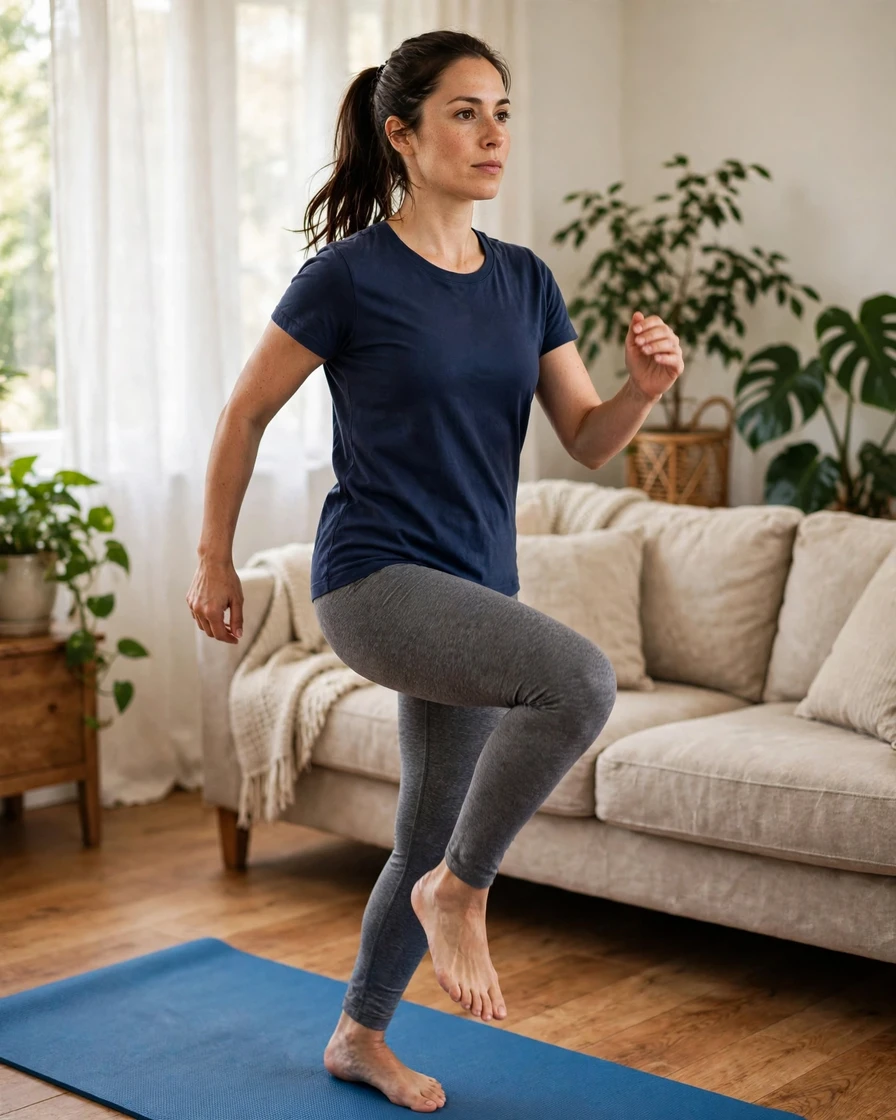
Marching in place is a gentle way to wake up your body and get blood flowing before the harder work begins. Stand tall on your mat with feet hip-width apart, then lift one knee toward hip height and lower it as the other knee rises, swinging your arms naturally as if walking briskly. Keep your chest open, your gaze forward and your steps light. Aim for two to three minutes at a steady, comfortable pace, gradually lifting your knees a little higher as you warm up.
This warm-up suits almost everyone, including beginners and anyone returning to exercise after a break, because it raises your heart rate without impact or strain. If you have a health condition, an injury, or you are pregnant, check with a healthcare professional before starting this or any new exercise routine. For an easier version, keep your steps small and hold the back of a chair for balance. To make it harder, pump your arms overhead or add a light bounce between steps.
Quick Tip: Put on a favorite song and march through it — music makes the warm-up fly by and sets the mood for the session.
2. Bodyweight Squats
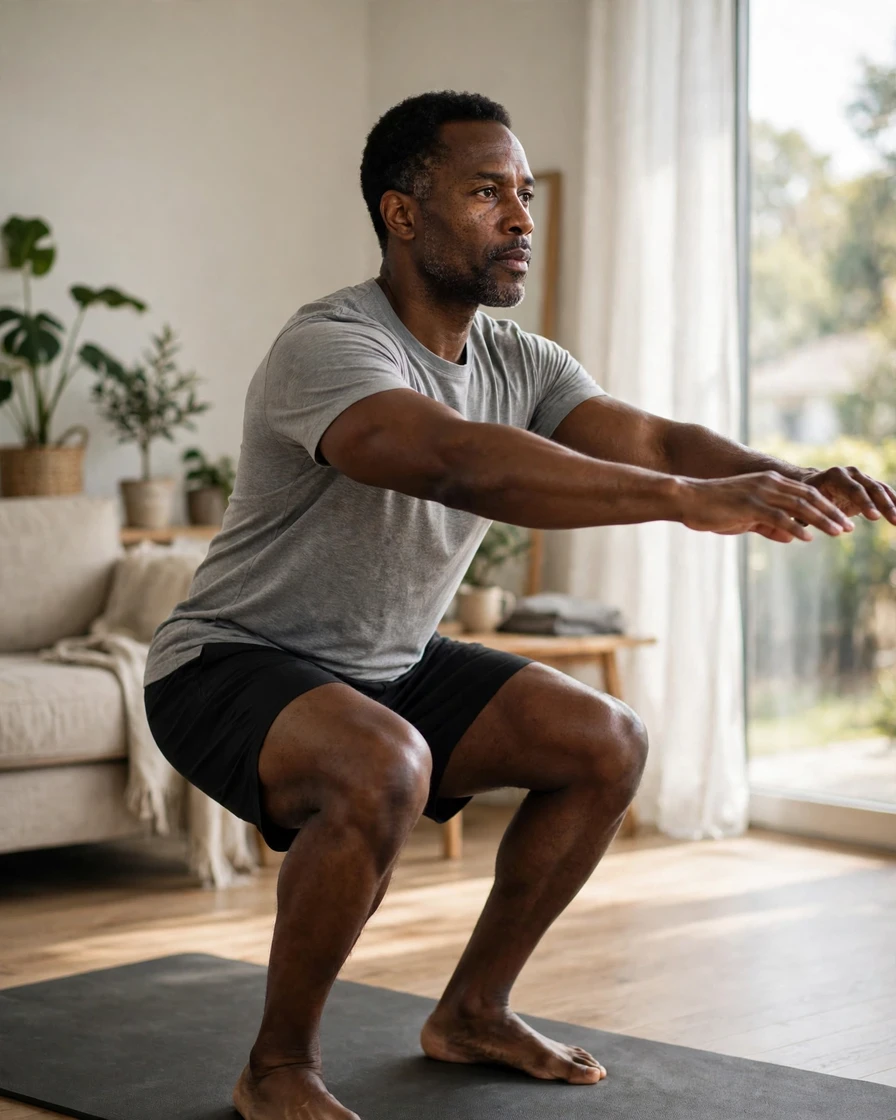
Squats are the foundation of lower-body strength, and they train a movement you use every day, from sitting down to picking things up. Stand with feet about shoulder-width apart and toes turned slightly out. Push your hips back and bend your knees as if sitting into an invisible chair, lowering until your thighs are roughly parallel to the floor, then press through your heels to stand tall. Keep your chest lifted and your knees tracking in line with your toes throughout.
This move may help build strength in your legs and glutes while supporting balance and everyday mobility. Try two or three sets of ten to twelve reps, resting for about a minute between sets. If a full squat feels too deep, lower only partway or squat to a chair and stand back up. If it feels easy, slow the lowering phase to three seconds or pause at the bottom. Stop if you feel sharp pain in your knees and never force depth your body is not ready for.
Quick Tip: Imagine you are sitting back onto a chair behind you — this cue keeps your weight in your heels and your knees happy.
3. Push-Ups
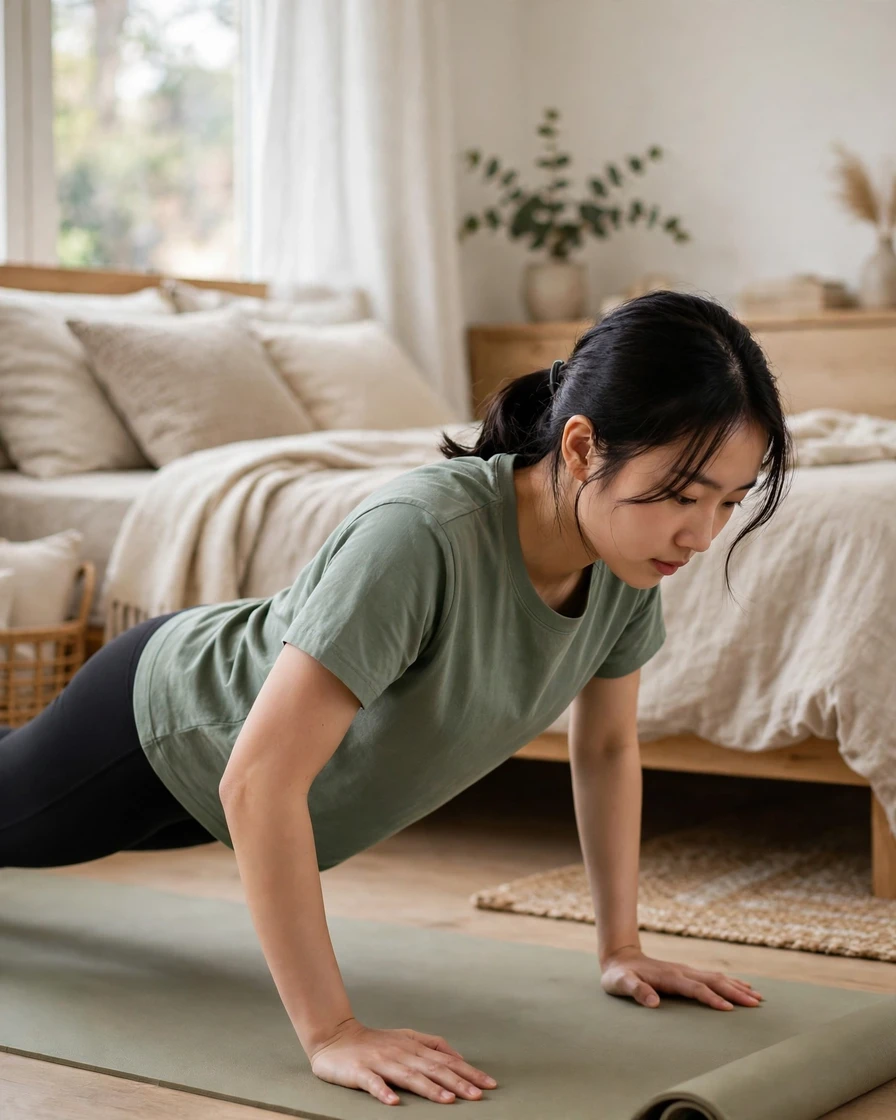
Push-ups are a classic upper-body exercise that work your chest, shoulders, triceps and core all at once, using nothing but your own body weight. Start in a plank position with your hands under your shoulders and your body in a straight line from head to heels. Lower your chest toward the floor by bending your elbows, keeping them angled slightly back rather than flared wide, then push the floor away to return to the start. Move slowly and keep your hips from sagging or lifting.
Aim for two or three sets of six to twelve reps, depending on your strength. If full push-ups are too challenging, drop your knees to the mat or try wall push-ups with your hands against a wall. To progress, try a slower tempo, a narrow hand position, or an extra set each week. Push-ups may help build upper-body strength that supports everyday tasks like lifting and carrying. Keep your neck in line with your spine and breathe out as you push up.
Quick Tip: Think of pushing the floor away from you rather than lifting your body — it keeps your shoulders in a strong, safe position.
4. Reverse Lunges
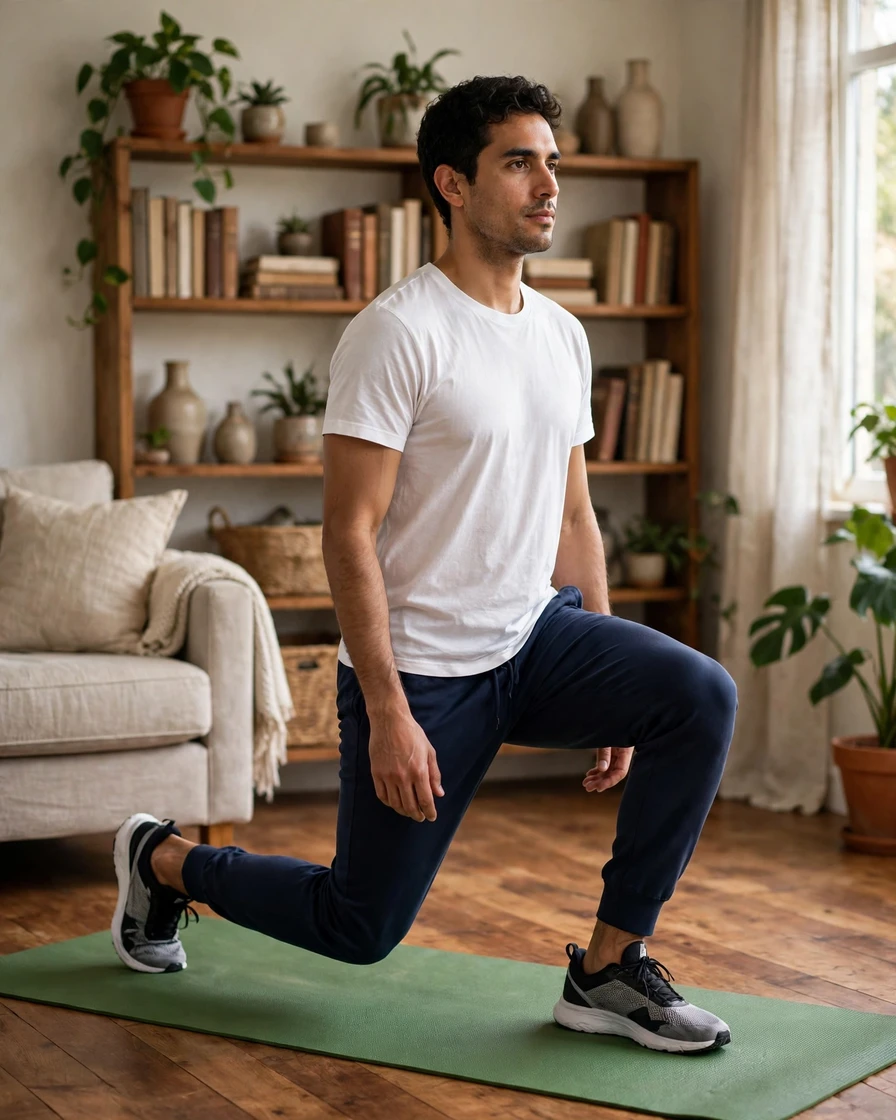
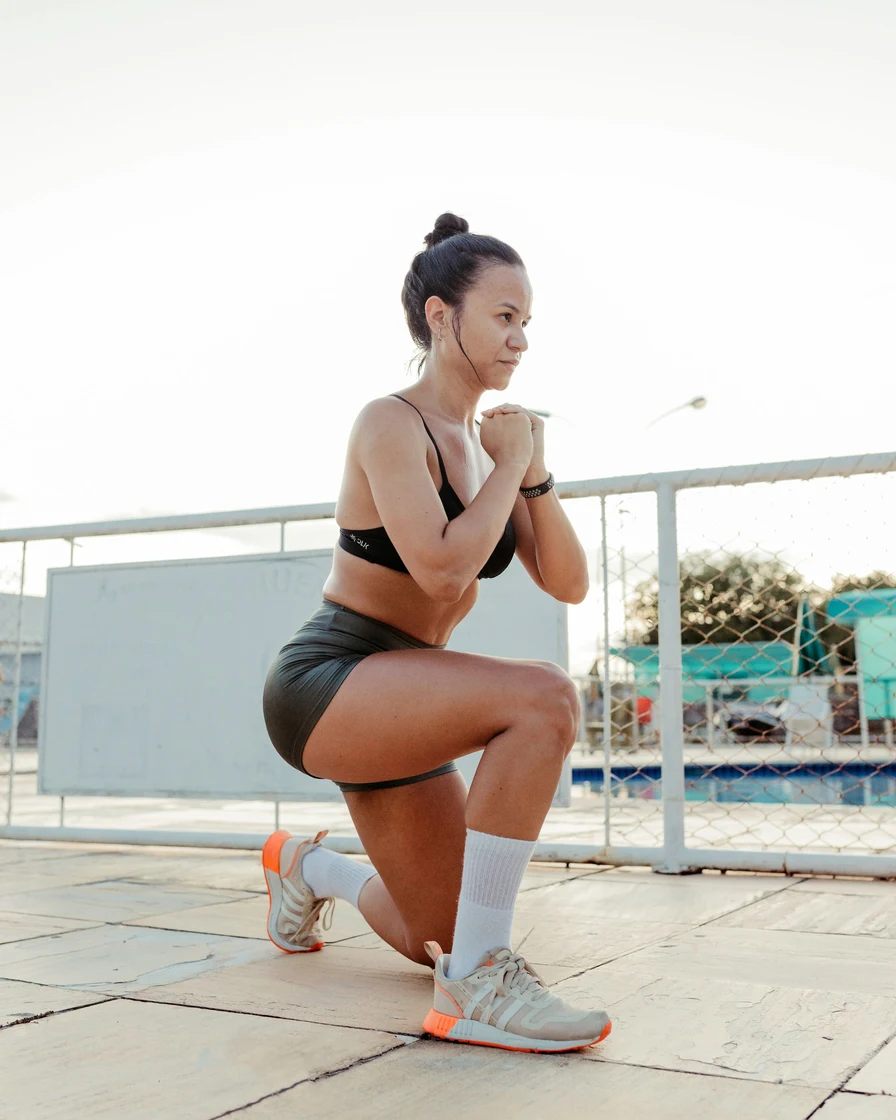
Reverse lunges build single-leg strength and balance, and they tend to feel kinder on the knees than forward lunges. Stand tall with your feet together, then step one foot back about two feet and lower both knees until they are bent at roughly right angles, keeping your front knee over your ankle and your torso upright. Push through your front foot to return to standing, then repeat on the other side. Alternate legs or finish all reps on one side before switching.
Try two or three sets of eight to ten reps per leg. This move may help strengthen your legs and glutes while improving balance and coordination, which can support steadier movement in daily life. Hold a chair or wall lightly for balance if you need to, and take shorter steps if the full lunge feels wobbly. To make it harder, hold the bottom position for two seconds or add a knee lift as you return to standing. Keep your steps controlled and avoid letting your front knee collapse inward.
Quick Tip: Keep your weight mostly in your front heel as you push back to standing — it protects your knee and fires up your glutes.
5. Glute Bridges
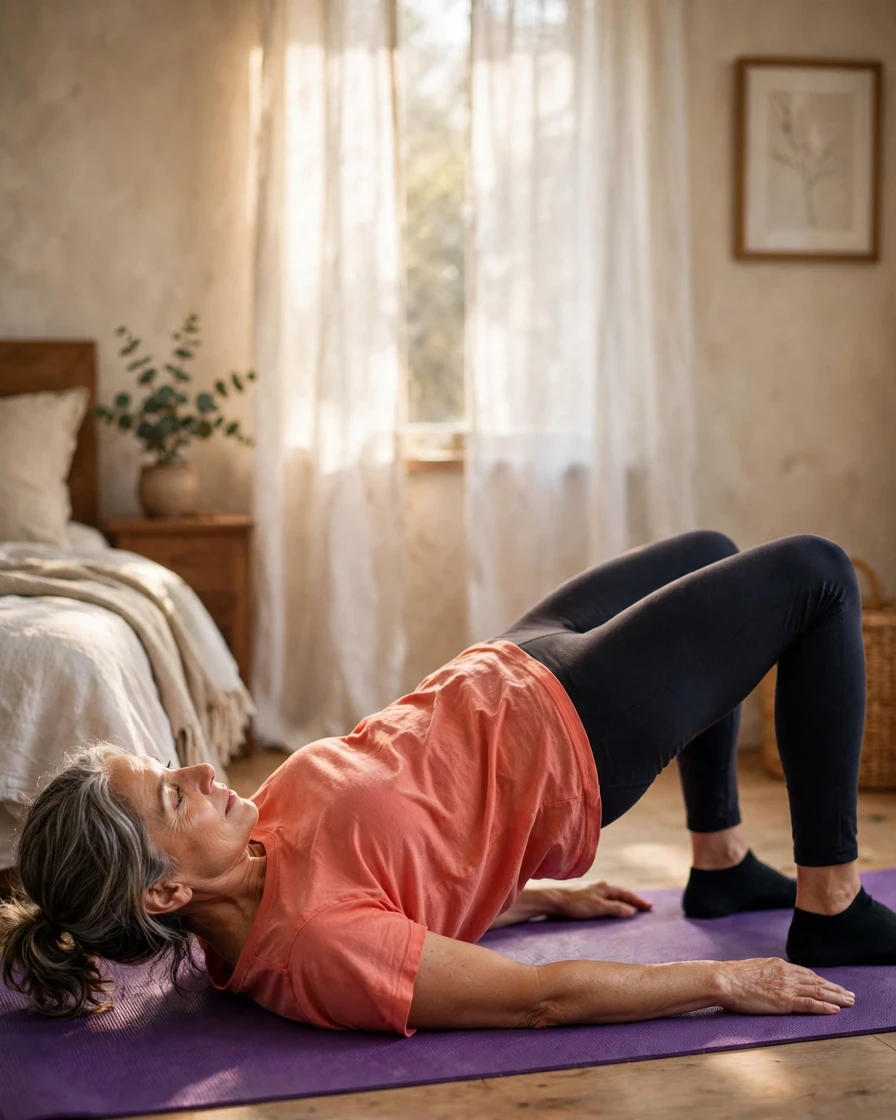
Glute bridges are a quiet but powerful move for the back of your body, waking up the glutes and hamstrings that spend much of the day switched off in a chair. Lie on your back with knees bent, feet flat on the floor hip-width apart and arms resting by your sides. Press through your heels to lift your hips until your body forms a straight line from shoulders to knees, squeeze your glutes gently at the top, then lower slowly back down.
Aim for two or three sets of twelve to fifteen reps, pausing briefly at the top of each lift. This exercise may help support hip strength and lower-back comfort, which can make walking, climbing stairs and standing feel easier. If you feel it mainly in your lower back, move your feet a little closer to your hips and focus on squeezing your glutes. For a harder version, lift one foot off the floor for a single-leg bridge, or hold the top position for ten seconds. Keep your ribs down and your core gently braced throughout.
Quick Tip: Place a small cushion between your knees and squeeze it lightly — it helps your inner thighs and glutes work together.
6. Plank Hold
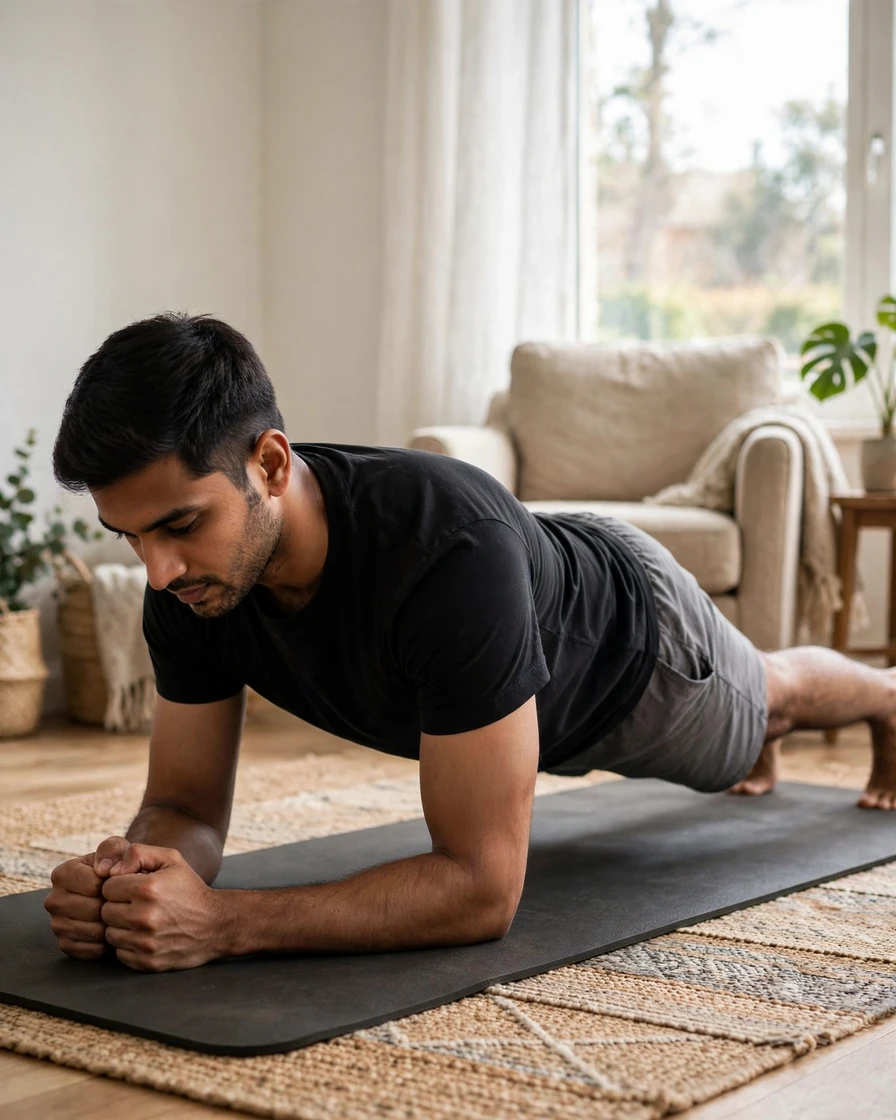
The plank is one of the simplest and most effective core exercises, training the deep muscles that hold your body steady in almost everything you do. Rest on your forearms with elbows under your shoulders, extend your legs behind you and lift your body into one straight line from head to heels. Brace your stomach gently as if someone were about to tap your belly, keep your neck long and breathe steadily. Avoid letting your hips sag toward the floor or pike up toward the ceiling.
Hold for twenty to forty seconds to start, rest, then repeat two or three times. A strong core may help support better posture and protect your lower back during daily lifting and bending. If the full plank is too much, drop your knees to the floor and hold a shorter line, or try a high plank on your hands. To progress, add five seconds each week or lift one foot slightly off the floor. Quality matters more than time, so stop the hold when your form starts to break down.
Quick Tip: Set a timer where you can see it — watching the seconds pass makes the hold feel much more doable.
7. Bird-Dog
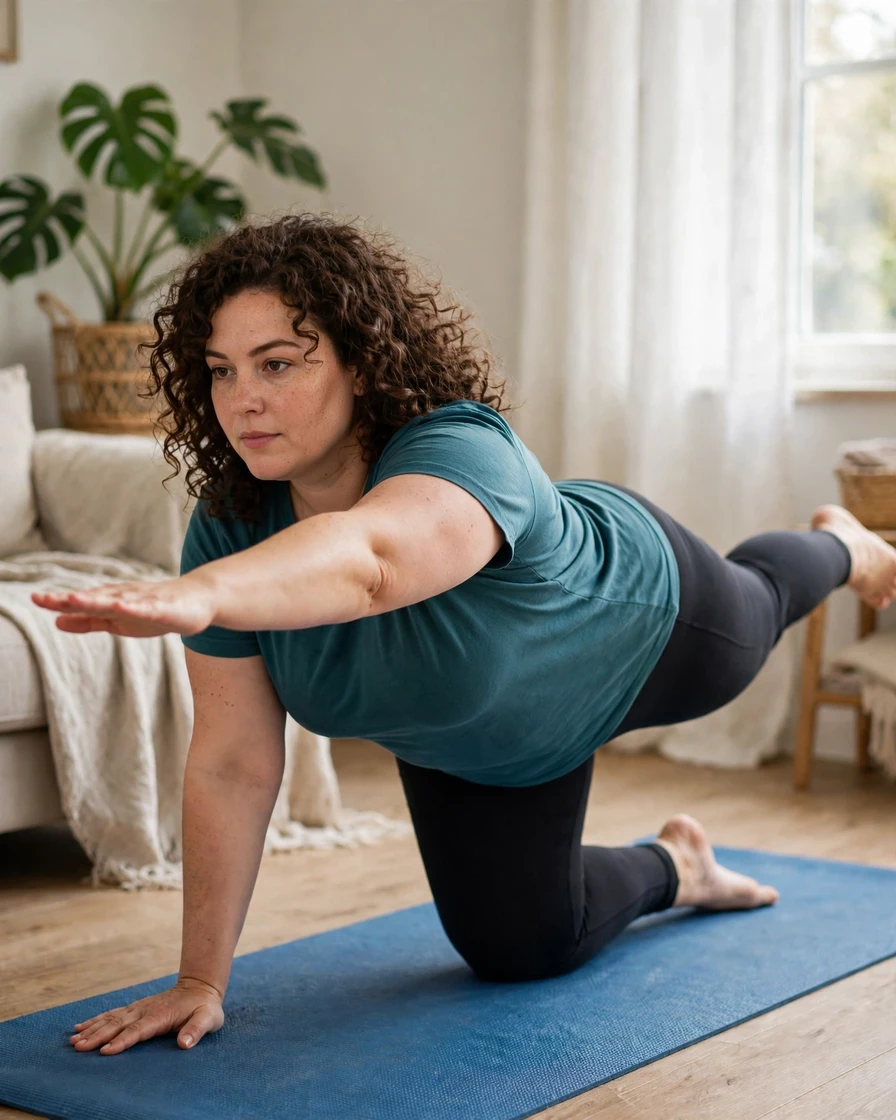
Bird-dog is a gentle stability exercise that trains your core, balance and coordination without any impact. Start on all fours with your hands under your shoulders and your knees under your hips. Slowly reach your right arm forward and your left leg back until both are straight and roughly level with your body, keeping your hips square and your back flat. Hold for two or three seconds, return to the start with control, then switch sides. Move slowly and breathe steadily throughout.
Try two sets of eight to ten reps per side. This move may help improve balance and core control, which can support steadier walking and everyday movement, and it is often a comfortable option for people who find floor-based core work hard on their neck. If balancing feels tricky, start by lifting just one arm or one leg at a time. For a harder version, draw your elbow and knee together underneath you before extending again. Keep your gaze down at the mat to keep your neck in a comfortable line.
Quick Tip: Imagine a glass of water balanced on your lower back — keeping it still is the secret to a steady bird-dog.
8. Dead Bug
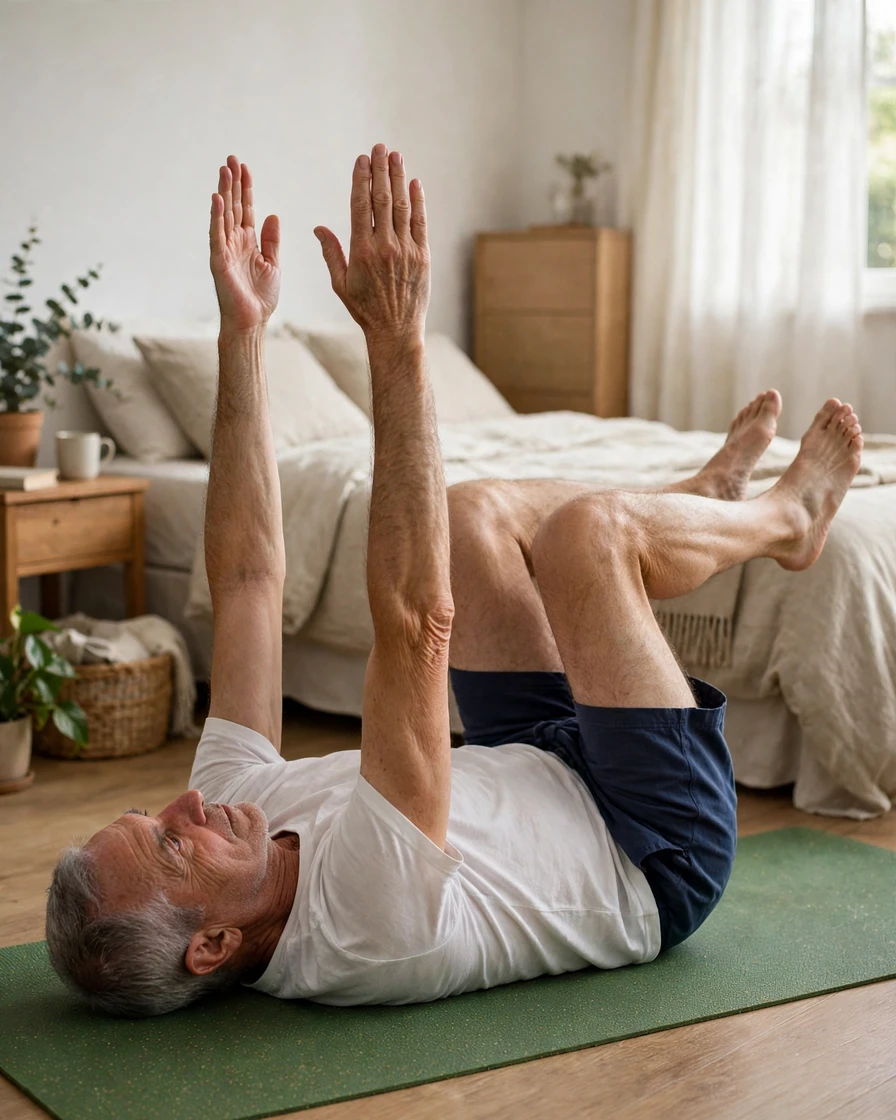
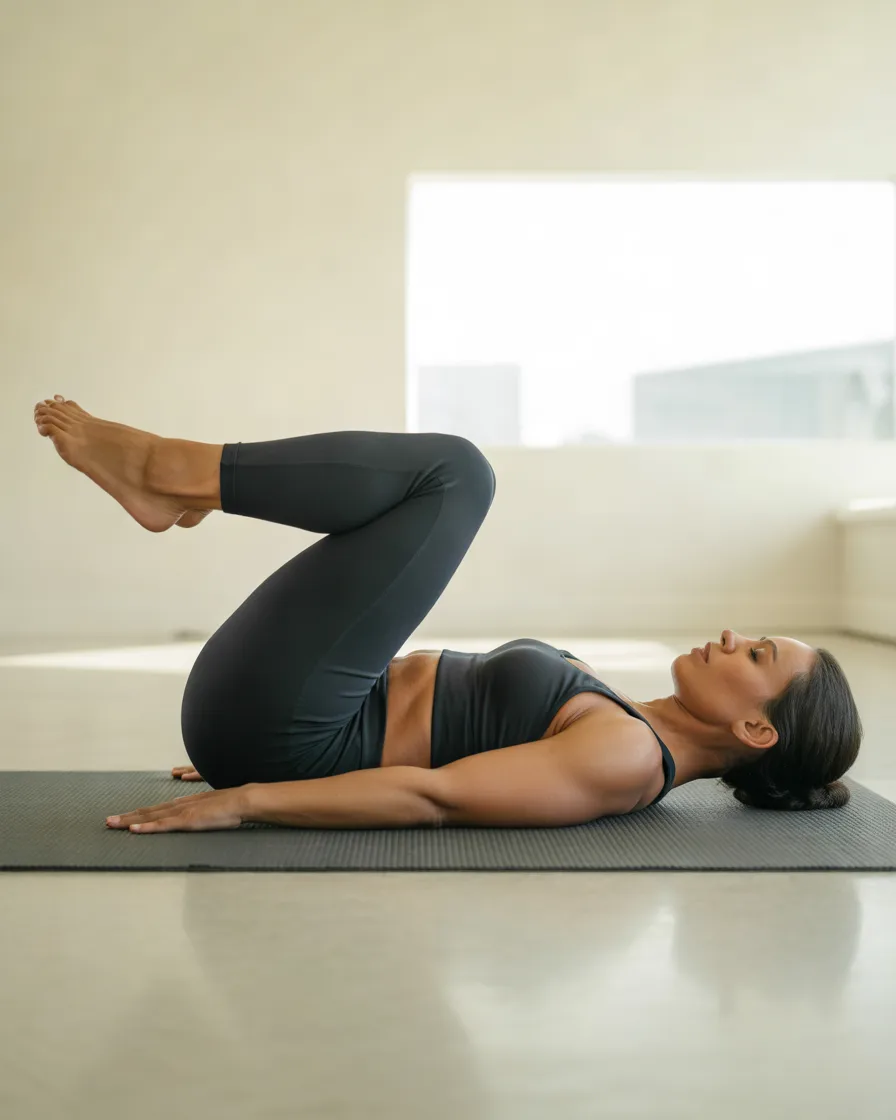
The dead bug is a quiet core exercise with a funny name and a serious purpose: teaching your core to stay steady while your arms and legs move. Lie on your back with your arms reaching toward the ceiling and your knees bent at right angles above your hips. Slowly lower your right arm behind your head and your left leg toward the floor, keeping your lower back pressed gently into the mat, then return and switch sides. Only lower as far as you can without your back arching away from the floor.
Aim for two sets of eight to ten reps per side, moving slowly and exhaling as you extend. This exercise may help build deep core strength that supports your spine during everyday bending, lifting and reaching. If your back lifts off the mat, shorten the movement and keep your knee bent as you lower your leg. For a harder version, straighten the lowering leg fully and hover it just above the floor. Keep your neck relaxed and your jaw unclenched throughout.
Quick Tip: Breathe out slowly as you extend your arm and leg — the exhale helps your core switch on naturally.
9. Mountain Climbers
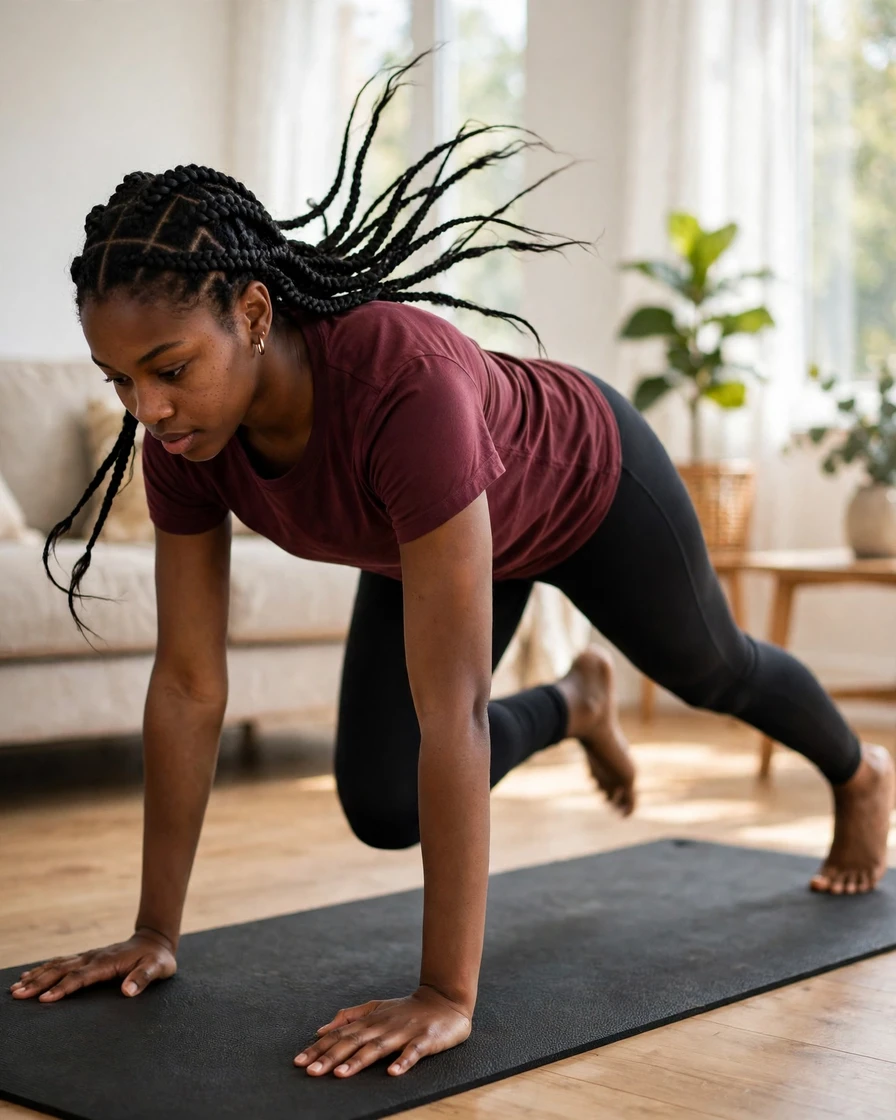
Mountain climbers bring the cardio finisher to life, raising your heart rate while your core works hard to keep you steady. Start in a high plank with your hands under your shoulders and your body in a straight line. Drive one knee toward your chest, then quickly switch legs, alternating in a smooth running motion while keeping your hips level and your shoulders stacked over your wrists. Keep your steps quick but controlled, and breathe steadily.
Try three rounds of twenty to thirty seconds with a short rest between rounds. This move may help improve cardiovascular fitness and coordination while giving your shoulders and core a final challenge. If the fast pace feels too much, slow it right down to a deliberate step-in, one knee at a time. For a harder version, add a few extra seconds each week or try cross-body climbers, driving each knee toward the opposite elbow. Stop and catch your breath if you feel dizzy, and land softly on the balls of your feet.
Quick Tip: Keep your hips low and level — letting them bounce up and down takes the work away from your core.
10. Jumping Jacks
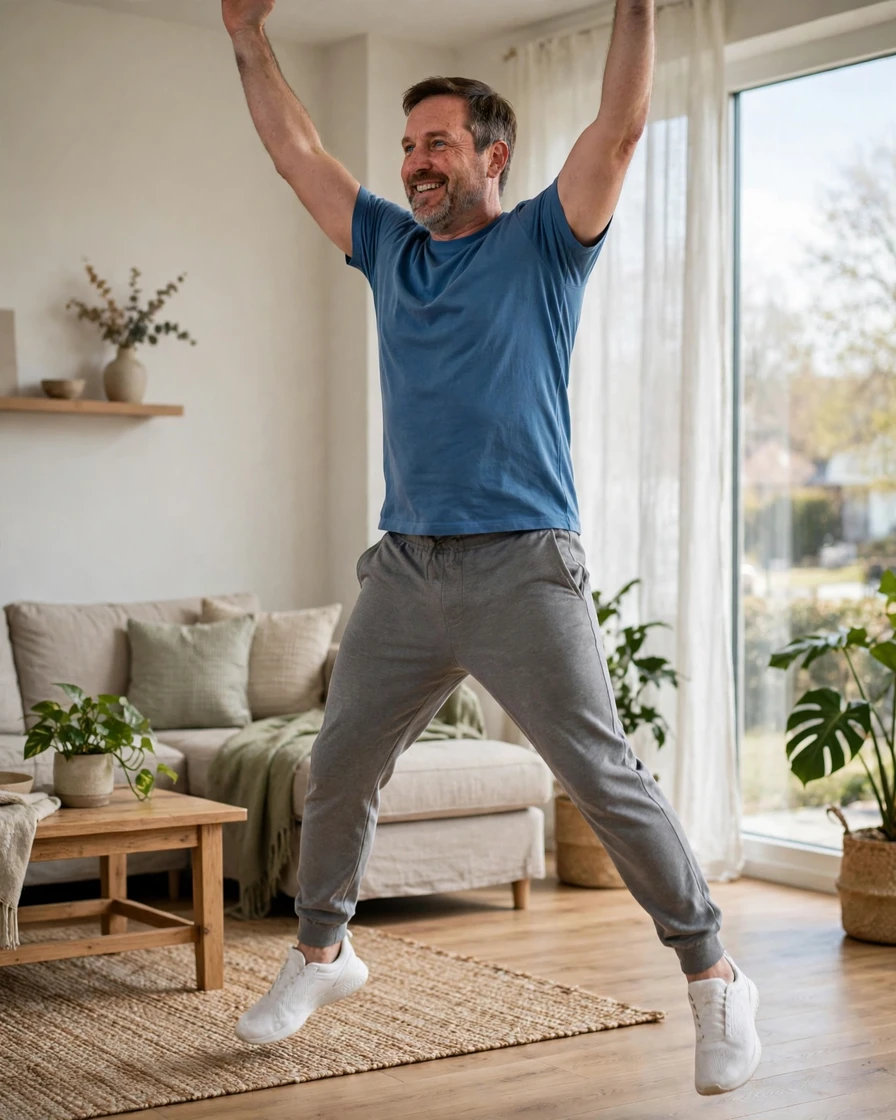
Jumping jacks are a joyful full-body move that finish the cardio section with energy and a smile. Stand tall with your arms by your sides, then jump your feet out wide while sweeping your arms overhead, and jump back to the start in one smooth motion. Land softly with slightly bent knees and keep your core gently braced. The rhythm should feel light and springy rather than heavy and pounding, so stay on the balls of your feet.
Aim for three rounds of twenty to thirty seconds, resting briefly between rounds. This classic move may help raise your heart rate and improve coordination, and it needs no equipment and almost no space. If jumping is uncomfortable, try low-impact jacks by stepping one foot out at a time while raising your arms — you still get the movement and the heart-rate lift. To make it harder, speed up slightly or add a small squat as your feet land wide. Keep your shoulders relaxed and your breathing even.
Quick Tip: If you live in a flat, do your jacks on a mat or rug to soften the landing and keep the neighbours happy.
11. Standing Quad and Hamstring Stretch
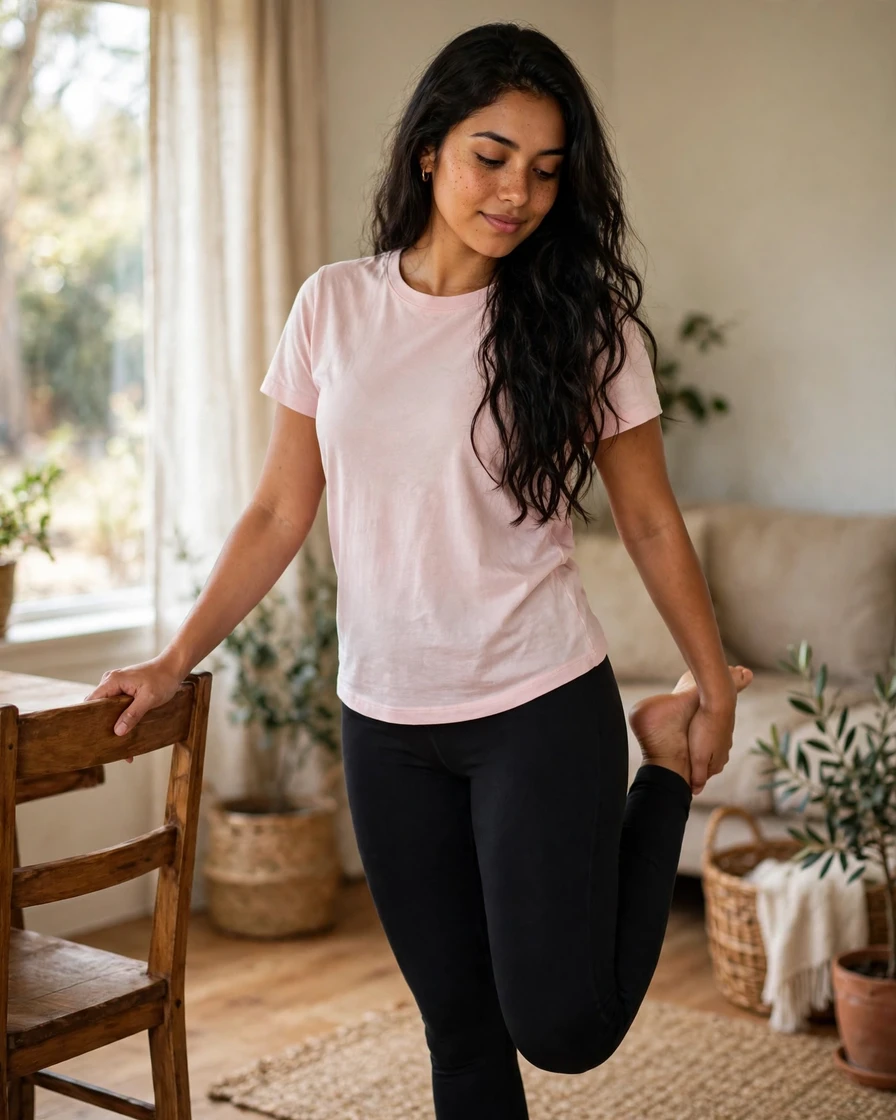
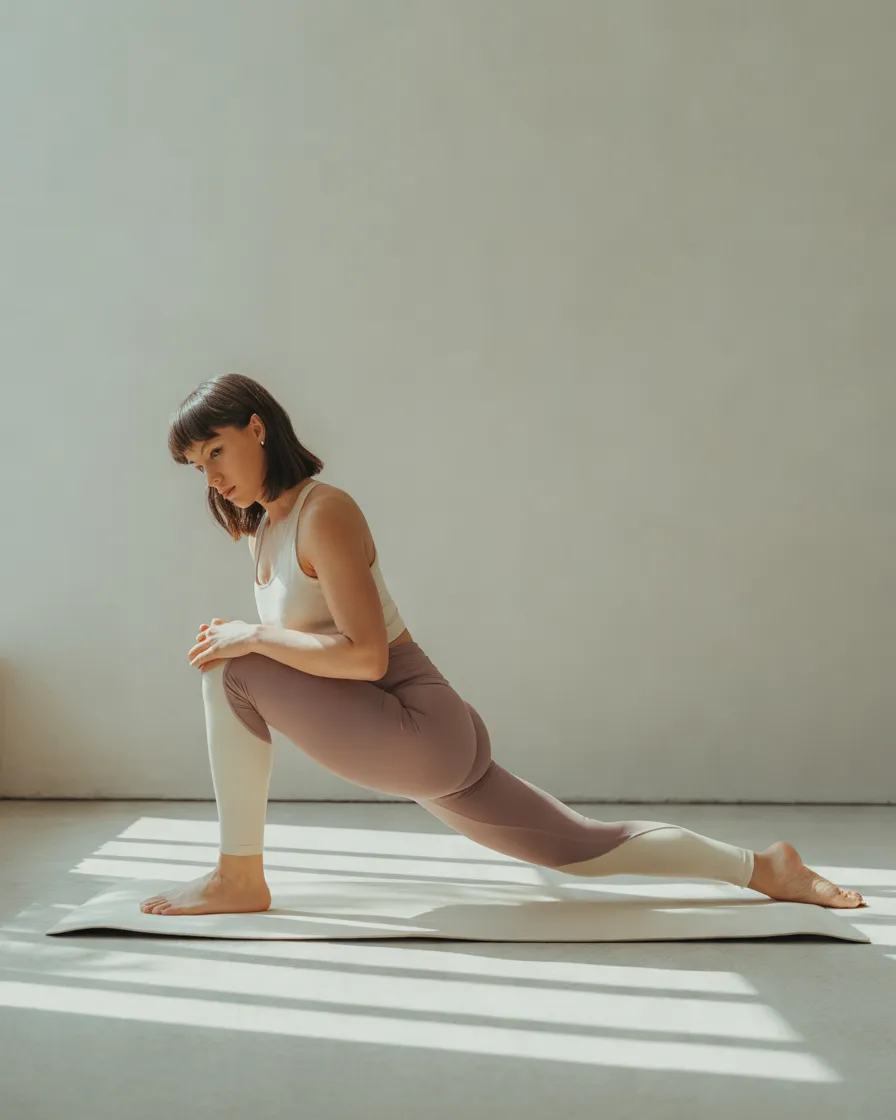
Now the pace slows right down. Stand tall near a chair or wall for balance, bend one knee and gently hold your foot behind you, drawing your heel toward your glute until you feel a comfortable stretch along the front of your thigh. Hold for twenty to thirty seconds, then switch legs. Next, step one foot forward, keep that leg straight with your heel on the floor, hinge forward slightly from your hips and feel the stretch along the back of your thigh, holding for twenty to thirty seconds per side.
Stretching after exercise may help your muscles relax and support flexibility over time, and this pair covers the two big muscle groups you worked hardest today. Never bounce or push into pain — a gentle pull is enough, and the stretch should feel pleasant rather than sharp. If balancing is tricky, hold the chair firmly with your free hand or do the quad stretch lying on your side. Breathe slowly and let your shoulders drop away from your ears as you hold each stretch.
Quick Tip: Do your stretches in the same order every day — the routine becomes a calming signal that your workout is done.
12. Cat-Cow Cool-Down Stretch
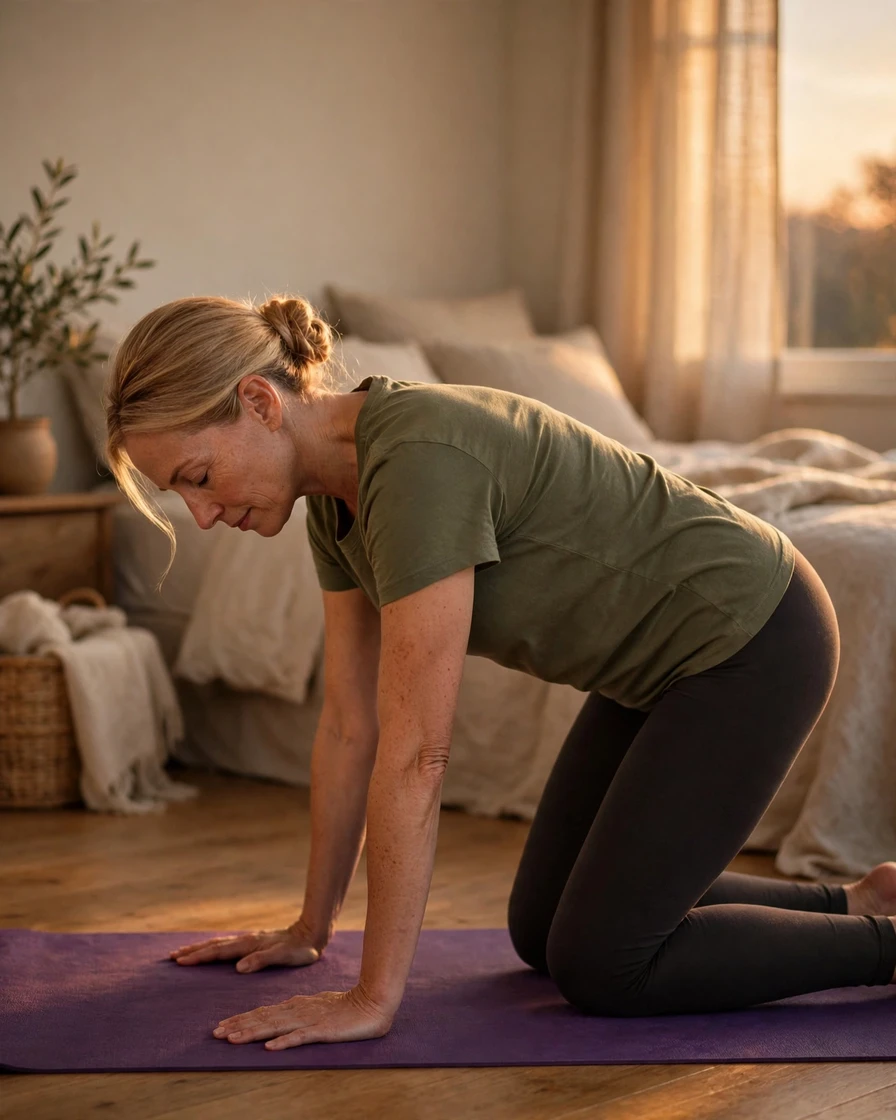
Cat-cow is the perfect way to close your session, gently moving your spine through its full range as your breathing slows. Start on all fours with hands under shoulders and knees under hips. As you breathe in, let your belly drop toward the floor, lift your head and tailbone and gently arch your back into cow. As you breathe out, round your spine toward the ceiling, tuck your chin and draw your belly in for cat. Flow slowly between the two positions, letting each breath guide the movement.
Continue for one to two minutes, or about eight to ten slow rounds. This gentle stretch may help ease tension in your back and neck after your workout and support spinal mobility over time. Move only within a comfortable range and skip any position that feels pinchy or painful. If your wrists feel sore, make fists or rest on your forearms instead. Finish by sitting back into a comfortable child’s pose for a few breaths, then stand up slowly — your thirty-minute session is complete.
Quick Tip: Close your eyes during the last few rounds and focus on your breath — it turns a simple stretch into a genuinely calming finish.
Expert Tips
Progress a little each week: Add one or two reps, five extra seconds on your holds, or one more round of cardio each week. Small steps add up quickly, and gradual progress helps your body adapt without soreness or strain. Keep a simple note of your numbers to see how far you have come.
Schedule it like an appointment: Aim for four or five sessions a week, with at least one full rest day between hard efforts. Many people find mornings easiest to stick to, but the best time is simply the one you will actually do. Rest days matter — muscles recover and grow stronger while you rest.
Warm up and cool down every time: The marching warm-up and the two closing stretches are part of the workout, not optional extras. Skipping them may increase the chance of stiffness or a pulled muscle, while doing them properly helps your body ease into and out of exercise.
Listen to your body and get advice when needed: Mild muscle effort is normal, but sharp pain, dizziness or chest discomfort are signs to stop and rest. If you have a health condition, an injury, or you are pregnant, speak to a healthcare professional before starting this routine or changing your exercise habits.
Keep it enjoyable: Change your playlist, work out with a family member, or move your mat near a window on sunny days. A routine you enjoy is one you will keep, and consistency matters far more than perfection.
How long does this daily workout plan at home take?
The full session takes about thirty minutes, including the warm-up and cool-down. The warm-up runs for two to three minutes, the strength and core moves take roughly twenty minutes, the cardio finisher adds about five minutes, and the stretches close things out in three to four minutes. If you are short on time, you can do one set of each move instead of two or three and finish in around twenty minutes.
Can beginners do this home workout routine?
Yes, this routine is designed with beginners in mind. Every move includes an easier variation, such as knee push-ups, shallow squats or slow mountain climbers, so you can start at a comfortable level and progress gradually. Take longer rests between sets if you need them, and focus on good form rather than speed. If you have not exercised in a while, consider checking with a healthcare professional before you begin.
Do I need any equipment for this no-equipment workout?
No equipment is needed at all. All twelve moves use only your body weight, so the only things that help are a mat or rug for comfort, enough floor space to stretch out, and comfortable clothes. A sturdy chair nearby is useful for balance during lunges and stretches. As you get stronger you can add resistance bands or light dumbbells, but they are never required for this plan.
How many days a week should I do this plan?
Four to five days a week works well for most people, with at least one or two rest days in between. Daily movement is fine, but your muscles need recovery time to adapt and strengthen, so avoid doing the full strength session every single day without a break. On rest days, a gentle walk or some light stretching is a good way to stay active while your body recovers.
When will I see results from a daily workout plan at home?
That depends on your starting point, consistency, sleep and overall lifestyle, so there is no fixed timeline. Many people notice small changes first, such as feeling steadier on stairs, having more energy during the day, or finding the moves easier after two or three weeks. Visible changes in strength and fitness usually take longer. Focus on showing up regularly and celebrating small progress rather than chasing a deadline.
Final Thoughts
A daily workout plan at home does not need to be complicated or punishing to work. Twelve simple moves, thirty minutes, and a small patch of floor are enough to build strength, support your heart and lift your mood — and because the routine lives in your home, there is nothing standing between you and your next session. Start gently, progress a little each week, and remember that a short workout you actually do beats a perfect one you keep postponing.
If you found this plan helpful, save it somewhere handy and try your first session today. Your future self will be glad you started.