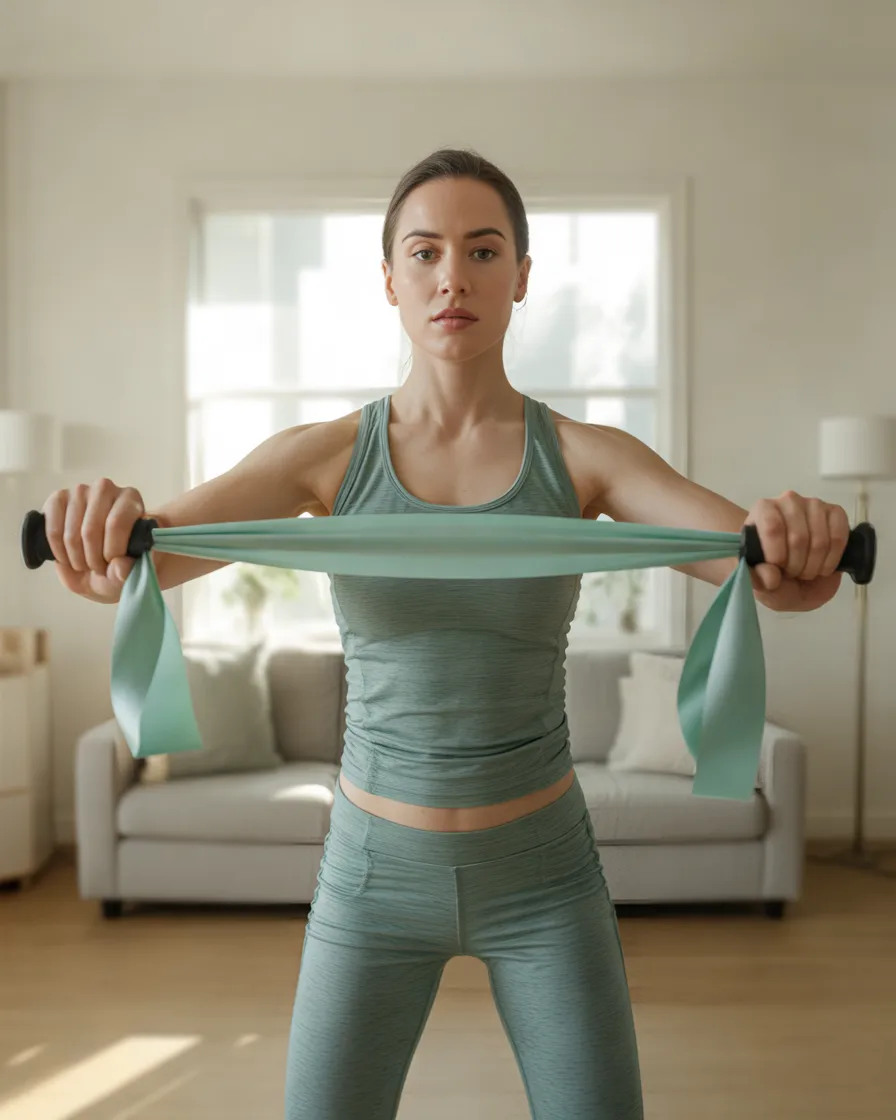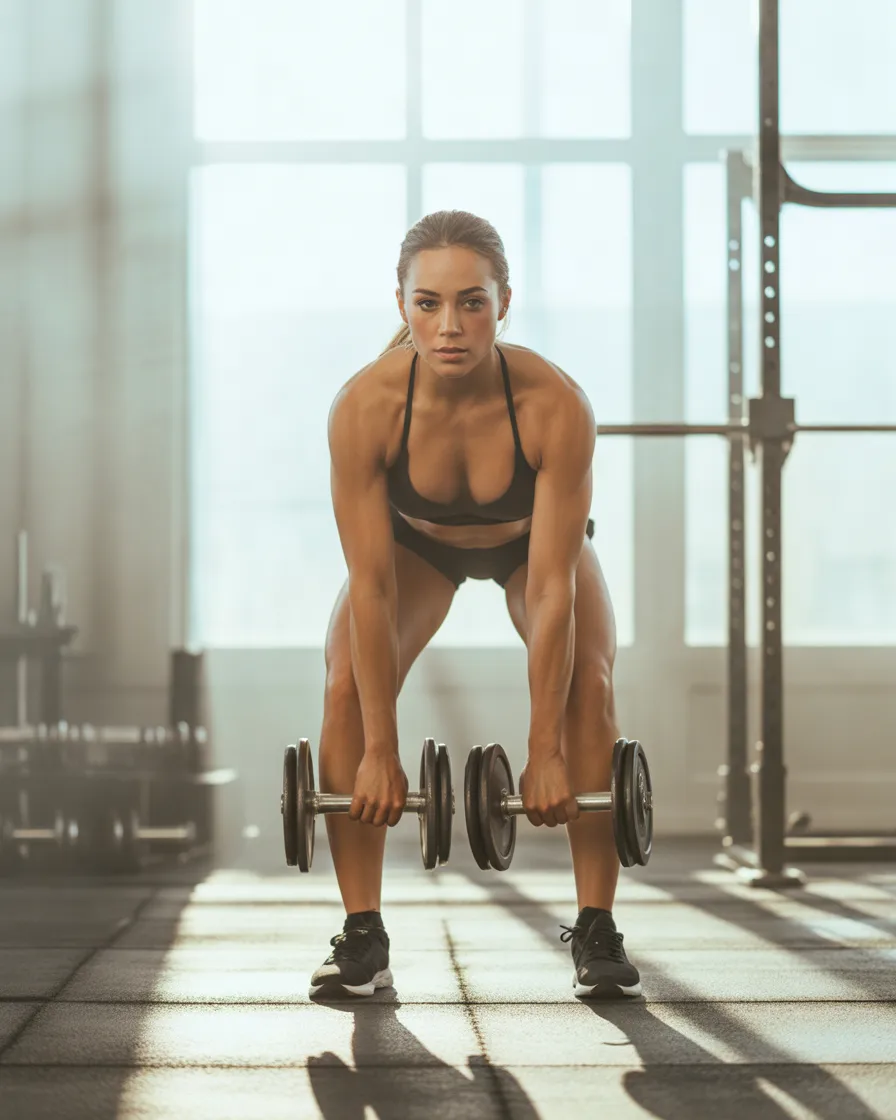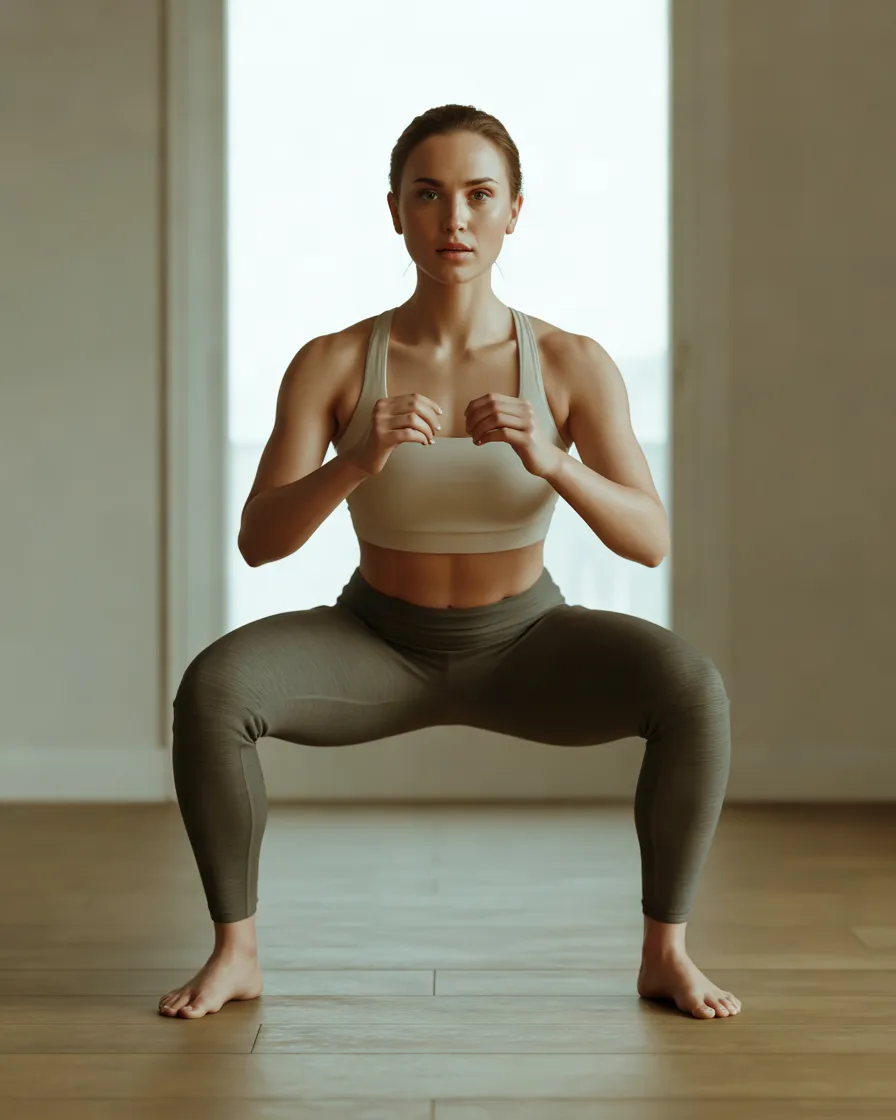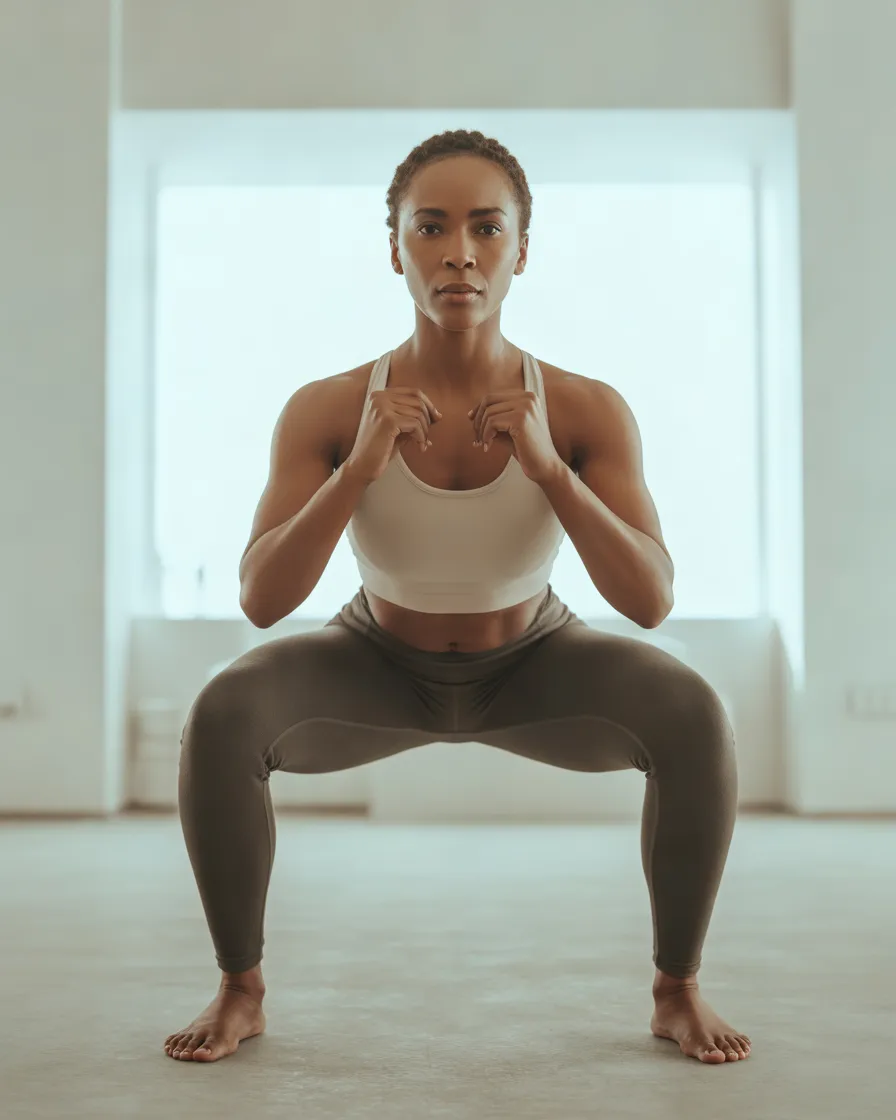
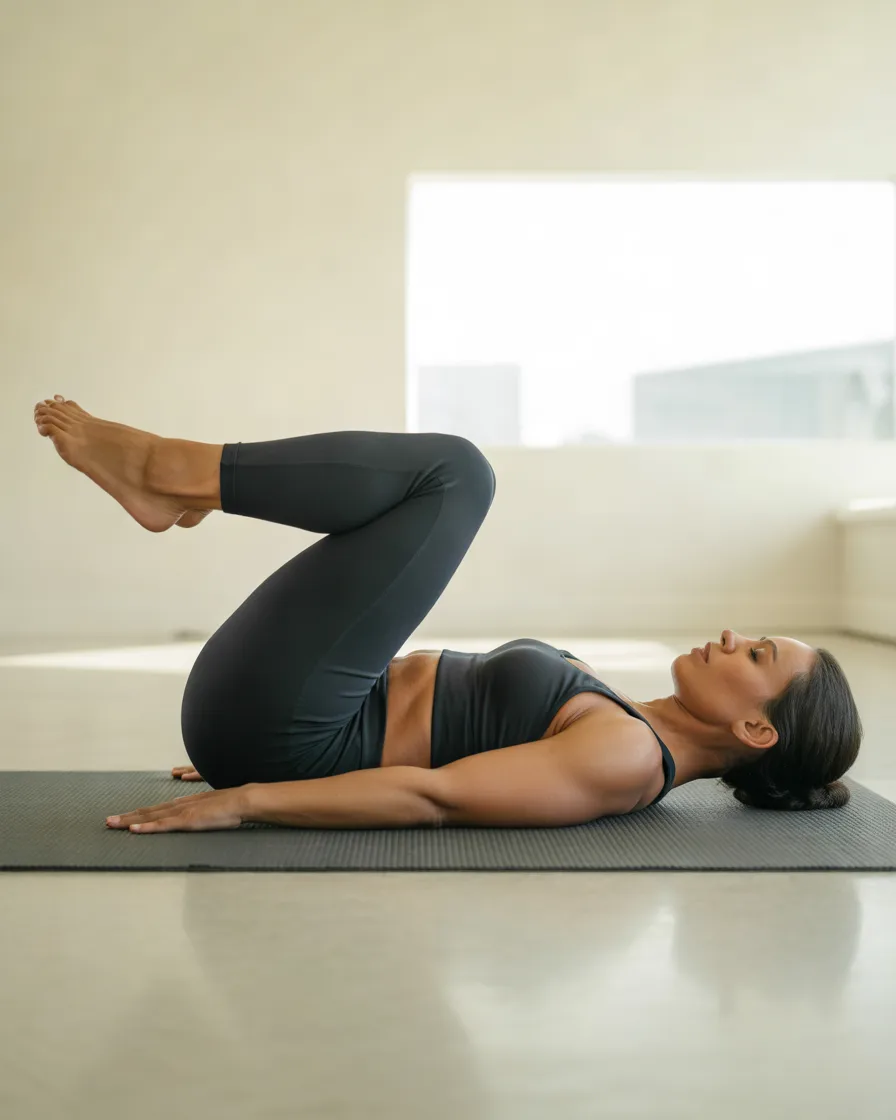
You do not need an expensive gym membership, complicated machines, or hours of exercise to start building stronger legs. With a little space at home and a consistent routine, you can work your thighs, calves, glutes, and hips using simple bodyweight exercises.
A toned legs home workout is a practical way to improve lower-body strength, muscular endurance, balance, and everyday mobility. Whether you want to feel stronger when climbing stairs, improve your fitness, or develop more visible muscle definition, the right exercises can help you work toward those goals.
The secret is choosing movements that train different parts of your lower body rather than repeating the same exercise every day. Squats and lunges strengthen the thighs and glutes, bridges target the back of the hips, and calf raises help develop the lower legs. Exercises such as side leg raises also work the muscles that support hip stability.
It is worth understanding what people mean by toned legs. The term generally describes a combination of developed muscles and the amount of body fat covering them. Exercise can strengthen and develop your muscles, but no individual exercise can selectively remove fat from your thighs or calves. Your results will depend on several factors, including genetics, training consistency, nutrition, recovery, and overall activity.
The good news is that you can begin with your own body weight and gradually increase the challenge as you become stronger.
In this guide, you will discover 10 effective home leg exercises, how to perform each one, the muscles they target, practical modifications, and expert-inspired tips for creating a routine that fits your fitness level.
1. Bodyweight Squats for Stronger Thighs and Glutes
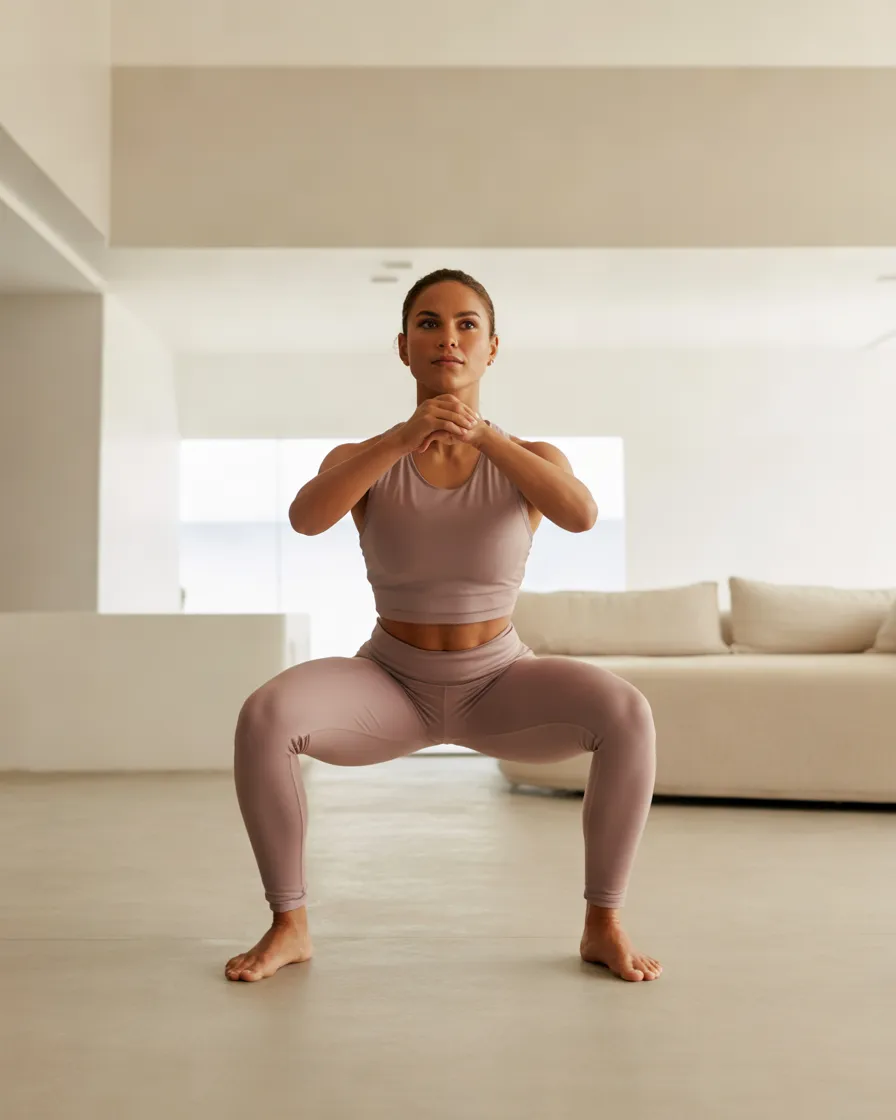
Bodyweight squats are one of the most useful exercises to include in a toned legs home workout. They train several lower-body muscles at once, including the quadriceps at the front of your thighs, glutes, and supporting muscles around your hips.
The movement also resembles everyday activities such as sitting down and standing up, making it a practical exercise for improving functional strength.
Benefits:
- Strengthens the quadriceps and glute muscles.
- Develops lower-body muscular endurance.
- Supports everyday movements such as standing and sitting.
- Helps improve coordination and movement control.
- Requires no exercise equipment.
How to perform bodyweight squats:
- Stand with your feet approximately shoulder-width apart.
- Keep your toes pointing slightly outward if that feels natural.
- Tighten your abdominal muscles gently.
- Push your hips backward as if sitting in a chair.
- Bend your knees and lower yourself as far as you can comfortably control.
- Keep your feet flat and your knees tracking in the direction of your toes.
- Push through your feet to return to standing.
Start with 8–12 repetitions and complete one or two sets.
Practical tips: Avoid rushing through the movement. Lower yourself slowly and maintain a comfortable range of motion. If you are struggling with balance, perform the exercise in front of a sturdy chair and use it as a depth guide.
Who it may suit: Beginners, busy adults, and people who want a simple exercise for developing general leg strength.
Important considerations: If you experience knee discomfort, reduce the depth and check your technique. Do not force your knees into a position that feels painful.
2. Reverse Lunges for Sculpted Thighs and Better Balance
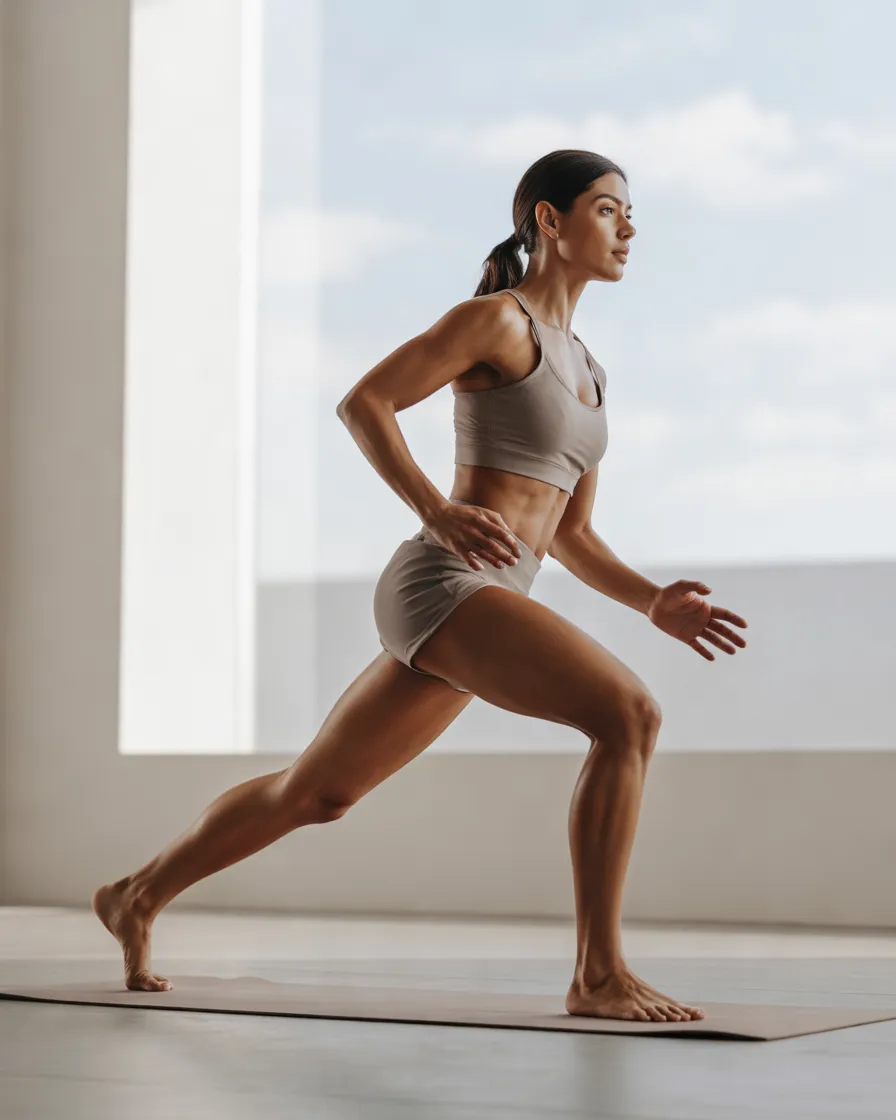
Reverse lunges are an excellent addition to a home leg workout because they train each leg individually. Unlike regular squats, which distribute your weight between both legs, lunges challenge your ability to control your body through a single-leg movement.
They primarily work the quadriceps and glutes while also engaging the hamstrings and muscles responsible for balance.
Benefits:
- Strengthens the front and back of your thighs.
- Activates the glutes and supporting hip muscles.
- Develops single-leg strength.
- Helps improve balance and coordination.
- Allows you to identify differences in strength between your legs.
How to perform reverse lunges:
- Stand upright with your feet hip-width apart.
- Keep your hands on your hips or beside your body.
- Take a controlled step backward with your right foot.
- Bend both knees while lowering your body.
- Keep your front foot firmly planted.
- Push through your front foot to return to the starting position.
- Repeat with your left leg.
Aim for 8–10 repetitions on each side.
Practical tips: Start with a shorter step if you are new to lunges. Keep your upper body upright and avoid allowing your front knee to collapse inward. You can hold a wall or sturdy chair for additional support.
Who it may suit: People who already feel comfortable standing and performing basic squats and want to develop better lower-body coordination.
Important considerations: Lunges require more balance than many other leg exercises. If you have knee, ankle, or hip problems, ask a qualified healthcare professional about suitable modifications before beginning.
3. Glute Bridges for Stronger Hips and the Back of Your Legs
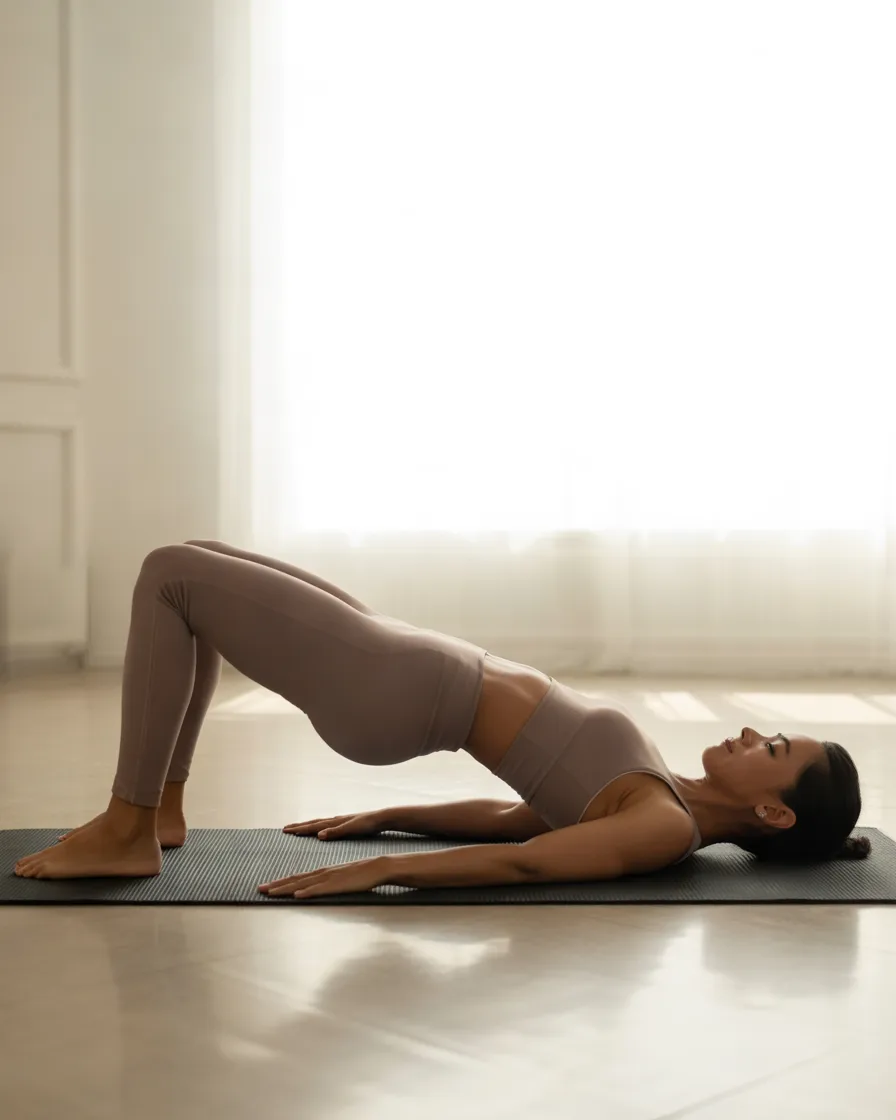
Glute bridges are particularly useful because they train the posterior chain, which includes muscles along the back of your body. The exercise mainly targets your glute muscles while also engaging your hamstrings.
You perform this movement while lying on your back, making it a useful option if standing exercises feel challenging.
Benefits:
- Strengthens the glute muscles.
- Engages the hamstrings.
- Supports hip extension strength.
- Helps develop lower-body muscular control.
- Provides a low-impact alternative to jumping exercises.
How to perform glute bridges:
- Lie on your back on an exercise mat.
- Bend your knees and place both feet flat on the floor.
- Keep your feet approximately hip-width apart.
- Position your arms beside your body.
- Gently tighten your abdominal muscles.
- Push through your feet and lift your hips.
- Stop when your shoulders, hips, and knees form a comfortable diagonal line.
- Squeeze your glutes gently at the top.
- Lower your hips slowly.
Complete 12–15 repetitions.
Practical tips: Focus on lifting with your glutes rather than arching your lower back. Keep your ribs relaxed and your movements controlled. Pause briefly at the top instead of bouncing.
For an additional challenge, you can eventually progress to a single-leg bridge, but master the regular version first.
Who it may suit: Beginners, people looking for floor-based exercises, and anyone wanting to strengthen the glutes and hamstrings without equipment.
Important considerations: If you experience lower-back discomfort, reduce the lifting height and reassess your position. Stop if the discomfort continues.
4. Step-Ups for Stronger Legs and Everyday Mobility
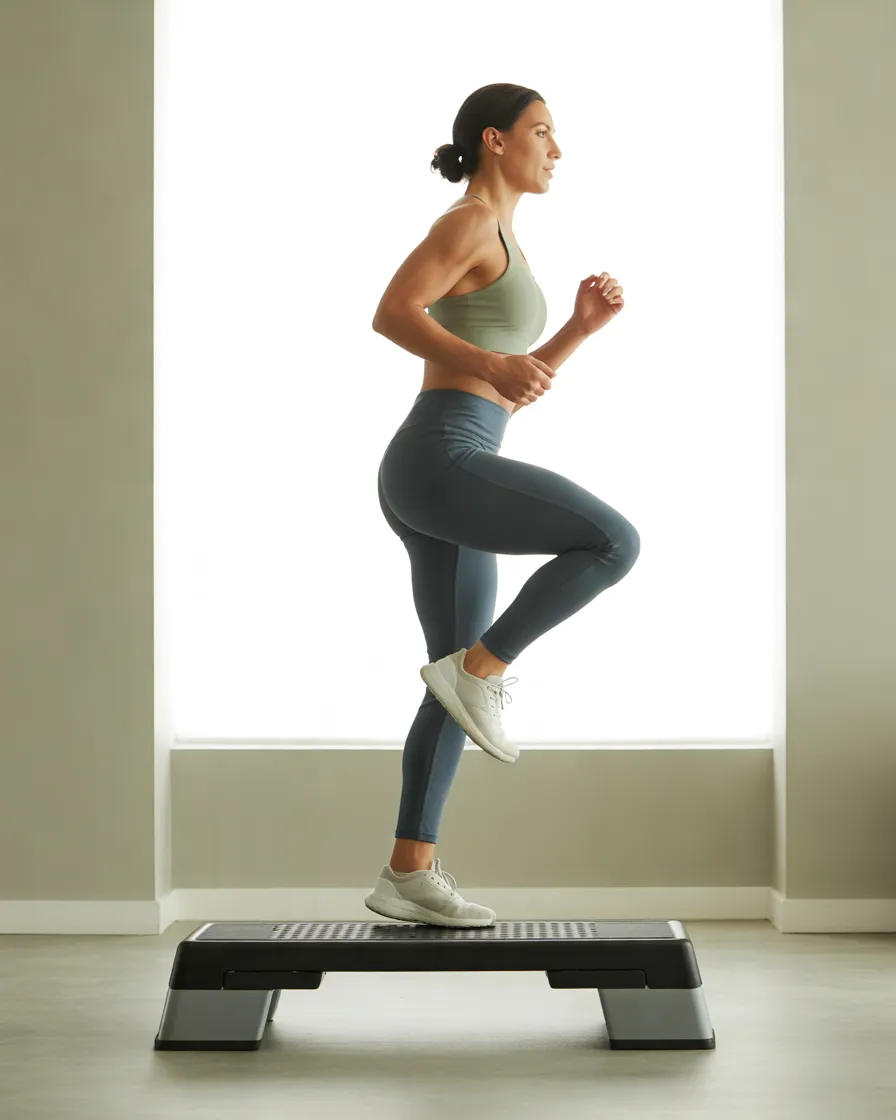
Step-ups are a practical exercise that can be performed using a stable, low step or a purpose-built exercise platform. They imitate the movement of climbing stairs and help strengthen the muscles responsible for lifting and controlling your body.
The exercise primarily works your quadriceps and glutes, with additional involvement from your hamstrings and calves.
Benefits:
- Develops single-leg strength.
- Strengthens the quadriceps and glutes.
- Supports stair-climbing ability.
- Challenges balance and coordination.
- Can be adjusted by changing the step height.
How to perform step-ups:
- Stand facing a stable, low step.
- Place your entire right foot on the platform.
- Push through that foot to lift your body.
- Bring your left foot onto the step.
- Step down carefully, maintaining control.
- Repeat with the opposite leg.
Begin with 8–10 repetitions per leg.
Practical tips: Choose a low platform initially. A bottom stair with a secure handrail may be suitable. Keep your working foot fully supported and avoid pushing excessively from the foot remaining on the floor.
You can gradually increase repetitions before considering a higher step.
Who it may suit: People who want to strengthen their legs for everyday activities and those who enjoy functional home workouts.
Important considerations: Never use a loose chair, unstable stool, or slippery surface. If balance is a concern, use a secure handrail and choose an easier alternative.
5. Wall Sits for Stronger Quadriceps and Muscular Endurance
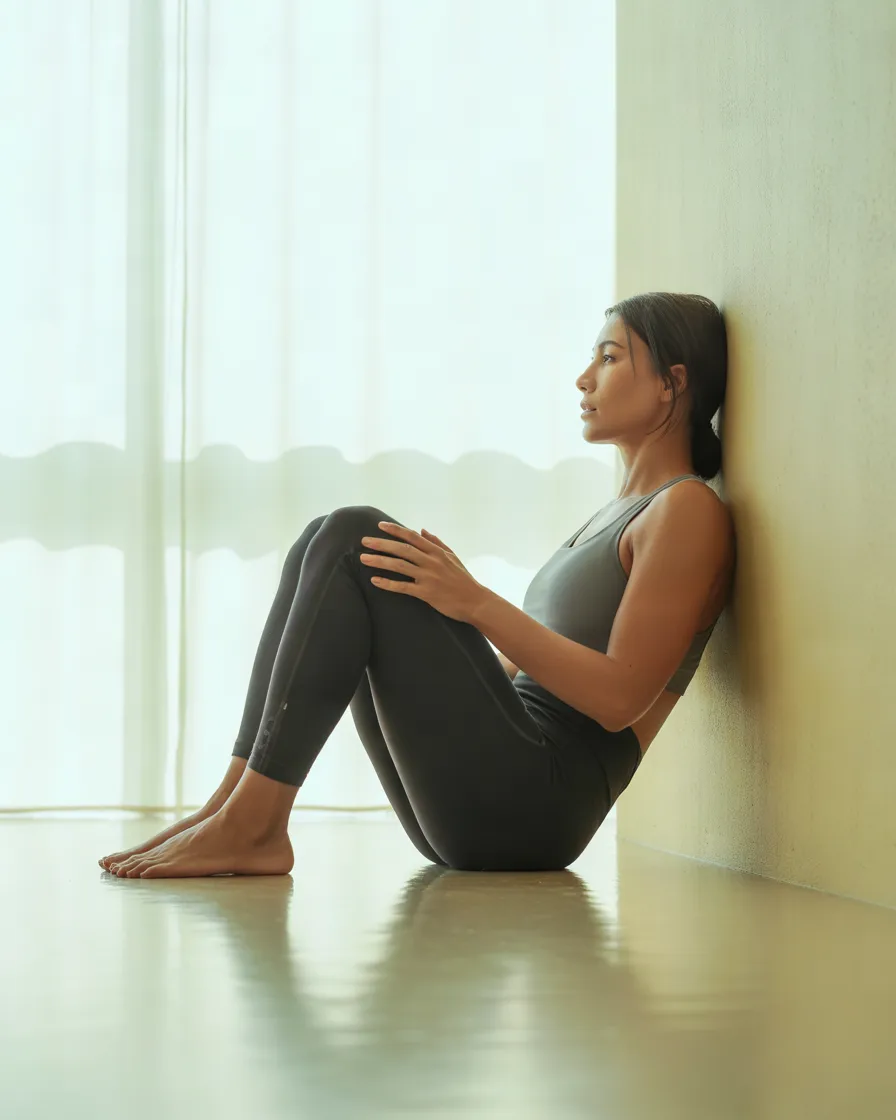
Wall sits are an isometric exercise, meaning your muscles work while your joints remain relatively stationary. Instead of repeatedly bending and straightening your knees, you hold a supported sitting position against a wall.
This exercise primarily challenges the quadriceps and can be a useful addition to a short home leg routine.
Benefits:
- Builds quadriceps muscular endurance.
- Requires very little space.
- Does not require weights or equipment.
- Encourages controlled lower-body positioning.
- Offers a different training stimulus from dynamic exercises.
How to perform wall sits:
- Stand with your back against a clear, stable wall.
- Place your feet slightly forward.
- Slide your back down the wall.
- Stop at a comfortable depth.
- Keep your feet flat on the floor.
- Maintain a stable position and breathe normally.
- Slowly slide back up when you finish.
Beginners can start with a 10–20-second hold. Gradually work toward 30–45 seconds if comfortable.
Practical tips: You do not need to lower your thighs until they are parallel with the floor. A higher position is perfectly acceptable when starting. Focus on maintaining steady breathing rather than trying to hold the position for an unnecessarily long time.
Who it may suit: People who want to improve thigh endurance and prefer a stationary exercise that does not involve repeated stepping.
Important considerations: Wall sits can place considerable demand on the quadriceps and knees. Choose a comfortable depth and stop if you experience sharp pain, dizziness, or unusual discomfort.
6. Standing Calf Raises for Stronger and More Defined Lower Legs
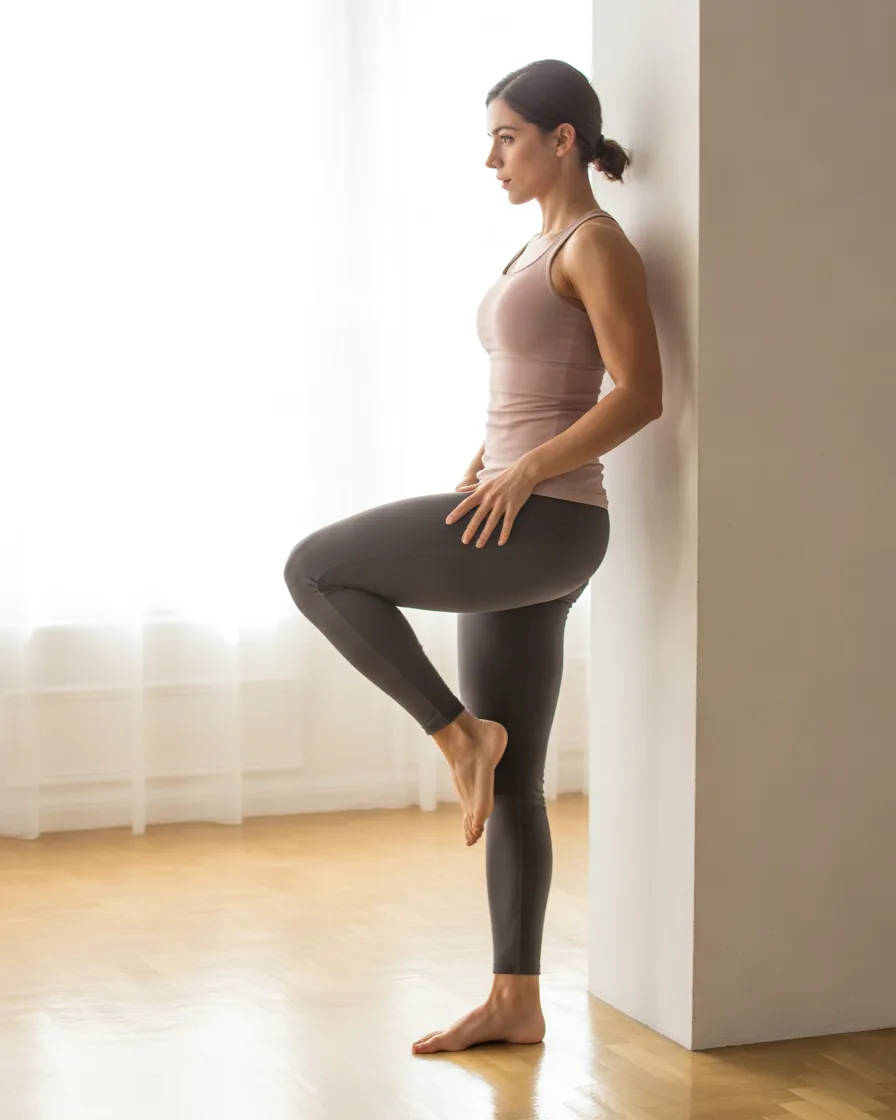
A balanced leg routine should not focus exclusively on the thighs and glutes. Your calf muscles are important for walking, running, jumping, and maintaining stability during everyday activities.
Standing calf raises are a straightforward way to strengthen these muscles at home.
Benefits:
- Strengthens the calf muscles.
- Develops lower-leg muscular endurance.
- Supports ankle control during movement.
- Requires no specialist equipment.
- Can be performed almost anywhere.
How to perform standing calf raises:
- Stand upright with your feet hip-width apart.
- Place your hands on a wall or sturdy support.
- Keep your knees comfortably straight but not locked.
- Slowly lift your heels from the floor.
- Rise onto the balls of your feet.
- Pause briefly at the top.
- Lower your heels slowly until they return to the floor.
Start with 12–15 repetitions.
Practical tips: Avoid bouncing or using momentum. A slow lowering movement helps you control the exercise. When regular calf raises become easier, you can try performing them one leg at a time while holding a secure support.
Who it may suit: Beginners and experienced exercisers who want to include lower-leg strengthening in their home routine.
Important considerations: If you have a history of Achilles tendon problems, significant ankle pain, or balance difficulties, seek professional guidance before increasing the difficulty.
7. Side Lunges for Inner Thighs and Hip Strength
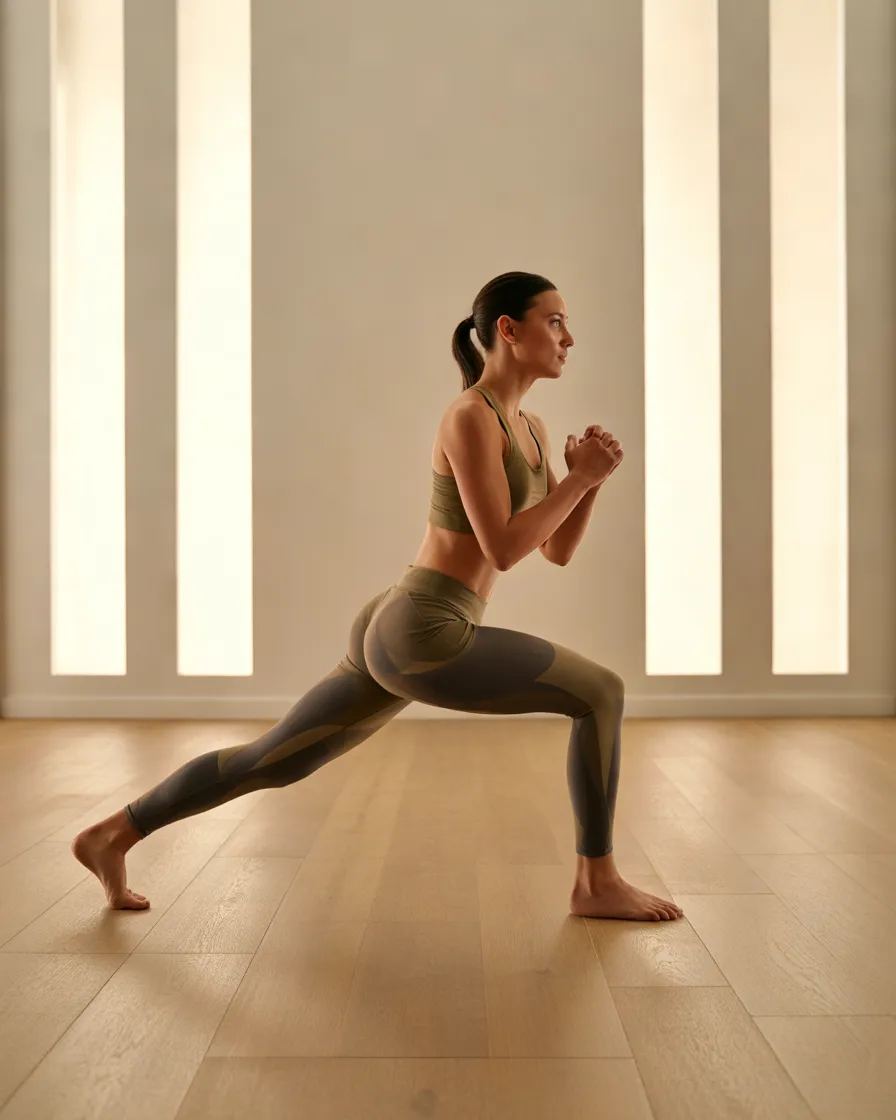
Side lunges introduce lateral movement into your leg workout. Many traditional exercises involve moving forward and backward, but this movement challenges your body from side to side.
It works the quadriceps, glutes, inner-thigh muscles, and other muscles around the hips.
Benefits:
- Strengthens the inner and outer thigh muscles.
- Engages the glutes.
- Develops lateral movement control.
- Supports hip mobility within a comfortable range.
- Adds variety to a traditional lower-body routine.
How to perform side lunges:
- Stand with your feet wider than hip-width apart.
- Keep your upper body upright.
- Take a controlled step toward your right side.
- Bend your right knee and push your hips backward.
- Keep your left leg relatively straight.
- Maintain contact between your right foot and the floor.
- Push through your right foot to return to the starting position.
- Repeat on the other side.
Start with 6–8 repetitions per side.
Practical tips: Begin with a small sideways movement. Your knees should generally follow the direction of your toes. Avoid forcing a deep stretch through your inner thighs.
Who it may suit: People who want a more varied leg workout and are comfortable with basic standing exercises.
Important considerations: Side lunges can feel unfamiliar if you have limited hip mobility. Reduce the range of movement and prioritize control over depth.
8. Single-Leg Romanian Deadlifts for Hamstrings and Glutes
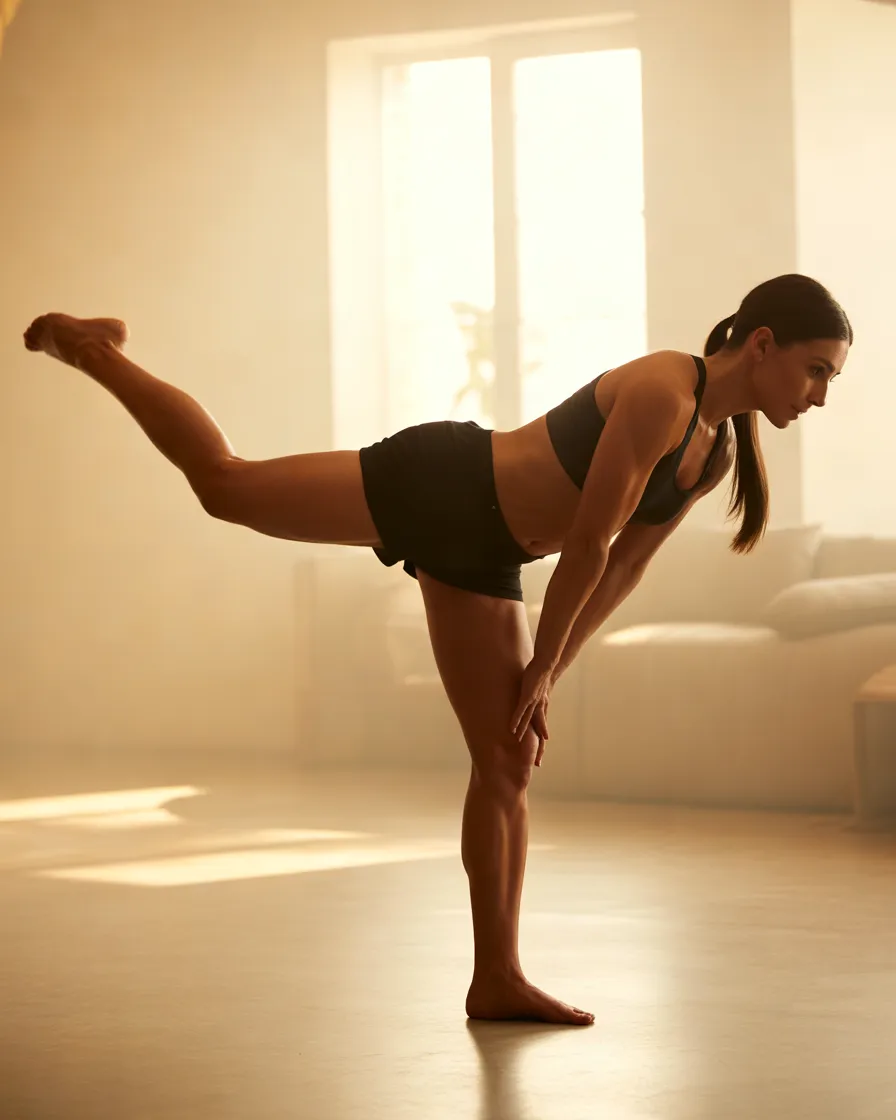
The single-leg Romanian deadlift is a valuable bodyweight exercise for strengthening the back of your legs. It uses a hip-hinge movement, which means your hips move backward while your spine remains relatively neutral.
The exercise primarily targets the hamstrings and glutes while challenging balance and coordination.
Benefits:
- Strengthens the hamstrings.
- Engages the glutes.
- Develops single-leg stability.
- Improves awareness of hip-hinge movement.
- Adds posterior-chain training to your routine.
How to perform the movement:
- Stand upright with your feet hip-width apart.
- Shift your weight onto your right foot.
- Keep your right knee slightly bent.
- Slowly move your hips backward.
- Extend your left leg behind you as your upper body leans forward.
- Keep your back neutral and your hips facing toward the floor.
- Stop when you feel a comfortable stretch in your supporting leg.
- Return to standing using your glutes and hamstrings.
- Repeat on the opposite side.
Try 6–8 repetitions on each side.
Practical tips: Balance is often the hardest part of this movement. Beginners should lightly hold a wall or sturdy chair. Think about pushing your hips backward rather than bending your spine forward.
Who it may suit: People who have mastered basic squats and want to improve hamstring strength and single-leg control.
Important considerations: Do not force your leg to lift high behind you. A small, controlled range is more useful than a large movement performed with poor posture.
9. Side-Lying Leg Raises for Outer Thighs and Hip Stability
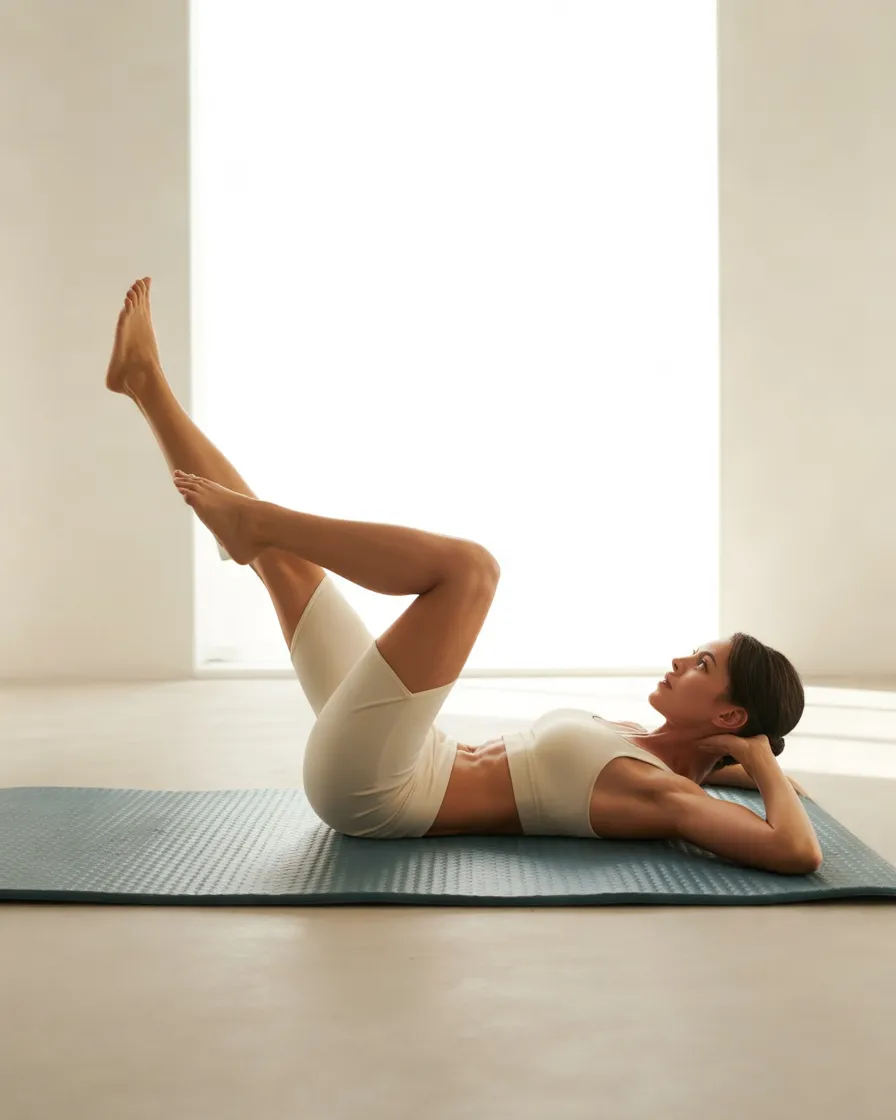
Side-lying leg raises are an accessible exercise for the muscles on the outer side of your hips, particularly the hip abductors. These muscles help control the position of your pelvis during walking and other single-leg activities.
The movement is simple, but correct positioning makes a significant difference.
Benefits:
- Strengthens the outer hip muscles.
- Engages the gluteus medius.
- Supports hip stability.
- Provides a low-impact exercise option.
- Can be performed without equipment.
How to perform side-lying leg raises:
- Lie on your right side on an exercise mat.
- Keep your legs extended and stacked.
- Support your head comfortably with your lower arm.
- Gently tighten your abdominal muscles.
- Lift your upper leg slowly.
- Keep your toes pointing forward.
- Avoid rolling your hips backward.
- Lower the leg slowly without dropping it.
Complete 10–12 repetitions before changing sides.
Practical tips: Lift your leg only as high as you can without moving your pelvis. A smaller controlled movement is often more effective than swinging your leg upward.
If the exercise becomes easy, a light resistance band can be placed around your thighs.
Who it may suit: Beginners, people who prefer floor-based movements, and those looking to strengthen the muscles supporting their hips.
Important considerations: Avoid lifting your leg so high that you feel discomfort in your lower back or hip. Keep the movement smooth and controlled.
10. Clamshell Exercises for Glutes and Outer Hip Strength
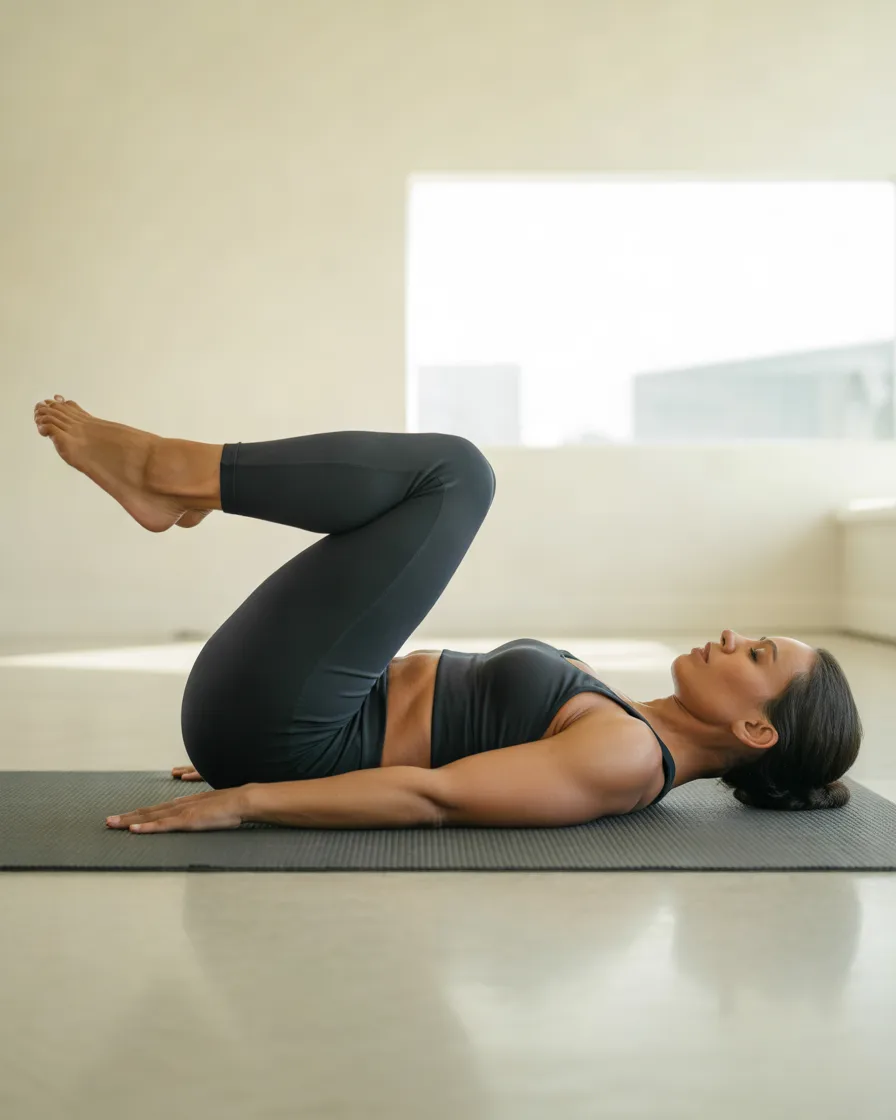
Clamshells are another useful floor-based movement for strengthening the muscles around your hips. They are particularly effective for targeting the gluteal muscles responsible for moving your thigh outward.
Although the movement looks simple, performing it correctly can help you engage the intended muscles without relying on momentum.
Benefits:
- Activates the outer glute muscles.
- Strengthens muscles involved in hip stability.
- Provides a beginner-friendly exercise.
- Requires very little space.
- Can be progressed with a resistance band.
How to perform clamshells:
- Lie on your side with your knees bent.
- Stack your hips and shoulders.
- Keep your feet together.
- Rest your head comfortably on your arm.
- Slowly lift your upper knee while keeping your feet touching.
- Avoid rotating your pelvis backward.
- Pause briefly at the top.
- Lower your knee slowly.
Perform 12–15 repetitions on each side.
Practical tips: Imagine opening a book while keeping its spine in place. Your upper knee moves, but your pelvis should remain steady. Start without a resistance band and add one only when you can maintain good technique.
Who it may suit: Beginners, people who want to strengthen their glutes, and anyone looking for a low-impact addition to a lower-body routine.
Important considerations: You should feel the exercise around the outer hip and glute area. If you experience sharp hip or back pain, stop and reassess your technique.
How to Combine These 10 Exercises Into an Effective Toned Legs Home Workout
Knowing individual exercises is useful, but putting them together in a realistic schedule is what helps create consistency.
You do not need to perform all 10 movements every day. Your muscles need time to recover, especially when you are introducing a new strength-training routine.
A practical starting point is two or three lower-body sessions per week, with recovery time between sessions.
Workout A: Thighs, Glutes, and Calves
| Exercise | Suggested repetitions |
|---|---|
| Bodyweight squats | 10–12 |
| Reverse lunges | 8 per leg |
| Glute bridges | 12–15 |
| Standing calf raises | 15 |
| Side-lying leg raises | 10 per side |
Workout B: Balanced Lower-Body Strength
| Exercise | Suggested repetitions |
|---|---|
| Step-ups | 8 per leg |
| Wall sits | 20–30 seconds |
| Side lunges | 8 per side |
| Single-leg Romanian deadlifts | 6–8 per leg |
| Clamshells | 12 per side |
Start with one set of each exercise if you are new to strength training. As your fitness improves, gradually progress to two sets.
Allow approximately 45–90 seconds of rest between sets, or longer when needed.
Example weekly schedule:
- Monday: Workout A
- Tuesday: Walking or gentle physical activity
- Wednesday: Rest or light movement
- Thursday: Workout B
- Friday: Walking or another enjoyable activity
- Saturday: Optional light activity or Workout A if recovery is good
- Sunday: Rest
If you choose three strength sessions, alternate the workouts rather than repeating the same demanding movements every day.
Expert Tips for Getting Better Results From Your Home Leg Workout
A successful fitness routine is not about completing the largest number of repetitions. It is about choosing appropriate exercises, performing them correctly, and gradually increasing the challenge.
Here are some useful principles to follow.
1. Warm Up Before Every Session
Spend approximately five to ten minutes preparing your body. Marching in place, gentle knee lifts, ankle circles, hip movements, and easy bodyweight squats can help prepare your muscles and joints for exercise.
Avoid jumping straight into demanding movements when your body is cold.
2. Prioritize Technique Over Speed
Perform each repetition with control. If you cannot maintain your posture, reduce the number of repetitions or choose an easier variation.
For example, supported reverse lunges are a better starting point than unsupported deep lunges if your balance is limited.
3. Increase the Challenge Gradually
Your muscles adapt to repeated exercise. When a movement becomes comfortable, you can increase the repetitions, add another set, slow down the lowering phase, or introduce a resistance band.
Change one factor at a time rather than increasing everything together.
4. Give Your Muscles Time to Recover
Strength training creates a demand on your muscles. Recovery allows your body to adapt to that demand.
Avoid training the same muscle groups intensely on consecutive days. A full day between demanding sessions is a sensible starting point.
5. Include Walking and Other Physical Activities
Strength exercises are important, but a balanced fitness routine also includes aerobic activity.
The CDC recommends that adults aim for at least 150 minutes of moderate-intensity aerobic activity each week, along with muscle-strengthening activities on at least two days.
Brisk walking, cycling, and dancing are practical ways to increase your weekly activity.
6. Support Your Training With Balanced Nutrition
Your body needs adequate energy and nutrients to support physical activity and muscle recovery.
Include a variety of protein sources, vegetables, fruits, whole grains, and healthy fats in your regular meals. Drink enough fluids, particularly when exercising in warm conditions.
You do not need restrictive diets or special supplements to begin a basic bodyweight workout.
7. Track Progress Beyond Appearance
Instead of judging progress only by how your legs look, pay attention to practical improvements.
You might notice that you can complete more controlled squats, hold a wall sit longer, climb stairs more comfortably, or maintain better balance during lunges.
These are meaningful signs of improving fitness.
8. Choose Comfortable Clothing and a Safe Workout Space
Wear clothing that allows your legs to move freely. Choose footwear with suitable grip for standing exercises, and make sure your exercise area is clear of furniture, loose rugs, and other obstacles.
For floor exercises, an exercise mat can provide additional comfort.
Frequently Asked Questions About Toned Legs Home Workout
1. Can I tone my legs at home without equipment?
Yes. Bodyweight squats, reverse lunges, glute bridges, calf raises, and side leg raises can all help strengthen your lower-body muscles without specialist equipment.
As you become stronger, resistance bands or light dumbbells can provide additional resistance, but they are not essential when starting.
2. How many days a week should I do leg workouts?
Two or three non-consecutive sessions per week can be a practical starting point for many healthy adults.
The CDC recommends muscle-strengthening activity on at least two days each week. Your routine should also include exercises for other major muscle groups, not only your legs.
3. How long does it take to see results from a toned legs home workout?
There is no universal timeline. Your progress depends on your starting fitness level, exercise consistency, training difficulty, nutrition, sleep, and genetics.
You may notice improvements in exercise control and endurance before visible changes in muscle definition become apparent.
Focus on gradual improvement rather than expecting a specific result within a fixed number of days.
4. Are squats enough to build toned legs?
Squats are an excellent lower-body exercise, but they do not train every muscle in exactly the same way.
Combining squats with lunges, bridges, calf raises, hip-hinge movements, and lateral exercises creates a more balanced routine.
5. Can I reduce thigh fat with leg exercises?
Leg exercises strengthen the muscles in your thighs, but they cannot specifically target fat loss in that area.
Changes in body fat distribution depend on several factors, including genetics, overall activity, nutrition, and individual physiology.
A balanced approach to physical activity and nutrition is more appropriate than relying on exercises that promise to burn fat from one specific body part.
6. Is a 15-minute home leg workout effective?
Yes, a focused 15-minute workout can be useful, particularly when you are starting out.
Choose four or five exercises, perform controlled repetitions, and use the time consistently. The difficulty should match your current fitness level.
A short workout performed regularly is generally more practical than an ambitious routine you cannot maintain.
7. Should I exercise my legs every day?
You do not need to perform demanding leg-strengthening workouts every day.
Allow time for muscle recovery between challenging sessions. On other days, you can enjoy walking, gentle mobility exercises, or other activities that do not leave your legs excessively fatigued.
8. Can beginners follow these leg exercises?
Most of these exercises can be adapted for beginners.
Start with bodyweight movements, smaller ranges of motion, fewer repetitions, and additional support when needed. Chair-assisted squats and supported reverse lunges are particularly useful starting variations.
Progress when the movements feel comfortable and controlled.
9. Do I need a resistance band for stronger, more defined legs?
No. Your body weight provides resistance, especially when you are new to strength training.
However, resistance bands can make exercises such as clamshells and side leg raises more challenging once you have mastered the basic movements.
10. What should I do if my legs feel sore after exercising?
Mild muscle soreness can occur after unfamiliar exercise, particularly when you introduce new movements.
Give yourself adequate recovery time and avoid repeating a demanding session when your muscles are still significantly uncomfortable.
Sharp pain, swelling, unusual weakness, or persistent discomfort should not be dismissed as normal soreness. Stop exercising and seek appropriate medical advice.
Conclusion: Start Your Toned Legs Home Workout With Simple, Consistent Steps
Building stronger, more defined legs does not have to involve expensive equipment or complicated gym routines. With exercises such as squats, reverse lunges, glute bridges, step-ups, and calf raises, you can train important lower-body muscles from the comfort of your home.
The most effective approach is to begin at a level that feels manageable, focus on proper technique, and gradually increase the difficulty as your strength improves.
Remember that consistency, recovery, balanced nutrition, and overall physical activity all contribute to long-term fitness.
Choose five exercises from this guide, create a realistic weekly schedule, and give yourself time to improve. You do not need a perfect routine on your first day. You simply need a safe starting point and the willingness to keep going.
Your next step: Put on comfortable workout clothes, prepare a safe space, and begin with a few controlled repetitions. Small improvements can build into meaningful progress over time.
Health disclaimer: This article provides general fitness information and is not a substitute for individualized medical advice. If you have a medical condition, an existing injury, balance difficulties, are pregnant or recently postpartum, or are returning to exercise after surgery, consult an appropriate healthcare professional before beginning a new routine.