Getting regular exercise does not mean you need to run, jump, lift heavy weights, or spend hours at the gym. If you prefer gentle movements that are easier to control, a low impact workout at home can be an excellent way to build a consistent fitness routine.
Low-impact exercises are movements that generally keep at least one foot in contact with the floor or use controlled movements without repeated jumping and hard landings. They can help you stay active while reducing the pounding associated with high-impact activities.
Another advantage is convenience. You can exercise in your living room, bedroom, or another small space without purchasing expensive fitness equipment. Many effective exercises use only your body weight, a sturdy chair, or a wall for support.
A well-planned low-impact routine can include cardiovascular exercise, strength training, balance movements, and core exercises. This combination helps you work different muscle groups rather than concentrating on just one area of fitness.
These exercises may be particularly appealing to beginners, people returning to exercise after a break, older adults, and individuals who prefer gentler movement. However, low impact does not automatically mean suitable for every injury or medical condition.
In this guide, you will discover 10 low impact workouts at home, including step-by-step instructions, potential benefits, practical modifications, and tips for building a manageable exercise routine.
What Makes a Workout Low Impact?
A low-impact workout focuses on controlled movements that avoid repeated jumping, running, or forceful landings. Instead of using explosive movements, you move steadily and maintain control over your body.
Examples include marching in place, wall push-ups, chair squats, gentle dancing, and controlled core exercises.
Low-impact workouts can still raise your heart rate and challenge your muscles. The intensity depends on factors such as movement speed, exercise duration, resistance, and the amount of effort you use.
For example, marching in place at a comfortable pace may feel easy, while increasing your marching speed and adding coordinated arm movements can make the same exercise more challenging.
The goal is to find a level that allows you to move safely and consistently.
1. Marching in Place for a Simple Low Impact Cardio Workout
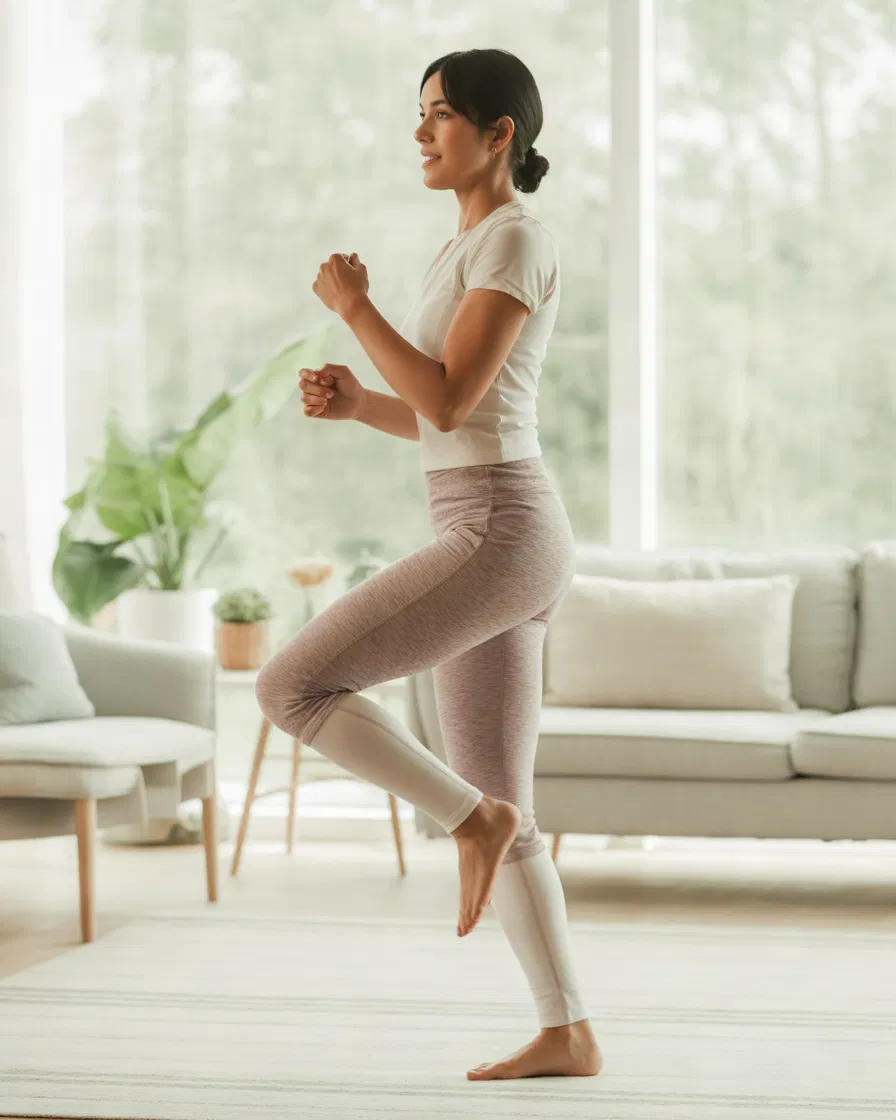
Marching in place is one of the easiest low impact workouts at home, especially if you are new to exercise. It requires no equipment, very little space, and no complicated movements.
The exercise involves lifting one knee at a time while remaining in the same position. You can perform it slowly or increase your pace as your fitness improves.
How to perform it:
- Stand upright with your feet approximately hip-width apart.
- Keep your shoulders relaxed and your arms beside your body.
- Lift your right knee comfortably toward your waist.
- Lower your right foot and repeat with your left knee.
- Continue alternating while gently swinging your arms.
Benefits: Marching in place increases movement throughout the body and can contribute to cardiovascular activity. It also encourages coordination and activates the muscles around your hips and legs.
Practical tips: Begin with 30–60 seconds of marching, followed by a short rest. Repeat two or three times. Once comfortable, gradually increase the duration to two or three minutes.
How to apply it: Use marching as a warm-up before strength exercises or as a short movement break during the day. You can also combine it with side steps and gentle arm movements.
Who it may suit: Beginners, people returning to exercise, and individuals who want a simple indoor cardio option.
Important considerations: Avoid lifting your knees higher than feels comfortable. If balance is a concern, march beside a sturdy chair or countertop for support.
2. Side Steps With Arm Reaches for Gentle Full-Body Movement
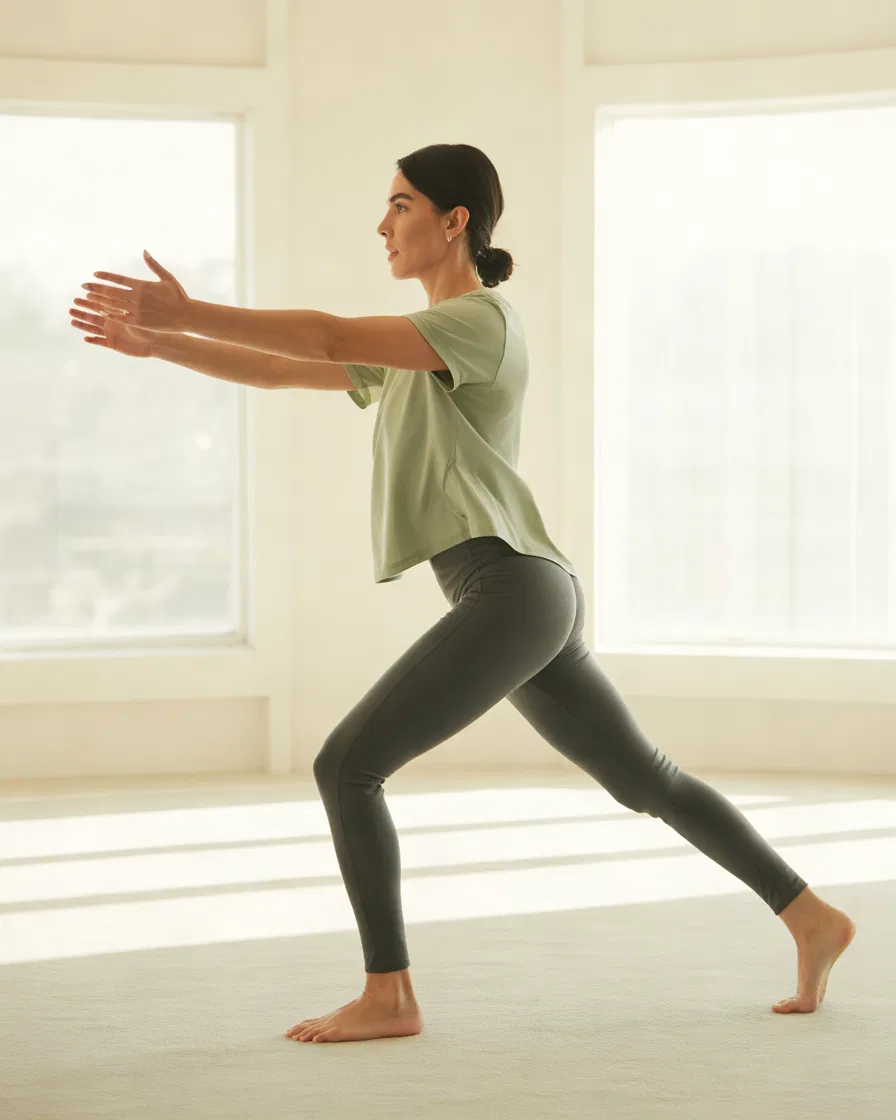
Side steps with arm reaches are a useful addition to a low-impact home exercise routine because they combine simple leg movements with upper-body activity.
Unlike jumping jacks, this exercise does not require you to jump or land repeatedly. You simply step from side to side while moving your arms in a controlled manner.
It is also easy to adjust according to your available space and fitness level.
How to perform it:
- Stand with your feet together and your arms relaxed.
- Step to your right with your right foot.
- Bring your left foot toward your right foot without crossing your legs.
- Raise both arms outward or overhead as you step.
- Repeat the movement toward your left side.
- Continue alternating sides at a comfortable pace.
Benefits: This exercise encourages coordination, increases daily movement, and engages the muscles of your legs, shoulders, and arms. It can also provide a gentle cardiovascular challenge.
Practical tips: Start with 30 seconds of side stepping. Keep your movements smooth rather than rushing. If raising your arms overhead feels uncomfortable, reach only to shoulder height.
How to apply it: Perform two or three rounds between strength exercises. For example, alternate one minute of side steps with one set of chair squats.
Who it may suit: Beginners, people who enjoy rhythmic exercise, and anyone looking for a simple alternative to traditional jumping jacks.
Important considerations: Keep your steps relatively small if you have limited balance or hip mobility. Exercise on a nonslip surface and avoid twisting your knees.
3. Step-Back Toe Taps for Low Impact Cardio and Coordination
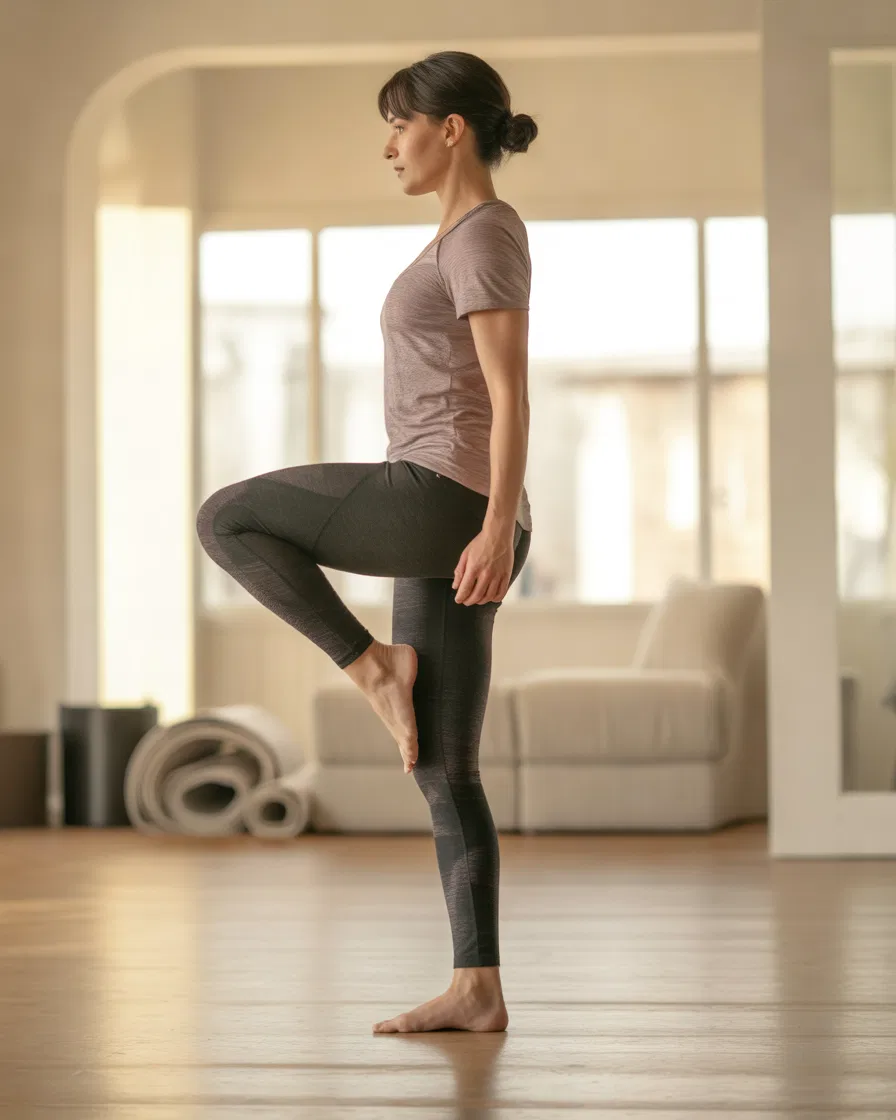
Step-back toe taps are a practical way to introduce more movement into your home workout without performing lunges or jumping exercises.
The movement involves stepping one foot backward, touching the floor with your toes, and returning to your starting position. You then repeat the action with the opposite foot.
It is a controlled exercise that can be performed at different speeds.
How to perform it:
- Stand upright with your feet hip-width apart.
- Shift your weight gently onto your right foot.
- Move your left foot backward and touch the floor with your toes.
- Return your left foot to its starting position.
- Repeat with your right foot.
- Continue alternating while maintaining a comfortable rhythm.
Benefits: Step-back toe taps encourage lower-body movement and coordination. They also provide an opportunity to practise controlled weight shifting, which is useful for developing movement confidence.
Practical tips: Begin with 10–12 repetitions per side. Keep your movements small and avoid stepping too far backward. You can add gentle arm swings to increase upper-body involvement.
How to apply it: Include this exercise in a 10–15-minute beginner cardio session. Alternate it with marching in place to create variety without increasing impact.
Who it may suit: Beginners and individuals who want a simple exercise that combines gentle cardio with coordination practice.
Important considerations: If you experience discomfort in your knees or hips, reduce the stepping distance. Use a stable support nearby if you feel unsteady.
4. Chair Sit-to-Stands for Lower-Body Strength
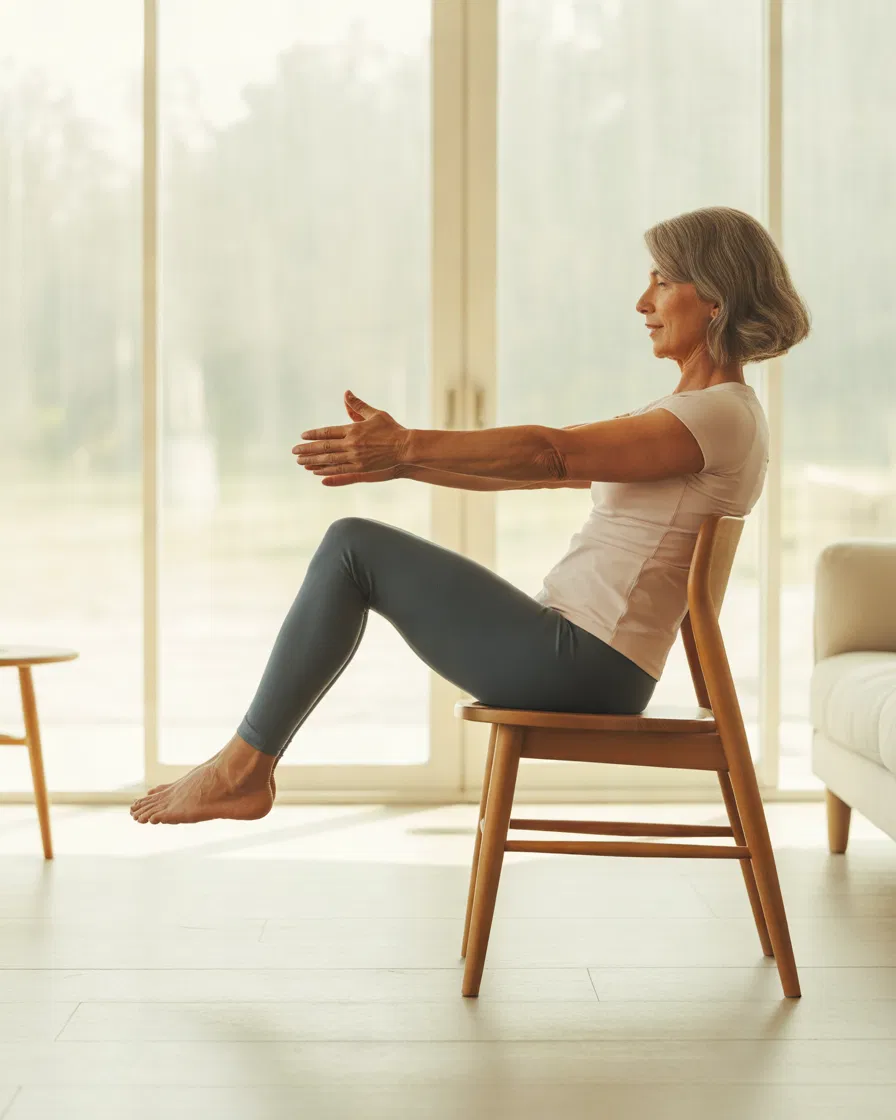
Chair sit-to-stands are among the most practical bodyweight exercises for a low impact workout at home. They involve sitting down and standing up from a sturdy chair using controlled movements.
This exercise resembles an everyday activity, making it particularly useful for practising functional lower-body strength.
You do not need dumbbells or gym equipment. A stable chair is enough.
How to perform it:
- Place a sturdy chair against a wall to prevent it from moving.
- Sit near the front of the seat with your feet flat on the floor.
- Position your feet approximately hip-width apart.
- Lean your upper body slightly forward.
- Push through your feet and stand up slowly.
- Gently lower yourself back into the chair.
Benefits: Sit-to-stands engage the quadriceps, glutes, and other muscles involved in standing and sitting. Regular strength training can support functional movement and everyday independence.
Practical tips: Start with five to eight repetitions. Use your hands on the chair or armrests for assistance if necessary. As your control improves, try completing the movement without using your hands.
How to apply it: Perform two sets of eight to ten repetitions, with enough rest between sets. Include it two or three times per week as part of a balanced strength routine.
Who it may suit: Beginners, older adults, and people who want to practise everyday movement while strengthening their legs.
Important considerations: Choose a chair with a firm seat and stable legs. Avoid allowing your knees to collapse inward. If standing causes pain or dizziness, stop and seek appropriate advice.
5. Wall Push-Ups for Upper-Body Strength at Home
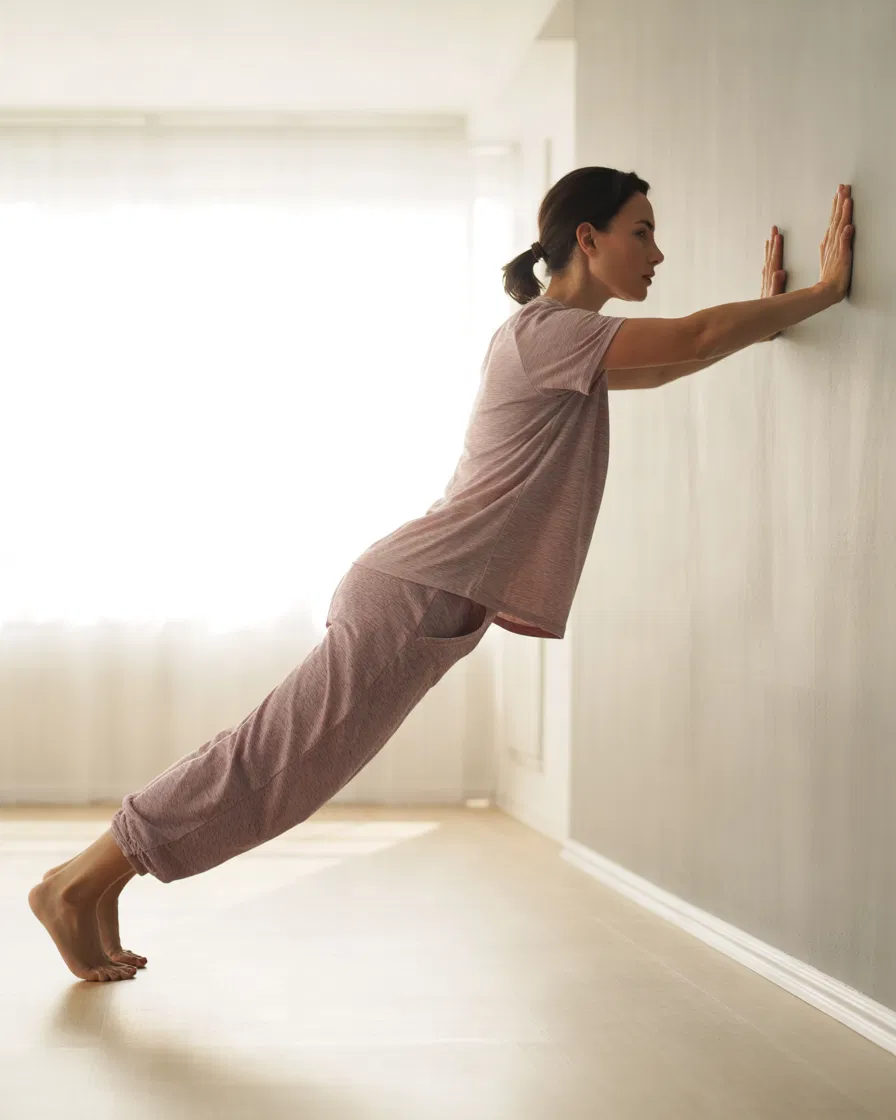
Traditional floor push-ups can feel challenging for beginners because they require considerable upper-body strength and core control. Wall push-ups provide an alternative that allows you to practise a similar pushing movement while standing.
You can adjust the difficulty by changing the distance between your feet and the wall.
How to perform it:
- Stand facing a clear wall.
- Place your palms against the wall at approximately shoulder height.
- Position your hands slightly wider than shoulder-width.
- Step backward until your body forms a gentle diagonal line.
- Bend your elbows and slowly bring your chest toward the wall.
- Push through your palms to return to the starting position.
Benefits: Wall push-ups work the chest, shoulders, and triceps. They also encourage upper-body strength and controlled movement.
Practical tips: Begin with eight to ten repetitions. Keep your body aligned instead of allowing your hips to move forward. Breathe out as you push away from the wall.
How to apply it: Perform two sets of 8–12 repetitions. If you become stronger, move your feet slightly farther from the wall to increase the challenge.
Who it may suit: Beginners, people developing upper-body strength, and individuals who find floor push-ups difficult.
Important considerations: Keep your wrists comfortable and your elbows slightly angled rather than flaring them directly outward. Stop if you experience shoulder or wrist pain.
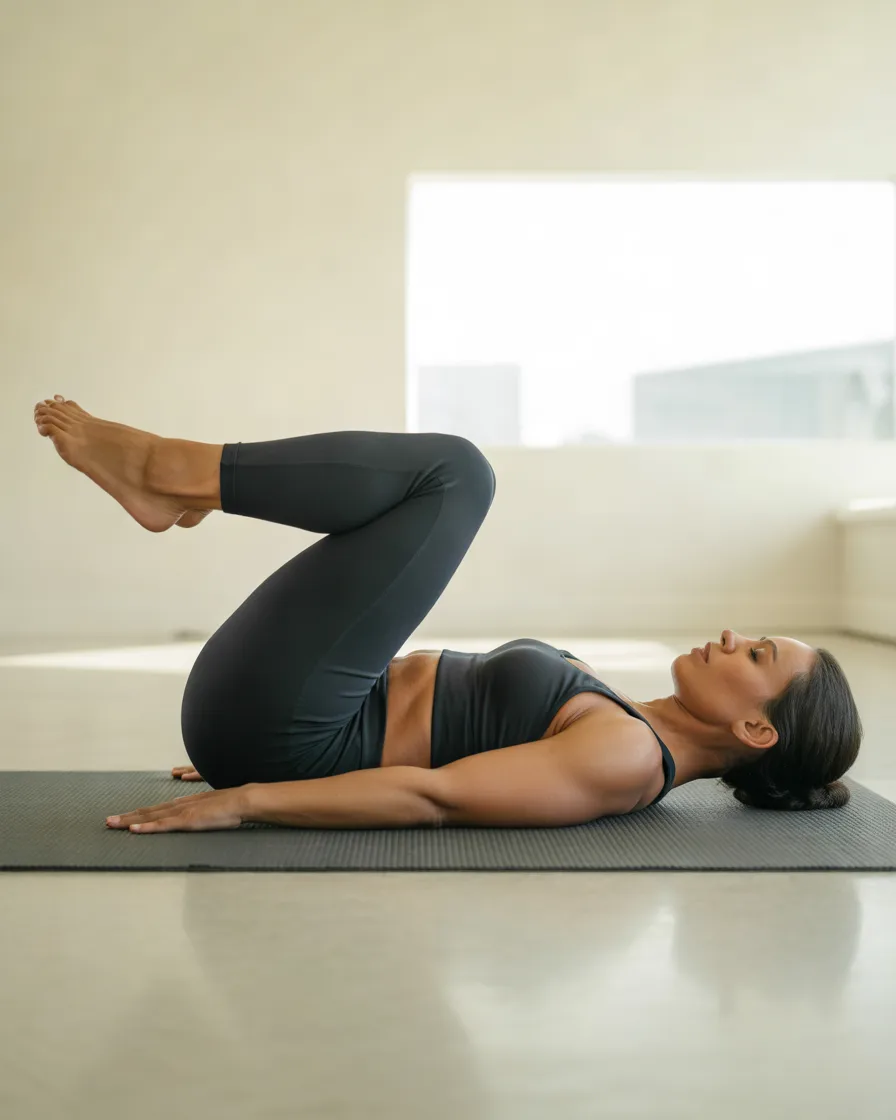
6. Glute Bridges for Hip and Core Strength
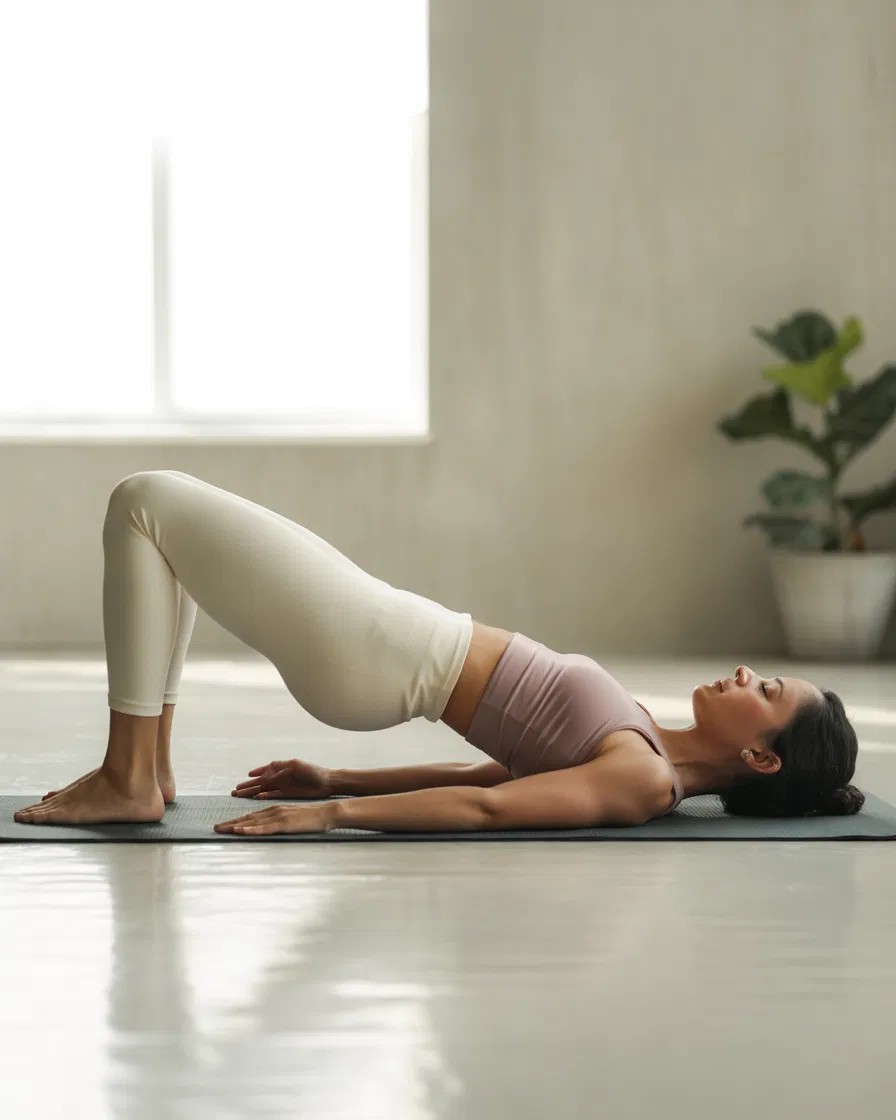
Glute bridges are a floor-based exercise that focuses on the muscles around your hips and buttocks. They are performed while lying on your back, making them a useful option when you want to include lower-body strength training without standing throughout the entire workout.
Although the movement looks simple, proper technique is important.
How to perform it:
- Lie on your back on a comfortable exercise mat.
- Bend your knees and place your feet flat on the floor.
- Keep your feet approximately hip-width apart.
- Rest your arms beside your body.
- Tighten your abdominal muscles gently.
- Lift your hips until your body forms a comfortable diagonal line from shoulders to knees.
- Pause briefly, then lower your hips slowly.
Benefits: Glute bridges activate the gluteal muscles and involve the muscles around your trunk and hips. They can help develop lower-body strength and movement control.
Practical tips: Start with eight to ten repetitions. Focus on lifting through your hips rather than arching your lower back. Hold the raised position for one or two seconds if comfortable.
How to apply it: Complete two sets of 10–12 repetitions during a strength-focused workout. Allow yourself adequate recovery between sets.
Who it may suit: People looking for a floor-based strength exercise, beginners who are comfortable getting down to the floor, and those wanting to add variety to lower-body training.
Important considerations: Avoid pushing your hips higher than your comfortable range. If lying down or getting up from the floor is difficult, choose another exercise or consult a qualified professional for an appropriate modification.
7. Bird-Dog Exercise for Core Stability and Balance
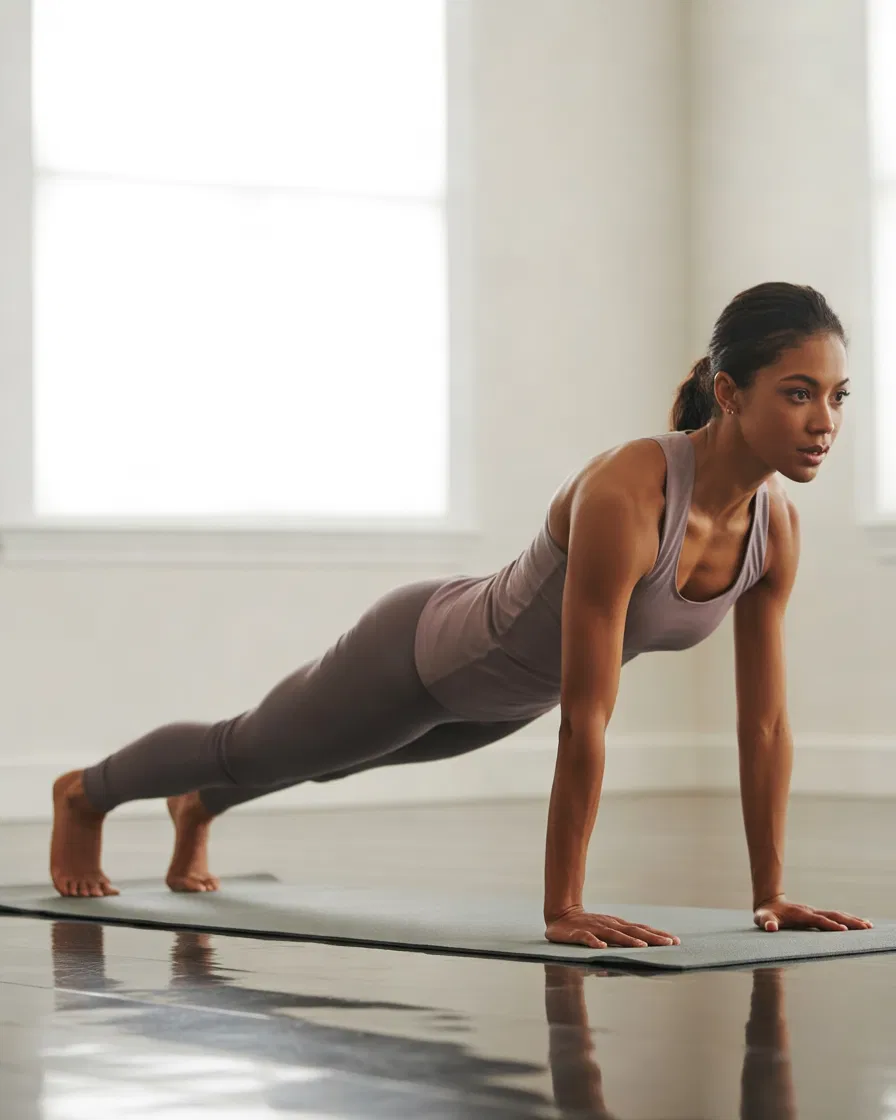
The bird-dog exercise is a controlled bodyweight movement that involves extending the opposite arm and leg while maintaining a stable position on your hands and knees.
It is often included in beginner-friendly core routines because it focuses on maintaining control rather than performing fast or forceful movements.
How to perform it:
- Begin on your hands and knees on an exercise mat.
- Position your hands under your shoulders and knees under your hips.
- Keep your back in a comfortable neutral position.
- Slowly extend your right arm forward.
- At the same time, extend your left leg backward.
- Pause briefly without allowing your hips to rotate.
- Return to the starting position and switch sides.
Benefits: Bird-dog movements engage the abdominal and back muscles while challenging coordination and balance. They also encourage controlled movement of the arms and legs.
Practical tips: Begin with five to eight repetitions on each side. You do not need to lift your arm and leg very high. Maintaining a steady trunk is more important than achieving a large range of motion.
How to apply it: Include two sets in a core-focused home workout. If the full movement is difficult, practise extending only one arm or one leg at a time.
Who it may suit: People who want to practise core control, beginners comfortable with floor exercises, and individuals looking for a slower alternative to traditional abdominal exercises.
Important considerations: Use a padded mat to improve comfort. If kneeling bothers your knees or placing weight on your wrists causes discomfort, select another exercise.
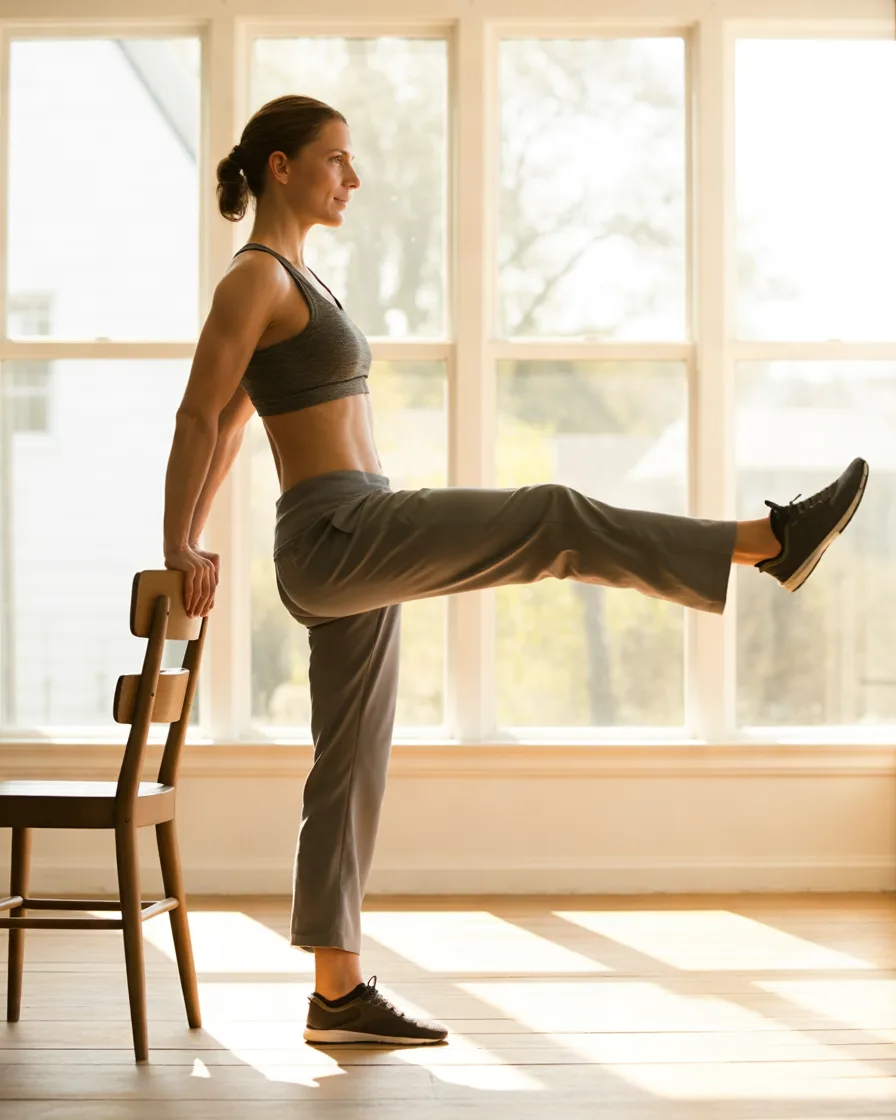
8. Standing Side Leg Raises for Hip Strength and Balance
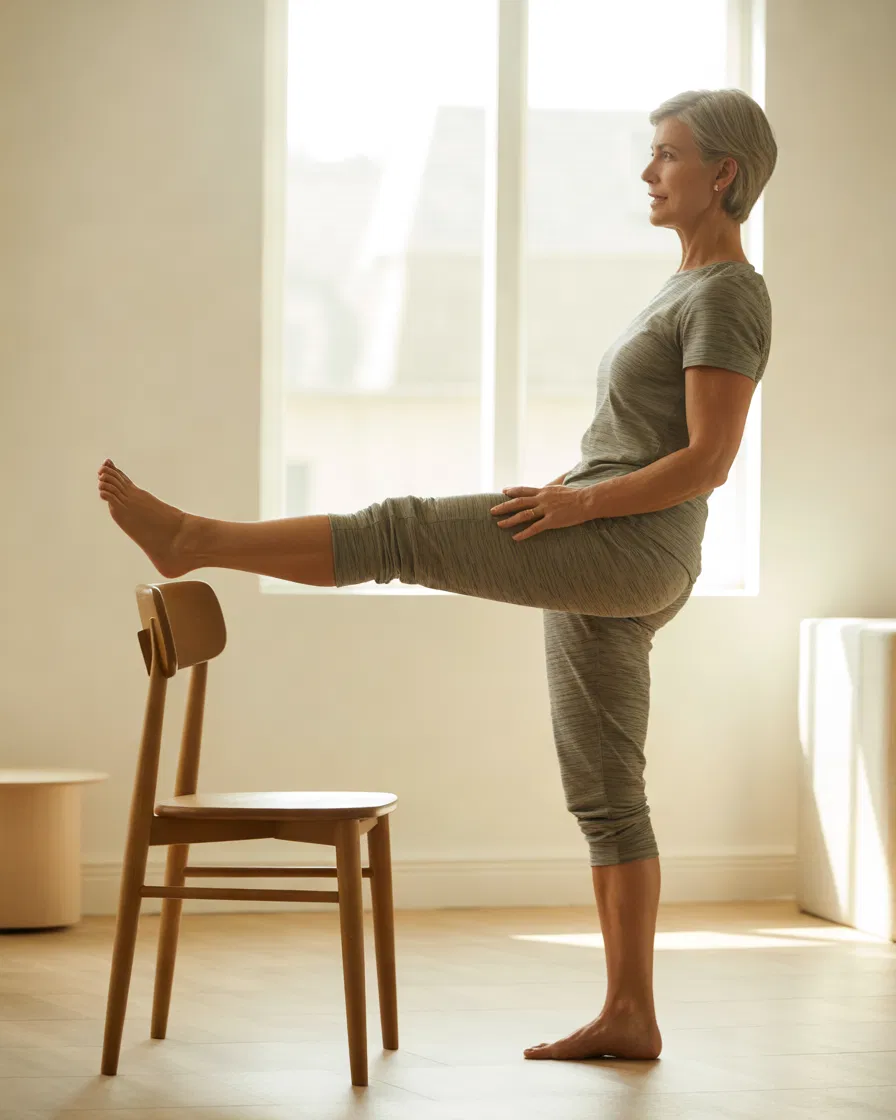
Standing side leg raises are a simple exercise that targets the muscles on the outer sides of your hips. They also give you an opportunity to practise maintaining balance while moving one leg independently.
The exercise does not require jumping, fast movements, or special equipment.
How to perform it:
- Stand upright beside a sturdy chair or countertop.
- Place one hand on the support if needed.
- Keep your feet facing forward.
- Slowly lift your right leg out to the side.
- Avoid leaning your upper body in the opposite direction.
- Lower your leg with control.
- Complete your repetitions and switch sides.
Benefits: Side leg raises work the hip-abductor muscles, which help control sideways leg movement and support pelvic stability. They also provide a simple opportunity to practise standing balance.
Practical tips: Begin with eight to ten repetitions on each side. Keep your toes pointing forward and use a small range of motion. Focus on control rather than lifting your leg as high as possible.
How to apply it: Perform two sets on each side after marching or chair sit-to-stands. Include the exercise in a lower-body routine two or three times per week.
Who it may suit: Beginners, people who prefer standing exercises, and individuals looking to include hip-strengthening movements in their home routine.
Important considerations: Avoid swinging your leg or leaning your body. If you experience hip discomfort, reduce the movement range or choose another exercise.
9. Calf Raises for Lower-Leg Strength and Stability

Calf raises are an accessible standing exercise that targets the muscles at the back of your lower legs. They are particularly convenient because you can perform them beside a wall, kitchen counter, or sturdy chair.
The movement involves lifting your heels off the floor and slowly lowering them again.
How to perform it:
- Stand upright with your feet hip-width apart.
- Place your fingertips on a stable support if needed.
- Keep your knees relaxed rather than locked.
- Slowly raise both heels off the floor.
- Balance on the balls of your feet.
- Pause briefly at the top.
- Lower your heels slowly and return to the starting position.
Benefits: Calf raises strengthen the calf muscles, which contribute to walking, climbing stairs, and other everyday movements. They can also help you practise controlled balance while standing.
Practical tips: Start with 10 repetitions and gradually increase to 12–15. Keep your movements slow and avoid bouncing at the top or bottom.
How to apply it: Perform two sets during your lower-body workout. You can also include a few repetitions during a short movement break.
Who it may suit: Beginners, people wanting to strengthen their lower legs, and individuals looking for a simple standing exercise.
Important considerations: Use support if your balance is limited. If you have ankle, Achilles tendon, or foot problems, check with a healthcare professional before adding calf raises to your routine.
10. Seated Marching With Arm Punches for Chair-Based Cardio
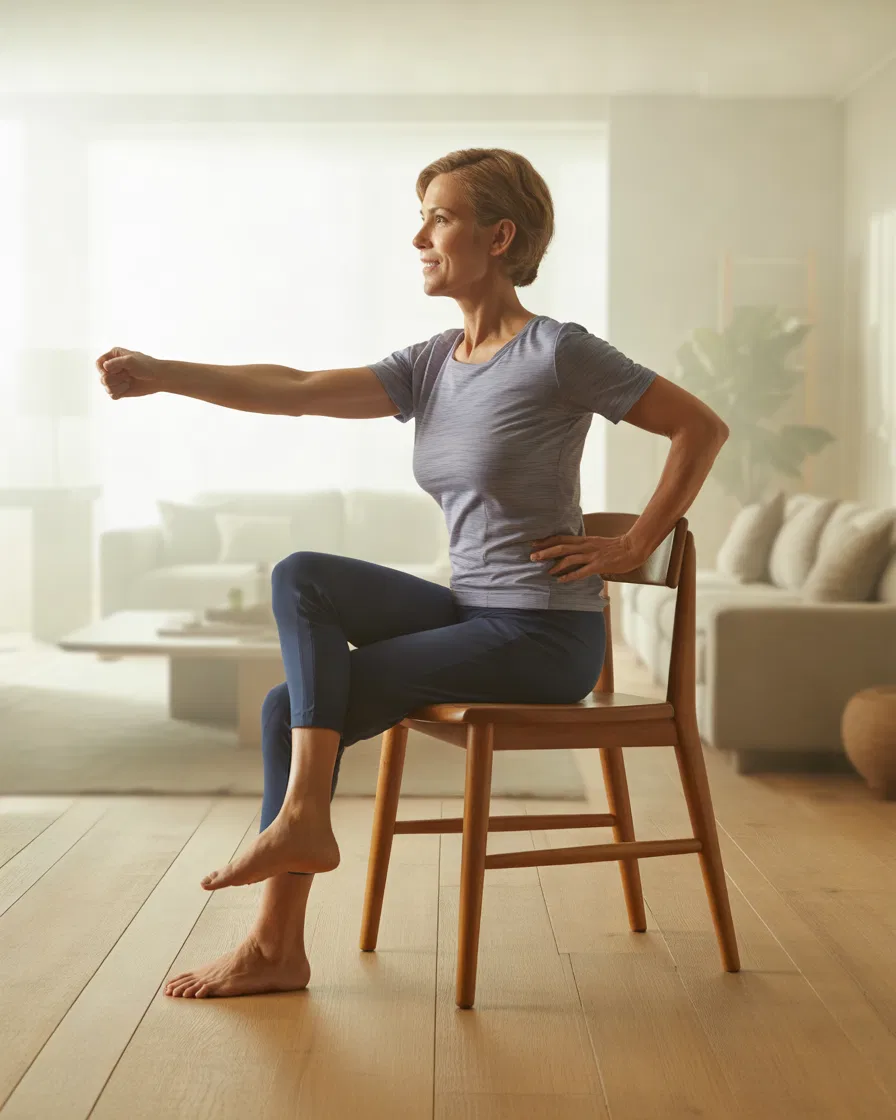
Seated marching with arm punches is a useful option when you prefer exercising from a chair or need a break from standing movements.
It combines alternating knee lifts with controlled forward arm movements. You can adjust the pace and range of motion according to your comfort.
This exercise also makes it easier to incorporate movement into a busy day.
How to perform it:
- Sit toward the front of a sturdy chair.
- Keep your back comfortably upright and your feet flat on the floor.
- Lift your right knee slightly.
- Lower it and repeat with your left knee.
- As you alternate your knees, gently extend one arm forward at a time.
- Continue at a steady, comfortable pace.
Benefits: Seated marching encourages movement in the legs and hips, while the arm movements involve the shoulders and upper body. Depending on your pace and duration, it can contribute to cardiovascular activity.
Practical tips: Start with 30–45 seconds. Keep your movements controlled and avoid leaning backward. If raising your knees is uncomfortable, lift your feet only slightly from the floor.
How to apply it: Perform two or three short rounds, resting between them. You can combine seated marching with gentle shoulder rolls and seated leg extensions.
Who it may suit: Beginners, people who prefer chair-based movement, and individuals who find prolonged standing uncomfortable.
Important considerations: Choose a stable chair without wheels. Avoid forcing your knees upward or extending your arms too quickly. If you have a medical condition affecting movement, ask a healthcare professional about suitable adaptations.
A Simple 20-Minute Low Impact Workout at Home for Beginners
Knowing individual exercises is helpful, but combining them into a simple routine makes it easier to build consistency.
You do not need to perform all 10 exercises every day. Instead, choose a balanced combination that includes cardio, upper-body strength, lower-body strength, and core movements.
Here is an example of a beginner-friendly 20-minute session.
1. Warm-up – 4 minutes
- March slowly in place for 2 minutes.
- Perform gentle shoulder rolls for 30 seconds.
- Complete controlled side steps for 1 minute.
- Perform comfortable ankle movements for 30 seconds.
2. Main workout – 12 minutes
Complete the following exercises at a comfortable pace:
- Marching in place: 1 minute.
- Side steps with arm reaches: 1 minute.
- Chair sit-to-stands: 1 minute.
- Wall push-ups: 1 minute.
- Standing side leg raises: 1 minute.
- Seated marching with arm punches: 1 minute.
Rest briefly between exercises as needed, then repeat the sequence once.
3. Cool-down – 4 minutes
- Walk slowly around your room or march gently.
- Perform comfortable shoulder movements.
- Gently stretch your calves.
- Take relaxed breaths and allow your breathing to return toward normal.
You can shorten the session if 20 minutes feels too demanding. The important thing is to choose an amount of activity that you can manage comfortably and build gradually.
Expert Tips for Getting Better Results From Low Impact Workouts at Home
Low-impact exercise works best when you approach it as a consistent part of your lifestyle rather than a short-term challenge. These practical suggestions can help you make your routine more manageable.
1. Start With Your Current Fitness Level
Do not compare your starting point with someone else’s workout routine. If you have not exercised regularly, begin with five or ten minutes of gentle movement.
As your body becomes accustomed to exercise, gradually increase the duration or number of repetitions.
2. Focus on Proper Exercise Technique
Correct movement is more important than completing a large number of repetitions. Keep your posture comfortable, avoid rushing, and control both the lifting and lowering phases of each movement.
If you are unsure about an exercise, consider guidance from a qualified fitness professional.
3. Combine Cardio and Strength Exercises
A balanced routine should not focus exclusively on cardio. Include movements such as chair sit-to-stands, wall push-ups, and glute bridges to challenge different muscle groups.
Cardiovascular activity and muscle-strengthening exercises serve different purposes, so including both creates a more complete routine.
4. Make Small Changes to Increase Difficulty
Once an exercise becomes comfortable, make one gradual adjustment at a time.
For example:
- Increase marching duration from one minute to 90 seconds.
- Add two repetitions to a strength exercise.
- Perform side steps at a slightly quicker pace.
- Add another set after allowing adequate recovery.
Avoid increasing duration, intensity, and repetitions all at once.
5. Schedule Recovery Days
Your muscles need time to recover after strength-focused sessions. Alternate demanding workout days with lighter movement, such as gentle walking or mobility exercises.
Recovery is particularly important when you are beginning a new fitness routine.
6. Choose Comfortable Clothing and Footwear
Wear clothing that allows unrestricted movement. Choose supportive footwear appropriate for your activity and exercise on a stable, nonslip surface.
Remove loose rugs and other objects that could cause you to trip.
7. Pay Attention to Your Breathing
Try not to hold your breath during strength exercises. Breathe naturally and avoid straining. For example, breathe out while pushing away from the wall during a wall push-up.
You should be able to adjust the intensity according to how you feel.
8. Track Consistency Rather Than Perfection
A short workout completed regularly can be more useful than an ambitious routine that becomes difficult to maintain.
Keep a simple record of your exercise days, session duration, and movements you find comfortable. This helps you notice gradual improvements without placing unnecessary pressure on yourself.
How Often Should You Do Low Impact Workouts at Home?
The appropriate exercise frequency depends on your current fitness level, health, recovery, and workout intensity.
For general health, the CDC recommends that adults aim for at least 150 minutes of moderate-intensity aerobic activity each week, alongside muscle-strengthening activities on at least two days.
These minutes can be divided into shorter sessions throughout the week. You do not need to complete all your activity in one workout.
For example, a beginner might start with:
- Monday: 10–15 minutes of gentle cardio.
- Tuesday: Light strength exercises.
- Wednesday: Rest or comfortable walking.
- Thursday: 15–20 minutes of low-impact movement.
- Friday: Strength and balance exercises.
- Saturday: Gentle dancing or indoor walking.
- Sunday: Rest or light movement.
This is only an example, not a fixed prescription. You can adjust the schedule according to your abilities and recovery needs.
The key is to build a routine that includes regular movement without leaving you excessively tired or uncomfortable.
Frequently Asked Questions About Low Impact Workouts at Home
1. What is the best low impact workout at home for beginners?
Marching in place is one of the easiest starting options because it requires no equipment and allows you to control your pace. Wall push-ups and chair sit-to-stands are also useful beginner-friendly movements.
Start with short sessions and increase your activity gradually.
2. Can low impact workouts help with weight management?
Low-impact workouts can contribute to overall physical activity and energy expenditure. However, changes in body weight depend on several factors, including nutrition, daily movement, sleep, genetics, and consistency.
Combining regular exercise with balanced eating habits may support long-term weight-management goals. No individual exercise guarantees weight loss.
3. Can I do low impact workouts every day?
You can include gentle movement in your daily routine, provided it is appropriate for your fitness level and health.
However, strength-focused workouts should allow sufficient recovery. You can alternate strength sessions with lighter activities such as comfortable walking, gentle dancing, or mobility exercises.
4. Are low impact workouts suitable for older adults?
Many low-impact exercises can be adapted for older adults. Seated marching, supported calf raises, and chair sit-to-stands are examples of movements that may be appropriate.
However, individual abilities vary. Older adults with balance problems, joint conditions, or other health concerns should seek professional guidance before beginning a new routine.
5. Can I get a good cardio workout without jumping?
Yes. Marching in place, side steps, seated marching, and controlled dancing can increase your heart rate without repeated jumping.
The intensity depends on your pace, movement range, and workout duration. You can make these exercises more challenging gradually while maintaining control.
6. How long should a beginner exercise at home?
A beginner can start with five to ten minutes of manageable movement and gradually increase the duration.
Some people may progress toward 20–30-minute sessions, while others may benefit from several shorter sessions throughout the day. Your starting point should reflect your individual fitness and health.
7. Do I need equipment for low impact workouts?
No. Most of the exercises in this guide use body weight alone.
A sturdy chair, exercise mat, and supportive footwear can make certain movements more comfortable, but expensive equipment is not necessary.
8. Are low impact workouts suitable for people with knee discomfort?
Some low-impact exercises may be more comfortable than activities involving jumping or running. However, the term low impact does not mean an exercise is automatically safe for every knee problem.
Choose movements that do not aggravate your symptoms, avoid forcing painful ranges of motion, and consult a healthcare professional or physiotherapist for individual recommendations.
9. Can low impact workouts improve muscle strength?
Yes. Exercises such as chair sit-to-stands, wall push-ups, glute bridges, and standing side leg raises challenge different muscle groups.
For continued improvement, gradually adjust repetitions, sets, movement control, or resistance while allowing enough recovery.
10. What should I do before starting a low impact workout at home?
Start with a gentle warm-up, prepare a safe exercise area, wear comfortable clothing, and keep water nearby.
Choose exercises that match your current abilities. If you have an injury, a medical condition, are pregnant or recently gave birth, or have recently undergone surgery, seek appropriate professional advice before beginning.
Stop exercising if you experience pain, dizziness, or feel unwell.
Conclusion: Make Low Impact Workouts Part of Your Daily Routine
Building a fitness routine does not require jumping exercises, expensive equipment, or a gym membership. With a little space and a few simple movements, you can create an effective low impact workout at home.
From marching in place and side steps to chair sit-to-stands, wall push-ups, and glute bridges, these 10 exercises offer different ways to work on cardiovascular fitness, strength, coordination, and movement control.
The most important step is to start at a comfortable level and progress gradually. Choose exercises you enjoy, allow your body enough recovery time, and focus on maintaining good technique.
Consistency matters more than trying to complete the hardest workout. By making manageable movement part of your regular schedule, you can develop a more active lifestyle that supports your overall health and well-being.
Editorial health reference: The activity recommendations and safety guidance in this article are informed by the CDC’s adult physical activity guidelines and NHS exercise guidance. Individual exercise suitability varies.