You do not need an expensive gym membership, complicated machines, or hours of exercise to build a more active lifestyle. Sometimes, all you need is a little floor space, comfortable clothing, and a workout routine you can realistically follow.
A well-designed fat loss workout plan at home can combine cardiovascular exercise, bodyweight strength training, and active recovery to help you improve fitness while supporting your weight-management goals.
The biggest advantage of exercising at home is flexibility. You can work out before breakfast, during a lunch break, or after finishing your daily responsibilities. You can also adjust the exercises to match your fitness level without worrying about keeping up with other people.
However, it is important to understand that exercise alone does not guarantee fat loss. Sustainable weight management generally involves physical activity, balanced nutrition, adequate sleep, and consistent habits. Physical activity increases energy expenditure, while eating habits also influence whether you maintain an overall calorie deficit.
The good news is that you can start with simple movements and gradually increase your workout duration and difficulty.
In this guide, you will discover 10 practical home workouts for fat loss, including beginner-friendly cardio, strength exercises, low-impact routines, and more challenging options. Each workout includes instructions, benefits, practical tips, and modifications to help you choose the movements that suit your needs.
1. Start With an Indoor Walking Workout for Easy Daily Fat Loss Activity
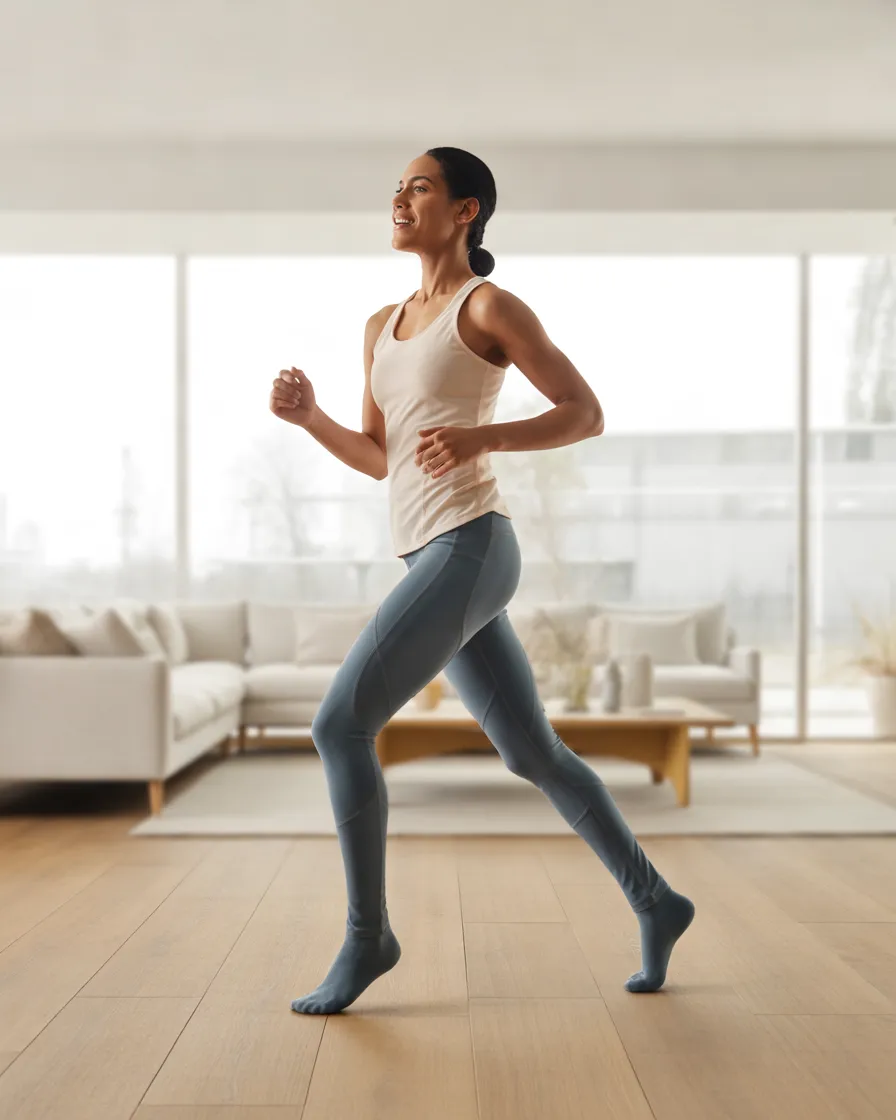
Indoor walking is one of the simplest ways to introduce regular cardiovascular exercise into your routine. You do not need a treadmill or a large workout area. A hallway, living room, or open space can be enough.
This workout is particularly useful if you are new to exercise or prefer a routine that does not involve jumping.
Walking at a comfortable but purposeful pace increases your heart rate and helps you become more physically active. It can also serve as a recovery-friendly activity between more demanding strength workouts.
Benefits:
- Supports cardiovascular fitness.
- Helps increase daily physical activity.
- Provides a lower-impact alternative to jumping exercises.
- Can help improve stamina over time.
- Easy to fit into a busy schedule.
How to do it:
- Begin by marching gently in place for two minutes.
- Walk around your available space for five minutes.
- Increase your pace slightly while swinging your arms naturally.
- Continue at a purposeful pace for another 10–15 minutes.
- Slow down for the final three minutes.
Aim for 15–25 minutes initially, depending on your current fitness level.
Practical tips: Play your favourite music or listen to a podcast to make the session enjoyable. If you spend most of your day sitting, consider adding short walking sessions throughout the day.
Who it may suit: Beginners, people returning to exercise, and anyone looking for an accessible home cardio workout.
Important considerations: Wear supportive footwear and use a clear, non-slippery surface. Increase your walking time gradually rather than trying to complete a long session immediately.
2. Build a Full-Body Squat Workout to Strengthen Your Lower Body
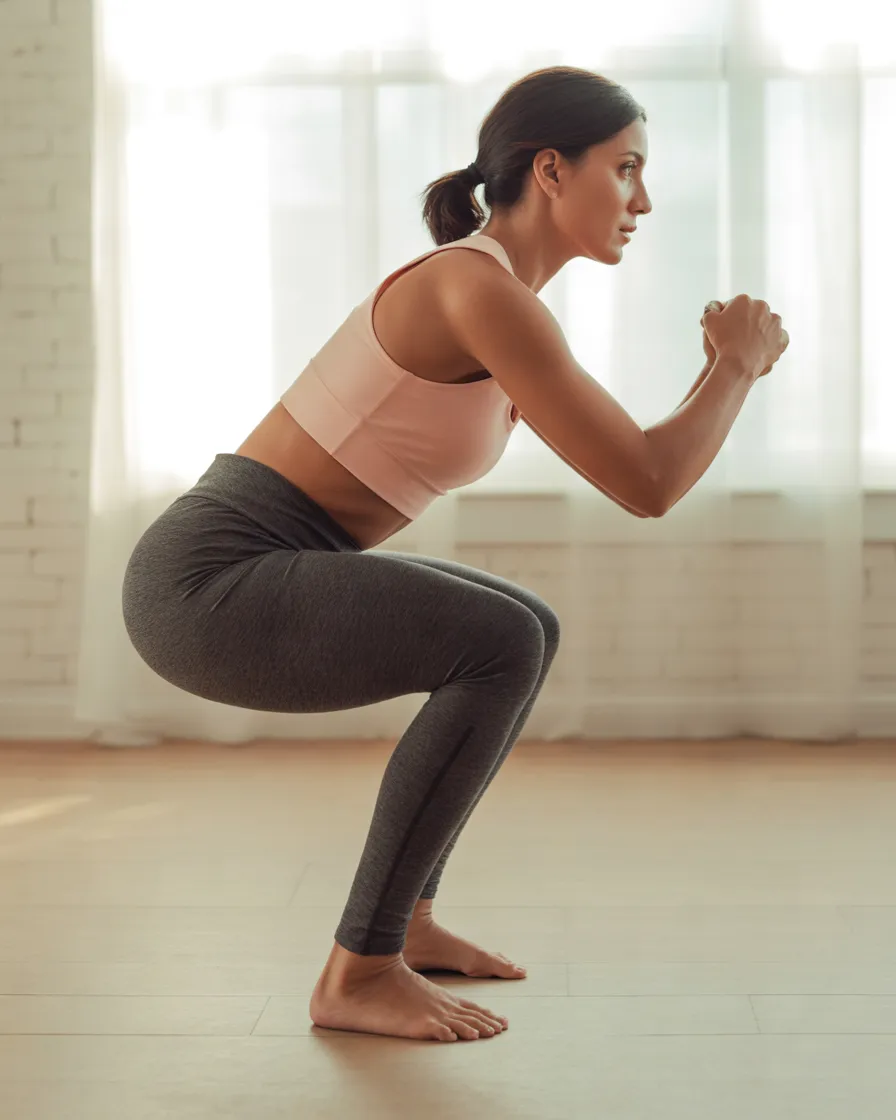
Squats are a useful addition to a home fat loss workout because they engage several large muscle groups, including the quadriceps, glutes, and supporting core muscles.
They are also practical because they require no special equipment. You can begin with regular bodyweight squats and progress to more challenging variations as your strength improves.
Instead of focusing on how many calories one exercise burns, think about squats as a way to develop strength and make your overall workout more effective.
Benefits:
- Strengthens the thighs and glutes.
- Develops lower-body muscular endurance.
- Supports everyday movements such as sitting and standing.
- Requires very little equipment.
- Can be modified for different fitness levels.
How to do it:
- Stand with your feet approximately shoulder-width apart.
- Keep your chest lifted and your abdominal muscles gently engaged.
- Bend your knees and hips as if sitting in a chair.
- Lower yourself only as far as you can comfortably control.
- Push through your feet to return to standing.
Start with two sets of 8–12 repetitions. Rest for approximately 45–60 seconds between sets.
If you are a beginner, use a sturdy chair behind you and practise controlled sit-to-stand movements.
Practical tips: Focus on good technique instead of speed. Keep your knees moving in the same general direction as your toes and avoid allowing them to collapse inward.
Who it may suit: Beginners and intermediate exercisers who want to strengthen their lower body without gym equipment.
Important considerations: If regular squats cause discomfort, try a shallower range of motion or supported chair squats. People with persistent knee or hip problems should seek appropriate professional guidance.
3. Try an Incline Push-Up and Backpack Row Workout for Upper-Body Strength
A balanced home workout should not focus exclusively on the legs. Your chest, shoulders, arms, and back also benefit from regular resistance exercise.
An incline push-up and backpack row combination provides a practical upper-body routine without requiring a complete home gym.
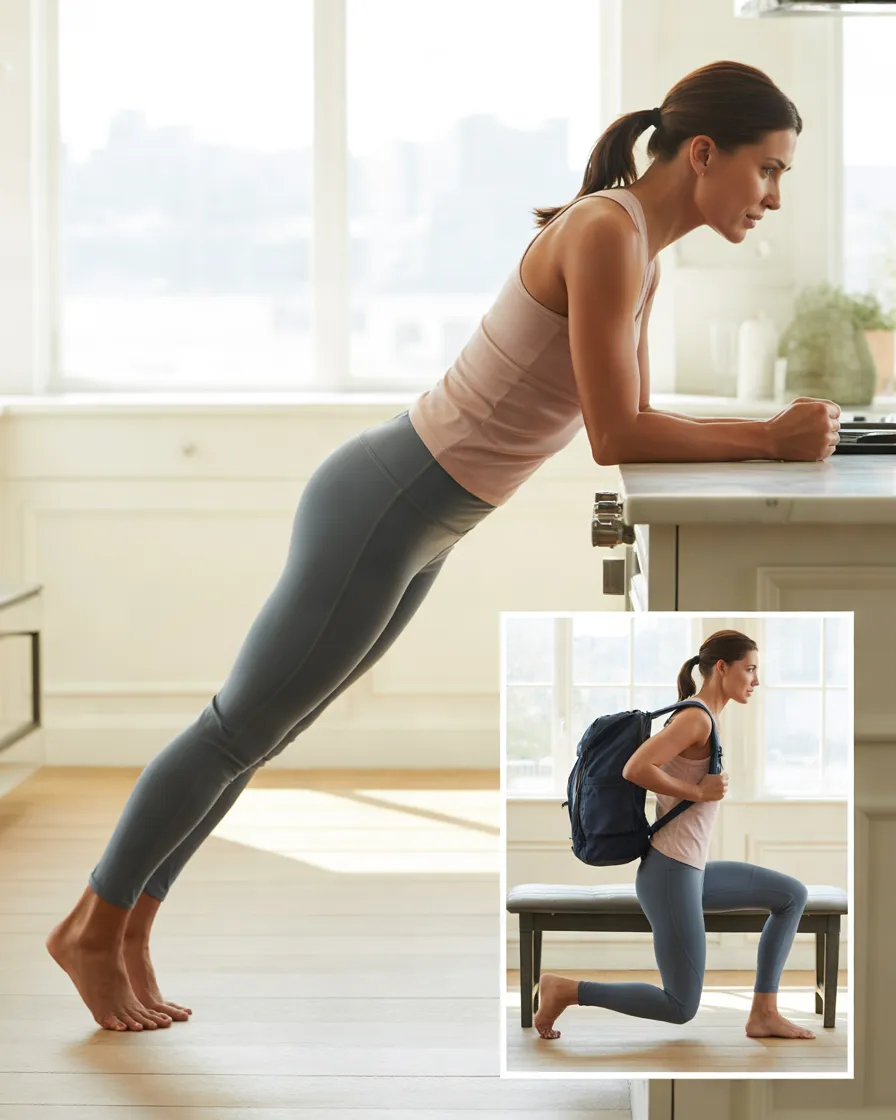
Incline push-ups use an elevated surface to make the traditional push-up more manageable. Backpack rows provide a simple pulling movement that helps train the back muscles.
Benefits:
- Strengthens the chest, shoulders, and arms.
- Develops back strength.
- Helps create a more balanced full-body training routine.
- Provides resistance without expensive equipment.
- Offers beginner-friendly exercise modifications.
How to do it:
For incline push-ups:
- Place your hands on a sturdy kitchen counter or stable exercise bench.
- Step your feet backward until your body forms a straight line.
- Bend your elbows and bring your chest toward the surface.
- Push yourself back to the starting position.
Complete 8–12 repetitions.
For backpack rows:
- Place a few lightweight, secure items inside a backpack.
- Hold the backpack firmly with both hands.
- Hinge forward slightly at your hips while keeping your back neutral.
- Pull the backpack toward your lower ribs.
- Lower it slowly and repeat.
Complete 10–12 repetitions.
Perform two or three rounds of both exercises.
Practical tips: Begin with a lightweight backpack and add resistance only when you can control the movement. A stable counter is generally easier to use than a low or slippery surface.
Who it may suit: People who want to build upper-body strength at home, including beginners who cannot yet perform traditional floor push-ups.
Important considerations: Check that the backpack is securely closed and that its contents cannot move around. Avoid pulling with momentum or rounding your back excessively.
4. Combine Reverse Lunges and Glute Bridges for a Lower-Body Workout
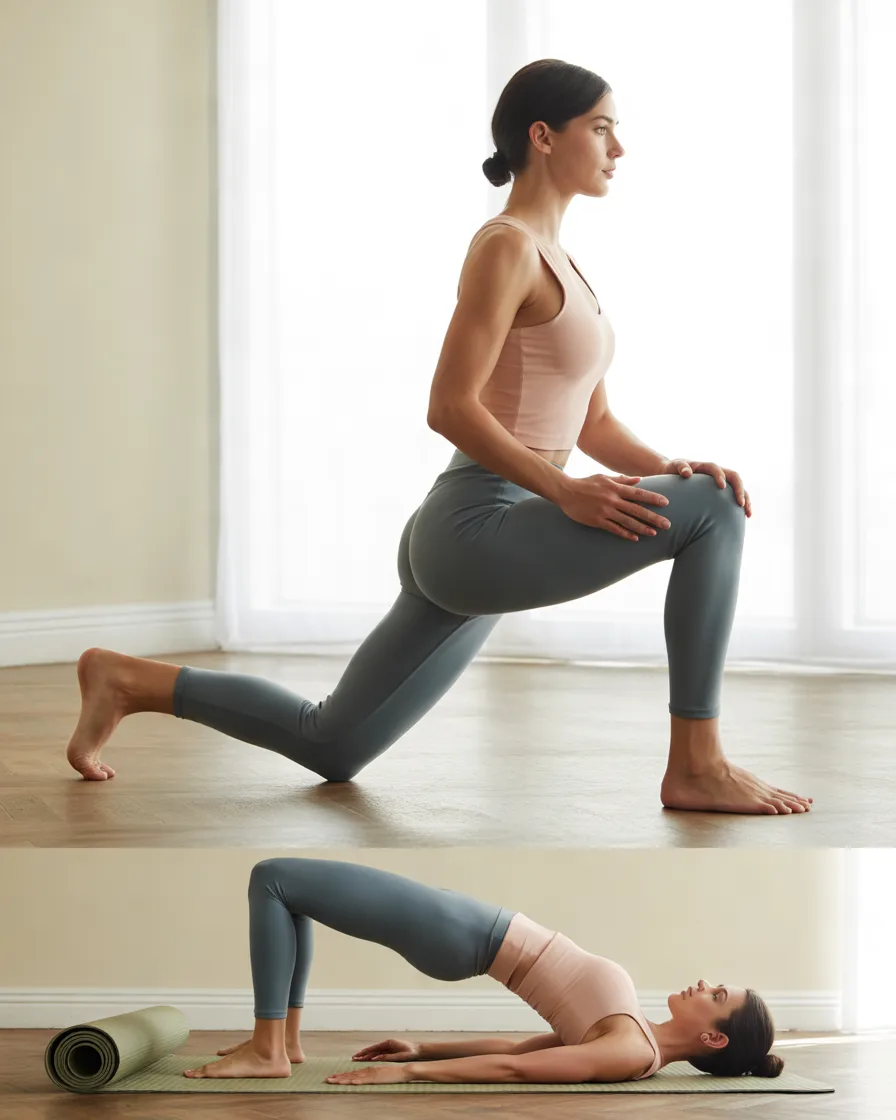
Reverse lunges and glute bridges make a useful combination because they train the lower body through different movement patterns.
Reverse lunges challenge balance and strengthen the legs. Glute bridges focus more directly on the muscles around the hips and buttocks.
Together, they create a practical lower-body session that can be performed in a relatively small space.
Benefits:
- Strengthens the glutes and thighs.
- Improves lower-body muscular endurance.
- Challenges balance and coordination.
- Develops hip strength.
- Complements walking and cardio sessions.
How to do it:
For reverse lunges:
- Stand upright with your feet comfortably apart.
- Step one foot backward.
- Bend both knees gently while maintaining balance.
- Push through your front foot to return to standing.
- Repeat on the opposite side.
Complete 8 repetitions per leg.
For glute bridges:
- Lie on your back with your knees bent.
- Place your feet flat on the floor.
- Gently tighten your abdominal muscles.
- Lift your hips until your shoulders, hips, and knees form a comfortable alignment.
- Lower slowly.
Complete 12–15 repetitions.
Perform two rounds, resting between exercises when necessary.
Practical tips: Use a wall or sturdy support if you need help balancing during reverse lunges. For glute bridges, concentrate on squeezing your glutes rather than arching your lower back.
Who it may suit: Beginners and intermediate exercisers who want to improve lower-body strength and stability.
Important considerations: Lunges may be challenging for people with knee or balance difficulties. Substitute supported split squats or another comfortable movement if necessary.
5. Add a Step-Up Workout to Your Home Cardio Routine
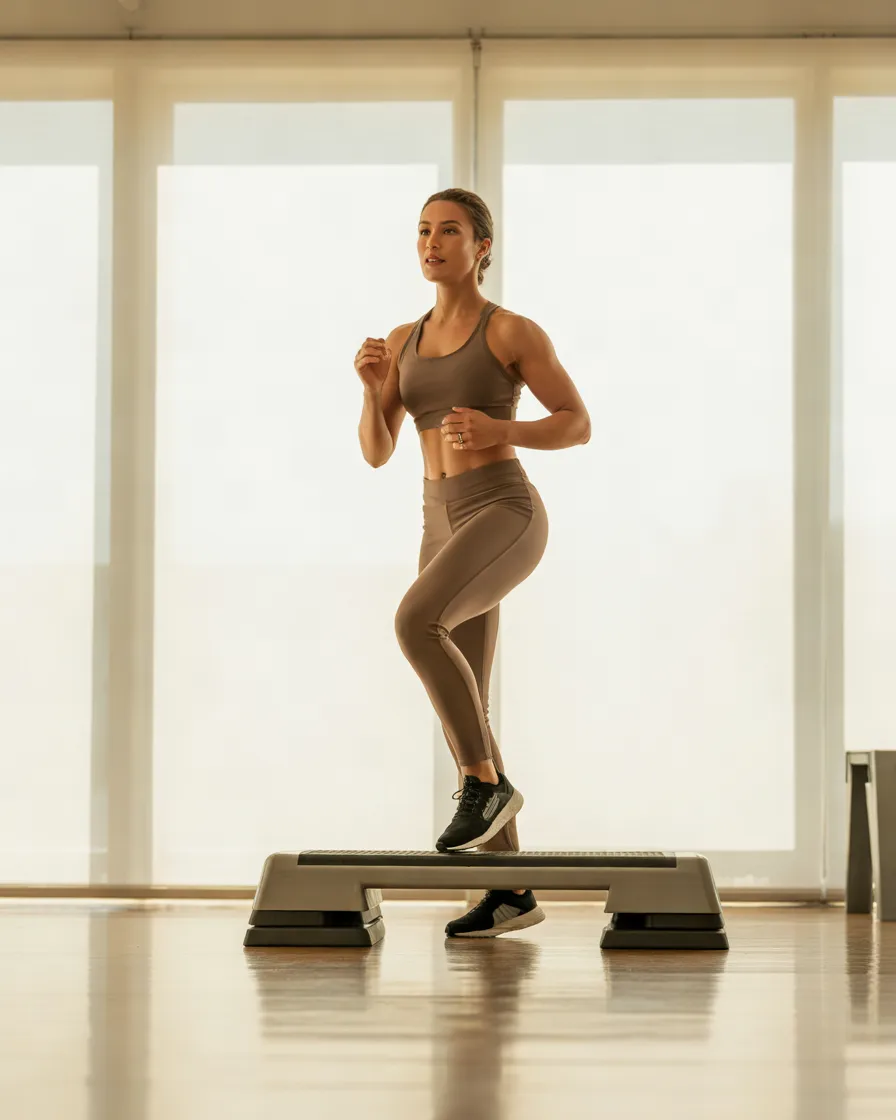
Step-ups are a functional exercise that combines lower-body strength with cardiovascular activity.
The movement is straightforward: step onto a stable elevated platform, stand tall, and step down carefully. Repeated at a controlled pace, it can become a useful part of a home workout for weight loss.
You do not need a tall platform. A low, purpose-built aerobic step is generally preferable to improvised furniture.
Benefits:
- Works the thighs and glutes.
- Challenges balance and coordination.
- Can raise your heart rate.
- Develops functional leg strength.
- Allows you to adjust the intensity through pace and duration.
How to do it:
- Stand in front of a low, stable aerobic step.
- Place your entire leading foot on the platform.
- Push through that foot to step up.
- Bring your other foot onto the platform.
- Step down carefully, one foot at a time.
- Alternate your leading leg.
Begin with 30 seconds of movement followed by 30–45 seconds of rest. Repeat for five rounds.
Practical tips: Start with a low platform and controlled movements. Keep your eyes on the step, especially when learning the exercise.
Who it may suit: People who enjoy simple cardio exercises and want to combine leg strengthening with aerobic activity.
Important considerations: Avoid using unstable chairs, stools, or household objects as stepping platforms. If you experience balance difficulties, try alternating toe taps on the floor instead.
6. Use Shadow Boxing for an Engaging Home Cardio Workout
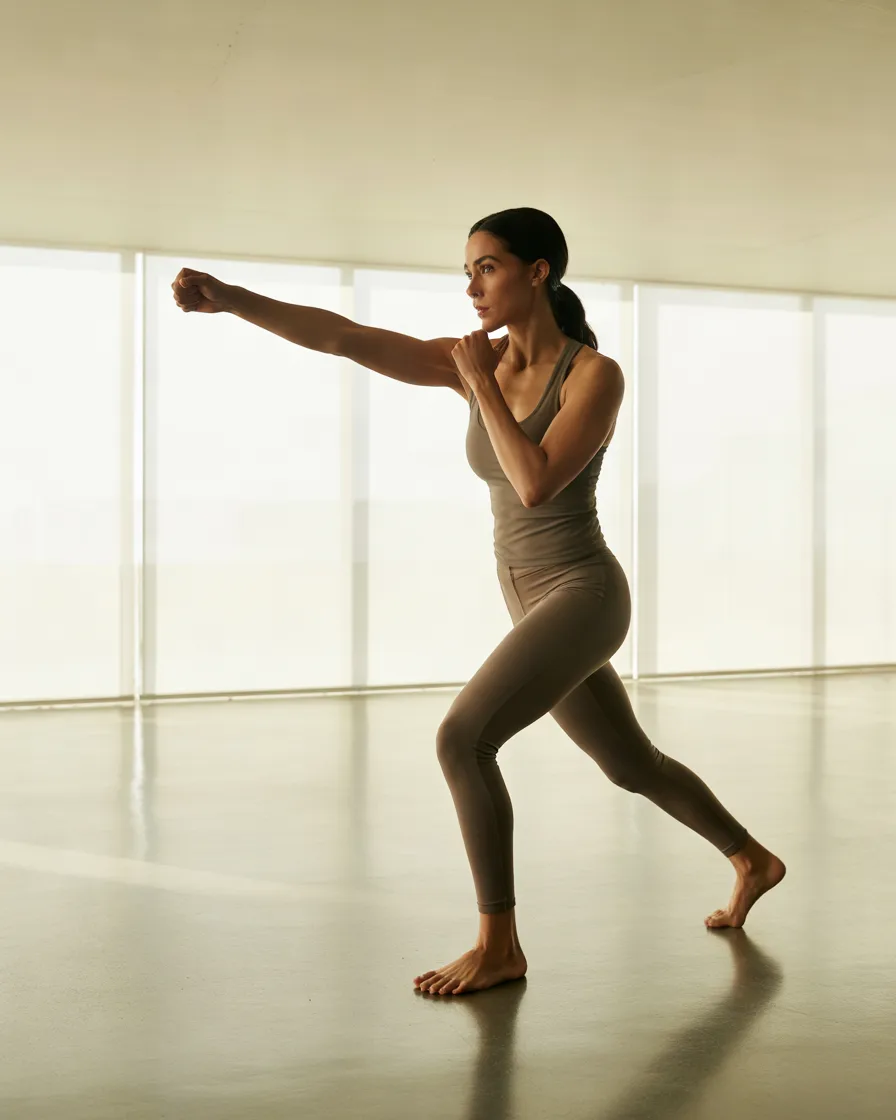
If repetitive exercises make you lose interest, shadow boxing can bring variety into your routine.
Shadow boxing involves practising boxing-style movements without hitting an opponent or using a punching bag. You move your feet, extend controlled punches, and engage your upper body while maintaining a steady rhythm.
It can be performed in a small open area and adjusted to your fitness level.
Benefits:
- Provides cardiovascular exercise.
- Encourages coordination and movement control.
- Engages the shoulders, arms, and core.
- Can improve exercise enjoyment.
- Offers a different option from traditional cardio routines.
How to do it:
- Stand with your feet comfortably apart and knees slightly bent.
- Keep your hands near your face in a relaxed boxing position.
- Extend one arm forward in a controlled straight punch.
- Return your hand to the starting position.
- Alternate arms while making small, comfortable steps.
- Continue moving for 30–60 seconds.
Rest for 30 seconds and repeat for four to six rounds.
As your fitness improves, increase the duration of each round to 90 seconds or two minutes.
Practical tips: Use music with a steady rhythm and concentrate on smooth movements. Keep your shoulders relaxed and avoid locking your elbows when extending your arms.
Who it may suit: People who enjoy energetic workouts, want an alternative to indoor walking, or prefer cardio sessions that feel more like an activity than a traditional exercise routine.
Important considerations: Keep enough space around you to move safely. Avoid uncontrolled twisting or forceful punches, especially if you have shoulder or wrist discomfort.
7. Follow a Low-Impact HIIT Workout Without Excessive Jumping
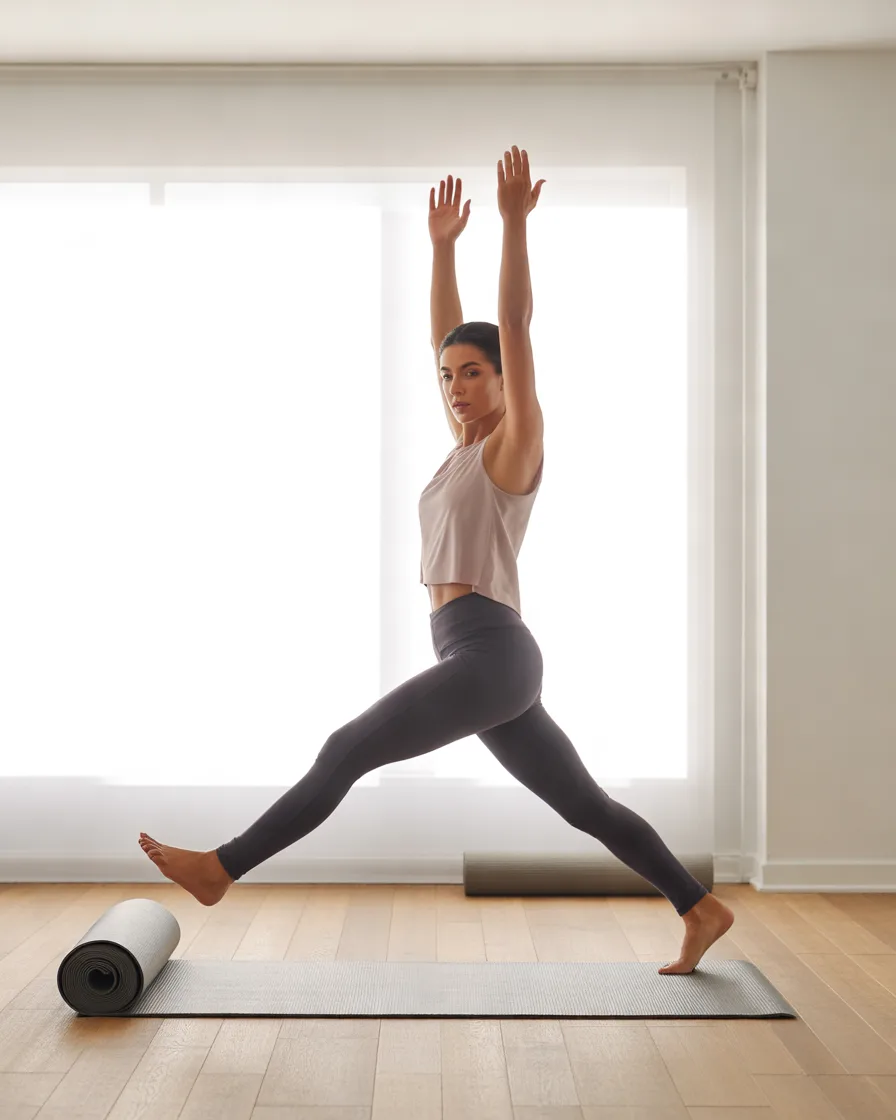
High-intensity interval training, commonly called HIIT, alternates periods of challenging activity with recovery.
However, an effective interval workout does not always need burpees, jumping squats, or intense movements. You can create a low-impact version that increases your activity level while keeping at least one foot on the floor.
This is particularly useful for people who want a structured home workout but are not comfortable with repeated jumping.
Benefits:
- Combines cardiovascular movement with short recovery periods.
- Makes workouts easy to organise.
- Can be completed in a limited amount of time.
- Allows intensity adjustments.
- Offers variety through different movement combinations.
How to do it:
Choose four exercises:
- Marching knee lifts.
- Step-back jacks.
- Squat-to-reach movements.
- Alternating side steps.
Perform each exercise for 30 seconds, followed by 30 seconds of easy recovery.
Complete the four exercises twice for an eight-minute beginner session. If you feel comfortable, gradually increase the number of rounds to three or four.
Practical tips: Start with a moderate effort instead of trying to move as quickly as possible. Maintain control throughout every repetition and take additional rest when needed.
Who it may suit: People who prefer short, structured cardio sessions and want an alternative to high-impact home HIIT workouts.
Important considerations: Interval training can become demanding even without jumping. Beginners should start with fewer rounds and longer recovery periods. It is not necessary to perform HIIT every day.
8. Make Dance Cardio Part of Your Weekly Fat Loss Routine
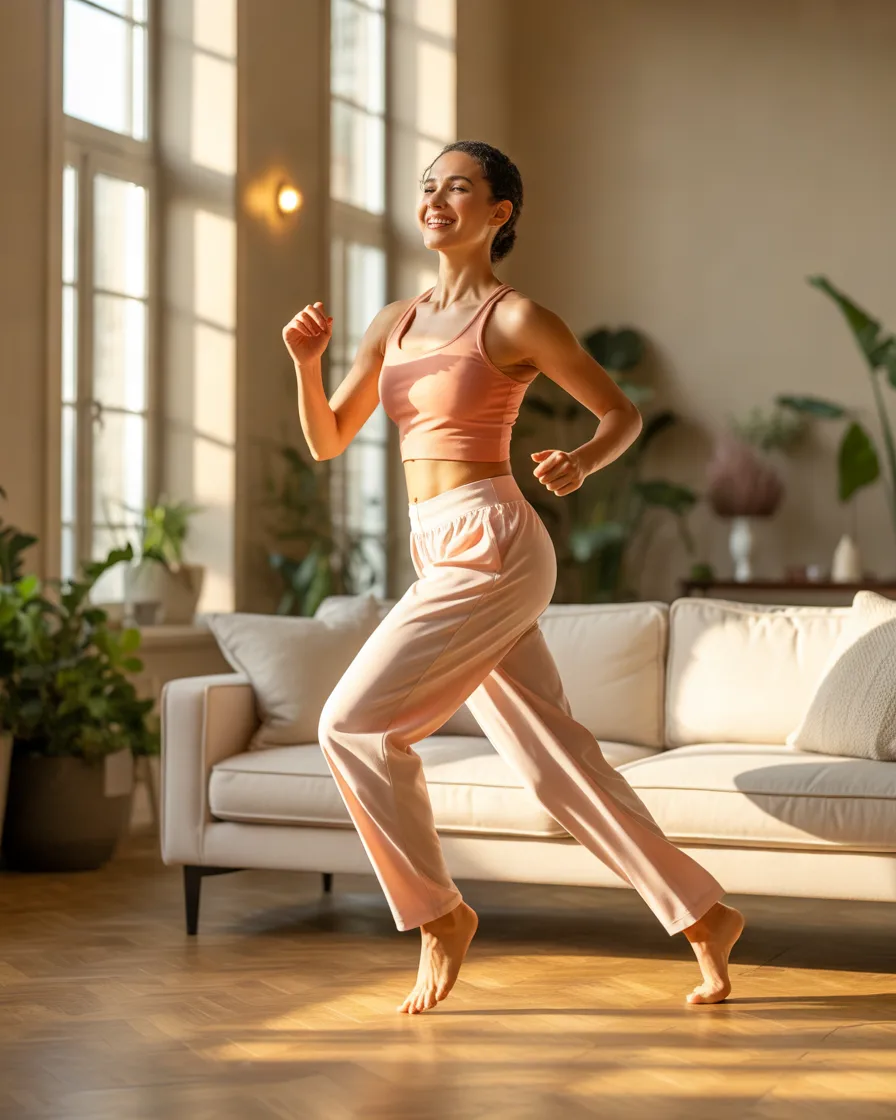
Dance cardio is an enjoyable way to increase movement without following a complicated exercise programme.
You can choose an upbeat playlist, follow a beginner dance routine, or create your own sequence using simple steps. The goal is to keep moving at an intensity that matches your fitness level.
Unlike repetitive workouts, dancing can make exercise feel more entertaining, which may help you maintain a regular routine.
Benefits:
- Provides aerobic activity.
- Encourages coordination and rhythm.
- Engages different muscle groups.
- Can support cardiovascular fitness.
- Makes exercising at home more enjoyable.
How to do it:
- Select three to five upbeat songs.
- Begin with simple side steps.
- Add alternating knee lifts and gentle arm movements.
- Include step touches and controlled turns if comfortable.
- Keep moving throughout the playlist.
- Finish with slower movements to bring your breathing back toward normal.
Start with 10–15 minutes and gradually build toward 25–30 minutes.
Practical tips: Choose music you genuinely enjoy rather than forcing yourself to follow complicated choreography. You can also use beginner dance fitness videos for additional guidance.
Who it may suit: People who dislike traditional workouts, enjoy music, or want an enjoyable alternative to walking and interval training.
Important considerations: Wear supportive shoes and avoid slippery floors. Keep movements simple if you have limited space or balance concerns.
9. Include a Core Stability Workout to Support Better Movement
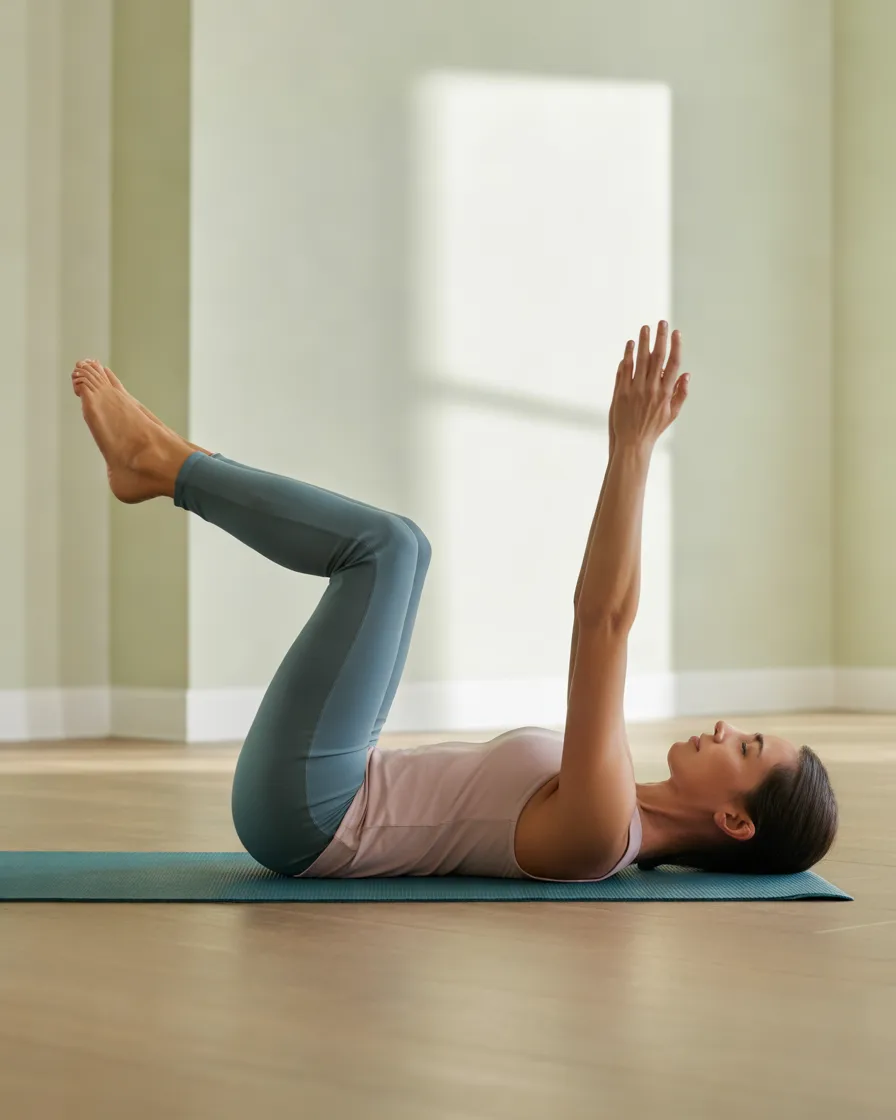
Core exercises are often included in fat loss routines, but it is important to understand their actual purpose.
Exercises such as dead bugs, bird dogs, and modified planks strengthen the muscles that help stabilise your trunk. They can support better movement control during other exercises.
However, performing abdominal exercises does not specifically burn the fat around your stomach. Fat loss occurs throughout the body according to individual factors rather than from one selected exercise area.
Benefits:
- Develops abdominal and trunk strength.
- Supports balance and movement control.
- Complements full-body strength training.
- Encourages controlled breathing.
- Provides a low-equipment workout option.
How to do it:
Try this three-exercise routine.
Dead bugs: Lie on your back with your arms raised and knees bent. Slowly lower your opposite arm and leg while maintaining a comfortable, stable back position. Complete 8–10 repetitions per side.
Bird dogs: Start on your hands and knees. Extend one arm and the opposite leg without rotating your hips. Return slowly and alternate sides. Complete 8 repetitions per side.
Modified plank: Support yourself on your forearms and knees. Keep your body aligned and gently engage your abdominal muscles. Hold for 15–30 seconds.
Complete two rounds with short recovery periods.
Practical tips: Move slowly and prioritise control. Breathing normally is important; avoid holding your breath throughout the exercises.
Who it may suit: Beginners and experienced exercisers who want to develop core stability as part of a balanced fitness routine.
Important considerations: Stop if an exercise causes back pain or unusual discomfort. Modify the movement rather than forcing yourself to complete the full version.
10. Try a Jump Rope Workout for a More Challenging Cardio Session
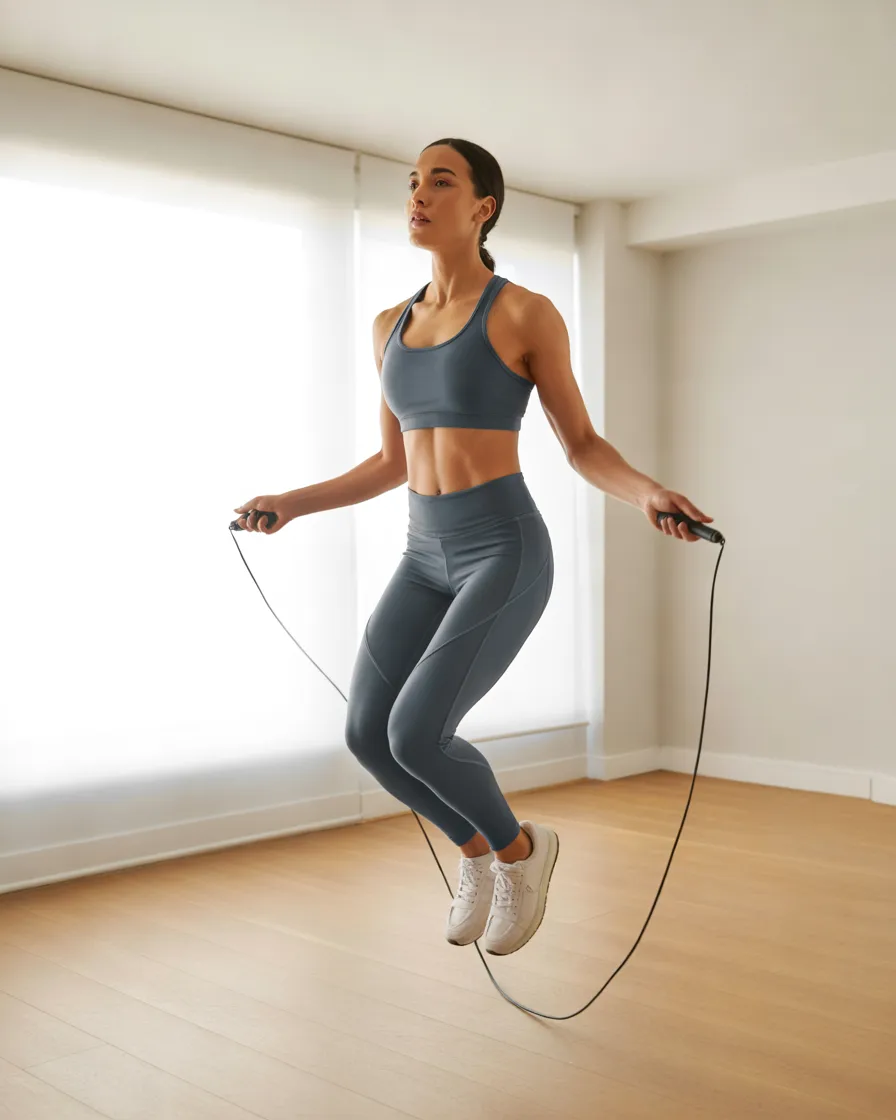
Jump rope is a classic cardiovascular exercise that can be performed at home with very little equipment.
It involves repeated small jumps while rotating a rope around your body. When performed at an appropriate intensity, it can provide vigorous aerobic activity.
It is also a more demanding option than indoor walking, so beginners should introduce it gradually.
Benefits:
- Provides vigorous cardiovascular exercise.
- Challenges coordination and timing.
- Engages the calves and lower-body muscles.
- Can be completed in short intervals.
- Requires relatively little equipment.
How to do it:
- Choose a suitable rope and clear enough overhead and floor space.
- Hold the handles comfortably.
- Rotate the rope using small wrist movements.
- Perform gentle, low jumps as the rope passes underneath.
- Land softly with your knees slightly relaxed.
Start with 20 seconds of jumping followed by 40–60 seconds of rest. Repeat three to five times if comfortable.
If you are not ready for jumping, practise rope-free alternating foot taps or marching movements.
Practical tips: Keep your jumps low and avoid unnecessary movement in your shoulders. Begin with short sessions and increase the duration only when your body has adapted.
Who it may suit: Intermediate exercisers and people who already tolerate impact-based activities.
Important considerations: Jump rope is not suitable for everyone. People with joint problems, balance difficulties, pelvic floor concerns, or certain medical conditions may prefer low-impact alternatives. Use an appropriate surface and supportive footwear.
How to Structure a Weekly Fat Loss Workout Plan at Home
Knowing individual exercises is useful, but combining them into a realistic weekly routine is what makes the plan practical.
You do not need to perform all 10 workouts every day. Instead, alternate strength training, cardiovascular activity, and recovery.
Here is an example of a beginner-friendly weekly schedule.
Monday – Full-body strength
- Bodyweight squats: 2 sets of 10.
- Incline push-ups: 2 sets of 8.
- Backpack rows: 2 sets of 10.
- Glute bridges: 2 sets of 12.
Tuesday – Indoor cardio
- Indoor walking: 20–25 minutes.
- Gentle stretching: 5 minutes.
Wednesday – Lower-body and core
- Supported reverse lunges: 2 sets of 8 per leg.
- Glute bridges: 2 sets of 12.
- Dead bugs: 2 sets of 8 per side.
- Bird dogs: 2 sets of 8 per side.
Thursday – Active recovery
- Comfortable walking: 15–20 minutes.
- Gentle mobility exercises.
- Optional light dancing.
Friday – Full-body circuit
- Squats: 10 repetitions.
- Incline push-ups: 8 repetitions.
- Backpack rows: 10 repetitions.
- Marching knee lifts: 30 seconds.
Repeat for two rounds.
Saturday – Cardio activity
Choose one:
- Dance cardio for 20–30 minutes.
- Shadow boxing for 15–20 minutes.
- Indoor walking for 30 minutes.
Sunday – Rest
Allow your body to recover. Gentle movement is optional if it feels comfortable.
As your fitness improves, you can increase the number of rounds, repetitions, or workout duration.
For general health, adults should aim for at least 150 minutes of moderate-intensity aerobic activity each week, alongside muscle-strengthening activities on at least two days. You can build toward this target gradually rather than trying to achieve it immediately.
Expert Tips for Making Your Home Fat Loss Workout More Effective
The most useful workout is not necessarily the hardest one. It is the routine you can perform safely and consistently while gradually improving your fitness.
Here are some practical ways to get more value from your training.
1. Focus on consistency instead of intensity.
A 20-minute workout performed regularly may be more useful than an exhausting session that leaves you unable to exercise for several days.
Set a realistic starting schedule and make it part of your normal routine.
2. Combine cardio with strength training.
Cardio helps improve aerobic fitness and increases energy expenditure. Strength training helps develop and maintain muscle strength.
Including both creates a more balanced home workout programme.
3. Increase difficulty gradually.
When an exercise becomes comfortable, consider adding a few repetitions, another set, slightly more resistance, or additional workout time.
Avoid increasing everything at once.
4. Do not ignore nutrition.
Exercise is only one part of weight management. Regular meals containing protein-rich foods, vegetables, fruits, whole grains, and appropriate portions can support your overall goals.
Avoid extreme food restriction or skipping meals simply to compensate for a workout.
5. Give your body enough recovery.
Muscles need time to recover after challenging strength sessions. Alternate demanding workouts with lighter activity and rest days.
Poor recovery can make it harder to maintain a consistent routine.
6. Pay attention to everyday movement.
Your activity outside formal workouts matters too. Walking while taking phone calls, using stairs when appropriate, and taking short movement breaks can help reduce long periods of sitting.
7. Track more than your body weight.
Consider monitoring your workout consistency, walking duration, strength improvements, energy levels, and how comfortably you complete everyday activities.
Body weight can fluctuate, so one measurement does not tell the whole story.
8. Warm up before exercising.
Spend approximately five minutes doing gentle marching, shoulder movements, hip movements, and easy bodyweight repetitions.
Finish with a gradual cool-down rather than stopping immediately after an intense session.
Common Mistakes to Avoid When Following a Fat Loss Workout Plan at Home
Even a well-designed workout routine can become less effective or unnecessarily difficult when basic training principles are ignored.
Watch out for these common mistakes:
Doing intense workouts every day: Your body needs recovery. Alternate challenging sessions with moderate activity.
Ignoring proper technique: Poor movement control can increase the risk of injury. Reduce repetitions or choose an easier variation when needed.
Expecting belly fat to disappear through crunches: Core exercises strengthen abdominal muscles, but they do not selectively remove stomach fat.
Starting with too much exercise: A sudden increase in workout duration or intensity can leave you excessively tired. Progress gradually.
Skipping strength training: Focusing only on cardio leaves an important part of physical fitness out of your programme.
Comparing your progress with others: People have different starting fitness levels, routines, recovery needs, and individual responses to exercise.
Ignoring pain and warning signs: Stop exercising if you experience chest pain, faintness, or unusual shortness of breath. Seek appropriate medical attention when necessary.
Frequently Asked Questions About a Fat Loss Workout Plan at Home
1. What Is the Best Fat Loss Workout Plan at Home for Beginners?
A combination of indoor walking, bodyweight squats, incline push-ups, glute bridges, and simple cardio intervals is a practical starting point.
Begin with two or three structured workouts per week and gradually introduce more activity as your fitness improves.
The best routine is one that matches your current abilities and that you can follow consistently.
2. Can I Lose Fat by Working Out at Home Without Equipment?
Yes. You can perform many effective exercises without gym equipment, including squats, lunges, push-ups, glute bridges, marching, and low-impact cardio movements.
A sturdy chair, exercise mat, or resistance band can provide additional options, but they are not essential for getting started.
Remember that sustainable fat loss also involves nutrition and overall lifestyle habits.
3. How Many Minutes Should I Exercise at Home Every Day?
Your ideal workout duration depends on your current fitness, schedule, and health needs.
Beginners may start with 15–20 minutes per session. As their fitness improves, they can gradually increase their activity.
For general health, adults should work toward at least 150 minutes of moderate aerobic activity per week, together with muscle-strengthening exercise on two or more days.
4. Is a 20-Minute Home Workout Enough for Fat Loss?
A 20-minute workout can contribute to your overall activity and fitness goals.
Its effectiveness depends on the exercises, intensity, frequency, nutrition, and your overall activity level.
You can start with 20 minutes and gradually increase your weekly activity rather than assuming every session must be long.
5. Which Home Exercises Help Burn More Calories?
Activities such as brisk indoor walking, dancing, jump rope, shadow boxing, and vigorous interval training can increase energy expenditure.
However, calorie use varies according to body size, exercise intensity, duration, and individual factors.
It is more helpful to choose activities you can perform regularly than to focus exclusively on estimated calorie-burning numbers.
6. Can I Follow a Fat Loss Workout Plan at Home Without Jumping?
Absolutely. Jumping is not essential for building an effective workout routine.
Indoor walking, step-back jacks, chair squats, glute bridges, incline push-ups, and controlled shadow boxing can provide useful alternatives.
Low-impact workouts are particularly helpful for people who prefer less jumping or need to modify exercise intensity.
7. Should I Do Cardio or Strength Training First?
There is no single order that works best for everyone.
If developing strength is your main priority, performing strength exercises first can help you approach them with more energy.
If cardiovascular fitness is your main focus, starting with cardio may make sense.
You can also perform cardio and strength sessions on separate days.
8. How Many Days a Week Should I Follow a Home Fat Loss Workout?
Many beginners can start with three structured workout days per week, supported by comfortable walking or other everyday movement.
As fitness improves, they can build toward a more regular schedule that includes aerobic activity and at least two days of muscle strengthening.
Allow recovery time between challenging sessions.
9. Do Abdominal Exercises Reduce Belly Fat?
Abdominal exercises strengthen the muscles around your stomach, but they do not specifically remove fat from that area.
Overall body fat changes depend on factors such as energy balance, genetics, lifestyle, and individual physiology.
A combination of full-body activity, resistance training, and balanced nutrition is a more useful approach.
10. Do I Need a Special Diet Alongside My Home Workout?
You do not necessarily need a restrictive or complicated diet.
A balanced eating pattern that includes protein, fibre-rich foods, vegetables, fruits, and appropriate portions can support your fitness and weight-management goals.
If you have specific dietary or medical needs, a registered dietitian or qualified healthcare professional can help you develop an appropriate plan.
Conclusion: Build a Sustainable Fat Loss Workout Plan at Home
Starting a home workout routine does not have to be complicated. With simple exercises, a realistic schedule, and gradual improvements, you can build a fitness routine that fits your lifestyle.
The 10 workouts in this guide offer different ways to combine cardio, strength training, and core stability. You can choose the movements that match your current fitness level and gradually introduce more challenging variations.
Remember that lasting progress is not about exercising as hard as possible every day. It is about developing habits you can maintain.
Start with a manageable routine, focus on good technique, support your workouts with balanced nutrition, and give your body enough recovery time.
Your home can be a practical place to begin building a stronger, healthier, and more active lifestyle.
References and Health Information
- Centers for Disease Control and Prevention (CDC): Physical Activity and Your Weight and Health
- Centers for Disease Control and Prevention (CDC): Adding Physical Activity as an Adult
- World Health Organization (WHO): Physical Activity
This article provides general educational information for adults and is not a substitute for individual medical advice.