Finding time for exercise can be difficult when you are balancing work, family responsibilities, household tasks, and personal commitments. Going to the gym is not always convenient, either. The good news is that you do not need an expensive gym membership or complicated equipment to build a healthier and stronger body.
A well-designed home workout plan for women can help you improve strength, support cardiovascular fitness, develop better balance, and make regular movement part of your everyday routine.
Whether you are a complete beginner, returning to exercise after a long break, or simply looking for a convenient way to stay active, working out at home offers flexibility. You can exercise in your living room, bedroom, or any comfortable space with enough room to move safely.
The most effective routine is not necessarily the longest or most challenging one. It is a routine that matches your current fitness level and that you can maintain consistently.
This guide covers 10 practical home exercises for women, including bodyweight strength movements, core exercises, and low-impact cardio. Most can be performed without equipment, although a resistance band, light dumbbells, or household water bottles can provide additional options.
You will also find a simple weekly workout schedule, practical tips for improving your technique, and answers to common questions about exercising at home.
The goal is simple: help you create a realistic fitness routine that supports your health without making exercise feel like another overwhelming responsibility.
10 Exercises to Include in Your Home Workout Plan for Women
A balanced home workout should include movements that challenge different muscle groups. Rather than focusing exclusively on abdominal exercises or lower-body movements, it is better to include exercises for the legs, hips, chest, back, shoulders, and core.
The following 10 exercises provide a practical starting point. You can combine them into a full-body workout and gradually increase the difficulty as your fitness improves.
1. Marching in Place: An Easy Way to Warm Up and Increase Daily Movement
Explanation
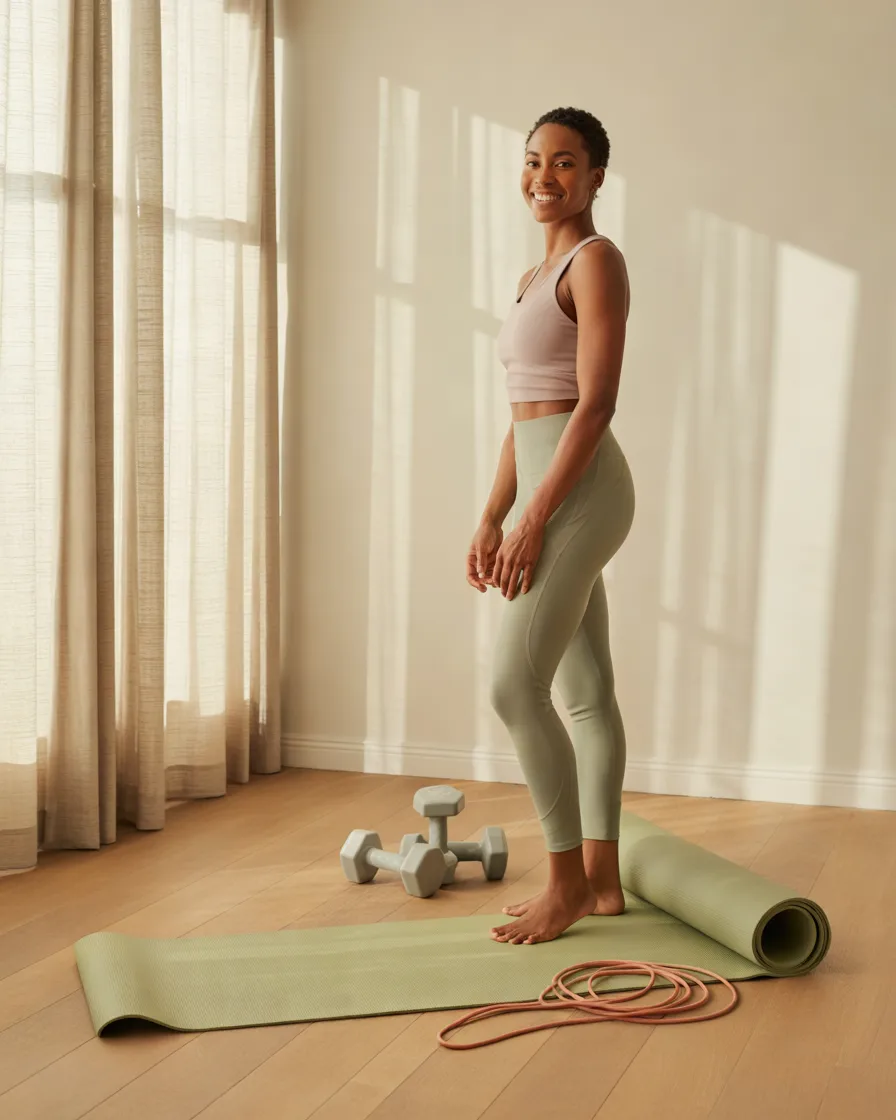
Marching in place is one of the simplest exercises to include in a beginner home workout for women. It involves walking on the spot while gently swinging your arms.
Although it looks basic, this movement gradually increases your heart rate and prepares your body for more demanding exercises.
It is particularly useful for women who have not exercised regularly and want to begin with something manageable.
Benefits
- Helps prepare muscles and joints for exercise.
- Increases heart rate gradually.
- Encourages better coordination.
- Provides a low-impact cardiovascular activity.
- Can help reduce stiffness after sitting for extended periods.
Practical Tips
Stand upright with your feet approximately hip-width apart. Lift one knee, lower it, and repeat with the opposite leg. Swing your arms naturally and maintain a comfortable rhythm.
Keep your shoulders relaxed and avoid leaning backward. If you need additional balance, stand near a sturdy chair or wall.
How to Apply It
Start with two minutes of comfortable marching. Gradually increase the duration to three to five minutes.
You can also use marching in place for 30–60 seconds between strength exercises when you want to keep moving without jumping.
Who It May Suit
This exercise is suitable for beginners, women returning to fitness, and people who prefer low-impact movements. It can also be adapted for older adults who are comfortable standing and marching.
Important Considerations
Wear supportive footwear and exercise on a non-slip surface. If you experience dizziness, unusual breathlessness, or pain, stop and assess how you feel.
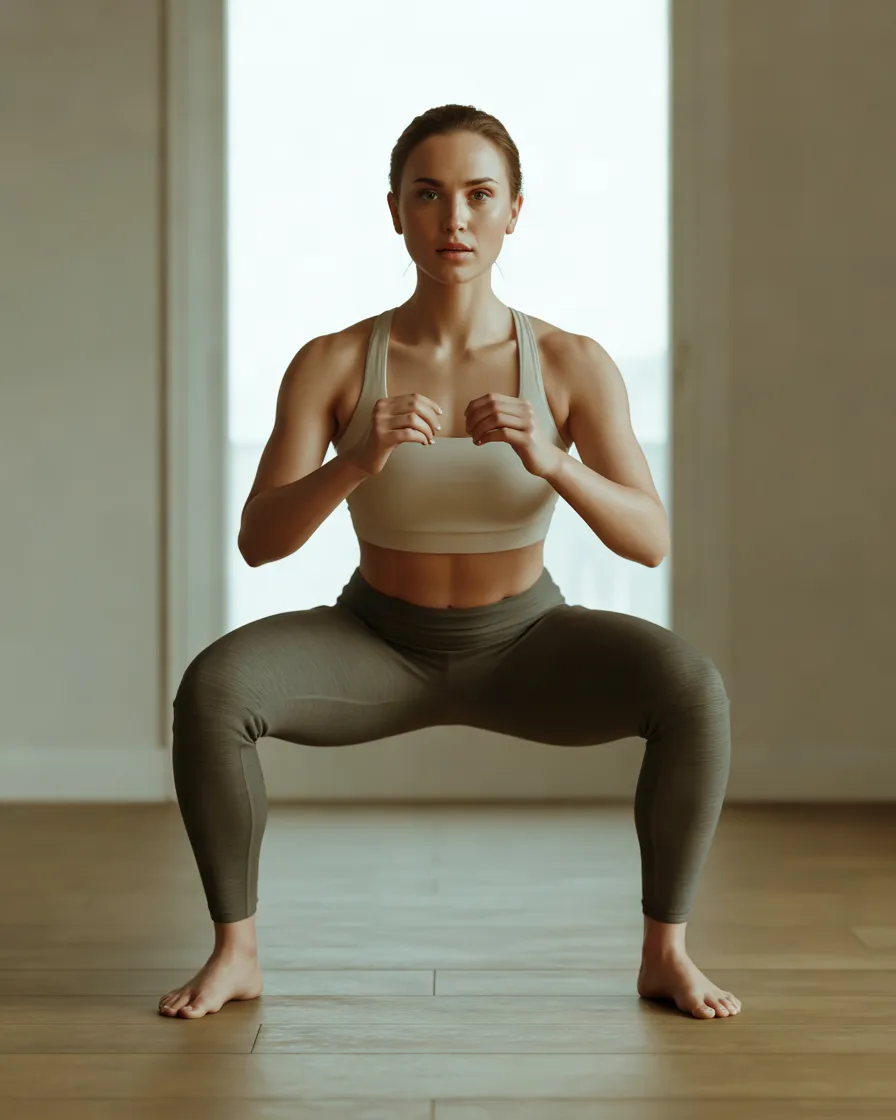
2. Bodyweight Squats: Strengthen Your Legs and Improve Everyday Movement
Explanation
Squats are a foundational lower-body exercise and an excellent addition to a full-body workout at home.
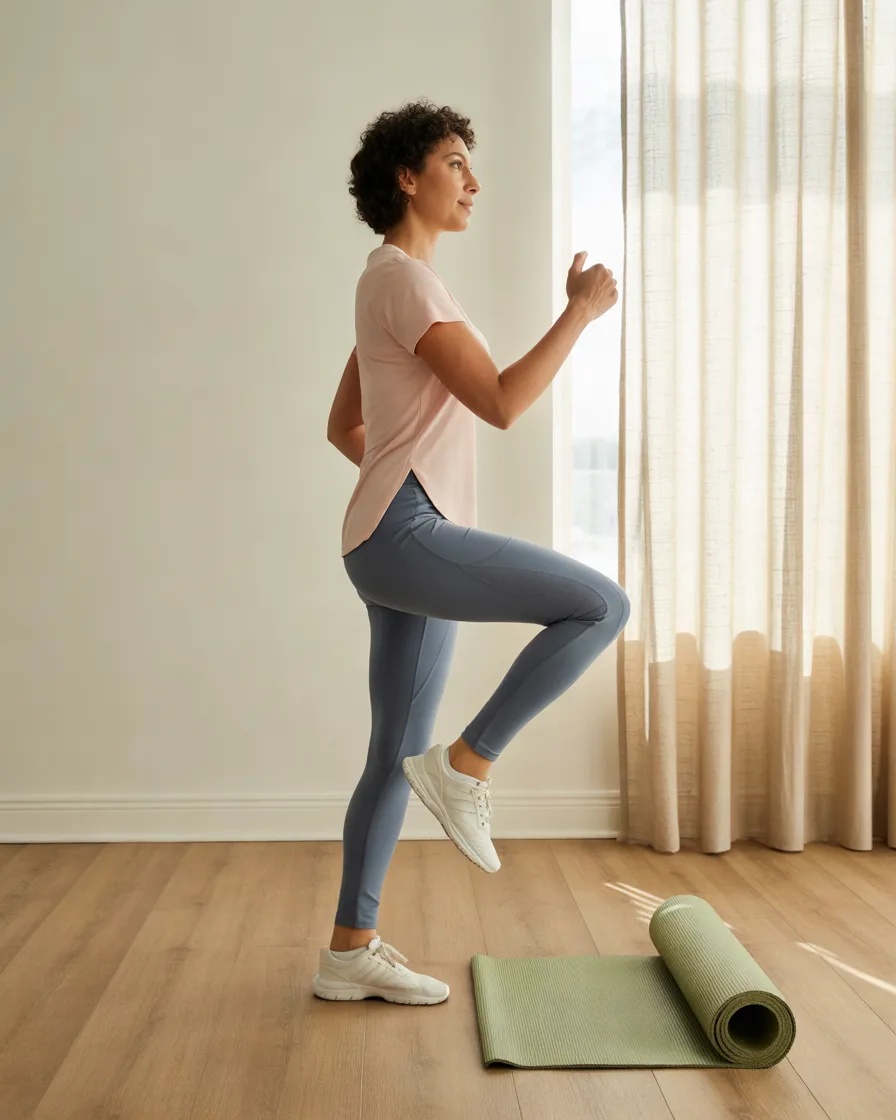
The movement involves bending your hips and knees as though you are sitting in a chair before returning to a standing position.
Squats primarily work the quadriceps and gluteal muscles while also involving the hamstrings and core.
Benefits
- Develops lower-body strength.
- Strengthens the muscles around the hips and knees.
- Supports everyday activities such as sitting and standing.
- Helps improve movement control.
- Can be adjusted for different fitness levels.
Practical Tips
Stand with your feet approximately shoulder-width apart. Keep your chest comfortable and your back in a natural position.
Push your hips backward and bend your knees as you lower yourself. Keep your feet firmly on the floor and avoid allowing your knees to collapse inward.
Lower only as far as you can comfortably control. Push through your feet to return to standing.
How to Apply It
Begin with two sets of 8–12 repetitions.
If a regular squat feels difficult, place a sturdy chair behind you and perform a sit-to-stand movement. As your strength improves, gradually increase your range of motion or repetitions.
You can eventually hold a light dumbbell or backpack to add resistance.
Who It May Suit
Squats can suit beginners, intermediate exercisers, and women interested in developing stronger legs and hips.
Important Considerations
Do not force a deep squat if you experience knee, hip, or back discomfort. Adjust your stance and movement range. Persistent pain deserves assessment by a qualified healthcare professional or physiotherapist.
3. Hip Hinge: Build Stronger Glutes and Hamstrings
Explanation
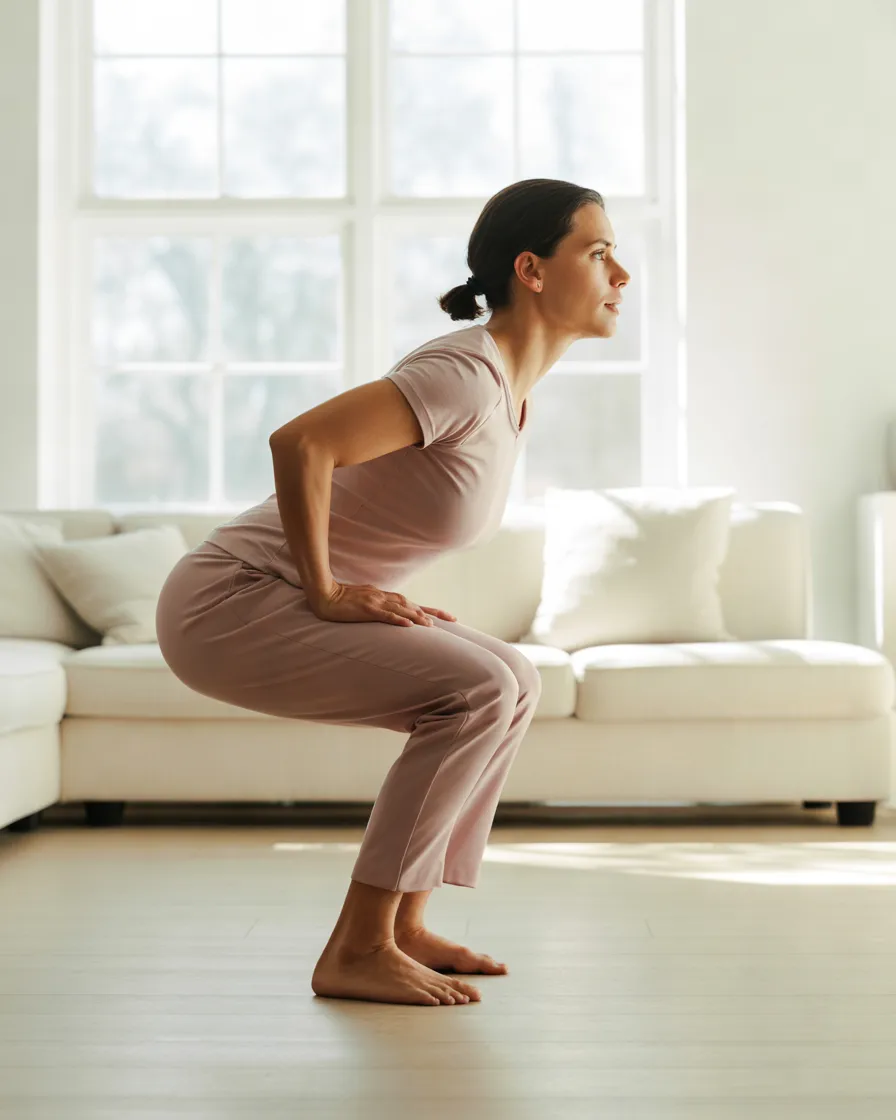
The hip hinge is an important movement pattern that teaches you to bend from your hips rather than rounding your lower back.
It is especially useful because many everyday activities, such as picking up shopping bags or lifting objects from the floor, involve similar movements.
You can perform this exercise without equipment or use a light backpack for additional resistance.
Benefits
- Strengthens the gluteal muscles.
- Works the hamstrings and muscles around the hips.
- Encourages better control when bending and lifting.
- Develops posterior-chain strength.
- Helps improve overall movement awareness.
Practical Tips
Stand with your feet hip-width apart and knees slightly bent.
Place your hands on your hips. Slowly push your hips backward while allowing your upper body to lean forward.
Keep your back in a comfortable neutral position. You should feel the movement mainly around your hips and the backs of your thighs.
Return to standing by bringing your hips forward.
How to Apply It
Perform two sets of 8–12 controlled repetitions.
Once you understand the movement, hold a light backpack close to your body. Increase the resistance gradually rather than starting with a heavy load.
Who It May Suit
This exercise may suit beginners who want to improve their lifting technique, as well as women looking to develop stronger hips and legs.
Important Considerations
Avoid rounding your lower back or forcing yourself to reach the floor. The quality of the movement matters more than how far you bend.
If you have a history of back problems, ask a physiotherapist about suitable modifications.
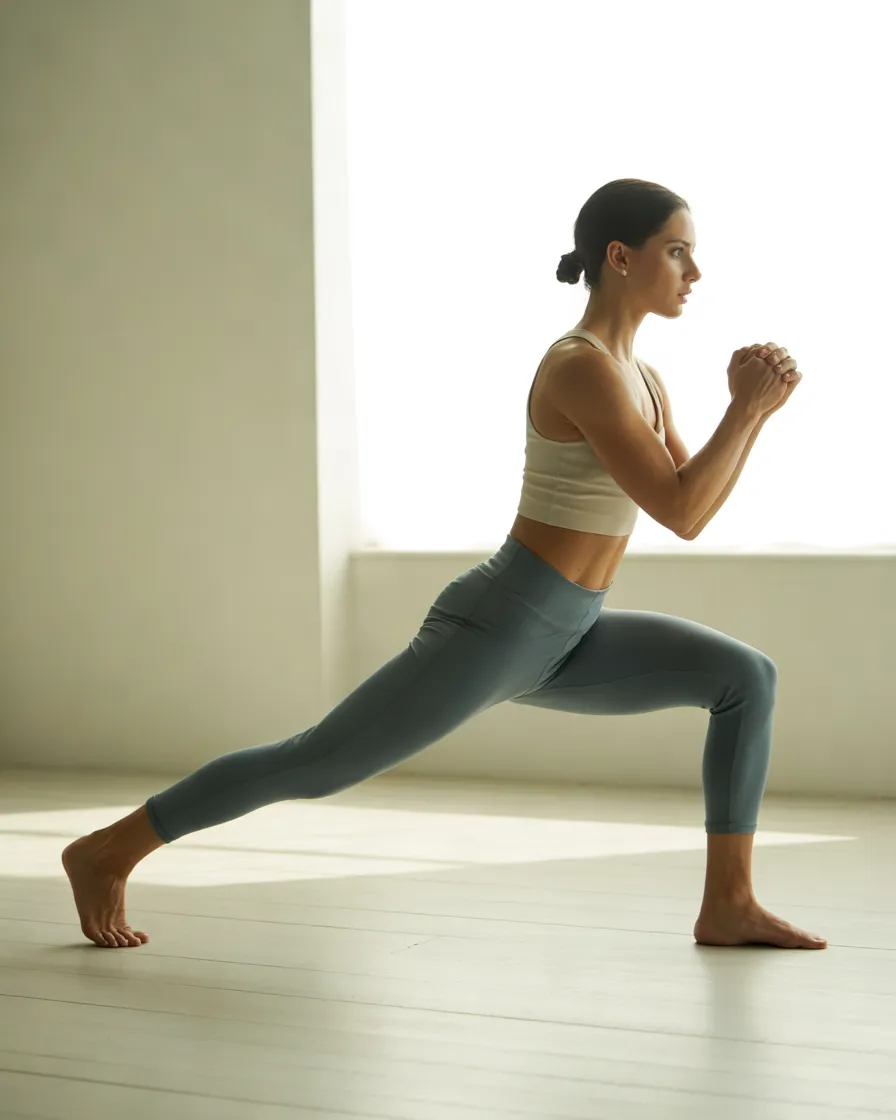
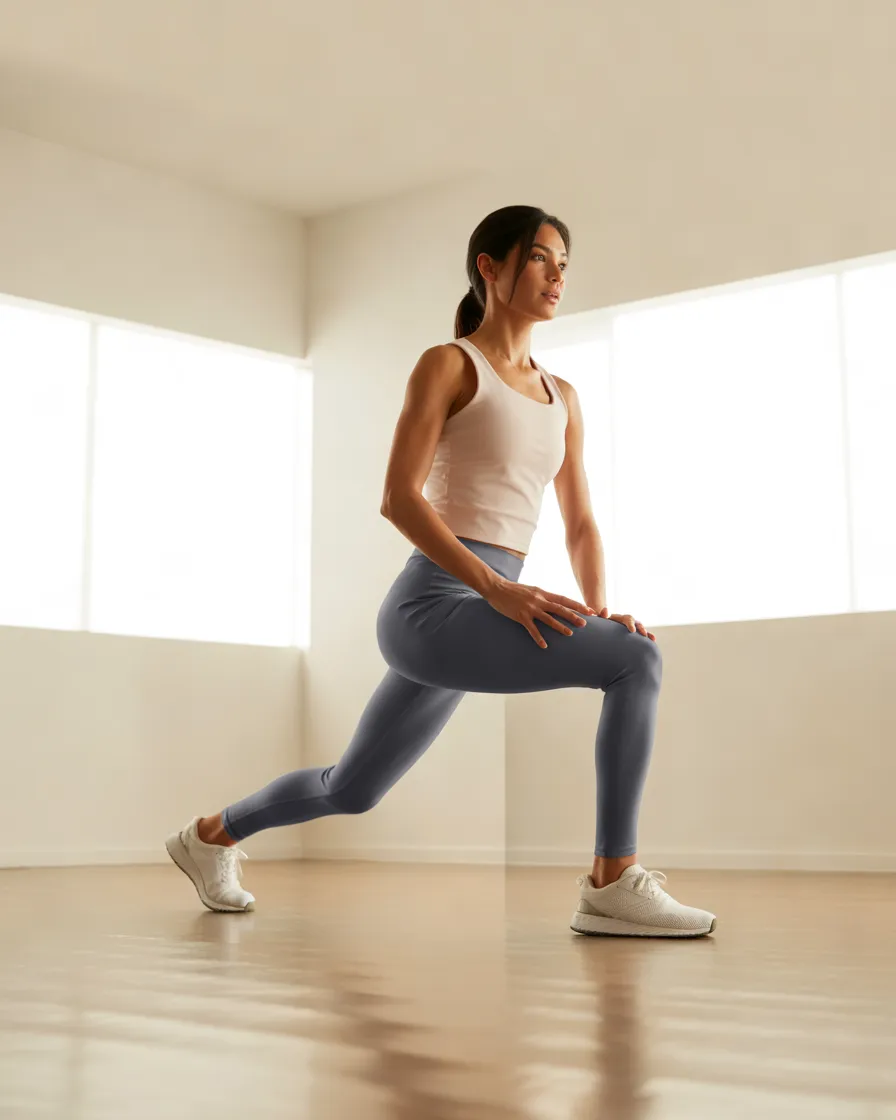
4. Reverse Lunges: Improve Leg Strength and Balance
Explanation
Reverse lunges are a useful lower-body exercise that works one leg at a time.
Unlike jumping exercises, reverse lunges allow you to control your movement and adjust the depth according to your ability.
They primarily target the quadriceps and glutes while also challenging balance and coordination.
Benefits
- Strengthens the legs and gluteal muscles.
- Develops single-leg movement control.
- Challenges balance and coordination.
- Helps improve functional lower-body strength.
- Provides variety in a home exercise routine.
Practical Tips
Begin standing with your feet hip-width apart.
Take a comfortable step backward with one foot. Bend both knees slightly as you lower your body while maintaining an upright upper body.
Push through your front foot to return to the starting position. Repeat on the other side.
If balance is challenging, hold a stable chair or countertop for support.
How to Apply It
Start with 6–8 repetitions per leg for two sets.
Focus on controlled movements rather than speed. Gradually increase the repetitions as your balance and strength improve.
Who It May Suit
Reverse lunges may suit women who already feel comfortable performing basic standing exercises and want to develop more balanced leg strength.
Important Considerations
Do not force your back knee toward the floor. Maintain a comfortable range of motion and keep your front knee aligned with your foot.
If lunges aggravate existing knee or hip discomfort, use supported sit-to-stands or another comfortable alternative.
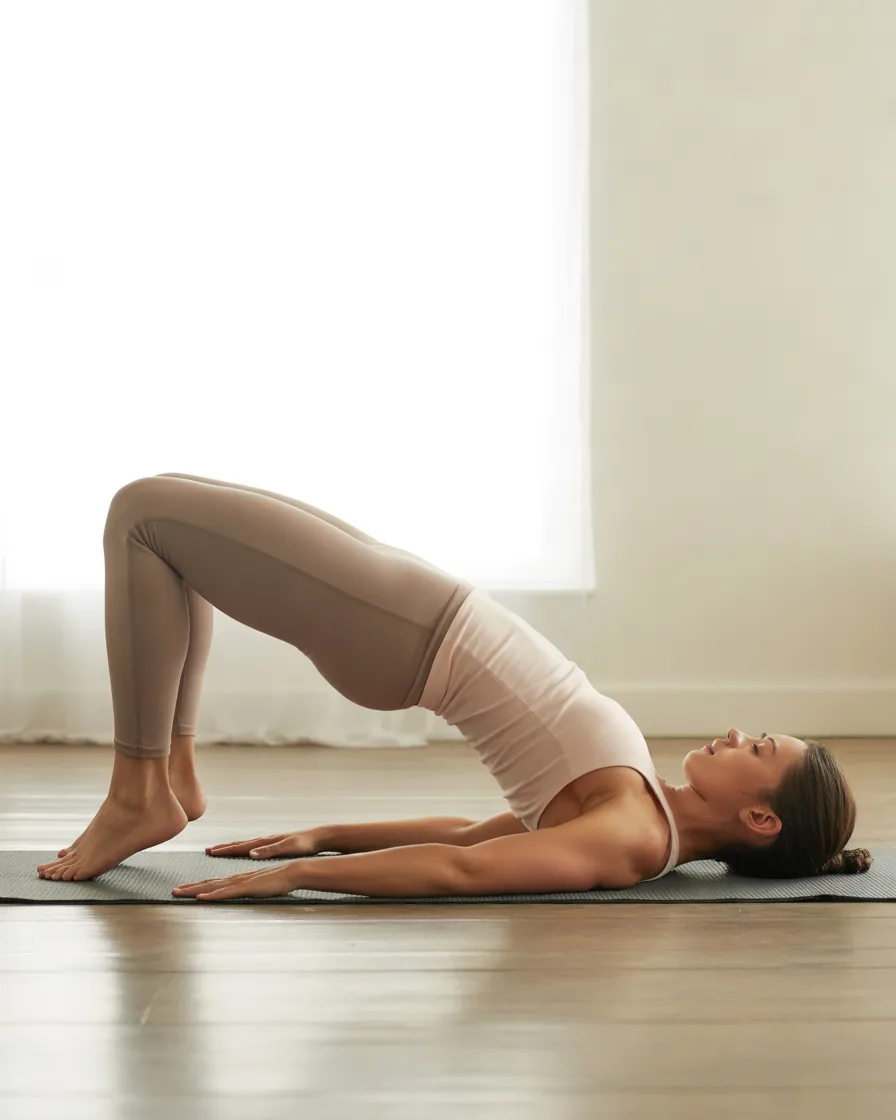
5. Glute Bridges: Strengthen Your Hips and Posterior Muscles
Explanation
Glute bridges are performed while lying on your back with your knees bent and feet resting on the floor.
The exercise involves lifting your hips while engaging the gluteal muscles.
It is a useful option for women who want to strengthen their hips without performing standing exercises throughout the entire workout.
Benefits
- Strengthens the gluteal muscles.
- Engages the muscles around the hips.
- Encourages controlled hip extension.
- Provides a low-impact strength exercise.
- Adds variety to lower-body training.
Practical Tips
Lie on your back with your knees bent and feet flat on the floor.
Keep your arms beside your body. Gently tighten your abdominal muscles and lift your hips until your body forms a comfortable diagonal line from your shoulders toward your knees.
Pause briefly, squeeze your glutes gently, and lower your hips with control.
Avoid pushing your lower back into excessive extension.
How to Apply It
Perform two sets of 10–15 repetitions.
Start with regular glute bridges. When they become easier, increase the pause at the top or place a light resistance band above your knees.
Who It May Suit
Glute bridges may suit beginners, women who prefer floor-based exercises, and people who want to include hip-strengthening movements in their routine.
Important Considerations
Use a comfortable exercise mat and avoid forcing your hips higher than your body can control.
Women experiencing pelvic pain, pelvic floor symptoms, or discomfort during abdominal and hip exercises should seek individualized guidance from a qualified professional.
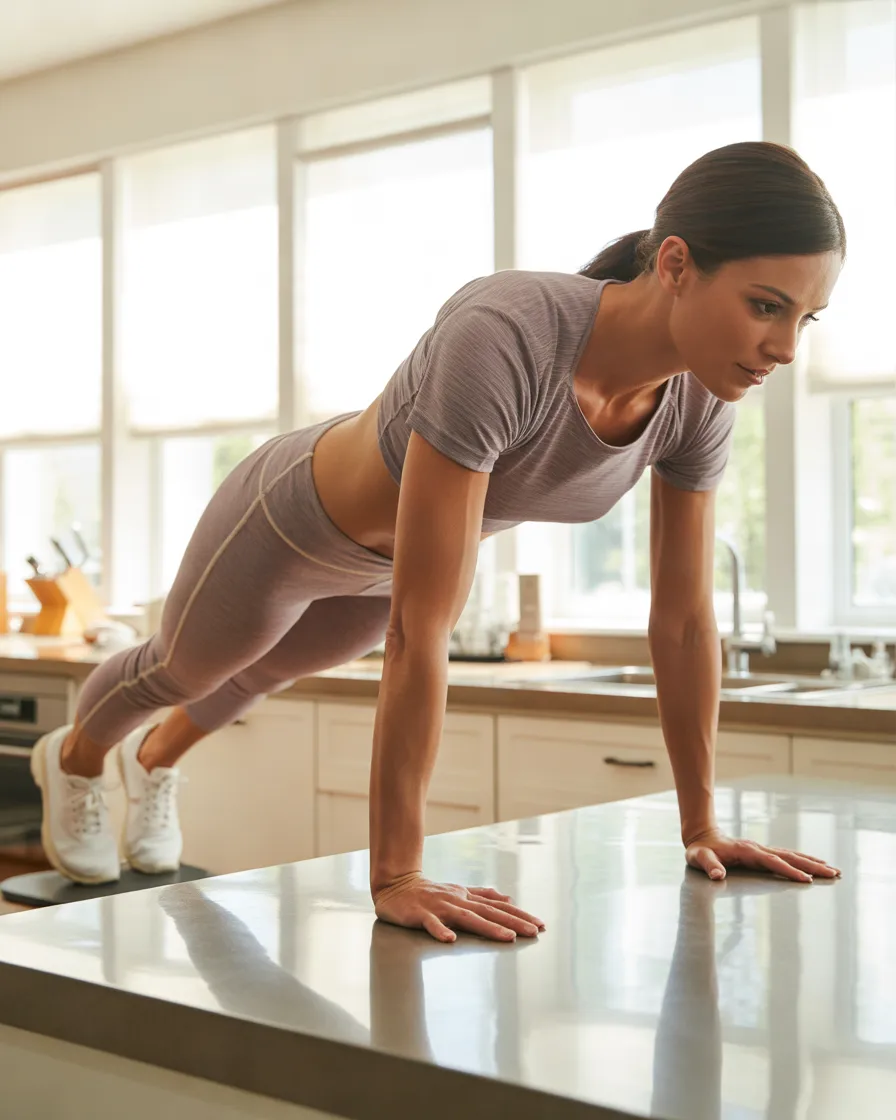
6. Incline Push-Ups: Develop Upper-Body Strength Without Gym Equipment
Explanation
Push-ups are a well-known bodyweight exercise that works several upper-body muscle groups.
However, traditional floor push-ups can be difficult for beginners. Incline push-ups offer a more accessible alternative.
You perform the movement with your hands against a stable wall, countertop, or other secure elevated surface.
Benefits
- Strengthens the chest muscles.
- Works the shoulders and triceps.
- Engages the abdominal muscles.
- Develops upper-body strength.
- Provides a simple no-equipment workout option.
Practical Tips
Place your hands on a stable wall or countertop, slightly wider than shoulder-width apart.
Step backward until your body forms a straight, comfortable line.
Bend your elbows and bring your chest toward the supporting surface. Push through your hands to return to the starting position.
Keep your abdomen gently engaged and avoid allowing your hips to drop.
How to Apply It
Start with two sets of 8–12 repetitions.
Wall push-ups are a good starting point. Once they become comfortable, move to a sturdy countertop or another slightly lower surface.
The lower the hand position, the more challenging the movement generally becomes.
Who It May Suit
This exercise may suit beginners, women who want to improve upper-body strength, and people who prefer modified push-ups instead of traditional floor variations.
Important Considerations
Always check that the surface is stable before exercising. Avoid slippery tables, movable furniture, or surfaces that could tip over.
Stop if you experience shoulder or wrist pain.
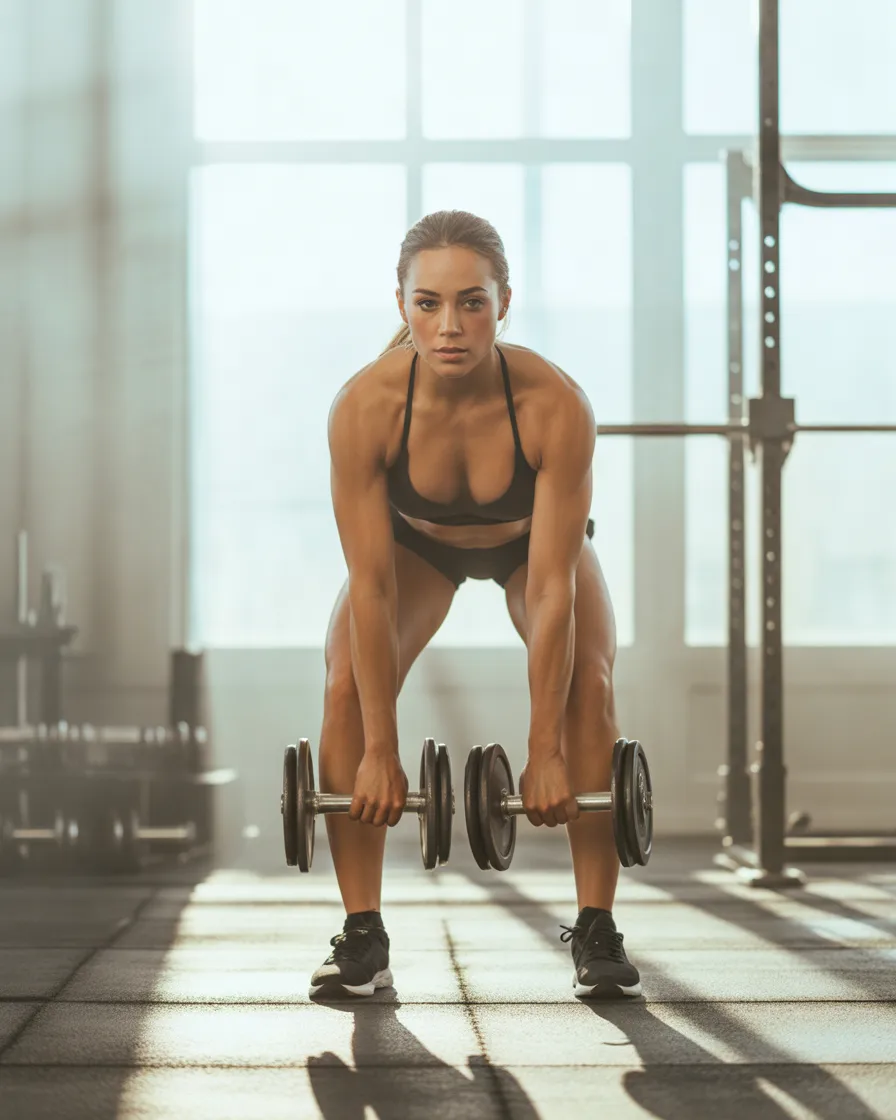
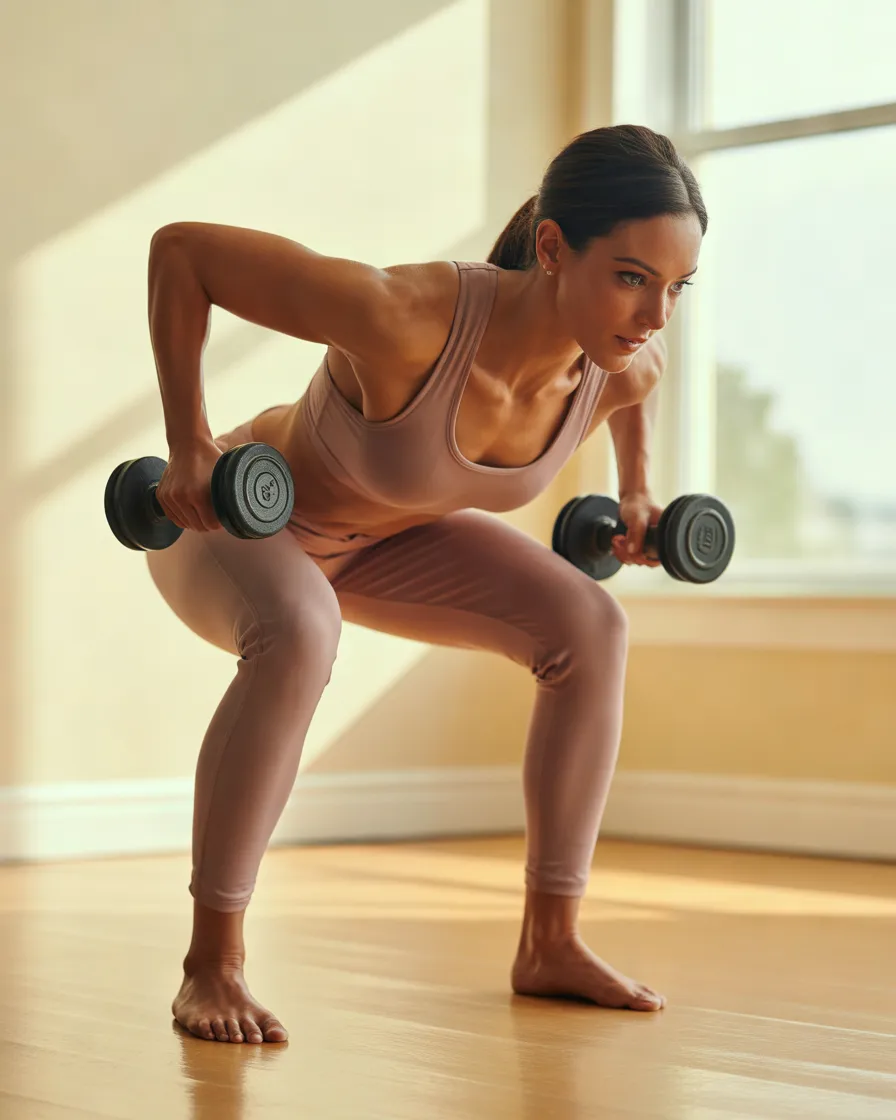
7. Bent-Over Rows: Strengthen Your Back and Improve Upper-Body Balance
Explanation
Many home workout routines include several pushing movements but overlook exercises that strengthen the back.
Bent-over rows help address this imbalance by training the upper-back muscles.
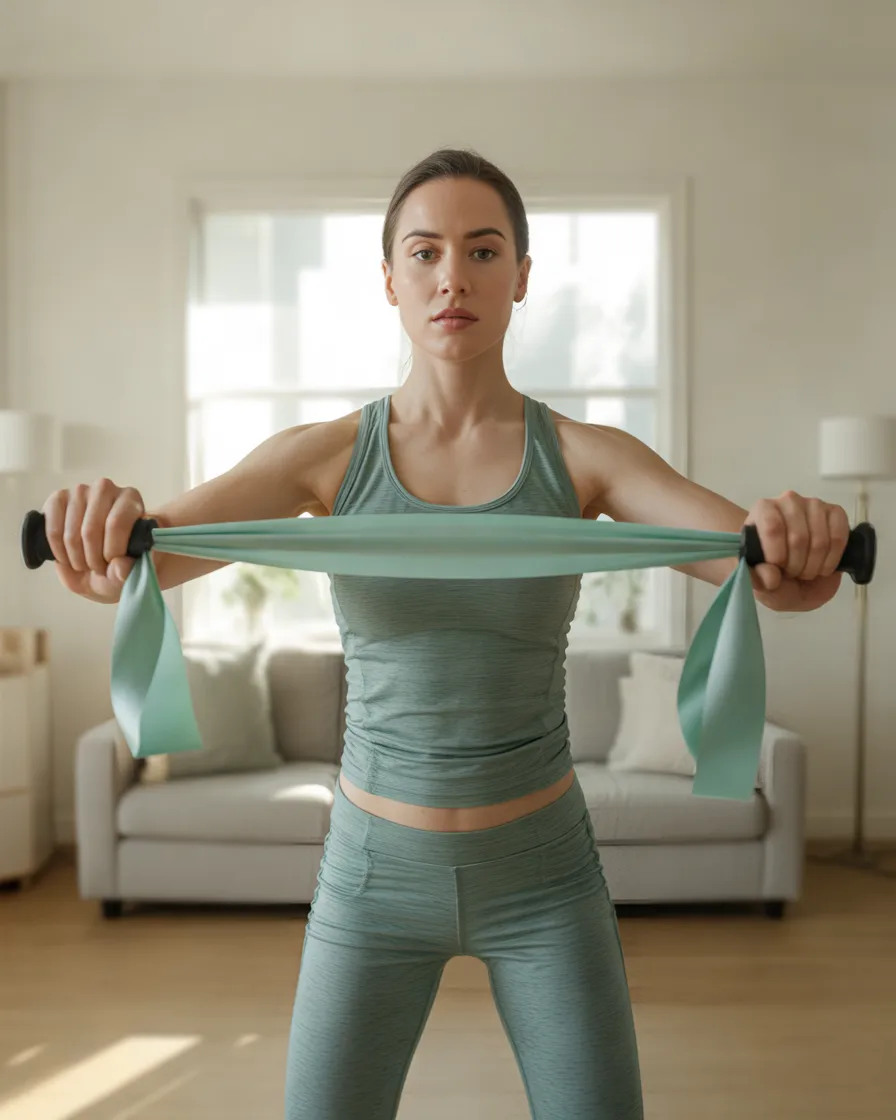
You can perform them with resistance bands, light dumbbells, or appropriately weighted water bottles.
Benefits
- Strengthens the upper-back muscles.
- Works the muscles around the shoulders.
- Engages the arms and core.
- Supports balanced upper-body training.
- Provides an accessible resistance-training option.
Practical Tips
Stand with your feet hip-width apart and hold a light weight in each hand.
Bend slightly at your hips while keeping your back in a neutral position.
Allow your arms to hang naturally. Pull your elbows backward toward your hips and gently bring your shoulder blades together.
Lower the weights slowly.
Avoid shrugging your shoulders or using momentum to lift the weights.
How to Apply It
Perform two sets of 8–12 repetitions.
Begin with light household water bottles. When the movement becomes comfortable, use a resistance band or slightly heavier weights.
Who It May Suit
Bent-over rows may suit women who want to strengthen their back, develop upper-body strength, or balance their routine with both pushing and pulling exercises.
Important Considerations
Do not use heavy objects that are difficult to control. Maintain a comfortable back position throughout the exercise.
If bending forward causes back discomfort, ask a physiotherapist about supported rowing alternatives.
8. Standing Overhead Press: Build Shoulder and Arm Strength
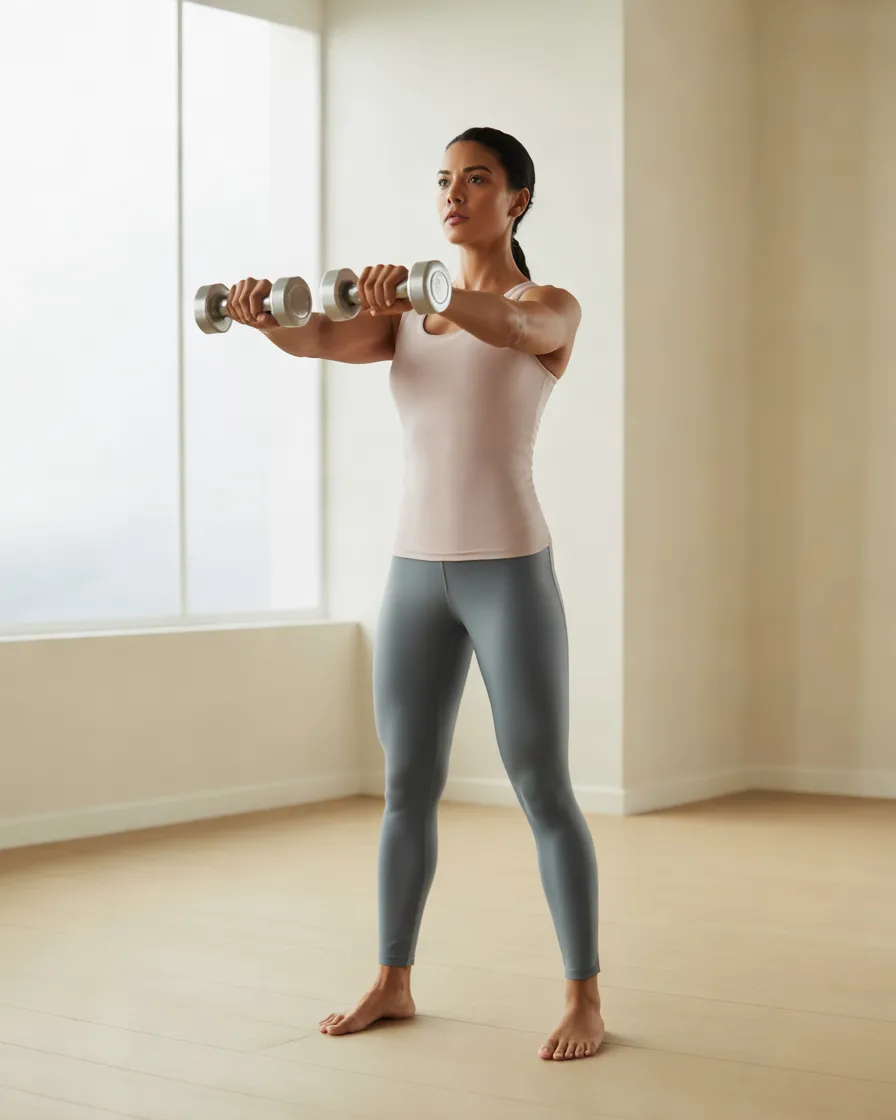
Explanation
The standing overhead press is a resistance exercise that works the shoulders and arms.
It can be performed with light dumbbells, resistance bands, or household water bottles.
Because the exercise requires you to control a weight above your head, it also challenges your posture and trunk stability.
Benefits
- Strengthens the shoulder muscles.
- Works the triceps.
- Develops upper-body strength.
- Encourages controlled movement and posture.
- Can be adapted using different resistance levels.
Practical Tips
Stand with your feet hip-width apart and hold a light weight in each hand.
Begin with your hands around shoulder height and palms facing forward or slightly inward.
Press the weights upward without forcing your elbows to lock. Slowly lower them to the starting position.
Keep your ribs comfortably positioned over your hips. Avoid arching your lower back.
How to Apply It
Start with two sets of 8–10 repetitions using light resistance.
You can perform the exercise seated if standing balance is difficult, provided you have a stable chair and a comfortable shoulder range of motion.
Who It May Suit
This movement may suit women interested in strengthening their shoulders and arms, particularly those who already have some experience with basic resistance exercises.
Important Considerations
Choose a weight that allows smooth, controlled repetitions. Do not force your arms overhead if you have shoulder limitations or pain.
A physiotherapist can help identify an appropriate alternative if overhead movements are uncomfortable.
9. Dead Bug Exercise: Improve Core Stability and Body Control
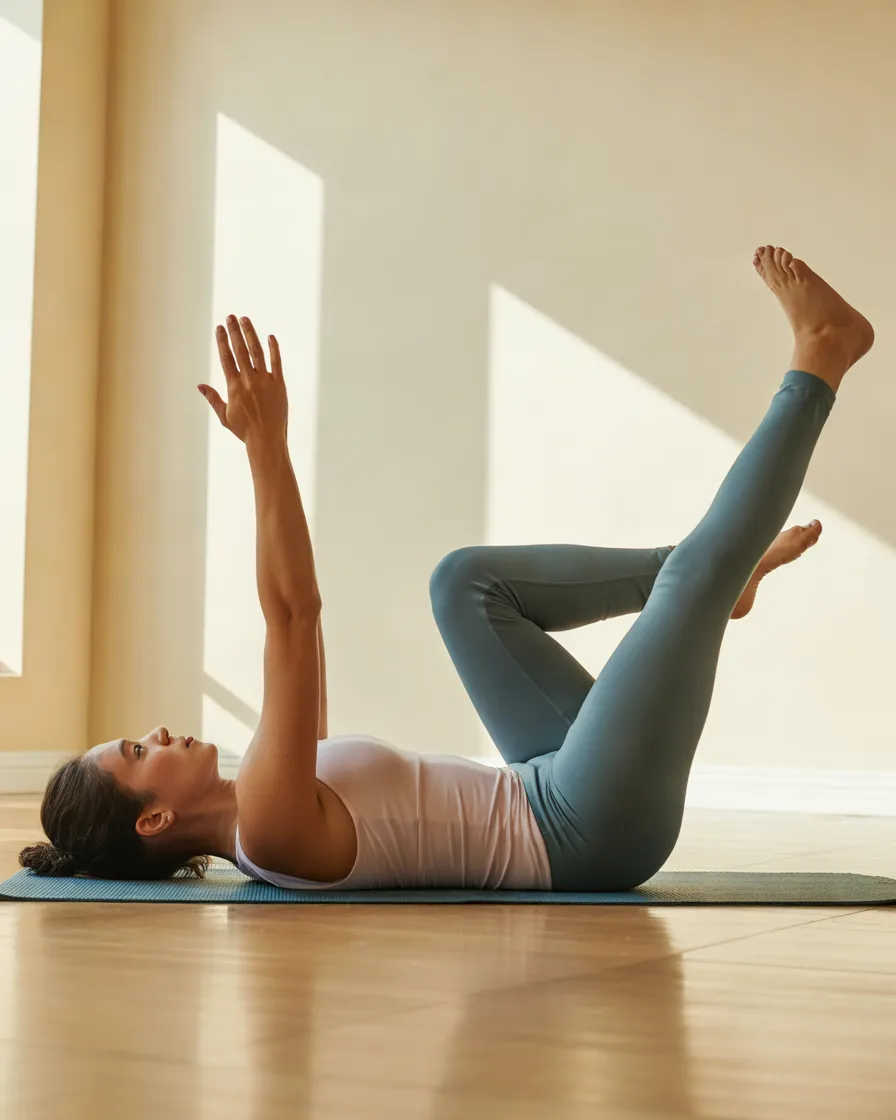
Explanation
The dead bug is a floor-based core exercise that focuses on controlling the trunk while moving opposite arms and legs.
Unlike exercises that involve repeated abdominal bending, this movement emphasizes maintaining a stable trunk.
It is particularly useful for people who want to develop better coordination and abdominal control.
Benefits
- Challenges deep abdominal muscles.
- Develops coordination between the upper and lower body.
- Encourages controlled movement.
- Supports general trunk stability.
- Provides a low-impact core-training option.
Practical Tips
Lie on your back with your arms pointing toward the ceiling and your knees bent above your hips.
Slowly extend your right arm and left leg while keeping your trunk controlled.
Return to the starting position and repeat with the opposite arm and leg.
Move slowly and avoid allowing your lower back to arch excessively.
How to Apply It
Begin with 6–8 repetitions per side for two sets.
If the full movement feels difficult, move only one arm or one leg at a time.
Focus on maintaining control instead of trying to extend your limbs as far as possible.
Who It May Suit
The dead bug may suit beginners and intermediate exercisers who want to include core stability exercises in a home fitness routine.
Important Considerations
Avoid holding your breath or forcing your lower back into an uncomfortable position.
If you experience pelvic pressure, abdominal discomfort, or worsening back pain, stop and seek appropriate professional advice.
10. Low-Impact Step Jacks: Add Cardio Without Jumping
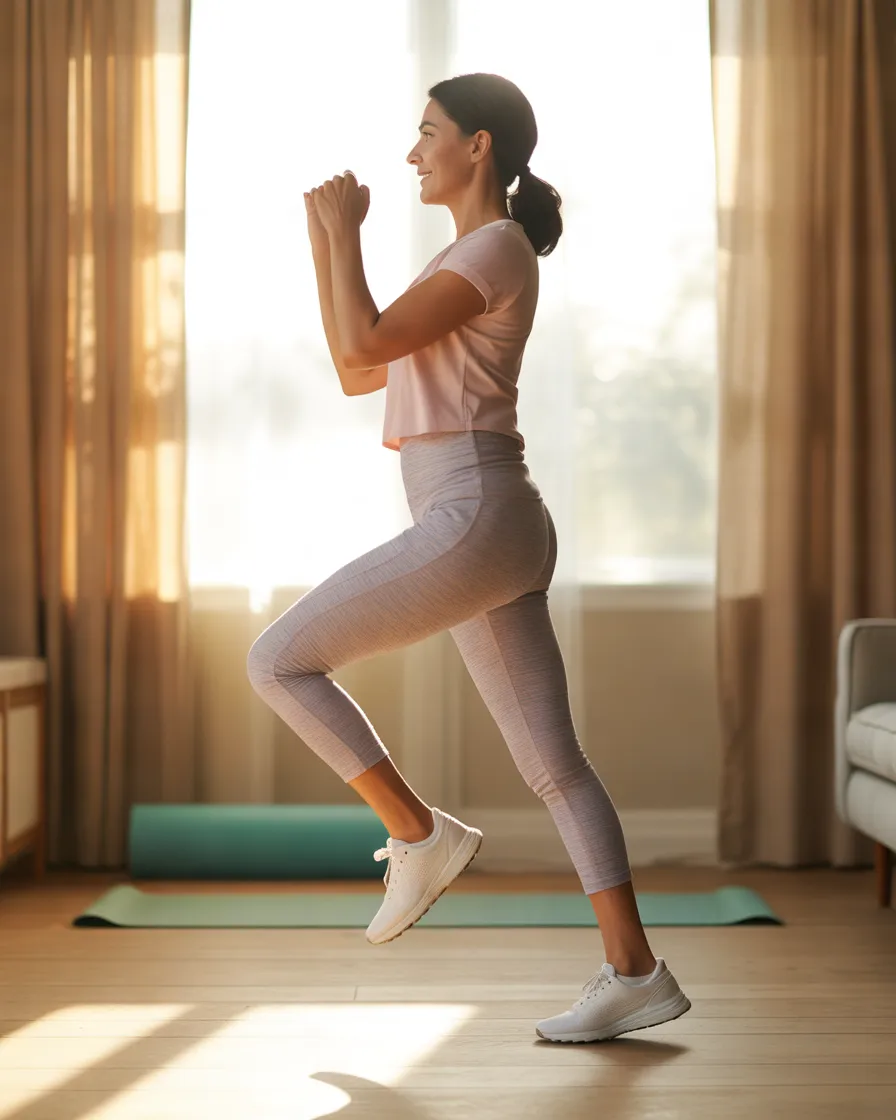
Explanation
Step jacks are a lower-impact variation of traditional jumping jacks.
Instead of jumping both feet outward, you step one foot to the side while raising your arms, then return to the starting position.
You alternate sides and maintain a steady rhythm.
This makes the movement useful for women who want to include cardiovascular exercise without repeated jumping.
Benefits
- Raises heart rate.
- Encourages regular aerobic activity.
- Works the arms and legs together.
- Improves coordination.
- Offers a lower-impact alternative to jumping jacks.
Practical Tips
Stand with your feet together and arms by your sides.
Step your right foot outward while lifting your arms comfortably overhead or to shoulder height.
Return to the starting position and repeat on the opposite side.
Keep your movements controlled and choose a pace that allows you to maintain good technique.
How to Apply It
Start with 30 seconds of movement followed by 30–45 seconds of rest.
Repeat two to four times depending on your fitness level.
As your endurance improves, gradually increase the working time or combine step jacks with marching in place.
Who It May Suit
Step jacks may suit beginners, women looking for low-impact cardio at home, and people who prefer simple rhythmic movements.
Important Considerations
Keep your movements comfortable and avoid excessive arm extension if your shoulders are sensitive.
Low-impact does not mean suitable for everyone. If you have balance problems or joint discomfort, choose an alternative that feels stable and comfortable.
A Simple Weekly Home Workout Schedule for Women
Having a collection of exercises is useful, but knowing how to organize them into a weekly routine makes it easier to stay consistent.
The following schedule combines full-body strength exercises with moderate cardiovascular activity and recovery days.
You do not need to perform all 10 exercises every day. Giving your muscles time to recover is an important part of developing a sustainable routine.
Monday: Full-Body Strength
- March in place: 3–5 minutes.
- Bodyweight squats: 2 sets of 10.
- Hip hinges: 2 sets of 10.
- Incline push-ups: 2 sets of 8.
- Bent-over rows: 2 sets of 10.
- Dead bugs: 2 sets of 6 per side.
Tuesday: Cardio and Movement
- Brisk walking or indoor walking: 30 minutes.
- Gentle stretching: 5 minutes.
Wednesday: Active Recovery
- Comfortable walking: 30 minutes.
- Gentle mobility exercises.
- Optional light stretching.
Thursday: Full-Body Strength
- March in place: 3–5 minutes.
- Reverse lunges: 2 sets of 6 per leg.
- Glute bridges: 2 sets of 12.
- Standing overhead press: 2 sets of 8.
- Step jacks: 2 sets of 30 seconds.
- Dead bugs: 2 sets of 6 per side.
Friday: Cardiovascular Activity
- Brisk walking, dancing, or low-impact aerobics: 30 minutes.
Saturday: Enjoyable Physical Activity
- Walking outdoors: 30 minutes.
- Light stretching or gentle yoga.
Sunday: Recovery
Take a rest day or enjoy a comfortable walk if you feel like moving.
This example provides approximately 150 minutes of moderate aerobic activity across the week, alongside two strength sessions. The aerobic activity and strength training serve different purposes, so it is useful to include both.
The recommended adult target is at least 150 minutes of moderate-intensity aerobic activity per week, or 75 minutes of vigorous activity, together with muscle-strengthening activity on at least two days. You can build toward this target gradually rather than trying to achieve it immediately.
Expert Tips for Getting Better Results From Home Workouts
A successful fitness routine depends on more than choosing the right exercises. Your technique, consistency, recovery, and ability to adjust the routine all matter.
Here are practical recommendations to help you make your home workout plan for women more effective.
1. Start With Your Current Fitness Level
If you are new to exercise, begin with one set of each movement instead of immediately attempting several rounds.
Your body needs time to adapt to unfamiliar activities. Start with manageable repetitions and increase them gradually.
2. Prioritize Correct Technique
Performing fewer repetitions with good control is generally more useful than rushing through a large number of poorly controlled movements.
Pay attention to your posture, breathing, and range of motion.
3. Progress Gradually
Once an exercise becomes comfortable, you can make it more challenging by:
- Adding a few repetitions.
- Increasing the number of sets.
- Using slightly more resistance.
- Slowing down the movement.
- Choosing a more challenging variation.
Change one aspect at a time so you can understand how your body responds.
4. Include Both Strength and Cardio
Strength exercises help develop muscular strength, while aerobic activity supports cardiovascular fitness.
A balanced routine should include both. Walking, dancing, cycling, and low-impact aerobics are practical options for home-based fitness.
5. Allow Time for Recovery
Muscles need recovery between challenging strength sessions.
Avoid training the same muscle groups intensely every day, particularly when you are beginning.
Sleep, adequate nutrition, hydration, and rest all contribute to your ability to maintain a routine.
6. Choose Comfortable Exercise Clothing
Wear clothing that allows you to move freely. Supportive footwear may be useful for standing and cardio exercises.
You should also choose a comfortable, non-slip exercise surface.
7. Track Your Progress Beyond Body Weight
Your progress is not limited to changes on the weighing scale.
You might notice that you can perform more repetitions, walk for longer, maintain better balance, or complete exercises with greater control.
These are useful indicators of improved fitness.
8. Make Exercise Convenient
Keep your exercise mat and resistance band somewhere accessible.
Choosing a regular time for physical activity can make it easier to develop a habit. Even a short session is worthwhile when a longer workout is not practical.
Important Safety Tips Before Starting a Home Workout Routine
Home exercise is convenient, but safety should always come first.
Before beginning a new fitness routine, consider your current health, physical activity level, and any limitations that may affect exercise selection.
Keep these recommendations in mind:
- Warm up for approximately five minutes before strength or cardio sessions.
- Use a stable chair, countertop, or wall when needed for balance.
- Avoid exercising on slippery floors.
- Keep water nearby and stay hydrated.
- Do not force movements through pain.
- Increase workout intensity gradually.
- Stop exercising if you experience unusual dizziness, chest pain, or severe breathlessness.
Women who are pregnant, recently gave birth, recovering from surgery, or managing chronic health conditions may need individualized exercise guidance.
For an uncomplicated pregnancy, physical activity is generally encouraged, but exercise selection and intensity should be discussed with an obstetric healthcare professional. Postpartum exercise should also be resumed gradually, taking account of delivery, recovery, and any pelvic floor symptoms.
If you have not exercised for a long time or are unsure which activities are appropriate, consult a healthcare professional before beginning.
Frequently Asked Questions About Home Workout Plans for Women
1. What Is the Best Home Workout Plan for Women Beginners?
A good beginner routine includes a combination of squats, hip hinges, glute bridges, incline push-ups, rows, core exercises, and low-impact cardio.
Start with two strength sessions per week and gradually introduce more cardiovascular activity.
The best routine is one that matches your fitness level and can be maintained consistently.
2. Can Women Get Fit by Exercising at Home Without Equipment?
Yes. Many effective exercises use body weight as resistance.
Squats, lunges, glute bridges, incline push-ups, and dead bugs can all be performed without purchasing gym equipment.
As your strength improves, you can add resistance bands, light dumbbells, or a securely packed backpack.
3. How Many Days a Week Should Women Exercise at Home?
Most adults should aim for at least two days of muscle-strengthening activity and 150 minutes of moderate-intensity aerobic activity each week.
Beginners can start with fewer sessions and shorter durations before gradually increasing their activity.
Recovery days should also be part of the schedule.
4. How Long Should a Home Workout Last?
A beginner strength workout may take approximately 20–30 minutes, including a warm-up and cooldown.
However, workout duration depends on your fitness level, available time, and exercise selection.
Shorter sessions can also be useful. You can divide aerobic activity into smaller periods throughout the day.
5. Can Home Workouts Help Women Manage Their Weight?
Regular physical activity can support weight management by increasing energy expenditure and helping maintain muscle strength.
However, body weight is influenced by several factors, including food intake, sleep, genetics, medications, and overall lifestyle.
A sustainable approach combines enjoyable physical activity, balanced nutrition, and realistic expectations. No individual exercise can guarantee weight loss or reduce fat from one specific body area.
6. Are Low-Impact Home Workouts Effective?
Yes. Low-impact workouts can improve cardiovascular fitness and provide opportunities to strengthen muscles without repeated jumping.
Marching in place, step jacks, walking, modified push-ups, and controlled strength exercises are useful options.
The effectiveness of a workout depends on its intensity, consistency, and suitability for your abilities rather than whether it includes jumping.
7. Can Women Exercise During Pregnancy?
Many women with uncomplicated pregnancies can continue or begin appropriate physical activity.
However, pregnancy may require adjustments to exercise selection, intensity, and body position.
Consult an obstetric healthcare professional for individualized guidance, particularly if you have pregnancy-related complications or warning symptoms.
8. What Is the Best Time of Day to Exercise at Home?
There is no single best time for everyone.
Some women prefer morning workouts because they fit easily into their daily routine. Others find evening exercise more convenient after work or household responsibilities.
The most useful time is the one that allows you to exercise comfortably and consistently.
Conclusion: Build a Home Workout Routine You Can Maintain
Creating a healthier lifestyle does not require complicated equipment, expensive gym memberships, or hours of daily exercise.
A practical home workout plan for women can begin with simple movements such as squats, glute bridges, incline push-ups, rows, and low-impact cardio.
The important thing is to choose exercises that suit your current abilities and gradually develop your strength and endurance.
Start with manageable sessions, give yourself time to recover, and increase the challenge as your fitness improves. Remember that consistency is more valuable than trying to complete an exhausting workout once and then giving up.
Your fitness journey does not need to look like anyone else’s. Focus on building a routine that fits your schedule, supports your health, and makes you feel more confident in your everyday movements.
Start small, stay consistent, and give your body the time it needs to become stronger.
Sources and Further Reading
The following established health organizations provide guidance on physical activity, strength training, and exercise safety:
- Centers for Disease Control and Prevention (CDC) – Adult Physical Activity Guidelines
- National Health Service (NHS) – Physical Activity Guidelines for Adults
- National Health Service (NHS) – How to Improve Strength and Flexibility
- American College of Obstetricians and Gynecologists (ACOG) – Exercise During Pregnancy