Can an arm workout women at home really build strength without a gym membership? Yes — light dumbbells, a resistance band and a sturdy chair can cover the biceps, triceps and shoulders well. Strong arms make everyday tasks easier, from carrying shopping bags to lifting a suitcase, and regular practice may help with posture and upper-body stamina too.
The ten exercises below cover the front, back and sides of the arms, with dumbbell, bodyweight and band moves that fit in a small space. Each one comes with clear form cues, sets and reps, and an easier or harder option, so you can start light and build up at your own pace.
1. Bicep Curls — A Classic Arm Workout Women at Home
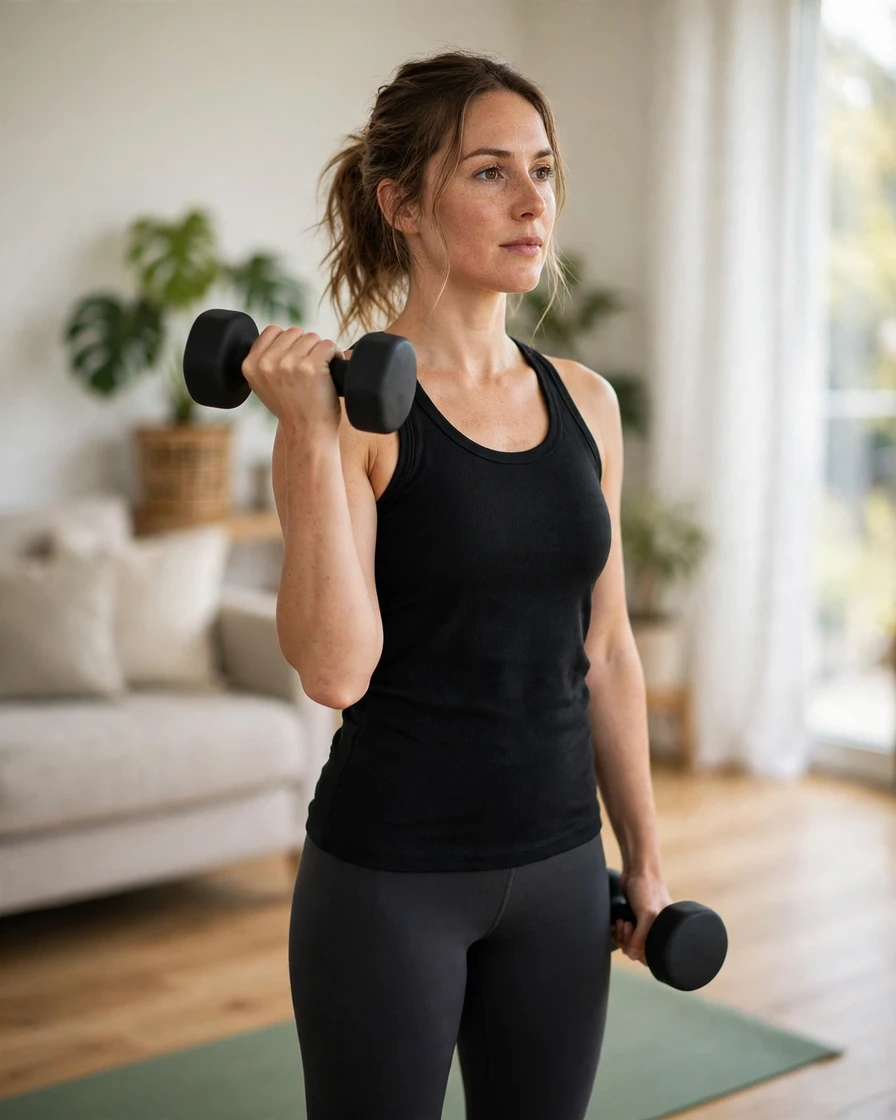
The bicep curl is the move most people picture when they think of arm training, and it is a good place to start. Stand tall with a light dumbbell in each hand, palms facing forward and arms relaxed at your sides. Keep your elbows close to your body and curl one dumbbell up toward your shoulder, then lower it slowly and switch sides, or lift both at once. Aim for 2 to 3 sets of 10 to 12 reps, moving slowly so the muscle does the work, not momentum.
Curls mainly work the front of the upper arm, and they may help with everyday lifting and carrying. They suit beginners well, since the movement is simple. If you have no dumbbells, filled water bottles work just as well. Keep your shoulders relaxed and avoid leaning back — if you rock your body, the weight is too heavy. Stop if you feel sharp pain in your elbow or shoulder, and speak to a healthcare professional before starting a new routine if you have a joint or health concern.
Quick Tip: Lower the dumbbell for a slow count of three — the lowering phase builds as much strength as the lift.
2. Hammer Curls
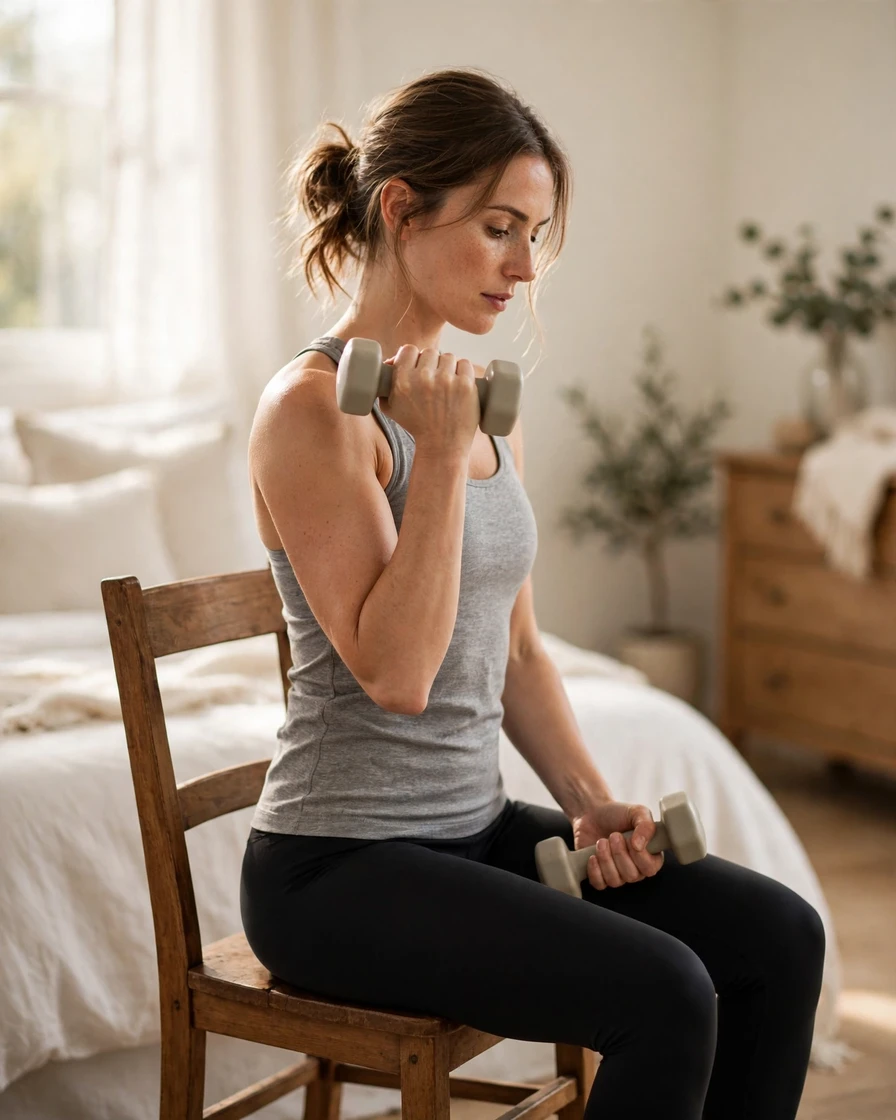
Hammer curls look like bicep curls, but the grip is different: hold the dumbbells with your palms facing each other, as if you were holding a hammer. Sit on a sturdy chair or stand tall, keep your elbows tucked in, and curl one dumbbell toward your shoulder without turning your wrist. Lower it with control and repeat on the other side. Try 2 to 3 sets of 10 to 12 reps per side, keeping the movement slow and steady.
The neutral grip shifts some of the work to the forearms and the outer part of the upper arm, which may help with grip strength for tasks like opening jars and carrying bags. Hammer curls suit anyone who finds regular curls uncomfortable on the wrists, since the wrist stays in a neutral position throughout. Start with a light weight and build up only when the last few reps feel challenging but still controlled. Keep your back straight if seated, and stop if your wrist or elbow hurts.
Quick Tip: Sit on a chair with no armrests so your elbows can hang freely at your sides.
3. Overhead Tricep Extension
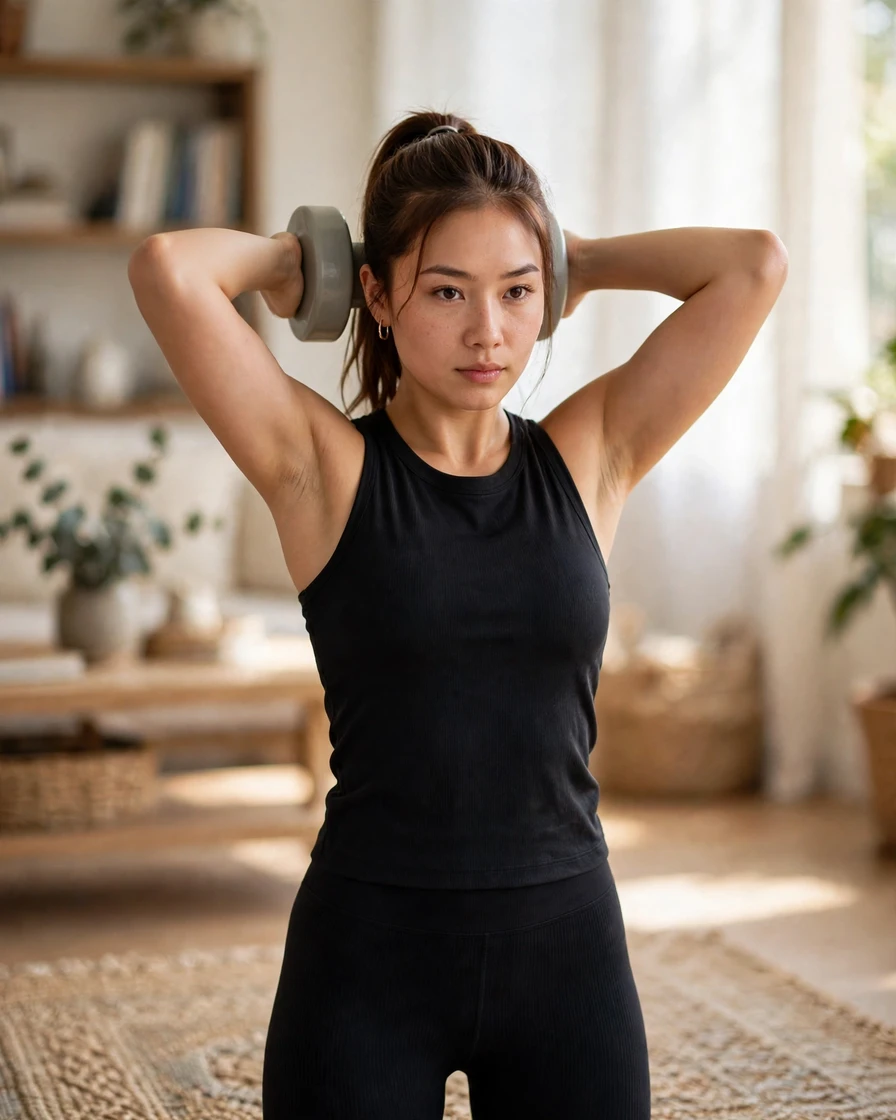
The overhead tricep extension targets the back of the upper arm, the part that works when you push a door open or lift something overhead. Stand with your feet hip-width apart and hold one dumbbell with both hands above your head. Keep your elbows close to your ears and pointing forward, then bend your elbows to lower the dumbbell behind your head, and press it back up. Aim for 2 to 3 sets of 10 to 12 reps.
This move suits anyone who wants balanced arm strength, since the triceps do much of the pushing work in daily life. A lighter weight is fine here — the triceps tire quickly, and good form matters more than a heavy dumbbell. Keep your core gently braced and avoid arching your lower back as you lower the weight. If the overhead position bothers your shoulders, try the seated version or a lighter weight. It fits neatly into a wider home workout plan for women alongside lower-body and core moves. Stop if you feel pinching in the shoulder.
Quick Tip: Hold the dumbbell by one end with both palms under it, like a goblet, for a secure grip.
4. Tricep Kickbacks
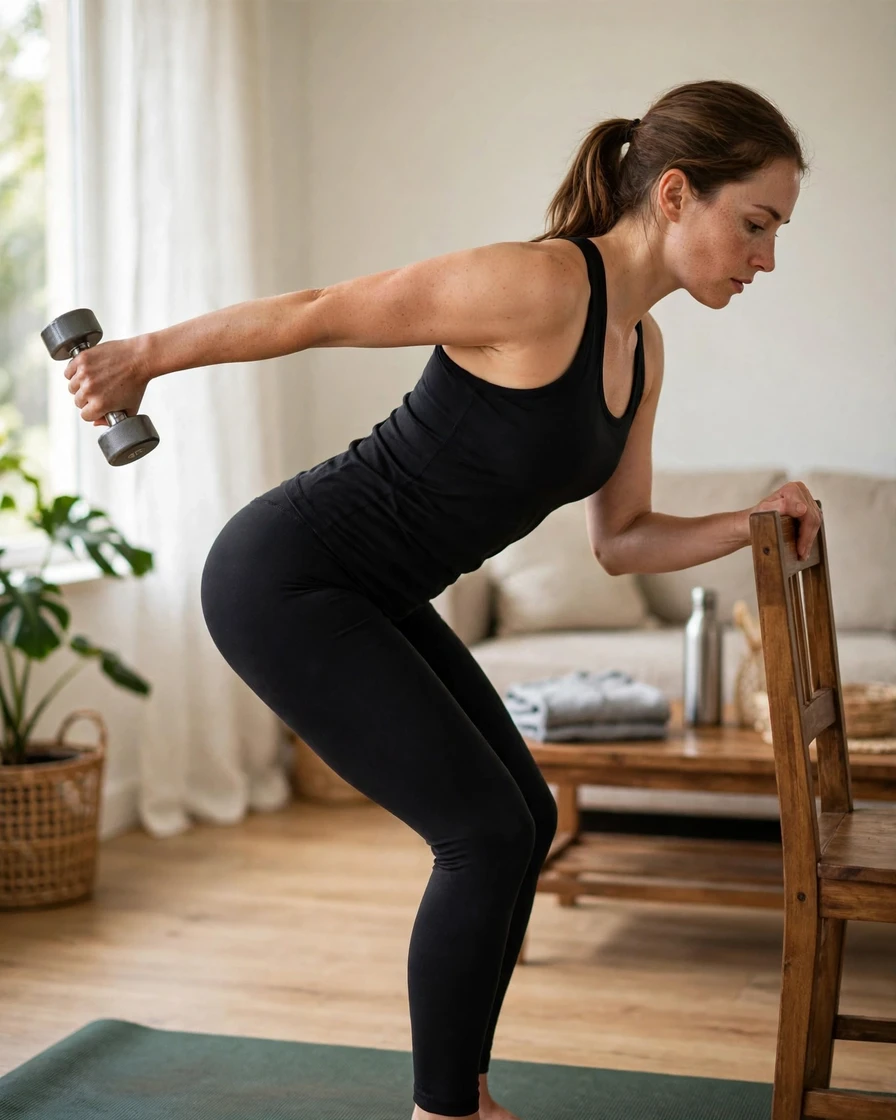
Tricep kickbacks are a gentle way to work the back of the arm with a light weight. Stand beside a sturdy chair, hinge forward at the hips with a flat back, and rest one hand on the chair. Hold a light dumbbell in the other hand, bend your elbow so your upper arm is level with your back, then straighten your arm behind you until it is fully extended. Pause for a second, then bend the elbow again. Aim for 2 to 3 sets of 12 reps per side.
The key is keeping your upper arm still — only the forearm moves. Kickbacks may help with pushing strength and can support steadier shoulders, since the move asks you to hold your body steady while one arm works. They suit beginners and anyone coming back to exercise after a break. Keep your neck in line with your spine by looking at the floor, and choose a weight that lets you straighten the arm fully. If your lower back feels strained, hinge less deeply or rest longer between sets.
Quick Tip: Squeeze the back of your arm for a second at full extension before bending the elbow again.
5. Chair Tricep Dips
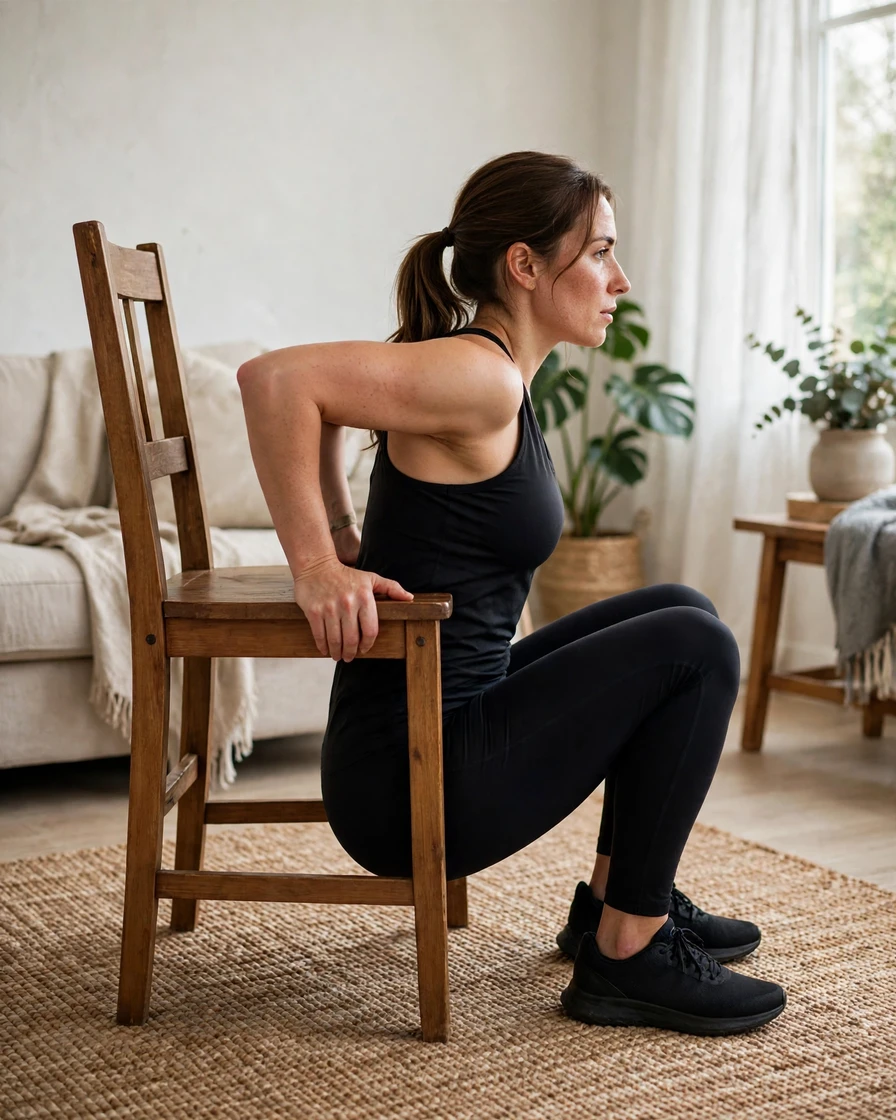
Chair dips use your own body weight, so you need no equipment at all. Sit on the edge of a sturdy chair with your hands gripping the front edge beside your hips, fingers pointing forward. Walk your feet out, lift your hips off the chair, and lower your body by bending your elbows until your upper arms are roughly level with the floor. Press back up through your palms. Start with 2 sets of 8 to 10 reps.
Dips work the triceps and shoulders, and they may help with the pushing strength used to get up from a chair. Keep your back close to the chair and your shoulders down, away from your ears. To make it easier, bend your knees more and keep your feet closer in; to make it harder, straighten your legs. Check that the chair cannot slide — place it against a wall if needed. Stop if your shoulders feel pinched or painful, and skip this move if you have a shoulder injury unless a healthcare professional has cleared it.
Quick Tip: Lower only as far as feels comfortable — a small range done well beats a deep dip with poor form.
6. Lateral Raises
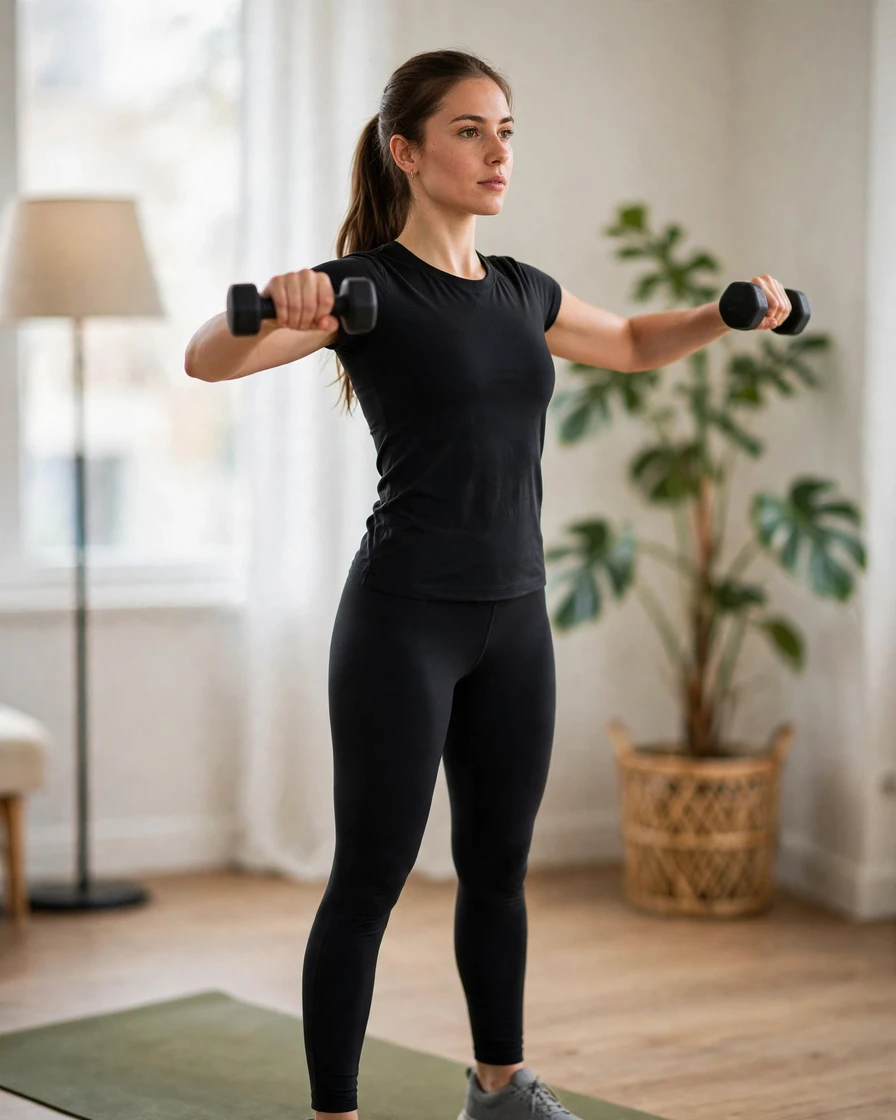
Lateral raises work the sides of the shoulders, which help lift your arms out to the side and carry bags away from your body. Stand tall with a light dumbbell in each hand, arms at your sides and palms facing your thighs. Raise both arms out to the sides until they reach shoulder height, keeping a slight bend in the elbows, then lower them slowly. Aim for 2 to 3 sets of 10 to 12 reps.
Light weights are the right choice here — the shoulder muscles are small and tire fast. Lift only to shoulder height, and avoid shrugging your shoulders up toward your ears. If you feel the weight pulling you off balance, widen your stance a little or sit on a chair to steady yourself. Lateral raises suit most fitness levels, and water bottles work well if you have no dumbbells. Stop if you feel a sharp pinch at the top of the lift, and lower the weight or shorten the range.
Quick Tip: Imagine pouring water from a jug as you lift — thumbs pointing slightly down keeps the shoulders in a safe position.
7. Front Raises
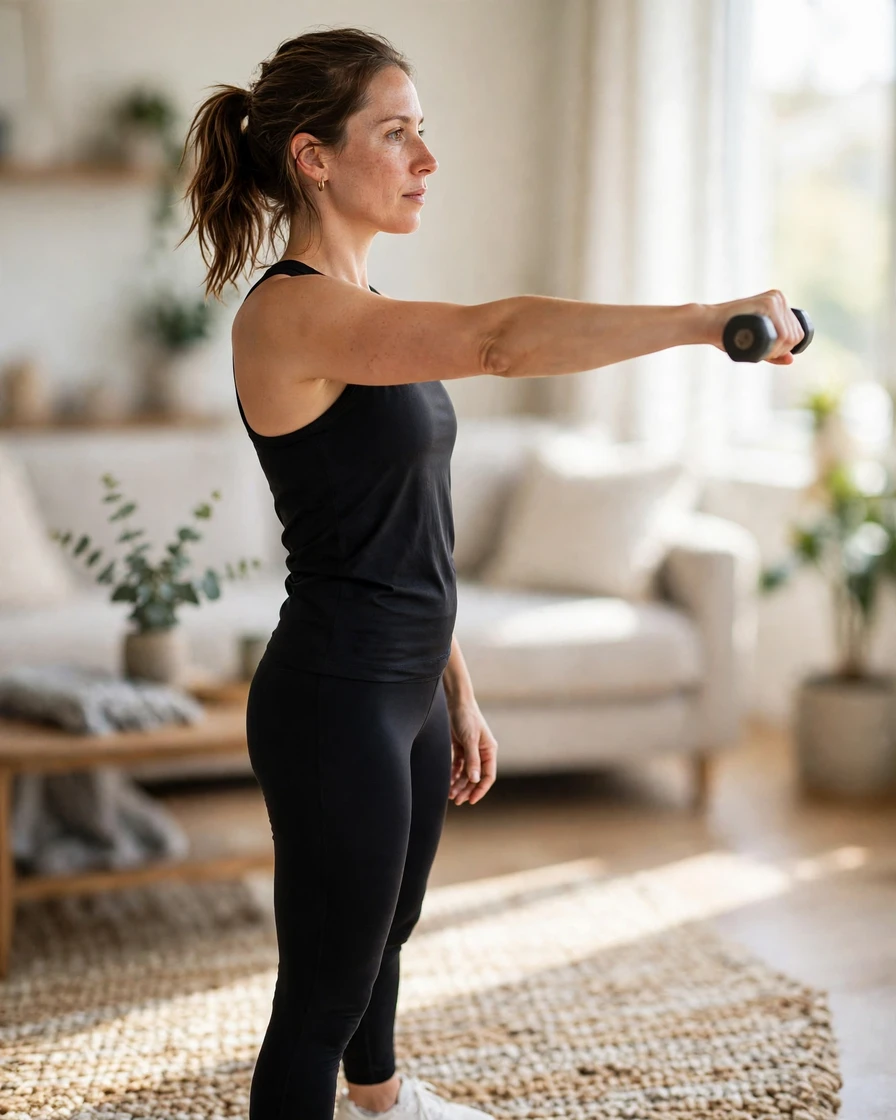
Front raises target the front of the shoulders, the muscles that lift your arms forward to reach a shelf or hold a bag in front of you. Stand tall with a dumbbell in each hand, palms facing your thighs. Raise one arm straight in front of you to shoulder height, lower it slowly, and repeat with the other arm. Try 2 to 3 sets of 10 reps per side, keeping the movement smooth.
Raising one arm at a time makes it easier to keep your balance and notice if one side is weaker than the other. Keep your torso still — if you lean back to lift the weight, it is too heavy. A soft bend in the elbow is fine, and the weight should never rise above shoulder height. Front raises pair well with lateral raises for rounded shoulder strength. Stop if the front of your shoulder feels sore or pinched, and rest a day before trying again.
Quick Tip: Alternate arms slowly instead of rushing through both sides — control matters more than speed.
8. Arm Circles
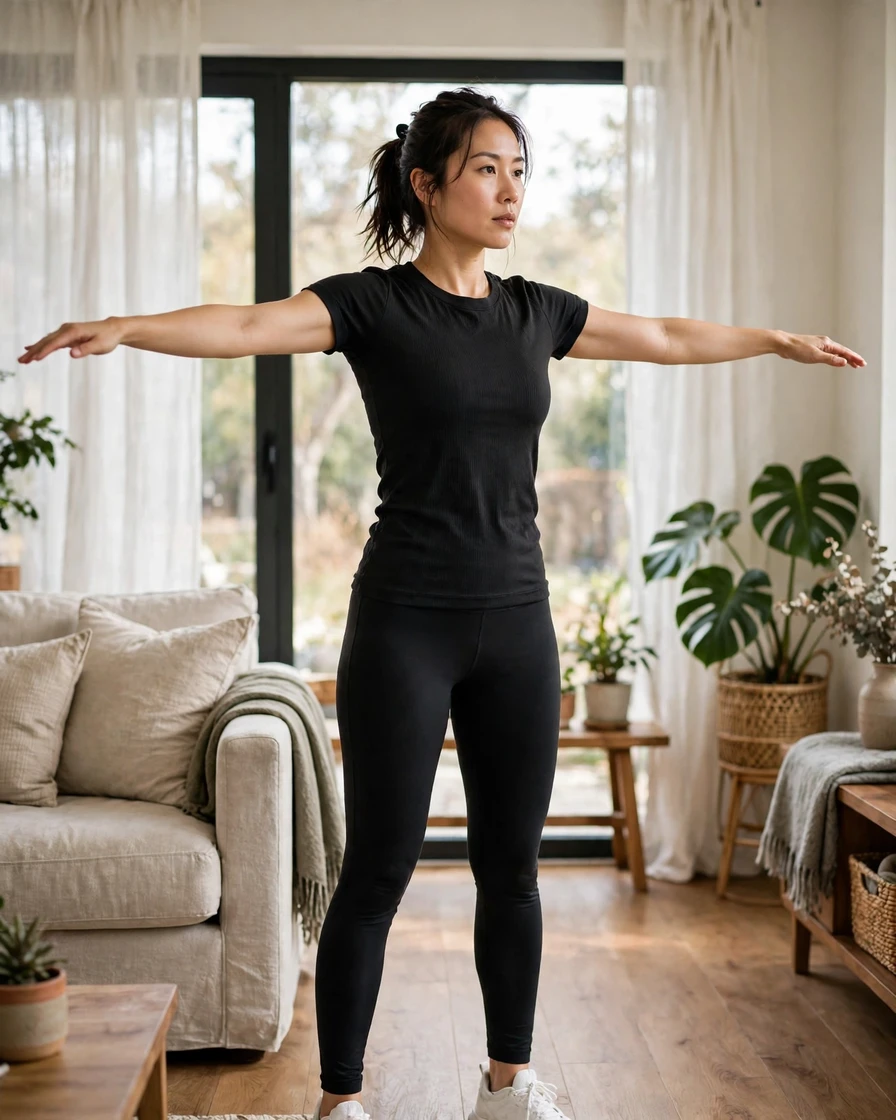
Arm circles need no equipment and work well as a warm-up or a gentle strength move on their own. Stand with your feet hip-width apart and stretch both arms out to the sides at shoulder height, palms facing down. Make small, slow circles for 20 to 30 seconds, then reverse direction for the same time. Keep your shoulders relaxed and your arms steady at shoulder height.
Small circles may look easy, but they can leave your shoulders and upper arms pleasantly tired after a minute. They suit warm-ups, rest days and anyone building up to weighted moves. To make them harder, hold a water bottle in each hand or make the circles slightly bigger; to make them easier, lower your arms a little or take a short break halfway. Keep the circles smooth and controlled rather than fast and jerky, and stop if your shoulder clicks painfully. They also work well between heavier exercises as active recovery that keeps the shoulders warm.
Quick Tip: Keep the circles small — the size of a dinner plate is plenty, and bigger circles tire the shoulders too fast.
9. Resistance Band Pull-Aparts for an Arm Workout Women at Home
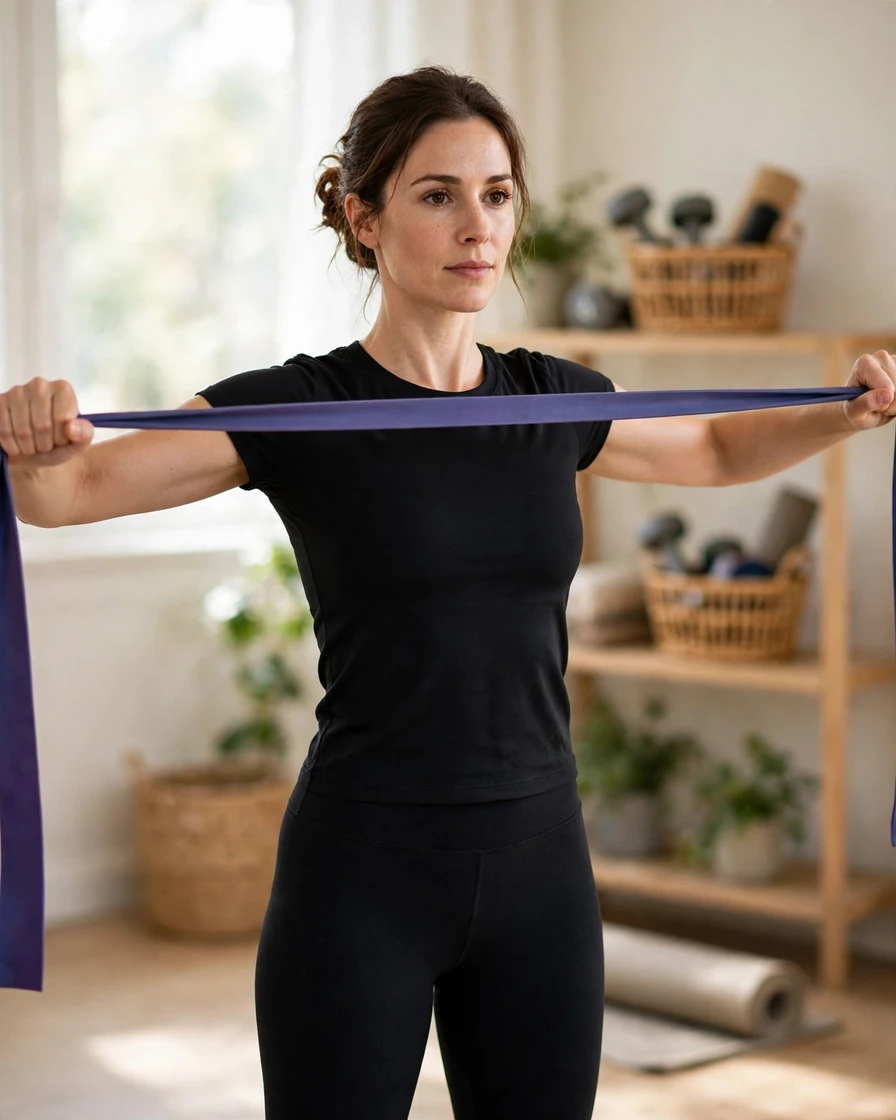
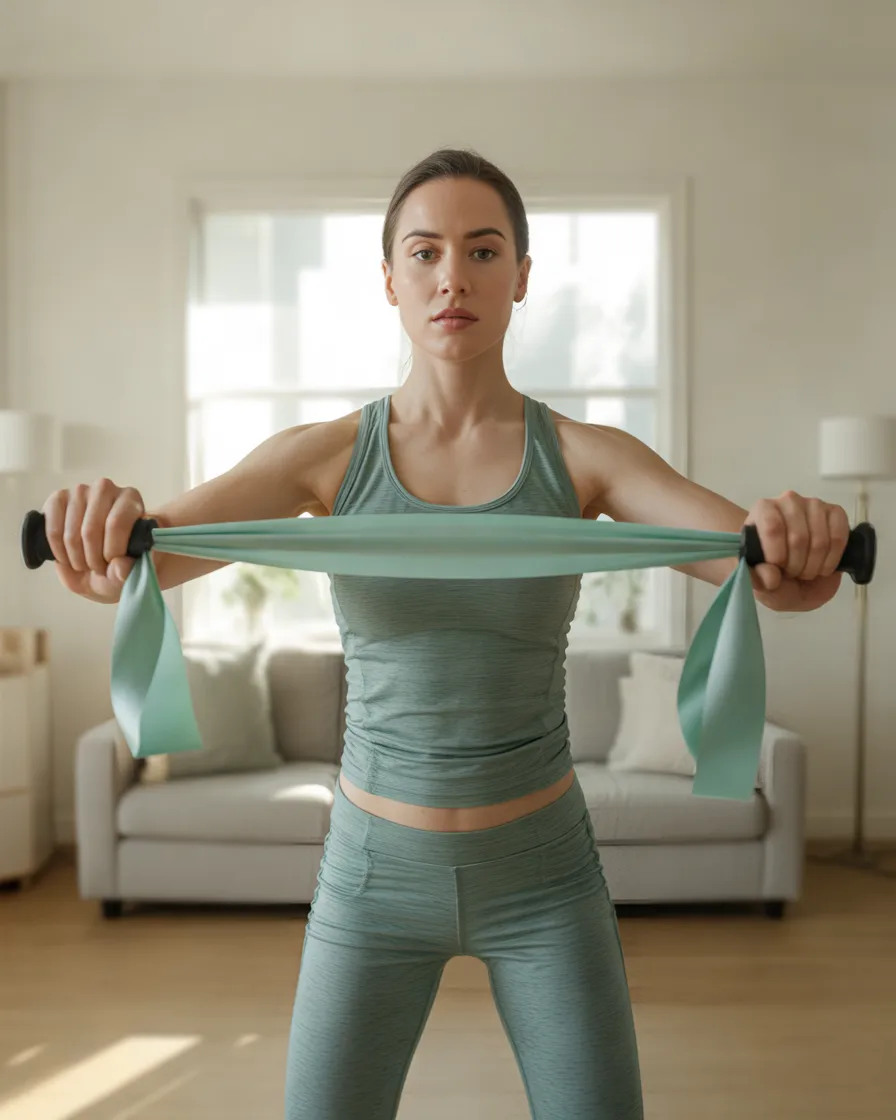
Band pull-aparts use a light resistance band to work the shoulders and upper back together. Stand tall and hold the band in front of you at chest height with both hands about shoulder-width apart, palms facing down. Pull the band apart by moving your hands out to the sides until the band touches your chest, squeezing your shoulder blades together, then return slowly. Aim for 2 to 3 sets of 12 to 15 reps.
This move may help with posture, since it strengthens the muscles that pull the shoulders back after hours at a desk. It suits anyone with a band at home, and a light band is the right start — the last few reps should feel like work but stay controlled. Keep your ribs down and avoid arching your back as you pull. Pull-aparts pair well with a back workout for women at home for balanced upper-body strength. If the band feels too tight, hold it wider apart.
Quick Tip: Pause for one second with the band at your chest and really squeeze your shoulder blades together.
10. Plank Shoulder Taps
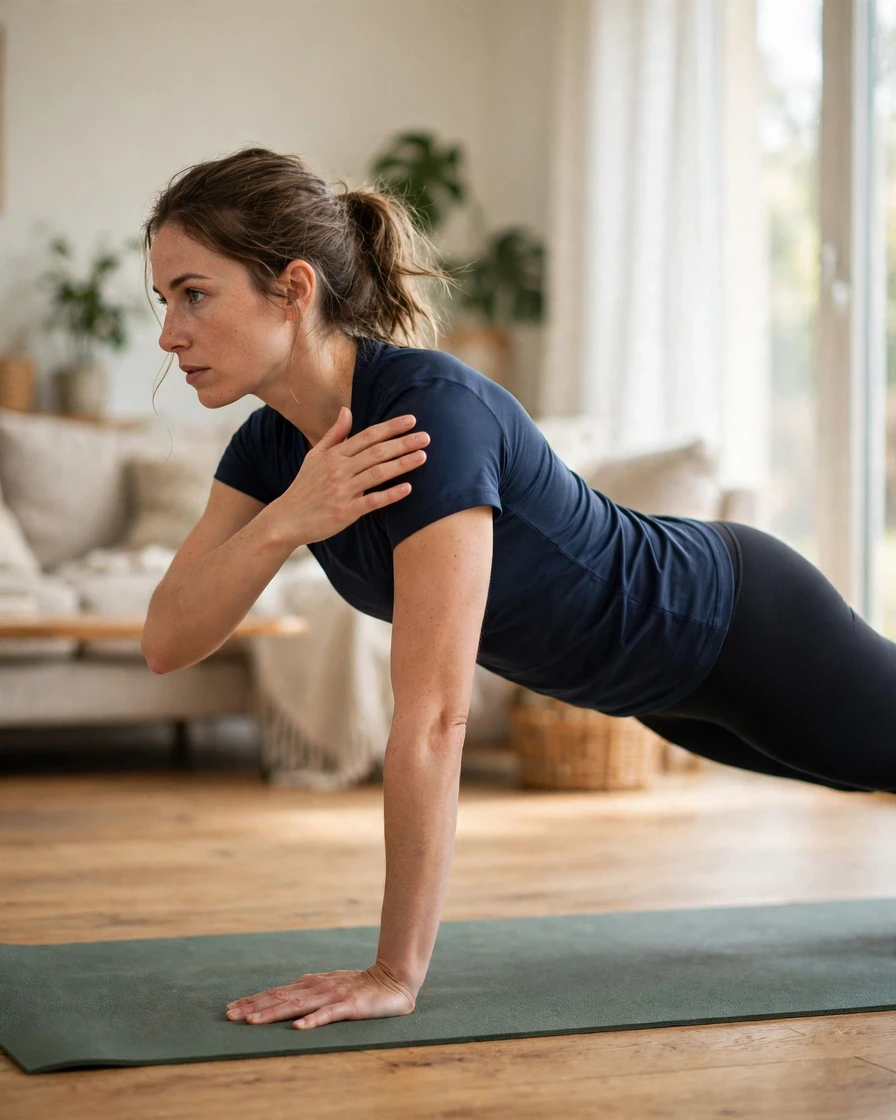
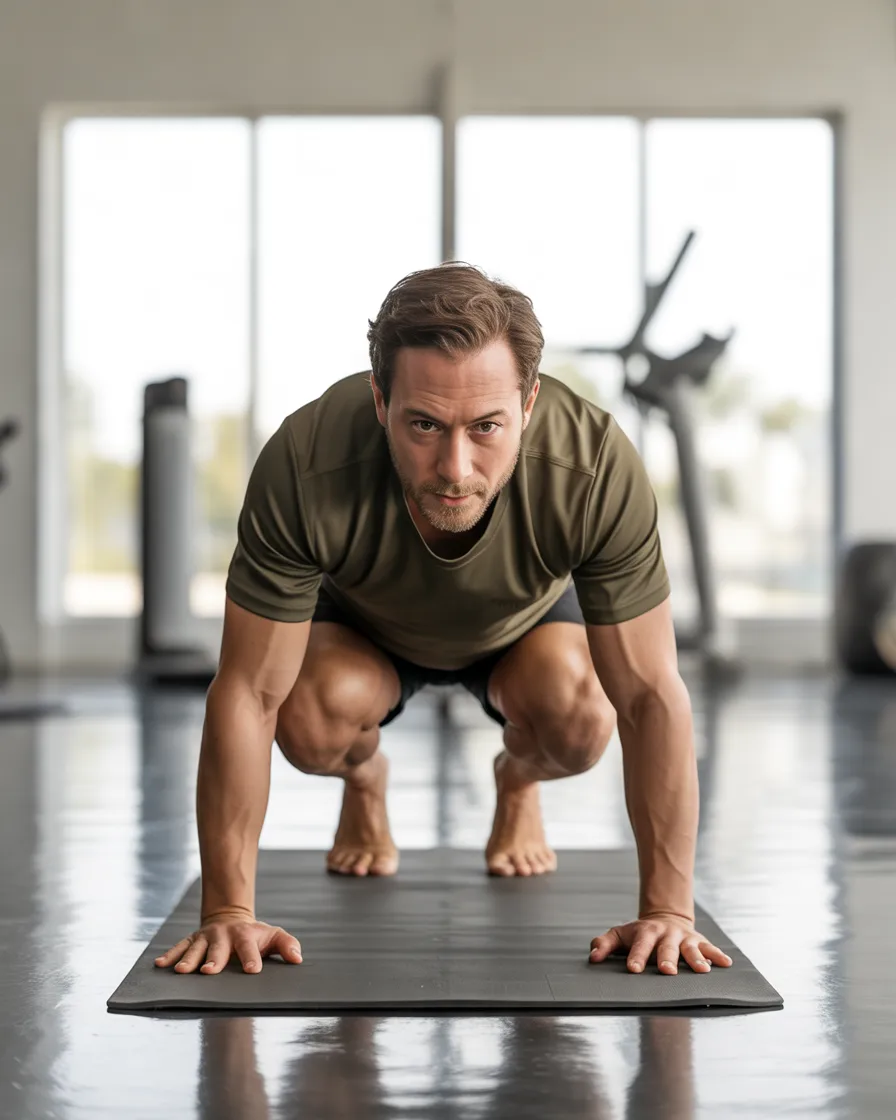
Plank shoulder taps build arm and core strength in one move, using only your body weight. Start in a high plank on a yoga mat, hands under your shoulders and body in a straight line from head to heels. Lift one hand and tap the opposite shoulder, place it back down, then tap with the other hand. Try 2 sets of 8 to 10 taps per side, keeping your hips still.
The challenge is keeping your hips level while one arm lifts — wobbling is normal at first. This move suits anyone comfortable holding a plank, and it works the arms, shoulders and core together. To make it easier, widen your feet or drop to your knees; to make it harder, slow each tap down. Keep your neck in line with your spine and avoid letting your hips sag. As a finisher, it rounds out this routine, and you can slot the set into a daily workout plan at home two or three times a week. Stop if your wrists hurt, and try fists on the mat instead.
Quick Tip: Set your feet a little wider than your hips — a wider base makes balancing much easier.
Expert Tips
- Warm up first: Spend three to five minutes marching in place, rolling your shoulders and doing gentle arm circles before you pick up a weight. Warm muscles move better and are less likely to feel strained.
- Start light and add slowly: Choose a weight you can lift with good form for the full set. When the last two reps stop feeling like work, move up to the next weight — small steps keep your joints happy.
- Rest between sessions: Aim for two or three arm sessions a week with at least one rest day between them. Muscles need time to recover, and rest days are when strength actually builds.
- Breathe and move slowly: Breathe out on the effort and in as you lower the weight. Slow, controlled reps build more strength than fast, swinging ones, and they keep your form honest.
- Listen to your body: Mild muscle tiredness is normal, but sharp pain, pinching or clicking that hurts is a signal to stop. If pain keeps coming back, speak to a healthcare professional before training again.
Final Thoughts
An arm workout women at home can do with little or no equipment is one of the simplest ways to build upper-body strength into a busy week. Ten moves, a few minutes at a time, and a light pair of dumbbells are enough to start — the routine grows with you as you get stronger.
Pick three or four moves to try this week, and add the rest as they feel comfortable. Keep the weights light, the form slow and the sessions regular, and your arms will feel the difference in everyday life before long.
How often should women do an arm workout at home?
Two or three times a week is a good starting point, with at least one rest day between sessions. Muscles need recovery time to grow stronger, so daily arm training is not needed. You can pair arm days with lower-body or core sessions on the other days of the week.
Do I need dumbbells for an arm workout at home?
No, dumbbells are helpful but not essential. Filled water bottles, cans or a resistance band can replace light dumbbells for most moves, and chair dips, arm circles and plank shoulder taps need no equipment at all. Start with what you have and add weights later if you like.
How long does an arm workout at home take?
About 15 to 20 minutes is enough for a full session of these ten moves, including a short warm-up. If you are short on time, pick four or five moves and do two sets of each — a shorter session done regularly still builds strength over time.
Can I do arm workouts every day?
It is better to leave a rest day between arm sessions so the muscles can recover. Training the same muscles every day can lead to soreness and stalled progress. On rest days, gentle stretching or a walk is a good way to stay active without overworking your arms.
What weight dumbbells should women start with?
Most beginners do well starting with 1 to 3 kg (2 to 5 lb) dumbbells for arm exercises. The right weight lets you finish each set with good form while the last two reps feel challenging. When a full set feels easy, move up to the next weight.