A whole body workout at home solves a common problem: the gym is too far, too crowded, or simply does not fit into a busy day. Yet your body still needs regular movement — strength for carrying groceries, balance for stairs, and energy for the hours in between. A small patch of floor and a pair of light dumbbells are all it takes to train every major muscle group.
This routine brings twelve moves together in one session, working your legs, back, chest, shoulders, and core from a gentle warm-up through to a relaxing stretch. Each exercise includes clear form cues and an easier option, so you can adjust it to your level. Clear some space and let’s get moving.
1. Dynamic Warm-Up to Start Your Whole Body Workout at Home
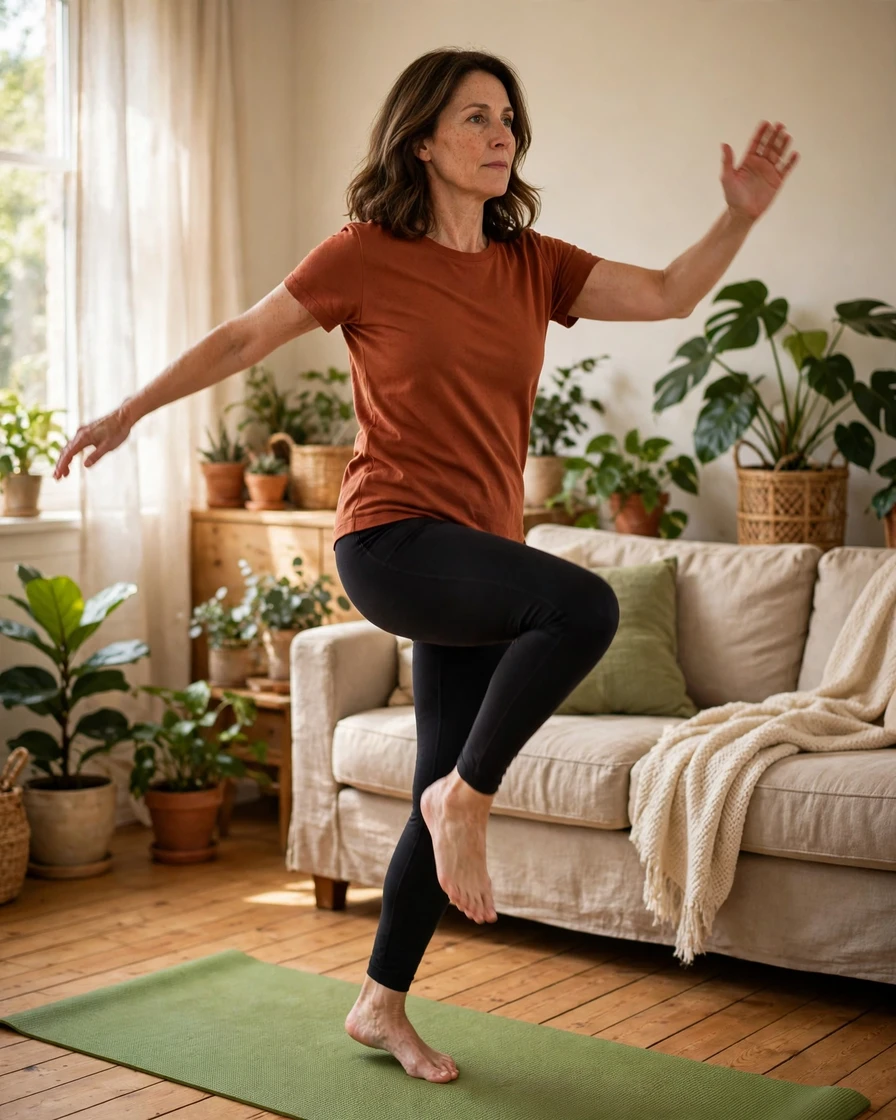
A dynamic warm-up gets your whole body ready to move, gently raising your heart rate and loosening the joints you are about to use. Start by marching in place for one minute, lifting your knees a little higher with each step, then add arm circles — ten slow circles forward, then ten back. Follow with gentle torso twists, hip circles, and a few slow squats without weight, moving smoothly from one motion to the next. Keep everything relaxed and controlled, breathing steadily as your muscles warm up and your joints start to feel loose.
Spend about five minutes on your warm-up before touching a dumbbell. This short preparation may help your body ease into exercise and lower the chance of stiffness or a pulled muscle. If you have a health condition, an injury, or you are pregnant, check with a healthcare professional before starting this or any new exercise routine. A warm-up suits everyone, from complete beginners to regular exercisers, and it is especially helpful on cold mornings when muscles feel stiff. Stop if any movement causes pain, and keep the pace easy — you should feel warm and ready, not tired.
Quick Tip: Put on a song you like and warm up through it — music makes the first five minutes fly by.
2. Goblet Squat With a Dumbbell
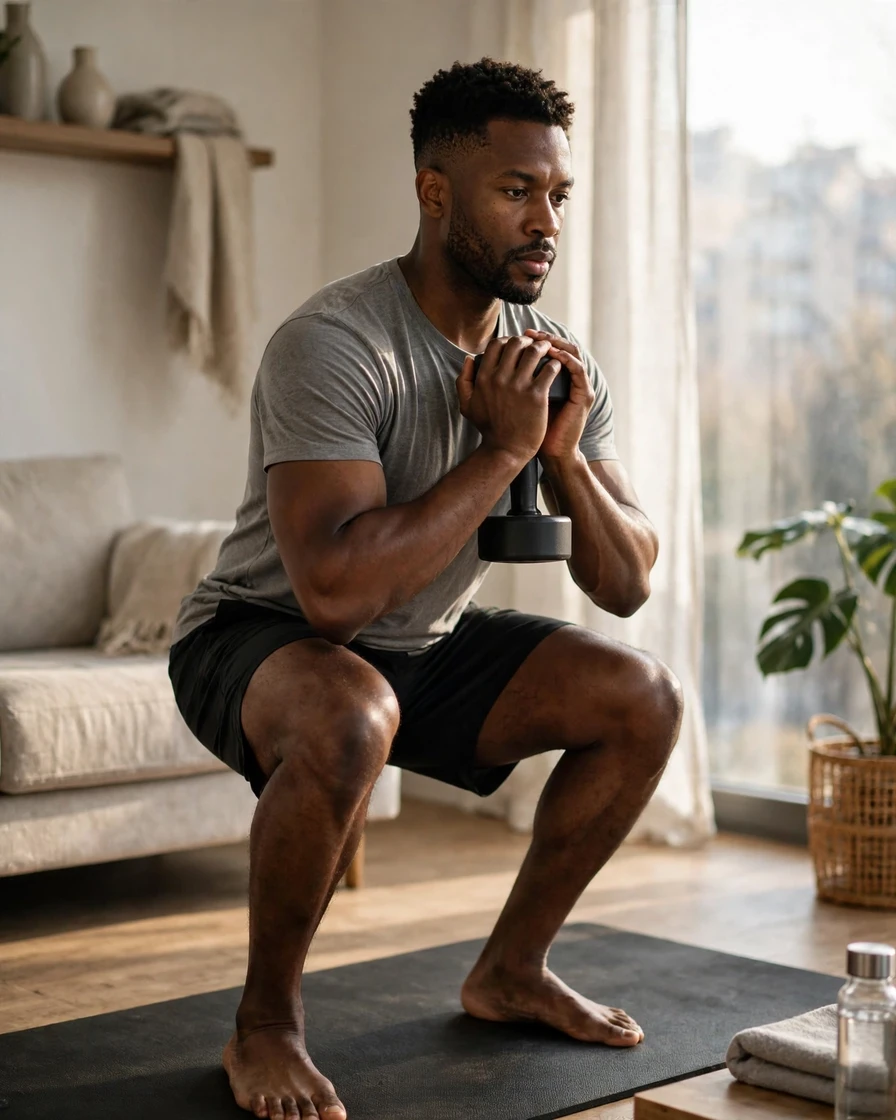
The goblet squat is one of the friendliest ways to load a squat, and it teaches good form almost by itself. Hold one dumbbell upright against your chest with both hands, cupping the top end like a goblet, and stand with your feet a little wider than shoulder-width apart, toes turned slightly out. Push your hips back and bend your knees to lower yourself down, keeping your chest tall and your elbows pointing down between your knees. Lower until your thighs are roughly parallel to the floor, or as far as feels comfortable, then press through your heels to stand up.
This move may help build strength in your legs and glutes while teaching you to keep your spine upright under load, which supports safer everyday lifting. Try two or three sets of eight to twelve reps, resting a minute between sets. Start with a light dumbbell and only add weight when you can finish every rep with good form. If your heels lift off the floor, place a book or small plate under them, or widen your stance. Stop if you feel sharp pain, and never force depth your body is not ready for.
Quick Tip: Keep your elbows tucked inside your knees at the bottom — it helps you stay upright and squat deeper.
3. Dumbbell Romanian Deadlift
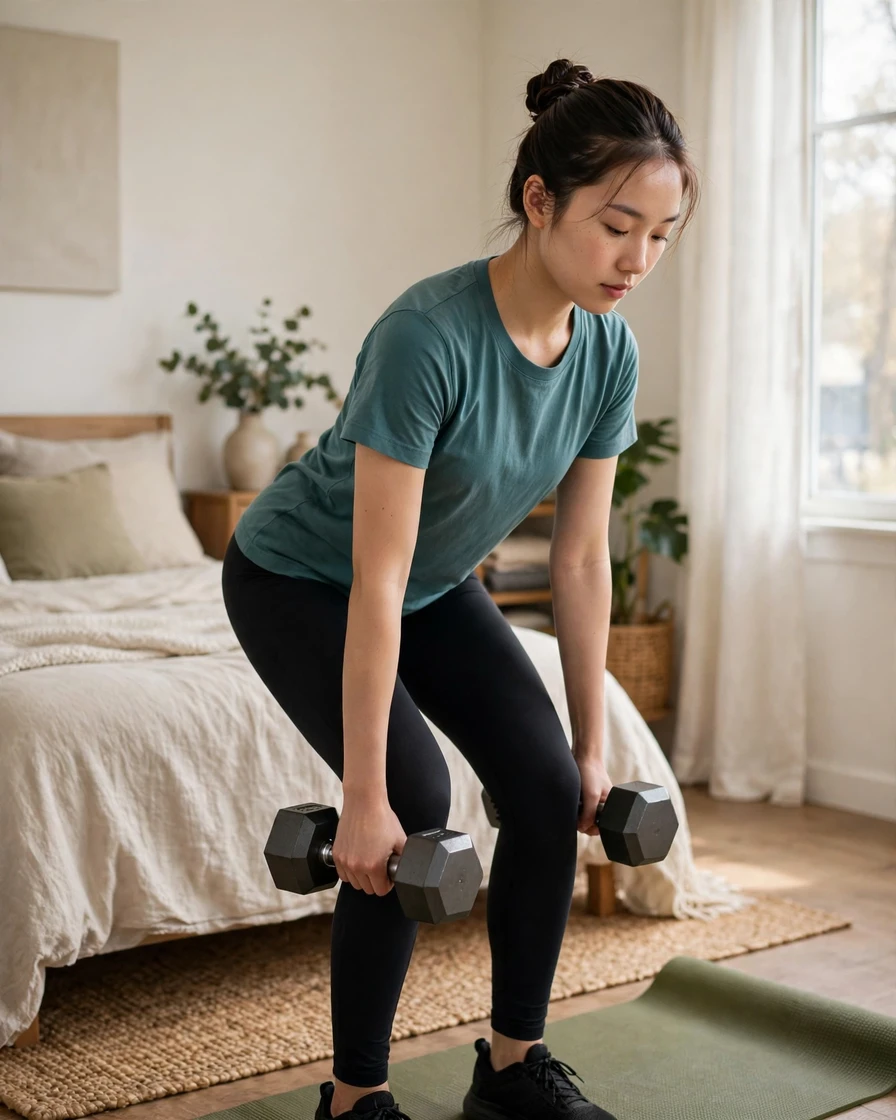
The dumbbell Romanian deadlift trains the back of your body — hamstrings, glutes, and lower back — with a hinge pattern that carries over to picking things up safely. Stand tall holding a dumbbell in each hand in front of your thighs, feet hip-width apart and knees slightly bent. Hinge forward at your hips, sliding the dumbbells down the front of your legs as your hips push back, keeping your back flat and your chin tucked. Lower until you feel a stretch in your hamstrings, around knee height, then drive your hips forward to stand tall again.
This move may help build strength in your posterior chain and support better posture, which can make bending and lifting feel easier. Try two or three sets of ten to twelve reps with a controlled tempo, lowering for two or three seconds on each rep. Keep the dumbbells close to your legs and your core gently braced throughout. If your lower back rounds, shorten the range and lighten the weights — the stretch in your hamstrings is the signal to stop, not the floor. Stop if you feel pain in your back, and keep your neck in line with your spine.
Quick Tip: Slide the dumbbells along your thighs like rails — if they drift away from your legs, your back is doing the work.
4. Floor Dumbbell Chest Press
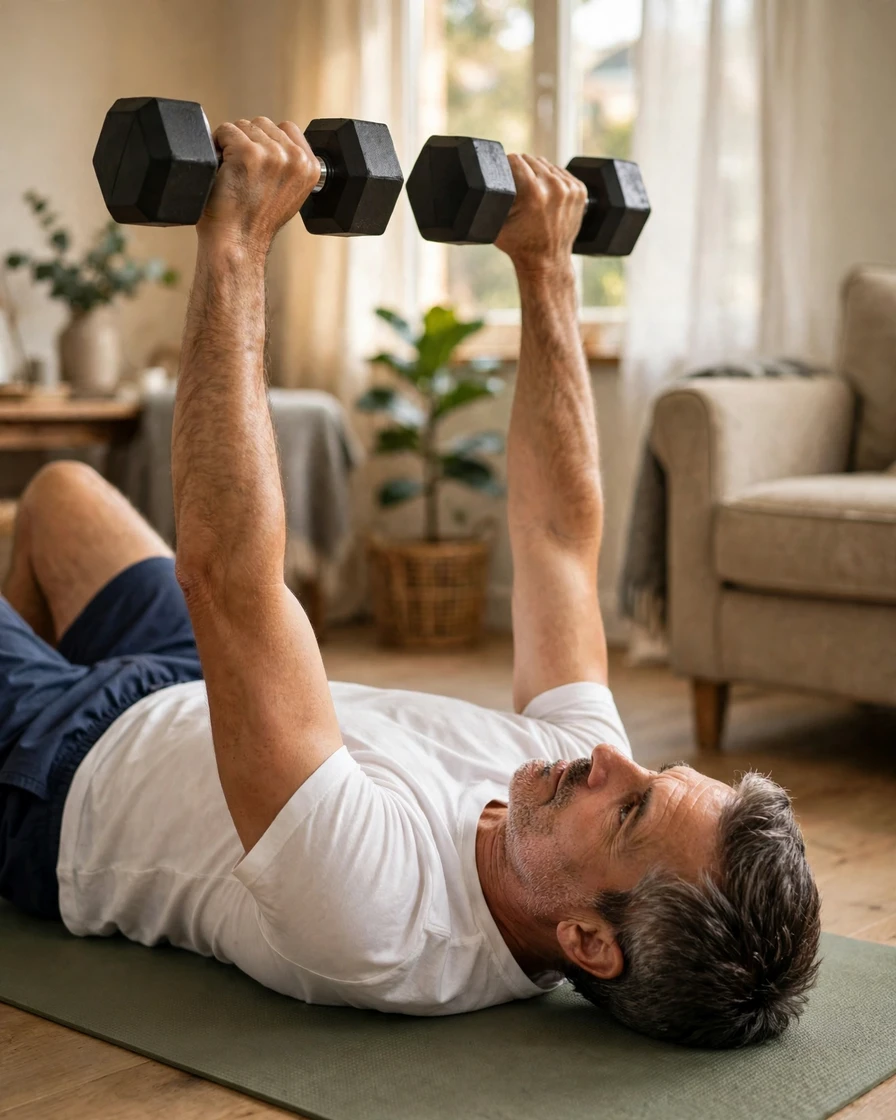
The floor dumbbell chest press gives you the benefits of a bench press without needing a bench, using the floor to keep your shoulders in a safe range. Lie on your back on a mat with your knees bent and feet flat, holding a dumbbell in each hand at chest height with your palms facing toward your feet. Press both dumbbells straight up until your arms are extended, keeping your elbows slightly soft at the top, then lower them slowly until your upper arms rest lightly on the floor. Keep your lower back pressed gently into the mat throughout.
This press may help build strength in your chest, shoulders, and triceps, supporting everyday pushing tasks like opening heavy doors or lifting bags onto a shelf. Try two or three sets of eight to twelve reps, choosing a weight that feels challenging by the last two reps. The floor stops your elbows from dropping too low, which many people find kinder on their shoulders. If one side feels weaker, keep both dumbbells moving together and let the weaker side set the pace. Breathe out as you press up and in as you lower down.
Quick Tip: Press the dumbbells up slowly and lower them even more slowly — the lowering half builds just as much strength.
5. Bent-Over Dumbbell Row
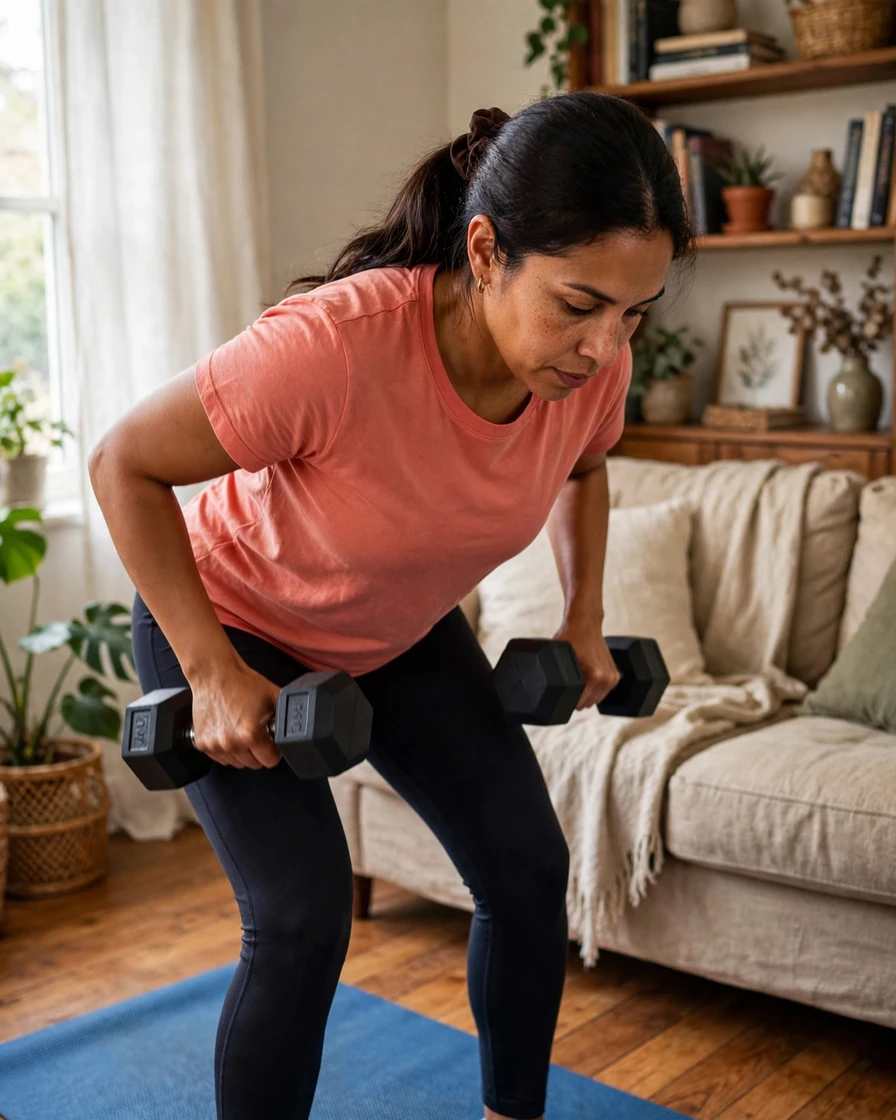
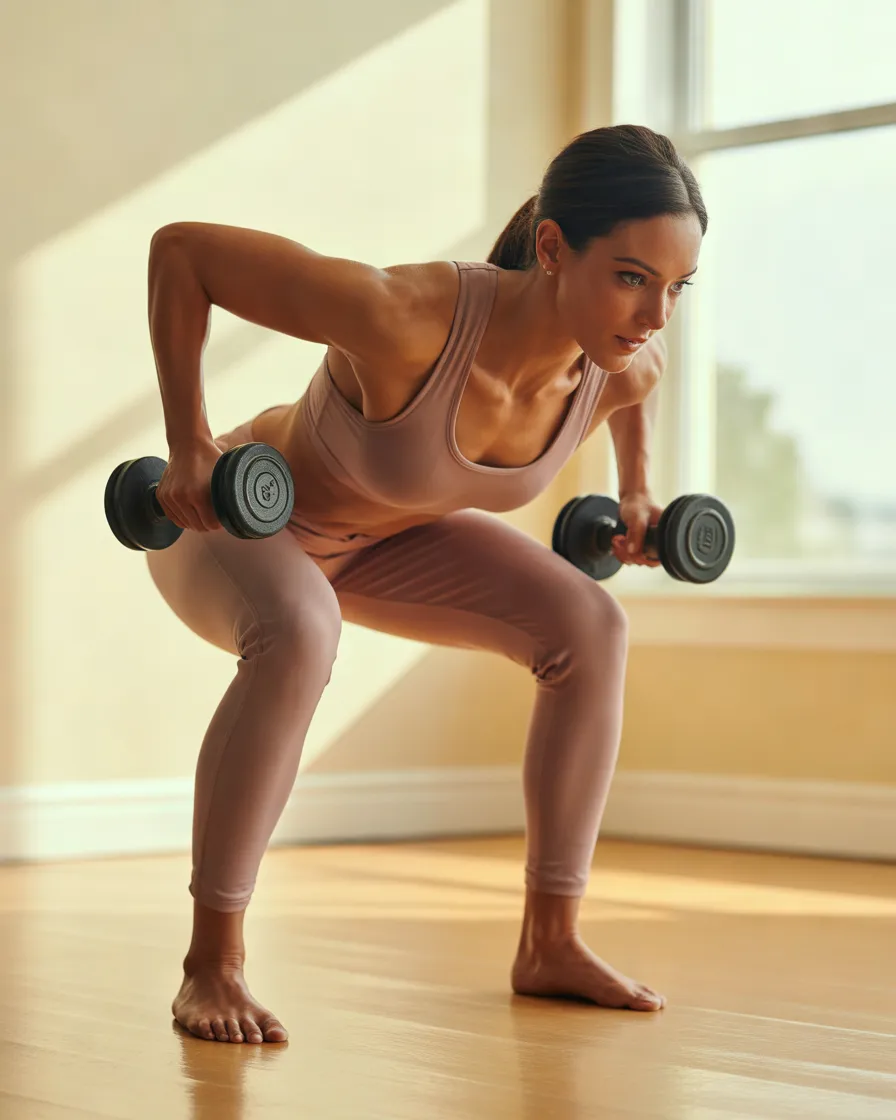
The bent-over dumbbell row is a straightforward way to strengthen your back and improve your posture, which matters if you spend hours at a desk. Stand with your feet hip-width apart, holding a dumbbell in each hand, and hinge forward at your hips until your torso is at roughly a forty-five-degree angle, knees slightly bent and back flat. Let your arms hang straight down, then pull both dumbbells up toward your ribs, squeezing your shoulder blades together at the top, and lower them with control. Keep your neck in line with your spine and your gaze on the floor.
This move may help build strength in your upper back and arms while supporting better posture and shoulder health. Try two or three sets of ten to twelve reps, resting about a minute between sets. If holding the hinge is hard, rest one hand on a sturdy chair or low table and row with one arm at a time. Avoid rounding your back or jerking the weights up — slow, controlled pulls work the muscles far better than fast, sloppy ones. Stop if you feel pain in your lower back, and lighten the weight until your form feels steady.
Quick Tip: Think of pulling your elbows toward your back pockets — it keeps the work in your back, not your arms.
6. Dumbbell Overhead Press
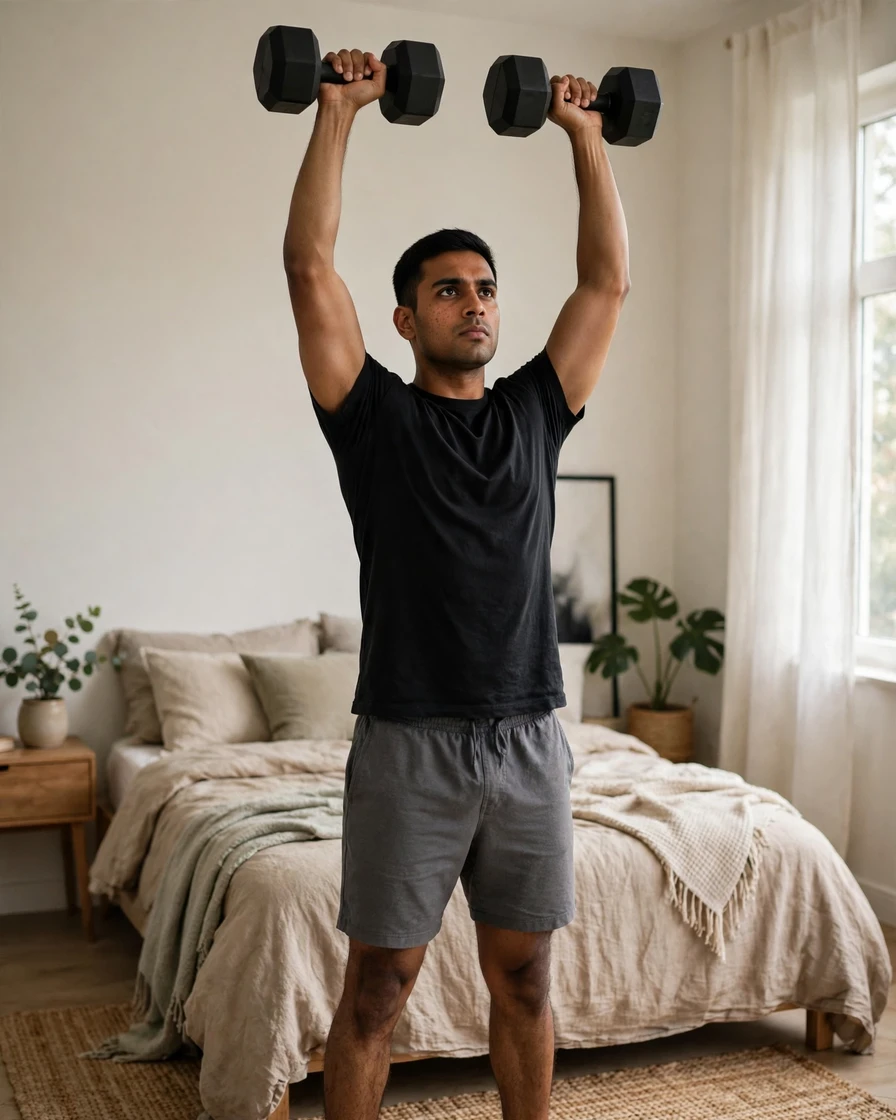
The dumbbell overhead press builds strong shoulders and arms using a movement you repeat every day, from putting dishes away to lifting luggage into an overhead rack. Stand tall with your feet hip-width apart, holding a dumbbell in each hand at shoulder height with your palms facing forward. Brace your core gently, then press both dumbbells straight overhead until your arms are extended, keeping your ribs down and avoiding any arch in your lower back. Lower the weights slowly back to your shoulders, keeping the movement smooth and controlled.
This press may help build shoulder and arm strength while supporting stability through your core, since your trunk works to keep you steady as the weights rise. Try two or three sets of eight to ten reps, resting about a minute between sets. If standing feels unsteady, sit on a sturdy chair with your feet flat and press from there. Choose a weight that challenges the last few reps without making you lean back or shrug. Stop if you feel pain in your shoulders, and never force a weight overhead that you cannot control on the way down.
Quick Tip: Squeeze your glutes gently before each press — it steadies your whole body and protects your lower back.
7. Dumbbell Reverse Lunge
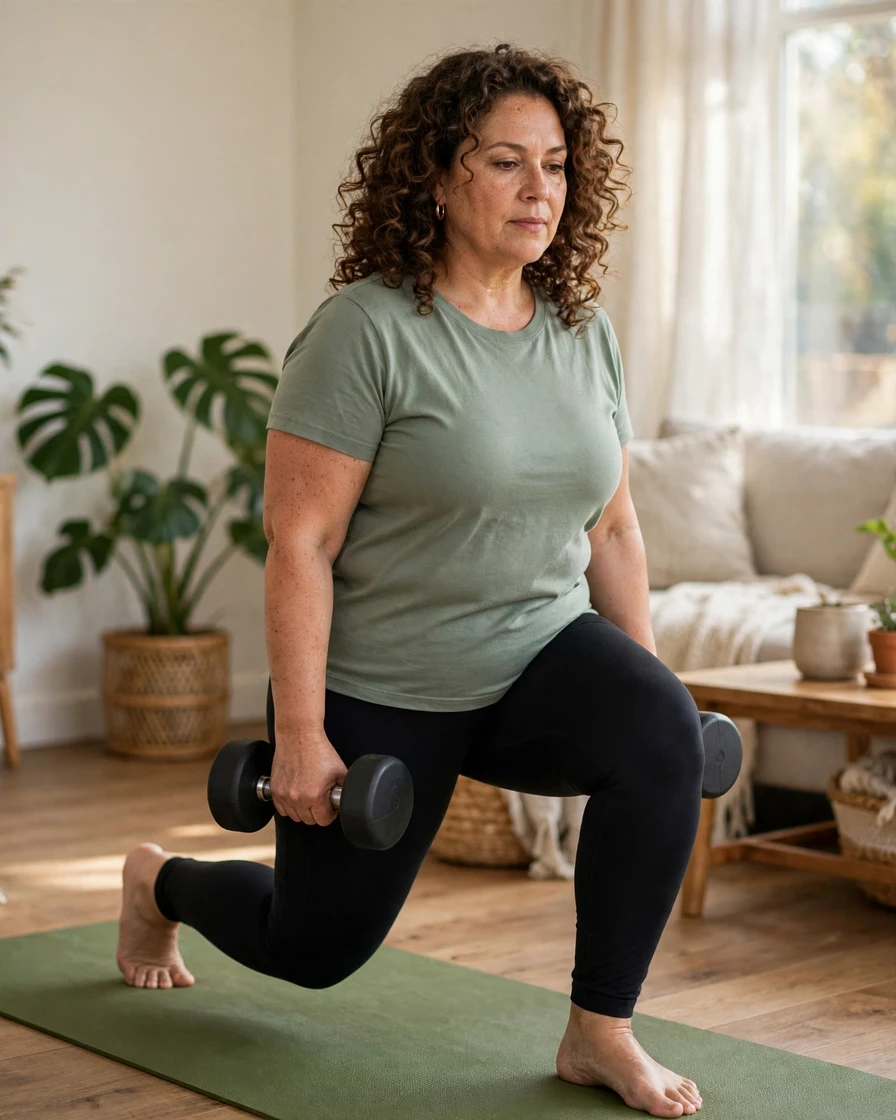
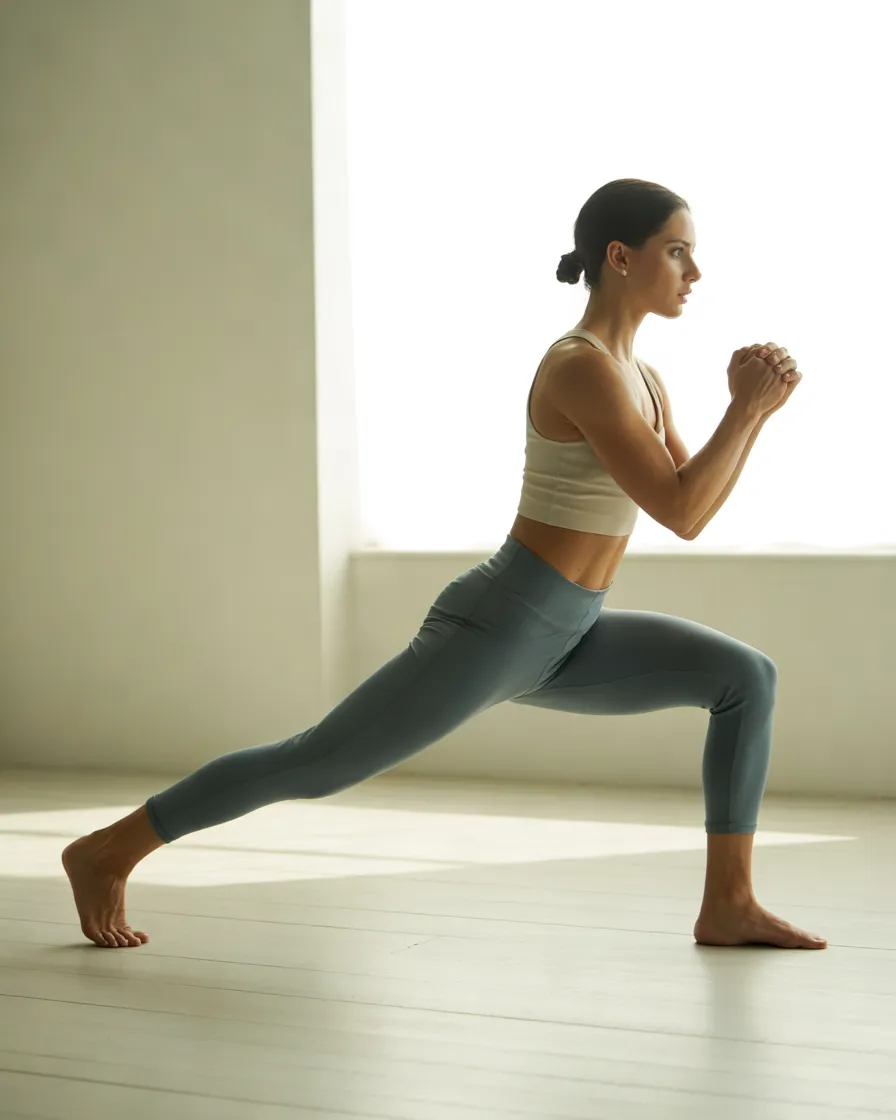
The dumbbell reverse lunge builds single-leg strength and balance, and it tends to feel kinder on the knees than stepping forward. Stand tall holding a dumbbell in each hand at your sides, feet together. Step one foot back about two feet and lower both knees until they are bent at roughly right angles, keeping your front knee over your ankle and your torso upright. Push through your front foot to return to standing, then repeat on the other side, alternating legs or finishing all reps on one side first.
This move may help strengthen your legs and glutes while improving balance and coordination, which can support steadier movement in daily life. Try two or three sets of eight to ten reps per leg, resting about a minute between sets. Hold a chair lightly for balance if you need to, and take shorter steps if the full lunge feels wobbly. To make it harder, hold the bottom position for two seconds or add a knee lift as you return to standing. Keep your front knee tracking in line with your toes and stop if you feel sharp pain in either knee.
Quick Tip: Take a slightly shorter step back than you think you need — it keeps your balance steady and your form clean.
8. Dumbbell Glute Bridge
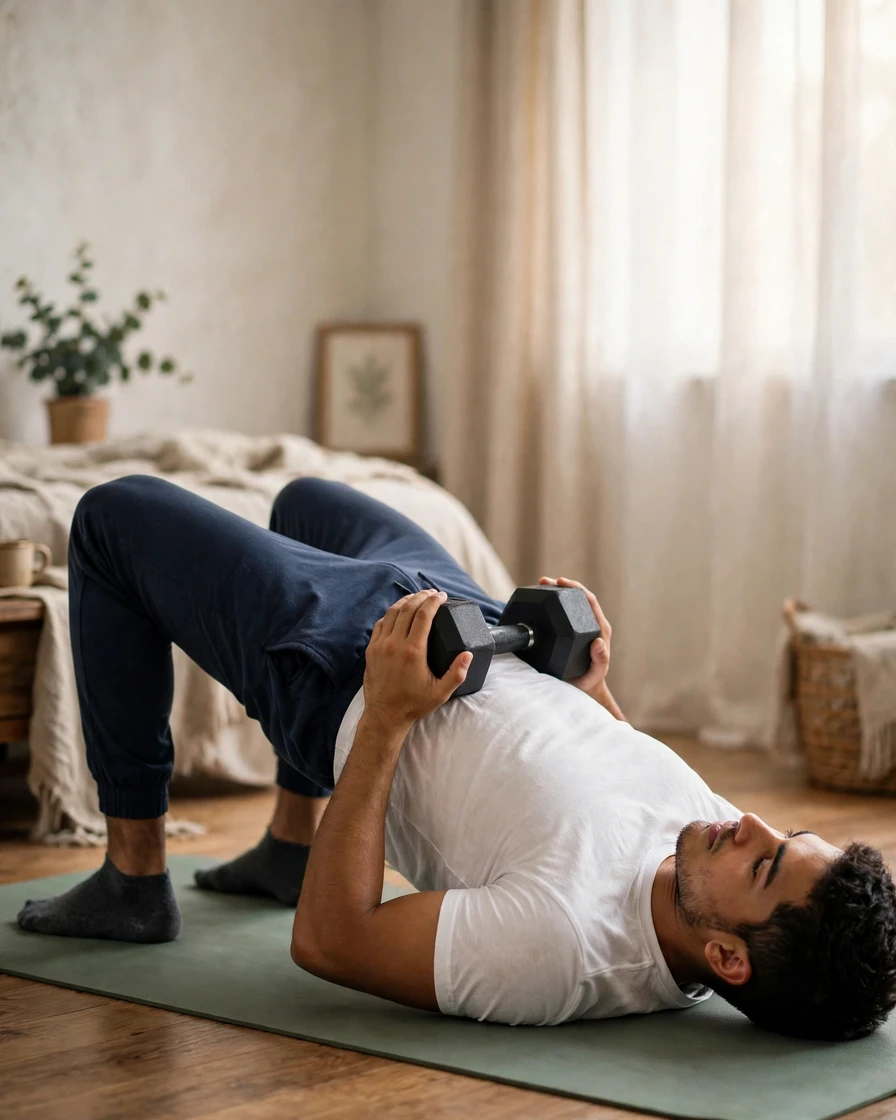
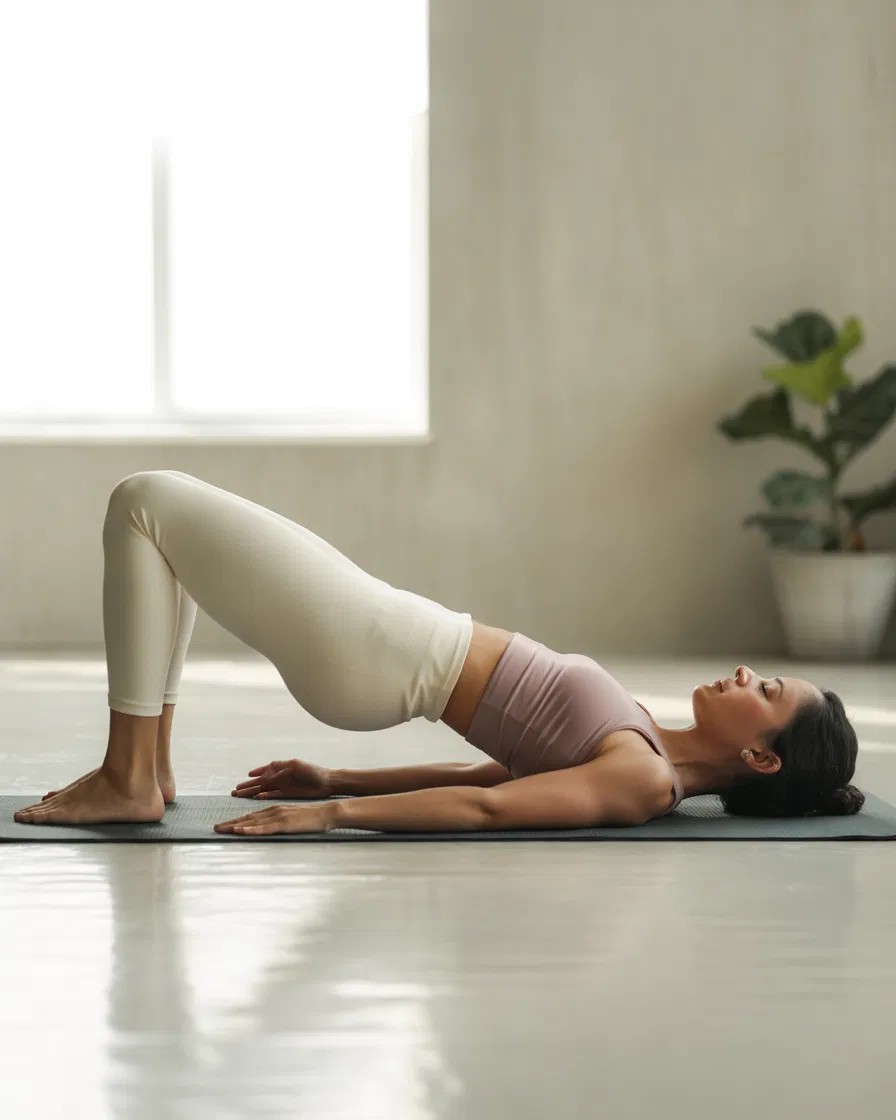
The dumbbell glute bridge wakes up the glutes and hamstrings that spend much of the day switched off in a chair, adding a little weight to a simple floor move. Lie on your back with your knees bent and feet flat on the floor, hip-width apart, and rest a dumbbell across your hips, holding it steady with both hands. Press through your heels to lift your hips until your body forms a straight line from shoulders to knees, squeeze your glutes gently at the top, then lower slowly back down.
Aim for two or three sets of twelve to fifteen reps, pausing briefly at the top of each lift. This exercise may help support hip strength and lower-back comfort, which can make walking, climbing stairs, and standing feel easier. If you feel it mainly in your lower back, move your feet a little closer to your hips and focus on squeezing your glutes. For a harder version, hold the top position for ten seconds or try a single-leg bridge without the dumbbell. Keep your ribs down and your core gently braced throughout.
Quick Tip: Pause and squeeze your glutes for two seconds at the top of every rep — the pause is where the work happens.
9. Resistance Band Lateral Walk
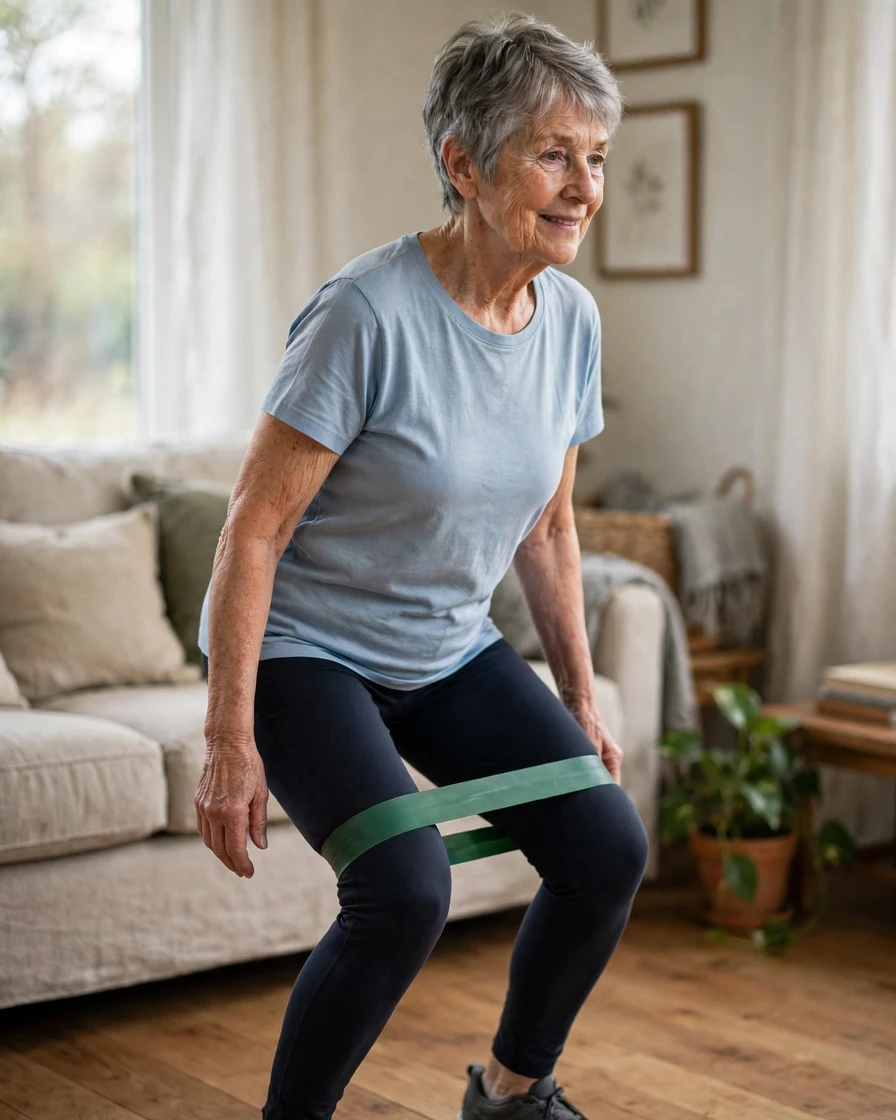
The resistance band lateral walk is a small move with a big payoff, strengthening the outer hips and glutes that keep your knees steady when you walk, run, or climb stairs. Place a loop band just above your knees or around your ankles, stand with your feet hip-width apart, and bend your knees slightly into a quarter squat. Step sideways with one foot, then bring the other foot in to meet it, keeping tension on the band the whole time and your knees tracking in line with your toes.
Take ten to twelve steps in one direction, then walk back the same way, and repeat for two or three rounds. This move may help support hip stability and knee alignment, which can make everyday movement feel steadier and more comfortable. If the band rolls or slips, try a wider band or place it just above your knees instead of at your ankles. Keep your steps short and controlled — rushing lets the band go slack and the work disappear. Stop if you feel pain in your knees or hips, and choose a lighter band if your form starts to wobble.
Quick Tip: Keep your toes pointing forward, not out — it keeps the band working your outer hips instead of your calves.
10. Renegade Row (Plank Row)
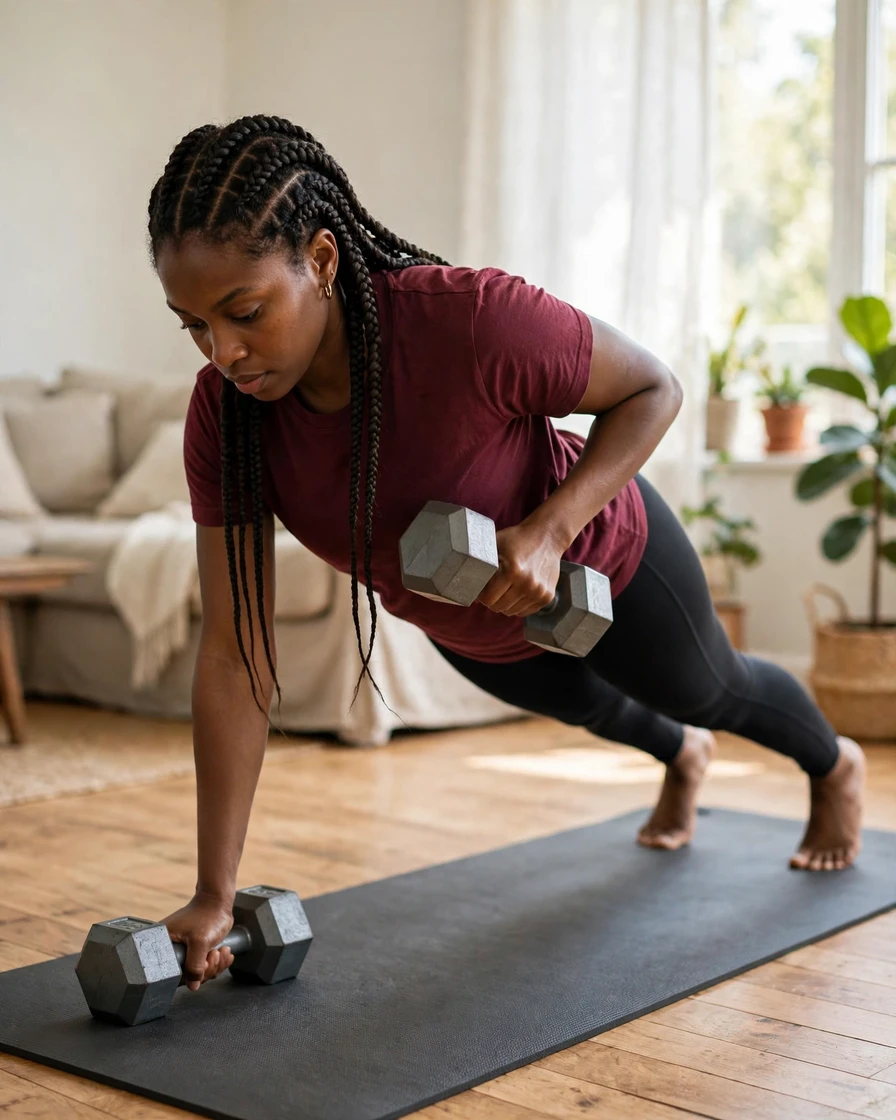
The renegade row combines a plank with a row, training your core, back, and arms in one demanding move. Start in a high plank with your hands gripping a dumbbell in each hand, feet a little wider than hip-width apart for balance. Brace your core and keep your hips level, then pull one dumbbell up toward your ribs, keeping your elbow close to your body, and lower it with control before rowing the other side. The goal is to keep your hips still — if they rock from side to side, widen your feet or lighten the weights.
Try two or three sets of six to eight reps per side, resting about a minute between sets. This exercise may help build core stability and upper-back strength at the same time, which can support better posture and steadier movement. If the full version feels too hard, drop your knees to the floor and row from a kneeling plank, or use lighter dumbbells. Hexagonal dumbbells are the safest choice here because they will not roll under your hands. Stop if your wrists hurt, and keep your neck in line with your spine throughout.
Quick Tip: Set your feet wider than you think you need — a wide base keeps your hips level while you row.
11. Dumbbell Thruster
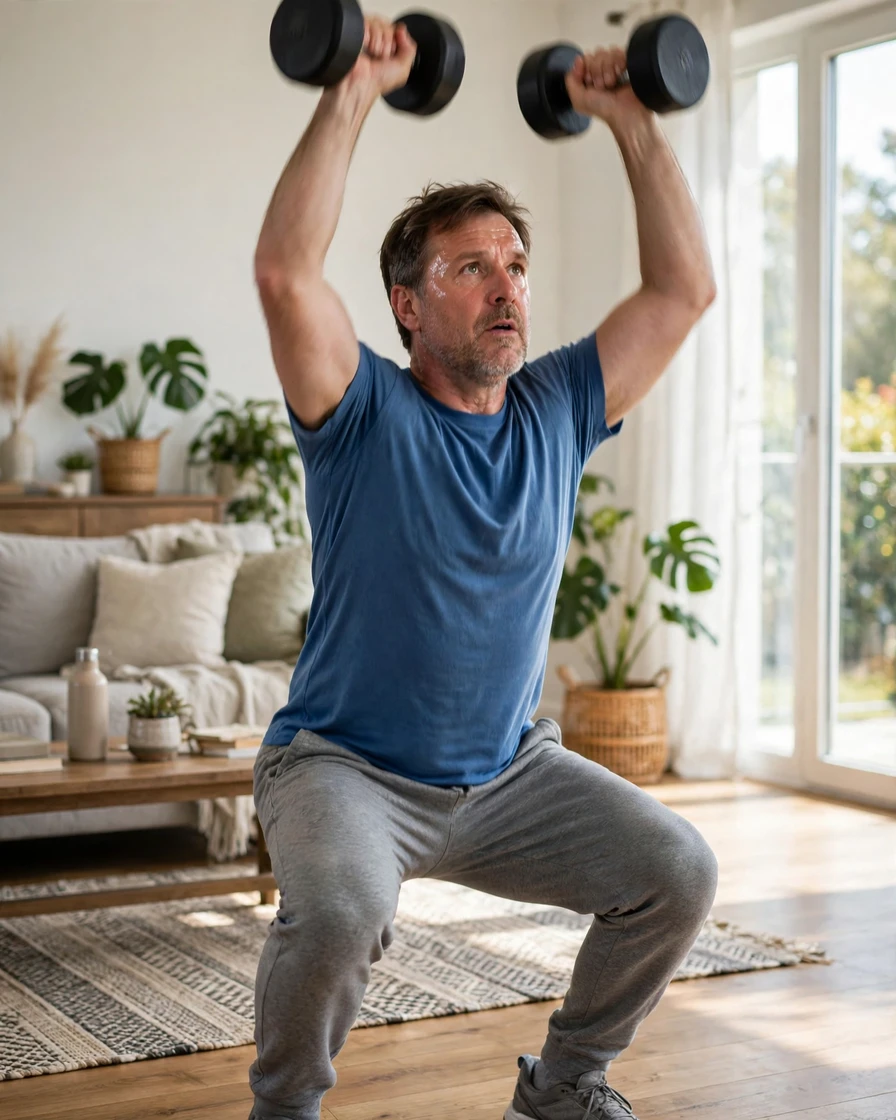
The dumbbell thruster pairs a squat with an overhead press, making it one of the most efficient full-body moves in this routine. Stand with your feet shoulder-width apart, holding a dumbbell in each hand at shoulder height with your palms facing each other. Squat down until your thighs are roughly parallel to the floor, keeping your chest tall, then drive up through your heels and use the momentum to press both dumbbells overhead in one smooth motion. Lower the weights back to your shoulders and repeat.
Try two or three sets of eight to ten reps, resting a little longer between sets than usual because this move raises your heart rate quickly. The thruster may help build strength in your legs, shoulders, and arms while giving your heart and lungs a workout at the same time. Start with light dumbbells and master the rhythm before adding weight — the press should feel like a natural extension of the squat, not a separate struggle. If the overhead press feels too much, do the squat alone and press with one arm at a time. Stop and catch your breath if you feel dizzy.
Quick Tip: Breathe out as you drive up and press — the exhale powers the move and keeps your core braced.
12. Cool-Down Stretch Flow for Your Whole Body Workout at Home
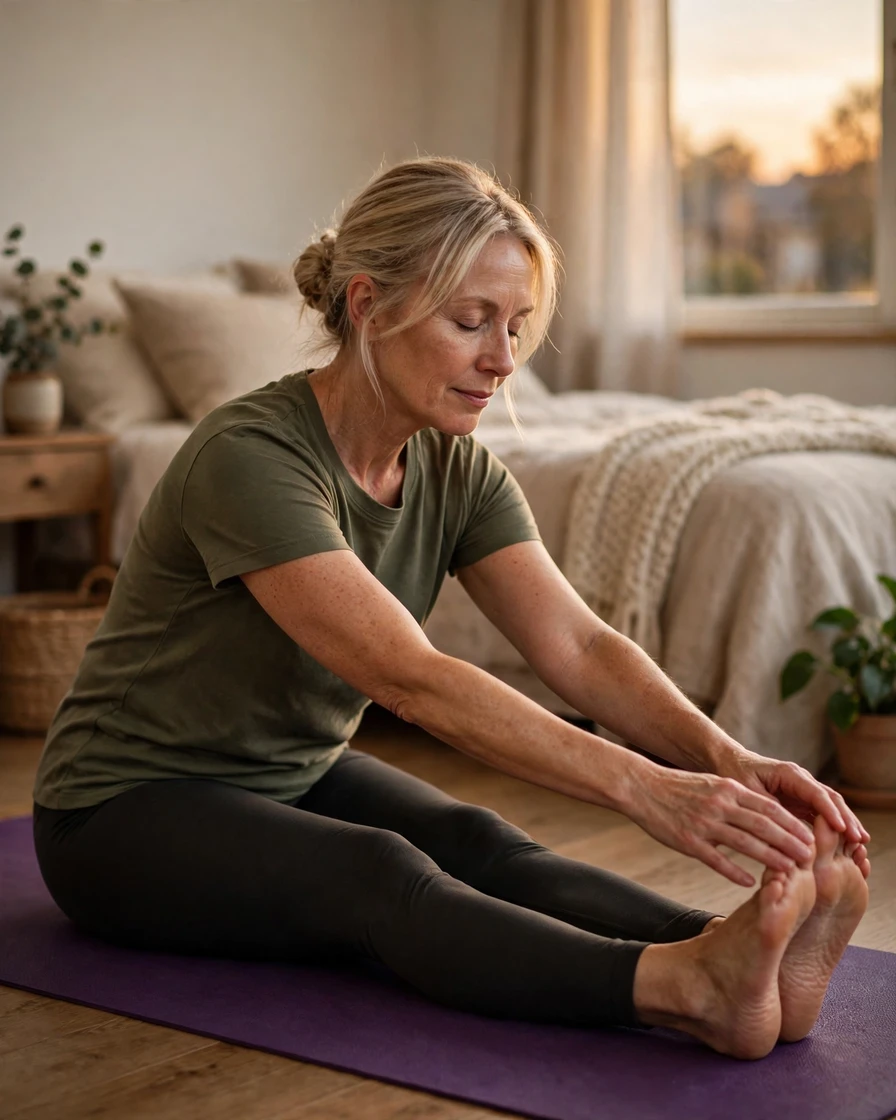
A cool-down stretch flow helps your body shift gently from working hard to resting, letting your heart rate fall and your muscles relax. Start standing and reach both arms overhead, stretching tall and breathing deeply, then fold forward slowly and let your arms hang toward the floor. Step into a gentle lunge stretch for your hip flexors, holding each side for twenty to thirty seconds, then come down to the mat for a seated forward fold and a few slow cat-cow rounds on all fours. Move slowly and breathe deeply throughout.
Spend about five minutes on your cool-down, holding each stretch until it feels comfortable rather than forcing it. Stretching after exercise may help your muscles relax and support flexibility over time. Never bounce or push into pain — a gentle pull is enough, and the stretch should feel pleasant rather than sharp. This closing flow suits everyone, and it is a good moment to notice how your body feels after the session. Finish with a few slow breaths lying on your back, then stand up slowly — your whole body workout at home is complete.
Quick Tip: Save one slow, deep breath for each stretch — it helps your muscles relax and your heart rate settle.
Expert Tips
– Warm up and cool down every time: The warm-up and the closing stretch flow are part of the workout, not optional extras. Skipping them may increase the chance of stiffness or a pulled muscle.
– Start light and progress slowly: Begin with the lightest dumbbells you own and add weight only when every rep feels controlled. Small steps add up quickly, and gradual progress helps your body adapt.
– Put form before weight: A lighter dumbbell lifted well works your muscles better than a heavy one lifted badly. Film yourself from the side now and then to check your squat, hinge, and press positions.
– Listen to your body and get advice when needed: Mild muscle effort is normal, but sharp pain, dizziness, or chest discomfort are signs to stop and rest. If you have a health condition or an injury, speak to a healthcare professional before starting this routine.
Final Thoughts
A whole body workout at home does not need a gym membership or fancy equipment to be effective. Twelve simple moves, a pair of dumbbells, and a resistance band are enough to build strength across your whole body, and because the routine lives in your home, there is nothing standing between you and your next session. Start gently, progress a little each week, and remember that a short workout you actually do beats a perfect one you keep postponing. If you found this routine helpful, save it somewhere handy and try your first session today.
How long does this whole body workout at home take?
The full session takes about thirty to forty minutes, including the warm-up and cool-down. The warm-up runs for about five minutes, the ten strength moves take roughly twenty-five minutes, and the closing stretches take about five minutes. If you are short on time, do one set of each move instead of two or three and finish in around twenty minutes.
Can beginners do this whole body workout at home?
Yes, this routine suits beginners. Every move includes an easier option, such as lighter dumbbells or a chair for balance, so you can start at a comfortable level and progress gradually. Take longer rests if you need them, and focus on good form rather than speed. If you have not exercised in a while, check with a healthcare professional first.
What equipment do I need for this workout?
You need very little: a pair of light to medium dumbbells and one loop resistance band. A mat or rug makes the floor moves more comfortable, and a sturdy chair nearby helps with balance during lunges. If you do not own dumbbells yet, start with water bottles or canned goods, and buy a pair once the routine becomes a habit.
How many days a week should I do this routine?
Two or three days a week works well for most people, with at least one rest day between sessions. Your muscles need recovery time to adapt and grow stronger, so avoid doing the full strength session every day. On rest days, a gentle walk or some light stretching is a good way to stay active while your body recovers.
When will I see results from a whole body workout at home?
That depends on your starting point, consistency, sleep, and overall lifestyle, so there is no fixed timeline. Many people notice small changes first, such as feeling steadier on stairs or finding the moves easier after two or three weeks. Visible changes in strength usually take longer, so focus on showing up regularly and celebrating small progress.