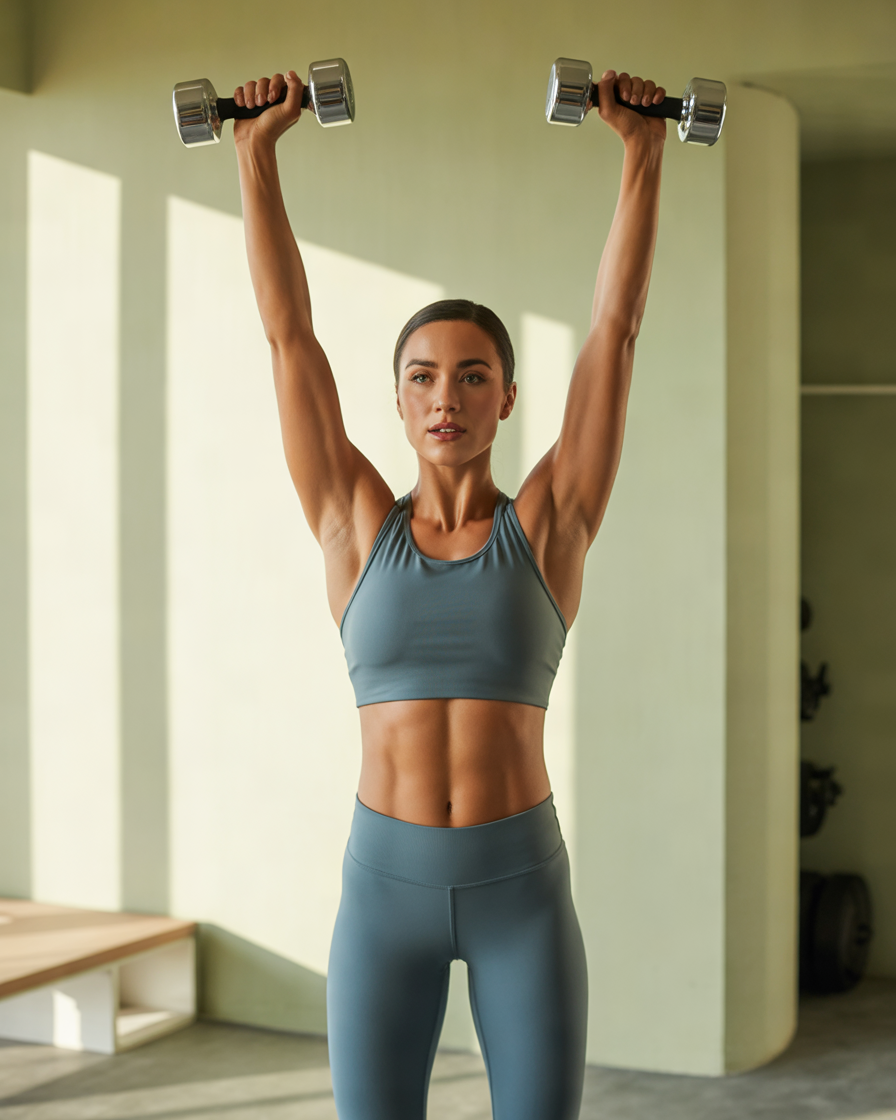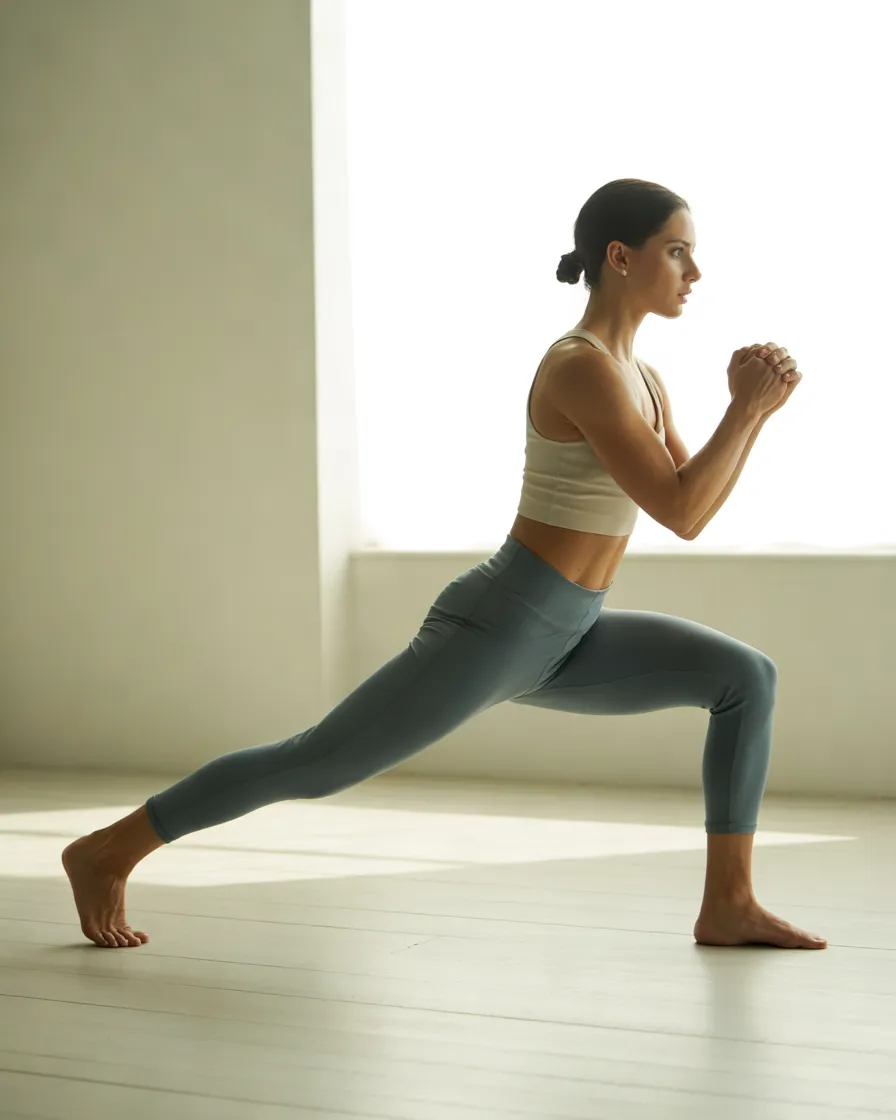
Building a strong back is an important part of a balanced fitness routine. While many women focus on their abs, legs, and glutes, the back muscles deserve just as much attention. A well-planned back workout for women at home can help strengthen the upper and lower back, improve muscular endurance, support better posture, and make everyday movements feel easier.
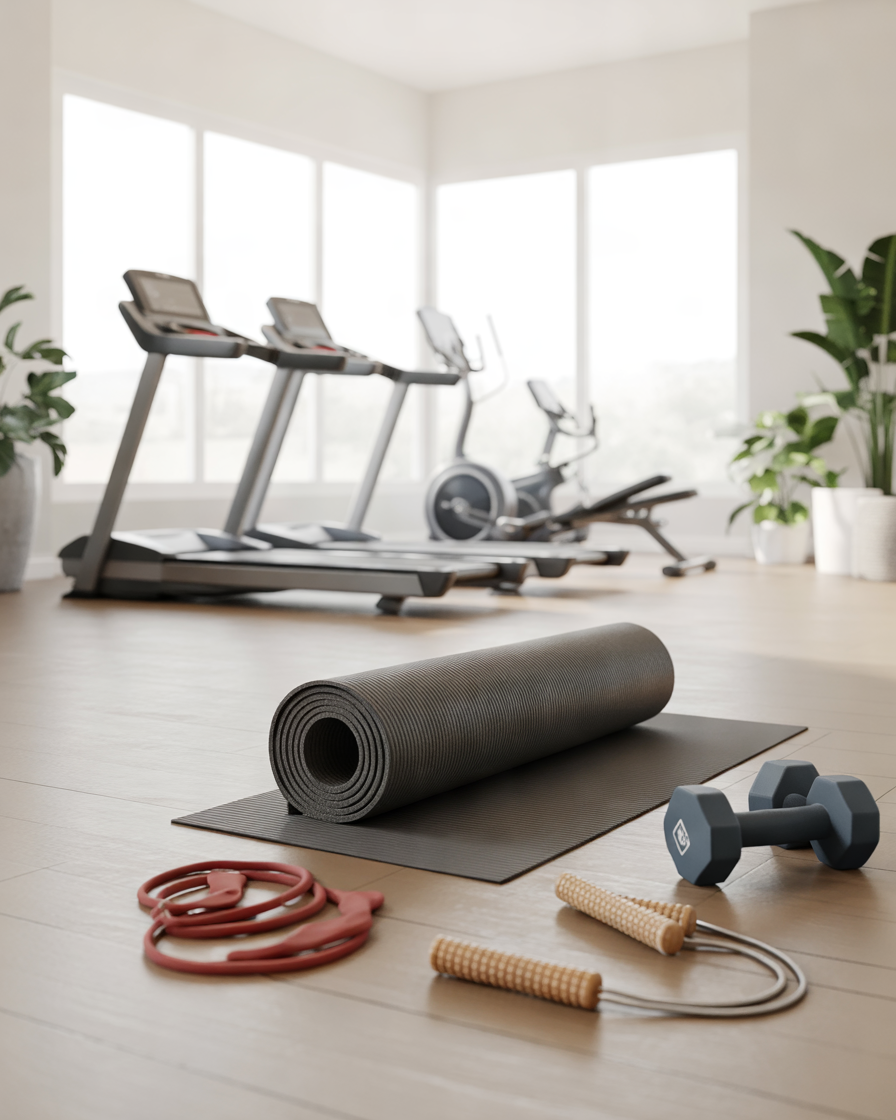
The good news is that you do not need an expensive gym membership or complicated equipment to train your back. Many effective back exercises can be performed in your living room using your body weight, resistance bands, or a pair of light dumbbells. Even a small workout space is enough to get started.
A home back workout can target several muscle groups, including the latissimus dorsi (lats), trapezius, rhomboids, rear deltoids, and spinal erectors. These muscles help with movements such as pulling, lifting, carrying, and maintaining an upright posture.
Whether you are a beginner, an experienced exerciser, or someone returning to fitness after a break, choosing the right exercises makes a difference. The key is to focus on controlled movements, proper technique, and gradual progression rather than rushing through repetitions.
In this guide, you will discover 10 effective back workouts for women at home, including beginner-friendly bodyweight exercises and resistance-based movements. Each exercise includes its benefits, practical instructions, useful tips, suitable fitness levels, and important safety considerations.
Let’s explore how to build a practical home back workout that fits into your schedule.
1. Superman Exercise: A Beginner-Friendly Lower Back Workout at Home
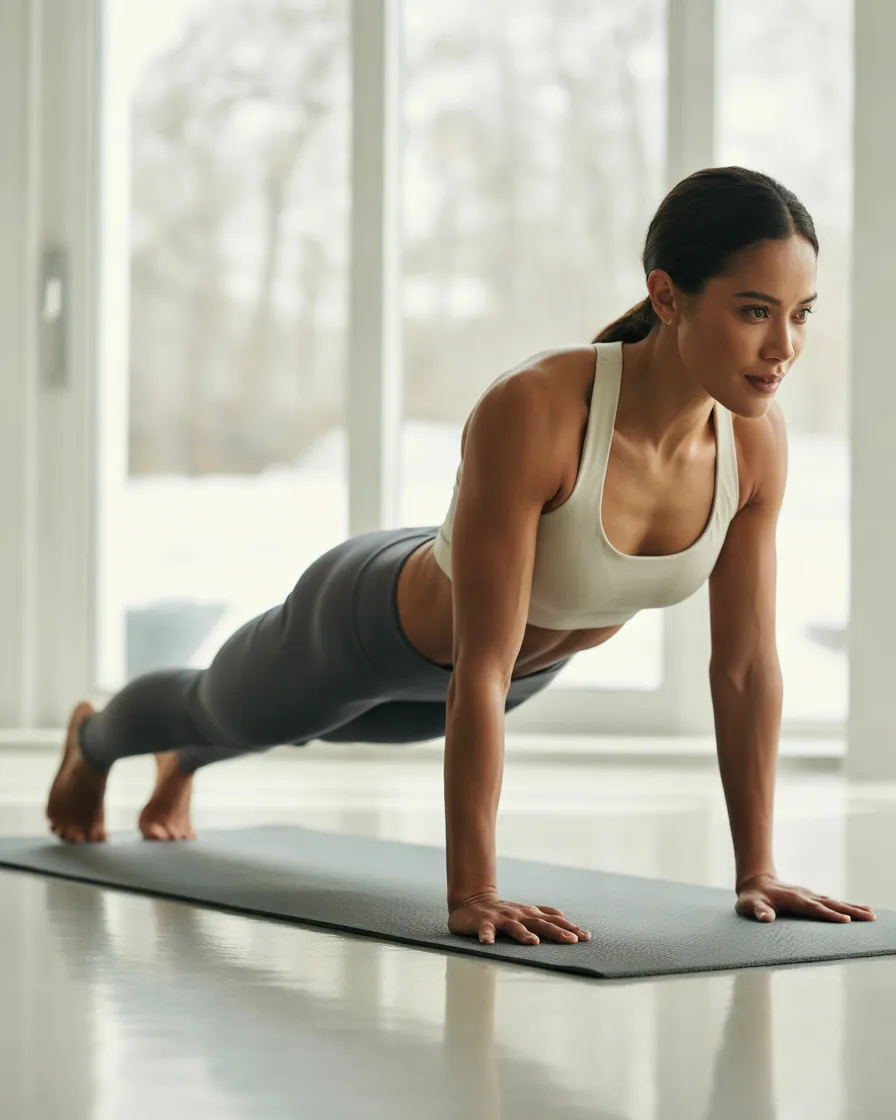
The Superman exercise is a simple bodyweight movement that targets the muscles along your spine. It is especially useful for women who want to develop lower-back endurance without purchasing workout equipment.
You perform this exercise while lying face down on a mat, making it suitable for small home workout spaces.
Benefits
- Activates the spinal erectors and supporting back muscles.
- Helps develop muscular endurance in the lower back.
- Encourages controlled coordination between the upper and lower body.
- Requires no equipment.
- Can be included in beginner-friendly strength routines.
How to Perform the Superman Exercise
- Lie face down on an exercise mat with your arms extended in front of you.
- Keep your legs straight and position them comfortably apart.
- Gently engage your abdominal muscles.
- Slowly lift your arms and legs slightly off the floor.
- Keep your neck neutral and avoid looking forward.
- Hold the position for two to three seconds.
- Lower your arms and legs slowly to the starting position.
- Repeat for 8–12 controlled repetitions.
Practical Tips
Think about lengthening your body rather than lifting as high as possible. A small, controlled lift is often more comfortable and effective than forcing your back into an exaggerated arch.
If lifting both arms and legs feels difficult, start by lifting only your arms or only your legs.
Who It May Suit
This exercise may suit beginners and women who want to add a simple lower-back endurance movement to their home fitness routine.
Important Considerations
Avoid jerking your arms or legs upward. If you experience lower-back discomfort, reduce the lifting range or stop the exercise. People with existing back injuries should seek professional guidance before attempting it.
2. Bent-Over Dumbbell Rows: An Effective Upper Back Workout for Women
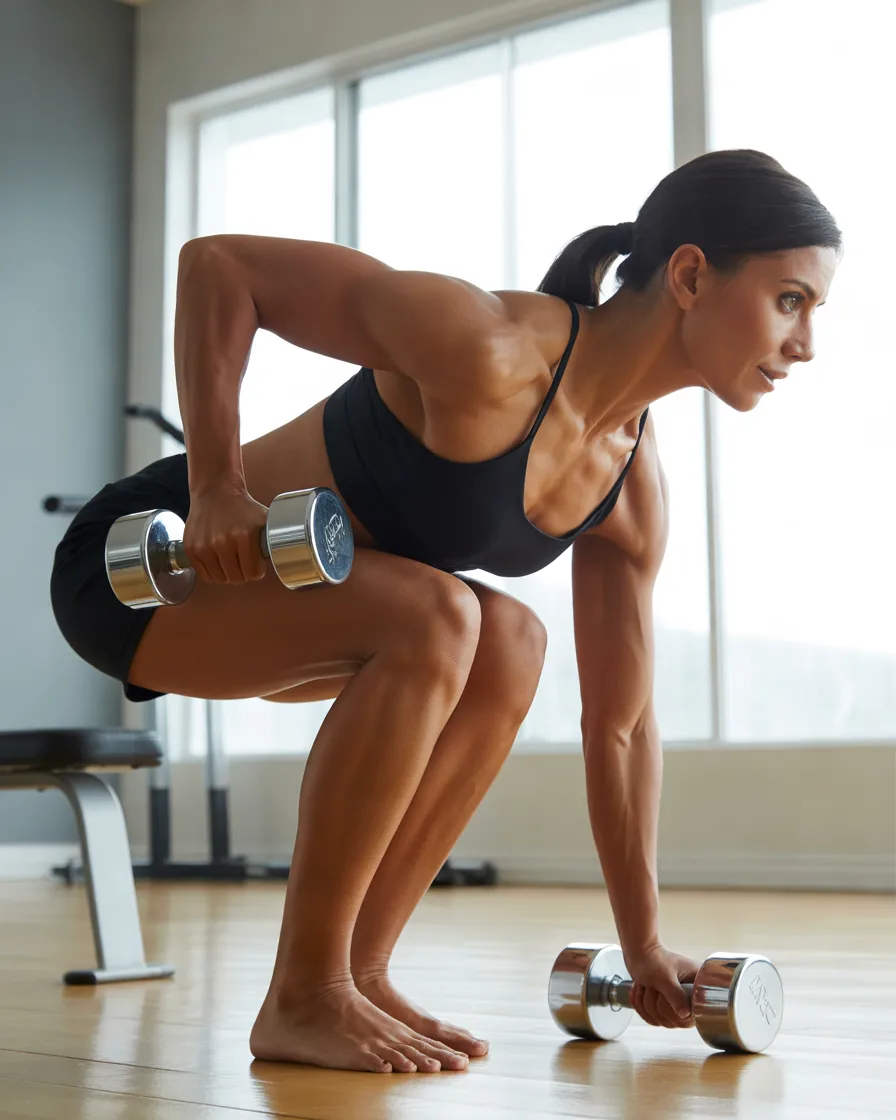
Bent-over dumbbell rows are one of the most practical exercises for strengthening the upper and middle back at home. This movement works several pulling muscles, including the lats, rhomboids, and trapezius.
You only need a pair of dumbbells. Beginners can start with lightweight dumbbells or suitable household weights.
Benefits
- Strengthens the upper and middle back.
- Engages the latissimus dorsi muscles.
- Supports balanced pulling strength.
- Also recruits the rear shoulders and arms.
- Helps develop control during lifting and pulling movements.
How to Perform Bent-Over Dumbbell Rows
- Stand with your feet approximately hip-width apart.
- Hold one dumbbell in each hand with your palms facing inward.
- Slightly bend your knees.
- Push your hips backward and lean your torso forward while maintaining a neutral spine.
- Allow your arms to hang naturally beneath your shoulders.
- Pull both dumbbells toward your waist.
- Gently squeeze your shoulder blades together.
- Lower the dumbbells slowly.
- Complete 10–12 repetitions.
Practical Tips
Keep your elbows relatively close to your body and avoid shrugging your shoulders toward your ears.
Choose a weight that allows you to control both the lifting and lowering phases. If your back rounds during the movement, reduce the weight or shorten your range of motion.
Who It May Suit
This exercise is suitable for women with basic movement experience who want to build upper-body strength. Beginners can start with very light weights and practice the hip-hinge position before adding resistance.
Important Considerations
Do not use momentum to swing the weights upward. Keep your spine neutral and avoid holding your breath. If you have a history of back problems, consult a qualified exercise professional or healthcare provider about suitable modifications.
3. Bird Dog Exercise: Improve Back Stability and Core Control
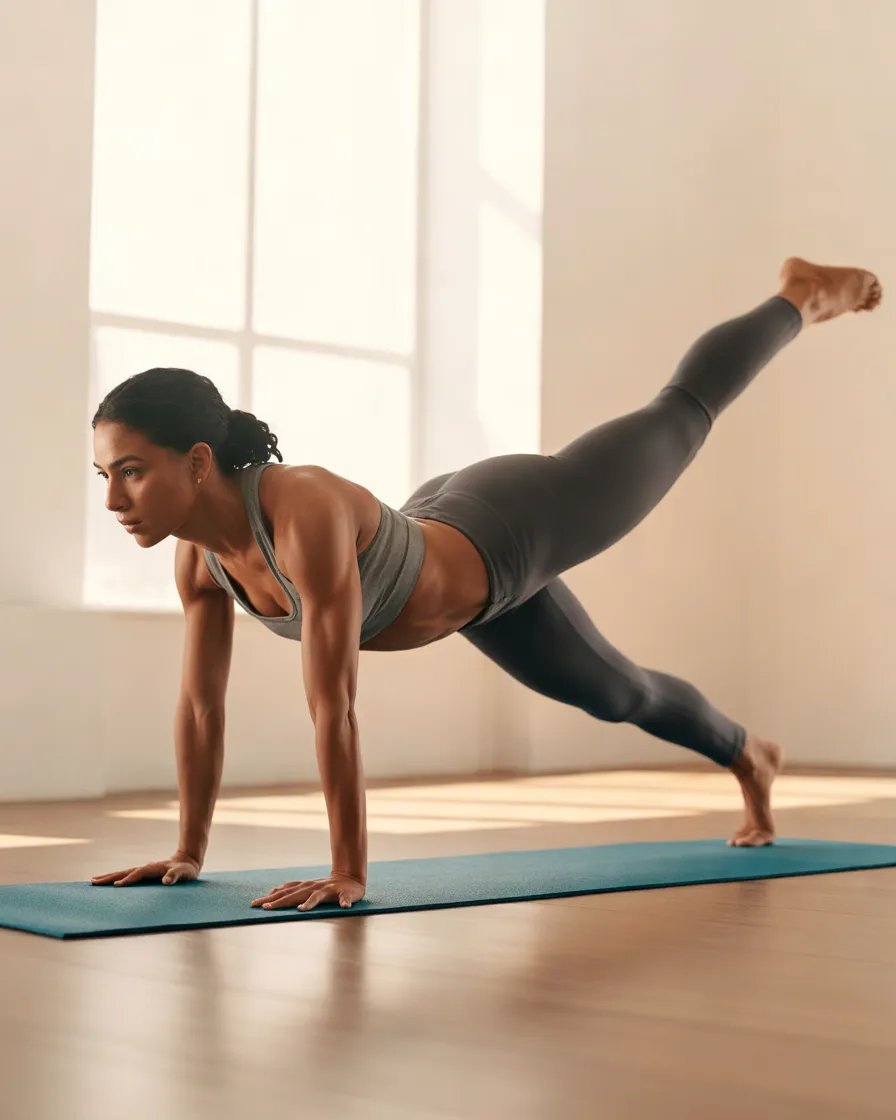
The Bird Dog exercise is a popular bodyweight movement that combines back stability, abdominal engagement, and coordination.
Unlike traditional strength exercises, it focuses on controlling your body while extending opposite limbs. It is an excellent addition to a balanced home workout for women.
Benefits
- Activates the deep core and back-supporting muscles.
- Develops coordination and balance.
- Encourages control of the pelvis and spine.
- Works the glutes and shoulder stabilizers.
- Requires no gym equipment.
How to Perform the Bird Dog Exercise
- Begin on your hands and knees on an exercise mat.
- Position your hands beneath your shoulders.
- Keep your knees beneath your hips.
- Gently tighten your abdominal muscles.
- Slowly extend your right arm forward.
- At the same time, extend your left leg backward.
- Keep your hips facing the floor.
- Hold for two to three seconds.
- Return to the starting position.
- Repeat with the opposite arm and leg.
- Complete 8–10 repetitions per side.
Practical Tips
Imagine balancing a glass of water on your lower back. This mental image can help you avoid twisting or shifting your hips while extending your limbs.
Start with a smaller range of movement if maintaining balance is challenging.
Who It May Suit
The Bird Dog is particularly useful for beginners, women who prefer low-impact workouts, and individuals who want to improve their core and back coordination.
Important Considerations
Avoid arching your lower back or lifting your leg higher than your hip. Move slowly and keep your neck aligned with your spine. Stop if you experience pain or unusual discomfort.
4. Resistance Band Pull-Aparts: A Simple Upper Back Exercise for Women at Home
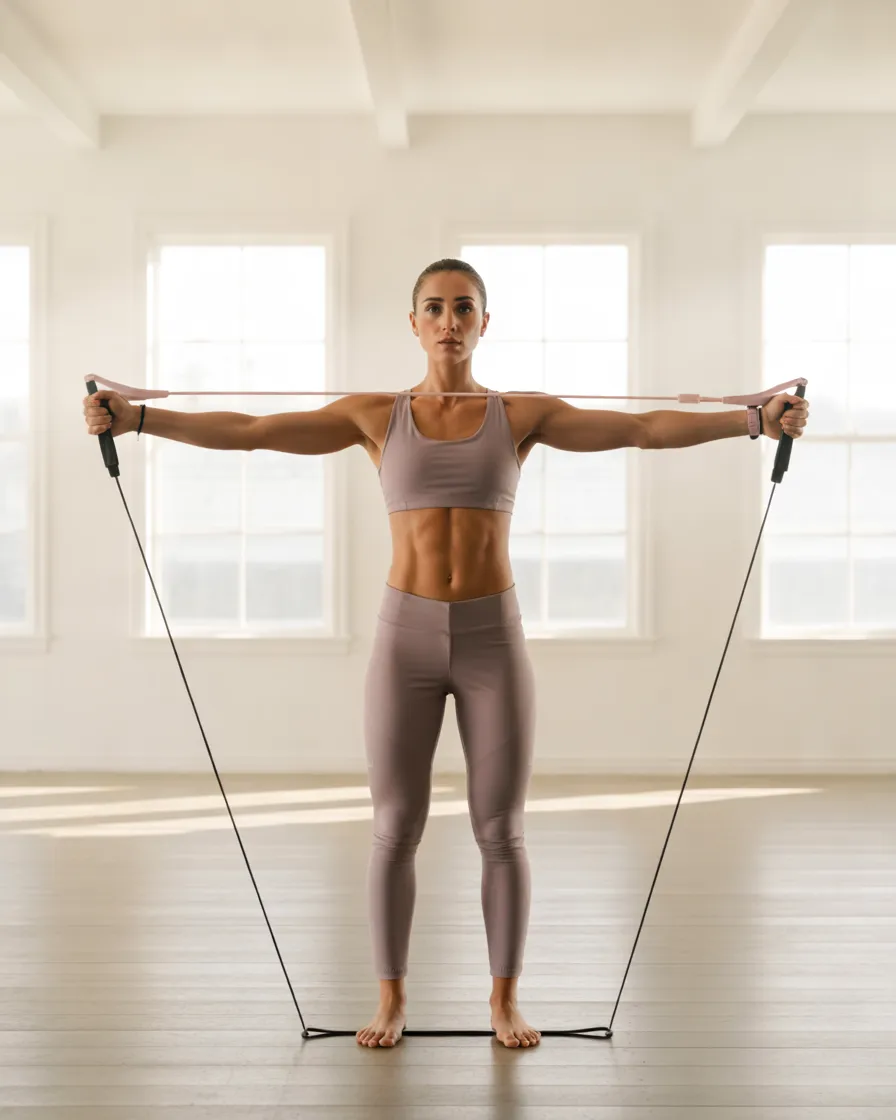
Resistance band pull-aparts are an accessible exercise for strengthening the upper back and rear shoulder muscles. They are particularly useful for women who spend long hours sitting at a desk or working on a computer.
The exercise requires only a lightweight resistance band and can easily fit into a home workout or warm-up routine.
Benefits
- Targets the rhomboids and rear deltoids.
- Activates the middle trapezius.
- Develops upper-back muscular endurance.
- Encourages controlled shoulder-blade movement.
- Offers adjustable resistance through different band strengths.
How to Perform Resistance Band Pull-Aparts
- Stand upright with your feet hip-width apart.
- Hold a resistance band with both hands.
- Extend your arms in front of your chest.
- Keep a slight bend in your elbows.
- Position your hands approximately shoulder-width apart.
- Slowly pull your hands away from each other.
- Move your shoulder blades gently toward each other.
- Stop when your arms reach a comfortable open position.
- Slowly return to the starting position.
- Complete 12–15 repetitions.
Practical Tips
Avoid raising your shoulders toward your ears. Keep your wrists straight and maintain a controlled pace.
If the band feels too difficult to stretch, move your hands farther apart before starting. This reduces the effective resistance.
Who It May Suit
This exercise is suitable for beginners and experienced exercisers. It is also a practical option for women who want an upper-back exercise without lifting heavy weights.
Important Considerations
Use a resistance band in good condition and inspect it for tears before exercising. Avoid pulling beyond a comfortable range, especially if you have shoulder discomfort.
5. Reverse Snow Angels: A Bodyweight Exercise for the Upper Back
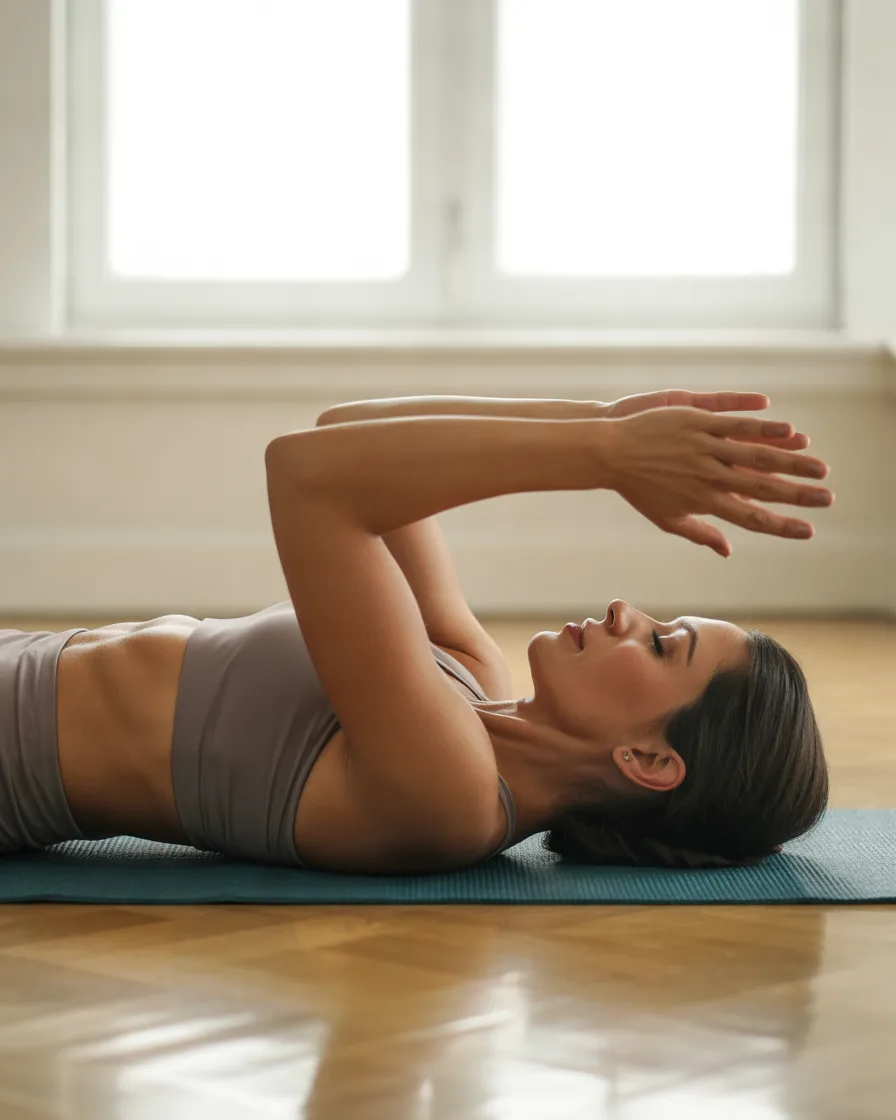
Reverse Snow Angels are a useful bodyweight movement that targets the muscles around your shoulder blades and upper back.
The exercise gets its name from the snow-angel motion. Instead of moving your arms while lying on your back, you perform the movement face down, keeping your arms slightly elevated.
It is a useful option when you want to strengthen your upper back without equipment.
Benefits
- Activates the rear shoulders and upper-back muscles.
- Encourages shoulder-blade control.
- Develops muscular endurance.
- Requires minimal workout space.
- Can complement resistance-based back exercises.
How to Perform Reverse Snow Angels
- Lie face down on an exercise mat.
- Extend your arms overhead with your palms facing the floor.
- Keep your forehead close to the mat and your neck relaxed.
- Gently lift your hands slightly off the floor if comfortable.
- Slowly move your arms outward in a wide arc.
- Continue moving them toward your hips.
- Reverse the movement and return your arms overhead.
- Complete 8–12 controlled repetitions.
Practical Tips
Keep your movements slow and focus on your shoulder blades rather than trying to lift your arms as high as possible.
You can also perform the exercise with your arms resting on the floor if lifting them creates discomfort.
Who It May Suit
This exercise may suit women who want to improve upper-back endurance and include equipment-free movements in their home routine.
Important Considerations
Avoid excessive neck lifting or arching your lower back. The movement should feel controlled and comfortable. Reduce the range if your shoulders feel restricted.
6. Dumbbell Reverse Fly: Strengthen the Rear Shoulders and Upper Back
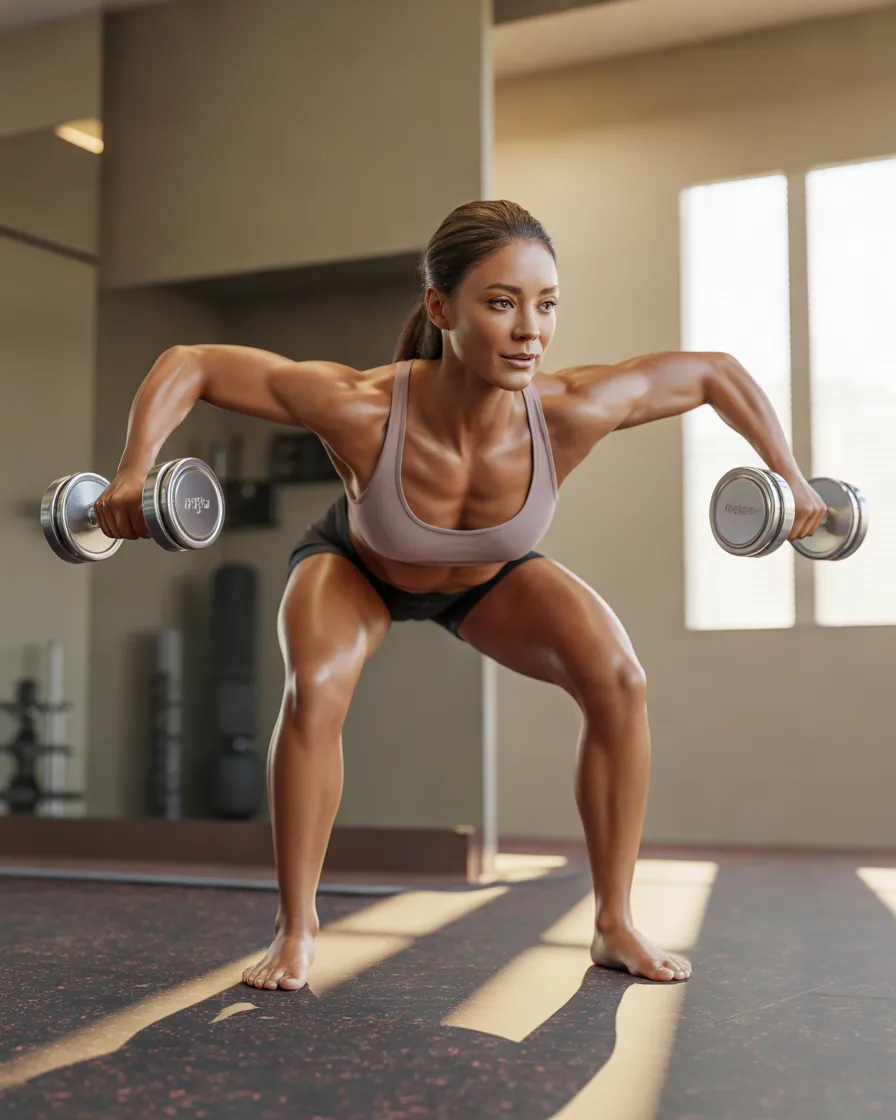
The dumbbell reverse fly is an effective exercise for targeting the rear deltoids and muscles of the upper back.
It is particularly useful for women who want to develop balanced shoulder strength alongside their back training. Because the movement uses relatively small muscles, you generally do not need heavy dumbbells.
Benefits
- Targets the rear deltoids.
- Activates the rhomboids and middle trapezius.
- Supports balanced upper-body strength.
- Develops control during shoulder movements.
- Complements rowing exercises.
How to Perform the Dumbbell Reverse Fly
- Stand with your feet hip-width apart.
- Hold a light dumbbell in each hand.
- Bend your knees slightly.
- Push your hips backward and lean your torso forward.
- Keep your back neutral and arms hanging beneath your shoulders.
- Maintain a slight bend in your elbows.
- Raise both arms outward to the sides.
- Stop when your arms reach approximately shoulder height or a comfortable range.
- Slowly lower the dumbbells.
- Complete 10–12 repetitions.
Practical Tips
Start with lighter dumbbells than you might use for regular rows. Focus on smooth movement rather than lifting heavy weights.
Avoid shrugging your shoulders or swinging your arms. Keep your chest stable throughout the exercise.
Who It May Suit
This movement is suitable for women who have some experience with basic strength exercises. Beginners can use very light weights or practise the movement without weights.
Important Considerations
Do not force your arms above shoulder height. If the bent-over position causes discomfort, use a supported variation with your chest resting against an incline bench or a stable support designed for exercise.
7. Resistance Band Seated Rows: A Convenient Back Workout Without Heavy Weights
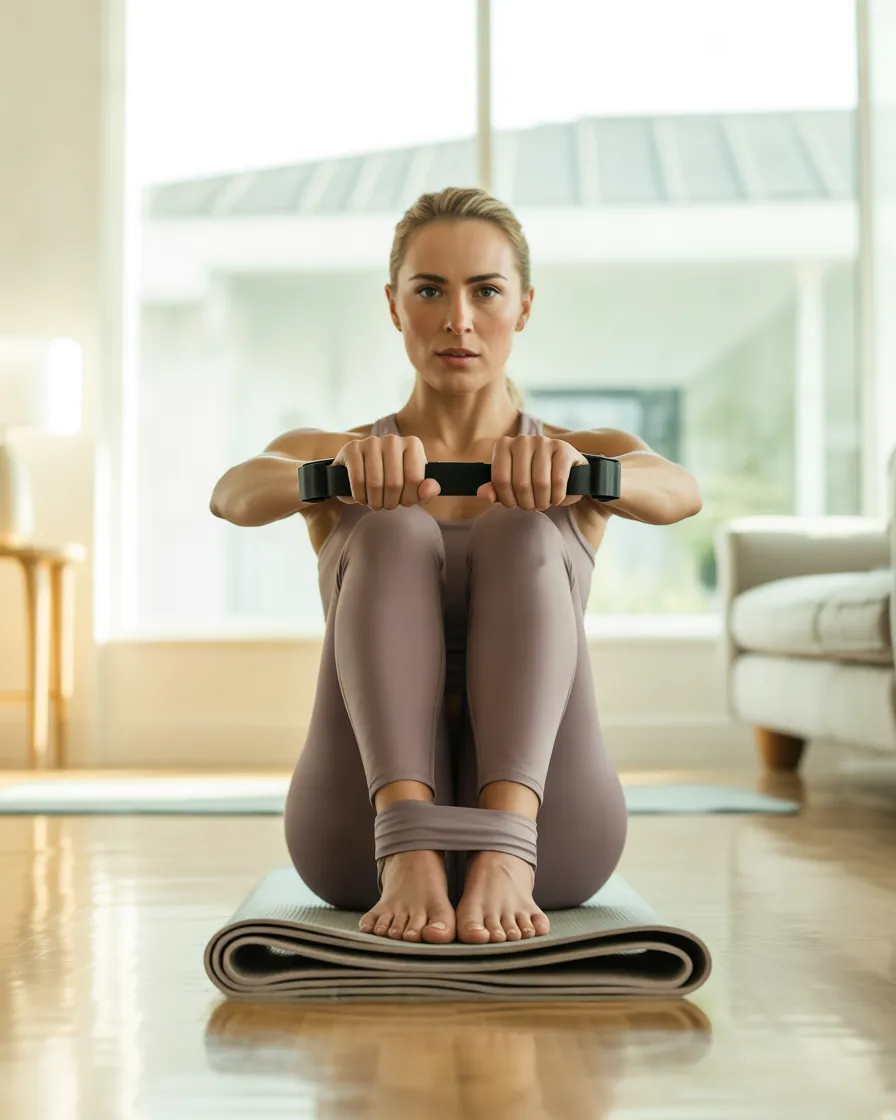
Resistance band seated rows are a practical alternative to gym-based cable rows. They target the lats, rhomboids, and other muscles involved in pulling movements.
This exercise is especially convenient for women who prefer training at home and want to add resistance without buying a full set of weights.
Benefits
- Strengthens the lats and middle back.
- Develops pulling strength.
- Activates the muscles around the shoulder blades.
- Allows resistance to be adjusted using different bands.
- Supports a balanced upper-body workout.
How to Perform Resistance Band Seated Rows
- Sit on the floor with your legs extended in front of you.
- Place a resistance band around your feet, using a suitable band designed for this exercise.
- Hold one end of the band in each hand.
- Sit upright with your shoulders relaxed.
- Begin with your arms extended comfortably.
- Pull both hands toward your waist.
- Move your elbows backward while keeping them close to your body.
- Gently squeeze your shoulder blades together.
- Slowly extend your arms again.
- Complete 12–15 repetitions.
Practical Tips
Sit tall without forcing your chest forward. Keep your knees slightly bent if your hamstrings make it difficult to sit upright.
Focus on moving your elbows backward instead of pulling only with your hands.
Who It May Suit
This exercise is suitable for beginners and intermediate exercisers who want a simple upper- and middle-back workout at home.
Important Considerations
Secure the resistance band carefully and check its condition before each session. Never use a damaged band. Avoid leaning backward excessively to generate momentum.
8. Wall Angels: A Gentle Exercise for Upper-Back Mobility and Posture Control
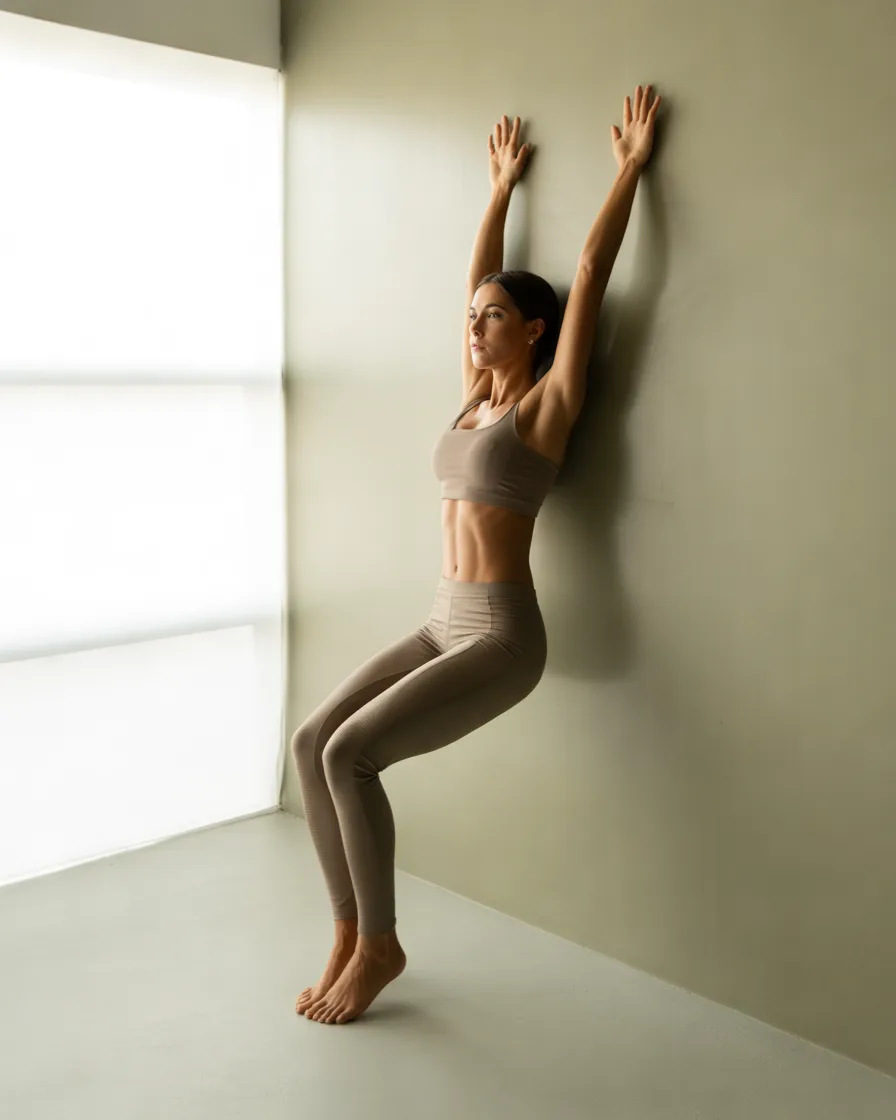
Wall Angels are a simple movement that involves sliding your arms up and down while maintaining contact with a wall as comfortably as possible.
Although they are not a heavy resistance exercise, they can help develop shoulder control and upper-body mobility. They are a useful addition to a home fitness routine, particularly if you spend considerable time sitting.
Benefits
- Encourages controlled shoulder movement.
- Develops upper-back and shoulder muscular endurance.
- Promotes awareness of upright body positioning.
- Requires no exercise equipment.
- Provides a gentle movement option between strength exercises.
How to Perform Wall Angels
- Stand with your back against a clear wall.
- Position your feet slightly forward from the wall.
- Keep your head and upper back comfortably aligned.
- Raise your arms to form a goalpost shape.
- Bend your elbows approximately 90 degrees.
- Position your hands and arms against the wall as comfortably as possible.
- Slowly slide your arms upward.
- Move only as far as you can without forcing your shoulders.
- Return to the starting position.
- Repeat 8–12 times.
Practical Tips
Not everyone can maintain full contact between their arms and the wall. That is perfectly fine. Focus on a comfortable range of movement rather than forcing your hands against the wall.
Move slowly and avoid arching your lower back to compensate for limited shoulder mobility.
Who It May Suit
Wall Angels may suit beginners, women who spend long hours working at a desk, and individuals looking for a low-impact upper-body movement.
Important Considerations
This exercise should not cause pinching or sharp shoulder pain. If you have a shoulder injury or significant movement restriction, seek advice from a qualified professional before performing it.
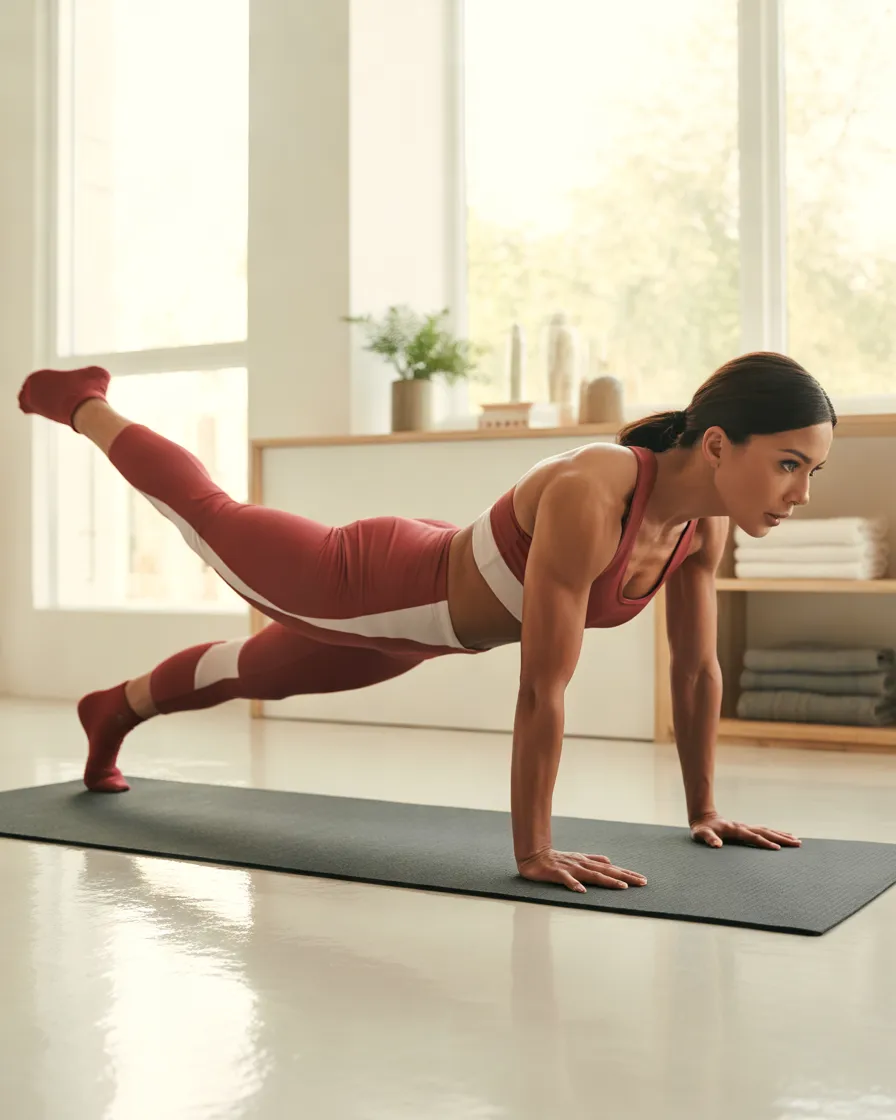
9. Plank With Shoulder Taps: Combine Back Stability With Core Strength
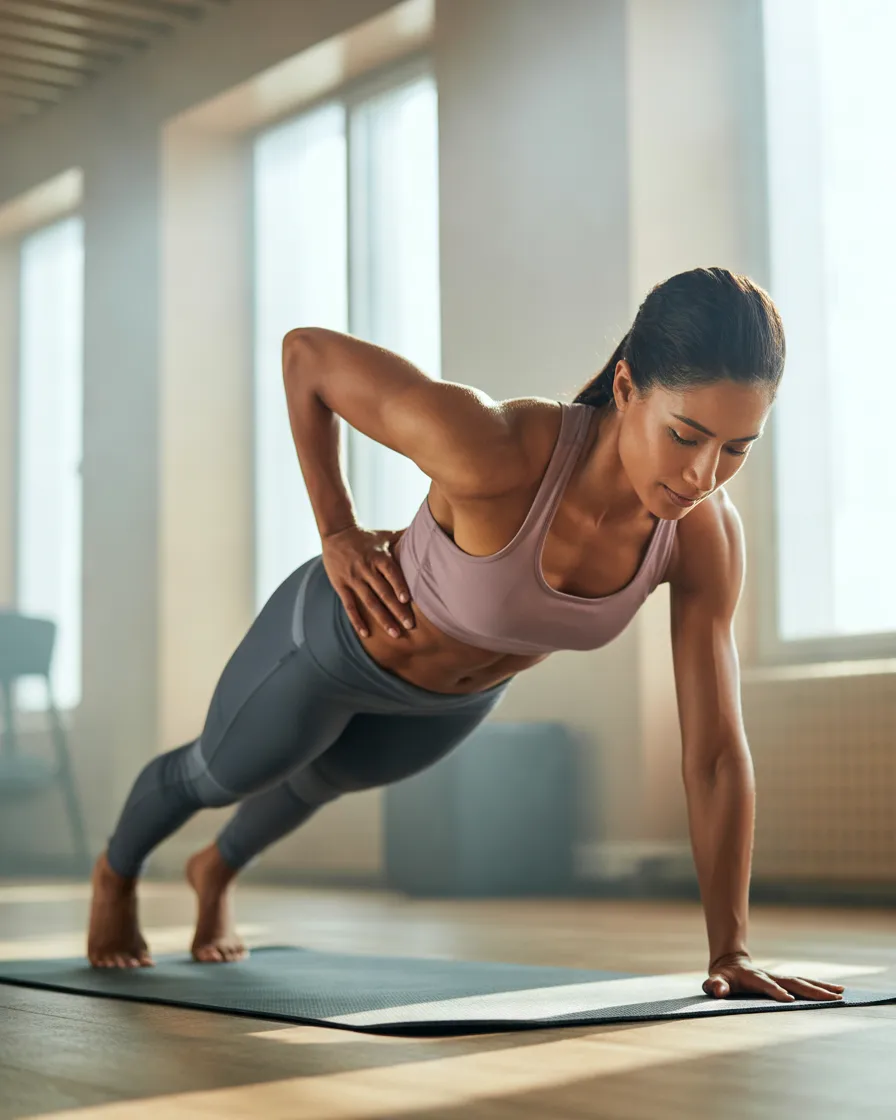
Plank shoulder taps are a dynamic bodyweight exercise that challenges core stability while requiring the shoulder and upper-back muscles to support your body.
The main focus is maintaining a stable plank position while alternating hand movements. This makes the exercise useful for women who want to combine upper-body endurance and abdominal training.
Benefits
- Engages the core and shoulder stabilizers.
- Activates supporting upper-back muscles.
- Develops balance and coordination.
- Encourages control of the trunk and pelvis.
- Requires no equipment.
How to Perform Plank Shoulder Taps
- Begin in a high plank position.
- Place your hands beneath your shoulders.
- Extend your legs behind you and position your feet comfortably apart.
- Keep your body in a straight line.
- Engage your abdominal muscles.
- Slowly lift your right hand and tap your left shoulder.
- Return your right hand to the floor.
- Repeat with your left hand.
- Alternate sides for 10–16 total taps.
Practical Tips
Keep your hips as steady as possible. Widening your feet can make the movement easier by increasing your base of support.
If a full plank is too challenging, perform the shoulder taps with your hands against a sturdy elevated surface.
Who It May Suit
This exercise may suit women who already feel comfortable holding a basic plank. Beginners can use an elevated variation to build strength gradually.
Important Considerations
Avoid rotating your hips excessively or allowing your lower back to sag. If your wrists are uncomfortable, try an elevated variation or consult a qualified fitness professional about alternatives.
10. Dumbbell Deadlifts: A Full Back-Supporting Strength Exercise for Women
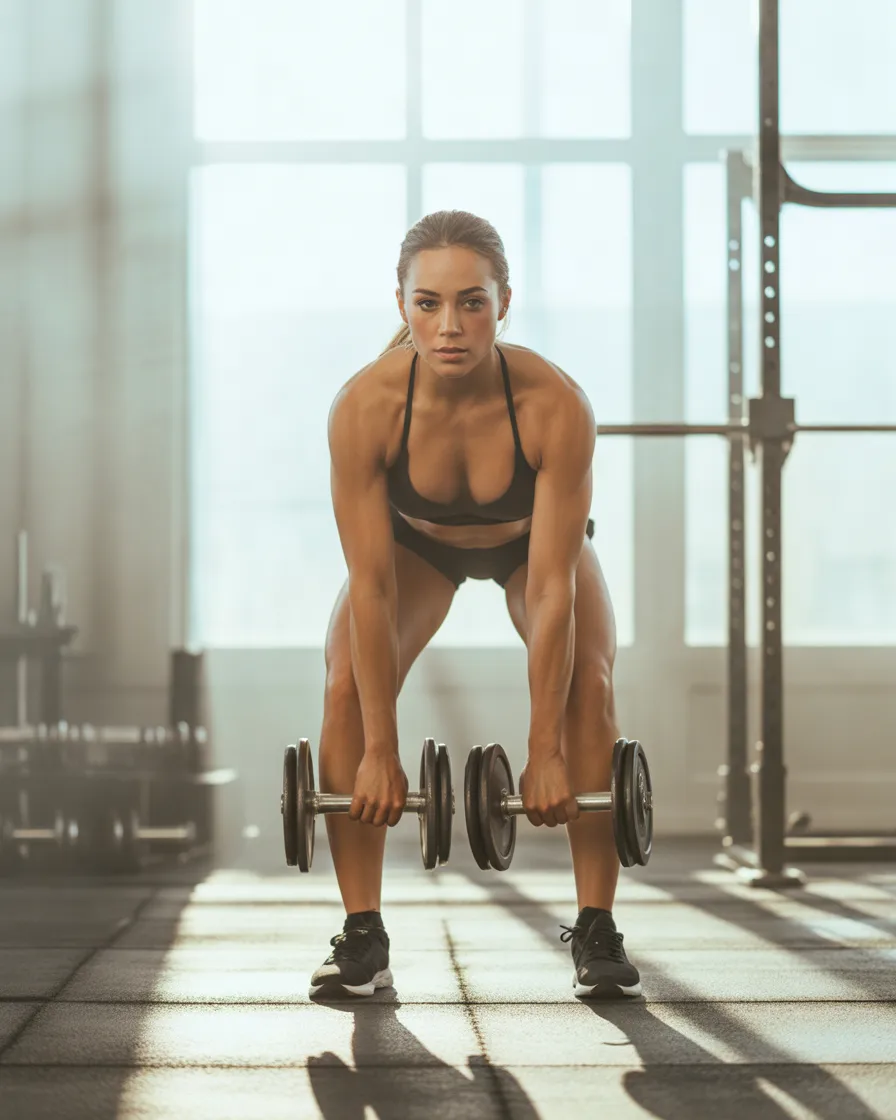
Dumbbell deadlifts are a useful compound exercise that trains the posterior chain, including the glutes, hamstrings, and spinal erectors.
Although they are not an isolated back exercise, they help strengthen several muscle groups that work together during lifting and hip-hinge movements.
For women training at home, dumbbell deadlifts provide an effective way to develop overall strength using a relatively small amount of equipment.
Benefits
- Strengthens the glutes and hamstrings.
- Engages the spinal erectors and supporting core muscles.
- Develops hip-hinge movement skills.
- Improves strength for everyday lifting activities.
- Provides a useful compound movement for full-body routines.
How to Perform Dumbbell Deadlifts
- Stand with your feet approximately hip-width apart.
- Hold a dumbbell in each hand in front of your thighs.
- Keep your knees slightly bent.
- Engage your abdominal muscles.
- Push your hips backward while lowering the dumbbells along the front of your legs.
- Keep your spine neutral.
- Lower the weights until you reach a comfortable range, generally around mid-shin level or higher.
- Push through your feet and bring your hips forward to stand upright.
- Squeeze your glutes gently at the top.
- Repeat for 8–12 repetitions.
Practical Tips
Think about pushing your hips backward rather than bending forward through your waist. Keep the dumbbells close to your legs throughout the movement.
Start with very light weights and practise the hip hinge without equipment before progressing.
Who It May Suit
This exercise is appropriate for women who have learned the basic hip-hinge technique and want to develop lower-body and posterior-chain strength.
Important Considerations
Deadlifts require good technique. Avoid rounding your back, lowering the weights farther than your mobility allows, or using weights that are too heavy. If you have a history of back pain or injury, seek professional advice before adding deadlifts to your routine.
Expert Tips for Getting More From Your Back Workout at Home
Choosing the right exercises is only one part of building an effective home fitness routine. Your technique, workout frequency, recovery, and exercise progression also matter.
Here are practical tips to help you get more from your back training.
Start With a Proper Warm-Up
Spend approximately five to eight minutes preparing your body before strength training.
A simple warm-up can include:
- Arm circles.
- Gentle shoulder rolls.
- Cat-Cow movements.
- Light torso rotations.
- Easy marching in place.
The purpose is to prepare your muscles and joints for movement, not to exhaust yourself before the workout begins.
Focus on Technique Before Increasing Resistance
It can be tempting to pick up heavier dumbbells as soon as an exercise feels familiar. However, good technique should come first.
Use a weight or resistance level that allows you to complete each repetition with control. If you need to swing your arms, twist your torso, or hold your breath, the resistance may be too challenging.
Train Your Back Consistently
For many beginners, two back-focused sessions per week can be a reasonable starting point.
Allow recovery time between challenging sessions, particularly when you are new to strength training. You can also include lighter mobility and movement exercises on other days.
Balance Your Back Workout With Other Muscle Groups
A balanced fitness routine should not focus exclusively on the back.
Include exercises for:
- Chest and shoulders.
- Arms.
- Legs and glutes.
- Abdominal and core muscles.
Training opposing muscle groups helps develop more balanced overall strength.
Progress Gradually
You do not need to increase your workout intensity every day.
Instead, gradually improve one training variable at a time:
- Add one or two repetitions.
- Use a slightly stronger resistance band.
- Increase dumbbell weight when appropriate.
- Improve your movement control.
- Add another set when recovery allows.
Small, consistent improvements are more sustainable than sudden increases in training volume.
Give Your Muscles Time to Recover
Muscles need time to recover after challenging strength workouts.
Prioritize adequate sleep, balanced meals, hydration, and rest days. If your muscles are still very sore or your technique is affected, consider postponing your next demanding session.
Do Not Expect Spot Reduction
Back exercises can strengthen and develop the muscles in your back, but they cannot selectively burn fat from that specific area.
Changes in body composition depend on several factors, including overall activity, nutrition, genetics, sleep, and individual health circumstances.
Sample 20–30 Minute Back Workout Routine for Women at Home
If you are unsure how to combine these exercises, the following routine offers a simple starting point.
| Exercise | Sets | Repetitions |
|---|---|---|
| Superman | 2 | 10 |
| Bent-Over Dumbbell Rows | 3 | 10–12 |
| Bird Dog | 2 | 8 per side |
| Resistance Band Pull-Aparts | 2 | 12–15 |
| Dumbbell Reverse Fly | 2 | 10–12 |
| Resistance Band Seated Rows | 2 | 12 |
| Plank Shoulder Taps | 2 | 10–16 total |
How to Use This Routine
- Warm up for five minutes.
- Choose manageable weights and resistance.
- Rest for approximately 45–90 seconds between sets as needed.
- Use controlled movements.
- Finish with gentle, comfortable mobility exercises.
This is a sample routine rather than a requirement to perform every exercise in one session. Beginners can start with four exercises and one or two sets each, then gradually build up.
You can also alternate exercises between sessions to avoid excessive training volume.
Common Mistakes Women Should Avoid During Home Back Workouts
Even relatively simple back exercises can become less effective or uncomfortable when performed incorrectly.
Watch out for these common mistakes:
1. Using Weights That Are Too Heavy
Heavy weights can make it difficult to control your movements. Start with a manageable resistance and increase it gradually.
2. Rushing Through Repetitions
Fast, uncontrolled repetitions can reduce movement quality. Focus on smooth lifting and lowering phases.
3. Ignoring Core Engagement
Your core helps stabilize your body during many back exercises. Gently engage your abdominal muscles when performing rows, deadlifts, and Bird Dogs.
4. Overarching the Lower Back
Excessive arching can place unnecessary stress on your lower back. Maintain a comfortable, neutral spinal position.
5. Skipping Recovery
Training the same muscles intensely every day does not necessarily improve results. Give your body enough time to recover.
6. Ignoring Pain
Muscle effort and fatigue are normal during exercise, but sharp pain, tingling, or unusual discomfort should not be ignored. Stop the movement and seek professional advice when appropriate.
Frequently Asked Questions About Back Workout Women at Home
1. What Is the Best Back Workout for Women at Home?
There is no single best exercise for everyone. Bent-over dumbbell rows, resistance band rows, Bird Dogs, Superman exercises, and reverse fly movements are useful options.
A combination of pulling exercises, stability movements, and posterior-chain exercises can help train different back muscle groups.
2. Can Women Build Back Muscles at Home Without Equipment?
Yes. Bodyweight exercises such as Superman, Bird Dog, Reverse Snow Angels, and plank shoulder taps can help develop muscular endurance and strength.
However, progressive resistance is important for continued strength development. Resistance bands and dumbbells can provide additional training options as your fitness improves.
3. How Many Days a Week Should Women Train Their Back?
For many beginners, two back-focused strength sessions per week can be a practical starting point.
The appropriate frequency depends on workout intensity, experience, recovery, and other physical activities. Allow enough recovery between challenging sessions.
4. How Long Should a Back Workout at Home Last?
A home back workout can take approximately 20–30 minutes, including a short warm-up.
Beginners may start with 15–20 minutes and gradually increase the duration as their fitness and exercise tolerance improve.
5. Do Back Exercises Help Improve Posture?
Strengthening the back and shoulder-supporting muscles may contribute to better postural endurance and body awareness.
However, posture is influenced by several factors, including mobility, daily habits, work environment, and individual anatomy. No single exercise can guarantee a particular posture.
6. Can Beginners Do Back Workouts Every Day?
It is generally better to avoid challenging the same muscles intensely every day, especially when starting a strength-training programme.
Beginners can alternate back training with walking, gentle mobility exercises, or workouts targeting other muscle groups.
7. Are Resistance Bands Effective for Women’s Back Workouts?
Yes. Resistance bands provide adjustable resistance and can be used for exercises such as pull-aparts and seated rows.
They are portable, relatively inexpensive, and convenient for small home workout spaces. Choose a suitable resistance level and inspect your band before use.
8. Which Back Exercises Can Women Do Without Dumbbells?
Several useful options require no dumbbells, including:
- Superman exercises.
- Bird Dogs.
- Reverse Snow Angels.
- Wall Angels.
- Plank shoulder taps.
These movements can be included in beginner-friendly bodyweight back workouts.
9. Can Back Workouts Help Reduce Back Fat?
Back exercises strengthen the muscles underneath the body’s fat tissue, but they do not directly remove fat from the back.
Overall body-fat changes are influenced by energy balance, nutrition, physical activity, genetics, and other individual factors. A balanced exercise and nutrition approach is more appropriate than relying on one body area workout.
10. What Should Women Eat After a Back Workout?
A balanced post-workout meal containing protein and carbohydrates can support recovery.
Practical options include:
- Greek yogurt with fruit and oats.
- Eggs with wholegrain toast.
- Chicken with rice and vegetables.
- Lentils with wholegrain bread.
- A tofu and vegetable rice bowl.
Your overall daily nutrition matters more than a specific post-workout meal.
11. Are Back Workouts Safe for Women With Lower Back Pain?
Not every back exercise is appropriate for someone experiencing lower-back pain.
The suitable movements depend on the cause of the pain, symptoms, medical history, and individual movement tolerance. Consult a qualified healthcare professional or physiotherapist before beginning a new back-training programme.
12. How Long Does It Take to Notice Improvements From Back Workouts?
Progress varies from person to person.
Some people notice improvements in movement control and exercise confidence within a few weeks. Changes in strength and muscle development generally require consistent training over a longer period.
Your results will depend on training frequency, resistance, nutrition, recovery, and starting fitness level.
Conclusion: Build a Stronger Back With Simple Home Exercises
You do not need a complicated gym routine to start developing a stronger back. With the right combination of bodyweight movements, resistance bands, and dumbbells, women can build an effective back workout at home that fits into everyday life.
The 10 exercises in this guide target different areas of the back while also engaging supporting muscles that contribute to overall strength and stability.
Start with beginner-friendly movements such as Bird Dogs, Superman exercises, and Wall Angels. As your technique and confidence improve, gradually introduce dumbbell rows, reverse flys, resistance band rows, and deadlifts.
Remember that consistency, proper technique, and recovery are more important than rushing through a challenging workout.
Choose exercises that feel comfortable, progress at your own pace, and make strength training a regular part of your fitness routine. A stronger back is a worthwhile goal for women at every fitness level.