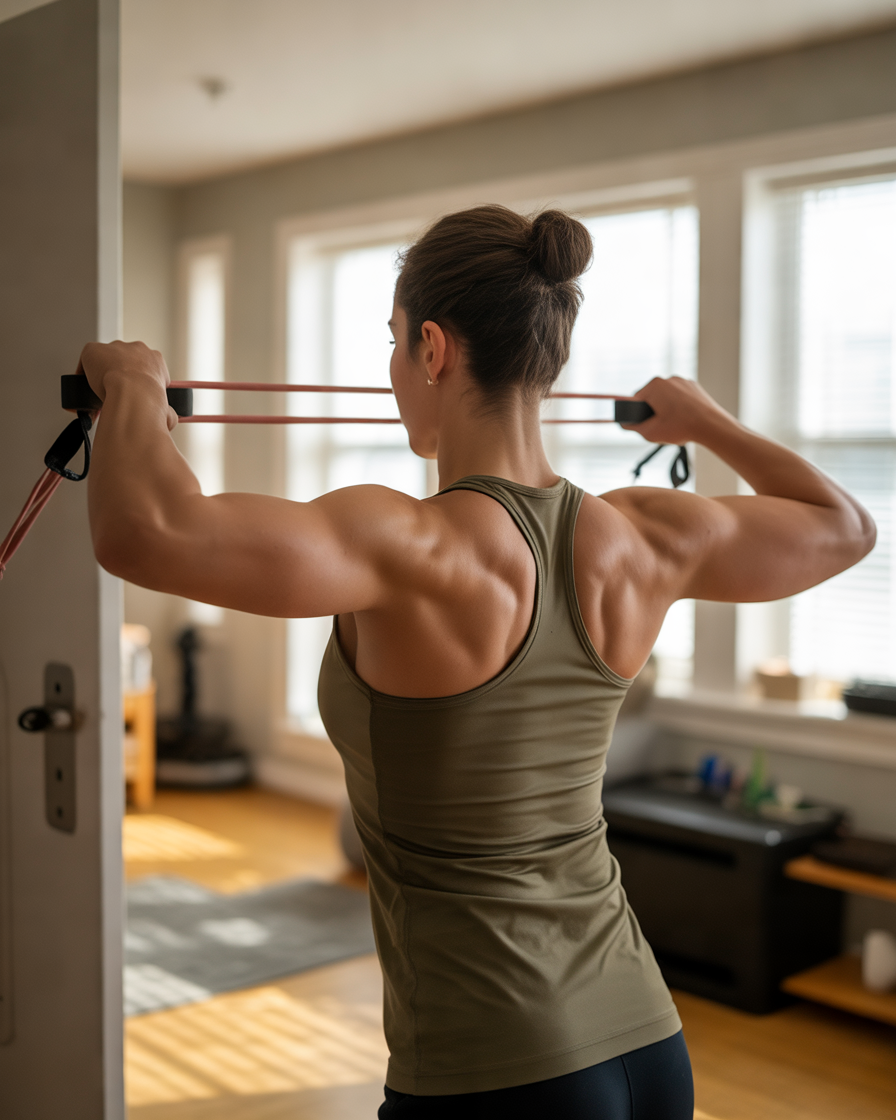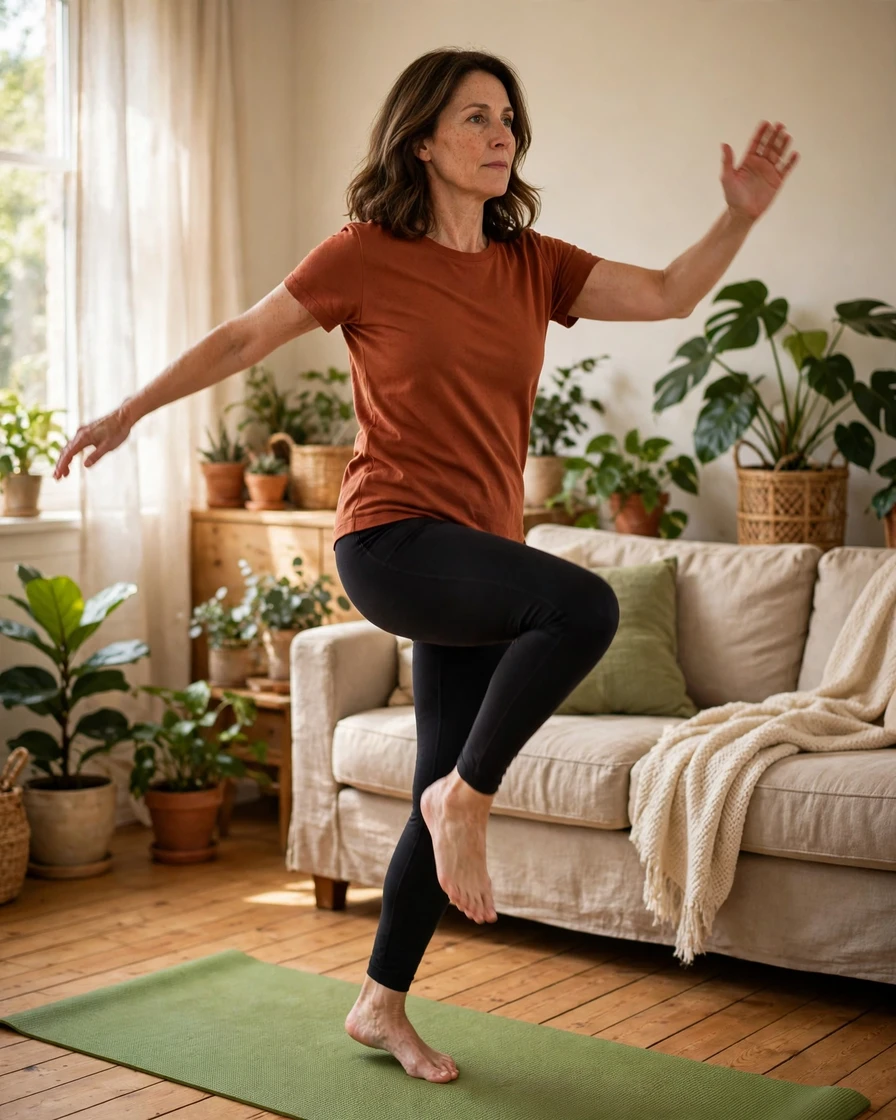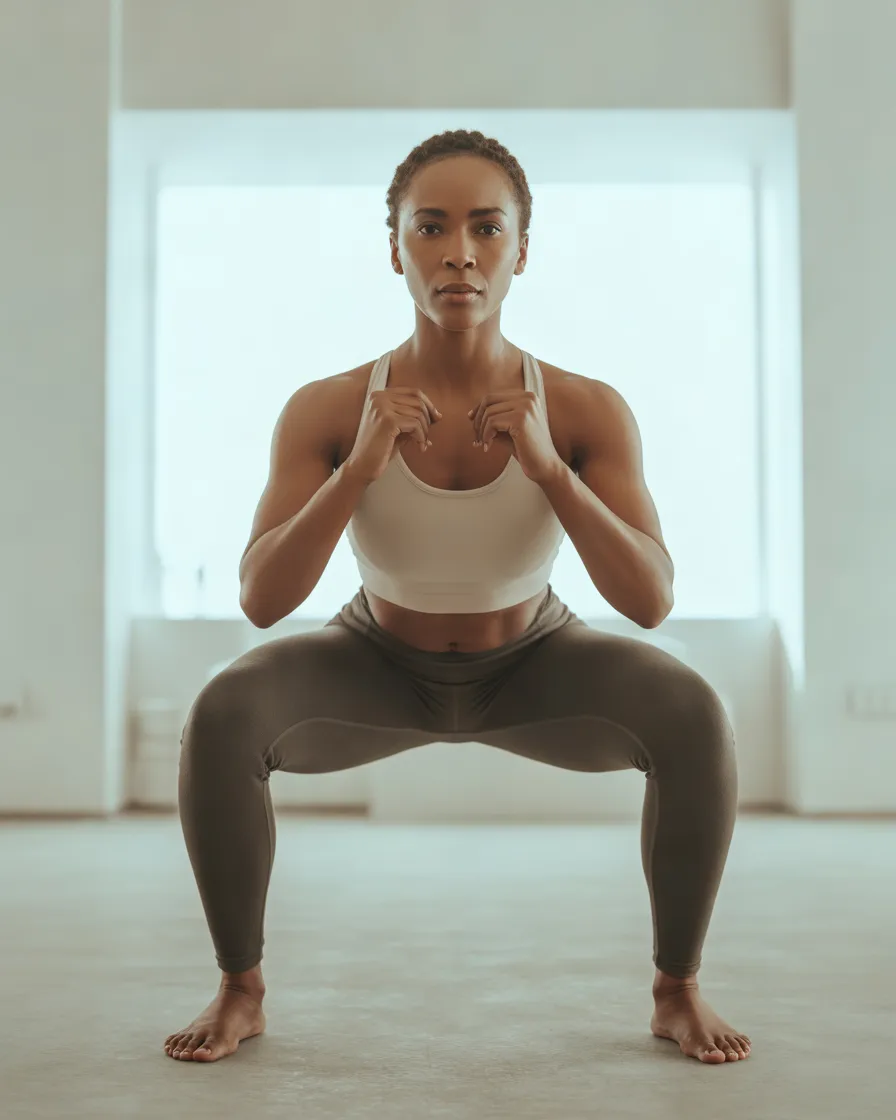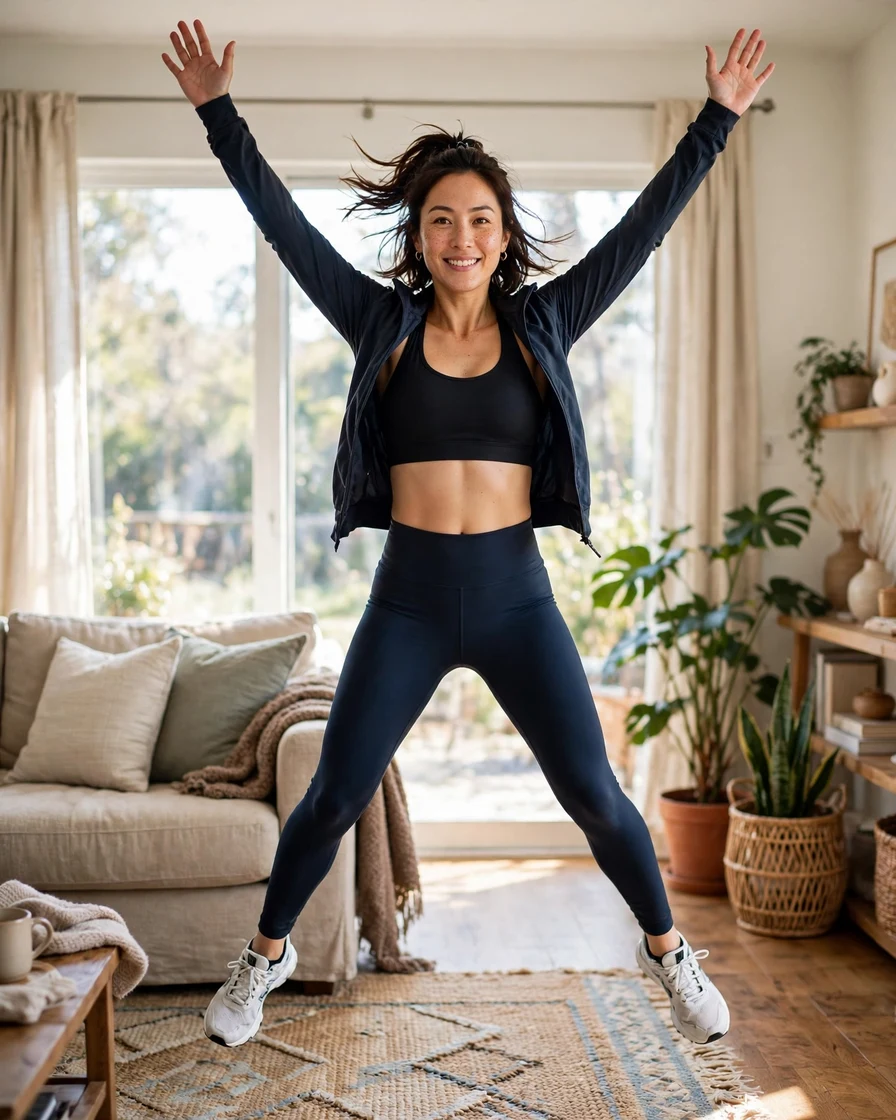
A bubble buttocks workout at home can build real glute strength without a gym membership or heavy equipment. Strong glutes support your hips, knees and lower back during everyday moves like climbing stairs, lifting bags and standing up from a chair. A mat, a little floor space and a resistance band are enough to start.
Fifteen exercises follow here, from simple floor moves to single-leg work and band drills. Each one gives clear form cues, sets and reps, and safety notes, so you can train with care and add load only when the move feels easy. You can do the whole routine in about half an hour, three times a week.
1. Glute Bridges
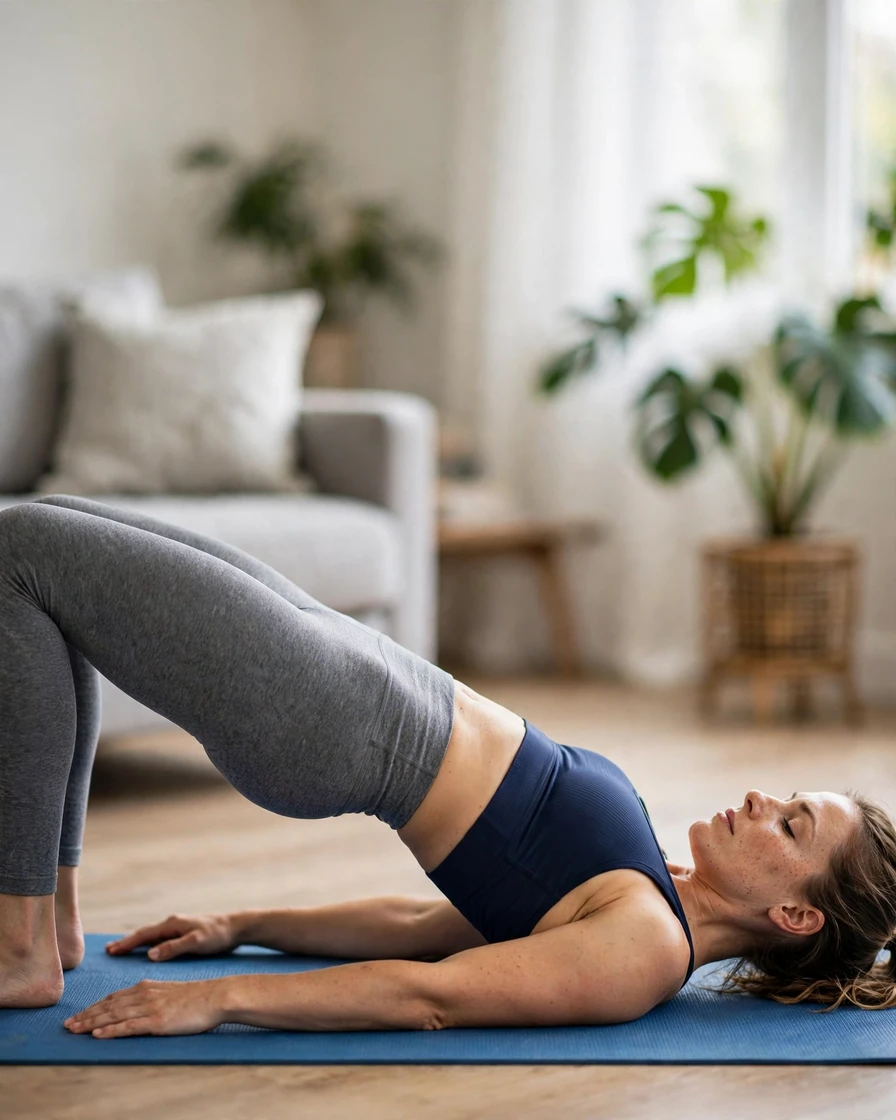
Glute bridges are a gentle first move for waking up the glute muscles. Lie on your back on a mat with your knees bent and your feet flat on the floor, about hip-width apart, near your body. Press through your heels, squeeze your glutes, and lift your hips until your body forms a straight line from shoulders to knees. Pause for a second at the top, then lower slowly. Aim for 3 sets of 12 to 15 reps, resting for 45 seconds between sets.
This move may help build basic hip strength and teach you the glute squeeze. It suits beginners, older adults and anyone returning to exercise after a break. To make it easier, lift only halfway and keep your hands on the floor for balance. To make it harder, hold a dumbbell across your hips or pause for three seconds at the top. Keep your lower back flat and avoid arching it at the top. Stop if you feel sharp pain in your back or knees, and ask a healthcare professional first if you have an existing condition.
Quick Tip: Push through your heels, not your toes, to keep the work in your glutes.
2. Bodyweight Hip Thrusts
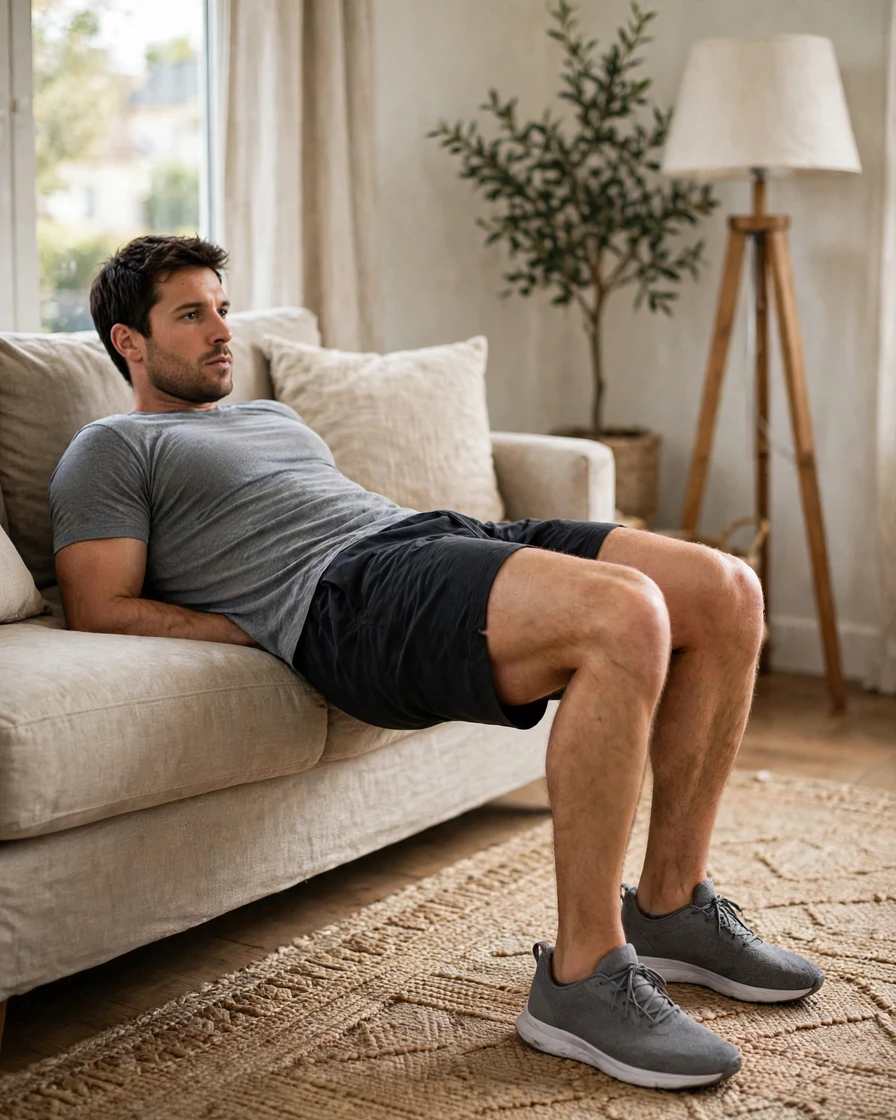
Bodyweight hip thrusts load the glutes through a bigger range than a floor bridge. Sit on the floor with your upper back against the edge of a low sofa or sturdy step, knees bent and feet flat on the floor. Lean back so your shoulder blades rest on the edge, then drive through your heels until your thighs are level. Keep your chin tucked, then lower with control. Aim for 3 sets of 10 to 12 reps.
This move may help build hip power for walking, running and climbing stairs. It suits people who already feel comfortable with glute bridges and want a harder move. To make it easier, use a lower surface or lift only partway. To make it harder, add a dumbbell across your hips. Check that the sofa or step cannot slide, and keep your knees tracking over your toes. Stop if you feel sharp pain in your lower back or hips, and ask a healthcare professional first if you have a back or hip condition.
Quick Tip: Pause for two seconds at the top of each rep to feel the glutes working.
3. Bodyweight Squats
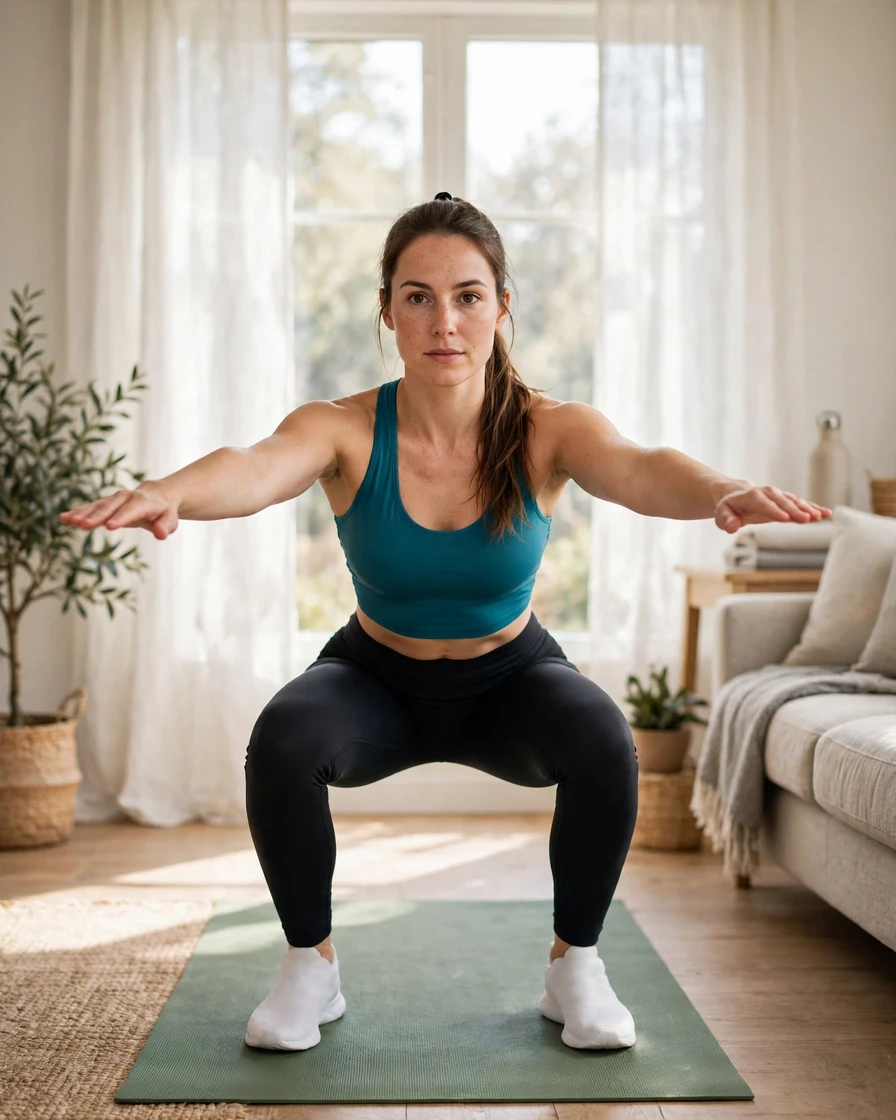
Bodyweight squats are a basic lower-body move that works the glutes, thighs and hips together. Stand with your feet about shoulder-width apart and your toes turned slightly out. Push your hips back, bend your knees, and lower until your thighs are near level. Keep your chest up and your weight through your heels, then press the floor away to stand. Aim for 3 sets of 12 to 15 reps.
Squats may help build leg strength and balance for daily life. They suit most healthy adults, and the move is easy to scale up or down. To make it easier, squat to a chair and stand back up, or hold a doorframe for balance. To make it harder, slow the lowering phase to three seconds. Keep your knees in line with your toes. Stop if your knees hurt sharply, and ask a healthcare professional first if you have a knee or hip condition.
Quick Tip: Sit back into your hips first, so your knees stay behind your toes as long as possible.
4. Bulgarian Split Squats
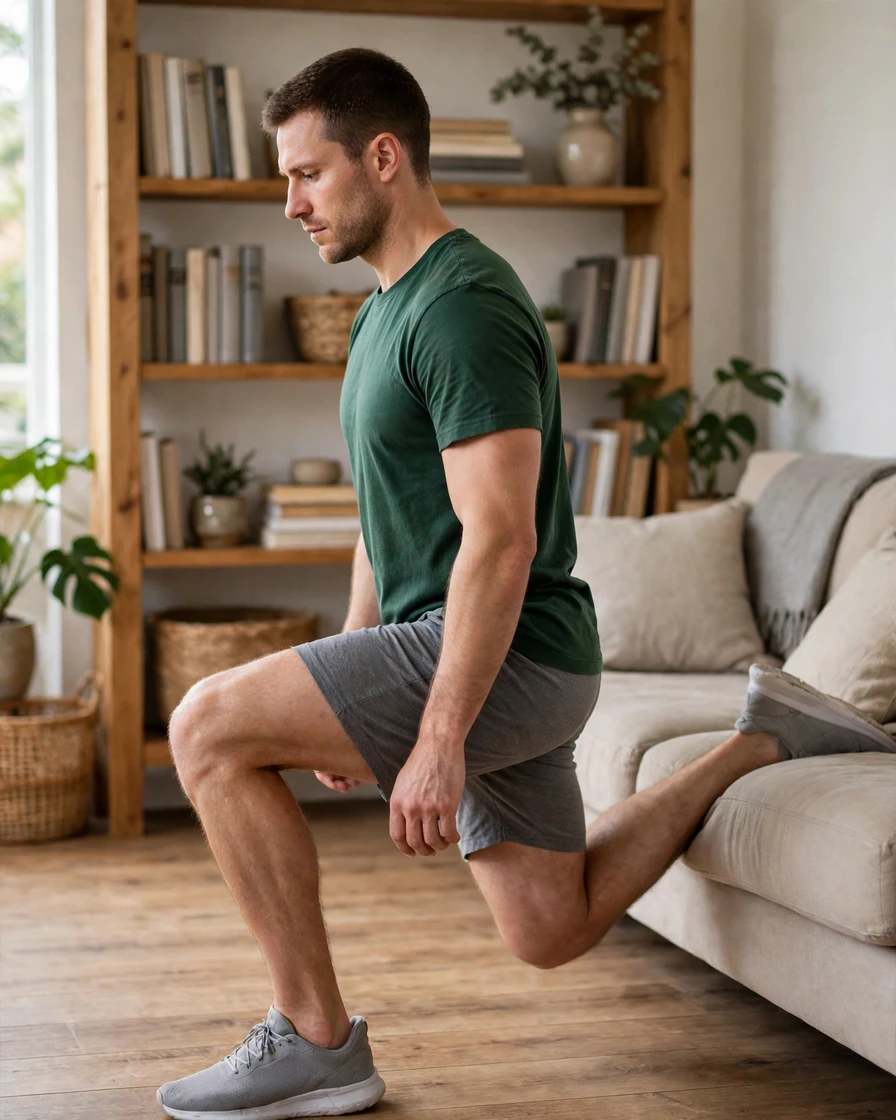
Bulgarian split squats train one leg at a time, which may help fix strength gaps between sides. Stand in front of a low sofa or sturdy chair, then rest the top of one foot on the seat behind you. Lower straight down by bending your front knee, keeping your chest up, until your front thigh is near level. Press through your front heel to stand back up. Aim for 3 sets of 8 to 10 reps on each leg.
This move may help build single-leg strength and balance for walking, running and climbing stairs. It suits people who can squat and lunge without pain and want a harder challenge. To make it easier, use a lower surface or hold a wall for balance. To make it harder, hold a dumbbell in each hand. Keep your front knee tracking over your toes and your hips level. Stop if you feel sharp knee pain, and ask a healthcare professional first if you have a knee or balance problem.
Quick Tip: Take a shorter stance at first — balance is easier when your feet are closer together.
5. Forward Lunges
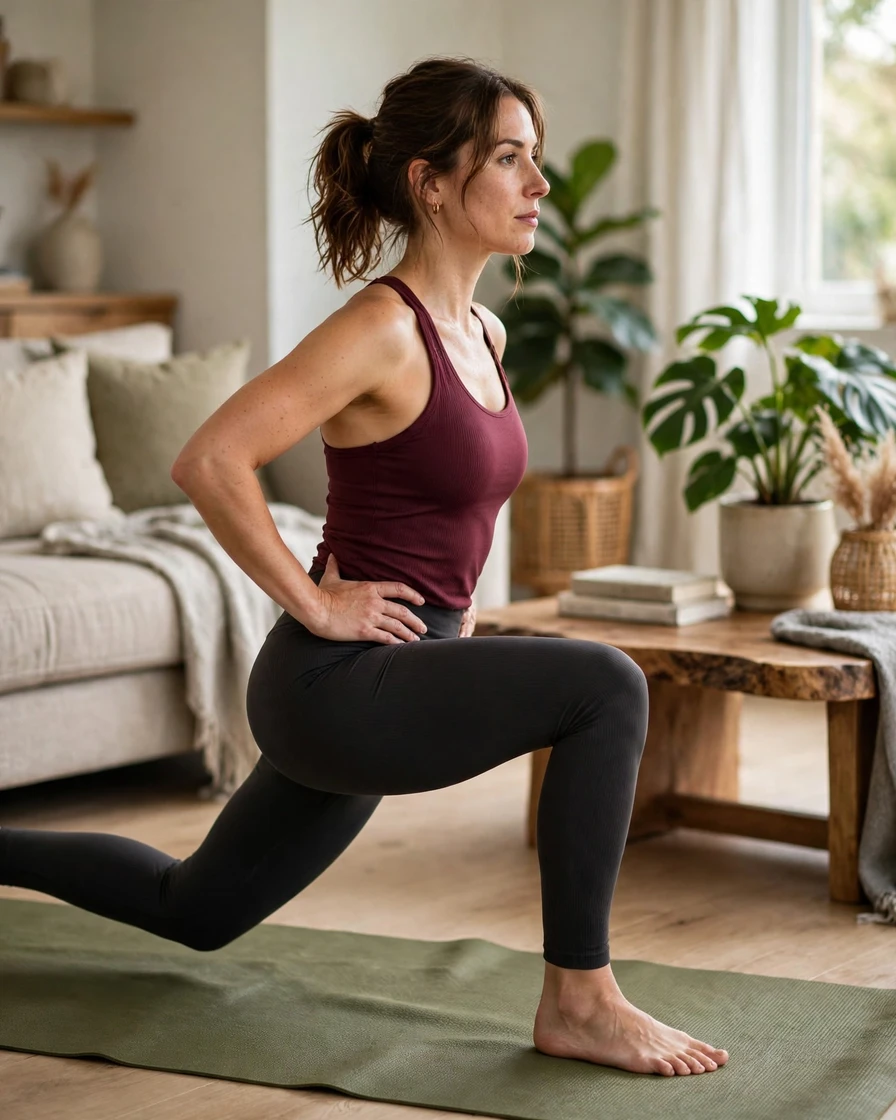
Forward lunges build glute and thigh strength while training balance and coordination. Stand tall with your feet hip-width apart and your hands on your hips. Step forward and lower until both knees are bent at about 90 degrees, with your front knee over your ankle. Push through your front heel to step back to the start, then switch legs. Aim for 3 sets of 10 reps on each leg.
Lunges may help strengthen the glutes and thighs for stairs, hills and daily walking. They suit most healthy adults who can balance on one leg for a few seconds. To make it easier, take a shorter step or hold a wall for support. To make it harder, hold a dumbbell in each hand or add a pause at the bottom. Keep your torso upright and your front knee steady. Stop if you feel sharp pain in a knee, and ask a healthcare professional first if you have a joint condition.
Quick Tip: Keep your steps even — a lunge that is too long strains the groin, and one too short strains the knee.
6. Banded Glute Kickbacks

Banded glute kickbacks isolate the glutes with light band resistance. Loop a band just above your knees, then get on all fours with hands under shoulders and knees under hips. Keep your back flat, then lift one leg behind you, knee bent at 90 degrees, until your thigh is level with your body. Squeeze your glute at the top, then lower slowly without touching the floor. Aim for 3 sets of 12 reps on each leg.
This move may help build glute strength and hip stability with little joint stress. It suits beginners and anyone who wants a low-impact glute move. To make it easier, drop the band and use bodyweight only. To make it harder, use a stronger band or pause for two seconds at the top. Keep your hips level and avoid rocking from side to side. Stop if you feel sharp pain in your lower back, and ask a healthcare professional first if you have a back or hip condition.
Quick Tip: Move slowly — a fast kickback uses momentum instead of muscle.
7. Donkey Kicks
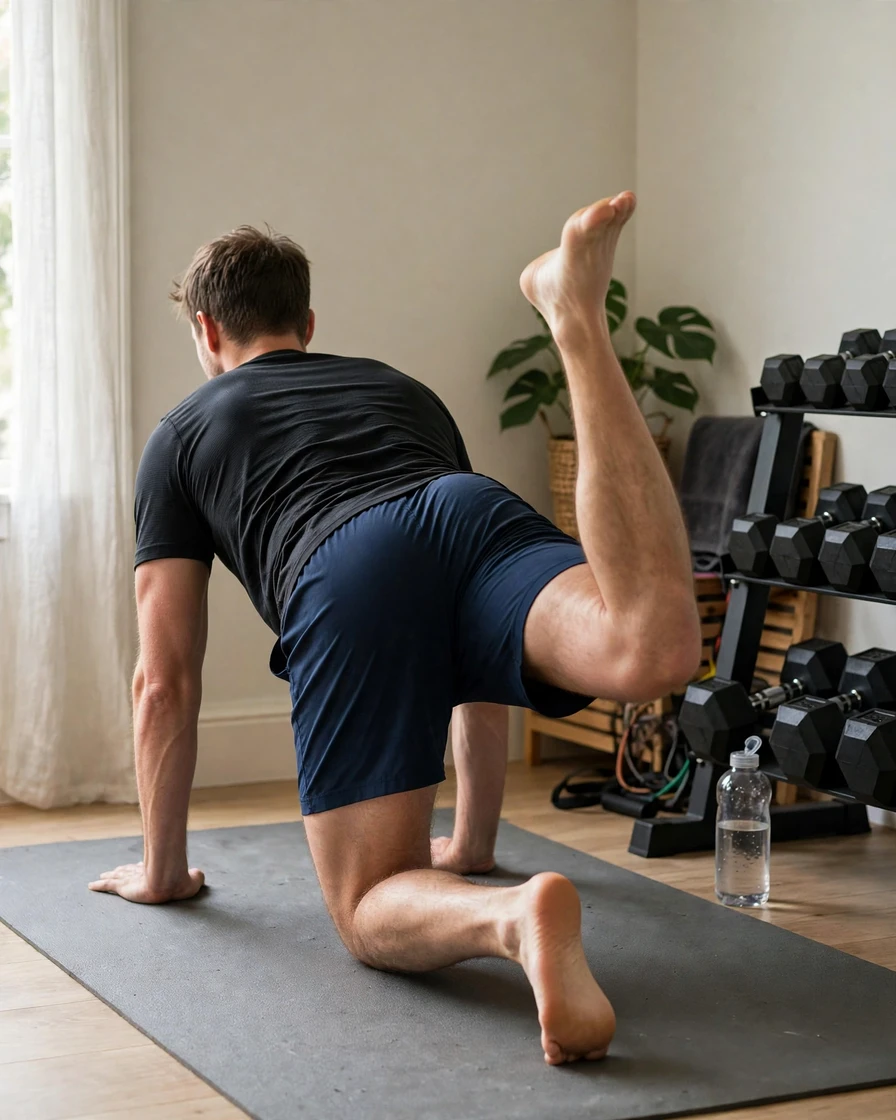
Donkey kicks are a simple floor move that targets the glutes one side at a time. Start on all fours, hands under shoulders, knees under hips, back flat. Lift one leg behind you, knee bent, pressing your heel toward the ceiling until your thigh is level. Squeeze your glute at the top, then lower the knee back down with control. Aim for 3 sets of 12 to 15 reps on each leg.
This move may help build glute strength and hip control without loading the knees. It suits beginners, older adults and anyone who prefers floor work. To make it easier, lift the leg only halfway and rest between reps. To make it harder, add an ankle weight or a light band above your knees. Keep your lower back still and avoid arching it as you lift. Stop if you feel sharp pain in your back or hips, and ask a healthcare professional first if you have an existing condition.
Quick Tip: Keep your hips level — if one hip drops, you are lifting too high.
8. Fire Hydrants
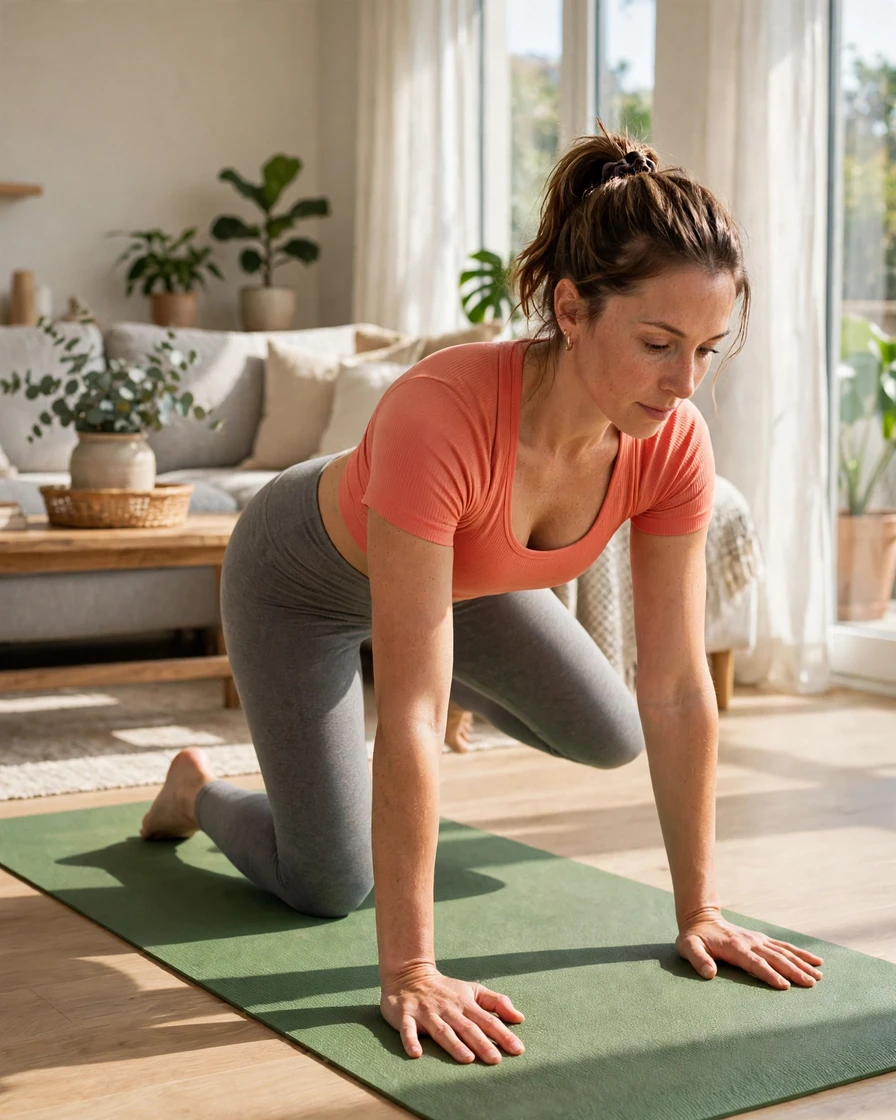
Fire hydrants work the side of the glutes and the hip muscles that keep your pelvis steady. Start on all fours, hands under shoulders and knees under hips. Keep your back flat, then lift one knee out to the side, bent at 90 degrees, until your thigh is level. Pause briefly, then lower the knee with control. Aim for 3 sets of 12 reps on each side.
This move may help hip stability and balance for walking and single-leg moves. It suits beginners and anyone who wants to strengthen the outer hips. To make it easier, lift the knee only partway and take your time. To make it harder, add a light resistance band just above your knees. Keep your weight even through both hands and avoid leaning to one side. Stop if you feel sharp pain in your hips or lower back, and ask a healthcare professional first if you have a hip condition.
Quick Tip: Think of lifting the knee, not the foot — it keeps the work in the hip muscles.
9. Step-Ups on a Sturdy Chair
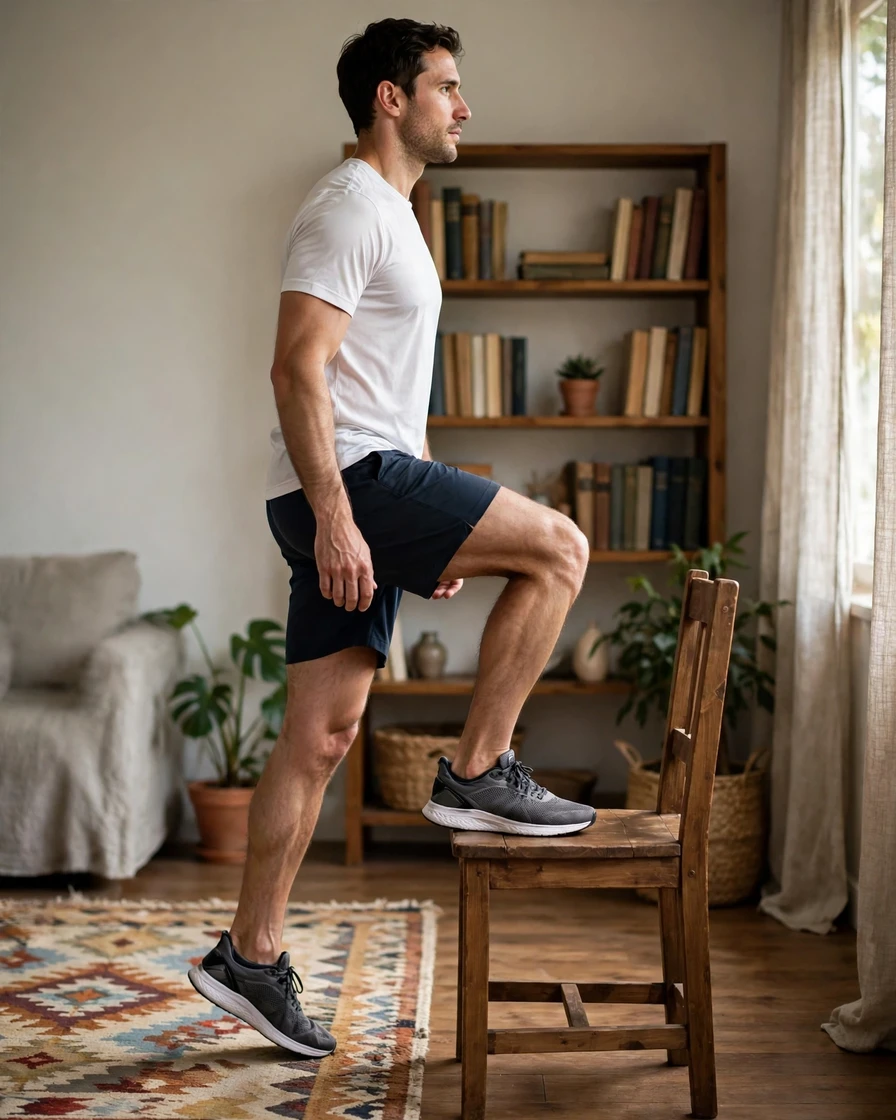
Step-ups build single-leg glute strength using a chair you already own. Stand facing a sturdy, non-slip chair or low step at about knee height. Place one foot flat on the seat, lean slightly forward, and press through that heel to stand on the chair. Lower back down with control, then switch legs. Aim for 3 sets of 10 slow reps on each leg.
This move may help build strength for climbing stairs and stepping up onto high curbs. It suits people who can balance on one leg and want a practical strength move. To make it easier, use a lower step or hold a wall for support. To make it harder, hold a dumbbell in each hand or slow the lowering phase. Check that the chair cannot slide or tip. Stop if you feel sharp knee pain, and ask a healthcare professional first if you have a knee or balance condition.
Quick Tip: Press through the heel of the foot on the chair — pushing off the floor foot cheats the move.
10. Single-Leg Romanian Deadlifts

Single-leg Romanian deadlifts train the glutes and hamstrings while building balance. Stand on one leg, knee slightly bent, hands by your sides. Hinge forward at the hips, free leg extending behind you, until your torso is near level. Keep your back flat and your hips level, then drive through your standing heel to return upright. Aim for 3 sets of 8 reps on each leg.
This move may help build hip hinge strength and balance for lifting and bending in daily life. It suits people who can balance on one leg and already feel comfortable with basic glute work. To make it easier, lightly touch a wall or chair for balance. To make it harder, hold a dumbbell in one or both hands. Keep your standing knee soft and avoid rounding your lower back. Stop if you feel sharp pain in your back or hamstring, and ask a healthcare professional first if you have a back condition.
Quick Tip: Hinge at the hips, not the waist — your torso should move as one flat line.
11. Banded Lateral Walks

Banded lateral walks wake up the side glutes before harder leg work. Loop a band just above your knees, stand feet hip-width apart, and bend your knees into a small squat. Keep your chest up, then step sideways with one foot, keeping tension on the band, and follow with the other foot without letting your knees collapse inward. Take 10 steps in one direction, then 10 back. Aim for 3 sets.
This move may help build hip stability and knee control, which can support squats, lunges and running. It suits beginners as a warm-up and athletes as a glute activator. To make it easier, use a lighter band or take smaller steps. To make it harder, use a stronger band or lower into a deeper squat. Keep your toes pointing forward and avoid bouncing. Stop if you feel sharp pain in your knees or hips, and ask a healthcare professional first if you have a knee condition.
Quick Tip: Keep the band tight the whole time — if it goes slack, your steps are too close together.
12. Frog Pumps
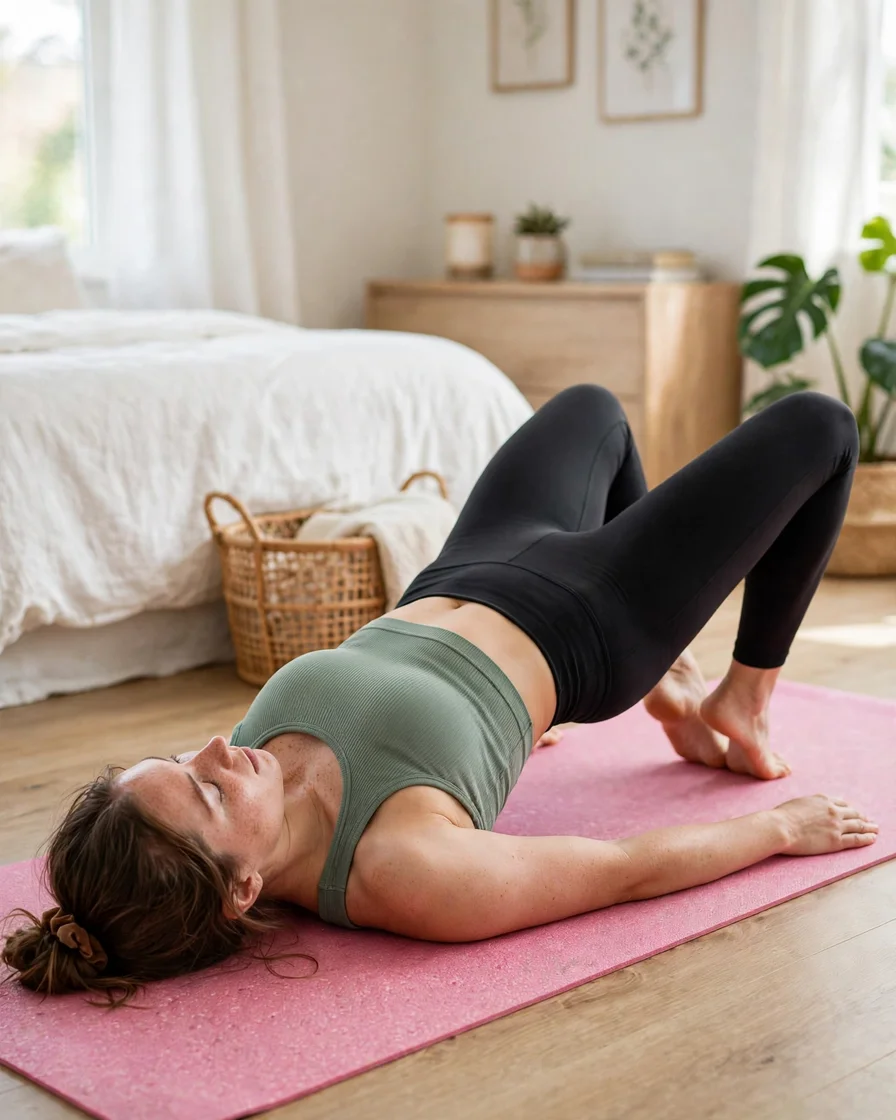
Frog pumps are a floor move that loads the glutes from a wide, open hip position. Lie on your back, bring the soles of your feet together, and let your knees fall open like a frog. Press your feet together and lift your hips until your body forms a straight line from shoulders to knees. Pause at the top, then lower slowly. Aim for 3 sets of 15 to 20 reps.
This move may help build glute strength with little strain on the lower back. It suits beginners and anyone who finds normal bridges uncomfortable. To make it easier, lift only partway and rest between sets. To make it harder, hold a dumbbell across your hips. Keep your feet pressed together and avoid arching your back at the top. Stop if you feel sharp pain in your hips or groin, and ask a healthcare professional first if you have a hip condition.
Quick Tip: Keep the lift small and controlled — a big arch at the top shifts work to your lower back.
13. Curtsy Lunges
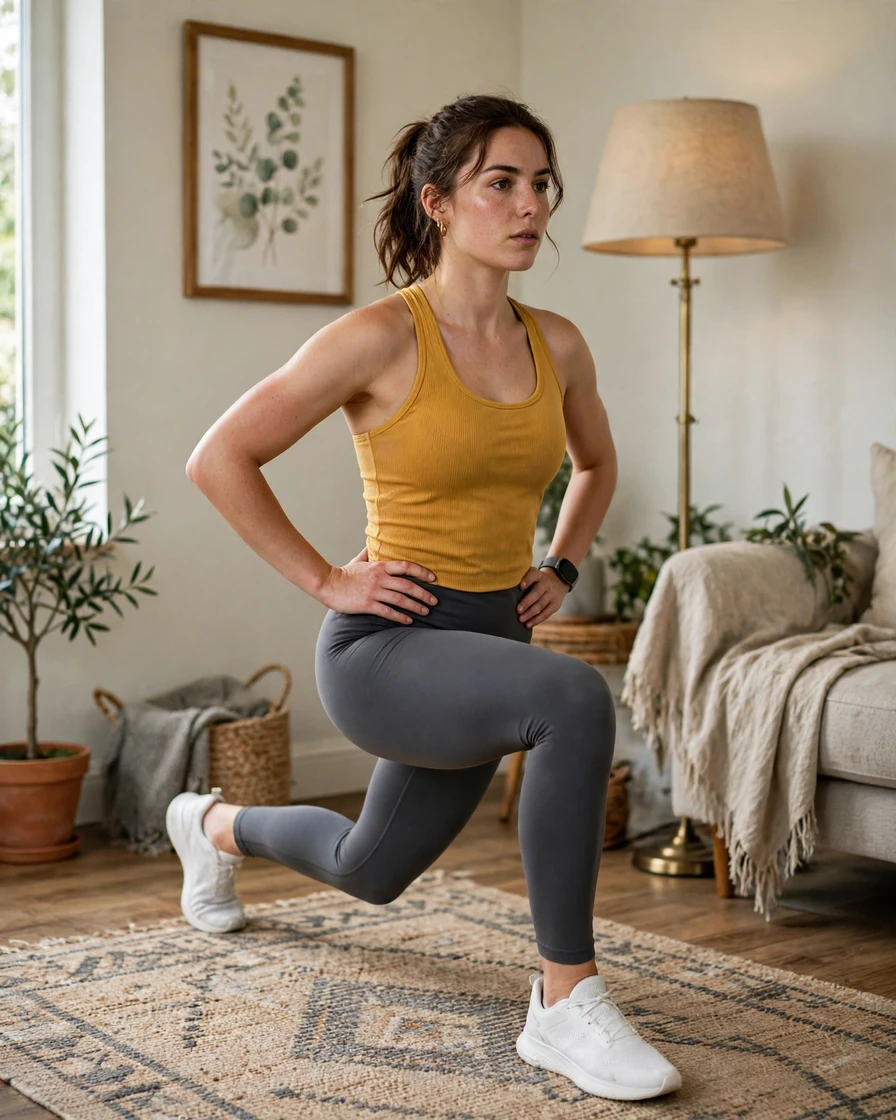
Curtsy lunges work the glutes from a diagonal angle that regular lunges miss. Stand tall with your feet hip-width apart and your hands on your hips. Step one leg back and across behind the other, and lower until your front thigh is near level. Keep your chest up, front knee over your toes, then press through your front heel to return. Aim for 3 sets of 10 reps on each leg.
This move may help build glute and thigh strength plus balance and coordination. It suits people who can lunge without pain and want more variety in their routine. To make it easier, take a shorter cross step or hold a wall for balance. To make it harder, hold a dumbbell at your chest or add a pause at the bottom. Keep the move controlled and avoid twisting your front knee inward. Stop if you feel sharp knee pain, and ask a healthcare professional first if you have a knee condition.
Quick Tip: Keep the cross step small at first — a wide cross makes balance much harder.
14. Side-Lying Leg Lifts
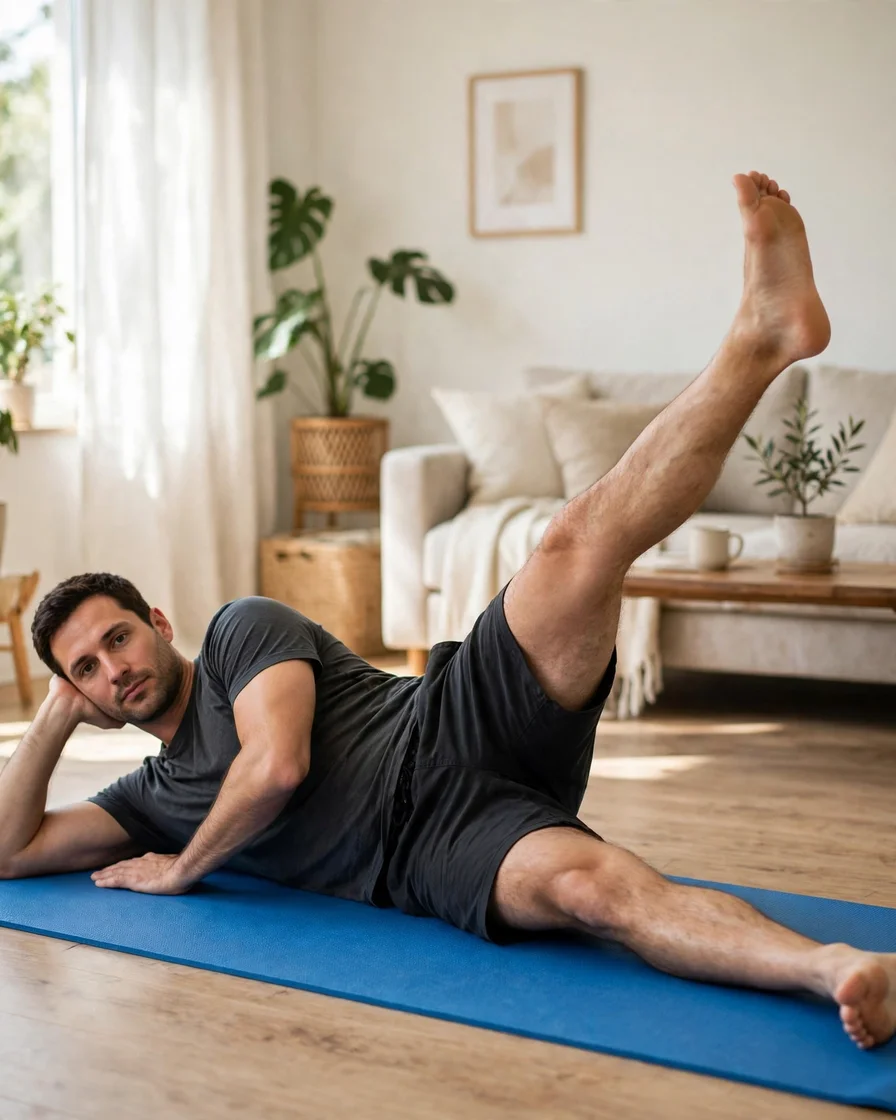
Side-lying leg lifts strengthen the outer glutes and hips with a gentle floor move. Lie on one side with legs straight and stacked, head resting on your lower arm. Keep your hips stacked, then lift your top leg toward the ceiling, keeping it straight, toes forward. Pause at the top, then lower slowly without resting the leg down. Aim for 3 sets of 12 to 15 reps on each side.
This move may help hip stability for walking and standing on one leg. It suits beginners, older adults and anyone who wants a low-impact hip move. To make it easier, bend your bottom knee for a wider base of support. To make it harder, add an ankle weight or a light resistance band around your ankles. Keep your hips stacked and avoid rolling forward or back. Stop if you feel sharp pain in your hips, and ask a healthcare professional first if you have a hip condition.
Quick Tip: Lift only as high as you can without your hips rolling — height matters less than control.
15. Single-Leg Glute Bridges

Single-leg glute bridges are a harder bridge that trains one glute at a time. Lie on your back, knees bent, feet flat on the floor. Extend one leg toward the ceiling, then press through your supporting heel and lift your hips until your body forms a straight line. Pause at the top, then lower slowly. Aim for 3 sets of 10 reps on each leg.
This move may help build single-leg glute strength and show gaps between sides. It suits people who can do regular glute bridges with ease and want a bigger challenge. To make it easier, bend the raised knee instead of keeping it straight, or lift only partway. To make it harder, pause for three seconds at the top or add a dumbbell across your hips. Keep your hips level and avoid letting one side drop. Stop if you feel sharp pain in your back or hips, and ask a healthcare professional first if you have an existing condition.
Quick Tip: Press your supporting heel into the floor hard — it keeps the glute doing the work.
Expert Tips
- Warm up first: Spend five minutes on light movement before you start, such as marching in place, gentle squats and banded lateral walks. Warm muscles move better and may help lower the risk of strains.
- Master form before load: Use bodyweight only until every rep feels smooth and controlled. Add a band or dumbbell only when the current version feels easy for the full set.
- Train two or three times a week: Leave at least one rest day between glute sessions so the muscles can recover. Short, regular sessions build strength better than one long, tiring workout.
- Add load slowly: Increase reps, sets or resistance by a small step each week. Small steps build strength safely and help you avoid sore knees or a sore back.
- Stop if it hurts: Mild muscle effort is normal, but sharp pain is a warning sign. Stop the move, rest, and speak to a healthcare professional if the pain stays.
Final Thoughts
A bubble buttocks workout at home needs no gym and no fancy gear — a mat, a band and a little floor space are enough. The fifteen moves above cover bridges, squats, lunges and single-leg work, so you can build a routine that fits your level.
Pick three or four moves to start, practise them twice a week, and add load only when the reps feel easy. Steady, careful training may help you build stronger glutes and steadier hips over time.
How often should I do a bubble buttocks workout at home?
Two or three sessions a week is a good target for most people. Leave at least one rest day between sessions so your glutes can recover and grow stronger. You can train more often if you keep the sessions short and the effort moderate, but rest days matter as much as the workouts.
Can beginners do these glute exercises at home?
Yes, most of these moves suit beginners when you start with bodyweight only. Begin with glute bridges, donkey kicks and side-lying leg lifts, then add squats and lunges as your balance improves. Start with fewer sets, rest between them, and speak to a healthcare professional before starting if you have a health condition.
Do I need equipment for a bubble buttocks workout at home?
No, most of these exercises use bodyweight only and need just a mat and some floor space. A resistance band adds variety for kickbacks and lateral walks, and a dumbbell can make bridges and squats harder later. Start with no gear, then add a band or dumbbell only when bodyweight reps feel easy.
How long does it take to see stronger glutes?
Most people notice better strength and control within four to six weeks of regular training. Visible changes take longer and depend on your starting point, diet, sleep and how often you train. Track your reps and weights each week, because steady progress is the clearest sign your program is working.
Are glute exercises safe for people with knee pain?
They can be, if you pick gentle moves and keep the form strict. Floor moves like glute bridges and side-lying leg lifts load the knees very little, while squats and lunges need care. Stop if you feel sharp pain, use a smaller range, and ask a healthcare professional which moves suit your knees.