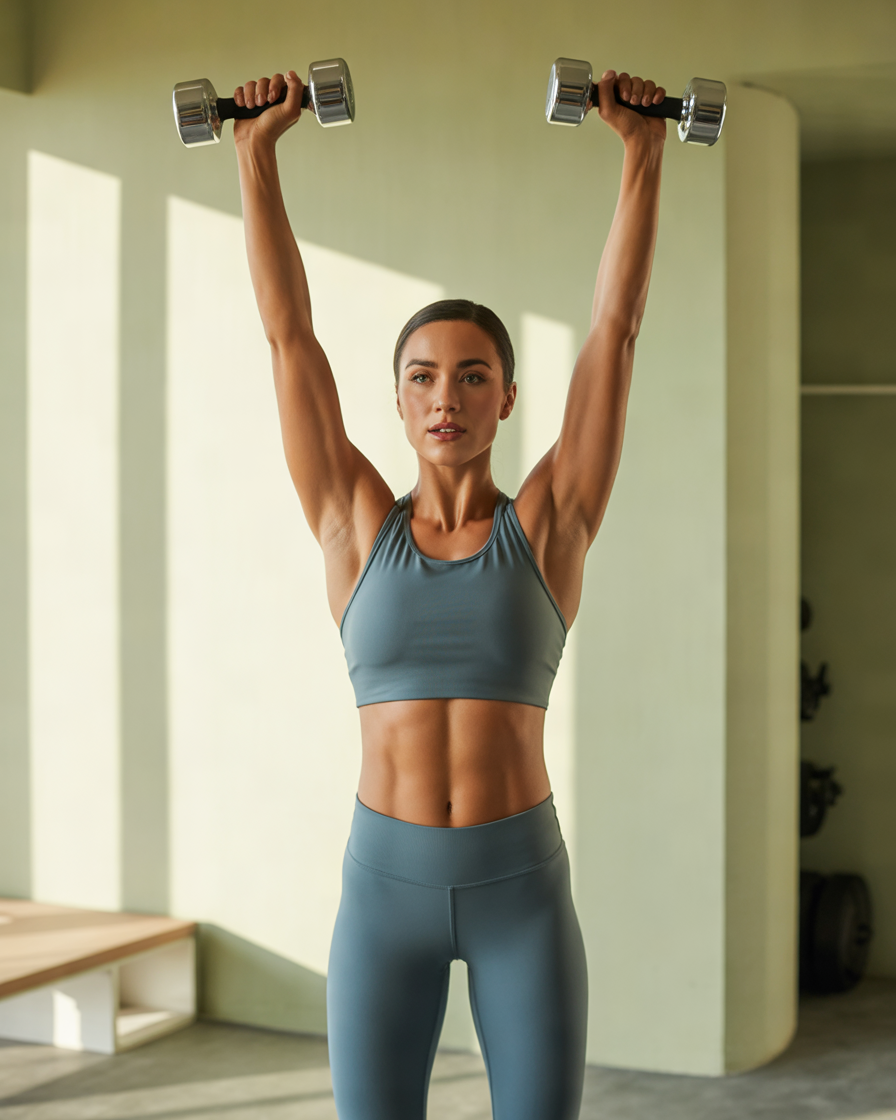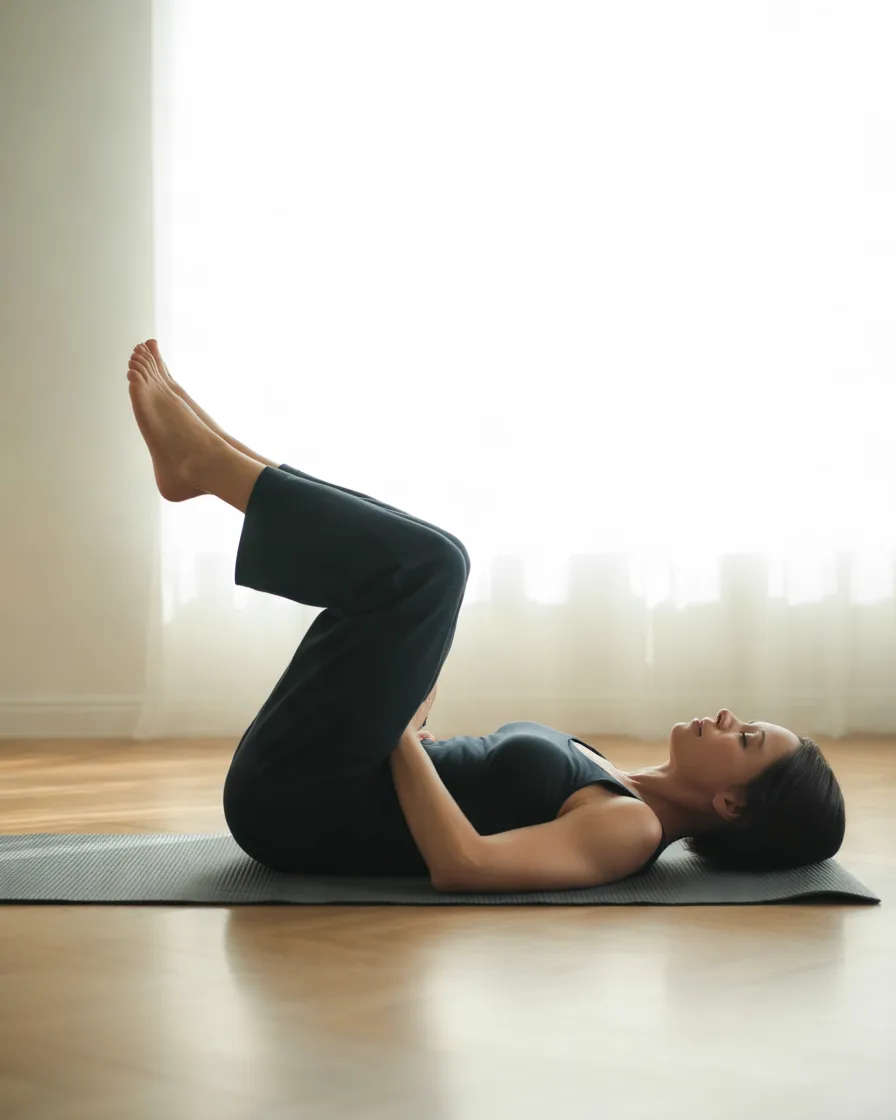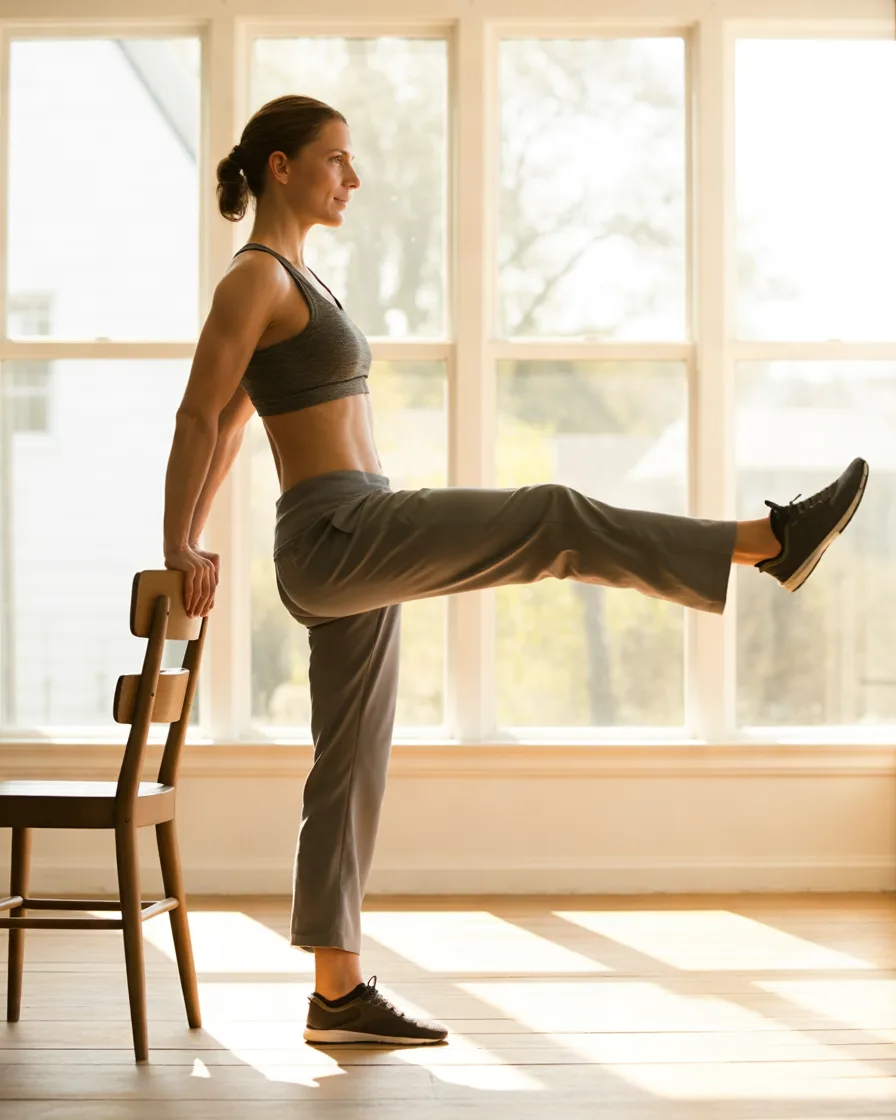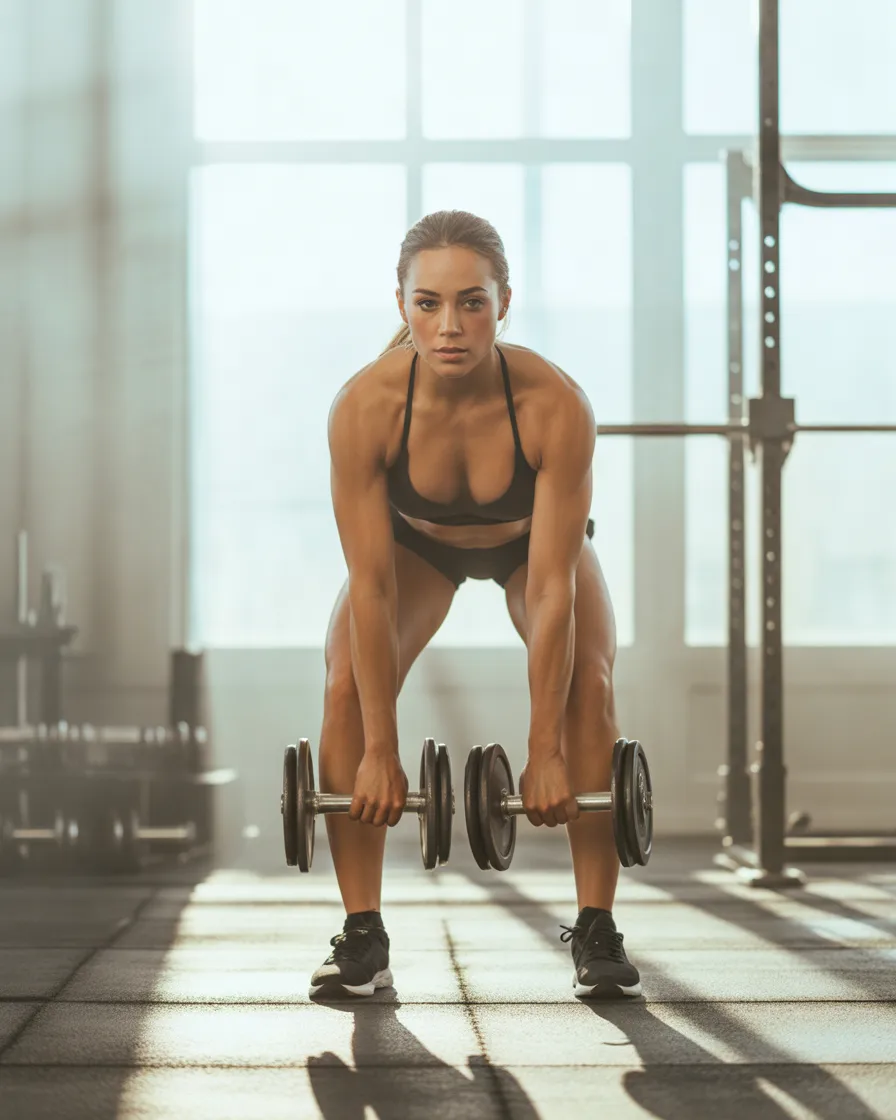
You do not need an expensive gym membership, heavy weights, or complicated fitness machines to build stronger legs. With the right exercises, you can train your thighs, glutes, hamstrings, and calves right at home using only your body weight.
An effective at home leg workout can help improve lower-body strength, balance, mobility, and everyday movement. Whether you are a beginner, someone returning to exercise, or an experienced fitness enthusiast looking for a convenient leg day routine, home workouts offer a flexible way to stay active.
Your legs contain some of the largest muscle groups in your body. These muscles help you walk, climb stairs, stand up, maintain balance, and perform everyday activities. Training them regularly can support better movement and overall physical fitness.
The good news is that you can work several lower-body muscle groups without purchasing any special equipment. Exercises such as squats, lunges, glute bridges, and calf raises can provide a challenging workout when performed with proper technique.
In this guide, we will explore 10 effective at-home leg workout exercises that require little or no equipment. Each exercise includes its main benefits, practical instructions, beginner-friendly tips, and important safety considerations.
You will also learn how to combine these movements into a simple home leg workout routine, adjust the difficulty level, and make steady progress over time.
1. Bodyweight Squats: A Simple Foundation for Stronger Legs
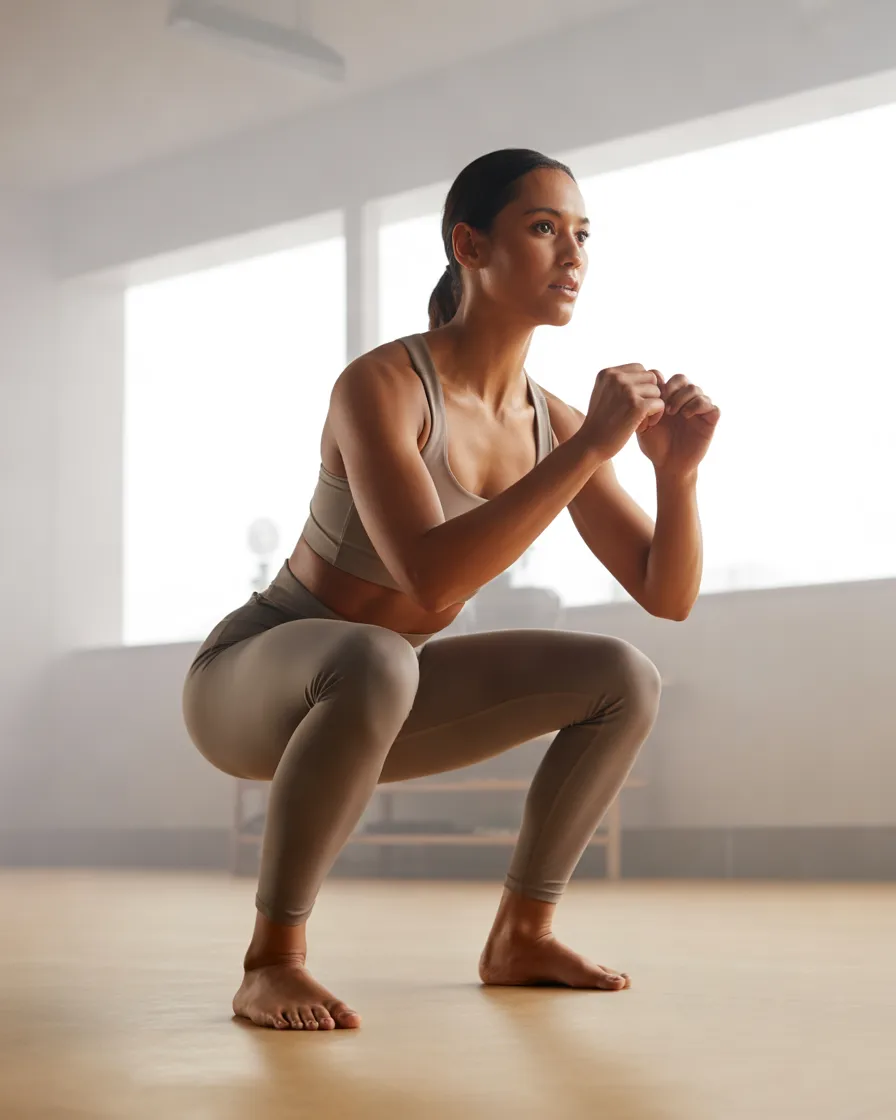
Bodyweight squats are among the most useful exercises for an at-home leg workout. They target several lower-body muscles at once, making them a practical choice for beginners and experienced exercisers.
During a squat, your hips move backward and downward while your knees bend. Your quadriceps, glutes, and hamstrings work together to control the movement and help you return to a standing position.
Benefits
- Strengthens the quadriceps and glute muscles.
- Engages the hamstrings and supporting core muscles.
- Helps develop lower-body strength for everyday activities.
- Supports better movement control and balance.
- Requires no gym equipment or additional weights.
How to Perform Bodyweight Squats
- Stand with your feet approximately shoulder-width apart.
- Point your toes slightly outward if that feels comfortable.
- Keep your chest lifted and your back in a natural position.
- Slowly bend your knees and push your hips backward.
- Lower your body as far as you can while maintaining comfortable control.
- Keep your feet flat on the floor.
- Push through your feet to return to the starting position.
- Repeat for the desired number of repetitions.
Practical Tips
Beginners can start with 2 sets of 10 repetitions. As the movement becomes easier, gradually increase to 3 sets of 12–15 repetitions.
If you struggle to maintain balance, perform squats in front of a sturdy chair. You can also use a chair as a target to control your squat depth.
Avoid rushing through repetitions. A slow, controlled squat is generally more useful than performing many repetitions with poor technique.
Who It May Suit
Bodyweight squats are suitable for many fitness levels. Beginners can use a reduced range of motion, while experienced exercisers can try slower repetitions or pause briefly at the bottom.
Important Considerations
Do not force your knees or hips into uncomfortable positions. Keep your feet supported and avoid allowing your knees to collapse inward.
2. Reverse Lunges: Improve Leg Strength and Balance
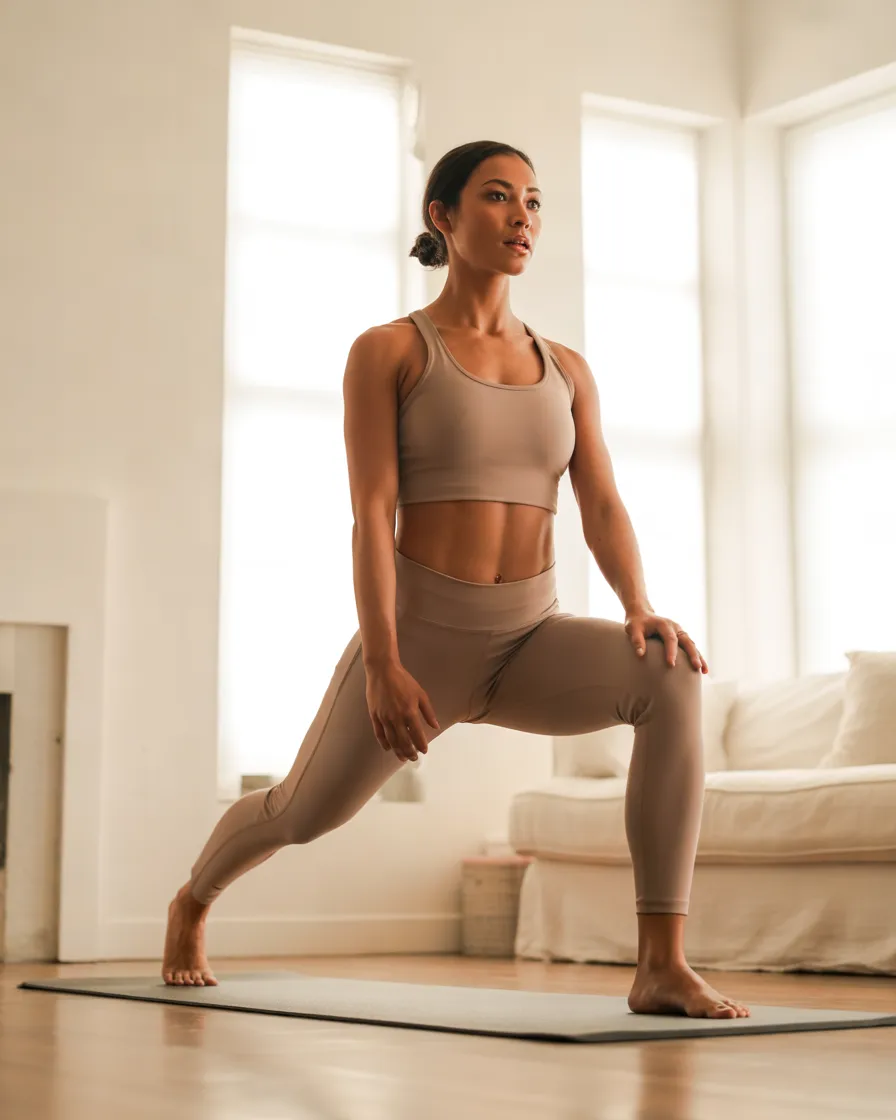
Reverse lunges are an excellent addition to a lower-body workout at home. Unlike regular squats, which involve both legs working together, reverse lunges challenge one leg at a time.
This movement primarily targets the quadriceps and glutes while also engaging the hamstrings and muscles responsible for maintaining balance.
Stepping backward rather than forward may feel more comfortable for some people because it allows them to control their movement and positioning more easily.
Benefits
- Strengthens the quadriceps and glutes.
- Trains each leg independently.
- Helps develop balance and coordination.
- Supports controlled hip and knee movement.
- Provides a useful alternative to traditional lunges.
How to Perform Reverse Lunges
- Stand upright with your feet hip-width apart.
- Place your hands on your hips or keep them beside your body.
- Take a comfortable step backward with your right foot.
- Slowly bend both knees as you lower your body.
- Keep your front foot flat and your torso comfortably upright.
- Lower until your back knee approaches the floor without forcing the movement.
- Push through your front foot to return to standing.
- Repeat with the opposite leg.
Practical Tips
Start with 8 repetitions per leg for 2 sets. Increase the repetitions gradually as your balance and strength improve.
If you find the exercise difficult, hold a sturdy chair or wall for support. Focus on maintaining control instead of taking very long steps.
You can also pause briefly at the bottom of each repetition to develop better movement awareness.
Who It May Suit
Reverse lunges can suit beginners and intermediate exercisers who want to strengthen their legs individually. They are also useful for people who want to include balance-focused movements in their workout.
Important Considerations
Keep your front knee aligned with your foot rather than allowing it to collapse inward. Avoid dropping your back knee forcefully onto the floor. If you experience knee discomfort, reduce your range of motion or choose a more comfortable exercise.
3. Glute Bridges: Strengthen Your Glutes and Hamstrings
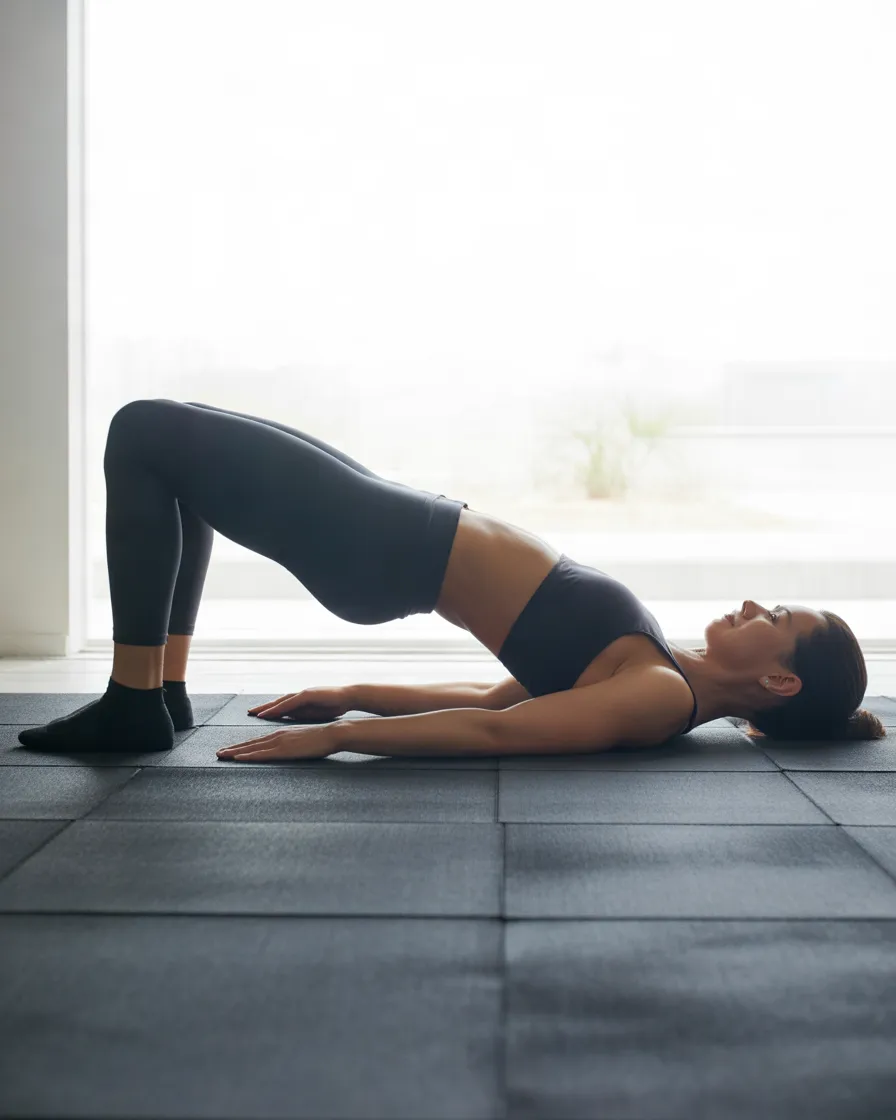
Glute bridges are a beginner-friendly exercise that targets the muscles around your hips and the back of your thighs. They are performed while lying on your back, making them a useful option for people who prefer floor-based exercises.
The movement involves lifting your hips while keeping your feet and shoulders supported. Your glute muscles help extend your hips, while your hamstrings assist with the movement.
Glute bridges are particularly useful when you want to include glute-focused exercises in your at-home leg workout.
Benefits
- Targets the glute muscles.
- Engages the hamstrings.
- Encourages controlled hip extension.
- Helps develop lower-body strength.
- Requires only a comfortable floor surface or exercise mat.
How to Perform Glute Bridges
- Lie on your back with your knees bent.
- Place your feet flat on the floor, approximately hip-width apart.
- Keep your arms relaxed beside your body.
- Gently tighten your abdominal muscles.
- Press through your feet and lift your hips.
- Continue until your shoulders, hips, and knees form an approximately straight line.
- Squeeze your glutes gently at the top.
- Slowly lower your hips to the starting position.
Practical Tips
Perform 2–3 sets of 12–15 repetitions.
Try holding the raised position for 2–3 seconds before lowering your hips. This helps you focus on controlled muscle engagement.
If you want a greater challenge, gradually progress to single-leg glute bridges once you can perform regular bridges comfortably and with good control.
Avoid pushing your hips excessively high. Your lower back should not do all the work.
Who It May Suit
Glute bridges are suitable for beginners, people who prefer low-impact exercises, and individuals looking to strengthen their glutes and hamstrings without standing movements.
Important Considerations
Avoid arching your lower back to lift your hips higher. If you experience back or hip discomfort, reduce the range of motion and check your positioning.
4. Wall Sits: Build Lower-Body Muscular Endurance
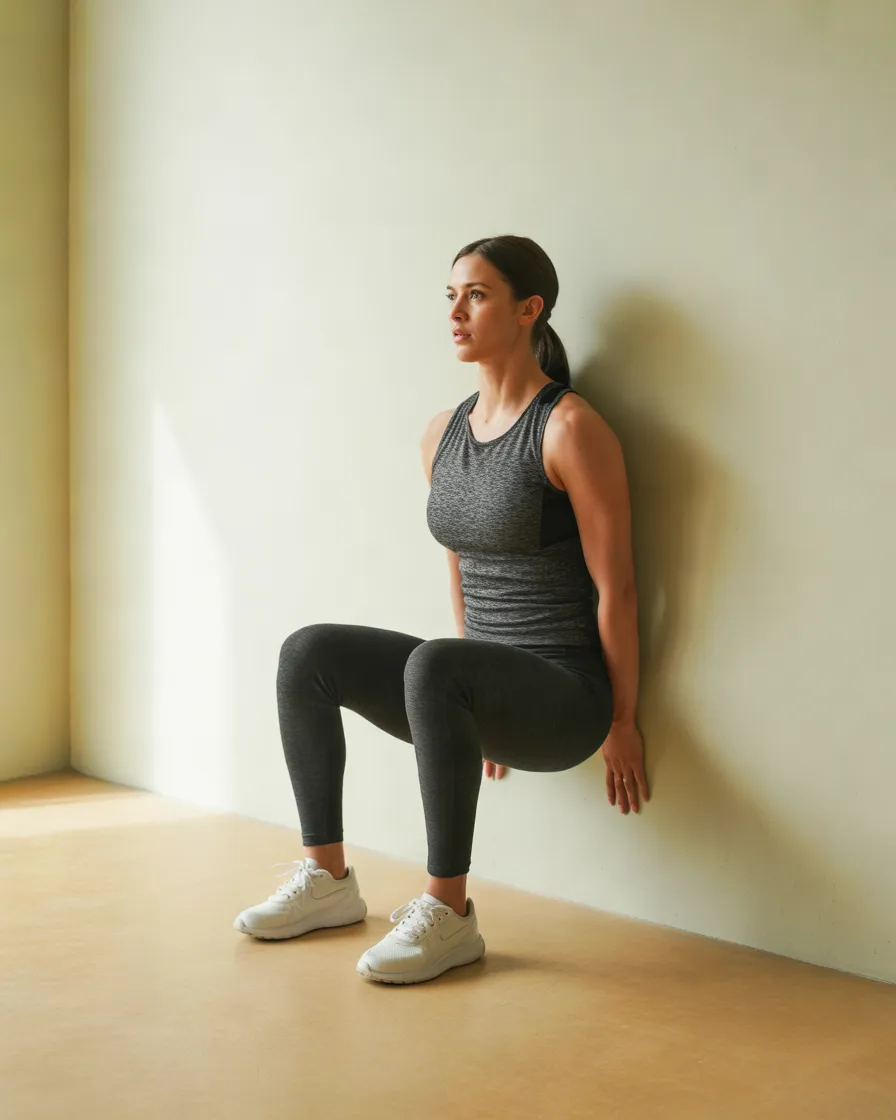
Wall sits are a simple but challenging exercise for strengthening the thighs. Instead of repeatedly moving up and down, you hold a seated position against a wall.
This exercise mainly targets the quadriceps, which are located at the front of your thighs. Your glutes and other supporting muscles also help maintain the position.
Wall sits are especially useful when you want to add a static exercise to your leg day at home.
Benefits
- Challenges quadriceps muscular endurance.
- Engages the glute muscles.
- Encourages controlled lower-body positioning.
- Requires no equipment.
- Offers a different training stimulus from squats and lunges.
How to Perform Wall Sits
- Stand with your back against a stable wall.
- Place your feet approximately shoulder-width apart.
- Walk your feet slightly forward.
- Slowly slide your back down the wall.
- Stop at a comfortable position where your knees are bent.
- Keep your back supported against the wall.
- Hold the position while breathing normally.
- Slowly return to standing.
Practical Tips
Beginners can start with a 15–20-second hold and complete 2 sets.
As your endurance improves, gradually work toward 30–45 seconds.
You do not have to lower your thighs until they are completely parallel to the floor. Choose a comfortable position that allows you to maintain proper control.
Try to breathe continuously rather than holding your breath during the exercise.
Who It May Suit
Wall sits may suit people who want to improve thigh endurance and add a low-movement exercise to their home leg workout.
Important Considerations
Use a stable wall and avoid slippery flooring. Stop if you experience sharp knee pain, dizziness, or unusual discomfort. People with existing knee problems should seek professional guidance before attempting prolonged holds.
5. Step-Ups: Strengthen Your Legs With a Stable Platform
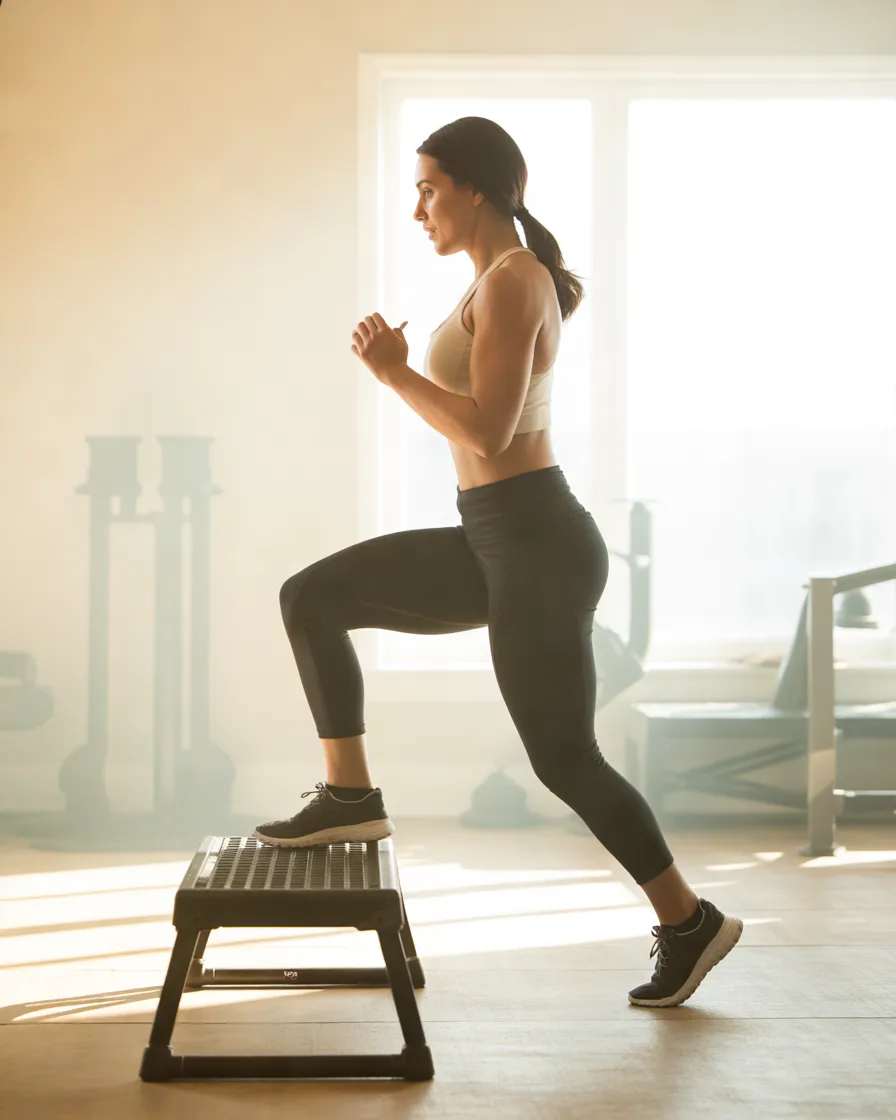
Step-ups are practical bodyweight leg exercises that imitate an everyday movement: climbing stairs.
You need a stable, low platform or exercise step to perform this movement. Your quadriceps and glutes do much of the work as you lift your body onto the platform.
Step-ups can be a useful exercise for people who want to train their legs while also challenging coordination and balance.
Benefits
- Strengthens the quadriceps and glutes.
- Challenges balance and coordination.
- Trains each leg individually.
- Develops strength for stair-climbing movements.
- Can be adjusted by changing the platform height.
How to Perform Step-Ups
- Stand in front of a stable, non-slip step or low platform.
- Place your entire right foot on the platform.
- Keep your upper body comfortably upright.
- Push through your right foot to lift your body.
- Bring your left foot onto the platform.
- Step down carefully, one foot at a time.
- Repeat with the opposite leg leading.
Practical Tips
Start with 8–10 repetitions per leg for 2 sets.
Choose a platform that is low enough to let you step up without twisting your body or forcing your knee into an uncomfortable position.
Keep your movements slow and controlled. Avoid jumping onto the platform or using excessive momentum.
If you are new to this exercise, use a lower step and stand near a wall or sturdy support.
Who It May Suit
Step-ups may suit beginners and intermediate exercisers who want to improve lower-body strength and movement coordination.
Important Considerations
Platform stability is essential. Do not use a loose chair, unstable stool, or slippery household object. Make sure the platform can safely support your body weight.
If stepping up causes knee pain or instability, stop and choose a more comfortable alternative.
6. Standing Calf Raises: Target Your Lower-Leg Muscles
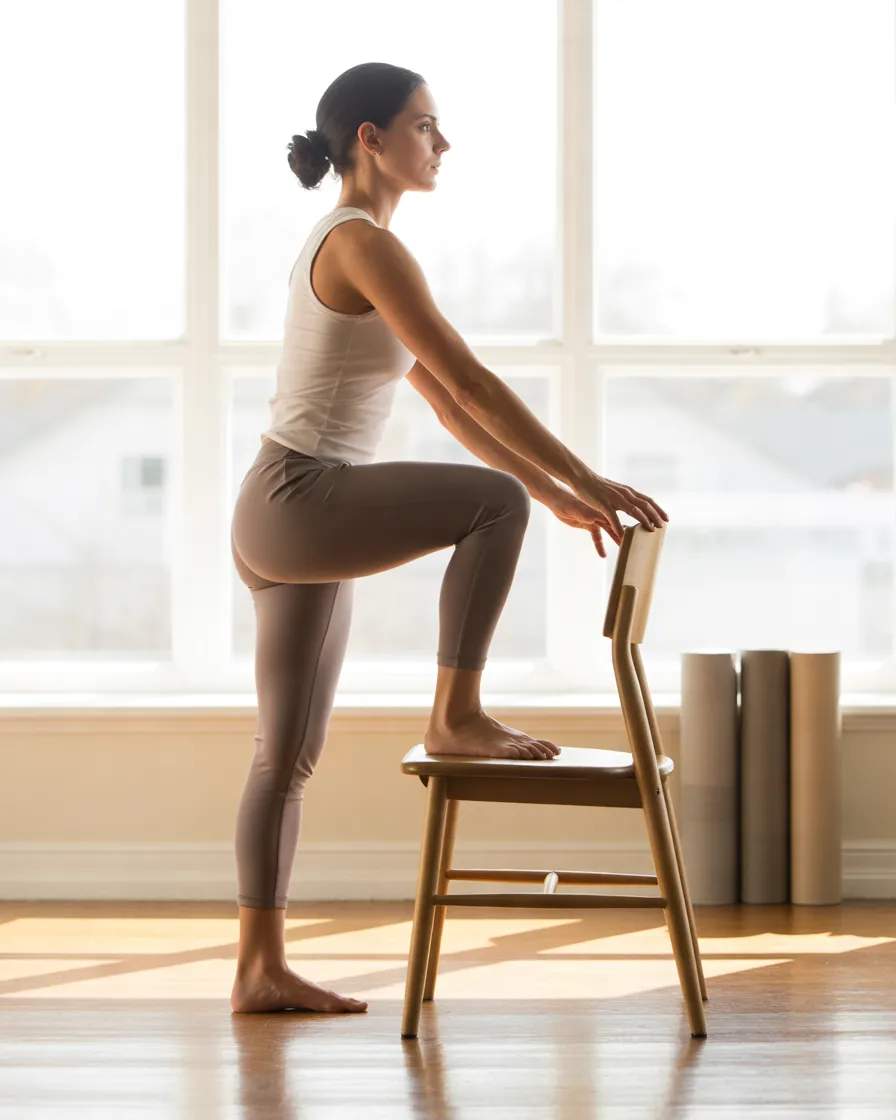
Calf raises are one of the easiest lower-body exercises to perform at home. They specifically target the calf muscles, which help you push through your feet when walking, running, and climbing stairs.
Although many leg workouts focus on the thighs and glutes, the calves also deserve attention. Including calf raises helps create a more balanced lower-body training routine.
Benefits
- Strengthens the calf muscles.
- Supports ankle movement and stability.
- Helps develop lower-leg muscular endurance.
- Requires very little space.
- Can be performed without equipment.
How to Perform Standing Calf Raises
- Stand upright with your feet approximately hip-width apart.
- Keep your knees comfortably straight but not locked.
- Hold a wall or sturdy chair if needed for balance.
- Slowly lift your heels off the floor.
- Rise onto the balls of your feet.
- Pause briefly at the top.
- Lower your heels slowly until they return to the floor.
- Repeat the movement.
Practical Tips
Start with 2 sets of 15 repetitions.
For an additional challenge, increase the pause at the top to 2 seconds or perform the exercise more slowly.
Once regular calf raises become comfortable, you can try single-leg calf raises while holding a stable support.
Avoid bouncing quickly through the movement. A controlled lifting and lowering motion helps you maintain better technique.
Who It May Suit
Calf raises are suitable for most fitness levels, including beginners who want to strengthen their lower legs without complicated movements.
Important Considerations
Use support if your balance is limited. Avoid forcing a deep stretch at the bottom of the movement. Anyone experiencing persistent ankle, Achilles tendon, or calf pain should seek appropriate professional advice.
7. Sumo Squats: Add Variety to Your Inner-Thigh Workout
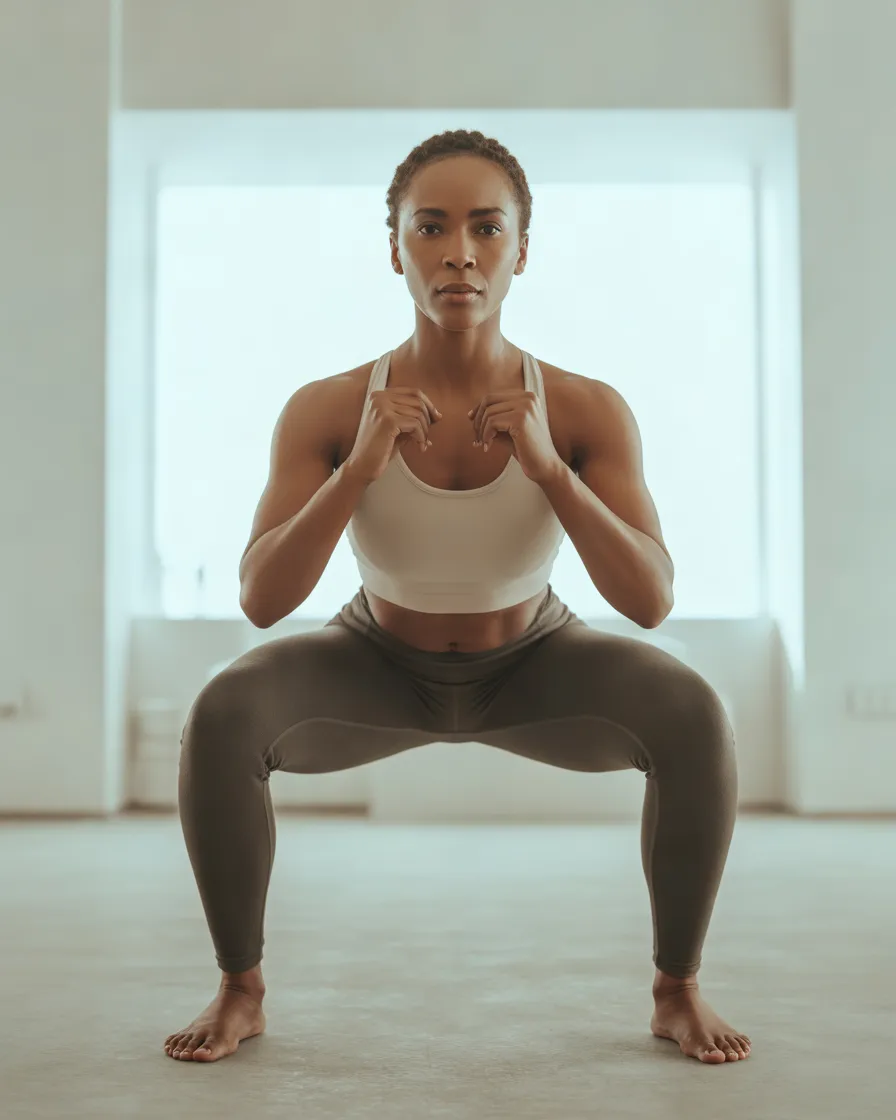
Sumo squats are a variation of traditional squats. They involve a wider stance and slightly outward-pointing toes.
This position changes how the lower-body muscles are recruited. The quadriceps and glutes remain important, while the inner-thigh muscles also contribute to controlling the movement.
If you want variety in your home leg exercises, sumo squats are worth including.
Benefits
- Strengthens the quadriceps and glutes.
- Engages the inner-thigh muscles.
- Adds variety to traditional squat training.
- Challenges hip and knee movement control.
- Requires no special equipment.
How to Perform Sumo Squats
- Stand with your feet wider than shoulder-width apart.
- Turn your toes slightly outward.
- Keep your chest lifted and your back in a natural position.
- Slowly bend your knees and lower your hips.
- Keep your knees aligned with the direction of your toes.
- Lower to a comfortable depth.
- Push through your feet to return to standing.
- Repeat with controlled movements.
Practical Tips
Perform 2–3 sets of 10–12 repetitions.
Start with a stance that feels natural rather than placing your feet extremely far apart.
Keep your weight distributed across your feet. Avoid lifting your heels or allowing your knees to move inward.
If you find the exercise difficult, reduce the depth of your squat until you develop better control.
Who It May Suit
Sumo squats may suit beginners and intermediate exercisers who can comfortably perform basic squats and want to add a different lower-body movement.
Important Considerations
Not everyone has the same hip mobility. Avoid forcing an unusually wide stance or deep squat. Choose a foot position that feels comfortable and allows your knees to track naturally.
8. Single-Leg Romanian Deadlift: Improve Balance and Hamstring Strength
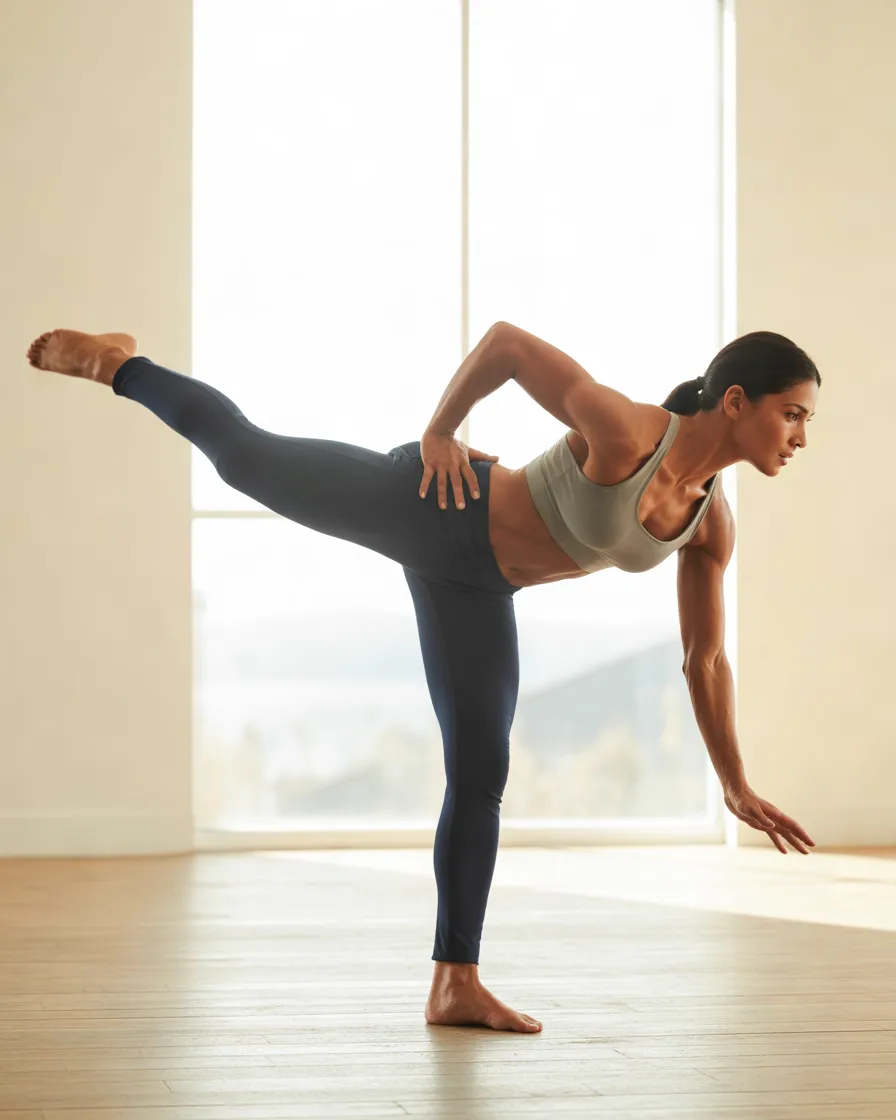
The single-leg Romanian deadlift is a useful bodyweight exercise for training the hamstrings, glutes, and muscles responsible for balance.
Unlike squats, which involve bending both knees, this movement focuses on hinging at the hips while one leg moves backward.
It may look difficult initially, but you can make it easier by holding a wall or chair for support.
Benefits
- Targets the hamstrings and glutes.
- Challenges single-leg balance.
- Develops hip-hinge movement control.
- Engages supporting core muscles.
- Adds variety to a bodyweight lower-body workout.
How to Perform a Single-Leg Romanian Deadlift
- Stand upright with your feet together.
- Shift your weight onto your right foot.
- Keep a slight bend in your right knee.
- Slowly push your hips backward.
- Allow your left leg to extend behind you.
- Lower your upper body while keeping your back in a natural position.
- Stop when you feel a comfortable stretch in the back of your supporting leg.
- Return to standing by bringing your hips forward.
- Repeat on the opposite leg.
Practical Tips
Start with 6–8 repetitions per leg for 2 sets.
Beginners can keep the toes of their back foot lightly touching the floor for additional stability.
Focus on moving from the hips rather than rounding your back. You can also practice the movement while holding a chair.
Progress gradually by improving your balance and range of motion rather than trying to reach the floor.
Who It May Suit
This exercise may suit intermediate exercisers and beginners who are comfortable with basic hip-hinge movements and want to improve their balance.
Important Considerations
Maintain a controlled movement and avoid twisting your hips. If you experience lower-back discomfort, stop and review your technique. Use support if necessary.
9. Lateral Lunges: Train Your Legs in a Different Direction
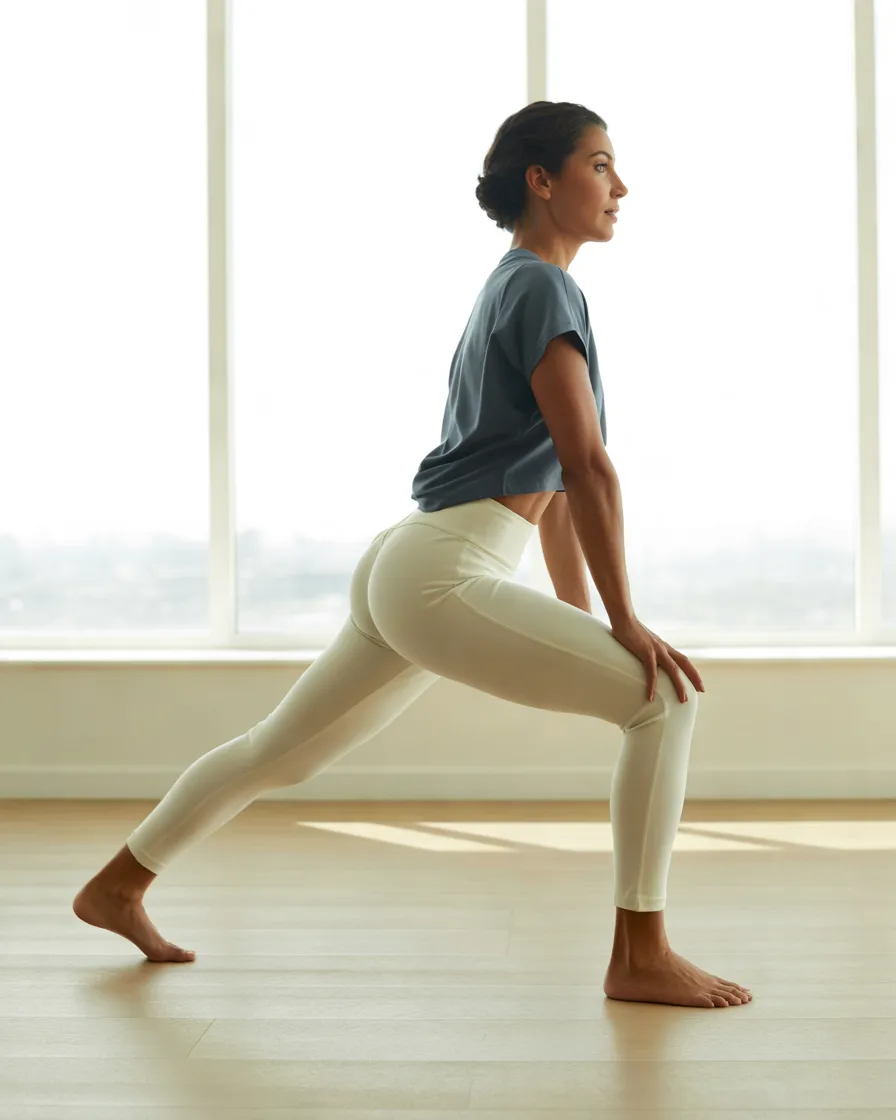
Many traditional leg exercises involve moving forward and backward. Lateral lunges introduce side-to-side movement, which challenges your lower body in a different direction.
This exercise mainly targets the quadriceps, glutes, and inner-thigh muscles. It also encourages controlled hip movement and lateral coordination.
Adding lateral lunges can make your leg workout at home more varied and functional.
Benefits
- Strengthens the quadriceps and glutes.
- Engages the inner-thigh muscles.
- Develops side-to-side movement control.
- Challenges lower-body coordination.
- Adds variety to a traditional leg routine.
How to Perform Lateral Lunges
- Stand with your feet together or slightly apart.
- Take a comfortable step to your right side.
- Bend your right knee while pushing your hips backward.
- Keep your left leg relatively straight.
- Lower your body only as far as feels comfortable.
- Keep your chest lifted and your right foot flat.
- Push through your right foot to return to the starting position.
- Repeat on the left side.
Practical Tips
Start with 8 repetitions per side for 2 sets.
Keep your steps controlled and avoid moving too far sideways before you become comfortable with the exercise.
Focus on keeping your bent knee aligned with your toes. Your other leg should remain comfortable rather than being forced into a locked position.
Beginners can perform a smaller side step to make the exercise easier.
Who It May Suit
Lateral lunges may suit beginners who are comfortable with basic squats and want to develop additional movement coordination. They can also be useful for intermediate exercisers looking for more variety.
Important Considerations
Some people may find lateral movements uncomfortable because of limited hip or ankle mobility. Do not force a deep position. Reduce your range of motion or choose another exercise if you experience discomfort.
10. Squat Pulses: Add a Controlled Challenge to Your Leg Workout
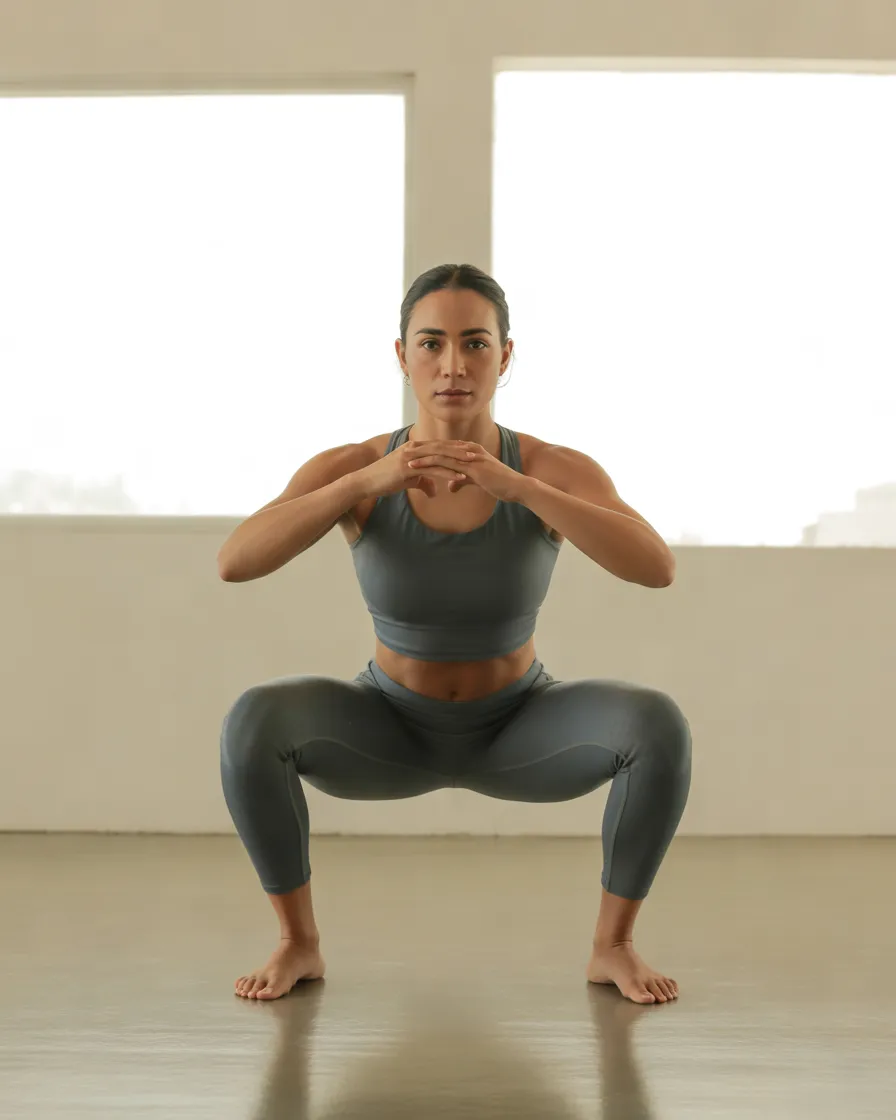
Squat pulses are a variation of the traditional squat that involves making small, controlled movements while holding a partially lowered position.
Instead of returning to a fully standing position after every repetition, you remain in the squat and move through a shorter range.
This exercise mainly challenges the quadriceps and glutes. It can be used as a finishing movement after regular squats or lunges.
Benefits
- Challenges thigh and glute muscular endurance.
- Adds variety to bodyweight leg training.
- Requires no equipment.
- Can be adjusted according to fitness level.
- Encourages controlled lower-body movement.
How to Perform Squat Pulses
- Stand with your feet approximately shoulder-width apart.
- Push your hips backward and lower into a comfortable squat.
- Keep your chest lifted and your feet flat.
- Maintain your squat position.
- Move your body slightly upward.
- Lower yourself a short distance again.
- Continue with small, controlled movements.
- Stand up slowly when your set is complete.
Practical Tips
Start with 10–15 small pulses for 2 sets.
You can begin with a shallow squat and gradually increase the depth as your strength and control improve.
Avoid making the pulses too fast or bouncing aggressively. Keep your movements smooth and controlled.
If your legs become too fatigued to maintain proper form, finish the set and rest.
Who It May Suit
Squat pulses may suit people who already feel comfortable performing standard bodyweight squats. Beginners can start with regular squats before trying this variation.
Important Considerations
This exercise can create significant muscular fatigue. Avoid continuing when your knees collapse inward or your posture becomes difficult to control. It is not necessary to perform very deep or extremely long squat-pulse sets to make your workout useful.
Expert Tips for Getting Better Results From an At Home Leg Workout
Choosing the right exercises is important, but your workout technique, consistency, and recovery also influence your progress.
Here are some practical tips to help you build a more effective lower-body training routine.
1. Always Begin With a Warm-Up
Spend approximately 5–10 minutes preparing your body before exercising.
A simple warm-up can include:
- Marching in place.
- Gentle bodyweight squats.
- Controlled leg swings.
- Ankle circles.
- Easy walking around your room.
The purpose is to gradually increase movement and prepare your muscles and joints for exercise.
2. Focus on Proper Exercise Technique
Good technique should come before increasing repetitions or making an exercise more difficult.
For example, performing 10 controlled squats is generally more useful than completing 25 rushed repetitions with poor positioning.
Pay attention to your posture, balance, breathing, and joint alignment.
3. Choose a Workout That Matches Your Fitness Level
Beginners do not need to perform all 10 exercises at maximum intensity.
Start with four or five movements and gradually add more as your fitness improves.
A practical starting point is 2 sets of 8–12 repetitions for most exercises. Adjust the number according to your comfort and ability.
4. Allow Time for Recovery
Your muscles need time to recover after challenging exercise.
For many people, performing a demanding leg-strength workout 2–3 times per week on non-consecutive days is a reasonable starting point.
You can use the days between workouts for walking, gentle mobility work, or other light activities.
5. Progress Gradually
Once an exercise becomes easier, increase the challenge in a controlled way.
You can:
- Add a few repetitions.
- Perform another set.
- Slow down the movement.
- Increase the range of motion when comfortable.
- Try a more challenging variation.
- Add resistance using suitable equipment if desired.
Avoid increasing everything at once.
6. Do Not Ignore Your Glutes and Hamstrings
Many people focus heavily on squats because they are familiar with them.
However, a balanced lower-body workout should also include movements that challenge the glutes and hamstrings.
Glute bridges and single-leg Romanian deadlifts are useful additions for this reason.
7. Stay Consistent Rather Than Training Too Hard
You do not need an exhausting workout every day to develop strength.
A manageable routine that you can follow consistently is often more practical than an intense programme that leaves you too tired to continue.
8. Wear Suitable Workout Clothing and Footwear
Choose comfortable clothing that allows you to move freely.
For standing exercises, wear stable footwear or use a safe exercise surface appropriate for the movement. Make sure your workout area is clear of loose rugs, furniture, and other obstacles.
A Simple 20–30 Minute At Home Leg Workout Routine
You can combine the exercises above into one practical lower-body training session.
This sample routine is designed for generally healthy adults who can comfortably perform basic bodyweight exercises.
| Exercise | Sets | Repetitions or Time |
|---|---|---|
| Bodyweight squats | 2 | 12 |
| Reverse lunges | 2 | 8 per leg |
| Glute bridges | 2 | 15 |
| Standing calf raises | 2 | 15 |
| Wall sits | 2 | 20–30 seconds |
| Lateral lunges | 2 | 8 per side |
Rest for approximately 45–90 seconds between sets, or longer if you need additional recovery.
Beginner Modification
If you are new to exercise, begin with one set of each movement. Use a chair for support during lunges and step-ups, and choose comfortable movement ranges.
Intermediate Modification
If you already exercise regularly, complete two or three sets of the exercises and gradually increase repetitions while maintaining good form.
You can also include sumo squats, single-leg Romanian deadlifts, and squat pulses as additional exercises.
Remember that you do not need to complete every movement in every session. Choose exercises that match your goals and current fitness level.
Common Mistakes to Avoid During Home Leg Exercises
Even simple bodyweight exercises can become less effective when performed incorrectly.
Watch out for these common mistakes:
Rushing Through Repetitions: Moving too quickly can make it harder to maintain proper technique. Use controlled movements.
Skipping the Warm-Up: Starting intense exercise without preparation may make movement feel uncomfortable. Begin with gentle activity.
Using an Uncomfortable Range of Motion: Deeper squats and longer lunges are not automatically better. Work within a comfortable range.
Ignoring Recovery: Training the same muscles intensely every day may leave insufficient time for recovery.
Comparing Your Progress With Others: People have different fitness levels, movement abilities, and starting points. Focus on gradual personal improvement.
Ignoring Warning Signs: Normal muscle fatigue is different from sharp pain, dizziness, or unusual discomfort. Stop exercising if concerning symptoms occur.
Frequently Asked Questions About At Home Leg Workouts
1. Can I Build Stronger Legs With an At Home Leg Workout?
Yes. Bodyweight exercises such as squats, lunges, glute bridges, and calf raises can help develop lower-body strength.
As your muscles adapt, you can gradually increase repetitions, sets, movement difficulty, or resistance.
Consistency and appropriate progression are important parts of strength development.
2. How Many Days a Week Should I Train My Legs at Home?
For many people, two or three lower-body strength sessions per week on non-consecutive days provide a practical starting point.
However, the ideal frequency depends on your fitness level, exercise intensity, recovery, and overall activity.
Beginners may benefit from starting with two sessions per week.
3. Can Beginners Perform Leg Exercises Without Equipment?
Absolutely. Many effective leg exercises use only body weight.
Bodyweight squats, glute bridges, supported reverse lunges, wall sits, and calf raises are useful starting options.
You can begin with simple variations and increase the difficulty as your confidence improves.
4. How Long Should an At Home Leg Workout Last?
A basic leg workout may take approximately 20–30 minutes, including rest periods.
The duration depends on the number of exercises, sets, repetitions, and your recovery needs.
A shorter workout performed with proper technique can still be valuable.
5. Are Bodyweight Squats Enough for a Complete Leg Workout?
Bodyweight squats are useful, but relying on squats alone may leave some lower-body movement patterns undertrained.
A more balanced routine can include lunges, hip-hinge exercises, glute bridges, and calf raises.
Combining different movements allows you to train more muscle groups and movement patterns.
6. What Is the Best At Home Leg Workout for Beginners?
A beginner-friendly routine can include:
- Bodyweight squats.
- Glute bridges.
- Supported reverse lunges.
- Standing calf raises.
- Short wall sits.
Start with one or two sets of each exercise and adjust the repetitions to your ability.
7. Can I Do Leg Workouts Every Day?
It is generally better to allow recovery between demanding leg-strength sessions.
You can remain active on other days with comfortable walking or gentle mobility exercises.
However, repeatedly training the same muscles intensely without sufficient recovery is not recommended.
8. Do I Need Dumbbells for an Effective Leg Workout?
No. Dumbbells are not essential when starting a home leg workout.
Bodyweight movements can provide a useful strength challenge, especially for beginners.
However, additional resistance may become helpful as your strength improves and basic movements become easier.
9. Should I Feel Sore After Every Leg Workout?
No. Muscle soreness is not a requirement for an effective workout.
Some people experience mild muscle soreness after unfamiliar exercise, while others experience very little.
Your progress is better assessed through improvements in strength, control, endurance, and exercise performance rather than soreness alone.
10. Is an At Home Leg Workout Suitable for Older Adults?
Many older adults can benefit from appropriately modified lower-body strengthening exercises.
Chair-assisted squats, supported calf raises, and comfortable glute bridges may be useful options.
However, exercise selection should consider balance, joint comfort, medical history, and individual ability. Anyone with existing health concerns or movement limitations should consult a qualified healthcare professional before starting a new routine.
Conclusion
Building stronger legs does not require an expensive gym membership or complicated fitness equipment. With a consistent at home leg workout, you can train your quadriceps, hamstrings, glutes, and calves using simple bodyweight movements.
Exercises such as bodyweight squats, reverse lunges, glute bridges, wall sits, step-ups, and calf raises provide a practical foundation for a home lower-body training routine.
Start with exercises that match your current fitness level, focus on proper technique, and increase the challenge gradually. Remember to warm up before exercising and allow enough time for recovery between demanding sessions.
Most importantly, choose a routine that fits your schedule and that you can maintain over time. Small, consistent efforts can help you develop better strength, movement control, and confidence in your everyday activities.
If you are new to exercise, start slowly and seek professional guidance when needed. Your goal should be to build a safe, enjoyable, and sustainable fitness habit.