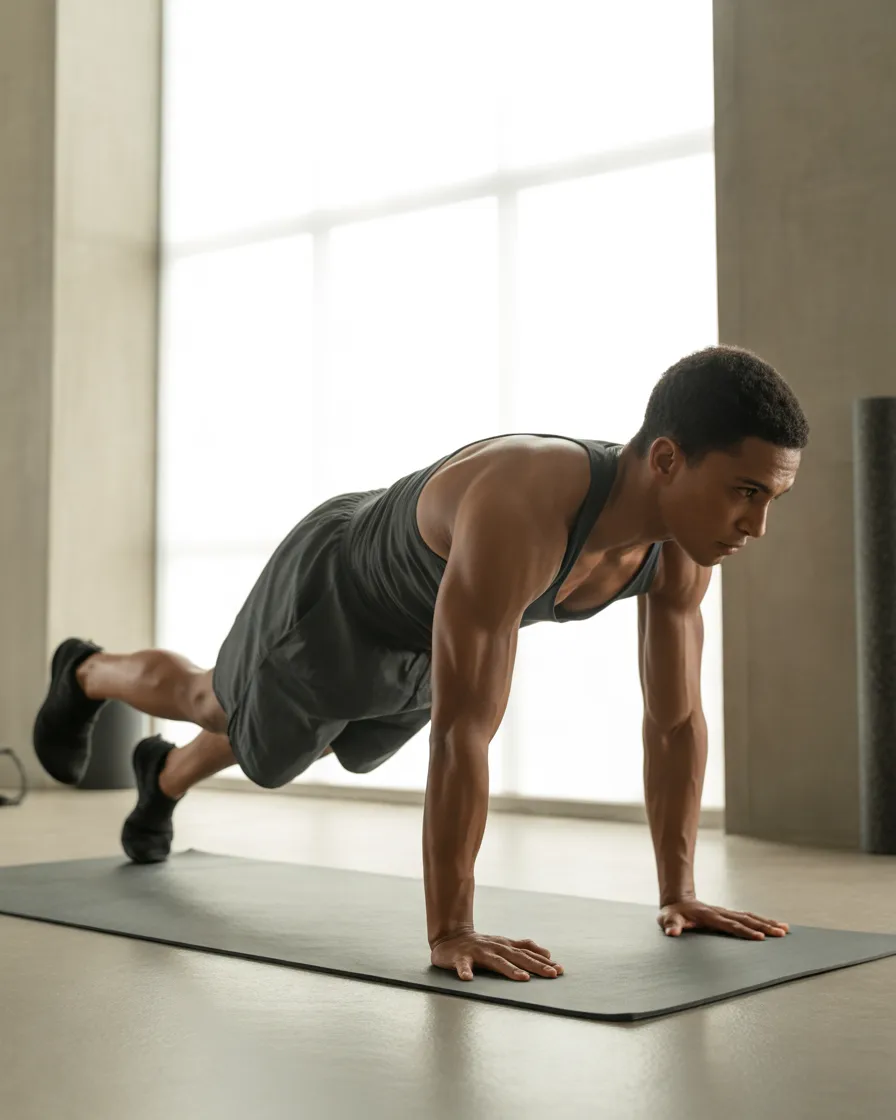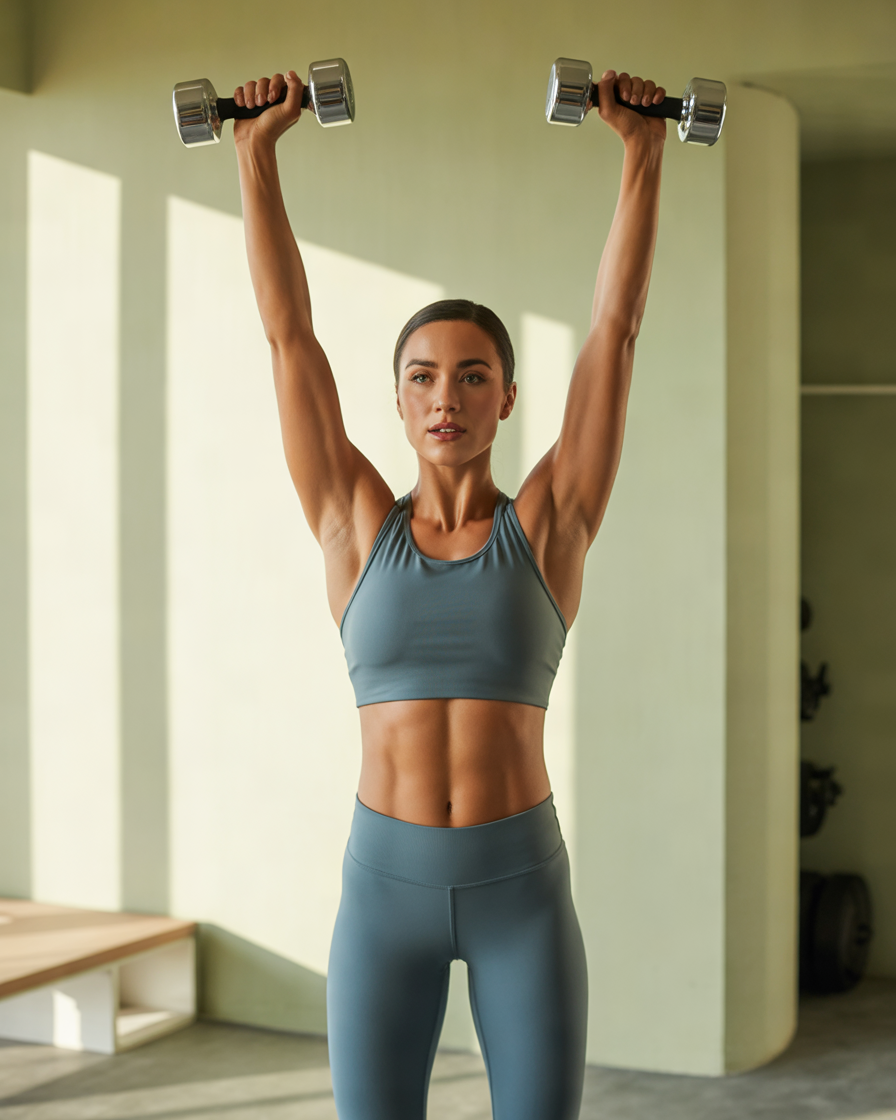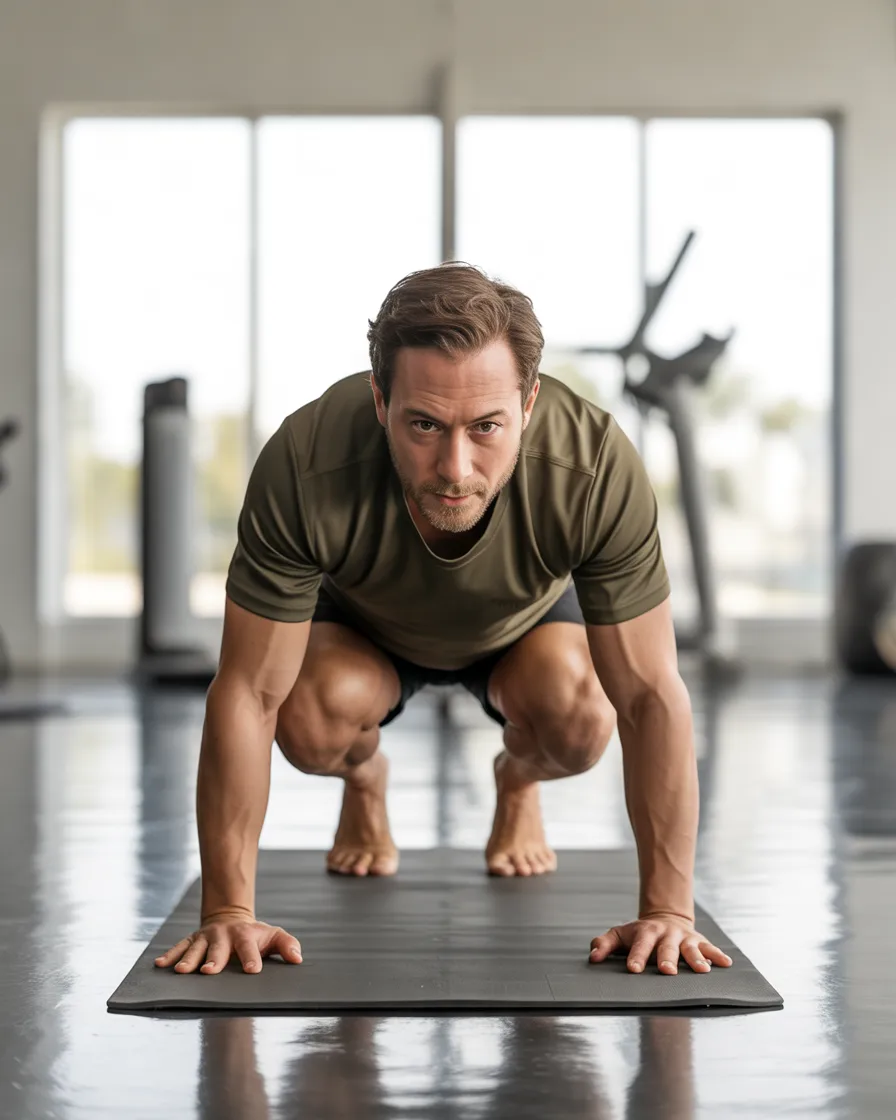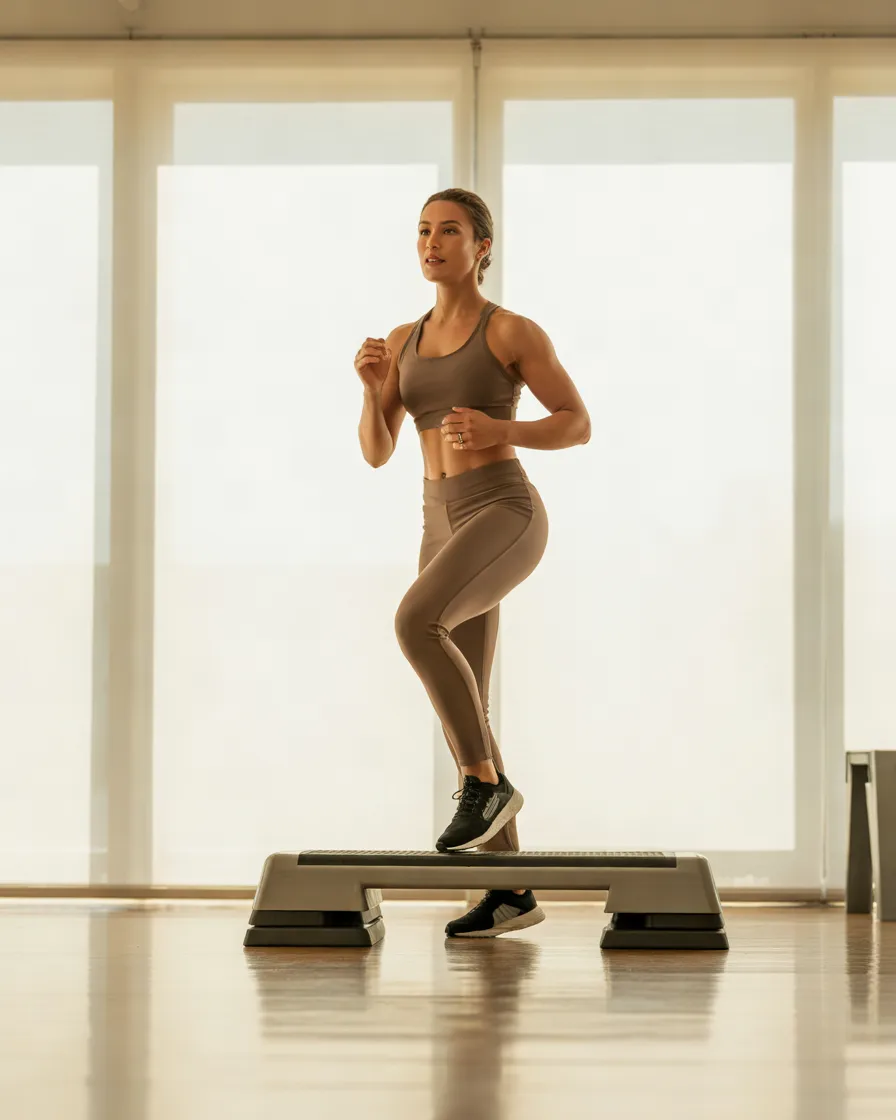
A small workout space at home can feel impossible when every room has a job, the living room is crowded, and the nearest gym is a drive away. Many people skip regular exercise not from a lack of motivation, but because they cannot see where a workout would fit in their home. A useful training spot needs far less room than most people think — often just a corner, a strip of wall, or a balcony floor.
The twelve ideas below cover corners, balconies, garages, spare rooms and clever storage, so you can build a setup that fits your home and the way you like to move. Each one includes practical steps and safety notes to help you start.
1. A Corner Workout Space That Stays Ready
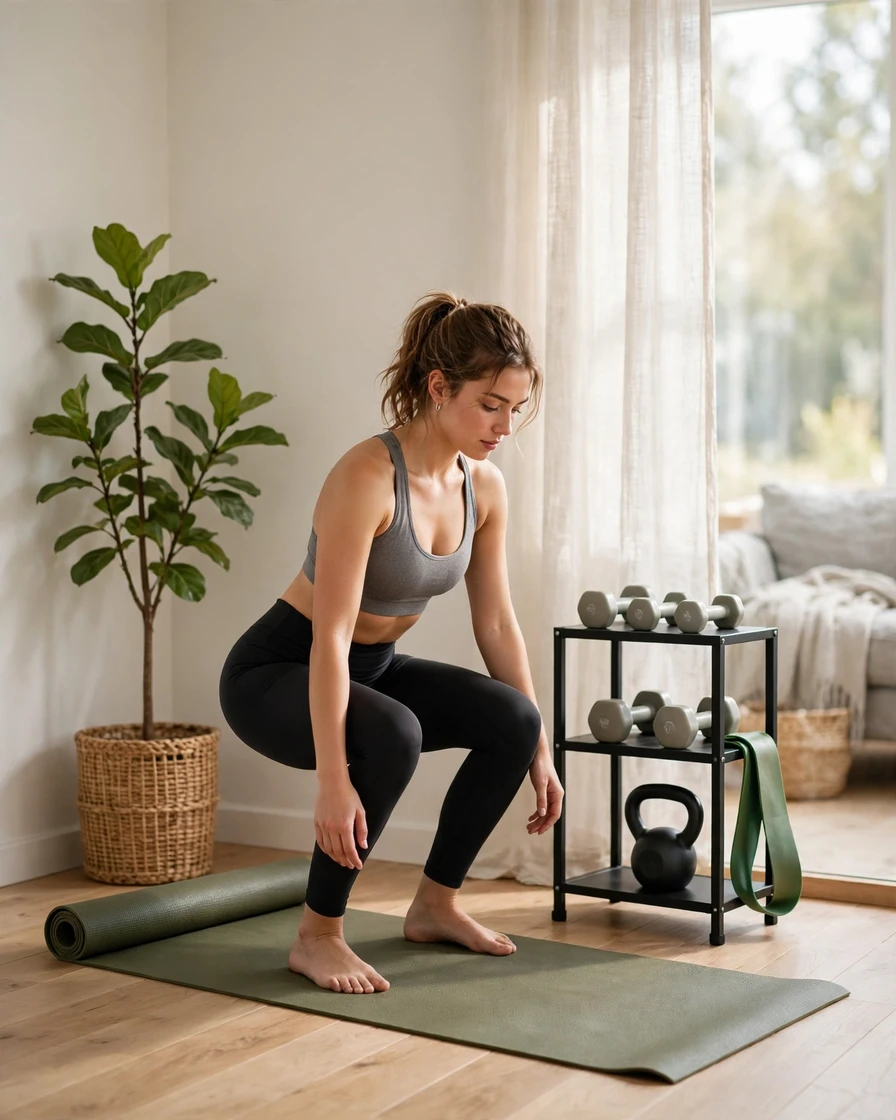
A corner gym zone is the simplest way to claim a training spot without giving up a whole room. Pick a corner with about 2m x 2m of clear floor, lay down a yoga mat, and add a small rack for light dumbbells, a kettlebell and a resistance band. A plant or a rug can mark the edge of the zone so it feels like a place of its own, even in a shared living room.
Because the gear stays out and ready, a corner zone may help you exercise more often — there is nothing to set up before you start. It suits renters and small flats, since everything is freestanding and can move with you. Keep the floor clear, check that the rack is stable, and leave enough room to stretch your arms overhead. If you are new to exercise or have a health condition, speak to a healthcare professional before starting a new routine.
Quick Tip: Face the corner toward a window if you can — daylight makes the zone feel bigger and more inviting.
2. Foldable Gear You Can Tuck Away
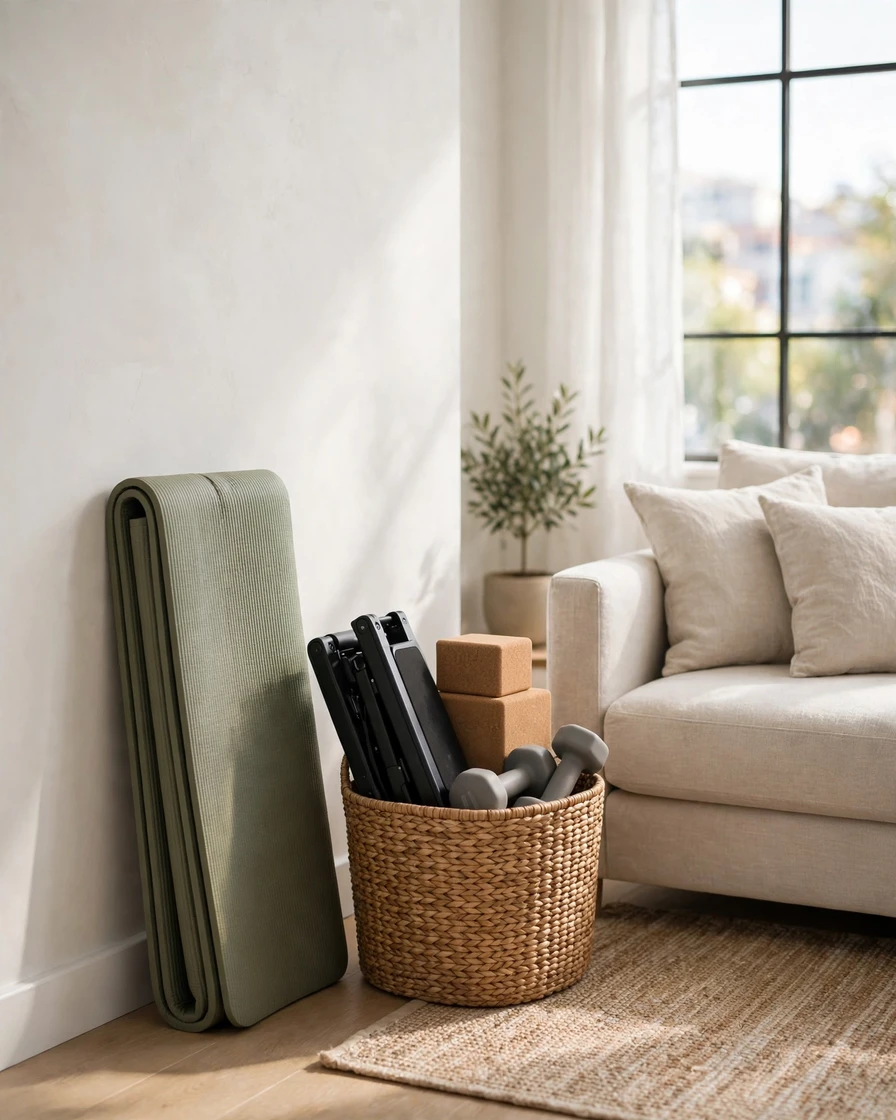
Foldable gear is the answer when your workout room is also your living room. A folding mat leans flat against a wall, a foldable step bench and light dumbbells fit inside a slim basket beside the sofa, and yoga blocks stack on top. Set everything up in a minute, and when you finish, the room goes back to normal — no one would know a workout happened there.
This setup suits people who share their space or dislike clutter, and it may help you stay consistent because packing away is as easy as setting up. Choose gear that folds flat and feels sturdy when open, and check the hinges and locks before each use. Store heavier items low in the basket so nothing tips out. A basket with a lid keeps dust off the gear between sessions. A small basket by the sofa keeps everything in one place, which means you are more likely to use it.
Quick Tip: Keep the basket in the same spot every day so setting up becomes a habit, not a hunt.
3. Wall-Mounted Storage for a Tidy Setup
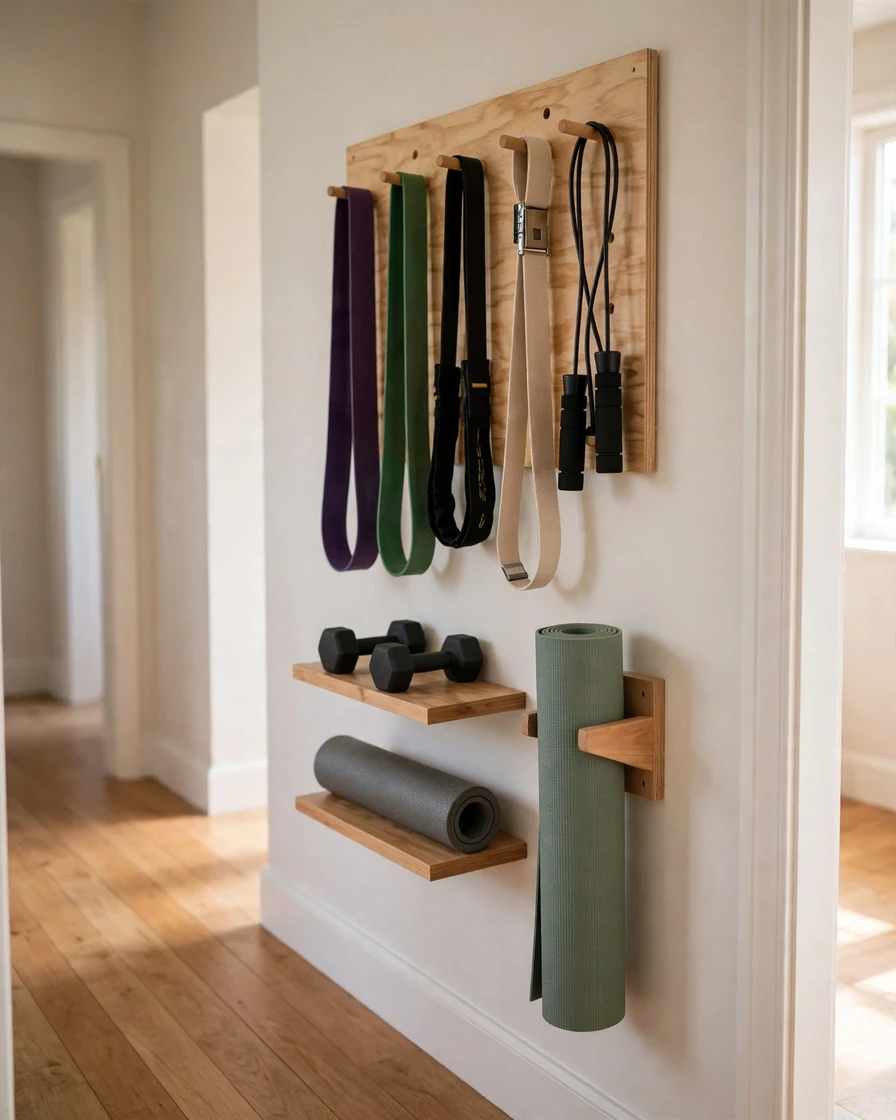
Wall-mounted storage turns a bare stretch of wall into the backbone of a home gym. A wooden pegboard with hooks holds resistance bands, a jump rope and a yoga strap, while two floating shelves carry dumbbells and a foam roller. A wall bracket keeps a rolled mat off the floor, and the whole setup fits on a 6-foot wall strip, leaving the floor free for movement. A small basket on the lowest shelf holds grip socks and a towel.
Keeping gear on the wall may help a small room feel bigger, since nothing sits on the floor. It suits hallways, bedrooms and any room with a spare wall near your workout spot. Fix hooks and shelves into wall studs or use proper wall anchors so nothing falls, and keep heavier dumbbells on the lowest shelf. Check hooks regularly for wear, and hang bands loosely so they keep their shape. Leave a little space between hooks so bands hang straight and stay easy to grab.
Quick Tip: Label nothing and group by use — bands on one side, small weights on the shelf below.
4. A Small Workout Space on the Balcony
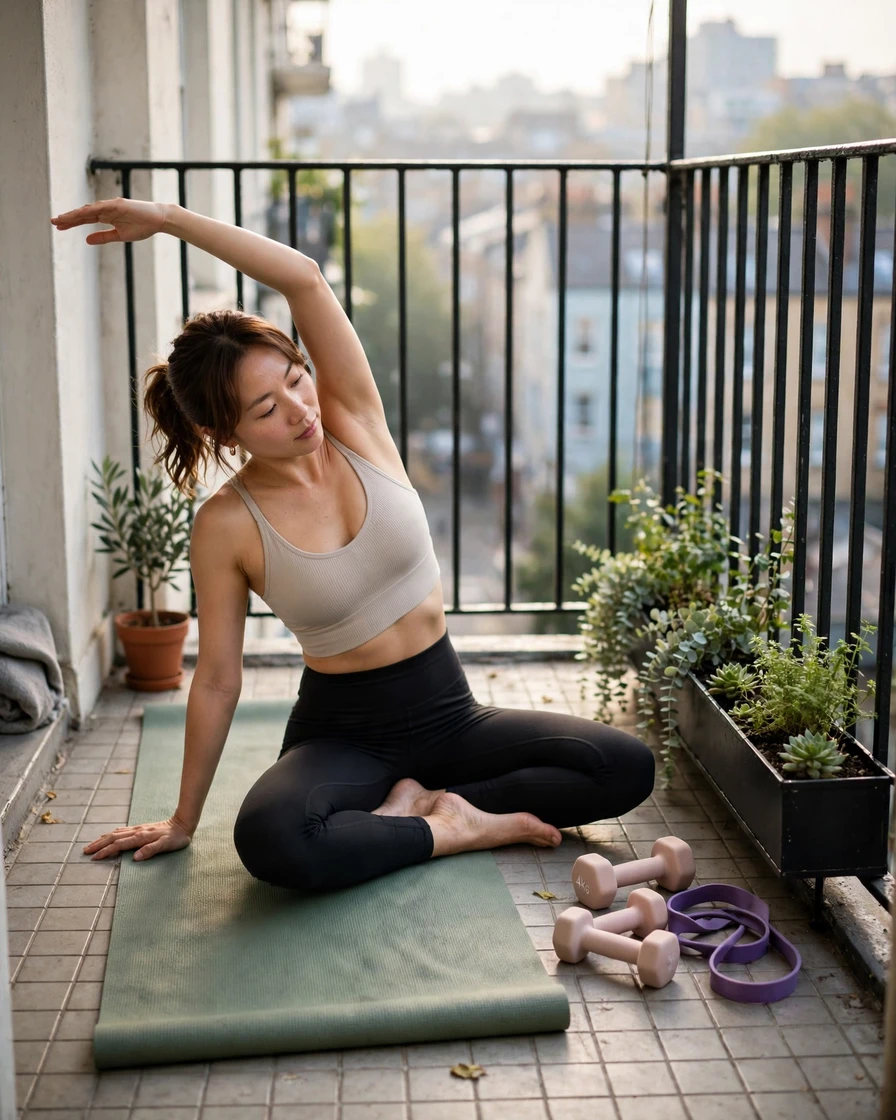
A balcony can become a fresh-air workout spot with very little gear. A yoga mat on the floor, a pair of light dumbbells and a resistance band are enough for stretching, bodyweight moves and light strength work. Planters along the railing add privacy and greenery, and morning light can make an early session feel easier. A small balcony of about 2m x 1.5m is plenty for mat work. A small outdoor rug under the mat adds grip and softens hard tiles.
Outdoor air and natural light may help a workout feel less like a chore, and the balcony suits gentle sessions like yoga, stretching and mobility work. Keep sessions quiet out of respect for neighbours, and never lean equipment against the railing. Check that the floor is dry and not slippery, store gear indoors after use to protect it from rain, and skip the balcony in very hot or cold weather. A compact folding chair nearby gives you a place to rest between sets.
Quick Tip: Work out early in the morning, when the balcony is cool and the light is soft.
5. A Garage Corner Turned Training Zone
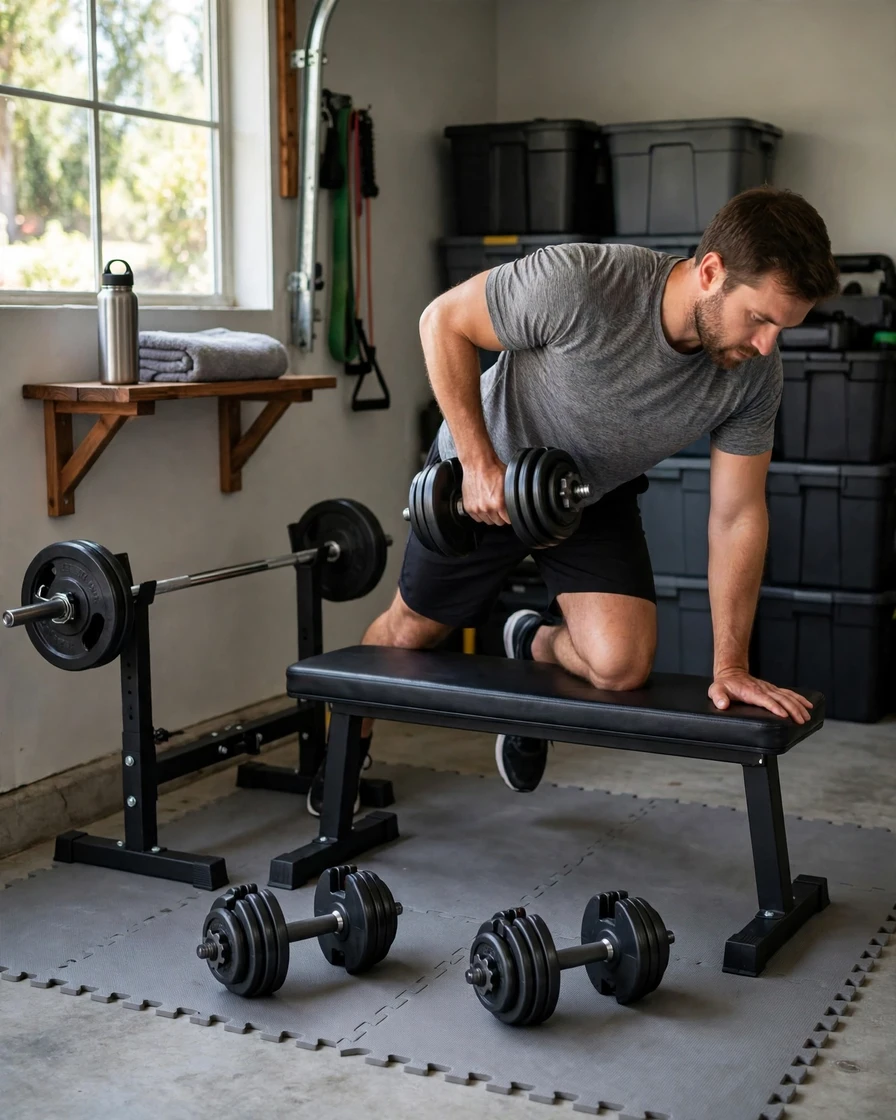
A garage corner gives you room for heavier gear that would crowd a living room. Interlocking foam mats protect the floor, a compact squat stand with a barbell fits against one wall, and a bench with adjustable dumbbells covers most strength training. A shelf for a towel and water bottle keeps the basics within reach, and a window or open door brings in fresh air.
A garage setup suits people who want to lift weights at home without a gym membership, and the extra space may help you train with more moves. Keep the floor clear of tools and boxes, check that the squat stand is stable before loading the bar, and use a spotter or safety arms for heavy lifts. If you are new to barbell training, consider a few coached sessions first, and speak to a healthcare professional if you have a back or joint concern. A small radio or speaker can make long garage sessions more pleasant.
Quick Tip: Lay foam mats under every piece of heavy gear to protect the floor and cut noise.
6. An Under-Stairs Nook for Quiet Workouts
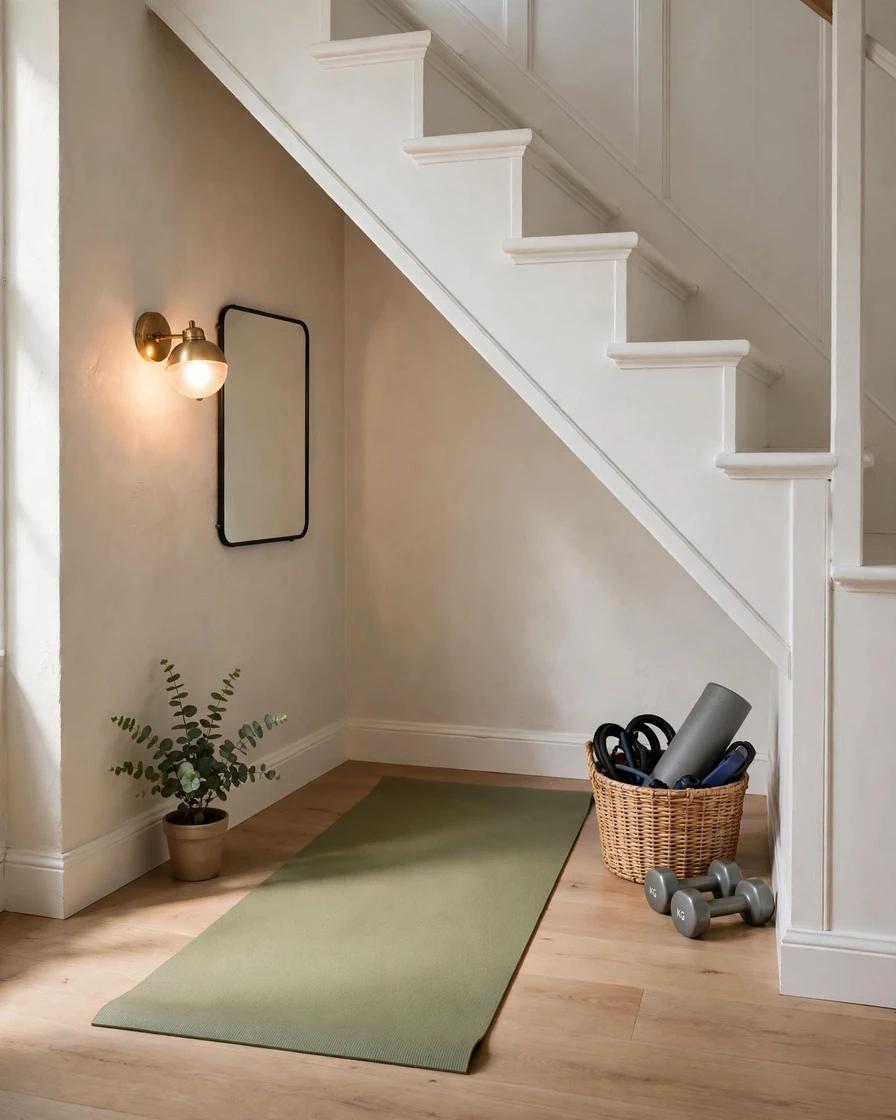
The space under the stairs is often wasted, but it can hold a quiet workout nook. A yoga mat fits on the floor, a basket under the slope holds a foam roller, resistance bands and light dumbbells, and a warm wall lamp and small mirror make the space feel welcoming. The sloped ceiling keeps the nook best suited to floor work, stretching and seated exercises. A small shelf on the side wall holds a water bottle and a phone.
An under-stairs nook suits gentle, quiet workouts like yoga, mobility and core work, and its tucked-away feel may help you focus. Measure the headroom before you plan anything — you need enough height to sit and stretch comfortably. Keep the floor clear, use a mat with good grip, and add a small light if the nook is dark. It is a good choice for early mornings, since the space is out of the way of the rest of the household.
Quick Tip: A small mirror on the side wall helps you check your posture in a tight space.
7. A Doorway Pull-Up Bar Station
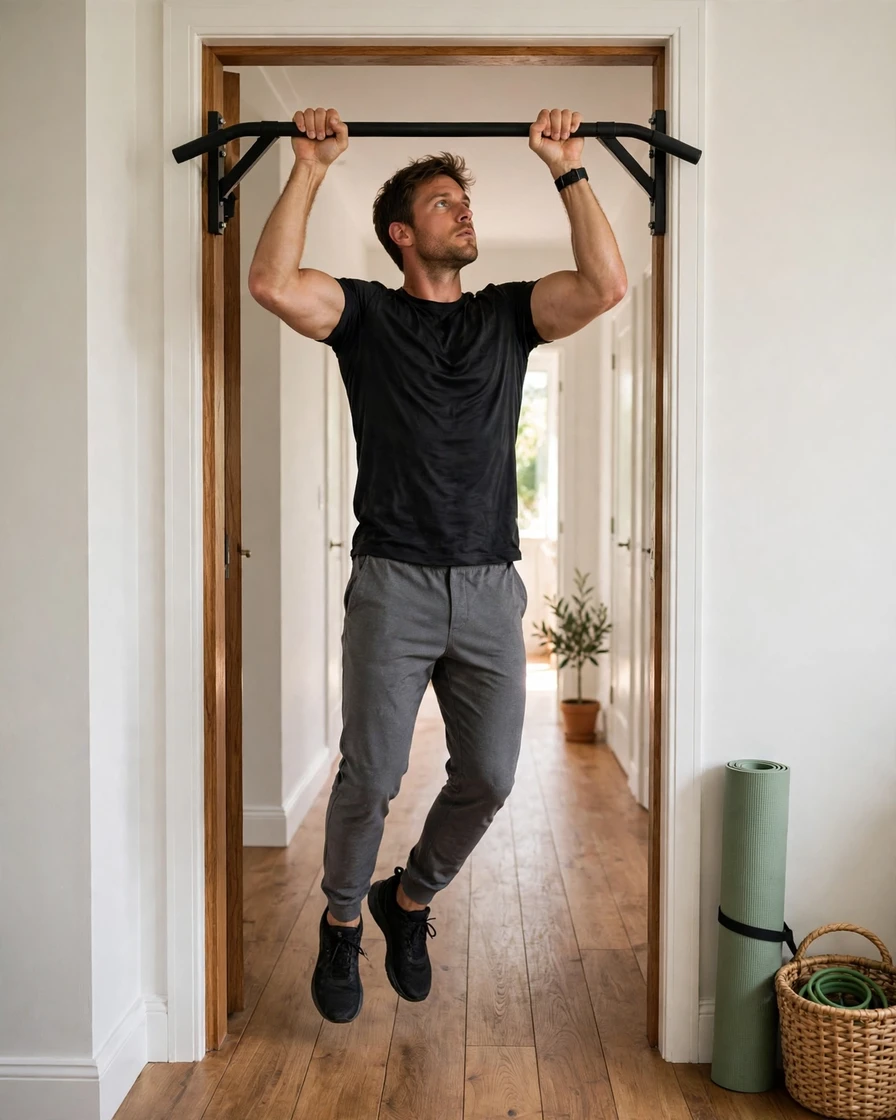
A doorway pull-up bar turns a hallway into an upper-body training station without taking up any floor space. The bar fits across a standard doorframe, and a rolled mat and a basket with a resistance band beside it cover warm-ups and assisted pull-ups. It is one of the smallest setups on this list — the bar itself needs no floor at all. A pair of workout gloves in the basket can protect your hands on the bar.
Pull-ups build upper-body and grip strength, and a band looped over the bar may help beginners work toward a full pull-up. This setup suits anyone with a sturdy doorframe and a little hallway space. Check that the frame is solid and the bar is fixed firmly before every session, and keep the floor below clear. Start with dead hangs or band-assisted reps if a full pull-up is too much, and stop if your shoulders or elbows hurt. Keep a towel nearby to wipe sweaty hands before each set.
Quick Tip: Hang a band over the bar for assisted reps — it makes the first pull-up reachable.
8. A Calm Yoga and Stretching Corner
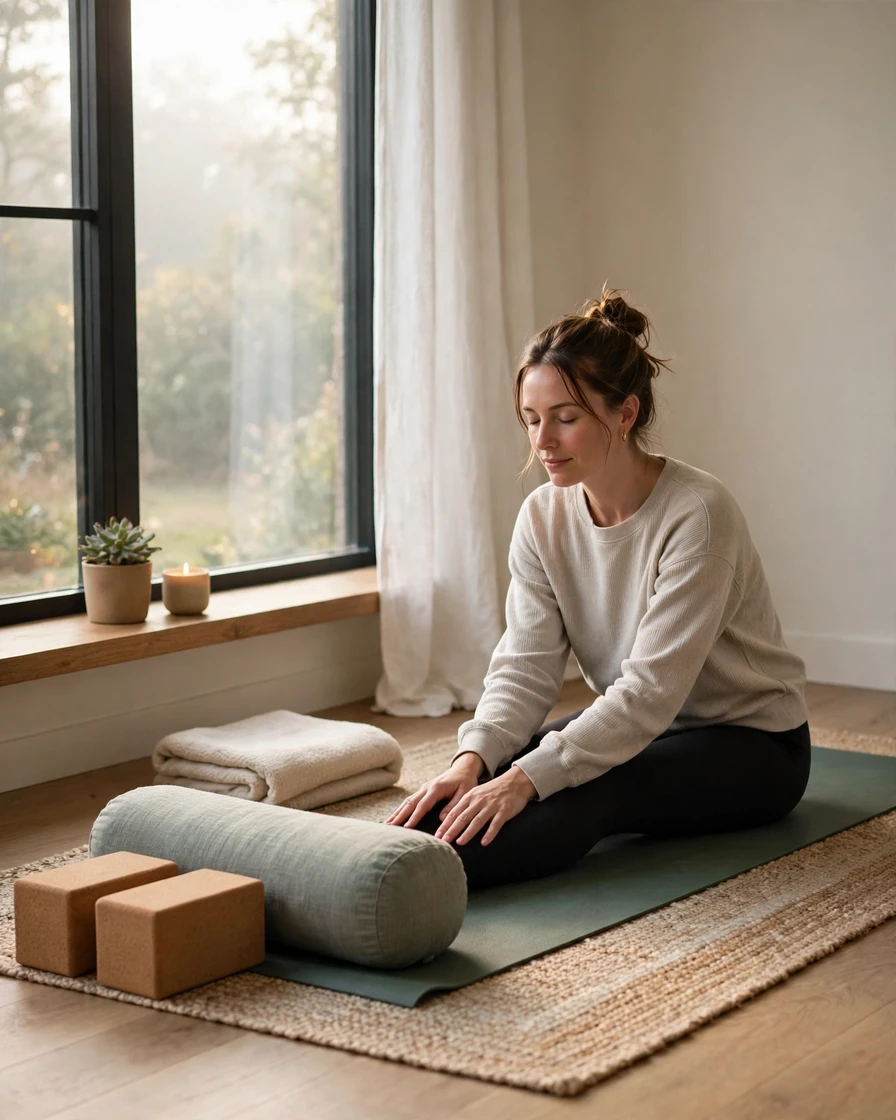
A yoga corner needs little more than a mat, a bolster, two blocks and a folded blanket, arranged near a window for soft natural light. A small plant and a candle on the sill add calm, and a light rug under the mat keeps the space warm underfoot. Keep the corner free of screens and clutter so it feels like a place to slow down.
A dedicated yoga corner may help you practise more often, since the mat is always ready and the space invites you in. It suits gentle stretching, breathing practice and restorative yoga, and it works in a bedroom or any quiet corner. Move slowly into each stretch, never force a pose, and use blocks and a bolster for support. If you are pregnant or have a joint or balance concern, speak to a healthcare professional before starting a new yoga routine. A short session of ten minutes can be enough on a busy day.
Quick Tip: Keep a folded blanket nearby — it supports knees and hips in seated poses.
9. A Resistance Band Station on the Wall
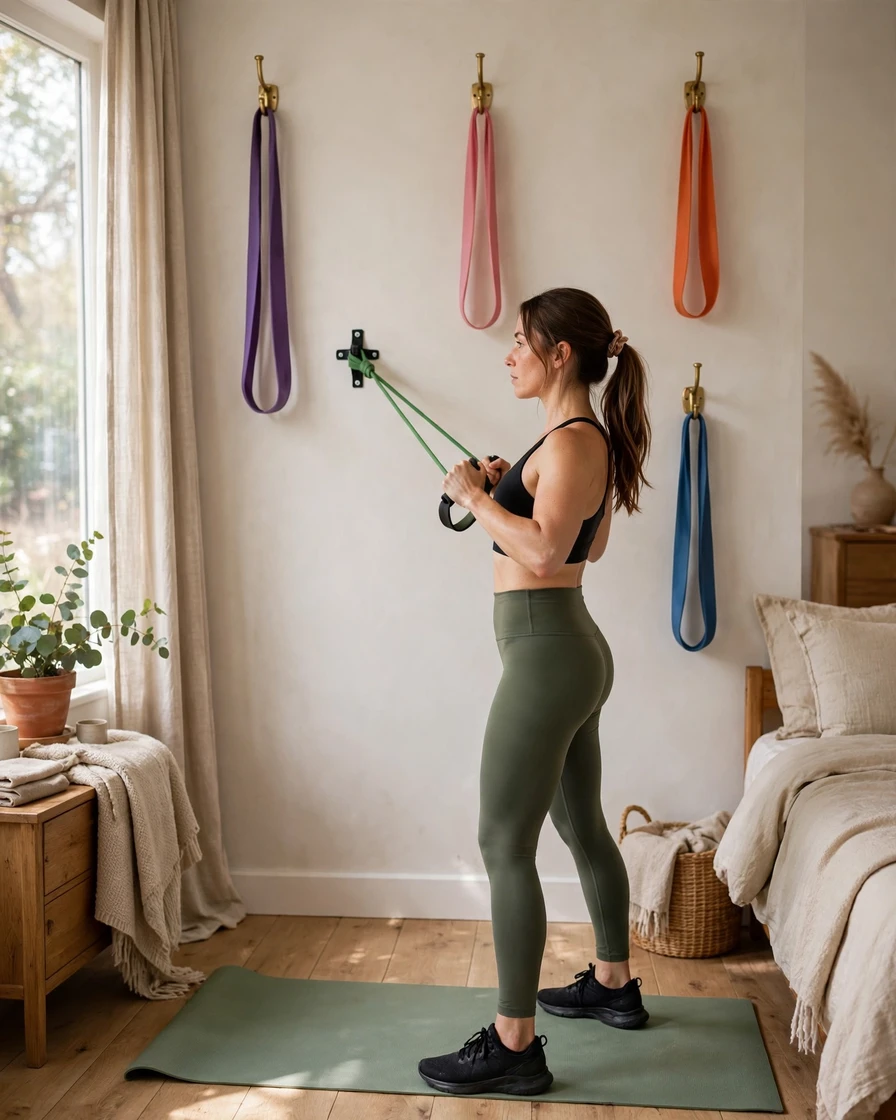
A resistance band station needs only a wall and a set of bands. Sturdy hooks at different heights hold bands of several strengths, a wall anchor gives you a fixed point for rows and presses, and a yoga mat on the floor marks your training spot. The whole station fits on a single wall, and bands cost little and weigh almost nothing. A door anchor gives you a second fixed point for chest presses and rows.
Bands provide gentle resistance that suits strength work, mobility and rehabilitation-style exercises, and the wall station may help you train more often because everything is visible and ready. Fix hooks and anchors into studs or use strong wall anchors, and check bands for nicks or wear before each session — a worn band can snap. Start with the lightest band, keep movements slow and controlled, and stop if a joint feels sore. Store spare bands in a small basket so the wall never looks crowded.
Quick Tip: Colour-code your bands by strength so you can grab the right one without thinking.
10. A Mirror and Mat Workout Space
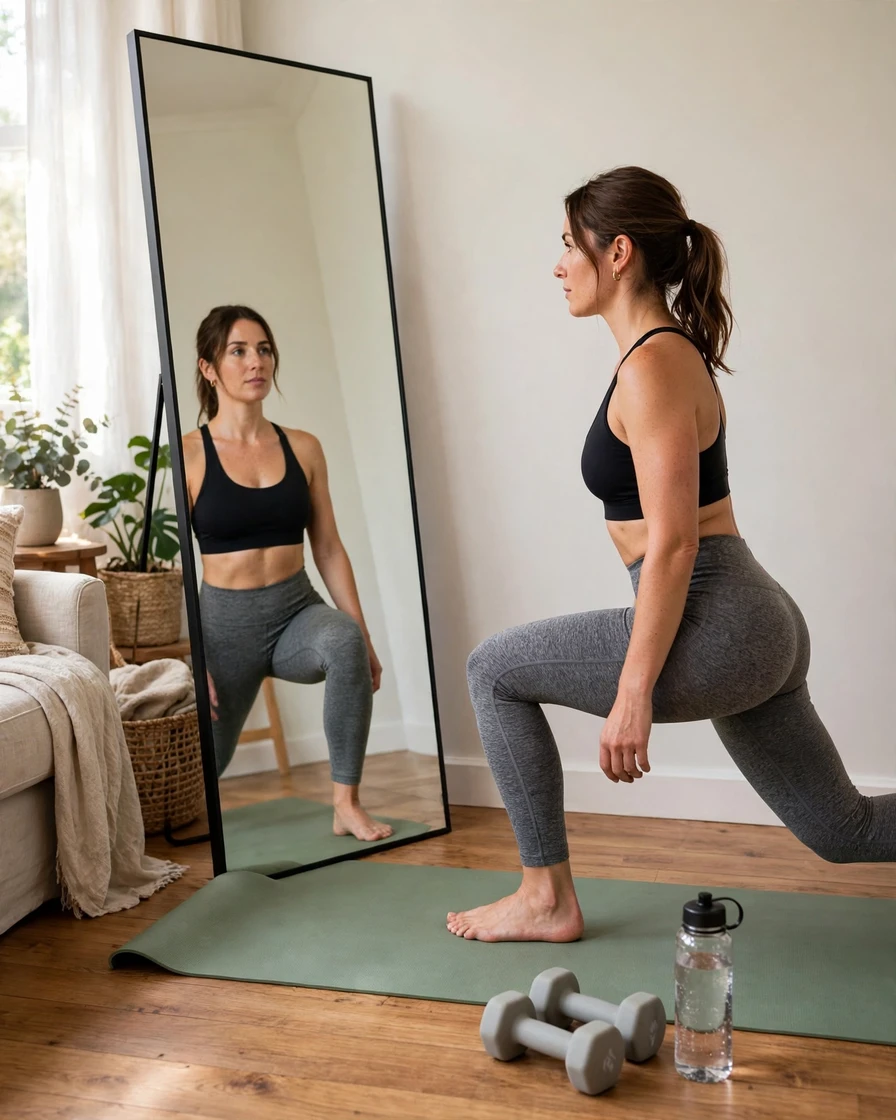
A mirror and mat zone is a simple setup that improves every workout. A tall full-length mirror leans against a pale wall, a yoga mat lies on the floor in front of it, and a pair of light dumbbells and a water bottle sit beside the mat. Seeing yourself move helps you check your posture, keep your knees aligned and spot when your form slips. A small plant beside the mirror softens the space without taking floor room.
This zone suits any room with a free wall and about 2m of floor, and it may help beginners most, since good form matters more than heavy weights. Lean the mirror securely or fix it to the wall so it cannot tip, and keep the mat flat and free of wrinkles. Work barefoot or in grippy shoes on a mat with good grip. If you are unsure about your form, a few sessions with a qualified trainer can help you build safe habits.
Quick Tip: Place the mirror where daylight falls on you, not behind you, to avoid glare.
11. A Rolling Equipment Cart for Any Room
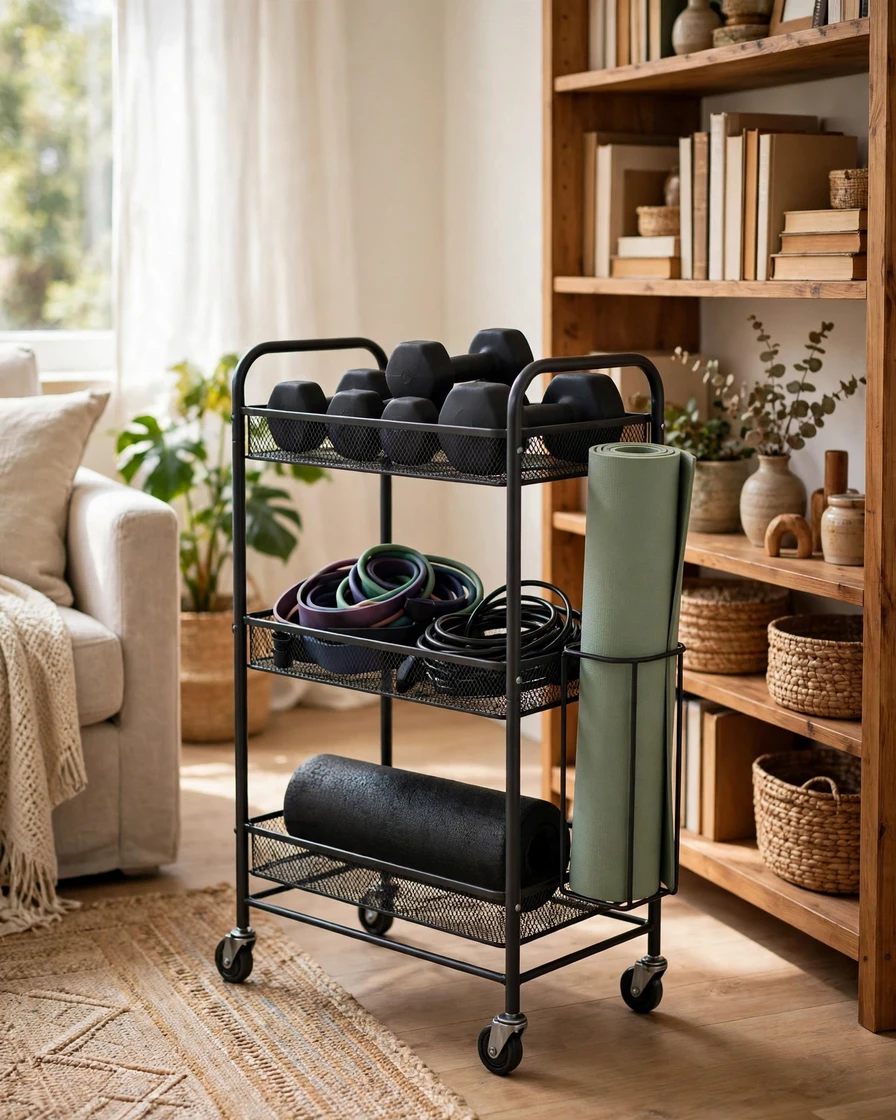
A rolling equipment cart puts your whole gym on wheels. A three-tier cart holds dumbbells on top, resistance bands and a jump rope in the middle, and a foam roller below, with a rolled mat in a side holder. Roll it out to wherever you want to train — the living room, the bedroom or the garden — and park it beside a bookshelf when you finish. A hook on the side holds a towel within easy reach.
A cart suits people who train in different rooms or share their space, and it may help you stay organized because every piece of gear has its own shelf. Choose a cart with lockable wheels and a sturdy frame, and load the heaviest items on the lowest shelf so it stays stable. Lock the wheels before you train, and keep the path clear when you roll it out. It is also a good option for renters, since nothing is fixed to the walls.
Quick Tip: Lock the wheels before every session — a cart that rolls mid-set is a tripping risk.
12. A Spare Room Mini Gym
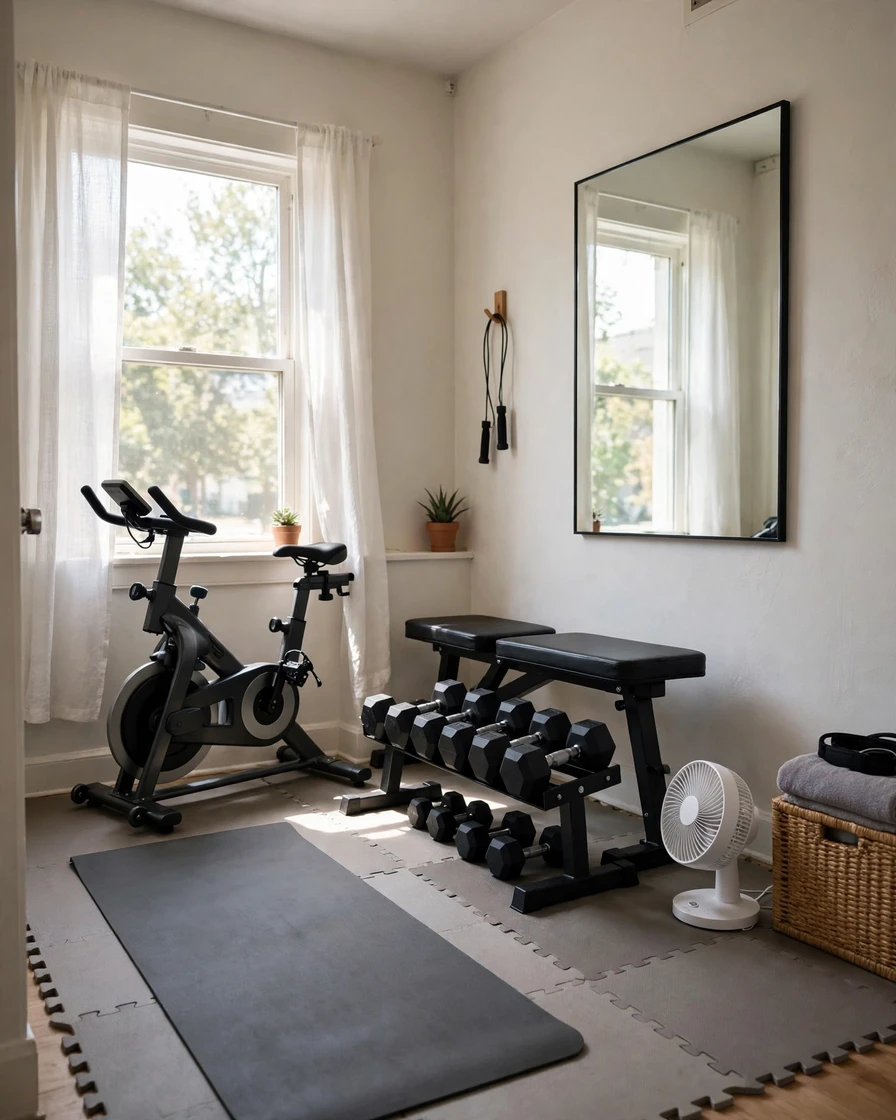
A spare room is the most complete small workout space of all. An exercise bike fits in one corner, a weight bench with a dumbbell rack sits against the wall, and a yoga mat on interlocking floor mats covers stretching and floor work. A wall mirror, a small fan and a jump rope on a hook finish the room, and a window keeps the air fresh.
A spare room gym suits people who train often and want a space that is always ready, and having a dedicated room may help exercise become a regular habit. Keep the room ventilated, check that the bike and bench are stable, and leave clear walkways between pieces of equipment. Start with the basics and add gear slowly — a bike, a bench and dumbbells already cover a full-body routine. Speak to a healthcare professional before starting a new exercise routine, especially if you have an existing health condition.
Quick Tip: Start with the bike, bench and dumbbells — add more gear only when you know you will use it.
Expert Tips
- Measure before you buy: Check your floor space, ceiling height and door widths before ordering gear. A mat needs about 2m of clear floor, and a pull-up bar needs a solid frame — a quick measure saves returns.
- Keep the floor clear and safe: A clear, non-slip floor matters more than fancy equipment. Move shoes, toys and cables out of the way, use a mat with good grip, and check that racks, shelves and wall hooks are fixed firmly.
- Start light and build slowly: Light dumbbells, the easiest band and short sessions are the right start. Add weight or time only when the current level feels easy, and rest a day between harder sessions.
- Check with a healthcare professional first: If you have a health condition, a joint problem, or you are returning to exercise after a long break, speak to a healthcare professional before starting a new routine.
Final Thoughts
A small workout space at home does not need a spare room or a big budget — a corner, a balcony or a wall can be enough. The best setup is the one you will actually use, so pick the idea that fits your home and start with the basics.
Set up your space this week, keep the floor clear, and give yourself a few short sessions to settle in. A small space used often can support a healthier, more active routine for years.
How much space do I need for a small workout space at home?
A corner of about 2m x 2m is enough for most mat work, stretching and light strength training. A yoga mat itself is under 2m long, so even a narrow strip of floor can work. Measure your space and leave room to stretch your arms overhead and lie down flat.
What equipment do I need to start a home workout space?
A yoga mat, a set of light dumbbells and a resistance band cover most beginner workouts. Add a foam roller and a bench later if you want more variety. Start with the basics, use them for a few weeks, and buy extra gear only when you know you will use it.
Can I work out in a small apartment without disturbing neighbours?
Yes, if you choose quiet exercises and protect the floor. Yoga, stretching, resistance bands and bodyweight moves make little noise, and a thick mat or foam tiles soften sound. Avoid jumping moves, keep music low, and train at reasonable hours. Choose a rug or mat at least 6mm thick for extra soundproofing.
Is a garage or balcony safe for working out?
Both can work if you check the basics first. Keep the floor dry and clear, make sure equipment is stable, and store gear indoors when it rains. Skip outdoor sessions in very hot or cold weather, and never lean equipment against a balcony railing.
Should I check with a doctor before starting home workouts?
Yes, especially if you have an existing health condition, a joint problem, or you have not exercised for a long time. A healthcare professional can advise on safe exercises for your situation. Start gently, stop if you feel pain, and build up slowly.