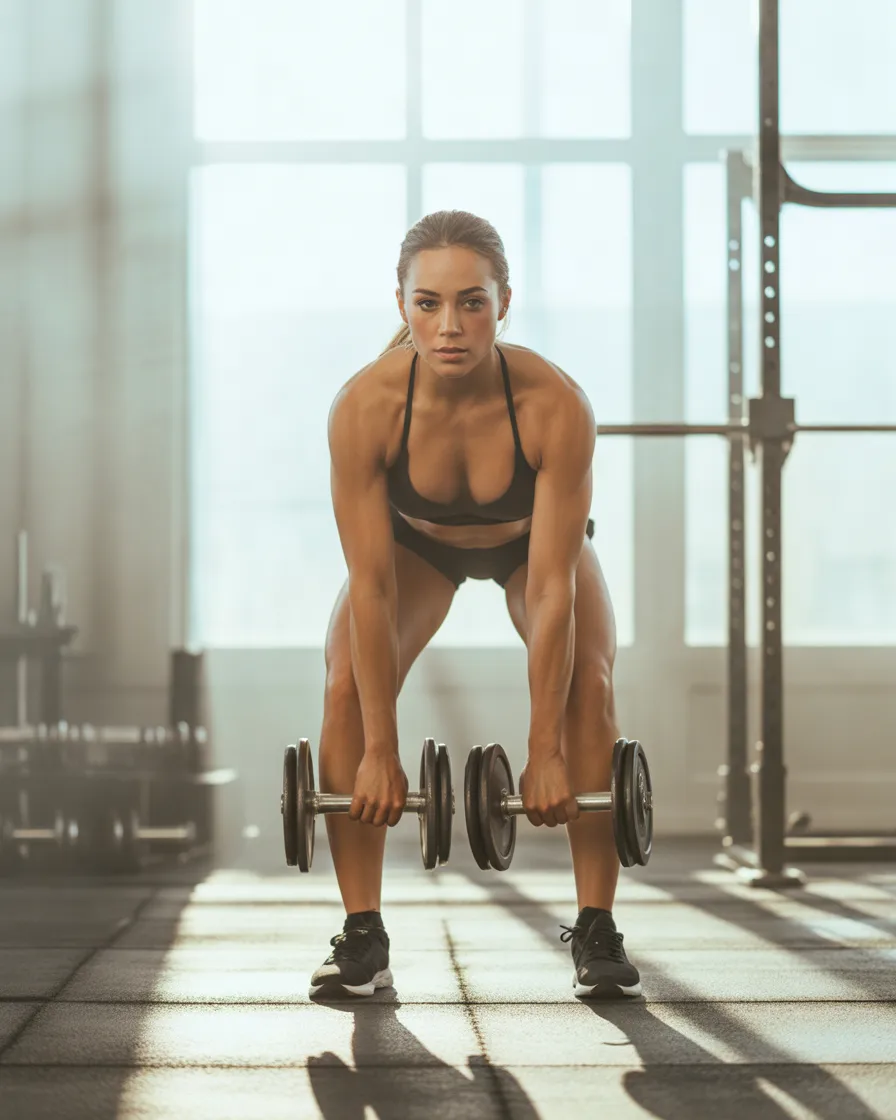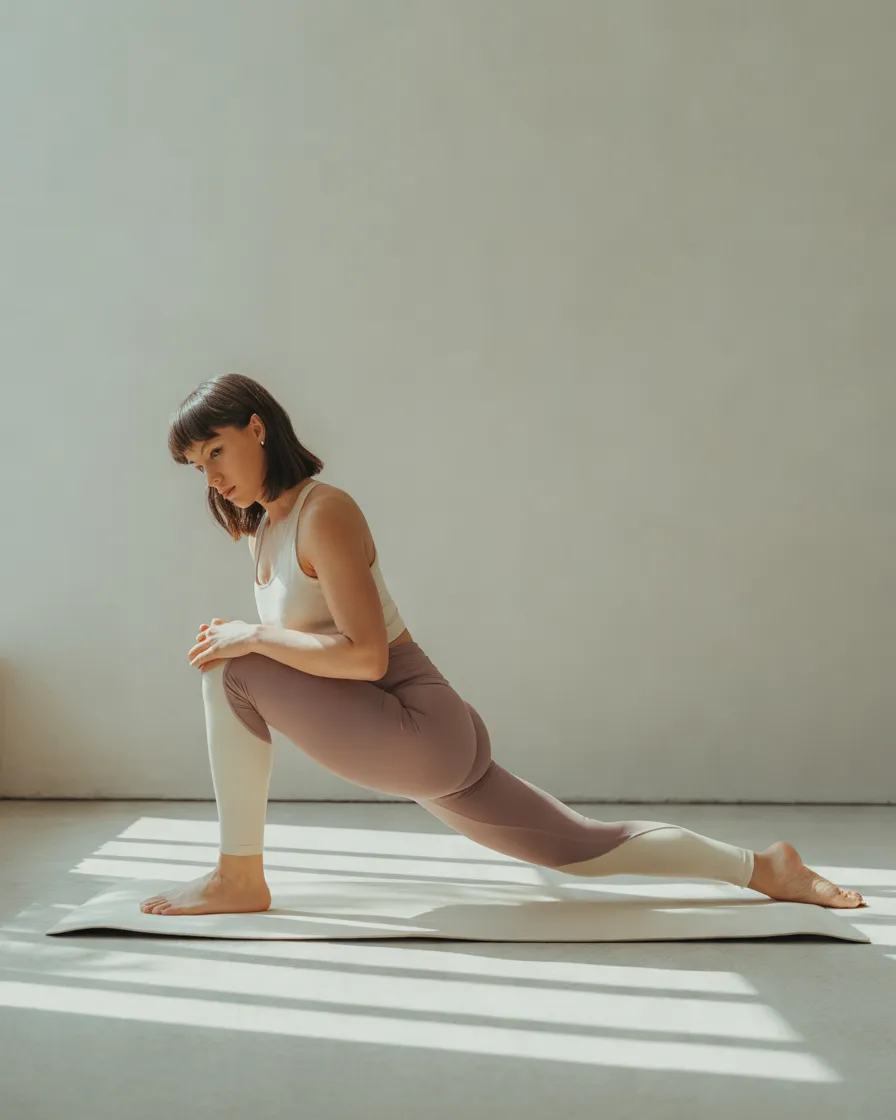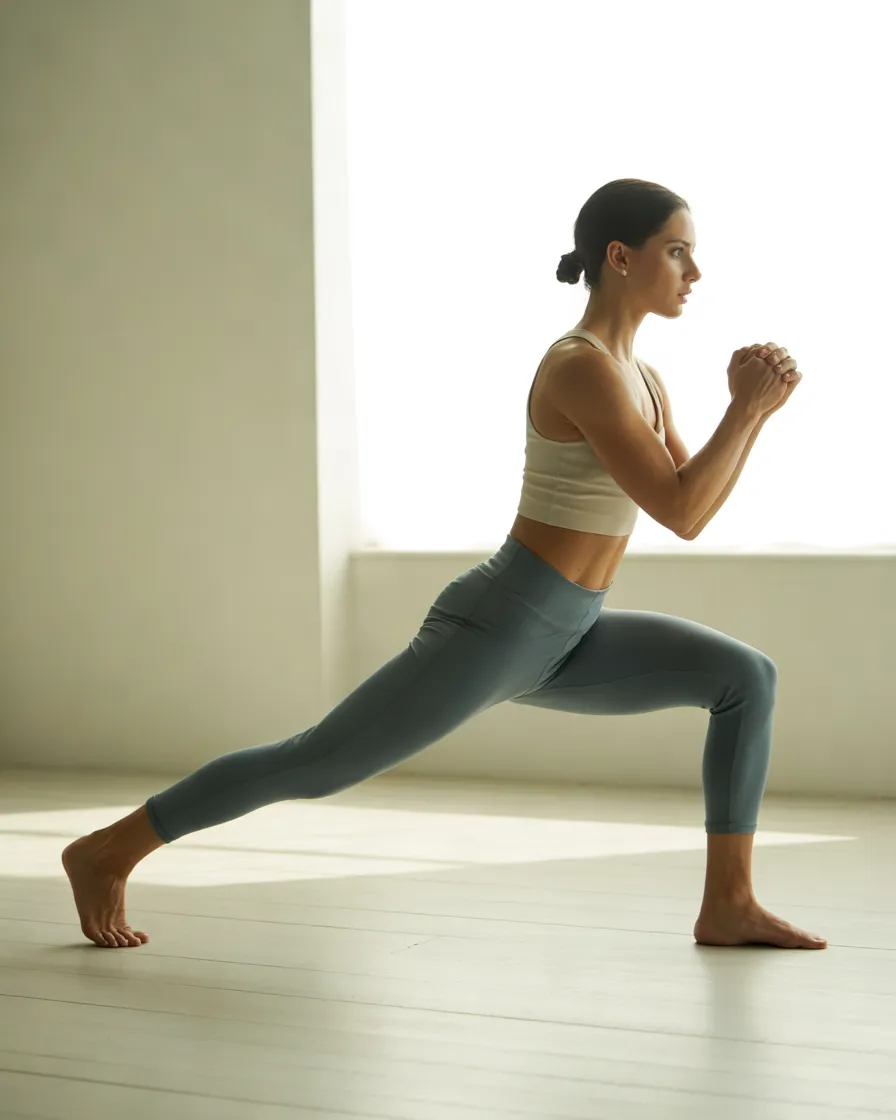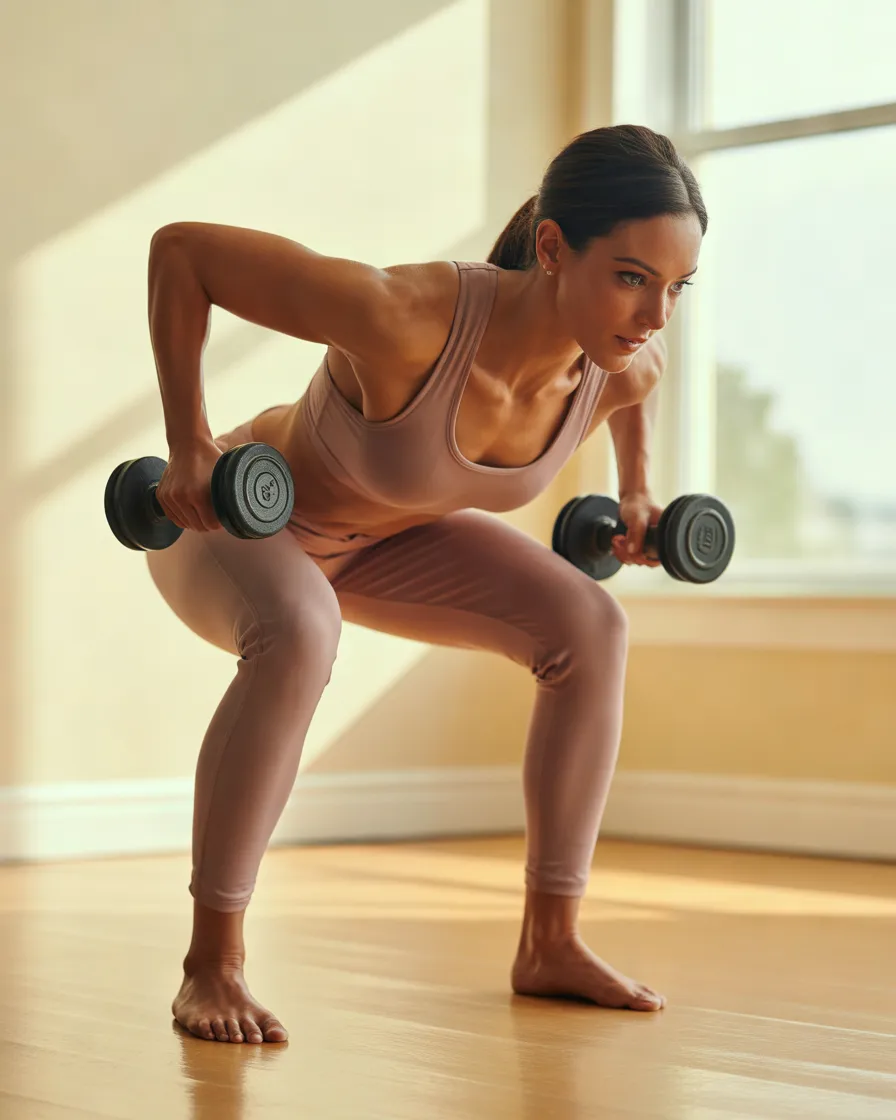
Finding time to exercise can be difficult when you have a busy schedule, work commitments, family responsibilities, or limited access to a gym. However, getting a good workout does not always require expensive equipment or hours of free time. A HIIT workout at home can help you fit meaningful physical activity into your daily routine.
HIIT stands for High-Intensity Interval Training. It involves alternating short periods of challenging physical activity with lower-intensity recovery periods. For example, you might perform bodyweight squats for 20 seconds, rest or march in place for 40 seconds, and then move to another exercise.
One of the biggest advantages of home HIIT workouts is their flexibility. You can perform many exercises using only your body weight, making them suitable for small living spaces. You can also adjust the workout duration, movement difficulty, and recovery time according to your fitness level.
Regular HIIT training can help improve cardiovascular fitness and muscular endurance. Research also suggests that HIIT can support improvements in certain aspects of metabolic health. However, results vary depending on your fitness level, consistency, nutrition, recovery, and overall lifestyle.
Another advantage is that you can choose between high-impact and low-impact movements. Beginners can start with controlled exercises, while experienced individuals can gradually introduce more challenging variations.
In this guide, we will explore 10 practical HIIT exercises you can perform at home without specialized equipment. You will also learn how to combine them into a manageable workout, make exercises easier or harder, and exercise safely.
1. Jumping Jacks for a Full-Body Cardio Warm-Up
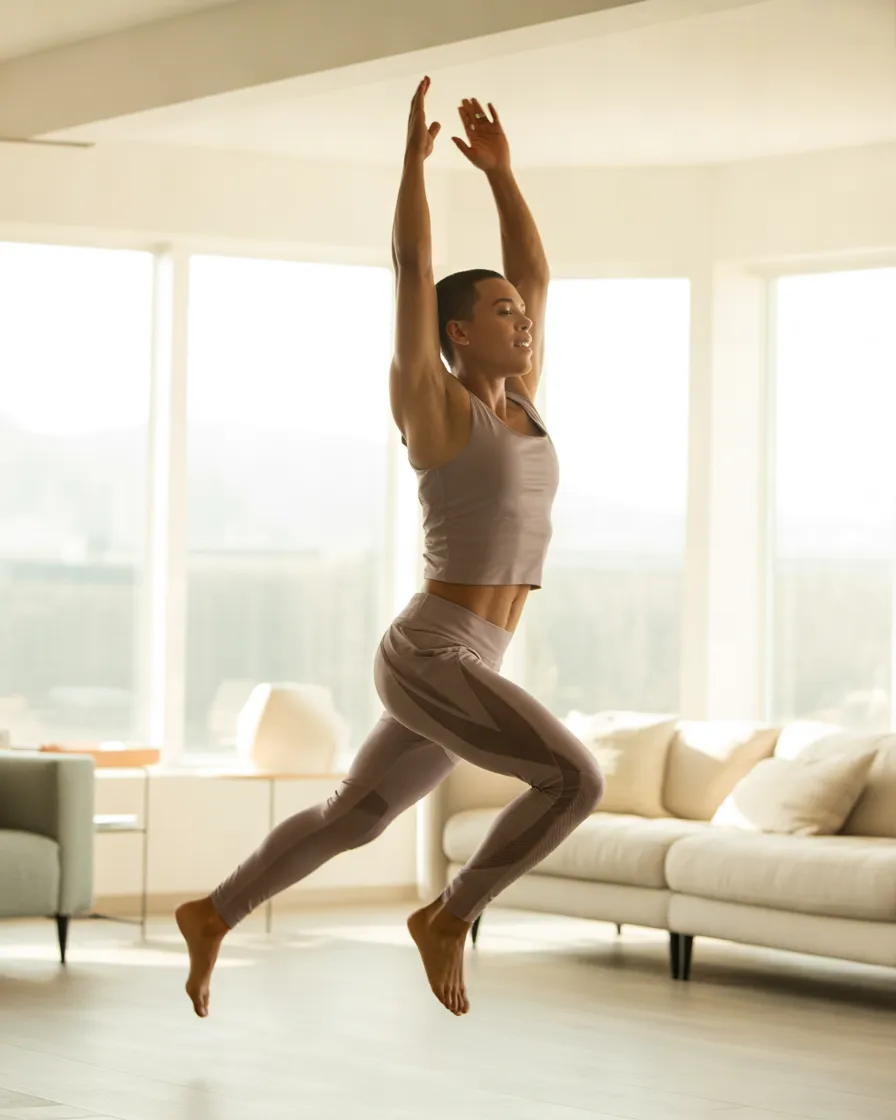
Jumping jacks are a classic cardio exercise that works several muscle groups while increasing your heart rate. They are an excellent addition to a HIIT workout at home because they require very little space and no equipment.
The movement involves jumping your feet apart while raising your arms overhead, then returning to your starting position. Repeating this movement creates a continuous rhythm that challenges your cardiovascular endurance.
Benefits:
- Increases heart rate and breathing.
- Engages the shoulders, legs, and core.
- Improves coordination and movement control.
- Provides a convenient way to add cardio to a home workout.
Practical Tips:
Keep your knees slightly bent when landing and avoid making unnecessarily loud or forceful contact with the floor. Maintain a comfortable rhythm instead of jumping as quickly as possible.
If jumping feels uncomfortable, replace traditional jumping jacks with step jacks. Step one foot outward at a time while moving your arms overhead.
How to Use It:
Perform jumping jacks for 20–30 seconds, followed by 30–40 seconds of recovery. Beginners can start with 10–15 seconds of movement.
Include them near the beginning of a workout or use them as a cardio interval between strength exercises.
Who It May Suit:
People with some exercise experience who want to improve their cardiovascular endurance. The step-jack variation may suit beginners and individuals who prefer lower-impact movement.
Important Considerations:
People with knee, ankle, or balance concerns should consider the step-jack alternative. Wear supportive footwear and make sure the floor is not slippery.
2. Bodyweight Squats for Stronger Legs and Glutes
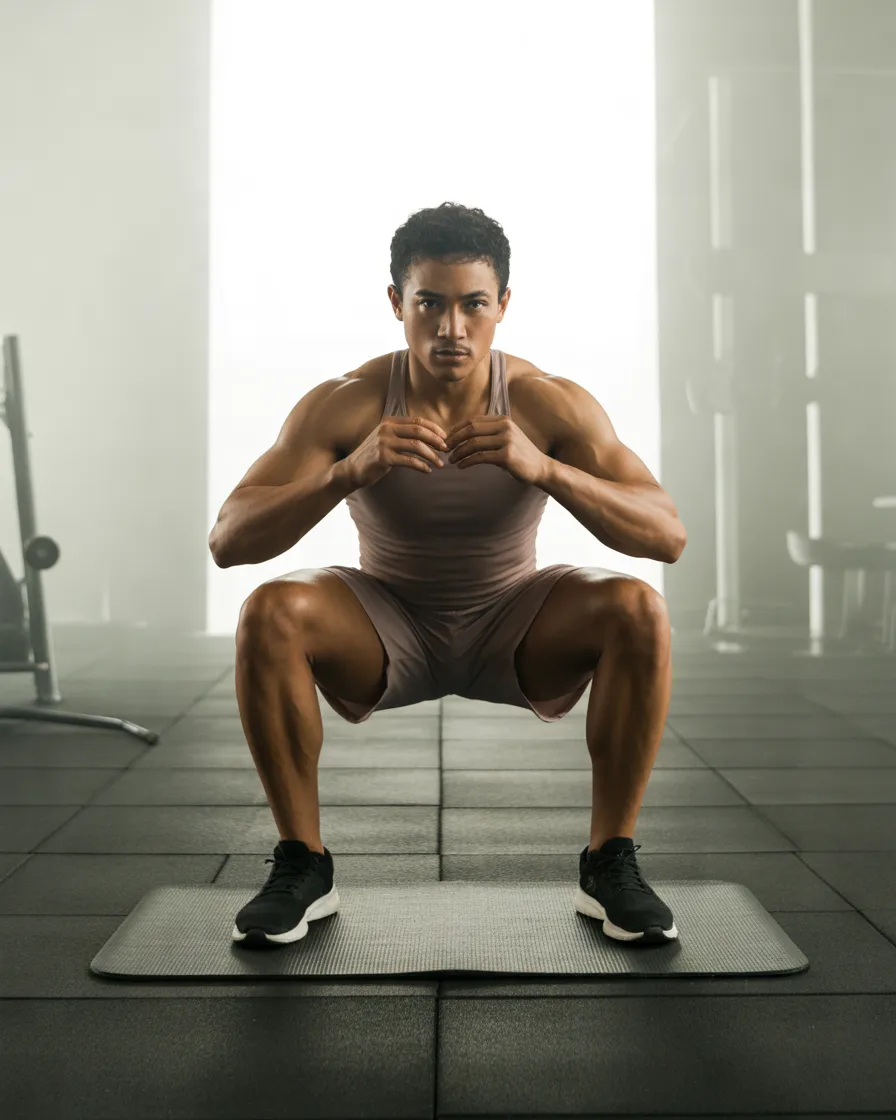
Bodyweight squats are among the most practical exercises for a full-body HIIT workout. They primarily target the quadriceps, glutes, and other muscles involved in lower-body movement.
You do not need dumbbells or gym equipment to perform this exercise. Your body weight provides resistance, making squats a convenient option for home training.
The movement involves bending your hips and knees to lower your body, then pushing through your feet to return to a standing position.
Benefits:
- Strengthens the muscles in your lower body.
- Engages the core for balance and stability.
- Helps develop muscular endurance.
- Supports everyday movements such as sitting and standing.
Practical Tips:
Stand with your feet approximately shoulder-width apart. Keep your chest comfortable and upright, push your hips backward, and bend your knees.
Lower yourself only as far as you can comfortably maintain good technique. Your knees should generally track in the same direction as your toes.
Avoid allowing your heels to lift off the floor.
How to Use It:
Perform controlled bodyweight squats for 20–30 seconds. Rest for 30–45 seconds before moving to the next exercise.
If you are a beginner, try 8–10 repetitions instead of focusing on speed.
For a greater challenge, add a small jump when returning to the standing position, provided you can land softly and comfortably.
Who It May Suit:
Beginners, intermediate exercisers, and people looking to include lower-body strength work in their home cardio routine.
Important Considerations:
People with knee or hip discomfort should use a comfortable range of motion and may benefit from practicing sit-to-stand movements from a stable chair. Stop if you experience sharp or increasing pain.
3. Alternating Reverse Lunges for Lower-Body Strength
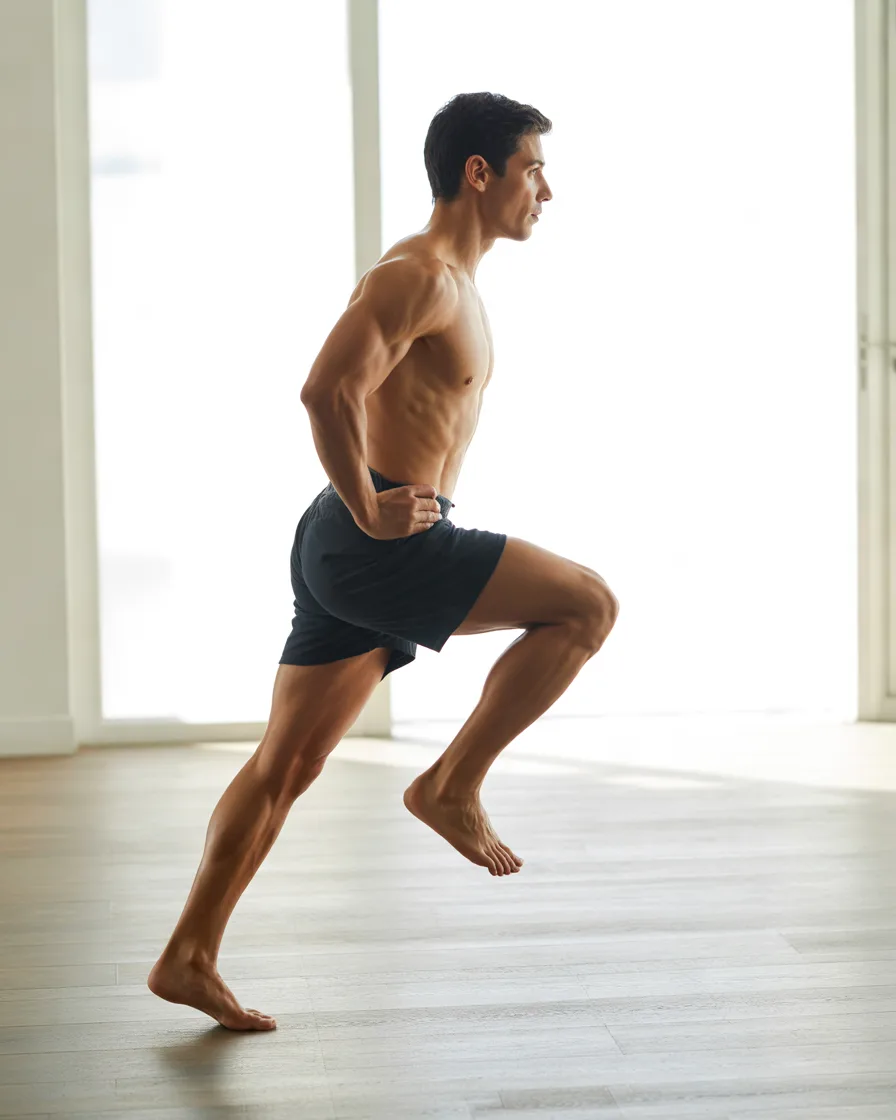
Alternating reverse lunges are useful for developing lower-body strength and balance. Unlike forward lunges, this movement involves stepping backward, which many people find easier to control.
It works the quadriceps, glutes, and hamstrings while challenging the muscles responsible for maintaining stability.
This exercise is particularly useful in a no-equipment HIIT workout because it combines resistance training with controlled movement.
Benefits:
- Strengthens the legs and glutes.
- Challenges balance and coordination.
- Engages the abdominal muscles for stability.
- Helps improve control during single-leg movements.
Practical Tips:
Begin standing with your feet comfortably apart. Step one foot backward and lower your body by bending both knees.
Keep your front foot firmly planted and your torso stable. Push through the front foot to return to the starting position.
Alternate legs and avoid rushing between repetitions.
If balance is difficult, stand near a wall or sturdy support.
How to Use It:
Perform alternating reverse lunges for 20–30 seconds. Start with approximately 5–6 controlled repetitions on each side.
Take additional recovery time if your legs become tired or your balance becomes unstable.
You can increase the challenge by gradually increasing the number of controlled repetitions.
Who It May Suit:
People interested in improving lower-body strength, coordination, and muscular endurance. Beginners can perform the movement with a shorter step and smaller range of motion.
Important Considerations:
Avoid forcing your knee into an uncomfortable position. If you have existing knee, hip, or ankle problems, consider a modified movement after receiving appropriate professional guidance.
4. Incline Push-Ups for Upper-Body Strength

Incline push-ups are an excellent modification of traditional push-ups. They allow you to train your upper body while adjusting the difficulty through the height of your supporting surface.
This exercise primarily targets the chest, shoulders, and triceps. Your core muscles also work to keep your body aligned.
You can perform incline push-ups using a stable countertop, exercise bench, or sturdy table that cannot move during exercise.
Benefits:
- Develops upper-body muscular endurance.
- Strengthens the chest, shoulders, and arms.
- Engages the abdominal muscles.
- Offers an adjustable alternative to floor push-ups.
Practical Tips:
Place your hands slightly wider than shoulder-width apart on a secure elevated surface.
Walk your feet backward until your body forms a reasonably straight line from your head to your heels.
Bend your elbows to bring your chest toward the surface. Push through your hands to return to the starting position.
Keep your hips from dropping and avoid lifting your shoulders toward your ears.
How to Use It:
Perform incline push-ups for 20–30 seconds or complete 6–12 controlled repetitions.
Rest for approximately 30–45 seconds before the next exercise.
As your strength improves, you can gradually use a lower supporting surface.
Who It May Suit:
Beginners who find traditional push-ups difficult, as well as intermediate exercisers looking for upper-body conditioning.
Important Considerations:
Always check that the supporting surface is stable. Avoid performing the exercise on chairs or furniture that can slide or tip over.
People with wrist or shoulder discomfort should choose a comfortable hand position and avoid painful ranges of motion.
5. Mountain Climbers for Core and Cardio Conditioning
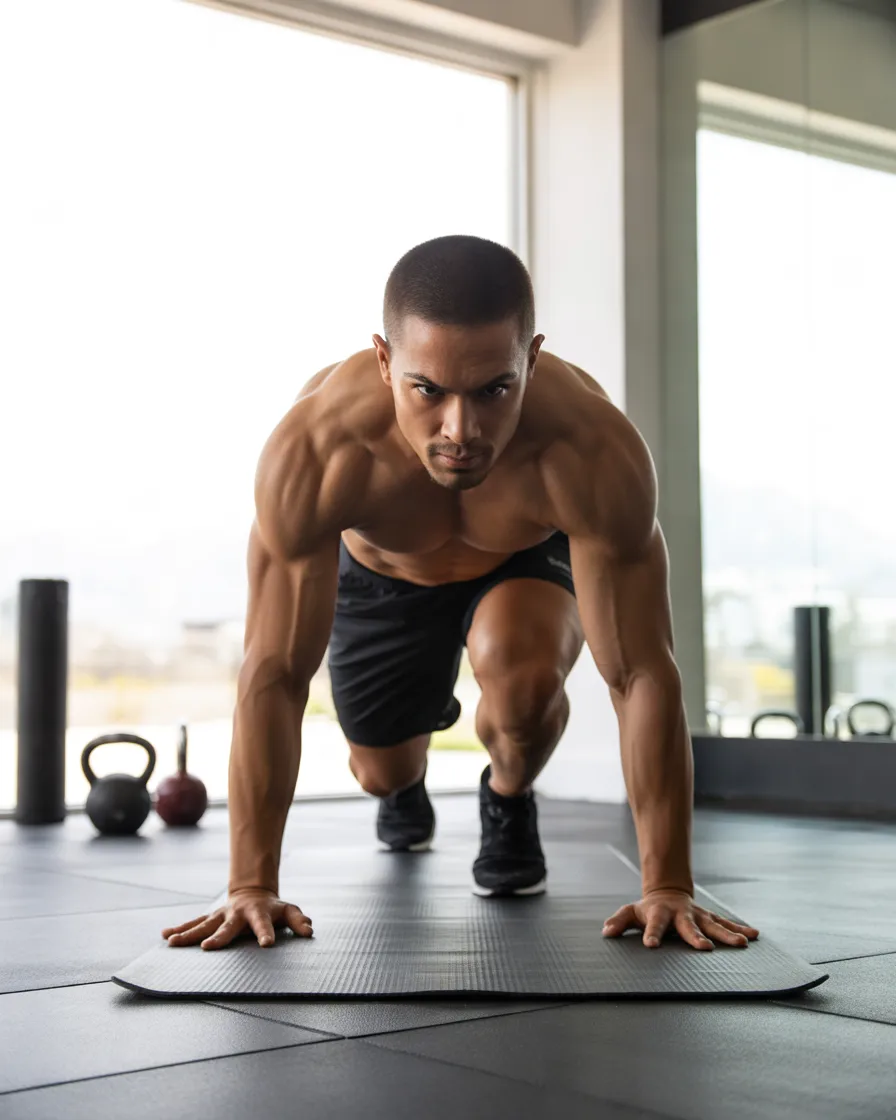
Mountain climbers combine a plank position with alternating knee movements. They are a popular exercise in full-body HIIT workouts because they challenge the core while increasing cardiovascular demand.
During the exercise, you support your upper body with your hands and move your knees toward your chest one at a time.
The movement can be performed slowly for beginners or at a quicker pace by people with more experience.
Benefits:
- Engages the abdominal and core muscles.
- Challenges shoulder stability.
- Increases cardiovascular effort.
- Develops coordination between the upper and lower body.
Practical Tips:
Start in a high-plank position with your hands beneath your shoulders.
Keep your back relatively flat and your abdominal muscles engaged.
Bring one knee toward your chest, return it, and repeat with the opposite leg.
Avoid allowing your hips to rise excessively or your lower back to sag.
Beginners can place their hands on a stable elevated surface to reduce the difficulty.
How to Use It:
Perform mountain climbers for 15–25 seconds, followed by 40–45 seconds of recovery.
Start slowly and focus on maintaining good posture. Increase your speed only when you can control the movement.
Who It May Suit:
People who want to combine core conditioning with cardiovascular exercise. Elevated mountain climbers are a useful starting variation for beginners.
Important Considerations:
This exercise places weight through the wrists and shoulders. People with discomfort in these areas should choose a suitable alternative rather than forcing the movement.
6. Skater Steps for Cardio and Coordination
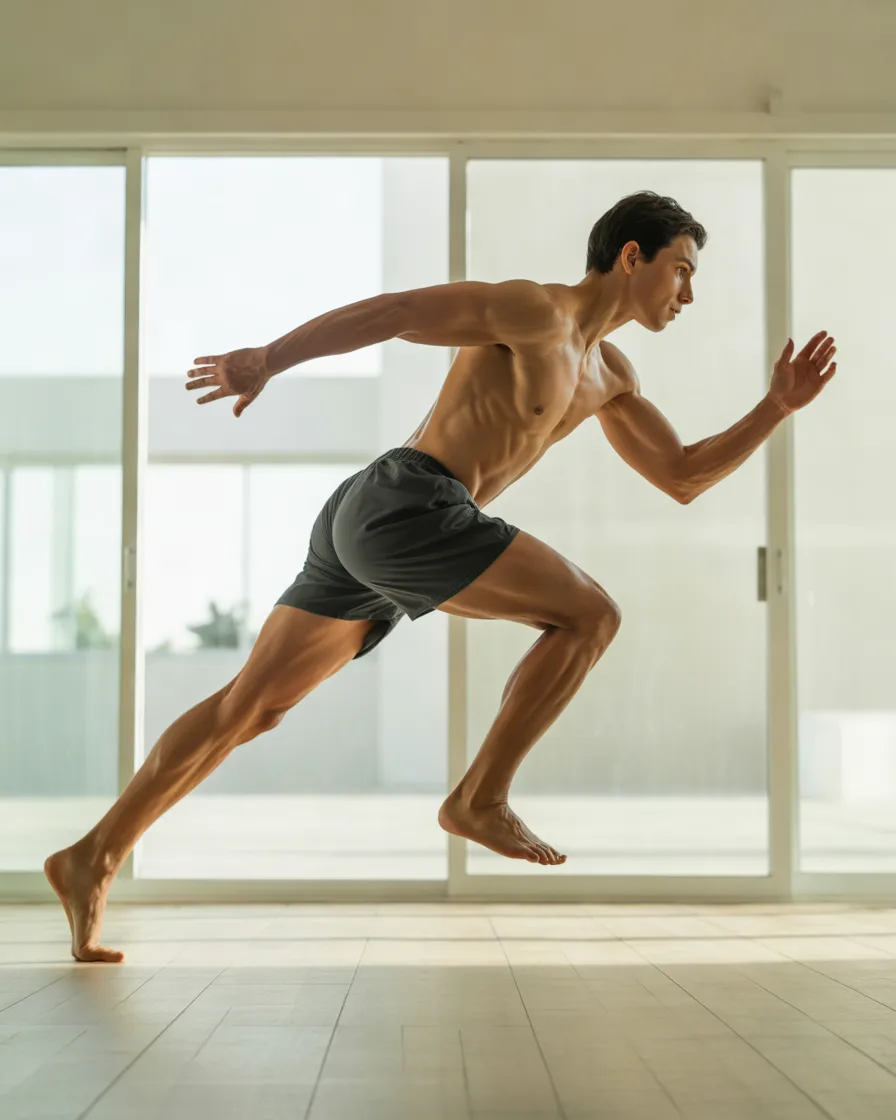
Skater steps are a side-to-side movement inspired by the motion of speed skating. They add variety to a home HIIT workout while challenging the legs, glutes, and muscles responsible for balance.
The movement involves stepping or hopping sideways while bringing the opposite foot behind the supporting leg.
You can choose a low-impact stepping variation or a more challenging jumping version depending on your fitness level.
Benefits:
- Challenges lower-body muscular endurance.
- Develops lateral movement and coordination.
- Engages the glutes and legs.
- Adds variety to traditional forward-and-backward exercises.
Practical Tips:
Begin with your feet comfortably apart and knees slightly bent.
Step to one side while transferring your weight onto that leg. Bring the opposite foot behind you without losing balance.
Repeat in the other direction.
Keep your movements controlled and avoid leaning too far forward.
How to Use It:
Perform skater steps for 20–30 seconds, then recover for 30–45 seconds.
Beginners should use side steps instead of jumping. More experienced exercisers can gradually add a small lateral hop.
Who It May Suit:
People looking to improve movement coordination and add lateral exercises to their cardio routine.
Important Considerations:
Make sure you have enough space on both sides. Avoid large jumping movements if you have knee, ankle, or balance concerns.
7. High Knees for an Effective Home Cardio Workout
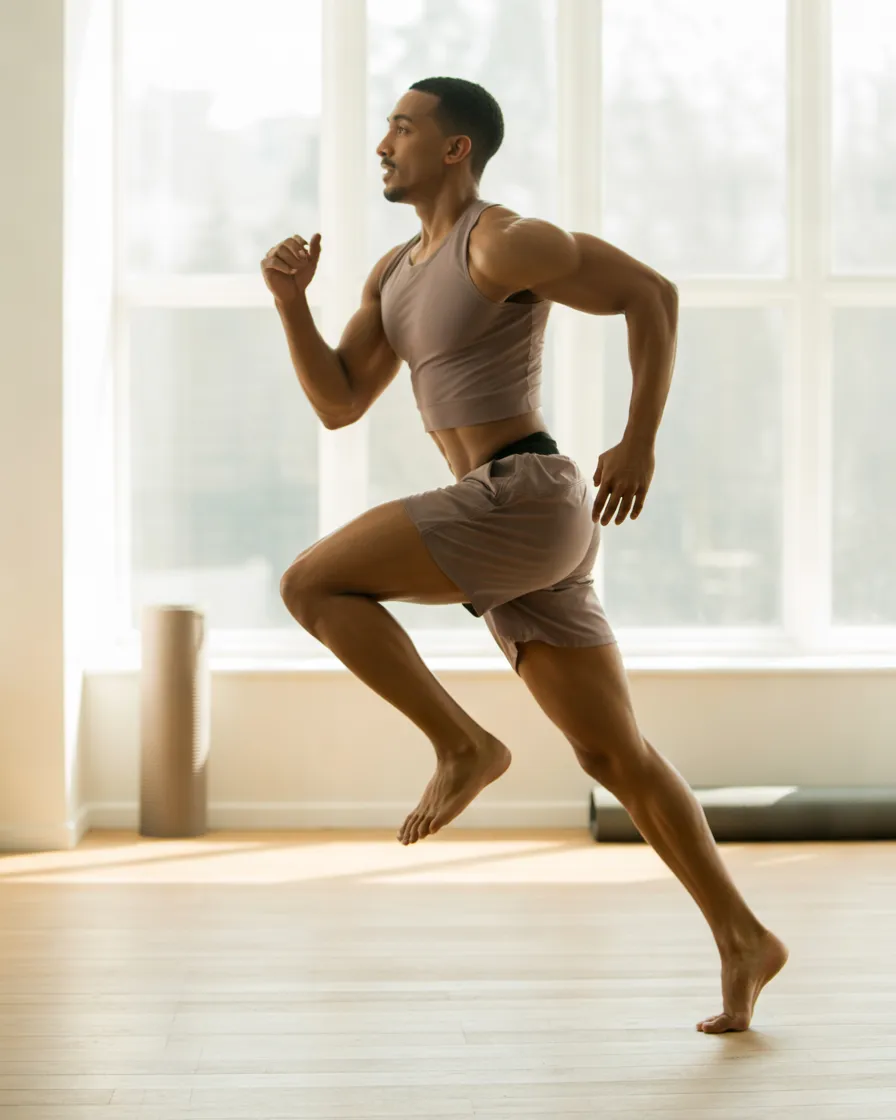
High knees are a simple cardio exercise that can make your home workout more challenging without requiring equipment.
The movement involves running or marching in place while lifting your knees toward your waist. Your arms move naturally to support coordination and rhythm.
The intensity depends on how quickly you move and how high you lift your knees.
Benefits:
- Increases heart rate and breathing.
- Challenges cardiovascular endurance.
- Engages the hip flexors and leg muscles.
- Improves coordination and movement rhythm.
Practical Tips:
Stand upright with your feet hip-width apart.
Begin marching in place while lifting your knees comfortably. Gradually increase your pace if your fitness level allows.
Move your arms naturally and keep your shoulders relaxed.
Do not force your knees higher than your comfortable range of motion.
How to Use It:
Perform high knees for 20 seconds, followed by 40 seconds of slower marching or rest.
Beginners can start with a steady march. More experienced exercisers can progress to a quicker running motion.
Who It May Suit:
People who enjoy cardio exercises and want an easy way to increase workout intensity. Marching high knees are suitable for individuals who prefer lower-impact movement.
Important Considerations:
Avoid excessive bouncing if you experience joint discomfort. Use a flat, nonslip surface and supportive shoes.
8. Plank Shoulder Taps for Core Stability
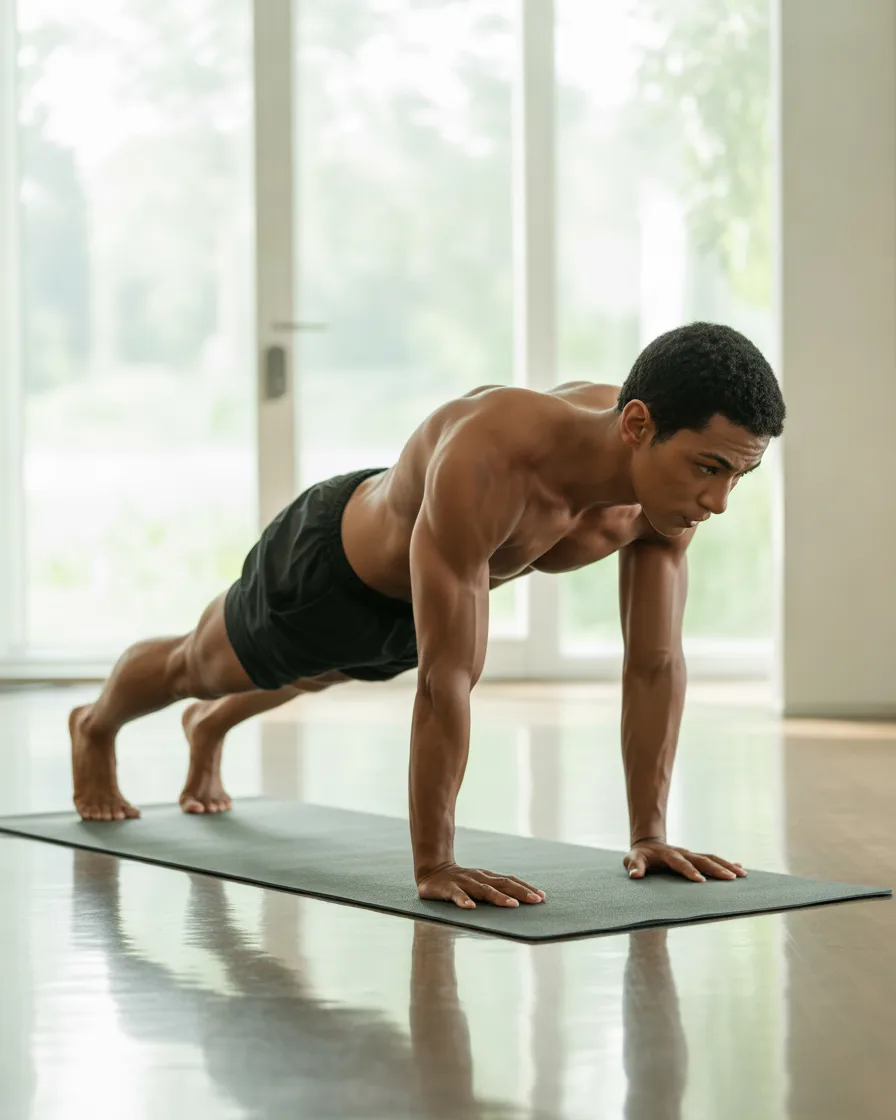
Plank shoulder taps are a bodyweight exercise that challenges core stability, shoulder strength, and coordination.
The exercise begins in a high-plank position. You lift one hand to touch the opposite shoulder, return it to the floor, and repeat on the other side.
Because your body must resist rotation, the abdominal and supporting muscles work to keep your hips stable.
Benefits:
- Challenges abdominal and core stability.
- Strengthens the shoulders and arms.
- Improves coordination.
- Encourages better control during plank movements.
Practical Tips:
Place your hands beneath your shoulders and extend your legs behind you.
Position your feet slightly wider than hip-width apart if you need additional stability.
Lift your right hand to touch your left shoulder. Return it to the floor and repeat on the opposite side.
Try to minimize movement through your hips.
If the floor variation is difficult, perform the exercise against a sturdy elevated surface.
How to Use It:
Continue alternating shoulder taps for 20–30 seconds.
Move slowly enough to maintain good form. Rest for approximately 30–45 seconds afterward.
Who It May Suit:
People who want to add core-focused movements to a bodyweight HIIT workout. Elevated variations can make the exercise more accessible.
Important Considerations:
People with wrist or shoulder problems may need an alternative. Do not sacrifice proper alignment just to complete more repetitions.
9. Step-Back Burpees for Full-Body Conditioning
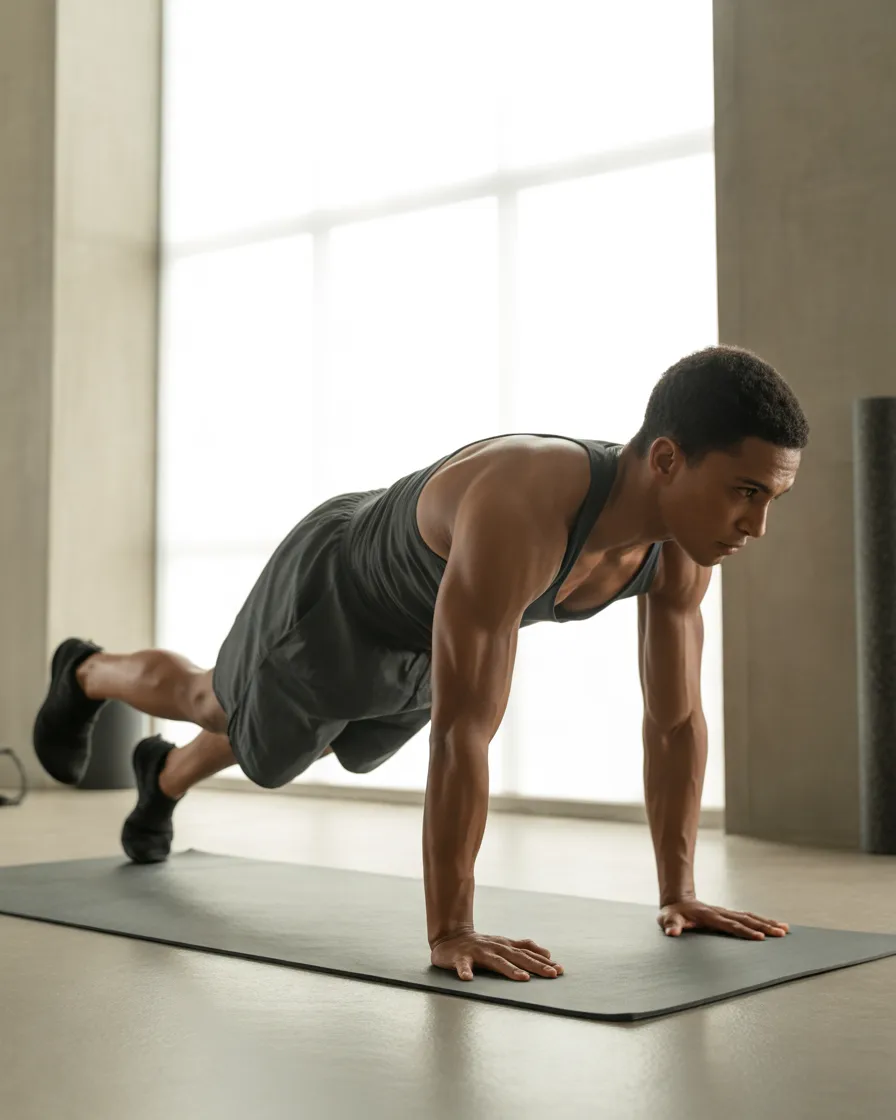
Traditional burpees combine a squat, plank, push-up variation, and jump into one continuous movement. They can be demanding, especially for beginners.
Step-back burpees provide a more manageable alternative while maintaining many of the same movement patterns.
Instead of jumping your feet backward and forward, you step one foot at a time into and out of a plank position. You can also leave out the push-up and final jump.
Benefits:
- Engages several major muscle groups.
- Challenges cardiovascular endurance.
- Combines lower-body and upper-body movements.
- Develops coordination and muscular endurance.
Practical Tips:
Begin standing with your feet comfortably apart.
Bend your knees and place your hands on the floor or a stable elevated surface.
Step one foot backward, followed by the other, until you reach a controlled plank position.
Step forward one foot at a time and return to standing.
Keep your movements controlled rather than rushing through the exercise.
How to Use It:
Perform step-back burpees for 15–20 seconds.
Rest for 40–60 seconds before your next movement. Beginners should start with just a few controlled repetitions.
More experienced exercisers may add a small jump when returning to standing.
Who It May Suit:
People looking for a full-body conditioning movement who can comfortably perform squatting and supported plank positions.
Important Considerations:
Burpees can be demanding. People with wrist, shoulder, back, or knee concerns should use a modified version or select another exercise. Do not attempt advanced jumping variations before developing the necessary control and strength.
10. Shadow Boxing for a Fun Cardio HIIT Session

Shadow boxing is a practical way to add movement and variety to your HIIT routine. It involves throwing controlled punches into the air without making contact with a target.
The exercise can increase cardiovascular demand while engaging the shoulders, arms, core, and lower body.
It is also a useful option for people who prefer rhythmic movements rather than repeating traditional jumping exercises.
Benefits:
- Challenges cardiovascular endurance.
- Engages the shoulders and upper body.
- Encourages coordination and footwork.
- Adds variety to a no-equipment home workout.
Practical Tips:
Stand with your feet comfortably apart and knees slightly bent.
Keep your hands near your face in a relaxed boxing position.
Extend one arm forward in a controlled straight punch, return it, and alternate with the other arm.
Rotate your upper body naturally without twisting your knees aggressively.
Keep your movements controlled and avoid fully locking your elbows.
How to Use It:
Perform shadow boxing for 30 seconds, followed by 30–45 seconds of recovery.
Beginners can use slow punches and gentle footwork. More experienced exercisers can increase their speed while maintaining control.
Who It May Suit:
People who enjoy rhythmic cardio activities and want a low-equipment alternative to traditional HIIT exercises.
Important Considerations:
Avoid forceful punching or excessive joint rotation. People with shoulder or elbow discomfort should keep the movement gentle or choose another exercise.
How to Create a Beginner-Friendly HIIT Workout at Home
Knowing individual exercises is useful, but combining them into a balanced routine makes your training more practical.
You do not need to perform all 10 exercises in one session. Select movements that work different muscle groups and match your current fitness level.
A beginner-friendly routine might include:
Warm-Up: 5 Minutes
- March in place.
- Perform gentle step jacks.
- Move your shoulders and arms.
- Practice a few comfortable bodyweight squats.
- Gradually increase your movement speed.
Main Workout: Approximately 10–12 Minutes
| Exercise | Work | Recovery |
|---|---|---|
| Step jacks | 20 seconds | 40 seconds |
| Bodyweight squats | 20 seconds | 40 seconds |
| Incline push-ups | 20 seconds | 40 seconds |
| Reverse lunges | 20 seconds | 40 seconds |
| Shadow boxing | 20 seconds | 40 seconds |
| Mountain climbers | 20 seconds | 40 seconds |
Complete one round initially. If you feel comfortable and can maintain good technique, gradually progress to a second round.
Cool-Down: 5 Minutes
- Walk slowly around the room.
- Take controlled, comfortable breaths.
- Perform gentle leg stretches.
- Relax your shoulders and arms.
The workout should feel challenging but manageable. You should not feel pressured to perform every movement at maximum speed.
Expert Tips for Getting Better Results From Home HIIT Workouts
Start With Your Current Fitness Level
Do not copy an advanced athlete’s routine when you are just beginning. Choose manageable exercises and allow your body to adapt.
A beginner can start with shorter work intervals and longer recovery periods. For example, 15 seconds of activity followed by 45 seconds of recovery can provide a useful starting structure.
Prioritize Exercise Technique Over Speed
Moving faster does not automatically make an exercise better.
Proper technique helps you use the intended muscles and maintain control. If your form begins to deteriorate, slow down, take a longer recovery period, or stop the exercise.
Avoid Performing HIIT Every Day
High-intensity exercise places demands on your muscles and cardiovascular system.
For many beginners, two nonconsecutive HIIT sessions per week can be a reasonable starting point. As fitness improves, some people may progress to three sessions, depending on their recovery and overall exercise schedule.
Use other days for walking, gentle cycling, mobility work, or strength training.
Make Recovery Part of Your Workout
Rest periods are not wasted time. They allow your breathing and effort levels to recover before the next challenging interval.
If you cannot recover sufficiently between exercises, reduce the intensity or increase your rest time.
Combine HIIT With a Balanced Exercise Routine
HIIT is only one part of a complete fitness plan.
Adults should generally aim for at least 150 minutes of moderate-intensity aerobic activity or 75 minutes of vigorous-intensity activity each week, or an equivalent combination. Muscle-strengthening activities are also recommended on at least two days per week.
You can combine HIIT sessions with walking and strength training to build a more balanced routine.
Track Your Progress Gradually
Keep a simple record of your workout duration, exercises, repetitions, and recovery periods.
For example, if you initially perform eight squats in 20 seconds with good technique, you may eventually complete more repetitions comfortably.
Progress does not always mean increasing speed. Better control, improved endurance, and consistent participation are meaningful improvements too.
Support Your Training With Good Nutrition and Sleep
Exercise is only one part of maintaining overall fitness.
Eat balanced meals that include protein, carbohydrates, healthy fats, vegetables, and fruit. Drink enough water throughout the day and allow adequate time for sleep and recovery.
Avoid treating a HIIT workout as a replacement for a healthy eating pattern.
Safety Tips Before Starting a HIIT Workout at Home
Although many home HIIT exercises are convenient, high-intensity activity may not be suitable for everyone.
Keep these precautions in mind:
- Warm up for approximately 5–10 minutes before vigorous exercise.
- Choose a clear workout area with sufficient room to move.
- Wear comfortable clothing and supportive footwear.
- Keep drinking water available.
- Start with low-impact variations if you are new to exercise.
- Increase intensity, frequency, and duration gradually.
- Avoid exercising through sharp pain or unusual discomfort.
- Allow recovery between demanding sessions.
If you have a cardiovascular condition, uncontrolled blood pressure, a significant joint problem, a recent injury or surgery, or another health concern that could affect exercise safety, speak with a healthcare professional before starting vigorous HIIT.
People who are pregnant, returning to exercise after a long break, or taking medication that affects heart rate or exercise tolerance may also benefit from individualized guidance.
Stop exercising if you experience chest pain or pressure, faintness, severe or unusual shortness of breath, or dizziness. Seek appropriate medical attention, especially for severe or persistent symptoms.
Frequently Asked Questions About HIIT Workout at Home
1. Is a HIIT Workout at Home Effective Without Equipment?
Yes. Many HIIT exercises use body weight as resistance. Squats, lunges, step jacks, mountain climbers, and incline push-ups can provide a challenging workout without gym equipment.
The effectiveness of your routine depends on exercise selection, intensity, consistency, and recovery rather than having expensive equipment.
2. How Long Should a Beginner HIIT Workout Last?
A beginner can start with approximately 10–15 minutes of main workout activity, excluding warm-up and cool-down periods.
Shorter intervals and longer recovery periods are often easier to manage. Gradually increase the workout duration as your fitness and exercise technique improve.
3. Can I Do HIIT at Home Every Day?
Daily high-intensity training is generally unnecessary, particularly for beginners.
Many people benefit from scheduling HIIT sessions on nonconsecutive days and using other days for walking, moderate cardio, or strength training.
Recovery is important for maintaining a sustainable exercise routine.
4. Is HIIT Better Than Regular Cardio?
Neither exercise approach is universally better.
HIIT involves alternating challenging activity with recovery periods, while steady-state cardio maintains a more consistent intensity.
HIIT may be useful for improving cardiorespiratory fitness in a shorter session for some individuals. However, walking, cycling, swimming, and other moderate-intensity activities also offer important health benefits.
5. Can HIIT Help With Weight Management?
HIIT can increase energy expenditure and support cardiovascular fitness. It may be one useful part of a weight-management routine.
However, weight changes depend on several factors, including overall calorie intake, physical activity, sleep, and individual health.
No particular HIIT exercise guarantees weight loss. Consistency and a sustainable lifestyle are more important than relying on one workout style.
6. What Is the Best HIIT Exercise for Beginners?
There is no single best exercise for everyone.
Step jacks, bodyweight squats, controlled reverse lunges, incline push-ups, and marching high knees are useful starting options.
Choose exercises that you can perform comfortably with proper technique. Low-impact alternatives are particularly helpful when you are building basic fitness.
7. Do I Need to Warm Up Before a Home HIIT Workout?
Yes. A warm-up gradually prepares your muscles and cardiovascular system for more demanding activity.
Spend approximately 5–10 minutes marching, moving your arms, performing gentle squats, and practicing the movements you plan to use.
A gradual cool-down after the session is also recommended.
8. Can I Do HIIT Without Jumping?
Absolutely. A low-impact HIIT workout can include step jacks, controlled squats, reverse lunges, elevated mountain climbers, marching high knees, and shadow boxing.
You can increase the effort through movement speed or controlled repetitions without adding jumping movements.
This makes home workouts more adaptable for people who prefer less impact.
9. How Many Times a Week Should I Do HIIT?
Beginners can consider starting with two sessions per week on nonconsecutive days.
More experienced individuals may tolerate three sessions, depending on their recovery, exercise intensity, and other physical activities.
There is no need to make every workout a high-intensity session.
10. Can I Build a Full-Body Workout Using Only Bodyweight Exercises?
Yes. A balanced bodyweight routine can include squats and lunges for the lower body, incline push-ups for the upper body, plank shoulder taps for core stability, and cardio movements such as step jacks and mountain climbers.
Combining these exercises provides a practical way to train several major muscle groups at home.
Conclusion: Make Your HIIT Workout at Home a Sustainable Habit
A HIIT workout at home can be a practical way to improve cardiovascular fitness, develop muscular endurance, and make physical activity part of a busy schedule.
The 10 exercises in this guide offer different ways to challenge your body without requiring a gym membership or specialized equipment. From bodyweight squats and reverse lunges to mountain climbers and shadow boxing, you can build a routine that suits your available space and fitness level.
Remember that more intensity does not always mean better results. Start with manageable intervals, focus on correct technique, and allow enough recovery between sessions.
Most importantly, choose movements you enjoy and can perform consistently. A balanced, sustainable exercise routine is more valuable than an extremely difficult workout that you cannot maintain.