Some mornings feel rushed before they even begin. The alarm goes off, the phone lights up, and the day is already pulling you in ten directions. Then you see a quiet photo of a tidy breakfast table or a sunlit yoga mat, and something in you slows down. That is the quiet power of healthy lifestyle aesthetic pictures: they do not shout at you to change everything, they simply show what a calmer, healthier day could look like.
This collection of healthy lifestyle aesthetic pictures is here to do exactly that. Each picture below captures one small, realistic part of a balanced routine, from a colourful breakfast bowl to a peaceful bedtime scene. You can save your favourites as phone wallpaper, pin them to a vision board, or simply use them as gentle reminders to build habits that fit your real life. None of these ideas needs special equipment or a perfect home. Pick one or two that appeal to you, try them for a week, and see how they feel. If you have a health condition or you are changing your diet or exercise routine in a big way, it is worth checking with a healthcare professional first.
1. A Calm Morning Routine Flat Lay
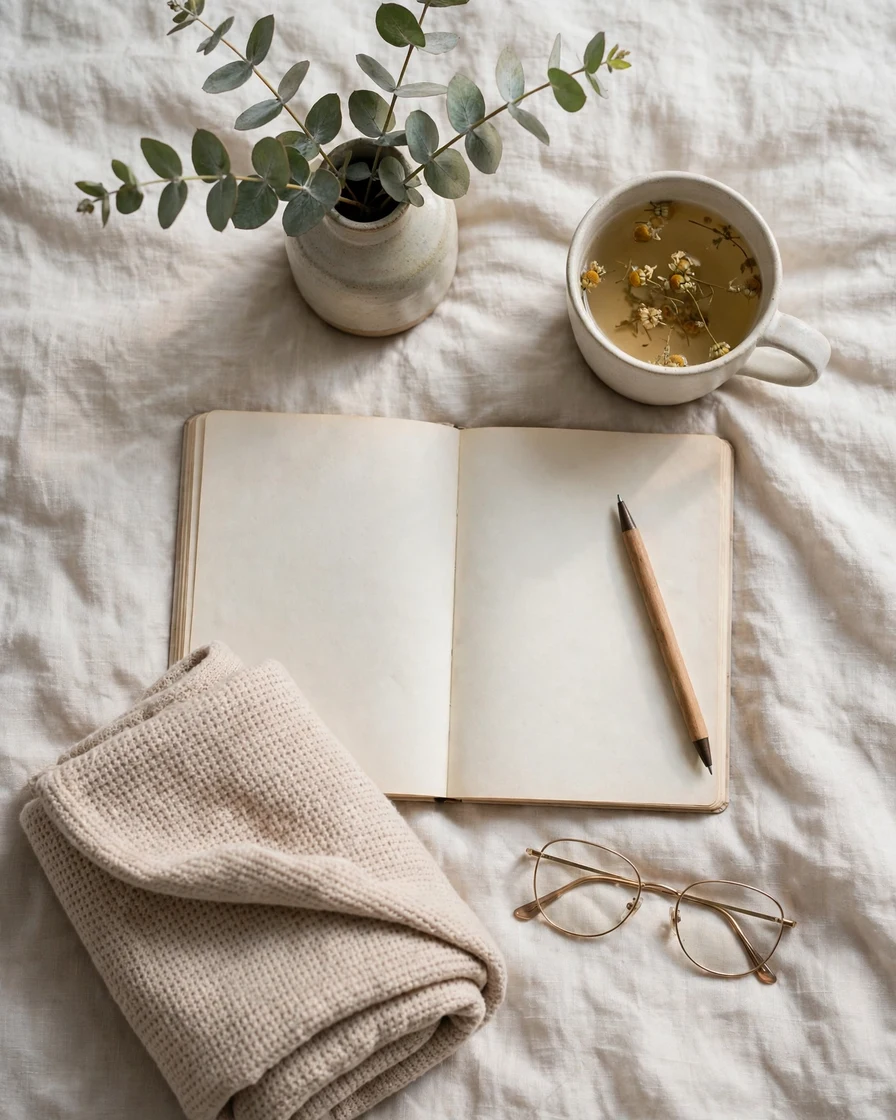
The picture shows a neat flat lay on light linen bedding: a ceramic mug of herbal tea, an open journal with a pen resting on the page, a small vase of eucalyptus sprigs, a folded beige throw, and a pair of reading glasses. Everything has its place, and nothing in the frame feels hurried. It is the kind of image that makes a slow morning look appealing rather than lazy.
A calm start may help set the tone for the rest of the day. When the first thing you do is not scrolling through messages, your mind gets a little breathing room. A short journaling habit can support clearer thinking, and a warm drink gives you a reason to sit still for five minutes. The benefit here is not the beautiful bedding, it is the pause.
To try it, lay out three things the night before: your journal, a pen, and your mug. When you wake up, make your tea first, then sit and write two or three lines about how you slept or what the day holds. Keep it to five minutes at first. This picture may suit busy people who want a gentler start, students, and anyone who works from home. One thing to keep in mind is that a routine should serve you, not stress you. If writing every morning feels like a chore, try it three days a week instead.
2. A Colourful Smoothie Bowl
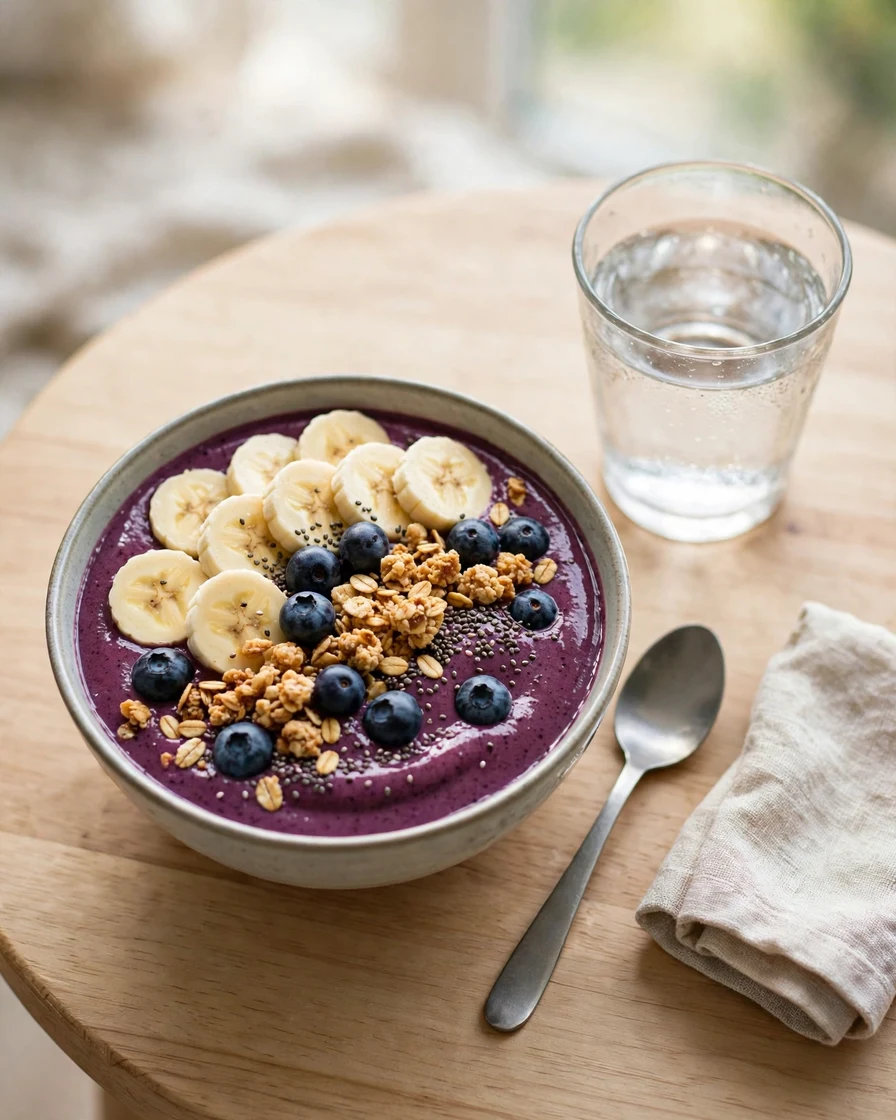
The picture shows a thick purple berry smoothie in a ceramic bowl, topped with neat rows of sliced banana, blueberries, crunchy granola, and a sprinkle of chia seeds. A spoon rests beside the bowl, with a glass of water and a folded linen napkin on the light wooden table. It looks fresh, bright, and satisfying rather than fussy.
A smoothie bowl can be a practical way to include fruit, fibre, and a little protein in one meal. The toppings add texture, which can make the meal feel more filling than a drink alone. Making it yourself also means you control the sweetness, since shop-bought versions can be high in added sugar.
To make your own, blend frozen berries with half a banana and a splash of milk or yoghurt until thick, then pour it into a bowl and add your toppings. Keep the toppings to a small handful each so the bowl stays balanced. This idea may suit people who skip breakfast, families who want a fun weekend breakfast, or anyone trying to eat more fruit. If you have diabetes or you watch your blood sugar, talk to a healthcare professional about portion sizes and fruit choices, and keep an eye on sweetened granola and honey.
3. A Yoga Corner at Sunrise
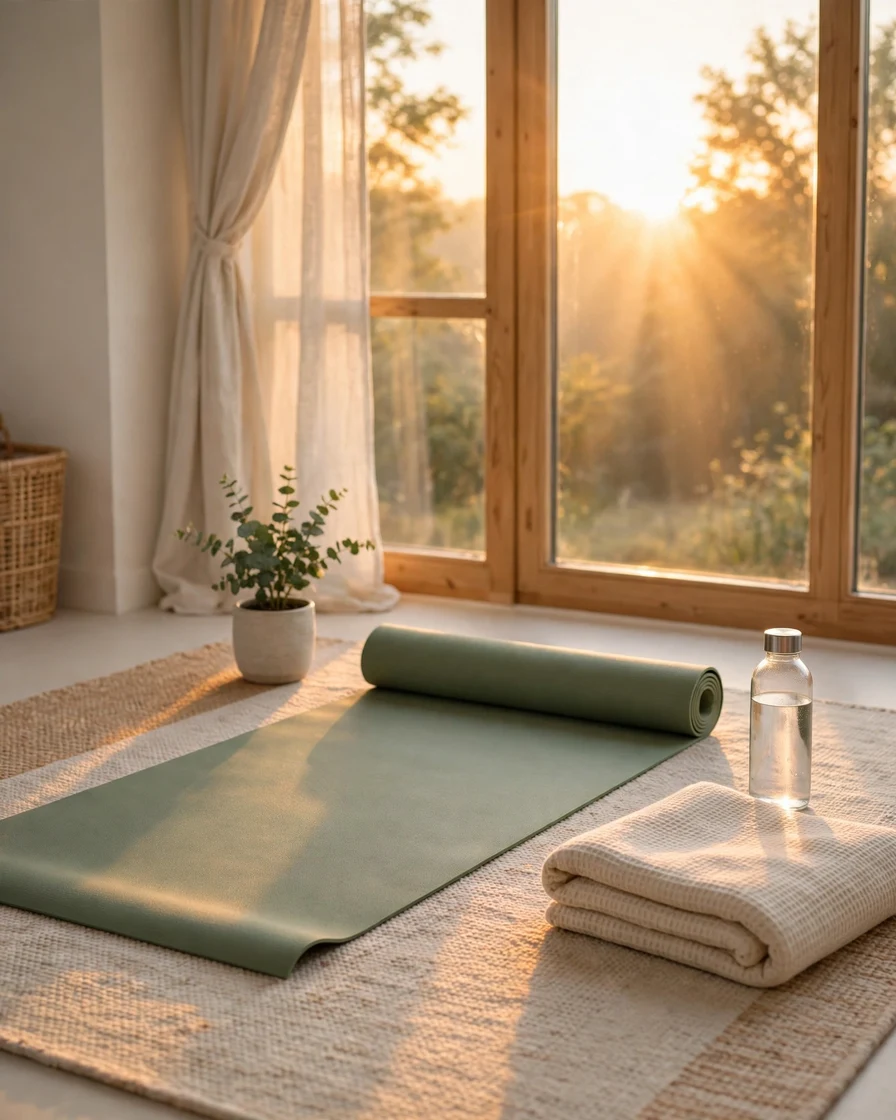
The picture shows a quiet corner of a bright living room at sunrise. A sage-green yoga mat is unrolled on a light rug, with a folded blanket, a small potted plant, and a water bottle placed neatly beside it. Warm golden light comes through a large window, and the whole scene feels still and uncluttered.
Having a ready-made corner can make it much easier to stretch or practise yoga regularly, because there is nothing to set up. Gentle stretching in the morning may help ease stiffness and support flexibility, and a few slow breaths can help you feel more settled before the day begins. The dedicated space itself is part of the habit: you see it, and you remember.
To create one, choose a quiet spot near a window and keep your mat unrolled or rolled and visible, not buried in a cupboard. Add a blanket for comfort and a bottle of water within reach. Start with ten minutes of simple stretches or a beginner video, three or four times a week. This may suit people with desk jobs, anyone with a stiff back from sitting, and beginners who find a full class too much. Move gently, stop if anything hurts, and if you have a joint problem, back pain, or you are pregnant, check with a healthcare professional before starting a new exercise routine.
4. A Tidy Meal-Prep Fridge Shelf
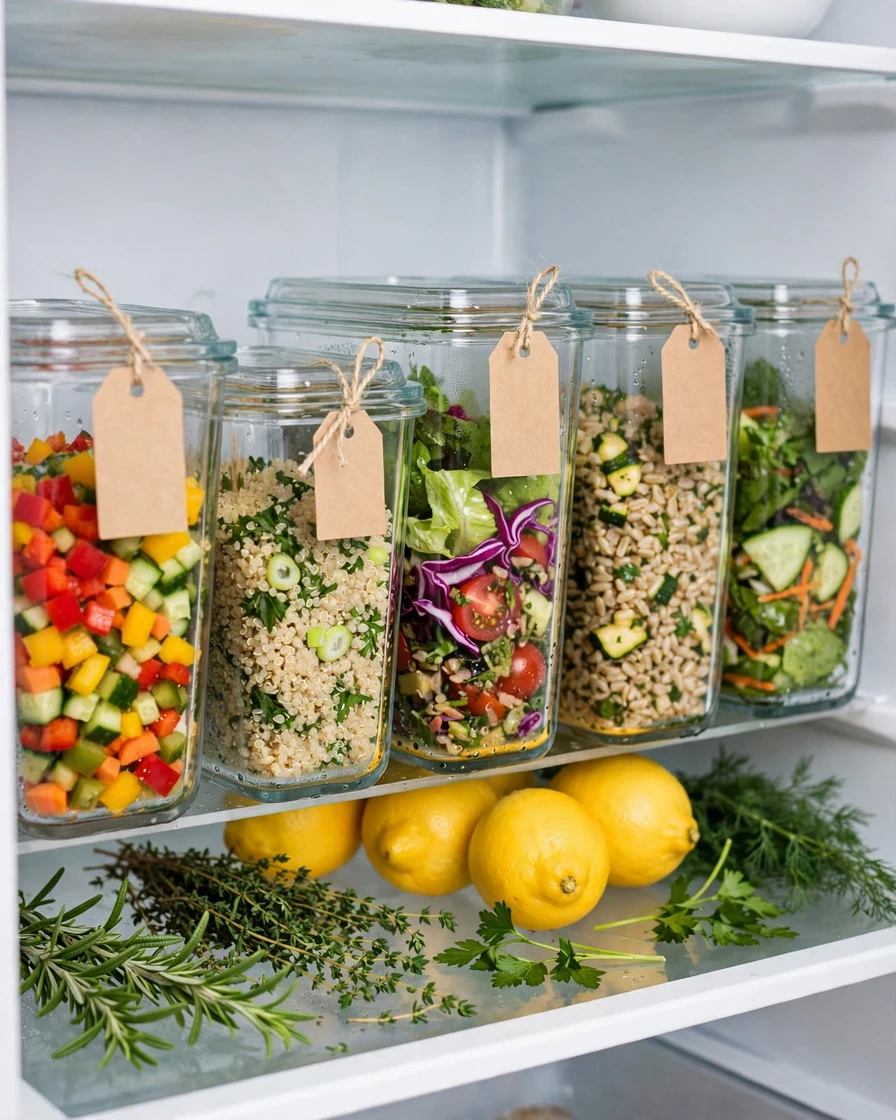
The picture shows one neat fridge shelf filled with clear glass containers: chopped colourful vegetables, cooked grains, and ready-made salads, each with a small plain label. Fresh lemons and herbs sit at the side, and everything is easy to see at a glance. There is no clutter, no mystery leftovers, and no guessing.
A shelf like this can make healthy eating easier on busy days, because the hard part is already done. When cooked grains and chopped vegetables are ready, putting together a lunch takes minutes instead of half an hour. It can also help reduce food waste, since you can see exactly what needs using up first.
To try it, set aside an hour on a quiet day. Cook one grain, chop two or three vegetables, and make one simple salad. Store them in clear containers, label them with the day, and keep them on one shelf at eye level. Use them within three to four days. This may suit working parents, people who eat lunch at a desk, and anyone who finds takeaway tempting when they are tired. Keep food safety in mind: cool cooked food quickly, refrigerate within two hours, and throw out anything that smells off or has been stored too long.
5. A Morning Walk in Nature
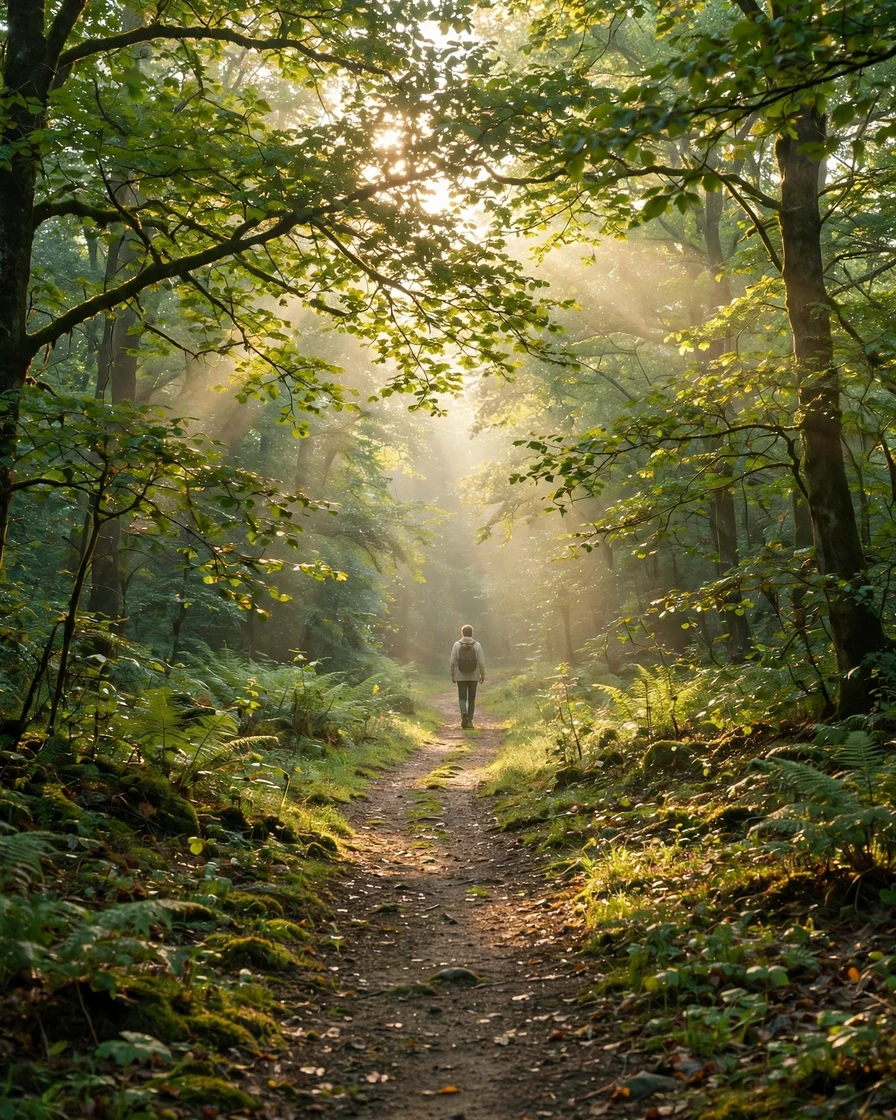
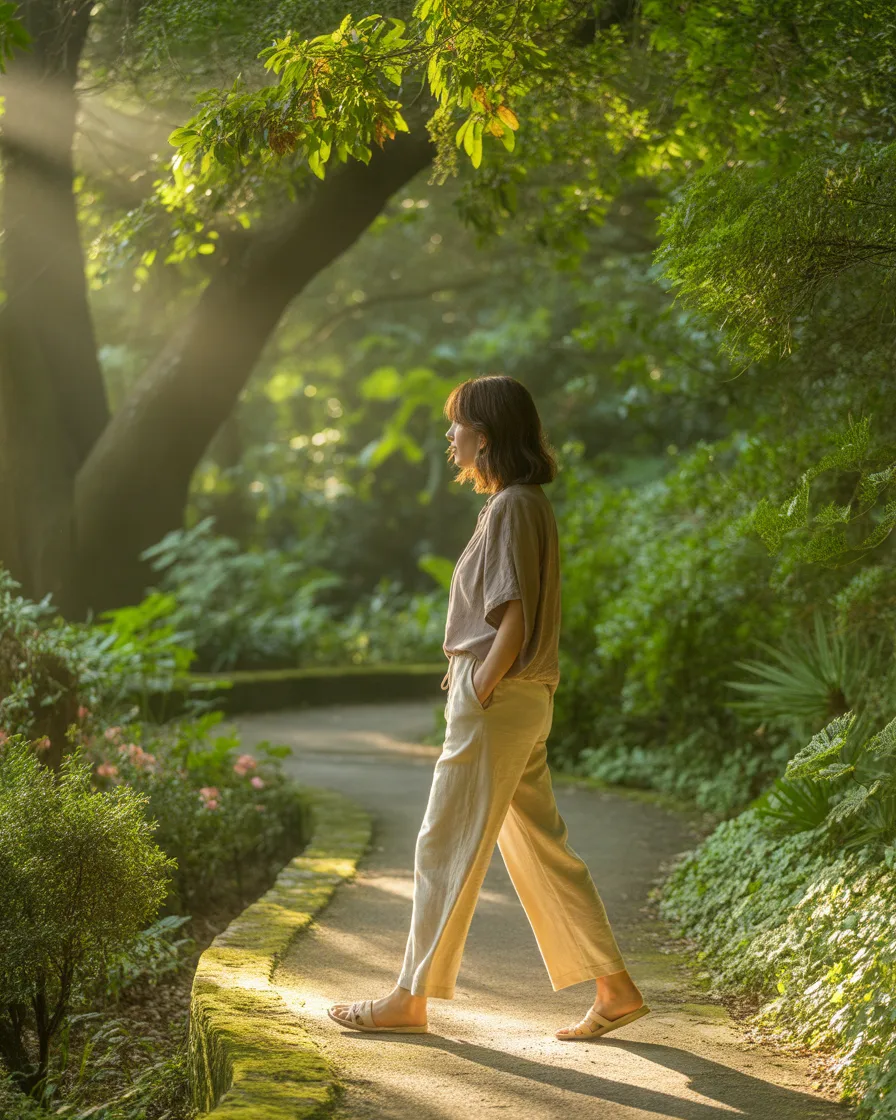
The picture shows a sunlit woodland path with green trees on both sides and soft morning light filtering through the leaves. A person in a light jacket is seen from behind, walking away along the path. There is no rush in the image, just trees, light, and a quiet trail ahead.
Walking outside is one of the simplest habits there is. A morning walk can support heart health, help you get daylight early in the day, and give your mind time to settle before work. Being among trees and greenery may help lift your mood, and many people find they think more clearly after even a short walk.
To make it part of your routine, pick a route you enjoy, even if it is just a loop around a local park, and aim for fifteen to twenty minutes. Walk at a comfortable pace, leave the headphones off sometimes, and notice the trees and the light. This may suit almost anyone, including people who dislike gyms, dog owners, and parents who can walk with children. Wear comfortable shoes, dress for the weather, and if you have a heart condition, breathing problem, or balance issue, speak with a healthcare professional about a suitable walking pace and distance.
6. A Cosy Reading Nook with Herbal Tea
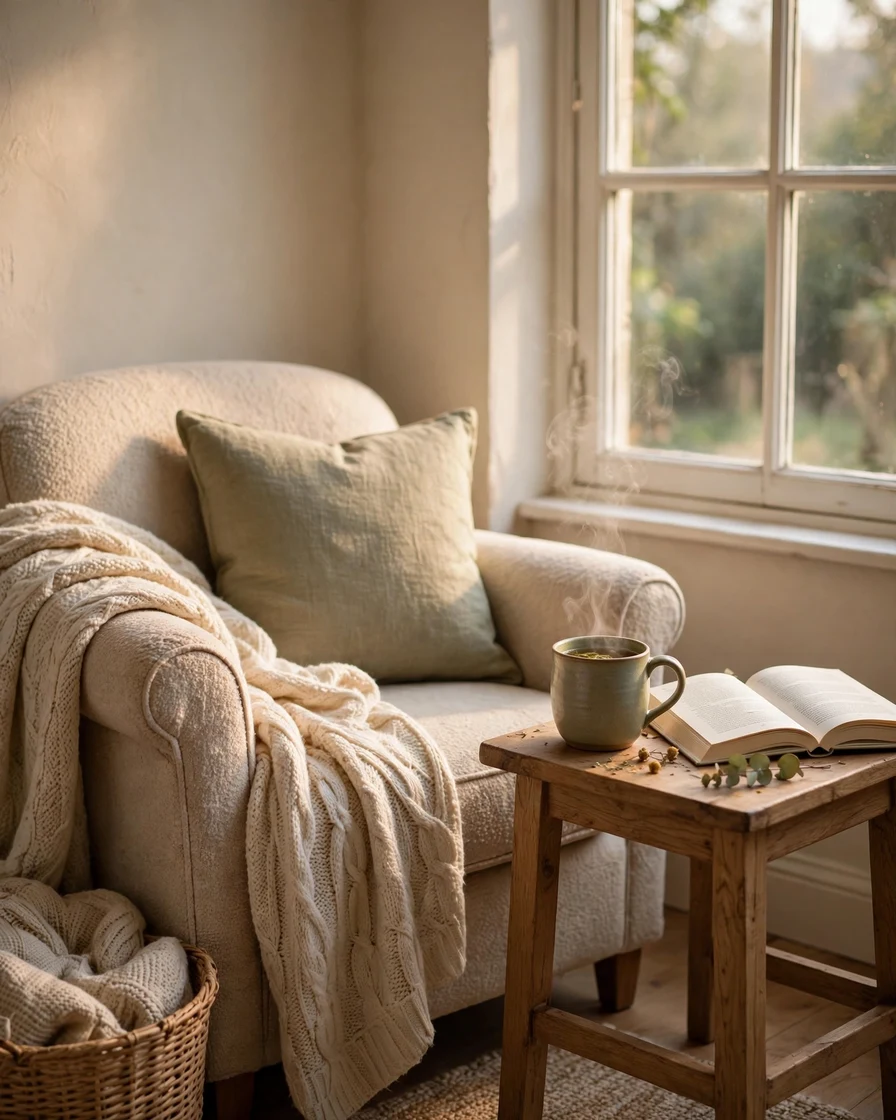
The picture shows a comfortable armchair with a knitted throw and a cushion, placed beside a window. On a small wooden side table sits a steaming mug of herbal tea and an open paperback book. Warm afternoon light fills the corner, and the scene invites you to sit down and stay a while.
A reading nook gives rest a proper place in your home. Reading a book instead of scrolling can help your mind wind down, and a caffeine-free herbal tea in the afternoon may support a calmer evening without disturbing sleep. The real benefit is the boundary it creates: this chair is for resting, not for working or worrying.
To make one, choose a chair you already own, add a throw and a cushion, and keep a book and a mug nearby so there is no excuse to skip it. Try fifteen minutes after lunch or before dinner, and keep your phone in another room. This may suit people who feel tired in the afternoon, avid readers, and anyone who wants a screen-free break. One consideration is the tea itself: some herbal teas can interact with medicines or are not advised in pregnancy, so check the ingredients and ask a pharmacist or healthcare professional if you are unsure.
7. A Bright Home Workout Space
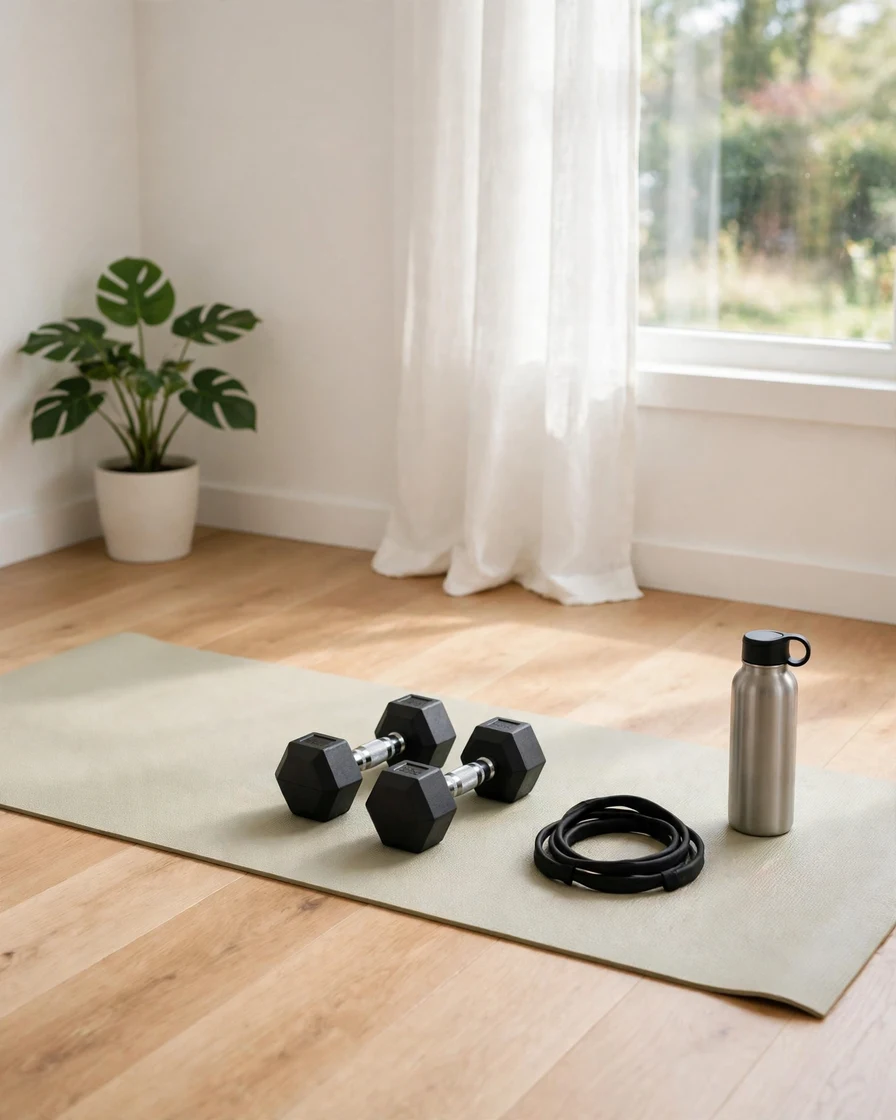
The picture shows a bright, tidy corner with a light exercise mat on a wooden floor, a pair of dumbbells, a resistance band, and a water bottle arranged neatly beside it. A potted plant stands in the corner, and soft daylight comes in from a window. It is a small space, but it looks ready to use.
You do not need a home gym to move more. A small, visible workout space removes the biggest barrier to exercise at home, which is getting started. Short strength sessions with light weights or a band can support muscle strength and bone health, and regular movement may help with energy and mood. Keeping the space tidy also matters: a cluttered corner is easy to ignore.
To set one up, clear a space about the size of a yoga mat, keep your mat, weights, and bottle in one place, and choose two or three short workouts you enjoy. Aim for two or three sessions a week, starting with fifteen minutes. This may suit people who cannot get to a gym, parents who exercise during nap time, and beginners who prefer privacy. Start with light weights, learn the form first, and stop if you feel pain. If you have a health condition or an old injury, ask a healthcare professional what types of exercise are safe for you.
8. A Balanced Plate for Dinner

The picture shows a plate on a rustic wooden table: a piece of grilled salmon, roasted sweet potato wedges, steamed green beans, and a small side salad with lemon. A glass of water sits beside the plate. The colours are natural and varied, and the plate looks satisfying without being overloaded.
A balanced plate is a useful visual guide for dinner. Half the plate with vegetables or salad, a quarter with protein such as fish, beans, or chicken, and a quarter with a starchy food such as sweet potato or rice can help you build a meal that covers the main food groups. Oily fish like salmon can provide omega-3 fats, while the vegetables add fibre and colour.
To use the idea, start with what you already cook and adjust the proportions rather than changing the whole meal. Add one extra vegetable, keep the protein to about a palm-sized portion, and drink water with the meal. This may suit families, people who want simpler portion guidance, and anyone trying to eat more vegetables. If you follow a special diet, have allergies, or take medicine affected by certain foods, check with a healthcare professional or a registered dietitian before making big changes.
9. A Bedtime Wind-Down Scene
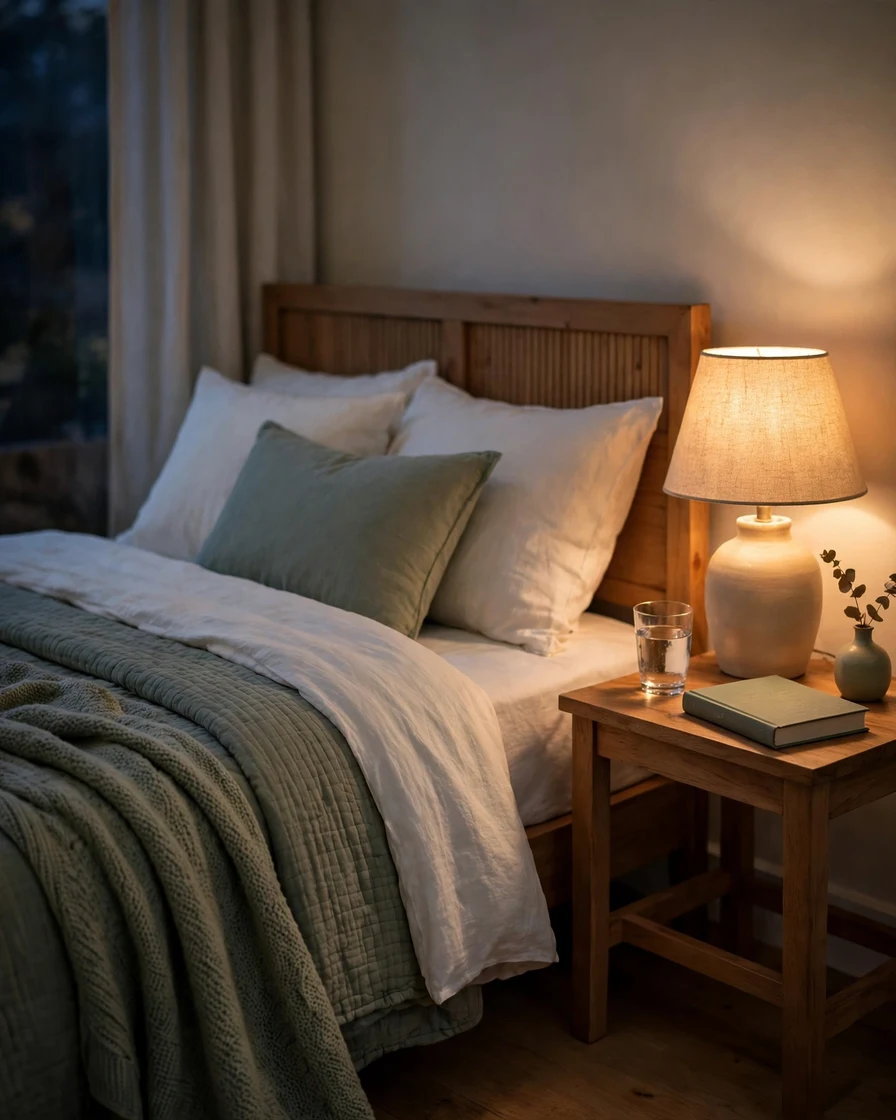
The picture shows a neatly made bed with soft white and sage bedding. On the bedside table, a small lamp glows warmly next to a glass of water and a closed book. The room is dim and quiet, and everything in it suggests sleep, not work or screens.
A wind-down routine can help signal to your body that the day is ending. Dimming the lights, putting the phone away, and doing something calm such as reading may support better sleep quality over time. Good sleep, in turn, can support mood, focus, and appetite the next day, which is why this quiet picture belongs in any collection of healthy lifestyle aesthetic pictures.
To build your own routine, pick a bedtime and start winding down thirty minutes before it. Turn off bright overhead lights, charge your phone outside the bedroom if you can, and read or stretch for a few minutes. Keep the room cool, dark, and quiet. This may suit light sleepers, shift workers trying to reset, and anyone who lies awake thinking. If you regularly struggle to fall asleep, snore heavily, or feel exhausted despite enough hours in bed, speak with a healthcare professional rather than relying on routine alone.
10. A Farmers Market Haul

The picture shows a woven basket and a paper bag on a kitchen counter, filled with fresh market produce: leafy greens, ripe tomatoes, carrots, citrus fruits, and a crusty loaf of bread. The colours are bright and seasonal, and the haul looks like the start of a good week of cooking.
Shopping at a farmers market can make healthy eating feel more enjoyable, because you choose what looks fresh and in season. Seasonal produce is often good value and full of flavour, which makes it easier to cook at home instead of ordering in. The walk around the market is a bonus: fresh air, gentle movement, and a break from the supermarket rush.
To try it, visit a local market with a short list and a reusable bag. Buy two or three vegetables you already know how to cook, plus one new thing to try. Plan two or three meals around the haul when you get home, and store leafy greens properly so they last. This may suit keen cooks, families who want children to see where food comes from, and anyone bored with the same weekly shop. Wash all produce well before eating, and remember that a market trip is a starting point, not a rule: a regular supermarket shop with plenty of fresh food works just as well.
11. A Simple Hydration Station
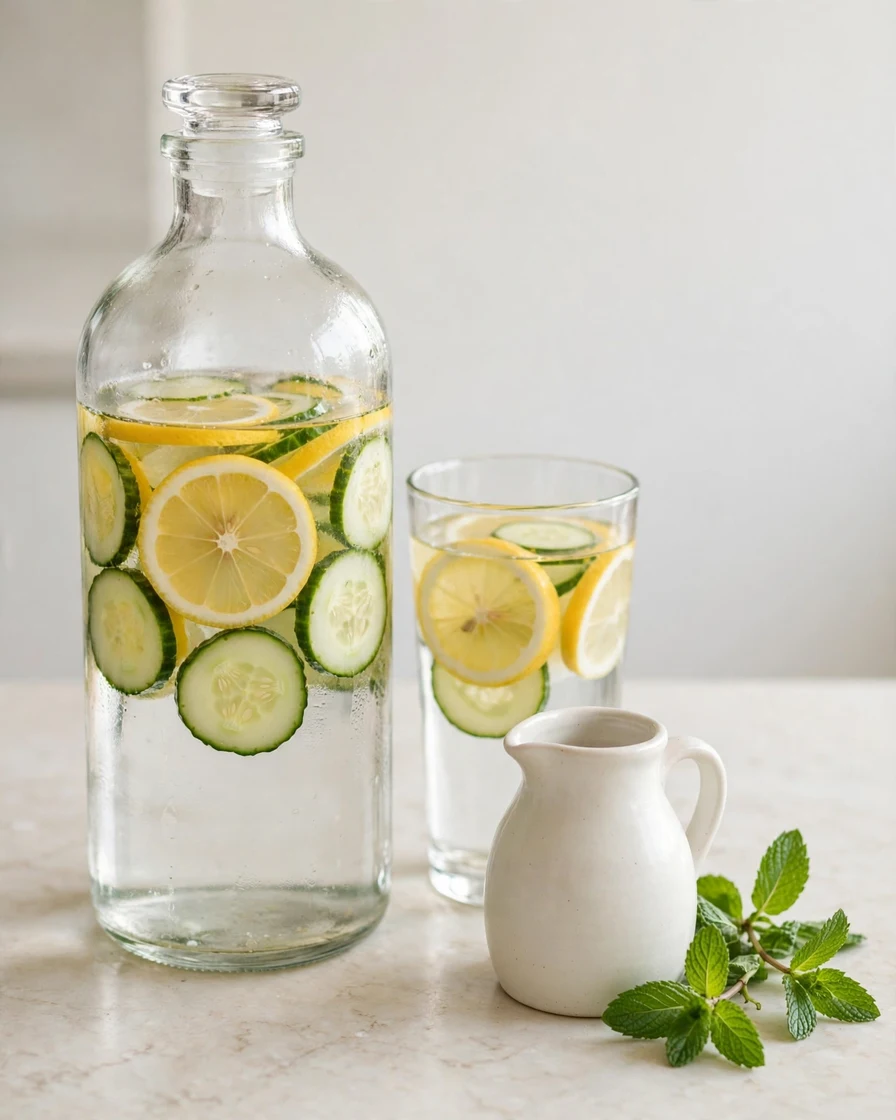
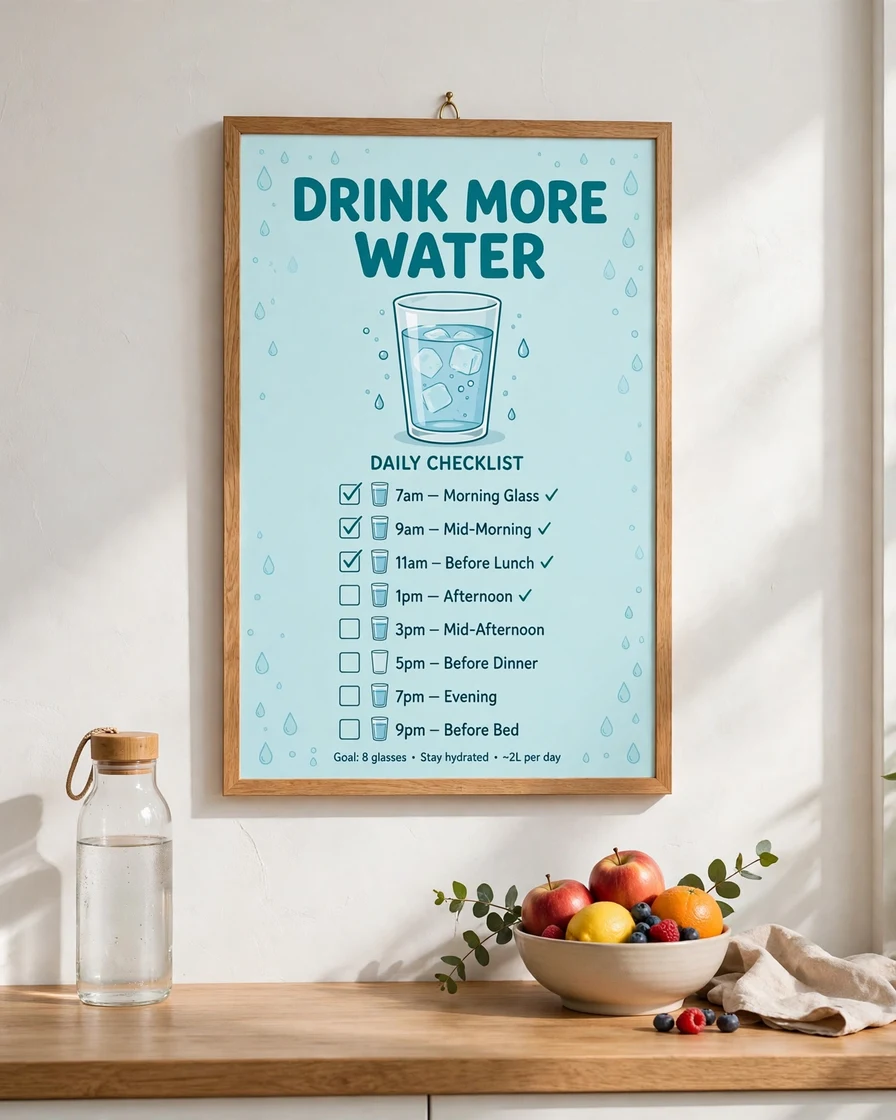
The picture shows a clean kitchen counter with a large glass water bottle and a glass of water filled with lemon and cucumber slices. A small jug and a sprig of fresh mint sit beside them, and the whole setup looks bright, fresh, and inviting.
Staying hydrated can support energy, concentration, and digestion, yet many people simply forget to drink. A visible station helps because the water is right there, and adding lemon or cucumber makes a plain glass feel like a small treat. It is a tiny change, but it removes the friction of getting up to fill a glass.
To make one, keep a bottle or jug of water on the counter or your desk, and a clean glass beside it. Add lemon, cucumber, or mint if you like the flavour, and refill the bottle each morning. Aim to sip through the day rather than drinking large amounts at once. This may suit office workers, students, and anyone who drinks a lot of tea, coffee, or fizzy drinks. If you have kidney problems, heart failure, or you have been told to limit fluids, follow your healthcare professional’s advice on how much to drink.
12. A Journaling Desk in Morning Light
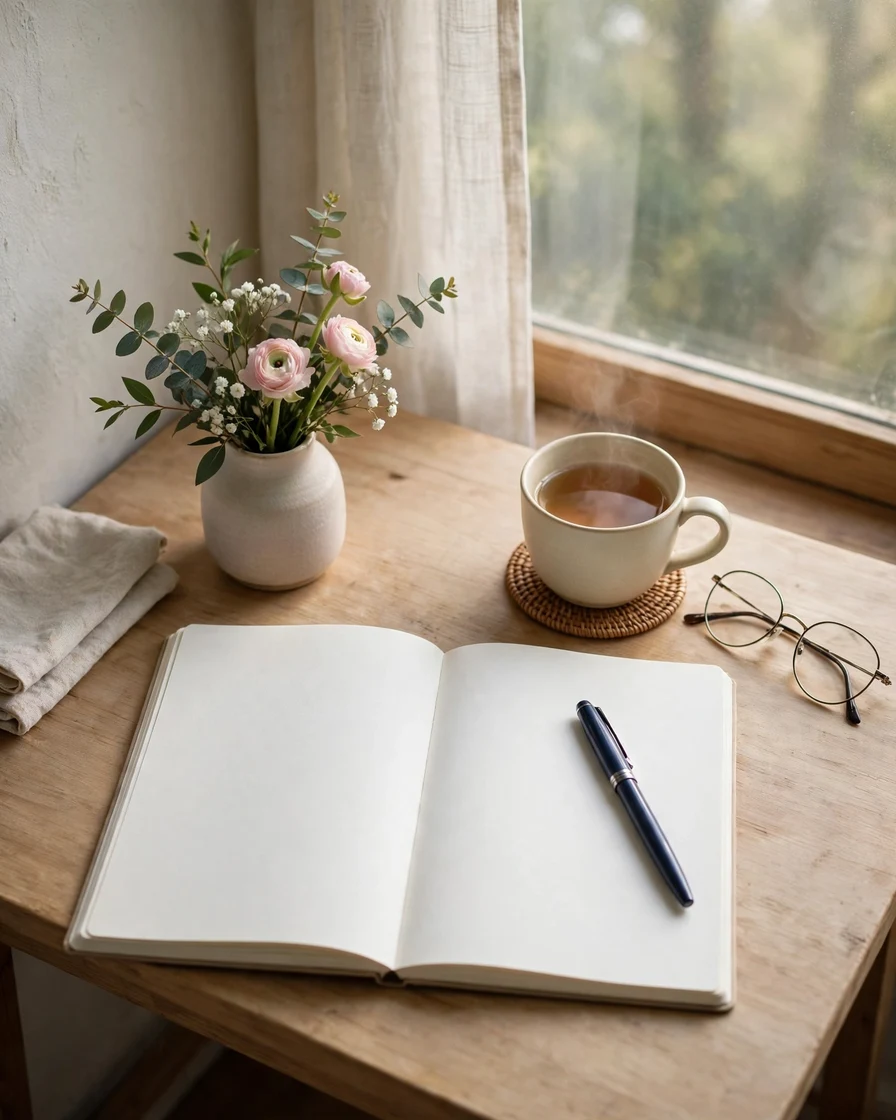
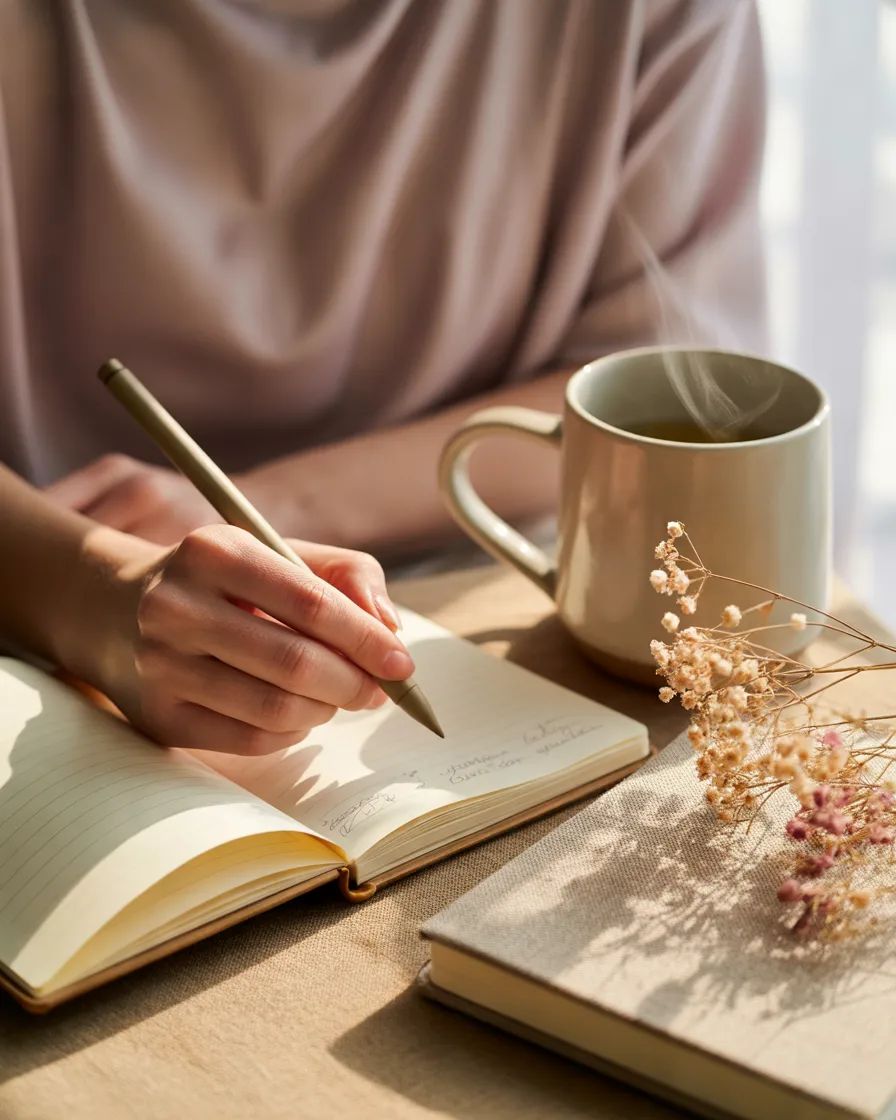
The picture shows a tidy wooden desk by a window in soft morning light. An open journal lies on the desk with a pen resting on the page, next to a small vase of fresh flowers, a cup of tea, and a pair of glasses. Nothing on the desk is demanding attention, and the scene feels calm and unhurried.
Journaling can be a simple way to look after your mental wellbeing. Writing down thoughts, worries, or three things you are grateful for may help you notice patterns and clear your head. It does not need to be long or well written. The habit itself, a few honest lines a day, is what matters, and a pleasant desk makes it easier to return to.
To start, keep your journal open on the desk with a pen beside it, so you do not have to hunt for it. Write for five minutes in the morning or evening, and use simple prompts if a blank page feels daunting, such as “Today I feel…” or “One thing I want to remember is…”. This may suit people who feel stressed, anyone trying to build a new habit, and those who like quiet time alone. Keep in mind that journaling is a self-care tool, not a treatment. If you are struggling with low mood or anxiety that does not lift, speak with a healthcare professional or a trusted person.
Expert Tips
Start with one picture, not all twelve. Pick the idea that feels easiest and most appealing, and give it a full week before adding another. Small habits that survive a busy week are worth more than a perfect routine that lasts two days.
Make your environment do the work. A water bottle on the desk, a mat that stays visible, and a fridge shelf you can see at a glance all make the healthy choice the easy choice. You do not need more willpower, you need fewer obstacles.
Use these healthy lifestyle aesthetic pictures as inspiration, not a standard to measure yourself against. Real homes have laundry on chairs and busy mornings. The goal is a routine that fits your life, not a photo shoot. If a habit stops working, change the habit, not yourself.
Pair habits together. A walk after lunch, tea while you read, or journaling with your morning coffee can help a new habit stick, because it attaches to something you already do. Keep the pair short and pleasant.
Finally, check in with yourself honestly. If you feel tired all the time, your sleep is poor, or a change in diet or exercise leaves you unwell, talk to a healthcare professional. Aesthetic pictures can inspire a healthier routine, but they cannot replace medical advice.
FAQs
What are healthy lifestyle aesthetic pictures?
Healthy lifestyle aesthetic pictures are calm, attractive photos that show small parts of a balanced routine, such as a tidy breakfast table, a yoga corner, or a walk in nature. People save them for inspiration, phone wallpaper, or vision boards, and use them as gentle reminders to build healthy habits.
How can I use healthy lifestyle aesthetic pictures to build real habits?
Choose one picture that matches a habit you want, such as a morning walk or a balanced plate, and copy the simplest part of it. Set up the space or the food the night before, practise the habit for a week, and only then add another. Pictures work best when they lead to one small, specific action.
Do I need to buy new things to copy these pictures?
No. Almost every idea in this list uses things you already own: a chair, a mug, a mat, or a bottle. Rearranging what you have is usually enough, and you can add items slowly if a habit sticks. A healthy routine should not depend on shopping.
Are these ideas suitable for beginners?
Yes, all twelve ideas are beginner-friendly and can be scaled up or down. Start with short sessions, light weights, and simple meals, and build gradually. If you have a health condition, are pregnant, or take regular medicine, check with a healthcare professional before starting new exercise or diet habits.
Where can I find more healthy lifestyle aesthetic pictures?
You can save the pictures in this article, search for wellness and healthy living inspiration on image platforms, or take your own photos of your routine. Your own photos often work best, because they show your real home and your real habits, which makes them easier to copy.
Conclusion
Healthy lifestyle aesthetic pictures are more than pretty images. Each one is a small, practical idea for a calmer and healthier day: a slow morning, a colourful meal, a walk among trees, a tidy space, or a quiet moment with a book. You do not need to copy all twelve. Choose the one that speaks to you, set it up tonight, and try it tomorrow. Over weeks, those small choices add up to a routine that feels good to live with, not just good to look at. Save your favourite picture, start small, and let your everyday routine become something worth photographing.