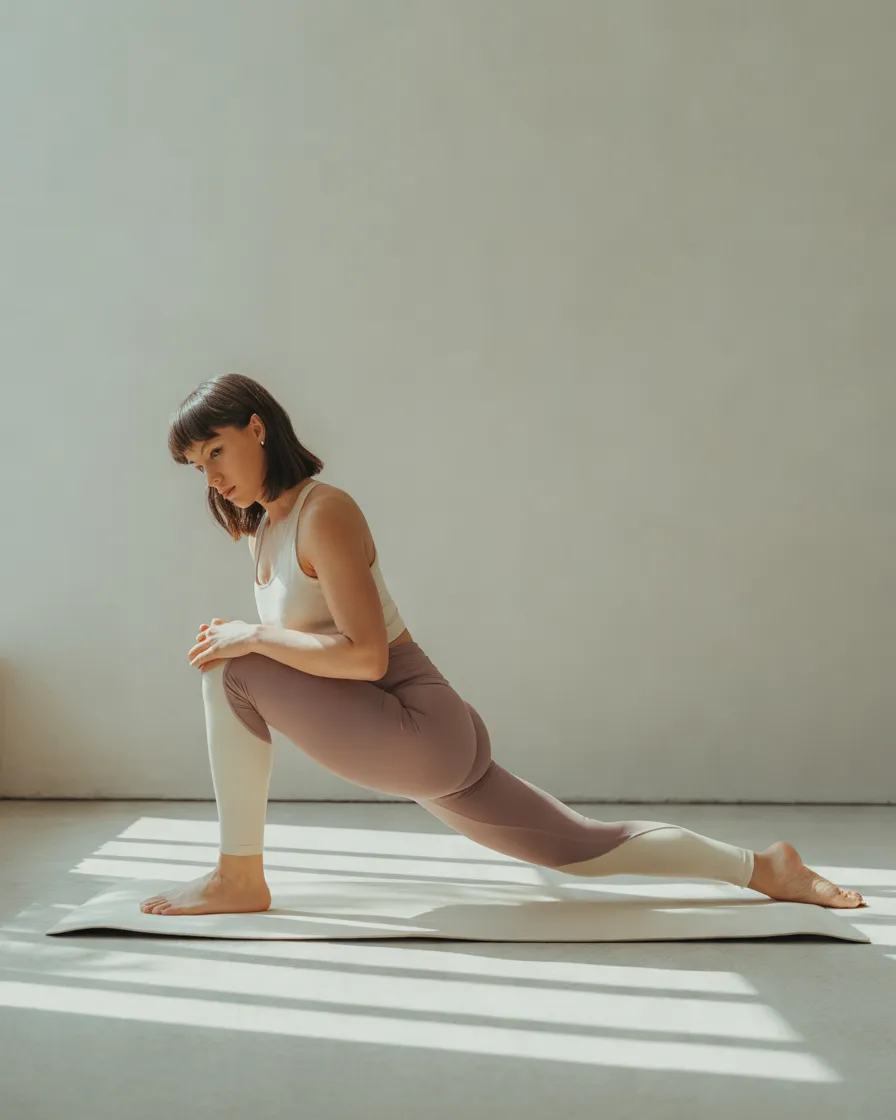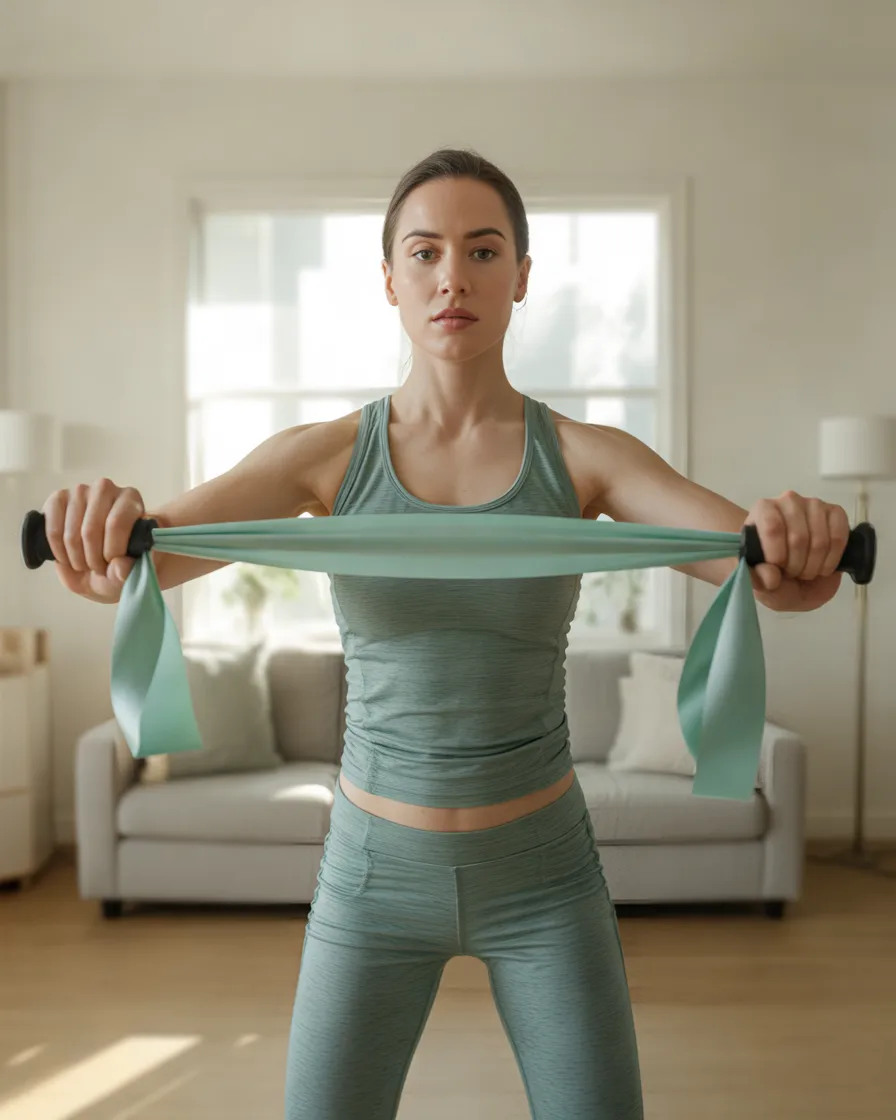
Your glutes do far more than shape how your jeans fit. They power every step you take, steady your knees when you climb stairs, and support your lower back when you lift a grocery bag or pick up a child. Yet for many people who sit most of the day, these muscles stay quiet and underused, and the hips, knees, and lower back end up doing work they were never meant to do.
A home glute workout is one of the simplest ways to wake those muscles up again. You do not need a gym membership, heavy weights, or a lot of space. A yoga mat, a sturdy chair or sofa, and a resistance band are enough to build a routine that can support stronger hips, steadier balance, and more comfortable everyday movement.
Before you begin, warm up for five minutes with easy movement such as marching in place, gentle leg swings, and slow bodyweight squats. Warm muscles move more freely and may help lower the chance of strains. If you have a knee, hip, or lower back injury, or any medical condition, talk with a healthcare professional before starting a new exercise routine. And one honest note: no exercise can target fat loss from one body part only. Fat loss happens across the whole body through overall activity and eating habits, and results vary from person to person.
1. Bodyweight Glute Bridge
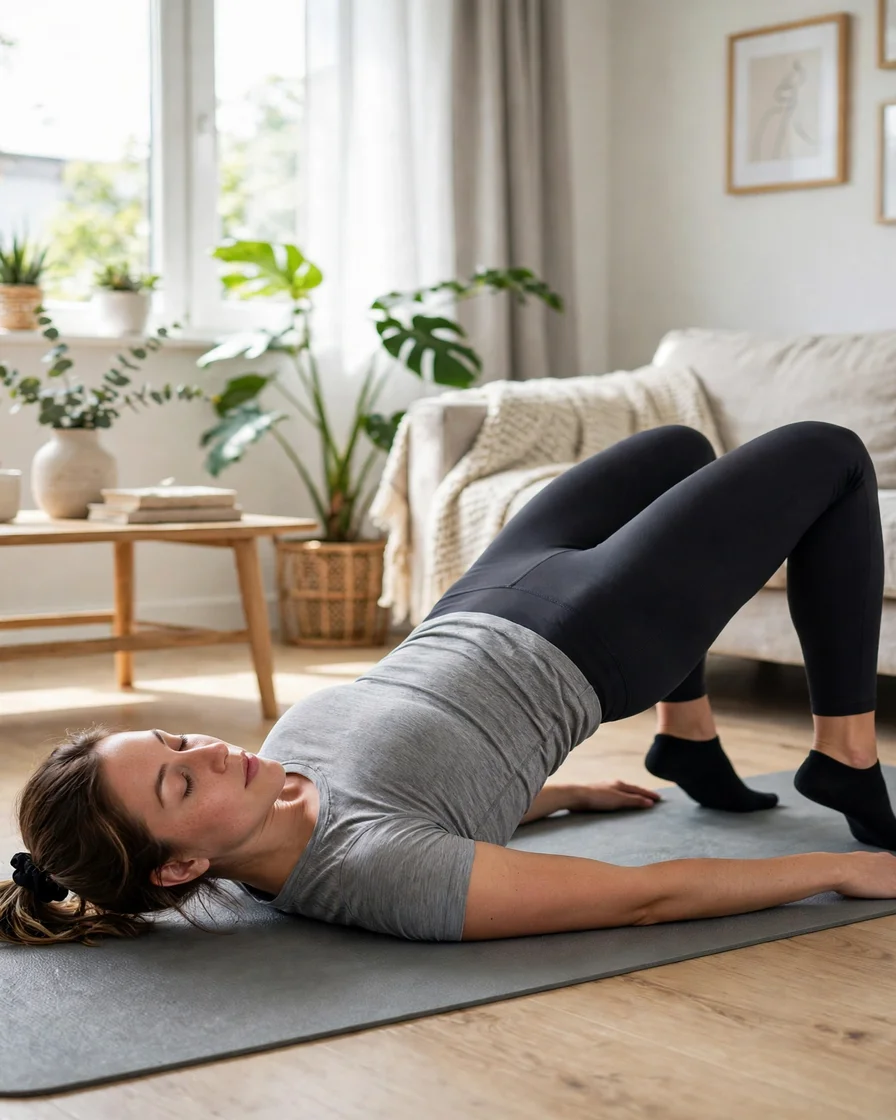
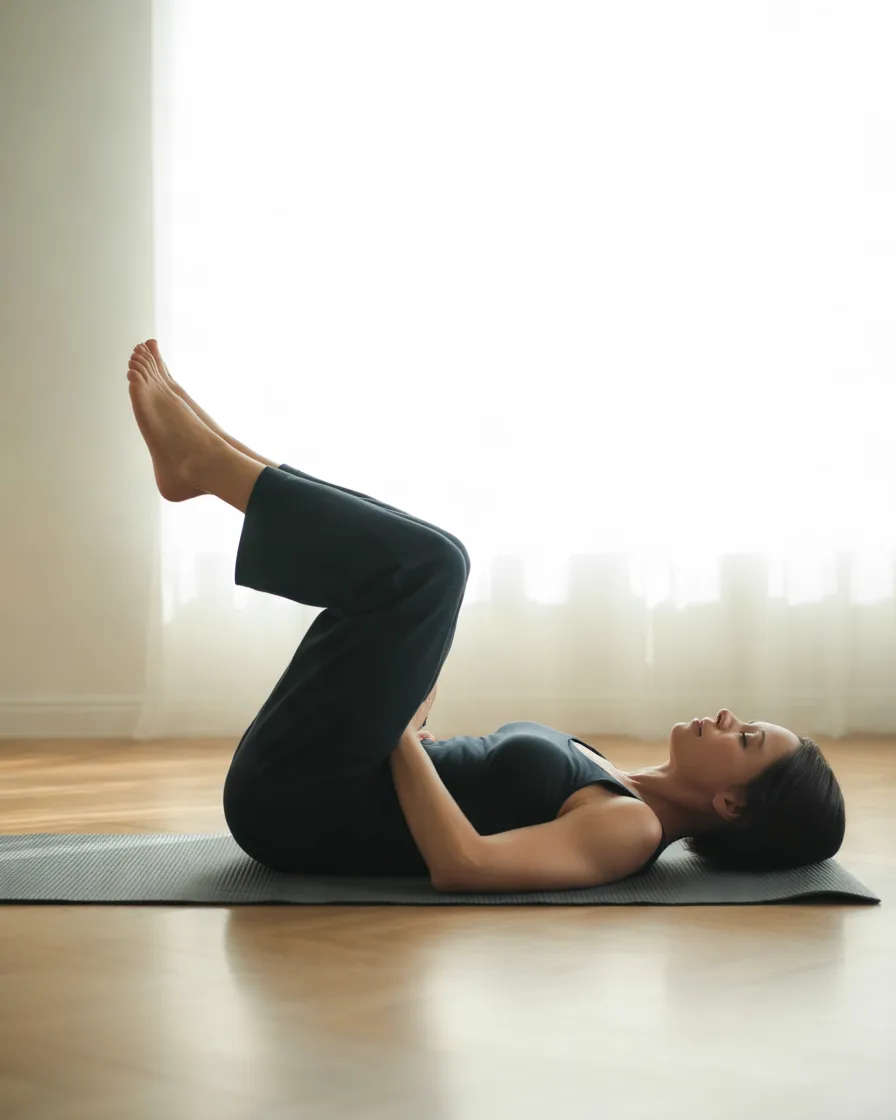
The glute bridge is the best place to start any home glute workout, because it teaches your glutes to switch on without loading your knees or lower back. In the photo, a woman lies on her back on a grey yoga mat, knees bent with feet flat on the floor and hips lifted high, arms by her sides, her body forming a straight line from shoulders to knees.
This move may help strengthen the gluteus maximus, the largest muscle in the buttocks, and can support better hip stability. Because your back stays on the floor, it is gentle on the spine and a good choice if squats feel uncomfortable.
How to do it: Lie on your back with your knees bent and your feet flat on the floor, about hip-width apart and close enough that your fingertips can almost touch your heels. Press through your heels, squeeze your glutes, and lift your hips until your body forms a straight line from shoulders to knees. Pause for two seconds, then lower slowly without arching your lower back. Try 3 sets of 12 to 15 repetitions.
Who it may suit: Beginners, people returning to exercise after a break, and anyone who wants a low-impact way to activate the glutes.
Important considerations: If your hamstrings cramp, move your feet a little closer to your body. Stop if you feel sharp pain in your lower back, and keep the movement slow rather than bouncing at the top.
2. Hip Thrust Using a Couch
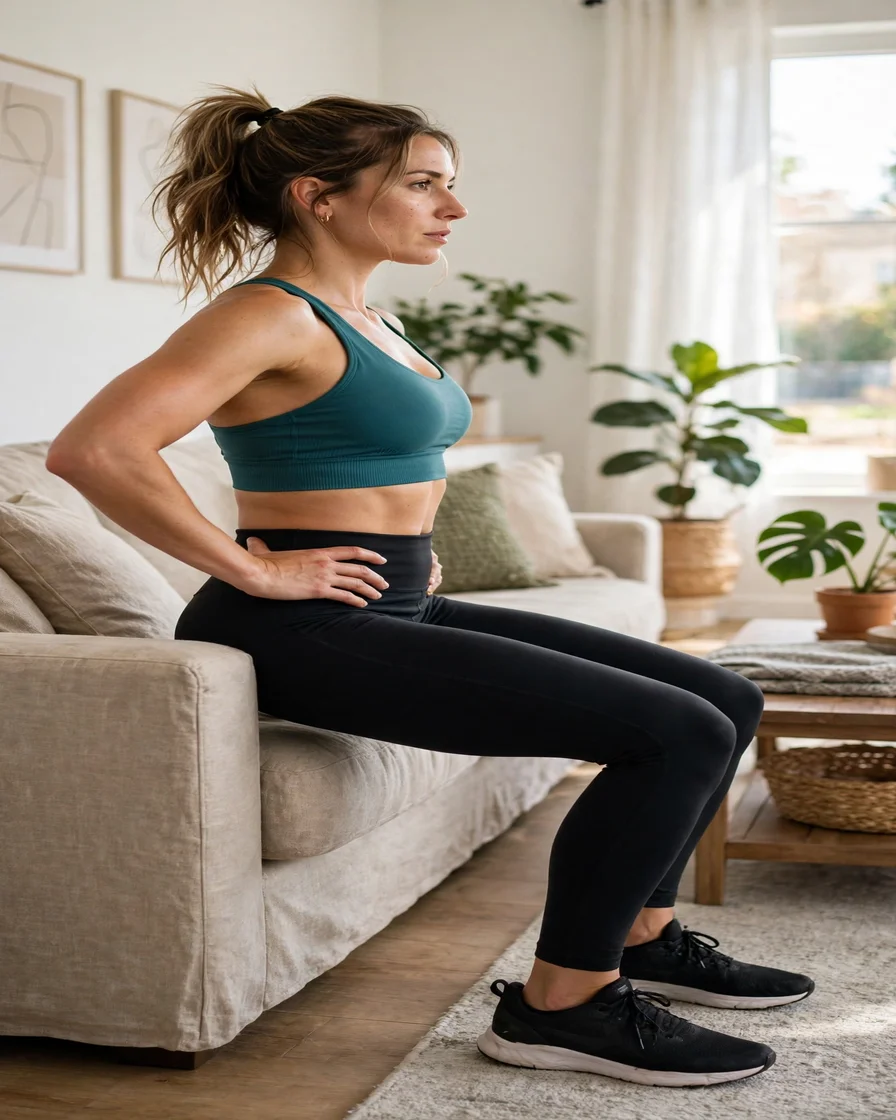
The hip thrust is the glute bridge’s stronger cousin, and your sofa makes it possible at home. In the photo, a woman rests her upper back on the edge of a beige sofa, feet flat on the floor, knees bent, hips driven up so her torso is level. The raised shoulder position gives the glutes a longer range to work through than a floor bridge.
This move can help build glute strength and power more than most bodyweight exercises, which may support climbing stairs, running, and standing up from a low chair.
How to do it: Sit on the floor with your upper back against the edge of a sturdy sofa or low chair and your feet flat on the floor, knees bent. Lean back so your shoulder blades rest on the sofa edge, then drive through your heels and lift your hips until your torso is level, with your chin tucked and your ribs down. Squeeze your glutes hard for two seconds, then lower with control. Try 3 sets of 10 to 12 repetitions.
Who it may suit: People who already feel comfortable with the glute bridge and want a harder challenge.
Important considerations: Make sure the sofa cannot slide away from you, and keep the weight in your heels. If your lower back arches, shorten the range. People with back pain should start with the floor bridge first.
3. Bulgarian Split Squat
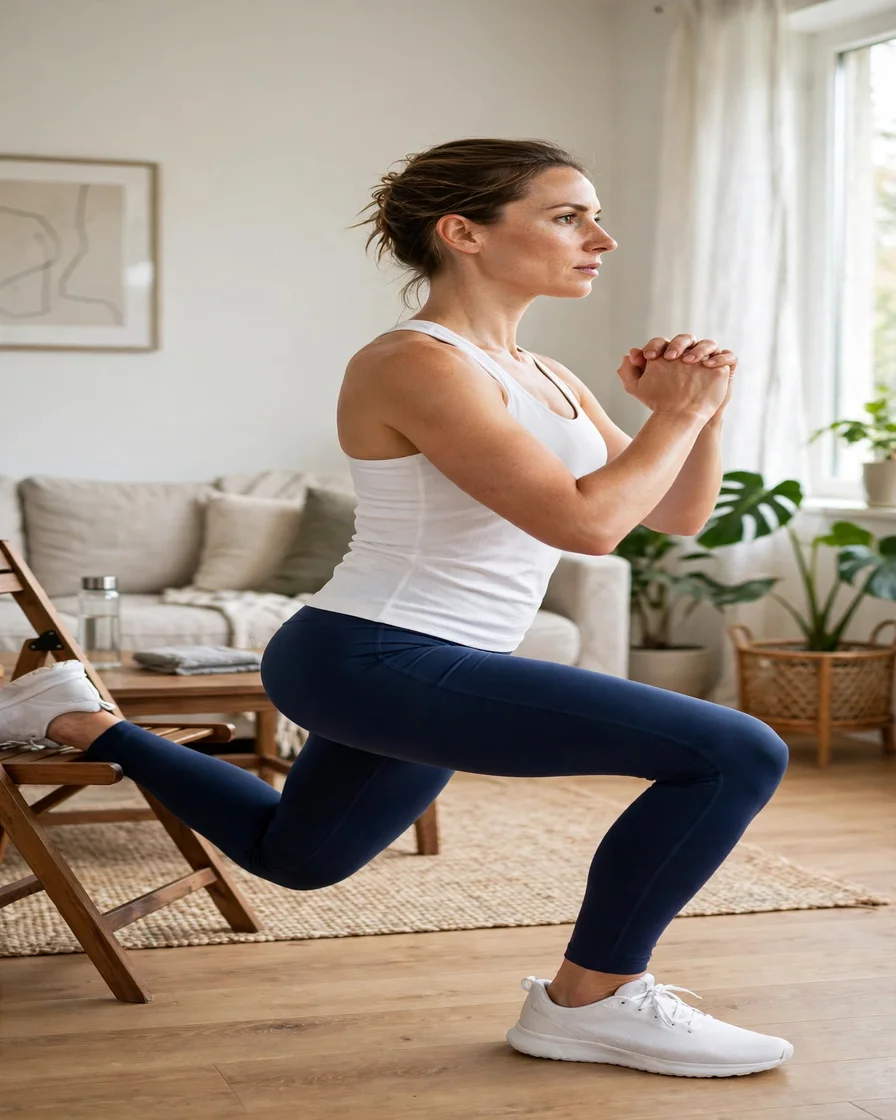
The Bulgarian split squat looks simple and feels anything but. In the photo, a woman stands with her rear foot resting on a low wooden chair behind her, her front leg bent deeply in a lunge with the knee over the ankle, her torso upright and her hands clasped in front of her chest. Working one leg at a time means the glutes cannot rely on the stronger side.
This move may help build single-leg strength and balance, which can support steadier walking and stair climbing. It also stretches the hip flexors of the rear leg, a bonus for people who sit for long hours.
How to do it: Stand a step in front of a sturdy chair and place the top of one foot on it behind you. Lower straight down by bending the front knee, keeping your chest tall and most of your weight in the front heel. Stop when your front thigh is near parallel to the floor, then press up. Try 3 sets of 8 to 10 repetitions per leg.
Who it may suit: Intermediate exercisers who want a real challenge without weights, and anyone working on balance or evening out strength between the legs.
Important considerations: Hold a wall or chair for balance if you wobble. If your front knee hurts, shorten the range and keep the knee over the second toe. Go slowly; rushing is the most common mistake.
4. Sumo Squat
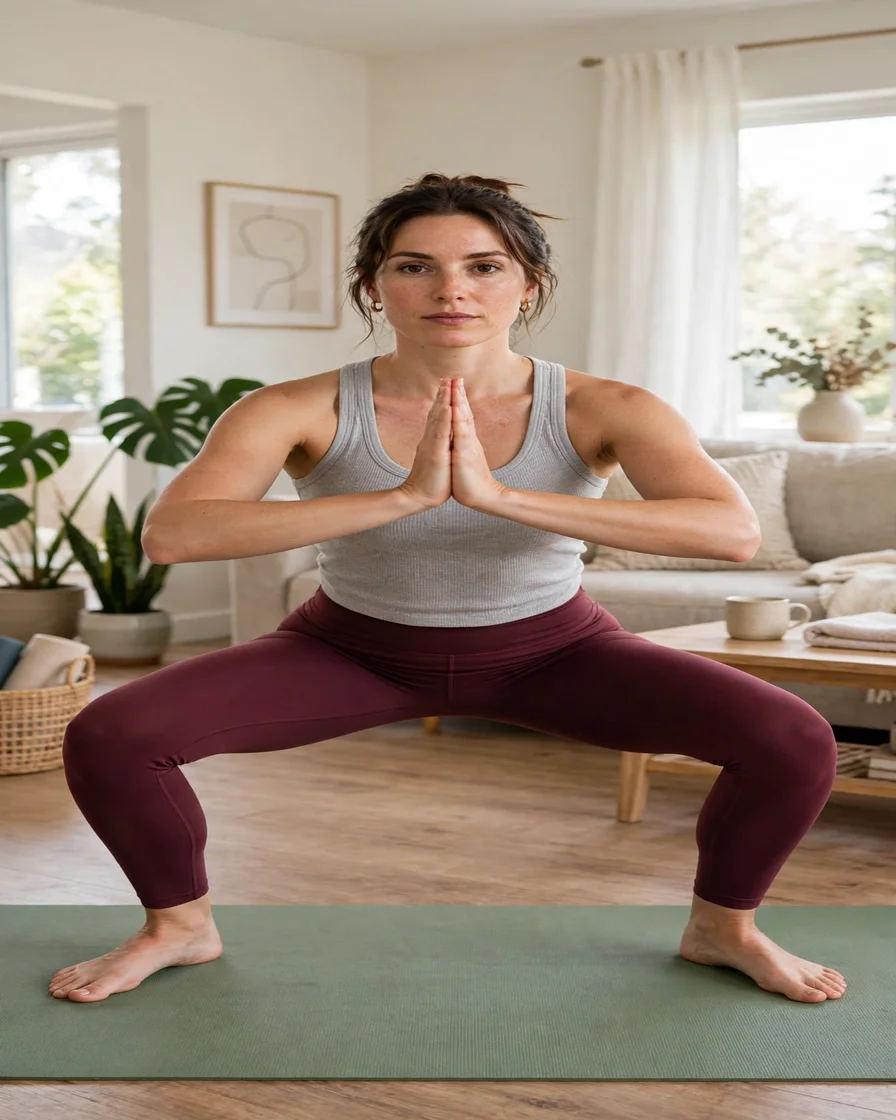
The sumo squat changes the angle of a regular squat so the glutes and inner thighs work harder. In the photo, a woman stands with feet wide apart and toes turned out, hips lowered into a deep squat with knees tracking over toes, hands clasped at chest height. The wide stance lets her sit back into her hips rather than folding forward.
This move can help strengthen the glutes, inner thighs, and quads together, and may support hip mobility over time. It also suits people who find narrow squats uncomfortable on the knees.
How to do it: Stand with your feet wider than shoulder-width apart, toes turned out at about 45 degrees. Push your hips back and bend your knees to lower down, keeping your chest up and your knees in line with your toes. Pause at the bottom, squeeze your glutes, and press through your heels to stand. Try 3 sets of 12 to 15 repetitions.
Who it may suit: Most fitness levels, including beginners, since the wide base feels stable. It also suits people who want a squat that places more emphasis on the glutes and inner thighs.
Important considerations: Do not let your knees collapse inward. If your heels lift, widen your stance slightly or reduce the depth, and avoid bouncing at the bottom.
5. Donkey Kick
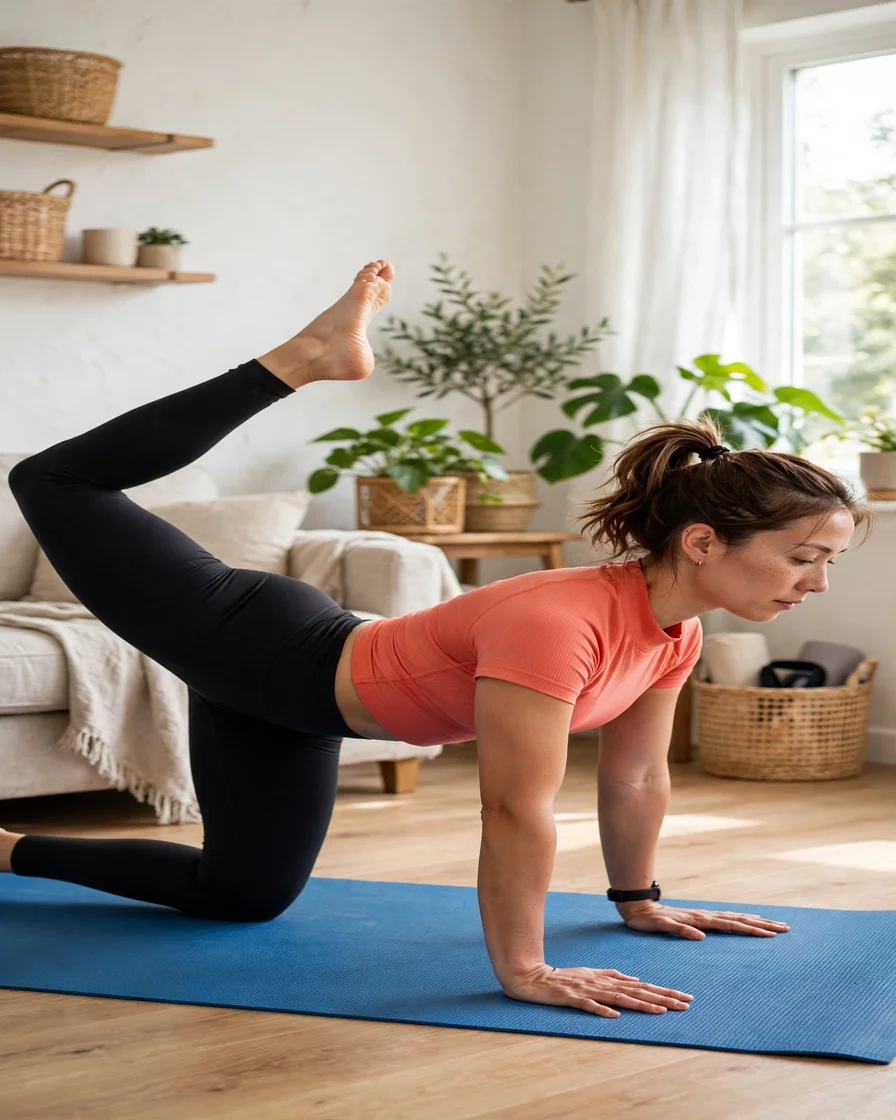
The donkey kick isolates the glutes with almost no equipment and very little joint stress. In the photo, a woman is on all fours on a blue yoga mat, hands under shoulders and knees under hips, with one leg bent at 90 degrees and lifted behind her so the sole of her foot faces the ceiling. Her back stays flat and her core steady, which is the key to making the glutes do the work.
This move may help strengthen the gluteus maximus on each side separately and can support hip stability. Because the spine stays neutral, it is a gentle option for people who need to avoid loaded squats.
How to do it: Start on all fours with hands under shoulders and knees under hips. Keep one knee bent at 90 degrees and lift that foot toward the ceiling, squeezing your glute at the top without letting your lower back arch. Lower slowly. Try 3 sets of 12 to 15 repetitions per leg.
Who it may suit: Beginners, people with knee sensitivity who prefer floor work, and anyone adding a finishing move at the end of a leg session.
Important considerations: Move only the leg, not the lower back. If you feel it in your back, reduce the height of the kick; a resistance band above the knees can add difficulty later.
6. Fire Hydrant
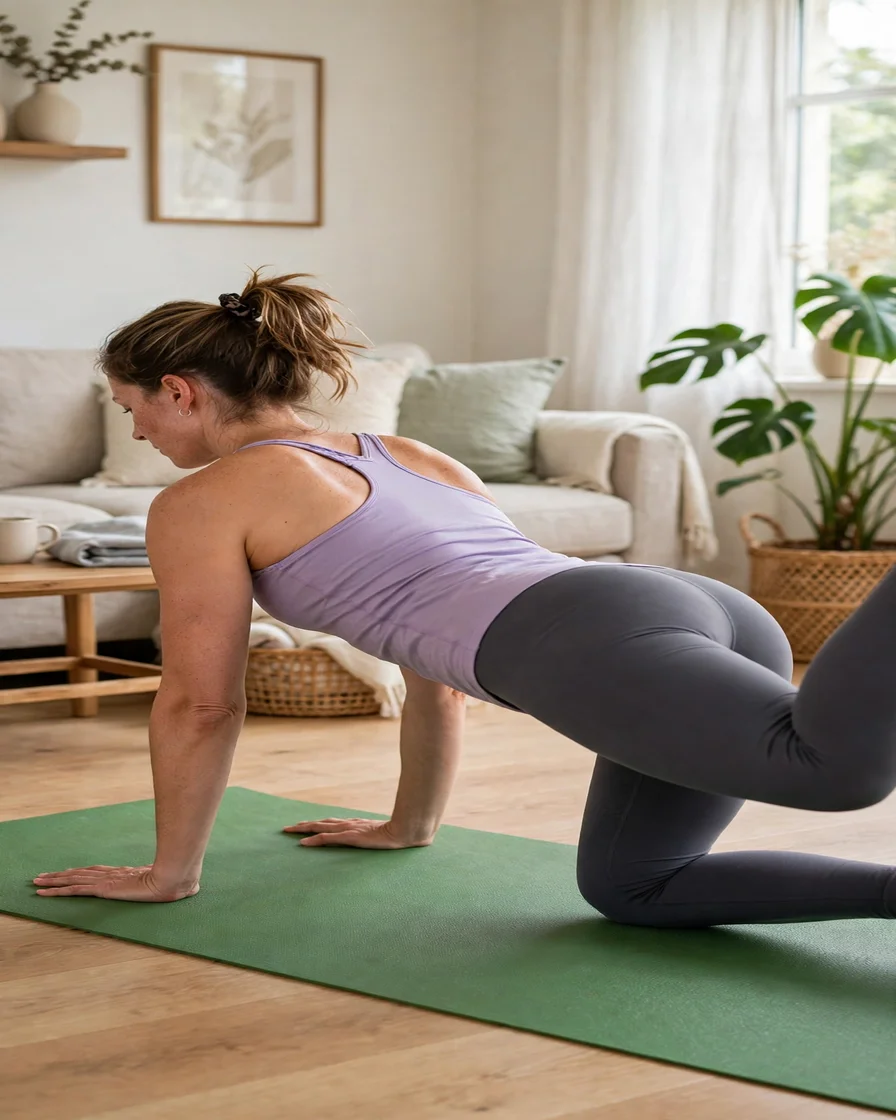
The fire hydrant targets the gluteus medius, the smaller muscle on the side of the hip that keeps your pelvis level when you walk. In the photo, a woman is on all fours on a green yoga mat with one knee lifted out to the side at hip height, the knee still bent at 90 degrees, her hips level and her back flat.
This move may help improve hip stability and balance, and can support knee alignment during walking, running, and squatting. Weak side hip muscles are a common reason knees drift inward.
How to do it: Start on all fours with hands under shoulders and knees under hips. Keeping the knee bent, lift one knee out to the side to about hip height, without letting your hips tilt or your weight shift. Pause briefly, then lower with control. Try 3 sets of 12 repetitions per side.
Who it may suit: Runners, walkers, and anyone who notices their knees caving inward during squats or stairs.
Important considerations: Only lift as high as you can without tipping your hips. Keep your core braced and your neck in line with your spine. If your wrists ache, try the move on your forearms instead.
7. Step-Up
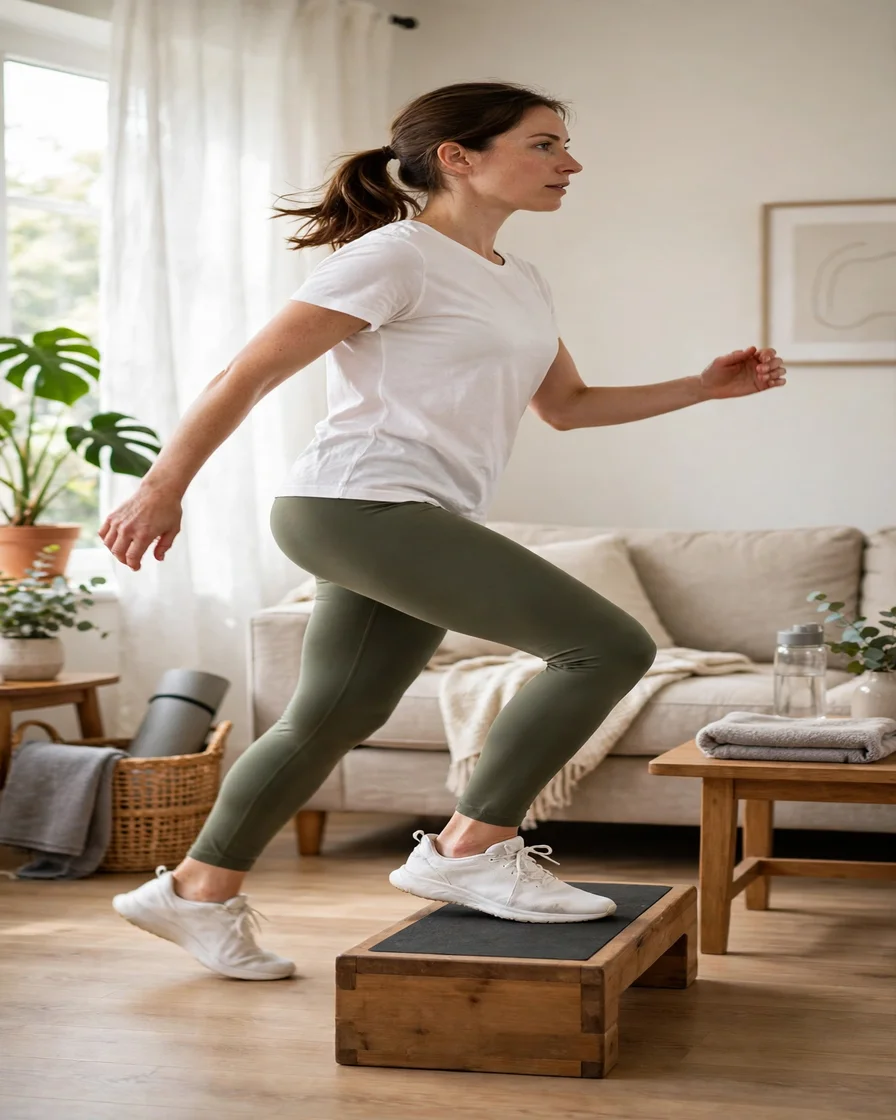
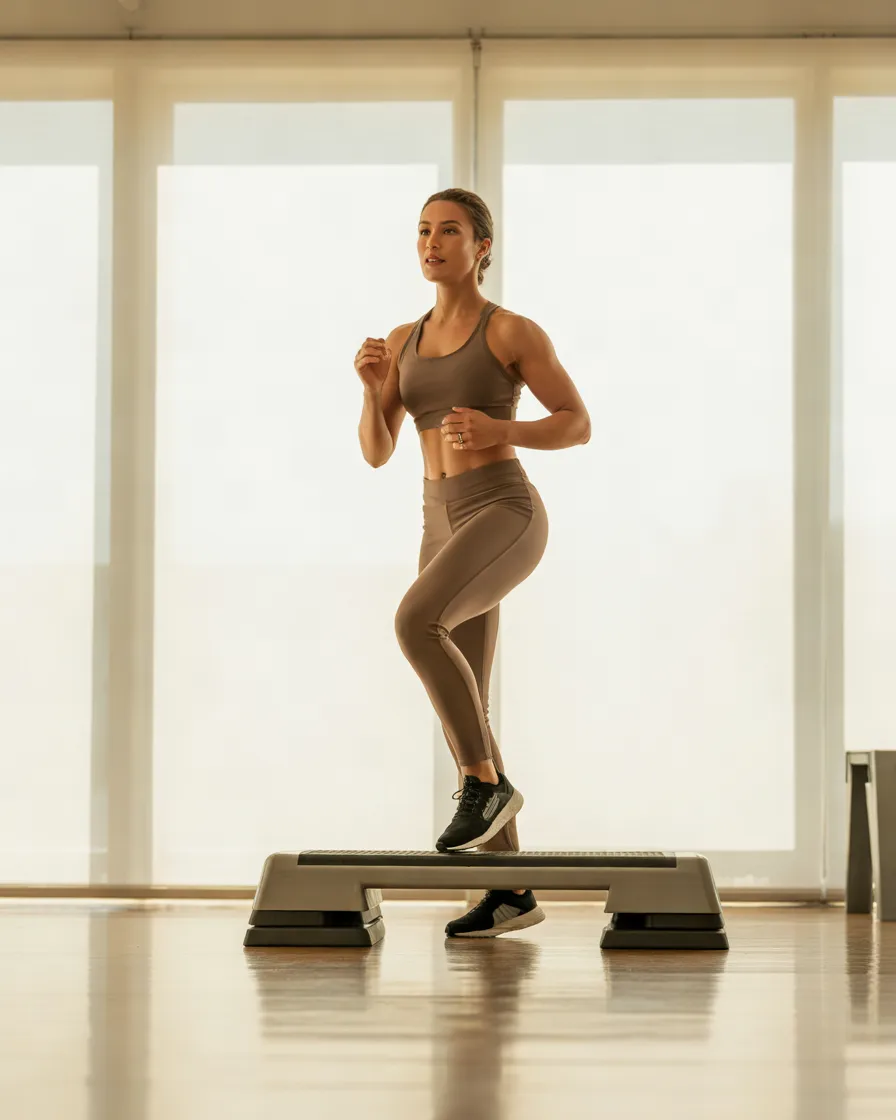
The step-up is one of the most practical moves in this home glute workout, because it copies something you do every day. In the photo, a woman steps up onto a sturdy low wooden platform, one foot planted flat on the step with the knee bent, the other foot just leaving the floor. The leading leg does almost all the work, which makes it a strong single-leg strength builder.
This move may help strengthen the glutes, quads, and calves, and can support balance and coordination. It is also a good way to build confidence on stairs.
How to do it: Stand facing a sturdy step, low stool, or the bottom stair. Place one foot flat on the step, press through that heel, and step up, bringing the other foot beside it. Step back down with control, leading with the same leg for the whole set before switching. Try 3 sets of 10 repetitions per leg.
Who it may suit: Most fitness levels, including older adults building leg strength for daily life, as long as balance is steady.
Important considerations: Use a step that cannot tip or slide, and keep it low enough that your knee stays below hip height at the start. Avoid pushing off the floor foot; the stepping leg should do the lifting. Hold a wall or rail if your balance is uncertain.
8. Curtsy Lunge
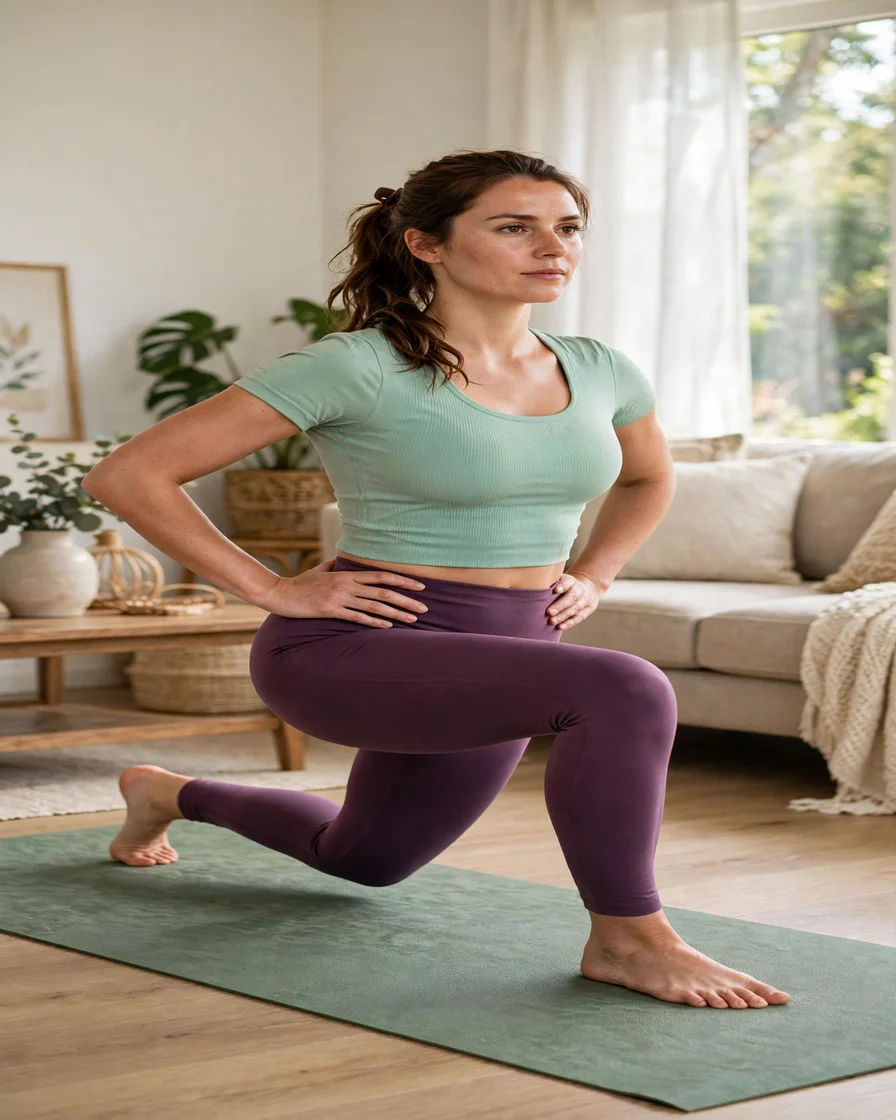
The curtsy lunge moves the legs in a diagonal line, which challenges the glutes in a different direction from a straight squat or lunge. In the photo, a woman stands on a yoga mat with one leg stepped back and across behind the other, both knees bent low, torso upright and hands on her hips. The crossing step places extra demand on the gluteus medius of the standing leg.
This move may help improve lateral hip strength, balance, and coordination, which can support steadier movement during sports and everyday side-to-side steps.
How to do it: Stand tall with your feet hip-width apart. Step one foot back and diagonally behind the other leg, then bend both knees to lower into a lunge, keeping your chest up and your front knee tracking over your toes. Press through the front heel to return to standing. Try 3 sets of 10 repetitions per leg.
Who it may suit: Intermediate exercisers who want variety beyond forward lunges, and anyone working on balance and side-hip strength.
Important considerations: Keep the step small and controlled; a very wide cross can strain the knee. If balance is a problem, hold a chair and shorten the range.
9. Single-Leg Romanian Deadlift
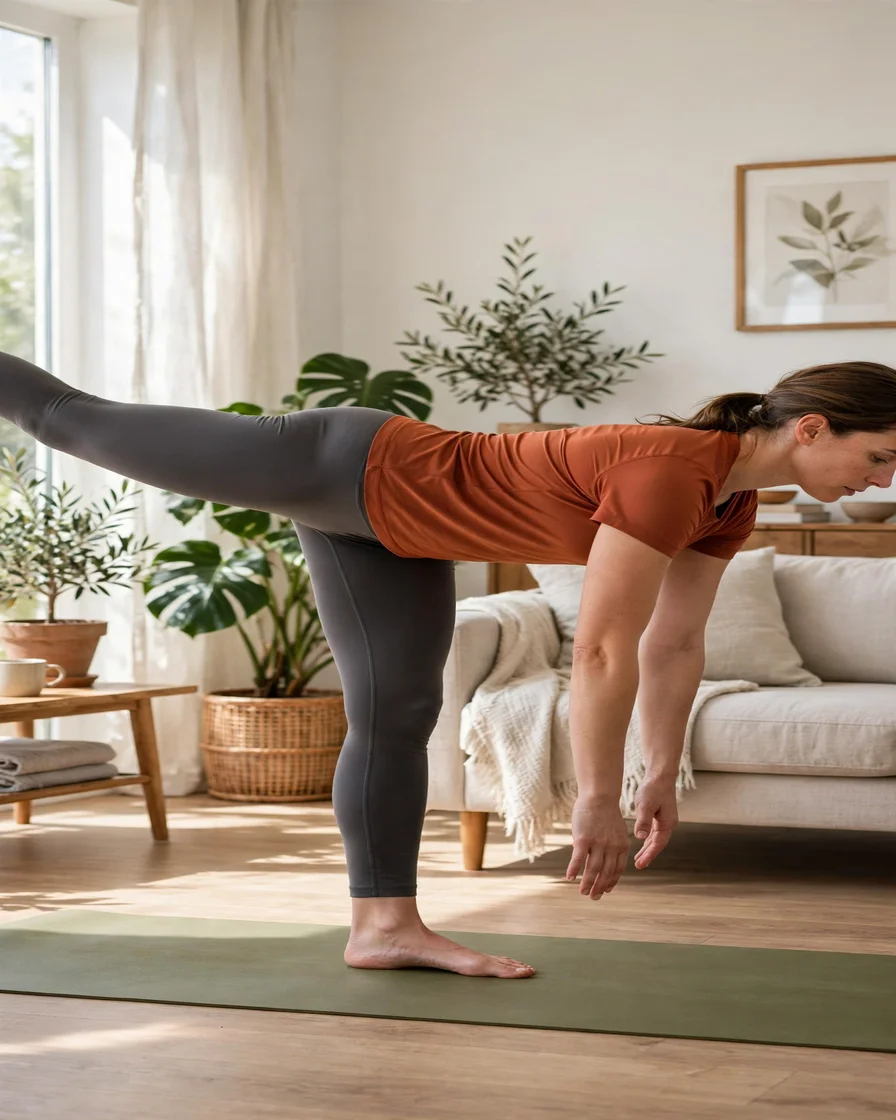
The single-leg Romanian deadlift is the most balance-heavy move in this list, and one of the most rewarding. In the photo, a woman stands on one leg on a yoga mat, torso hinged forward nearly parallel to the floor, free leg extended straight behind her, arms reaching down, back flat and hips square. The hinge pattern trains the glutes and hamstrings together.
This move may help strengthen the glutes and hamstrings, improve balance, and support better posture by teaching the hips to hinge instead of the lower back rounding.
How to do it: Stand on one leg with a soft bend in the knee. Hinge forward at the hips, letting your free leg extend behind you as your torso lowers, keeping your back flat and your hips level. Lower until you feel a gentle stretch in the back of the standing leg, then drive through the heel and squeeze your glute to return to standing. Try 3 sets of 8 repetitions per leg.
Who it may suit: Intermediate to advanced exercisers and runners.
Important considerations: Keep a wall or chair nearby for light fingertip support while learning. Do not round your lower back; if you cannot keep it flat, reduce the range. People with balance problems or recent ankle injuries should skip this move or ask a professional first.
10. Lateral Band Walk
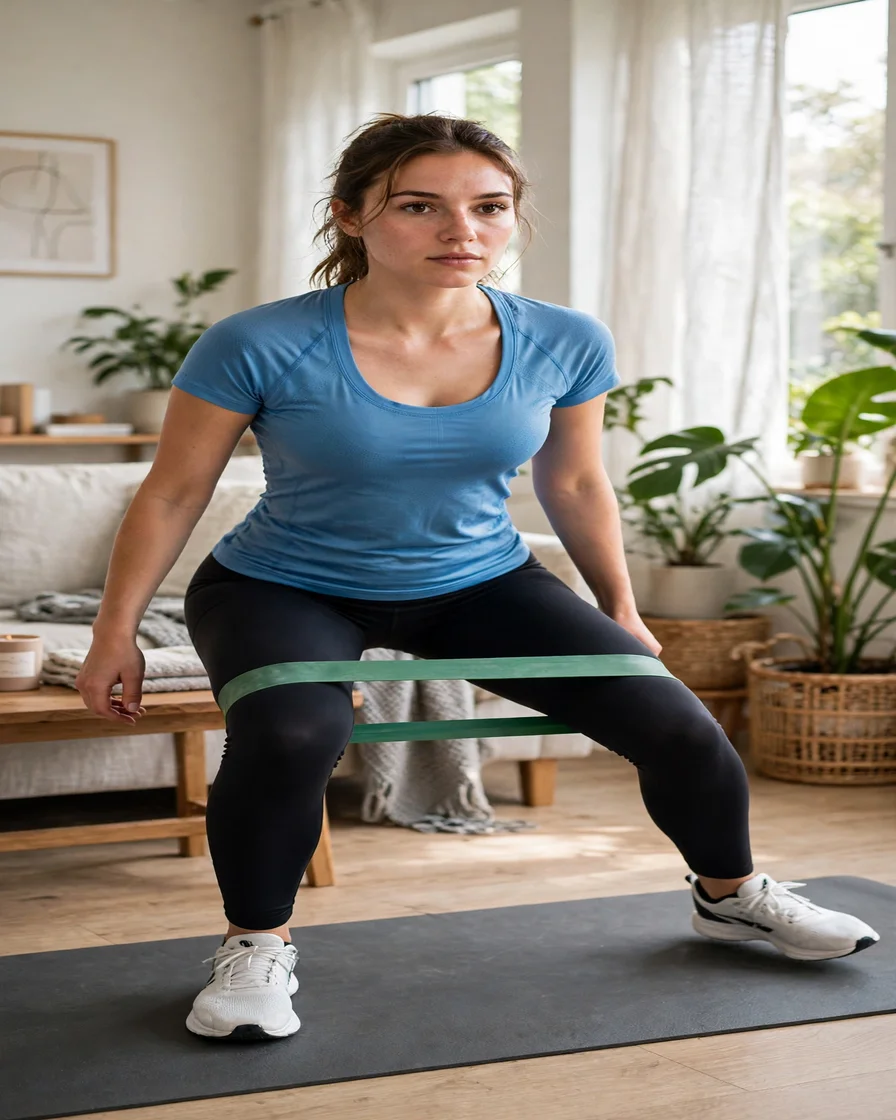
The lateral band walk is a small, controlled move that burns quickly. In the photo, a woman holds a half-squat position on a yoga mat with a green resistance loop band around her legs just above the knees, stepping sideways with one foot while the other stays planted. The band keeps the side hip muscles under constant tension.
This move may help strengthen the gluteus medius and minimus, which can support knee tracking and hip stability during walking, running, and squatting. It is often used in warm-ups and knee rehabilitation programmes.
How to do it: Place a loop resistance band just above your knees and stand in a half squat, feet hip-width apart. Step sideways with one foot, keeping tension on the band, then bring the other foot in without letting your knees collapse. Take 10 steps in one direction, then 10 back. Try 3 sets.
Who it may suit: Almost everyone, including beginners and runners. It is low impact and works well as a warm-up.
Important considerations: Choose a light band to start; a band that is too strong will pull your knees inward and spoil your form. Keep your chest up and your steps small and controlled. If you have knee pain, keep the squat shallow.
11. Frog Pump
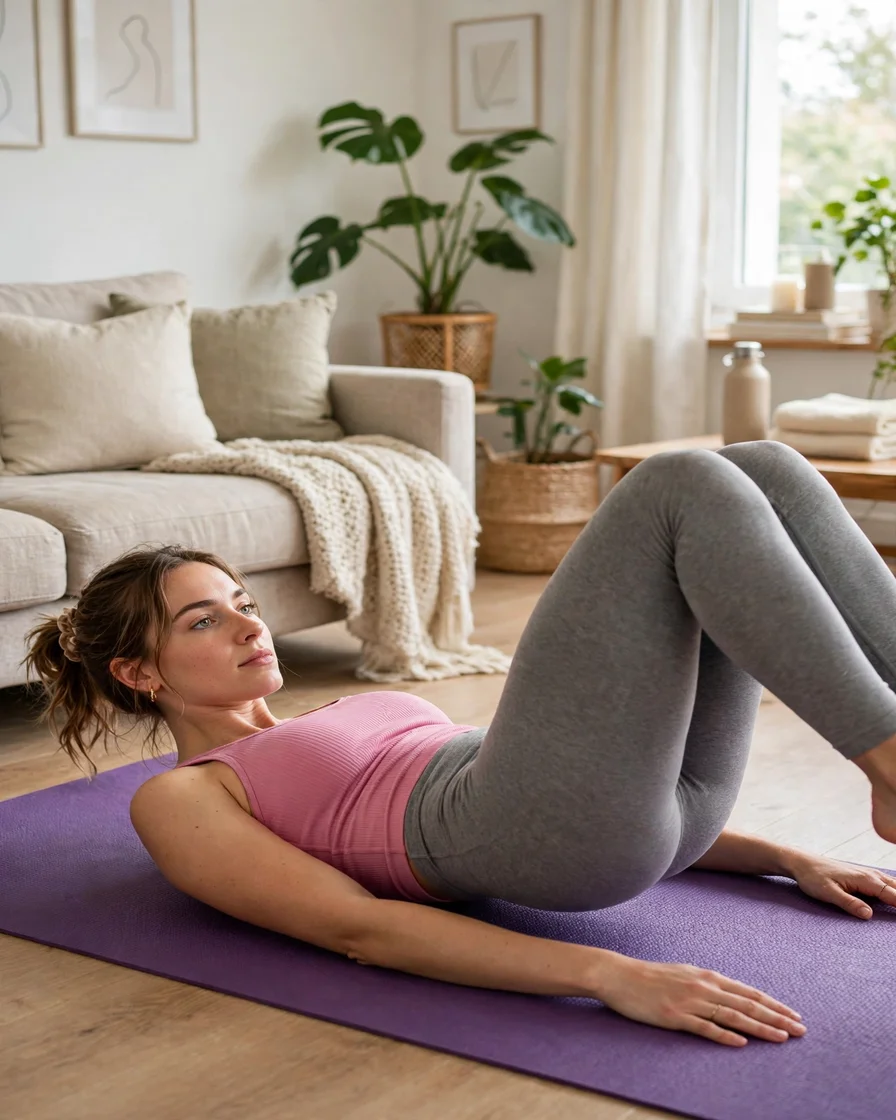
The frog pump is a glute bridge variation with the feet in a diamond shape, which changes the angle and can make the glutes work harder at the top. In the photo, a woman lies on her back on a purple yoga mat with the soles of her feet pressed together and her knees fallen open wide, her hips lifted off the mat with her glutes squeezed at the top.
This move may help isolate the glutes and can support hip mobility, since the open-knee position gently stretches the inner thighs.
How to do it: Lie on your back and press the soles of your feet together, letting your knees fall open. Press through the outer edges of your feet, squeeze your glutes, and lift your hips, pausing for two seconds at the top. Lower slowly. Try 3 sets of 15 repetitions.
Who it may suit: People who already enjoy the glute bridge and want a variation, and anyone looking for a gentle floor move to finish a session.
Important considerations: Do not force your knees toward the floor; only open them as far as feels comfortable. If your knees ache, return to a regular glute bridge. Keep your lower back from arching by bracing your core lightly.
12. Wall Sit With Glute Squeeze
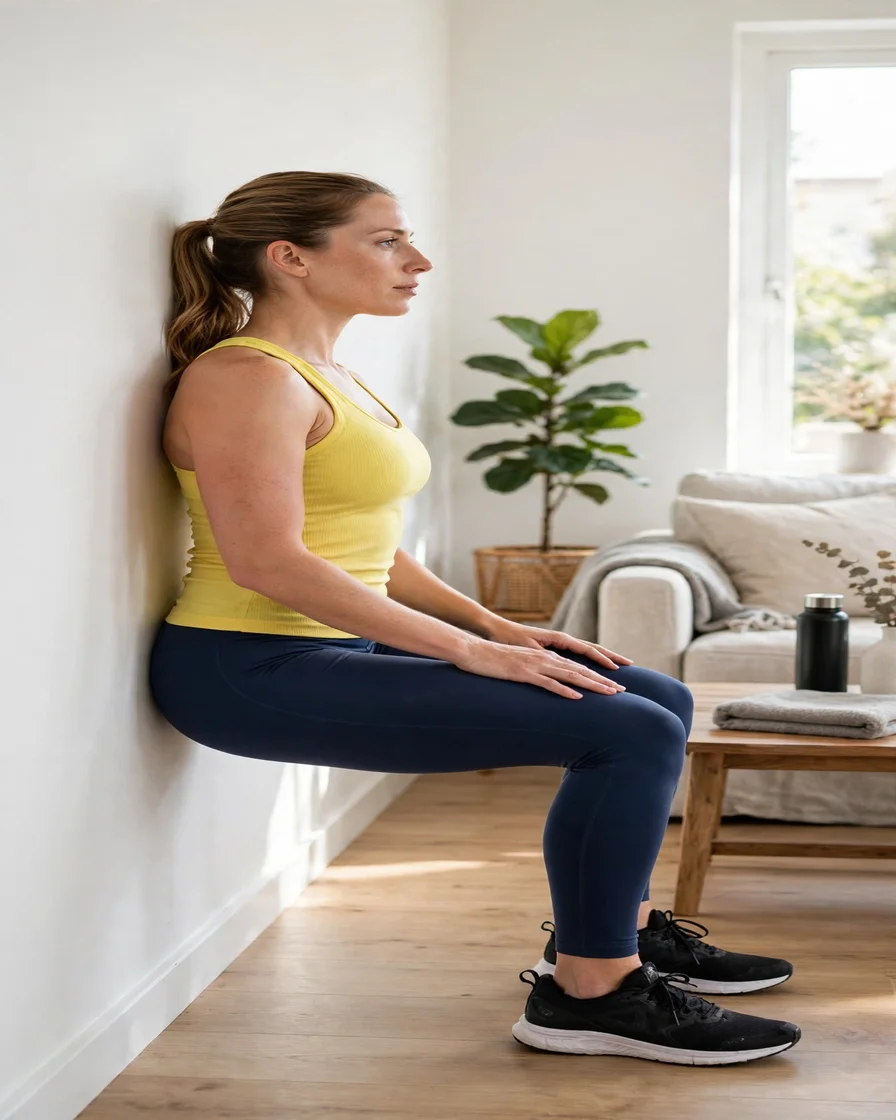
The wall sit is an isometric hold, which means the muscles work hard without moving, and adding a deliberate glute squeeze turns it into a glute exercise. In the photo, a woman stands with her back flat against a plain white wall, knees bent at 90 degrees as if sitting in an invisible chair, feet flat on the floor, hands resting on her thighs.
This move may help build endurance in the glutes, quads, and core, and can support knee stability since the joint stays in one safe position.
How to do it: Stand with your back against a wall and walk your feet out until your knees bend to about 90 degrees when you slide down. Press your lower back into the wall, keep your feet flat, and squeeze your glutes. Hold for 20 to 30 seconds, breathing steadily, then stand up and rest. Try 3 holds.
Who it may suit: Beginners, people building basic leg endurance, and anyone who wants a low-impact move that needs no equipment and no floor space.
Important considerations: Keep your knees over your ankles. Breathe normally; holding your breath raises blood pressure. If you feel dizzy or sharp knee pain, stand up straight away. People with high blood pressure should keep holds short and check with a healthcare professional first.
Expert Tips for Your Home Glute Workout
Start with the moves you can do well, not the ones that look impressive. Good form matters far more than the number of repetitions, and the glutes respond best to slow, controlled movement with a real squeeze at the hardest point of each rep. If you cannot feel your glutes working, slow down, reduce the range, and focus on the muscle instead of adding reps.
Train your glutes two or three times a week, with at least one rest day between sessions, since muscles adapt and grow stronger during recovery. Keep a short log of sets and reps, and make a move harder only when the current version feels easy for the full set, for example by adding a resistance band, holding a filled backpack, or adding two or three reps.
Pair your routine with everyday movement: walking, taking the stairs, and standing up regularly all give your glutes extra work between sessions. Eat enough protein across the day and sleep well, since both support muscle recovery. If progress stalls, check the basics: are you training regularly, resting enough, and doing each rep with full control?
FAQs
How often should I do a home glute workout?
Two or three sessions a week is a sensible starting point, with at least one rest day between sessions. This gives the muscles time to recover and adapt. If you are new to exercise, start with two shorter sessions and build up gradually.
Can I build glute strength at home without weights?
Yes, bodyweight moves such as glute bridges, Bulgarian split squats, and single-leg deadlifts can build real strength, especially for beginners. As the moves get easier, add resistance with a loop band, a filled backpack, or a water jug.
How long does it take to see results from a home glute workout?
Most people notice better balance and easier stairs within a few weeks, while visible changes in muscle shape usually take at least eight to twelve weeks of consistent training. Results vary a great deal depending on starting fitness, training frequency, sleep, and eating habits.
Will a home glute workout help my lower back pain?
Stronger glutes can support the hips and take some load off the lower back during daily movement. That said, back pain has many causes, and exercise is not a treatment on its own. If your pain is ongoing, severe, or new, speak with a healthcare professional before starting.
What is the best warm-up before a home glute workout?
Five minutes of easy movement works well: march in place, do slow bodyweight squats, swing each leg gently forward and back, and finish with ten glute bridges. The goal is to warm up the glutes, not to tire yourself out before the main session.
Conclusion
A home glute workout does not need fancy equipment or a long time commitment. Twelve moves, a mat, and a sturdy chair are enough to build stronger hips, steadier balance, and more comfortable everyday movement. Start with the moves that feel manageable, focus on slow and controlled form, and train two or three times a week with rest in between.
Remember that no exercise can remove fat from one body part alone, and results vary from person to person. What you can realistically expect is stronger glutes, better stability, and movement that feels easier over time. If you have an injury or a medical condition, check with a healthcare professional before you begin, warm up every time, and listen to your body.