You do not need a gym membership, a treadmill, or a single piece of equipment to get your heart pumping. Your living room floor is enough. A good cardio workout at home can raise your heart rate, build stamina, and support your overall fitness — all in the space between your sofa and the TV.
Many people put off cardio because they think it means long runs or crowded gyms. In reality, it simply means moving in a way that keeps your heart rate up for a sustained period. Combined with sensible eating and regular activity, this kind of movement may help support a healthy weight over time. Fat burning depends on many factors — your diet, sleep, stress, genetics, and how consistently you move — so no single workout can promise a specific result. What these moves can do is help you build a stronger heart, better endurance, and a habit you can actually stick with.
Below you will find 10 cardio workout at home fat burning moves. Each one includes step-by-step form cues, suggested timing, and joint-friendly modifications. Warm up for 3 to 5 minutes first — a slow march in place and some gentle arm circles work well — and keep a bottle of water nearby.
1. Jumping Jacks
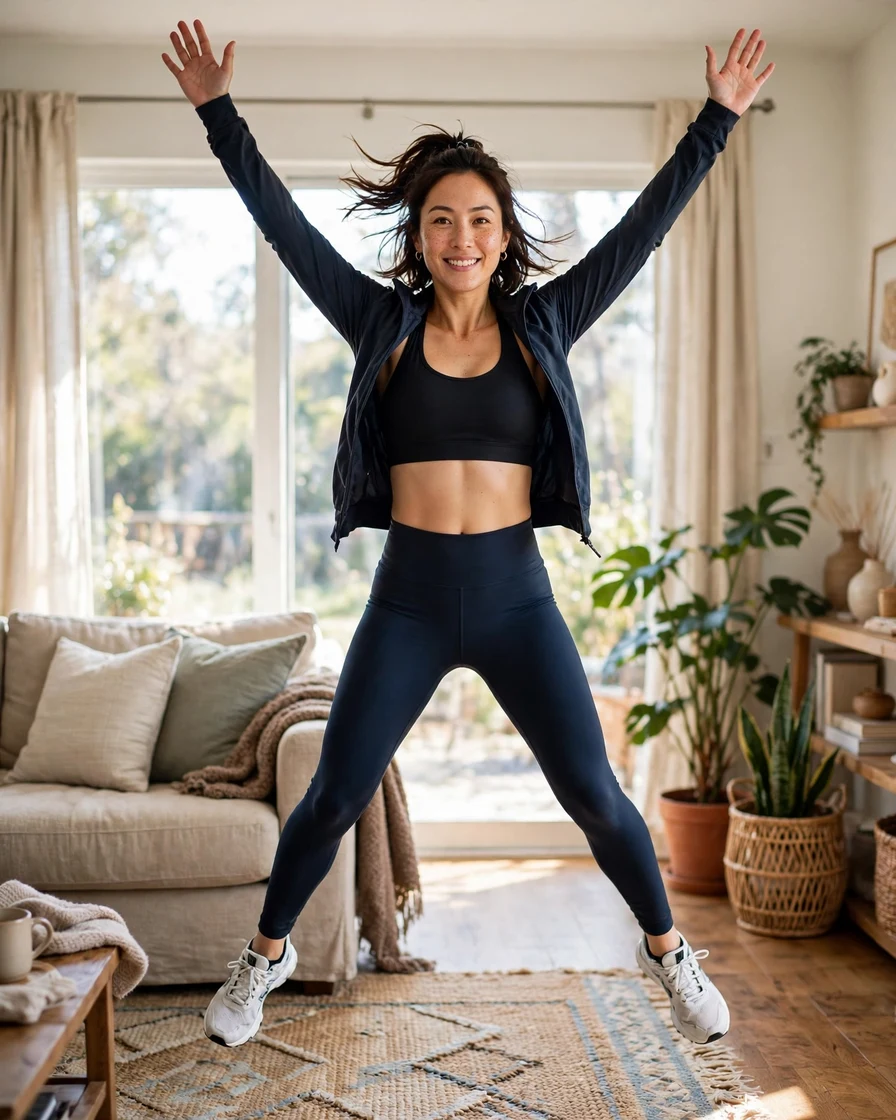
Jumping jacks are one of the simplest ways to raise your heart rate, and they need no equipment at all. They work your legs, arms, and core at the same time, which makes them a useful warm-up move as well as a main part of your routine.
How to do it: Stand tall with your feet together and your arms at your sides. Jump your feet out to the sides while raising your arms overhead. Jump back to the starting position and repeat. Land softly on the balls of your feet, keep your knees slightly bent, and keep your core gently engaged.
Benefits: Jumping jacks may help improve coordination and stamina, and they get your whole body moving in a short time.
Practical tips: If you have downstairs neighbours, do them on a rug or exercise mat to soften the sound. If your shoulders feel tired, bring your arms only to shoulder height.
Suggested duration: 30 to 45 seconds per round, for 2 to 3 rounds, with a short rest between rounds.
Who it may suit: Most beginners and anyone looking for a simple, full-body warm-up. A low-impact version — stepping one foot out at a time instead of jumping — suits people with sensitive knees or ankles.
Important considerations: Stop if you feel pain in your knees, ankles, or lower back. If you have a heart condition, joint problems, or you are new to exercise, check with your doctor before starting a new exercise routine.
2. High Knees

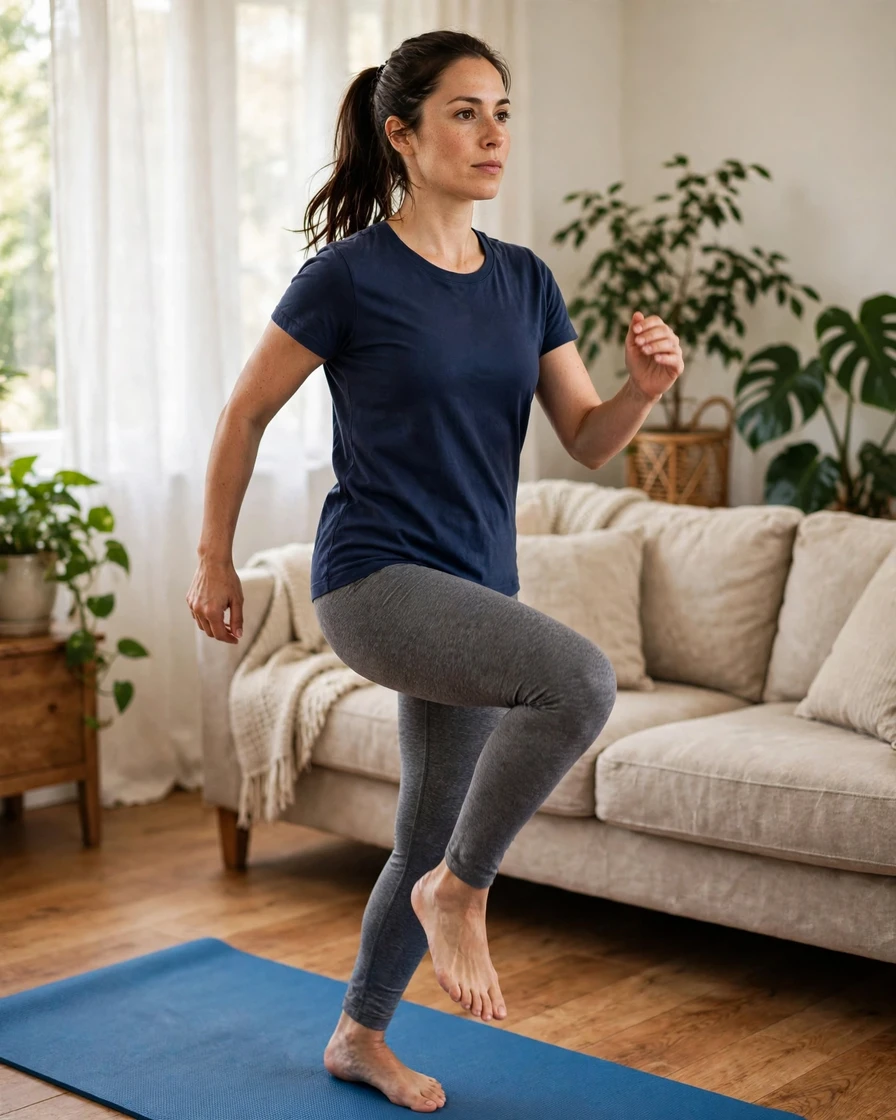
High knees turn running in place into a focused cardio move. Driving your knees up one at a time works your hip flexors, thighs, and core, and the pace is entirely in your control.
How to do it: Stand tall with your feet hip-width apart. Lift your right knee toward your chest while pumping your left arm forward, then switch sides quickly, as if you are running on the spot. Keep your chest up, your core engaged, and land on the balls of your feet. Start slowly and build speed only when your form feels steady.
Benefits: High knees may help improve leg strength, balance, and coordination, while giving your heart a solid workout.
Practical tips: Aim for a knee height that feels comfortable — hip height is plenty for most people. Pump your arms in time with your legs to help your rhythm.
Suggested duration: 30 seconds per round, for 2 to 3 rounds. Beginners can start with 20-second rounds.
Who it may suit: People who enjoy a running-style movement but want to stay indoors. The marching version — lifting knees slowly without jumping — suits beginners and anyone easing back into exercise.
Important considerations: Keep your landings soft and your knees tracking over your toes. If you feel dizzy or short of breath beyond normal effort, slow down and rest. Speak to your doctor first if you have a heart condition or joint problems.
3. Burpees (With a Low-Impact Modification)
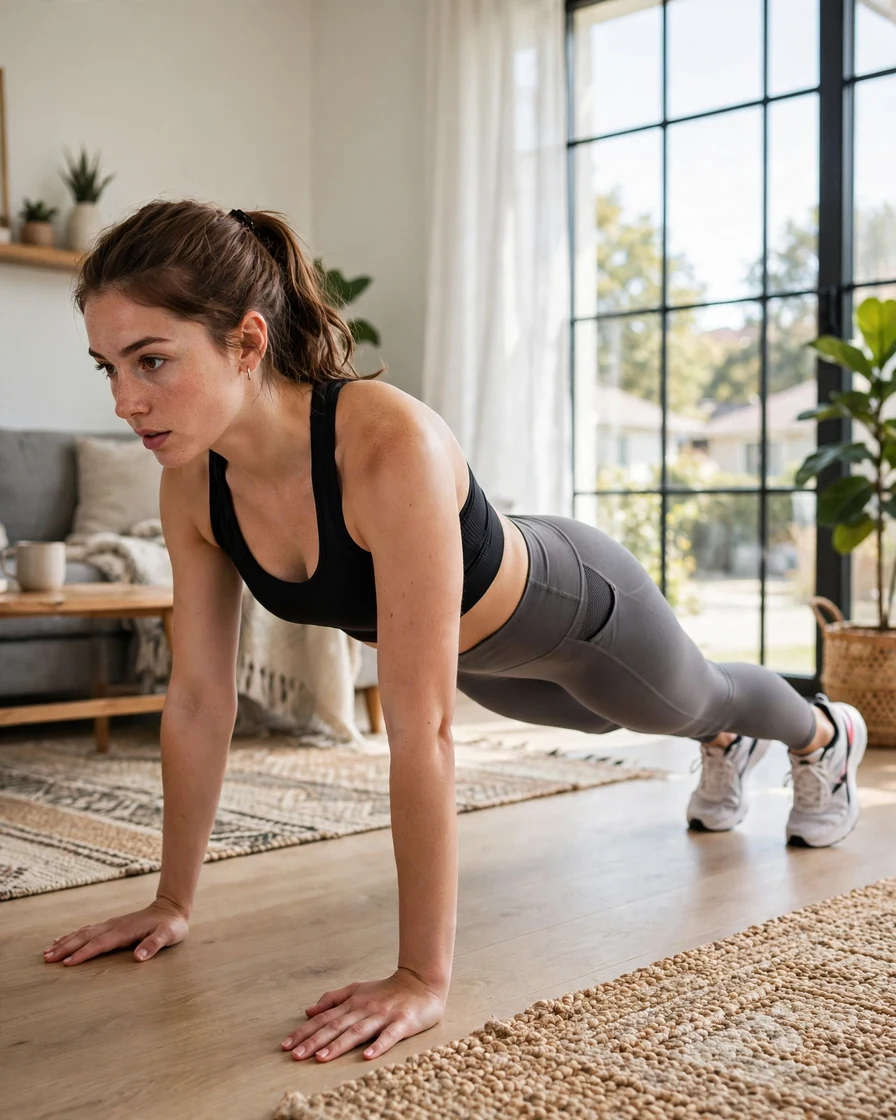
Burpees have a reputation for being tough, and they are — but they are also one of the most efficient full-body cardio moves you can do at home. The good news is that the low-impact version gives you most of the benefit without the hard jump.
How to do it: Stand with your feet shoulder-width apart. Squat down and place your hands on the floor in front of you. Step both feet back into a plank position, keeping your body in a straight line from head to heels. Step your feet back toward your hands, stand up, and reach your arms overhead. For the full version, add a small jump as you stand; for the low-impact version, simply rise onto your toes instead.
Benefits: Burpees work your chest, arms, legs, and core in a single movement, and they can raise your heart rate quickly. They may help build full-body strength and endurance at the same time.
Practical tips: Move at your own pace — slow, controlled burpees still count. Keep your back flat in the plank and avoid letting your hips sag.
Suggested duration: 8 to 10 repetitions per round, for 2 to 3 rounds. Rest for 30 to 60 seconds between rounds.
Who it may suit: People who want a challenging full-body move. The step-back, no-jump version suits beginners, anyone with knee or wrist concerns, and people returning to exercise after a break.
Important considerations: Burpees are demanding, so stop if you feel dizzy, nauseous, or in pain. Never push through chest pain or severe breathlessness — rest and seek medical advice if that happens. Check with your doctor before starting a new exercise routine, especially if you have a heart condition or joint problems.
4. Mountain Climbers
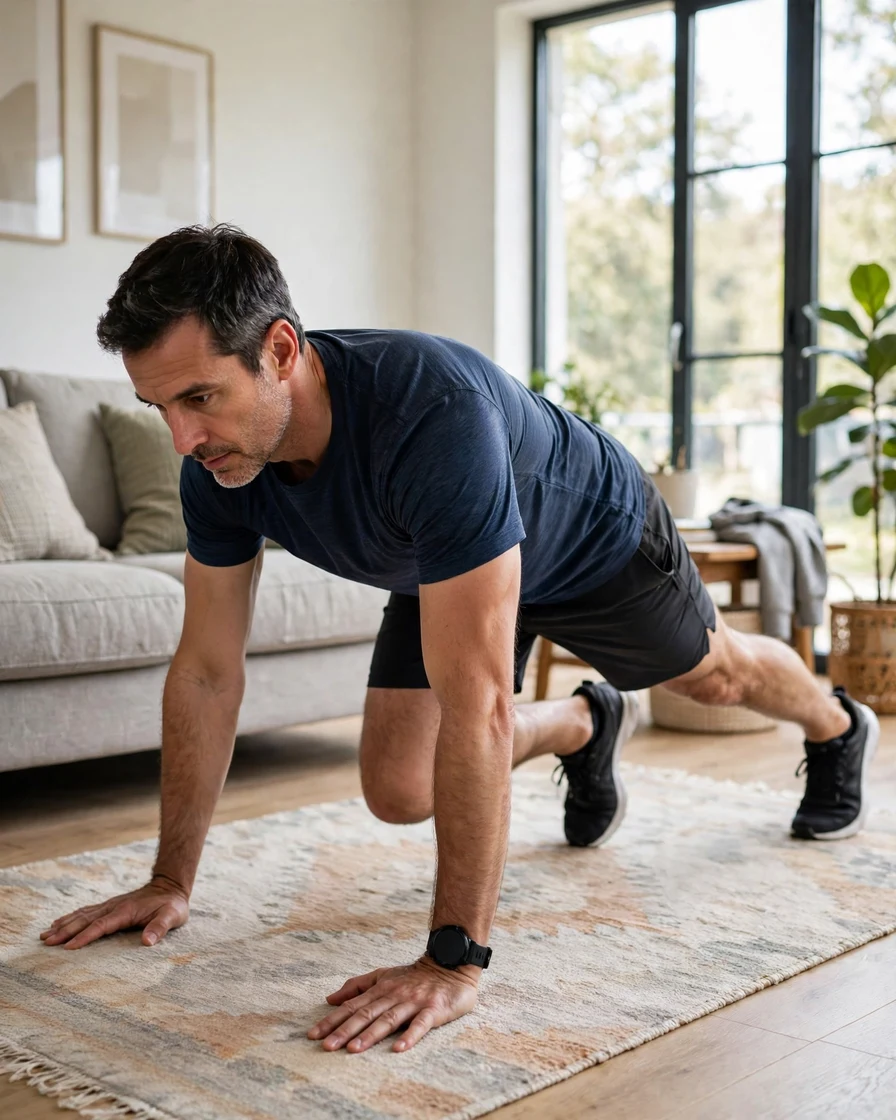
Mountain climbers combine a plank hold with fast leg movement, so your core works hard while your heart rate climbs.
How to do it: Start in a high plank with your hands under your shoulders and your body in a straight line. Drive your right knee toward your chest, then quickly switch and drive your left knee forward. Keep your hips level, your core tight, and your shoulders steady over your hands. Breathe steadily and keep the movement smooth rather than bouncy.
Benefits: Mountain climbers may help strengthen your core, shoulders, and legs while improving coordination. They are also easy to fit into a small space — you only need room for a plank.
Practical tips: Slow the pace down if your hips start to bounce or your lower back sags. Keep your neck in line with your spine by looking at the floor, not forward.
Suggested duration: 30 seconds per round, for 2 to 3 rounds. Beginners can start with 20 seconds and build up gradually.
Who it may suit: People who want a core-focused cardio move. The slow, step-by-step version suits beginners and anyone who finds fast floor work hard on the wrists or shoulders.
Important considerations: Stop if your wrists, shoulders, or lower back hurt. If you are new to exercise or have joint problems, speak to your doctor before adding mountain climbers to your routine.
5. Jump Rope (With a No-Rope Option)

Jump rope is a classic cardio tool for a reason: a few minutes can raise your heart rate, sharpen your coordination, and work your calves, shoulders, and core. If you do not have a rope — or your ceiling is too low — the no-rope version works just as well.
How to do it: Hold the rope handles lightly at your sides with your elbows close to your body. Turn the rope with small wrist circles and jump just high enough to clear it, landing softly on the balls of your feet. Keep your knees slightly bent and your jumps small and relaxed. For the no-rope option, hold your hands as if you were holding handles and make the same small jumps and wrist circles.
Benefits: Skipping may help improve footwork, balance, and stamina. It is also a useful way to add short, sharp bursts of cardio into a longer session.
Practical tips: Choose a rope that reaches your armpits when you stand on its centre. Start with 30-second bursts and rest between them.
Suggested duration: 30 to 60 seconds per round, for 3 to 4 rounds, with 30 seconds of rest between rounds.
Who it may suit: Anyone who enjoys rhythm-based exercise. The no-rope version suits people in small rooms, renters worried about noise, and beginners learning the timing before buying a rope.
Important considerations: Jump rope is high-impact, so take care if you have knee, ankle, or foot problems. Land softly, keep jumps low, and stop if you feel pain or dizziness. Check with your doctor first if you have a heart condition.
6. Dance Cardio

Dance cardio is the most fun move on this list, and that is exactly why it works. When you enjoy what you are doing, you are far more likely to keep going — and consistency matters more than any single workout.
How to do it: Put on a playlist you love and move. Step side to side, add arm reaches, shoulder rolls, or a simple grapevine step. The goal is to keep moving continuously, with your arms and legs working together. Keep your knees soft and your movements within a comfortable range.
Benefits: Dancing may help lift your mood, improve coordination and balance, and support heart health — all while feeling more like play than exercise.
Practical tips: Start with three or four favourite songs, which adds up to about 12 to 15 minutes of movement. Clear a little floor space and wear shoes with some grip. If you are following a video, choose a beginner level first and repeat it until the steps feel natural.
Suggested duration: 10 to 20 minutes, or 3 to 5 songs. Even 10 minutes counts as a useful session.
Who it may suit: Almost everyone — dance cardio suits all ages and fitness levels because you set the pace and the style. It is a good choice if other cardio feels boring or too hard on your joints.
Important considerations: Keep the intensity moderate if you are new to exercise, and stop if you feel dizzy or unwell. As always, check with your doctor before starting a new exercise routine if you have a heart condition or other health concerns.
7. Stair Climbs
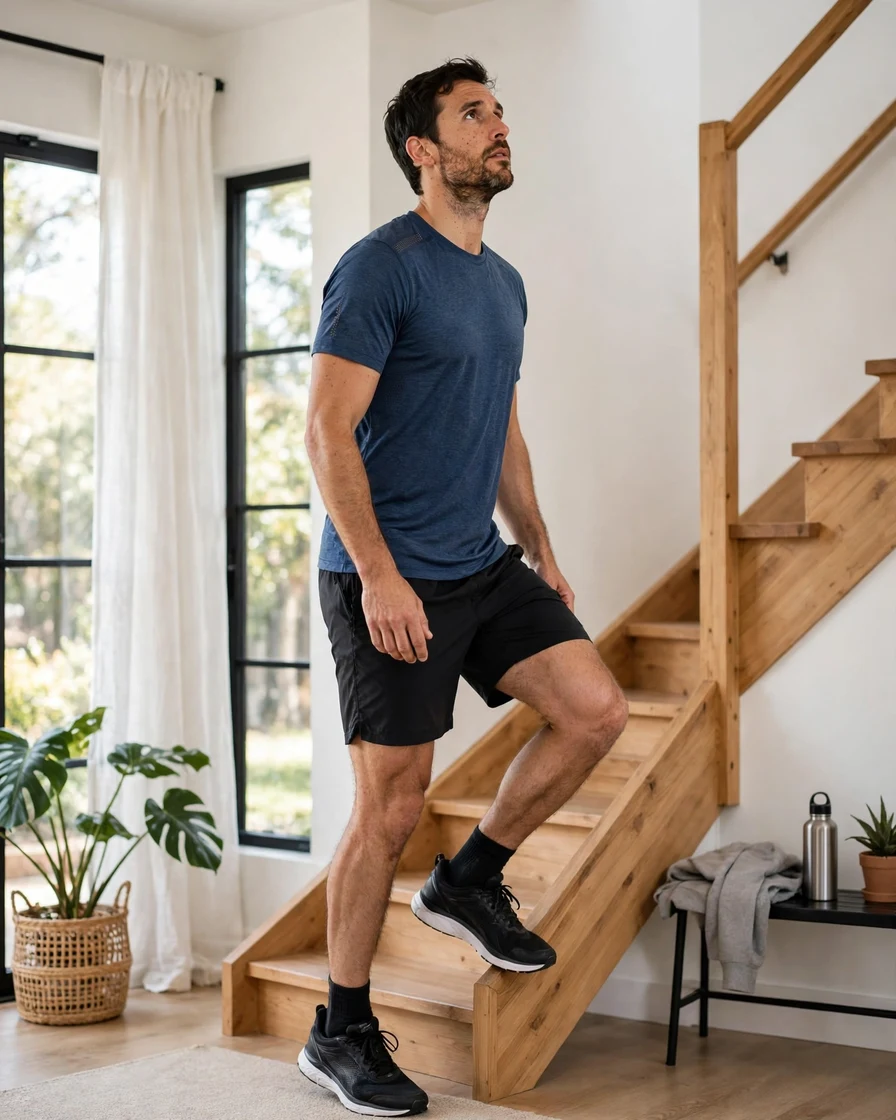
If your home has stairs, you already own a powerful cardio machine. Stair climbs work your glutes, thighs, and calves while raising your heart rate, and you can adjust the effort simply by changing your speed.
How to do it: Stand at the bottom of the stairs with your chest up and your core engaged. Walk or jog up the stairs, placing your whole foot on each step rather than just your toes. Use the handrail lightly for balance if you need it, but avoid pulling yourself up with your arms.
Benefits: Stair climbing may help build lower-body strength and stamina, and it can be a practical way to add cardio to a normal day.
Practical tips: Wear supportive shoes and make sure the stairs are clear of clutter. Start with 3 to 5 trips up and down and add one trip each week. If you only have a few steps, a single step or a sturdy low platform can work as an alternative — step up and down on it in the same way.
Suggested duration: 5 to 10 minutes of steady climbing, with short pauses at the top or bottom as needed.
Who it may suit: People with stairs at home who want a simple, no-equipment workout. It also suits anyone who prefers steady, rhythmic movement over jumping.
Important considerations: Take extra care if you have balance problems or knee pain — use the handrail and go slowly. Never rush down the stairs, and stop if you feel dizzy, breathless beyond normal effort, or unsteady. Speak to your doctor first if you have a heart condition or joint problems.
8. Skaters (Lateral Jumps)
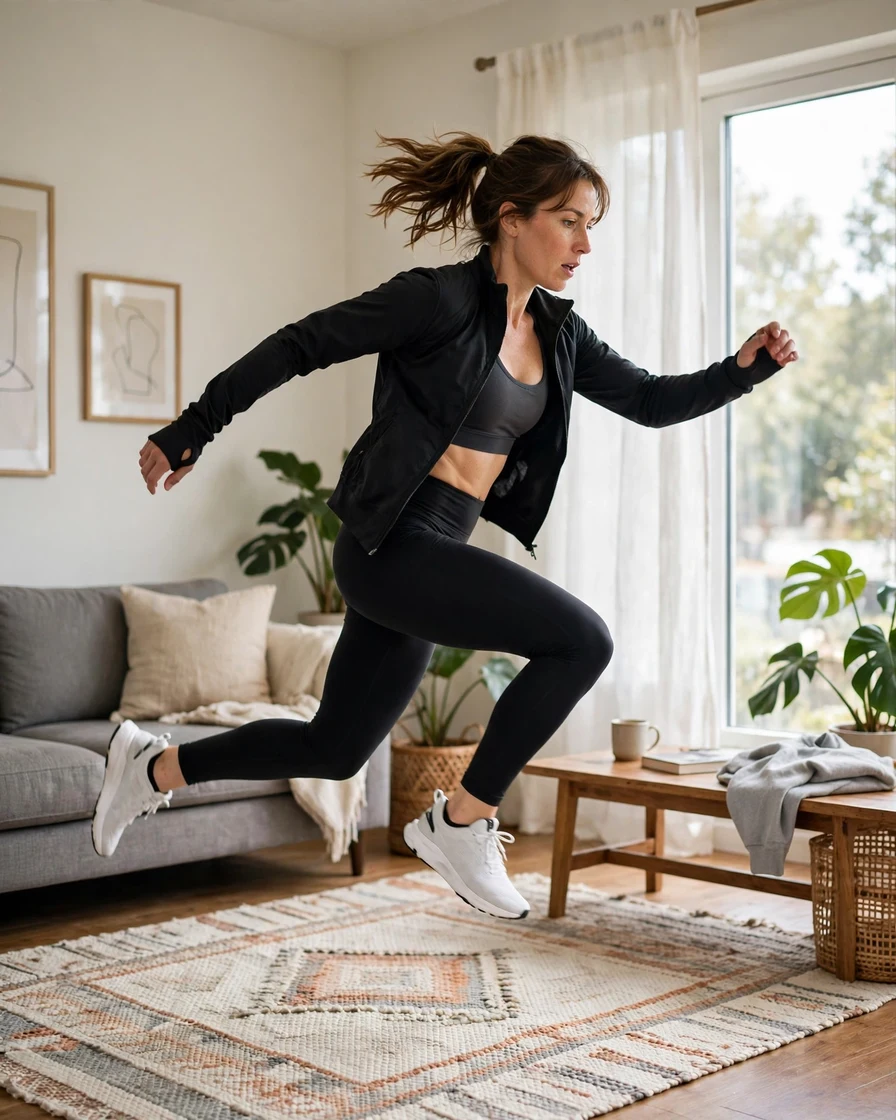
Skaters copy the side-to-side motion of a speed skater, and they train your body in a direction most workouts ignore. That lateral movement works your glutes, outer thighs, and ankles, while the jump adds a cardio challenge.
How to do it: Stand with your feet hip-width apart. Leap to your right, landing on your right foot with your knee slightly bent, and swing your left leg behind you. Then leap to your left, landing on your left foot. Swing your arms across your body as you jump, like a skater. Keep your chest up and land softly, with your knee tracking over your toes.
Benefits: Skaters may help improve lateral strength, balance, and agility.
Practical tips: Start with small, low jumps and build distance gradually. If jumping feels too much, step side to side instead and add a small knee lift. Keep a rug or mat underfoot for grip, and clear enough space on both sides.
Suggested duration: 30 seconds per round, for 2 to 3 rounds. Count roughly 10 to 12 jumps per side in each round.
Who it may suit: People who want to add variety and train side-to-side movement. The stepping version suits beginners and anyone with ankle or knee sensitivity.
Important considerations: Land with control — a wobbly landing is a sign to slow down or shorten the jump. Stop if you feel ankle or knee pain. Check with your doctor before starting a new exercise routine if you have joint problems or a heart condition.
9. Shadow Boxing
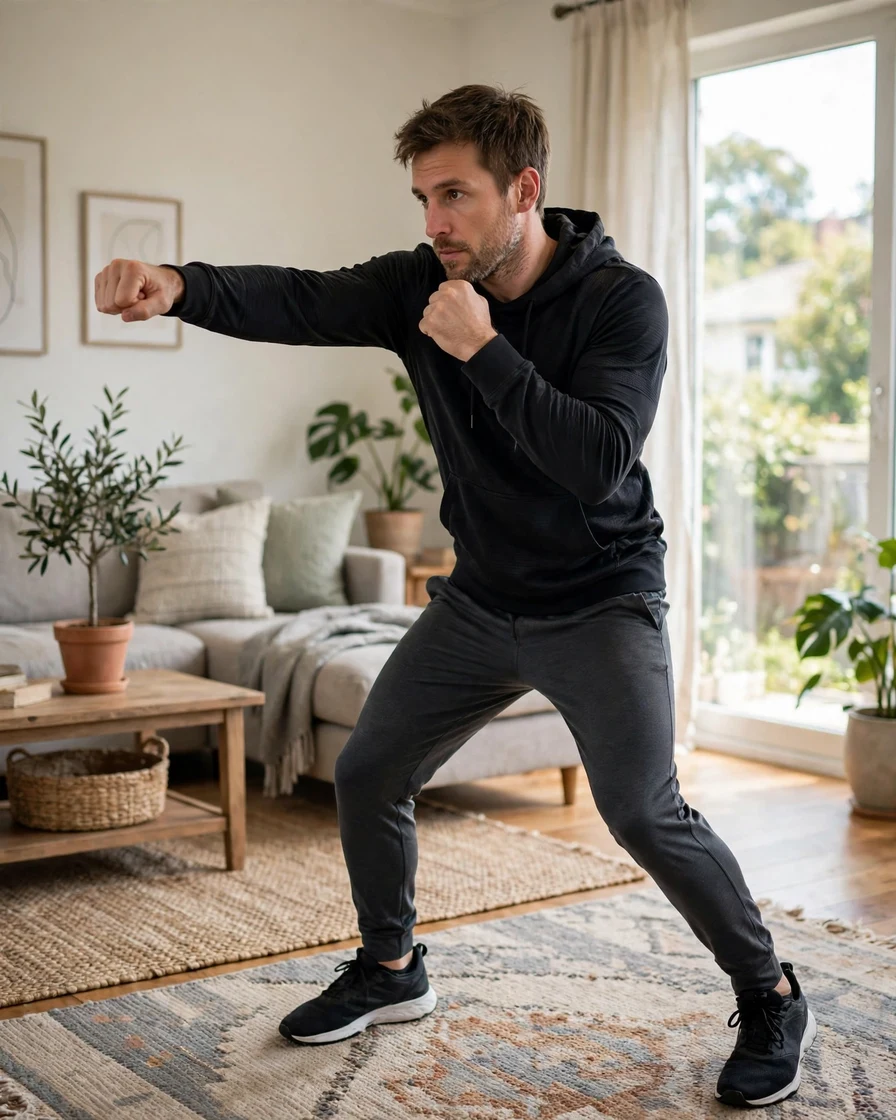
Shadow boxing is punching the air in a steady rhythm — no bag, no gloves, no partner needed. It is a surprisingly good cardio workout that also trains your shoulders, arms, and core, and it can be a healthy way to release tension.
How to do it: Stand with your feet shoulder-width apart, one foot slightly forward, knees soft, and hands up near your chin. Throw a jab with your front hand, then a cross with your back hand, turning your hips slightly with each punch. Add hooks and uppercuts as you get comfortable, and keep moving your feet — a small bounce or step between punches keeps your heart rate up. Keep your punches controlled and your elbows in.
Benefits: Shadow boxing may help improve upper-body endurance, coordination, and reaction time, while giving your heart a steady workout.
Practical tips: Keep your punches at about 70 percent of full extension to protect your elbows. Breathe out with each punch.
Suggested duration: 2 to 3 minutes per round, for 2 to 3 rounds, or 30-second bursts inside a circuit.
Who it may suit: People who want a low-impact cardio option that also works the upper body. It suits beginners well, since the pace and intensity are easy to adjust.
Important considerations: Stop if you feel shoulder or elbow pain, and keep punches controlled rather than snapping your arms straight. If you feel dizzy or unwell, rest. Speak to your doctor first if you have a heart condition or are new to exercise.
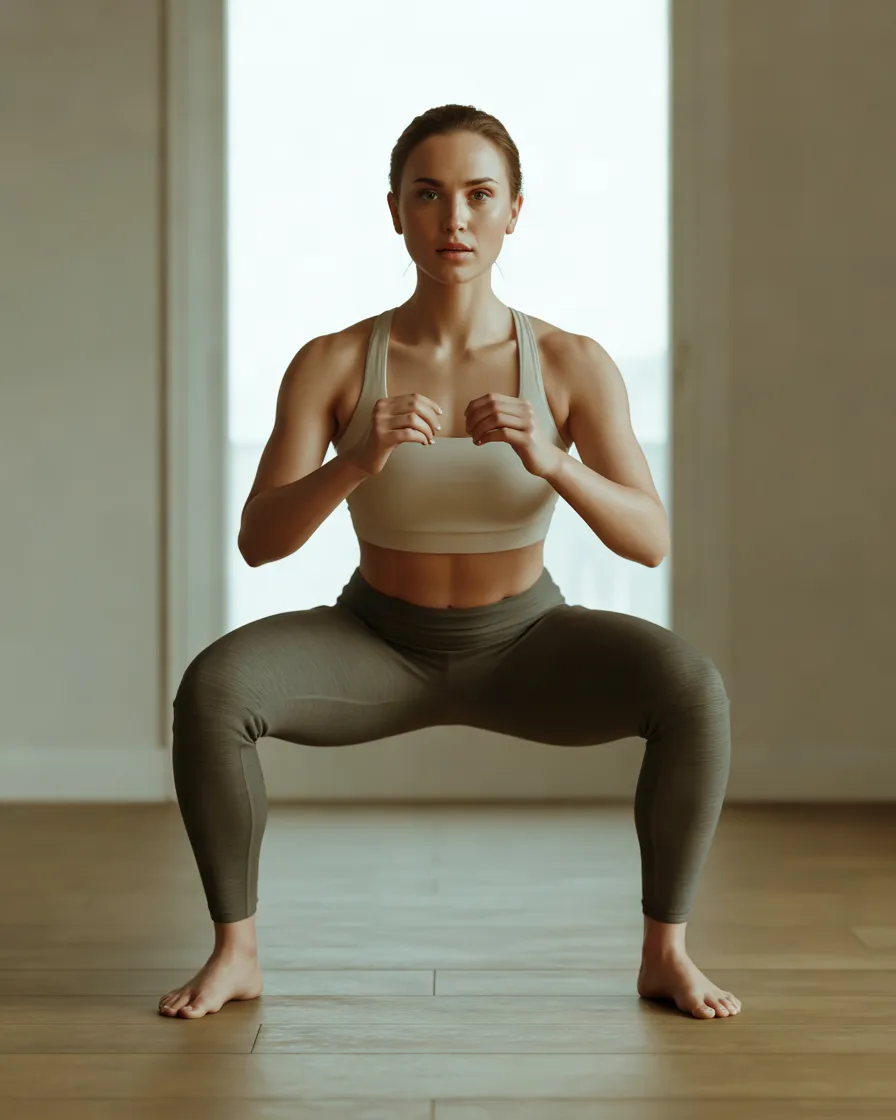
10. Squat Jumps

Squat jumps finish this list with a powerful lower-body move. They combine the strength of a squat with the cardio lift of a jump, which makes them one of the most demanding — and rewarding — moves here.
How to do it: Stand with your feet shoulder-width apart. Lower into a squat, keeping your chest up and your knees tracking over your toes. From the bottom of the squat, jump up explosively, swinging your arms for momentum. Land softly back into a squat position, with your knees bent to absorb the impact, and repeat. Keep your landings quiet — a loud thud usually means you are landing too hard.
Benefits: Squat jumps may help build leg power and stamina while raising your heart rate quickly.
Practical tips: Start with a shallow squat and a small jump, and deepen both as you get stronger. If jumping is not right for you, do regular bodyweight squats at a brisk pace instead — you still get a solid workout.
Suggested duration: 10 to 12 repetitions per round, for 2 to 3 rounds, with 45 to 60 seconds of rest between rounds.
Who it may suit: People with some exercise experience who want a stronger challenge. The no-jump squat version suits beginners and anyone with knee or ankle concerns.
Important considerations: This is a high-impact move, so skip the jump if you have knee, ankle, or back problems. Stop if you feel pain or dizziness. Check with your doctor before starting a new exercise routine, especially if you have a heart condition or joint problems.
Expert Tips for Your Cardio Workout at Home
Warm up and cool down every time. A 3 to 5 minute warm-up — marching in place, gentle arm circles, and slow squats — prepares your muscles and joints.
Build a simple circuit. Pick 4 to 5 moves from this list, do each for 30 seconds, rest for 30 seconds between moves, and repeat the circuit 2 to 3 times. That gives you a 20 to 30 minute session you can repeat three or four times a week.
Progress slowly. Add one round, a few seconds, or a little speed each week — not all at once. Small, steady progress is easier on your joints and far easier to maintain than a sudden jump in intensity.
Listen to your body. Muscle effort and mild breathlessness are normal during cardio. Sharp pain, dizziness, chest discomfort, or severe breathlessness are not. Slow down or stop if any of these appear, and seek medical advice if symptoms persist or worry you.
Pair movement with the basics. Cardio supports your health best alongside enough sleep, balanced meals, and regular daily movement such as walking.
Make it a habit, not a test. Choose the moves you actually enjoy and schedule them like any other appointment.
How long should a cardio workout at home last?
For most adults, 15 to 30 minutes of moderate cardio, three to five times a week, is a good starting point. You can build up gradually from shorter sessions — even 10 minutes counts, especially when you are just getting started.
Can I do a cardio workout at home every day?
You can move every day, but intense cardio every day may leave you tired or sore. A sensible pattern is to alternate harder days with easier ones — for example, a full circuit on Monday, Wednesday, and Friday, with gentle walking or dance cardio on the days between.
Do I need equipment for a cardio workout at home for fat burning?
No. Every move in this article needs nothing more than a little floor space. A mat can make floor moves more comfortable and a jump rope adds variety, but neither is required. Your body weight is enough to raise your heart rate and challenge your muscles.
Which move is best for beginners?
Jumping jacks, dance cardio, and shadow boxing are usually the easiest places to start, because they are low-impact and easy to adjust. Begin with the low-impact versions, keep rounds short, and add intensity only when the moves feel comfortable. If you are completely new to exercise, speak to your doctor first.
Can cardio at home really help with fat burning?
Cardio can support fat burning as part of an overall healthy lifestyle, but it does not work in isolation. Fat loss depends on many factors, including what you eat, how much you sleep, your stress levels, and how consistently you move. Regular cardio may help you use more energy and improve your fitness, which can support a healthy weight over time — but no workout can promise a specific amount of fat loss.
Conclusion
A cardio workout at home for fat burning does not need a gym, expensive equipment, or an hour of free time. With the 10 moves in this article — from jumping jacks and high knees to dance cardio and squat jumps — you can build a routine that fits your space, your fitness level, and your schedule.
Start small, warm up first, and choose the low-impact versions whenever your joints ask for them. The goal is not perfection, it is consistency. A few short sessions each week, done regularly, can support your heart health, your stamina, and your overall wellbeing — and that is a result worth working toward. If you have a heart condition, joint problems, or you are new to exercise, check with your doctor before starting, then pick your favourite moves and begin today.