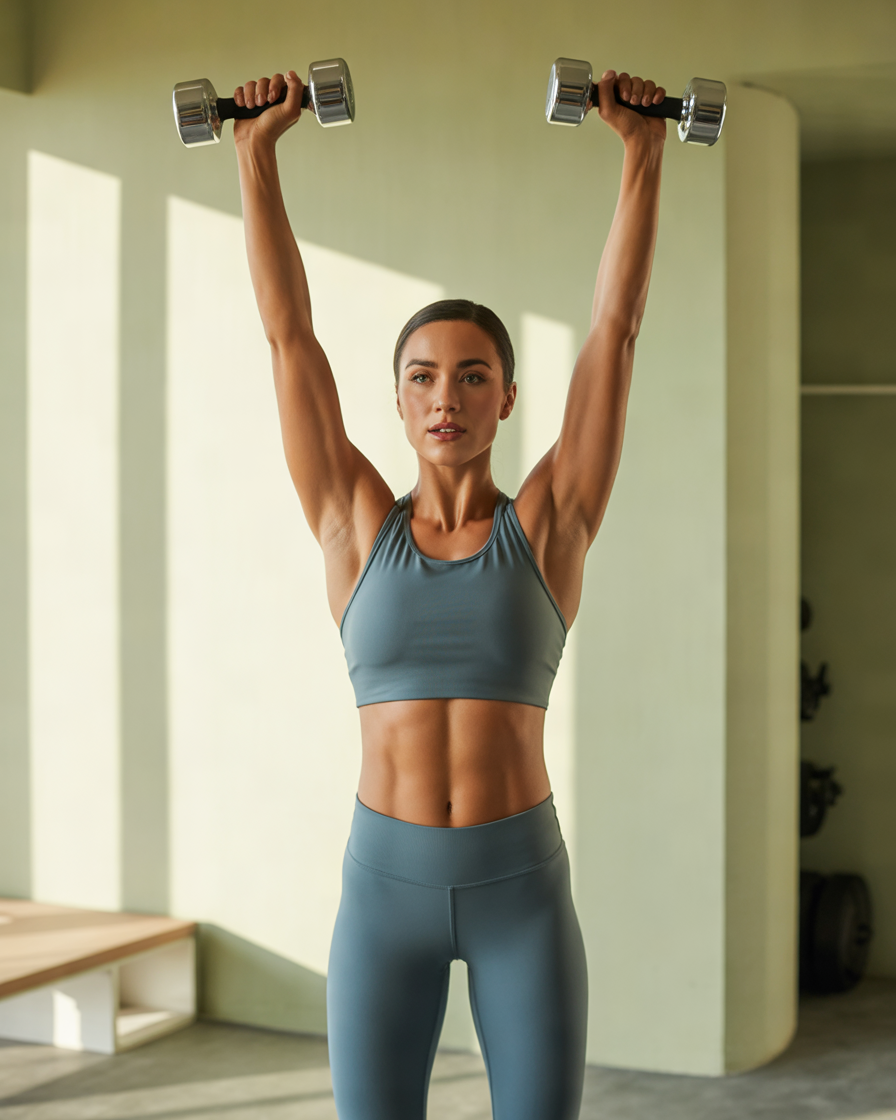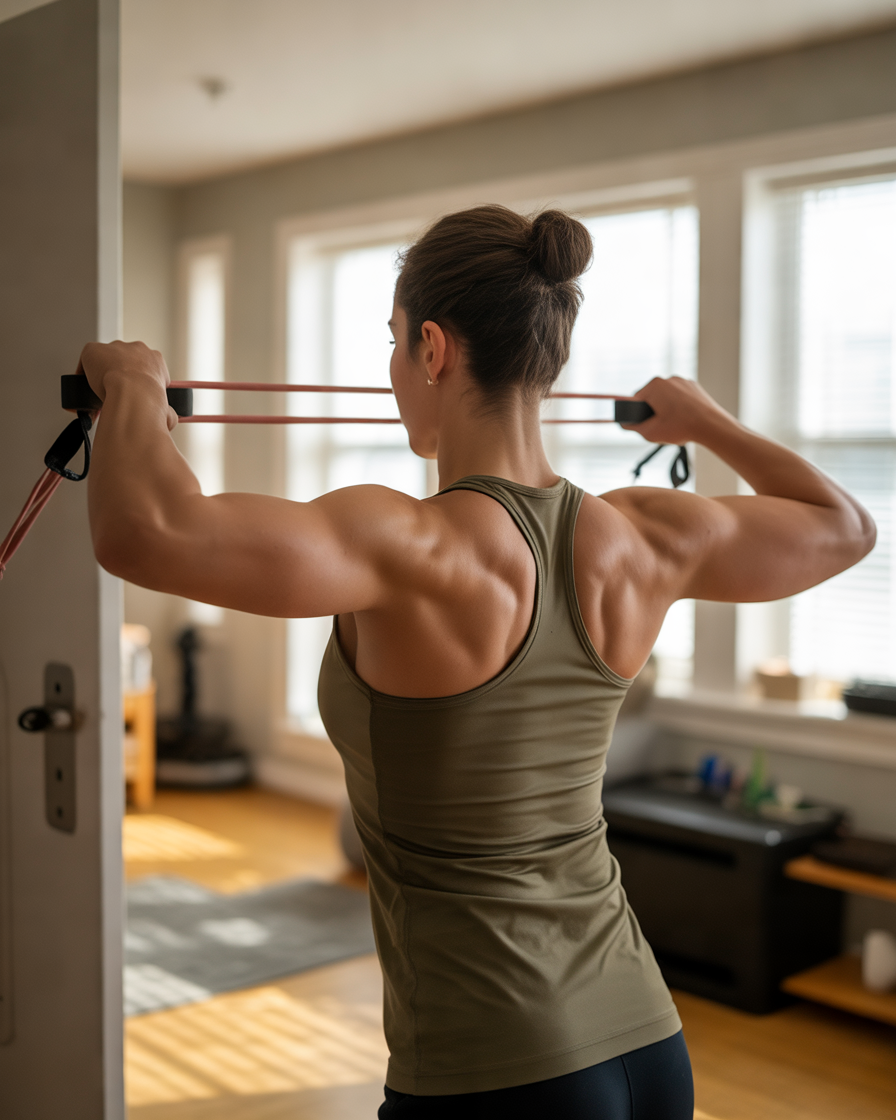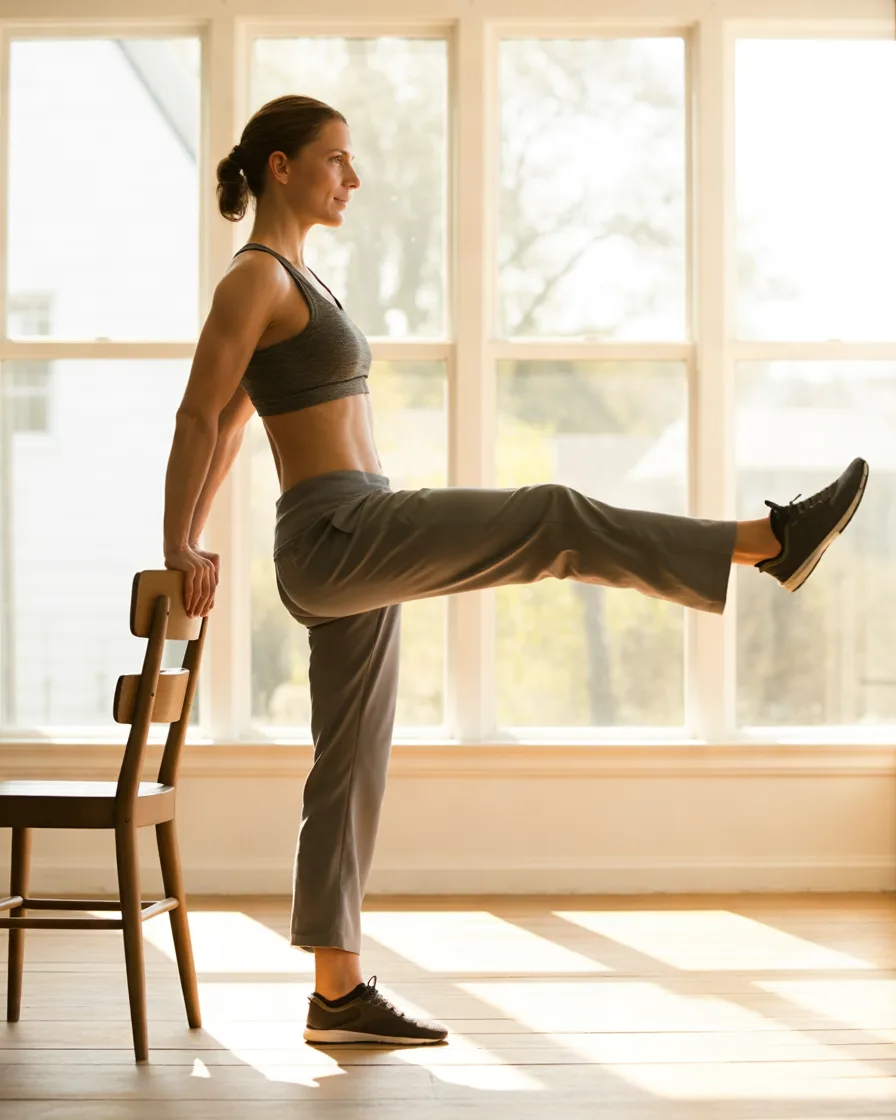
You do not need an expensive gym membership, heavy weights, or complicated equipment to strengthen your glutes. With the right exercises, a little space, and a consistent routine, you can build a practical glutes workout at home that fits your schedule and fitness level.
Your glutes are the muscles around your buttocks, and they play an important role in walking, climbing stairs, standing up, balancing, and extending your hips. The three main muscles are the gluteus maximus, gluteus medius, and gluteus minimus. Together, they help support lower-body movement and pelvic stability.
A well-designed at-home glute workout can help improve muscular strength, support everyday movement, and develop lower-body endurance. Depending on your training, nutrition, recovery, and genetics, consistent exercise may also contribute to greater muscle size and definition over time.
The key is choosing exercises that target different glute muscles rather than repeating the same movement. Glute bridges and hip thrusts emphasize hip extension, squats and lunges train several lower-body muscles, and side-lying exercises challenge the muscles responsible for moving your legs outward.
This guide covers 12 glute exercises you can perform at home, including beginner-friendly movements and more challenging variations. Each exercise includes practical instructions, suggested repetitions, benefits, suitability, and safety considerations.
Whether your goal is a stronger lower body, better movement control, or a more structured butt workout at home, these exercises can help you get started.
1. Glute Bridges: A Beginner-Friendly Exercise for Stronger Glutes
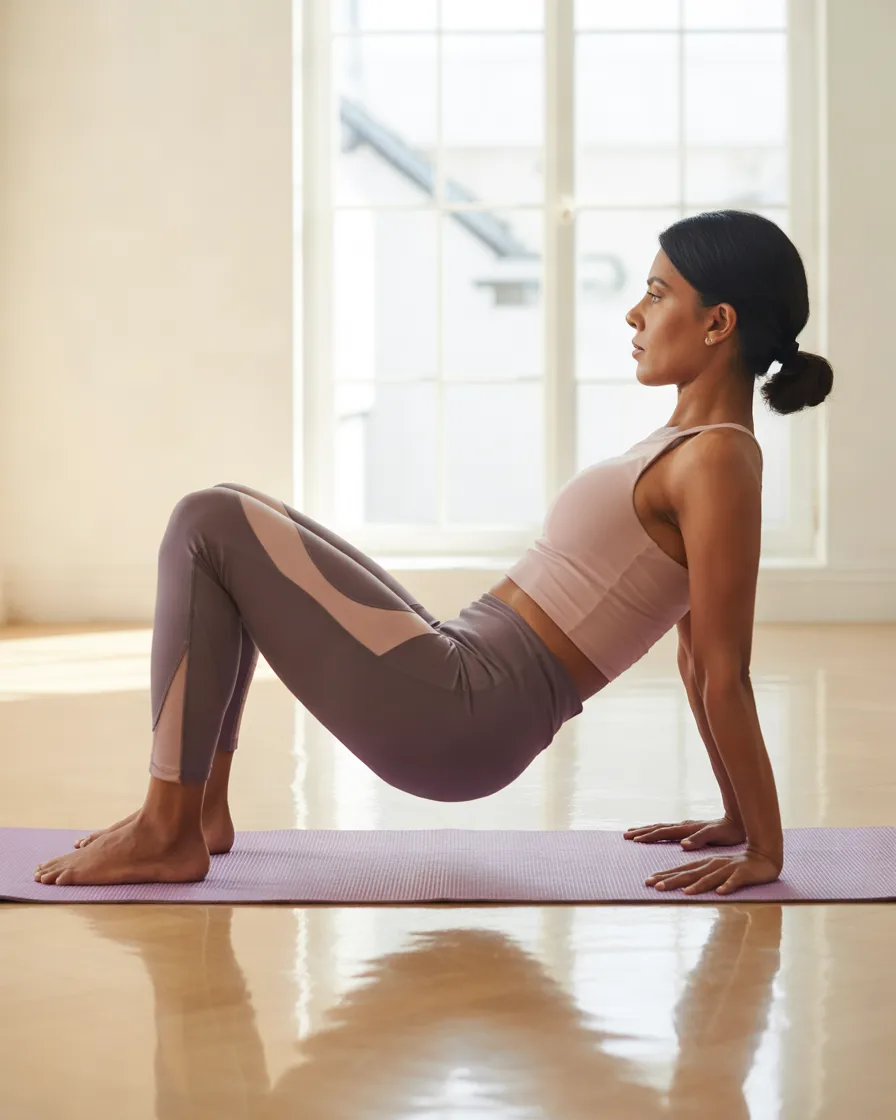
Glute bridges are one of the most accessible glute exercises for beginners. They train your hip-extension muscles while allowing you to keep your upper body supported on the floor. You do not need weights or much space, making them an excellent starting point for a glutes workout at home.
Benefits: Glute bridges strengthen the gluteal muscles and involve the hamstrings and abdominal muscles. They also help you practice controlling your pelvis and hips during movement.
How to perform the exercise:
- Lie on your back with your knees bent and feet flat on the floor.
- Place your feet approximately hip-width apart, with your arms resting beside you.
- Gently tighten your abdominal muscles.
- Press through your feet and lift your hips until your shoulders, hips, and knees form an approximately straight line.
- Squeeze your glutes briefly at the top without arching your lower back.
- Lower your hips slowly and repeat.
Suggested routine: Complete 2–3 sets of 10–15 repetitions, resting for 30–60 seconds between sets.
Practical tip: Concentrate on lifting your hips through controlled movement rather than pushing them as high as possible. If you mainly feel the exercise in your lower back, reduce the height and check your foot position.
Who it may suit: Beginners, people returning to exercise, and anyone who wants a simple bodyweight glute exercise.
Important considerations: Avoid forcing the movement through pain. If getting onto the floor is difficult, ask a qualified fitness professional about a suitable standing alternative.
2. Bodyweight Squats: A Practical Lower-Body Strength Exercise
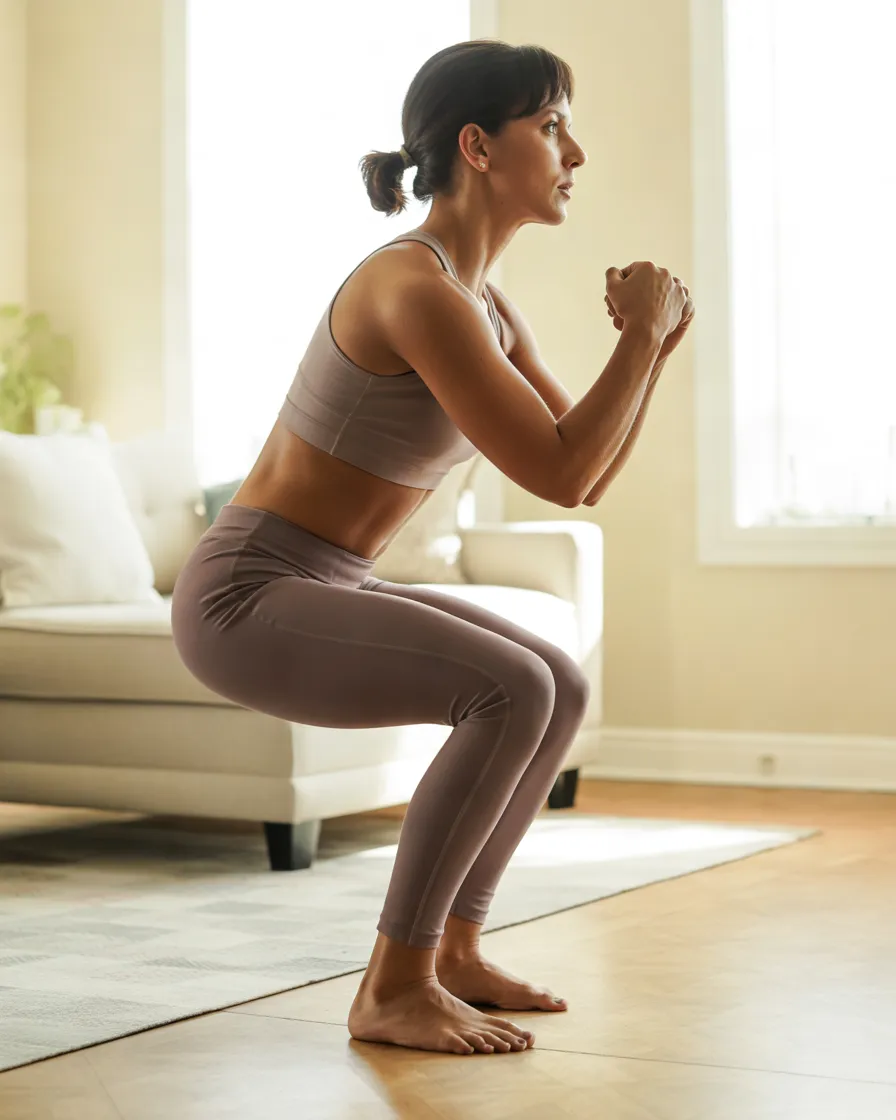
Bodyweight squats are a useful addition to any no-equipment glute workout. They train the glutes, quadriceps, and other muscles involved in standing up and sitting down. Because the movement resembles everyday activities, it is also easy to practice regularly at home.
Benefits: Squats develop lower-body strength, movement coordination, and muscular endurance. They challenge the glutes alongside the muscles at the front of the thighs.
How to perform the exercise:
- Stand with your feet around shoulder-width apart.
- Keep your chest comfortable and your spine in a natural position.
- Bend your knees and hips together, lowering yourself as if sitting on a chair.
- Keep your feet flat and your knees tracking in the same general direction as your toes.
- Descend only as far as you can maintain control.
- Press through your feet to return to standing.
Suggested routine: Perform 2–3 sets of 8–15 repetitions.
Practical tip: Use a chair behind you as a depth guide if you are new to squats. Gradually increase your range of motion as your strength and comfort improve.
Who it may suit: Beginners and intermediate exercisers who want to strengthen their legs and glutes without equipment.
Important considerations: Your ideal squat depth depends on your mobility, proportions, and comfort. If your heels lift or your balance becomes unstable, reduce the depth and practice near a sturdy support.
3. Reverse Lunges: Train Each Leg With Greater Control
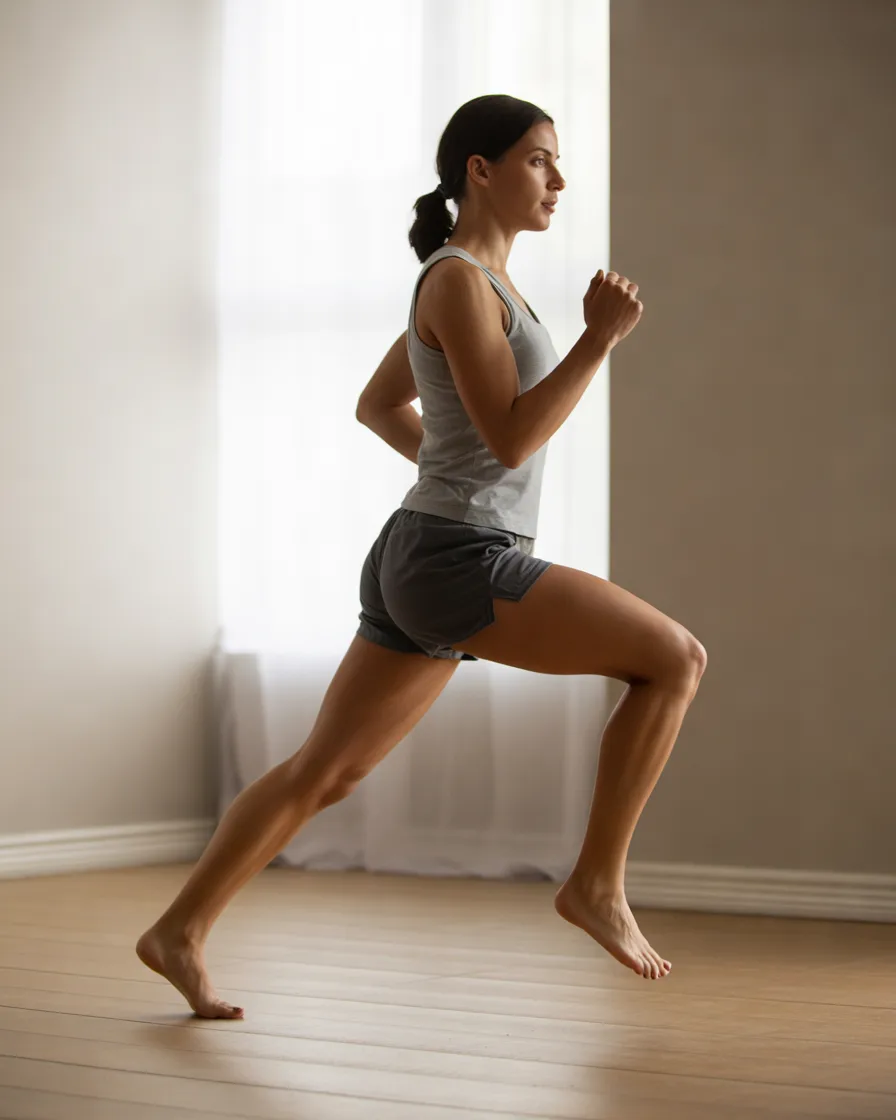
Reverse lunges are particularly useful when you want to challenge one leg at a time. Stepping backward rather than forward may feel easier to control for some people, although the exercise still requires balance and coordination.
Benefits: Reverse lunges strengthen the glutes, quadriceps, and other lower-body muscles. They also encourage single-leg control, which is useful for activities such as climbing stairs and walking.
How to perform the exercise:
- Stand upright with your feet approximately hip-width apart.
- Take a controlled step backward with one foot.
- Bend both knees as you lower your body toward the floor.
- Keep your front foot planted and your front knee aligned with your toes.
- Press through the front foot to return to standing.
- Repeat on the opposite side.
Suggested routine: Complete 2 sets of 8–10 repetitions per leg.
Practical tip: Begin with a small step backward and use a wall or sturdy chair for balance if needed. Once you feel confident, gradually increase your range of motion.
Who it may suit: Beginners with basic standing balance and intermediate exercisers looking for a more challenging butt workout at home.
Important considerations: Reverse lunges may be uncomfortable for people with certain knee, hip, or balance limitations. Choose a smaller range of motion or an alternative exercise if needed.
4. Donkey Kicks: Isolate the Glutes With a Controlled Movement
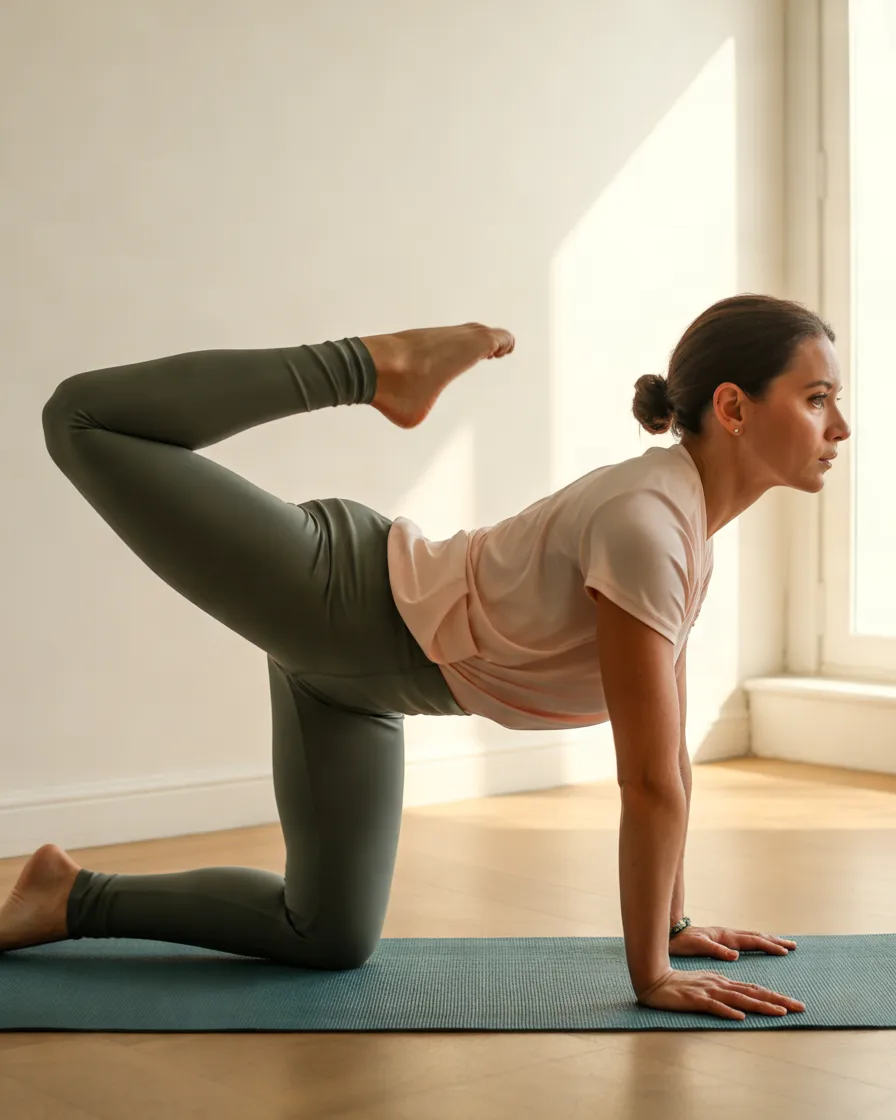
Donkey kicks are a floor-based exercise that trains hip extension while you support yourself on your hands and knees. They are a popular choice for home glute workouts because they require very little space and can be performed without equipment.
Benefits: Donkey kicks work the gluteal muscles and encourage controlled hip movement. They also require some trunk stability to prevent excessive movement through the lower back.
How to perform the exercise:
- Begin on all fours with your hands beneath your shoulders and knees beneath your hips.
- Keep your back in a comfortable, neutral position.
- Bend one knee and lift that thigh behind you without twisting your pelvis.
- Stop when your hip reaches its comfortable range of motion.
- Pause briefly, then lower your knee with control.
- Complete the repetitions before switching sides.
Suggested routine: Perform 2–3 sets of 10–15 repetitions per leg.
Practical tip: Imagine your pelvis is a bowl of water that you do not want to spill. Keeping your hips steady helps prevent you from compensating by arching your back.
Who it may suit: Beginners who are comfortable kneeling and want a low-impact glute-strengthening exercise.
Important considerations: Use a folded towel beneath your knees if the floor feels uncomfortable. If kneeling aggravates your joints, choose a standing hip-extension exercise instead.
5. Fire Hydrants: Strengthen the Side Glute Muscles
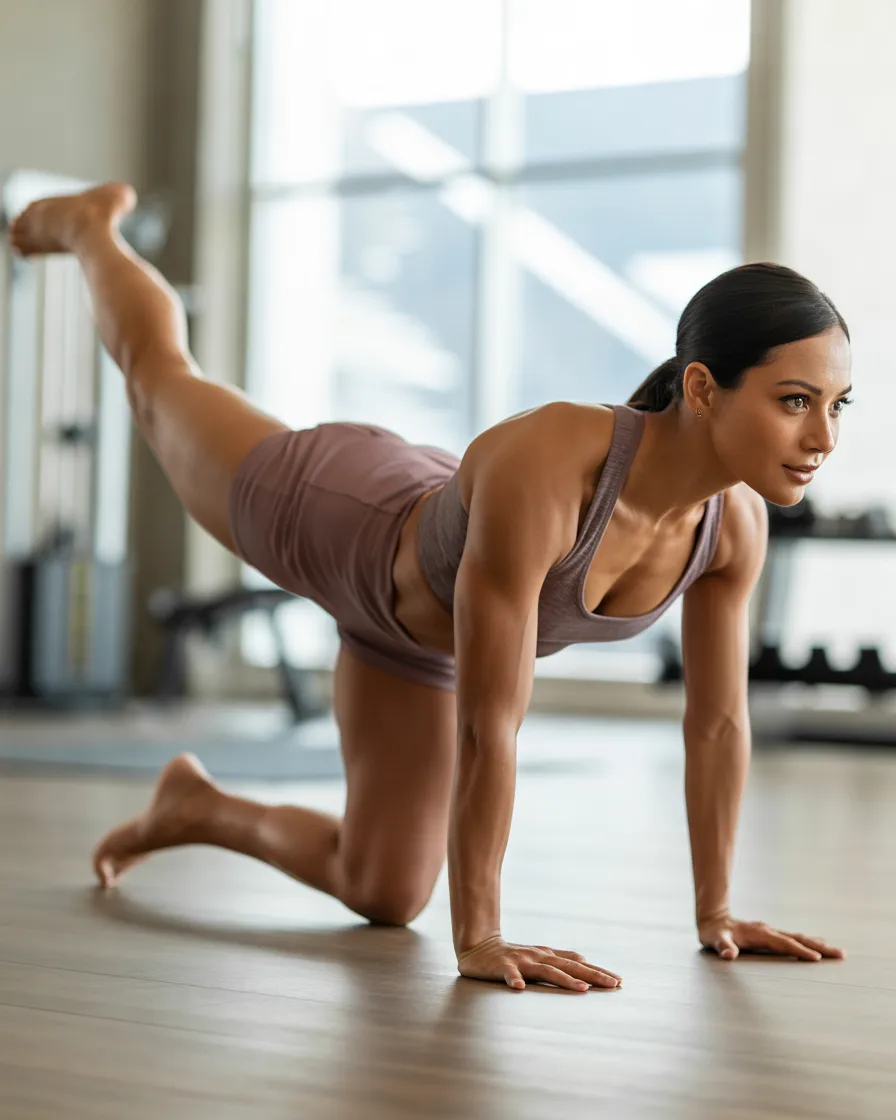
Fire hydrants use a sideways leg movement to challenge the muscles that move your thigh away from your body. These include the gluteus medius and gluteus minimus, which contribute to hip control and pelvic stability.
Benefits: Fire hydrants complement exercises such as squats and glute bridges by training a different direction of movement. They may help improve your control during single-leg activities when combined with a balanced strengthening routine.
How to perform the exercise:
- Start on all fours with your hands beneath your shoulders.
- Keep your knees bent and your abdomen gently engaged.
- Lift one knee outward to the side while maintaining a stable pelvis.
- Stop before your torso begins to rotate or your lower back moves excessively.
- Slowly return your knee to the starting position.
- Repeat on the other side.
Suggested routine: Complete 2 sets of 10–15 repetitions per side.
Practical tip: A smaller, controlled movement is often more useful than lifting your knee as high as possible. Keep your shoulders relaxed and your weight distributed evenly between your hands.
Who it may suit: Beginners and intermediate exercisers who want to include side-glute exercises in their home routine.
Important considerations: If kneeling is uncomfortable, try standing hip abductions while holding a sturdy chair. Stop if you experience sharp pain around the hip or groin.
6. Frog Pumps: Add a Short-Range Glute Exercise to Your Routine
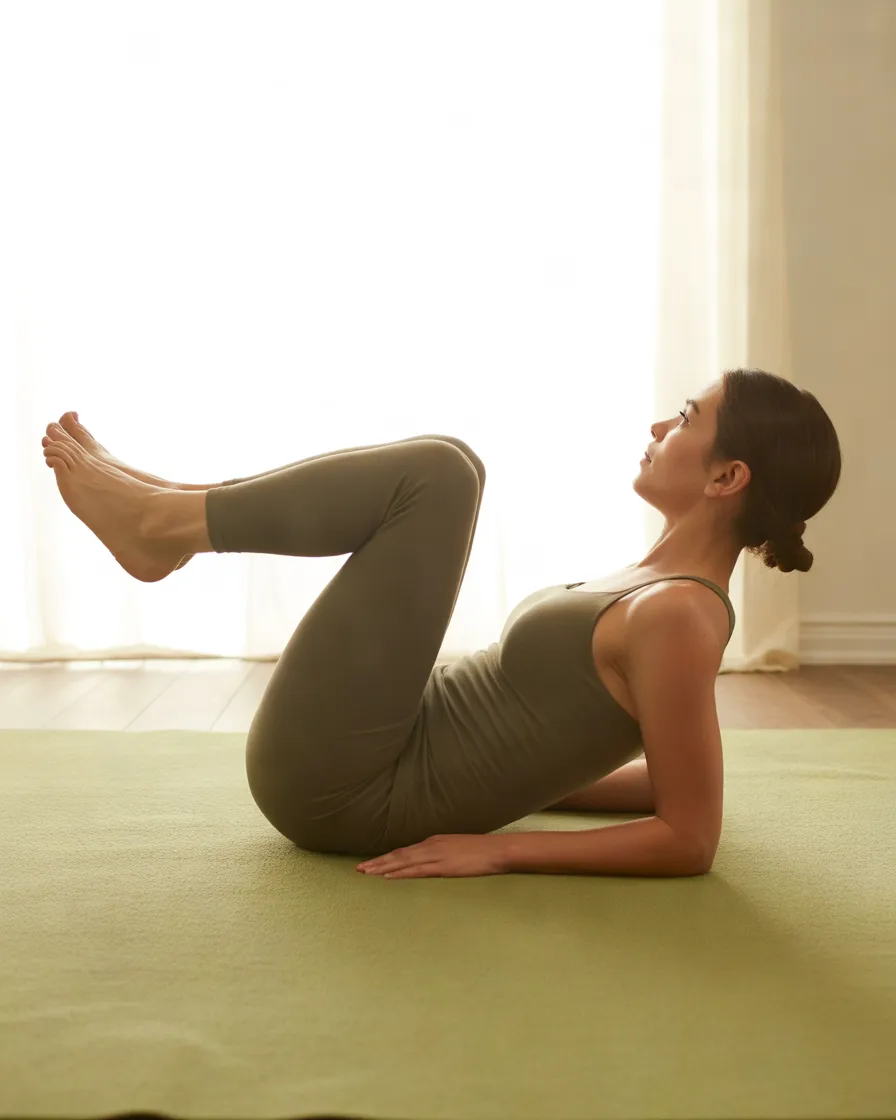
Frog pumps are performed lying on your back with the soles of your feet together and your knees open outward. The position creates a different movement pattern from a standard glute bridge and provides another way to train the glutes at home.
Benefits: Frog pumps work the hip-extension muscles and can provide a useful bodyweight training option when you want to vary your workout. Their short movement range may also make them easy to fit into a finishing circuit.
How to perform the exercise:
- Lie on your back on a mat.
- Bring the soles of your feet together and let your knees open outward comfortably.
- Place your arms beside you for support.
- Tighten your abdominal muscles and lift your hips using your glutes.
- Pause briefly at the top without arching your lower back.
- Lower your hips slowly and repeat.
Suggested routine: Perform 2 sets of 15–20 repetitions.
Practical tip: Keep the movement smooth and avoid bouncing at the bottom. Your knees should open only as far as feels comfortable.
Who it may suit: Beginners and experienced exercisers who want an additional bodyweight glute exercise.
Important considerations: The outward knee position may not suit everyone. If it causes discomfort, switch to ordinary glute bridges or another comfortable hip-extension movement.
7. Single-Leg Glute Bridges: Increase the Challenge Without Weights
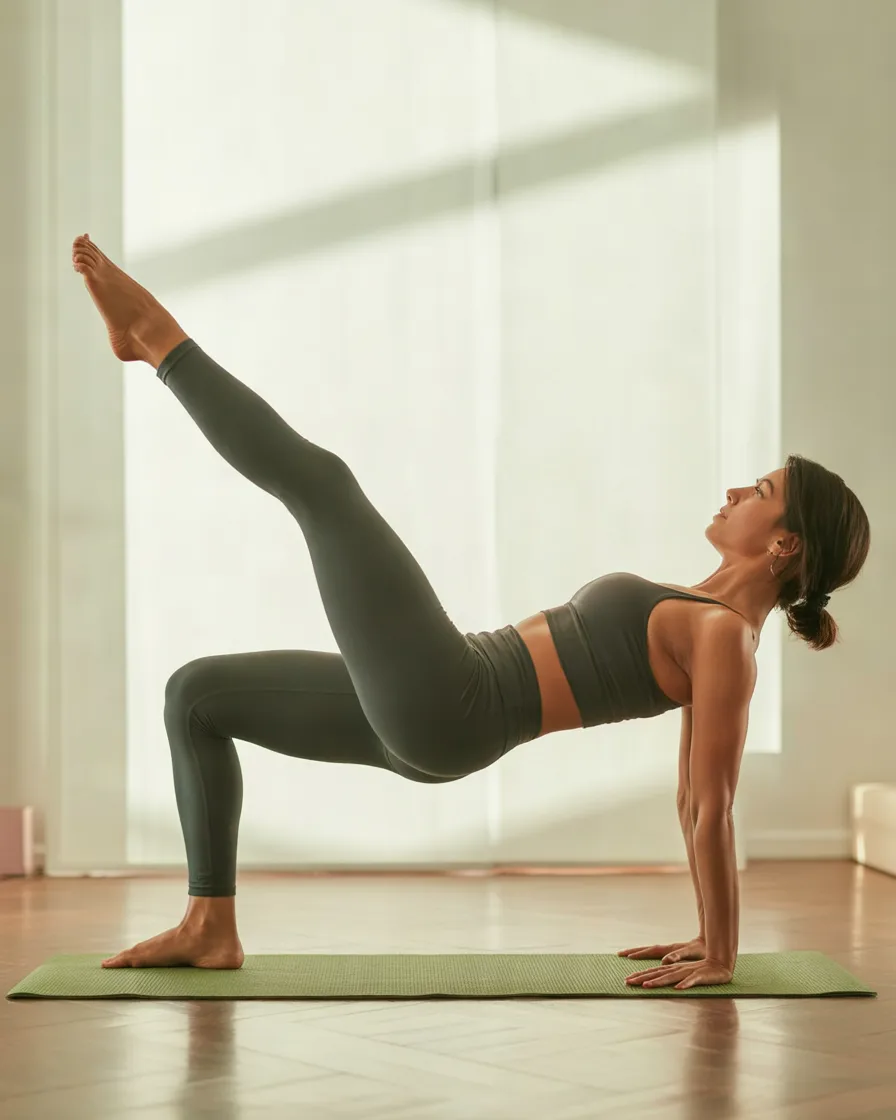
Once regular glute bridges feel manageable, a single-leg variation can make the exercise more challenging. Because one leg provides most of the support, the movement requires greater control from the working glute and surrounding stabilizing muscles.
Benefits: Single-leg glute bridges challenge hip extension, pelvic control, and muscular coordination. They can help you identify differences in strength or control between sides.
How to perform the exercise:
- Lie on your back with both knees bent and feet flat.
- Lift one foot off the floor, keeping your hips level.
- Press through the planted foot to raise your pelvis.
- Keep your abdominal muscles engaged and avoid twisting your body.
- Lower your hips slowly.
- Finish your repetitions before changing legs.
Suggested routine: Complete 2 sets of 6–10 repetitions per leg.
Practical tip: If your pelvis drops to one side or your hamstrings cramp, return to the two-legged version. You can also start by lifting one foot only slightly rather than extending your leg fully.
Who it may suit: Intermediate exercisers who can perform standard glute bridges comfortably and with good control.
Important considerations: This variation is more demanding than a regular bridge. Progress gradually, and do not sacrifice good technique to complete extra repetitions.
8. Step-Ups: Strengthen Your Glutes for Everyday Movement
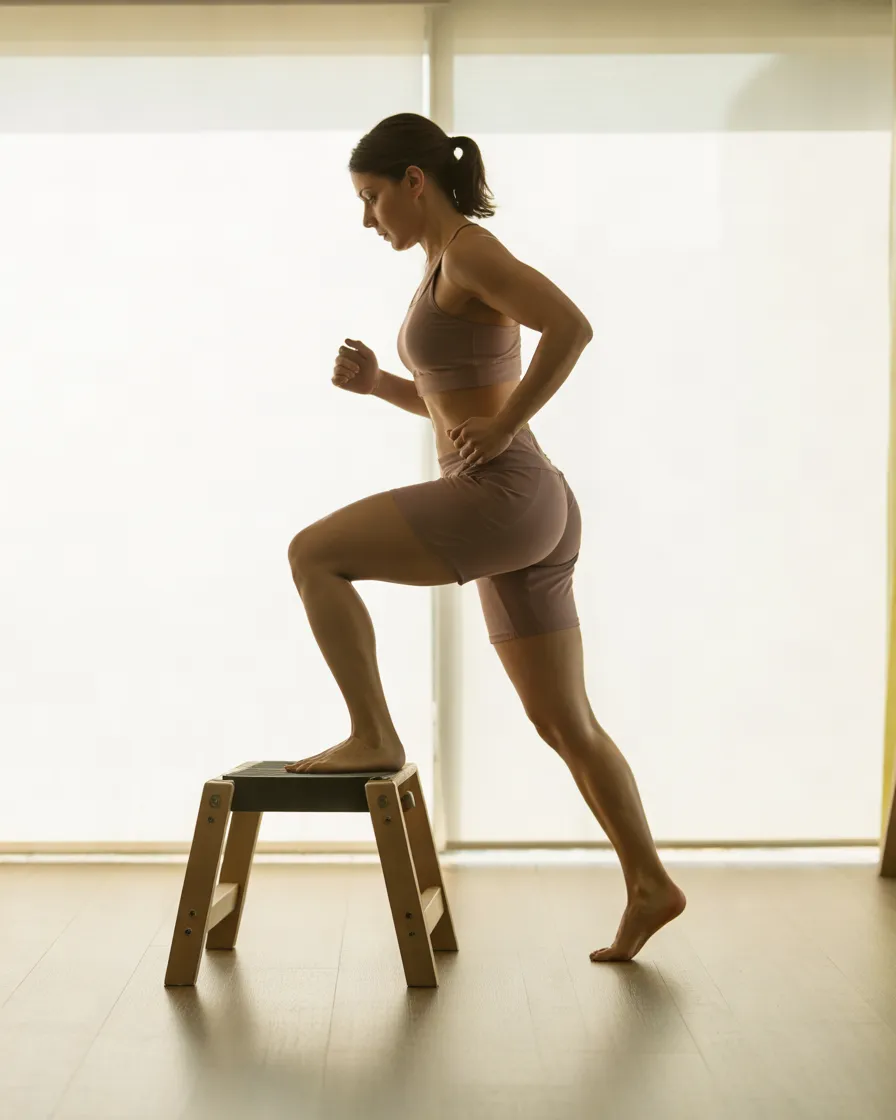
Step-ups involve climbing onto a raised surface, making them a practical exercise for developing lower-body strength and coordination. They can be performed at home if you have a low, sturdy step designed to support your weight.
Benefits: Step-ups train the glutes and quadriceps while challenging balance and single-leg coordination. The movement also resembles climbing stairs, which is useful for everyday mobility.
How to perform the exercise:
- Stand in front of a stable, low step.
- Place your entire working foot on the surface.
- Lean forward slightly from your hips while keeping your back neutral.
- Press through the foot on the step to raise your body.
- Bring the other foot onto the step if appropriate.
- Step down slowly and repeat, then change legs.
Suggested routine: Perform 2 sets of 8–10 repetitions per leg.
Practical tip: Start with a low step and avoid pushing excessively off the foot that remains on the floor. The working leg should do most of the lifting.
Who it may suit: Beginners with good basic balance and intermediate exercisers seeking a functional lower-body movement.
Important considerations: Never use an unstable chair, stacked books, or a slippery surface as a step. If you cannot find a safe platform, substitute supported reverse lunges or squats.
9. Hip Thrusts on a Sofa: Train Hip Extension Through a Larger Range
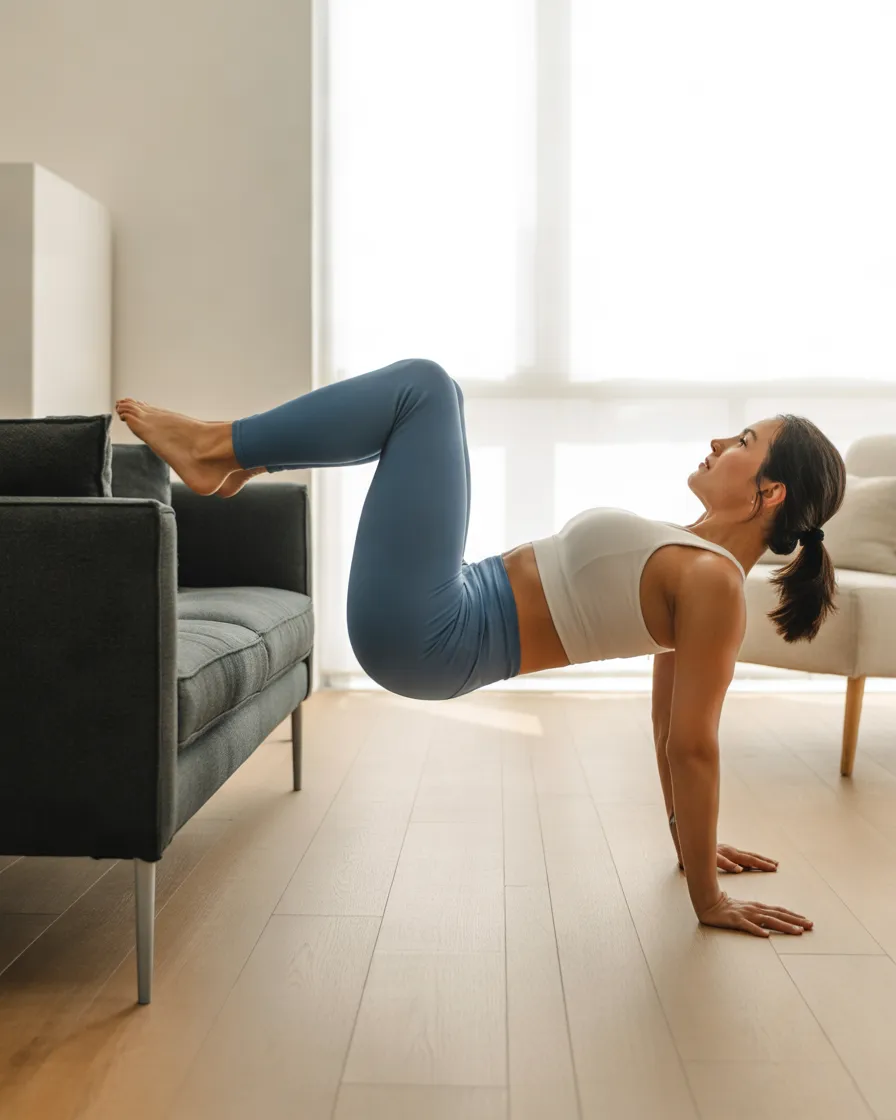
Hip thrusts are similar to glute bridges, but the upper back is supported on a stable elevated surface. This setup can allow greater hip movement and is useful for people who want to progress beyond floor-based bridges.
Benefits: Hip thrusts emphasize the glutes during hip extension and can be progressed over time by adjusting repetitions, resistance, and exercise difficulty.
How to perform the exercise:
- Sit on the floor with your upper back against a firm, low, stable sofa.
- Bend your knees and place your feet flat on the floor.
- Position your feet so your shins are approximately vertical near the top of the movement.
- Brace your abdomen and press through your feet.
- Raise your hips until your torso approaches a straight line from shoulders to knees.
- Pause briefly and lower your hips under control.
Suggested routine: Perform 2–3 sets of 10–15 repetitions.
Practical tip: Begin with bodyweight only. Focus on keeping your ribs down and avoiding excessive arching at the top. A sturdy exercise bench is an alternative if available.
Who it may suit: Intermediate exercisers or beginners who already feel comfortable with standard glute bridges.
Important considerations: The sofa must not slide or tip. Avoid using high, soft, or unstable furniture for support. If you cannot secure the setup, use floor glute bridges instead.
10. Side-Lying Leg Raises: Target the Glutes at the Side of the Hips
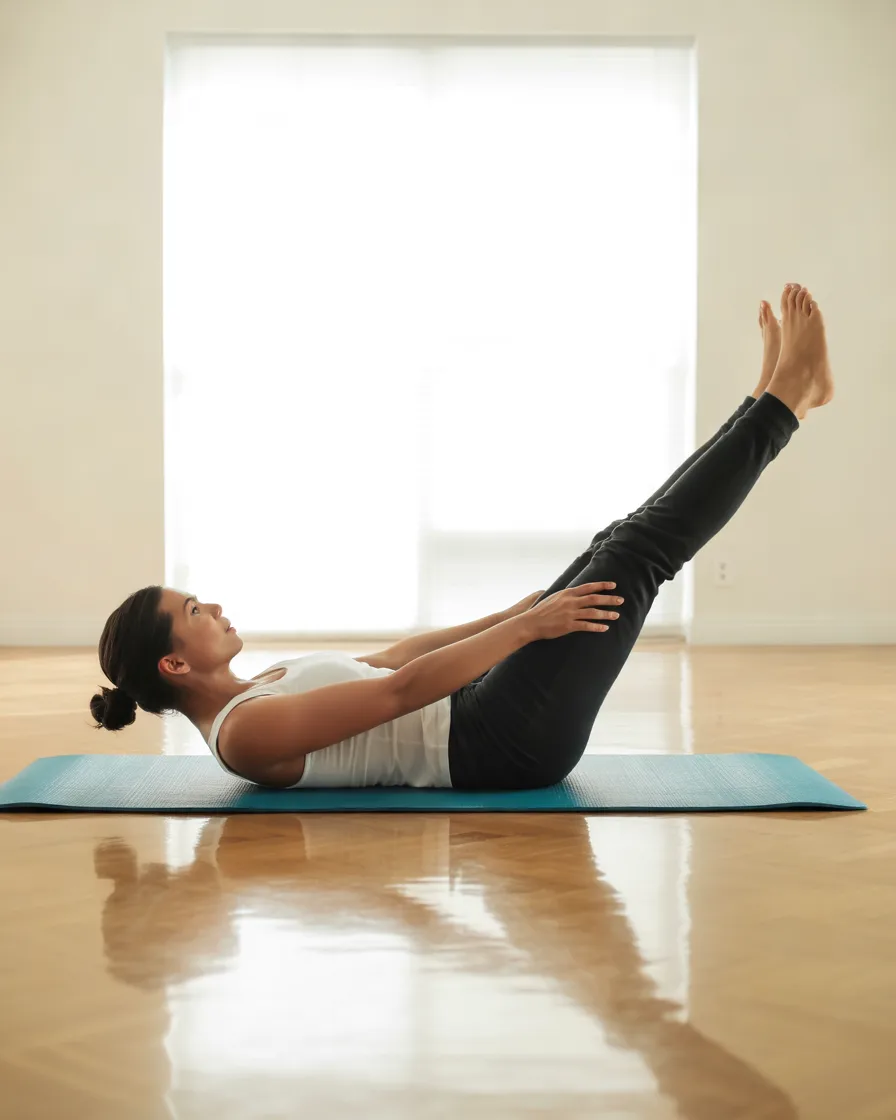
Side-lying leg raises are a straightforward way to train the hip-abduction muscles, particularly the gluteus medius. The exercise is performed on your side, making it useful when you want to include side-glute training without balancing on one leg.
Benefits: The movement strengthens muscles involved in moving the leg outward and controlling the pelvis. It complements glute bridges, squats, and lunges by training the hips in a different direction.
How to perform the exercise:
- Lie on your side with your legs extended and stacked.
- Support your head comfortably with your lower arm.
- Keep your hips stacked rather than rolling backward.
- Lift your top leg upward while keeping it aligned with your body.
- Pause briefly, then lower it slowly without letting it drop.
- Complete the repetitions before changing sides.
Suggested routine: Perform 2–3 sets of 10–15 repetitions per side.
Practical tip: Point your toes forward rather than turning them toward the ceiling. Lift only as high as you can without rotating your pelvis or feeling discomfort.
Who it may suit: Beginners, people who prefer floor-based exercise, and anyone wanting to target the side glutes.
Important considerations: If you feel a pinching sensation in your hip, reduce the range of motion or stop. A physiotherapist can help you identify an appropriate alternative if symptoms persist.
11. Sumo Squats: Add a Wider-Stance Squat Variation
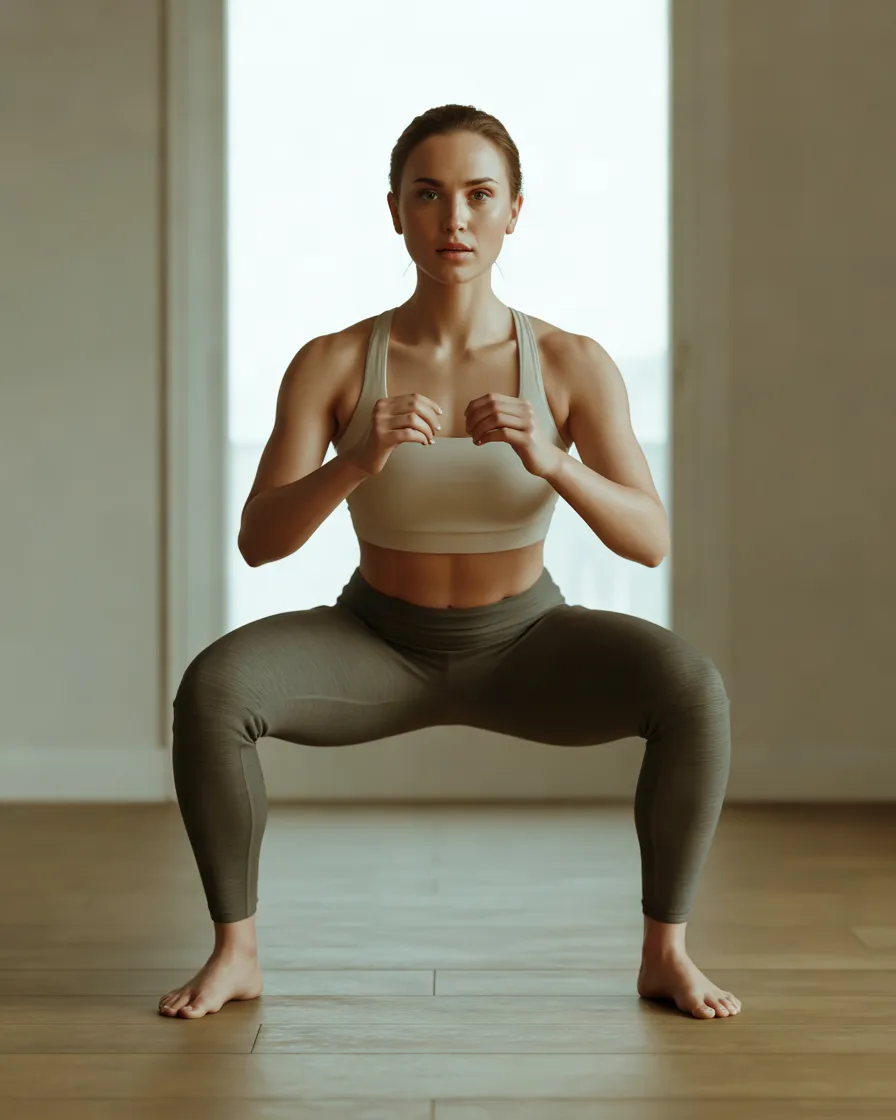
Sumo squats use a wider stance and a comfortable outward toe angle. This variation challenges the glutes and thigh muscles while introducing a different stance from the traditional bodyweight squat.
Benefits: Sumo squats strengthen the lower body and train the glutes, quadriceps, and inner-thigh muscles. They can also add variety to a home workout without requiring equipment.
How to perform the exercise:
- Stand with your feet wider than shoulder-width apart.
- Turn your toes outward slightly, using a comfortable angle.
- Keep your chest controlled and your spine in a natural position.
- Bend your knees and hips to lower your body.
- Keep your knees tracking in the direction of your toes.
- Press through your feet to return to standing.
Suggested routine: Complete 2–3 sets of 10–15 repetitions.
Practical tip: Begin with a moderate stance rather than placing your feet as far apart as possible. Your ideal width depends on your hip structure and mobility.
Who it may suit: Beginners who can squat comfortably and intermediate exercisers looking for more variety in a lower-body workout.
Important considerations: A wide stance is not automatically better for glute growth. If you feel hip or groin discomfort, narrow your stance or return to regular squats.
12. Bulgarian Split Squats: A More Challenging Glute Exercise
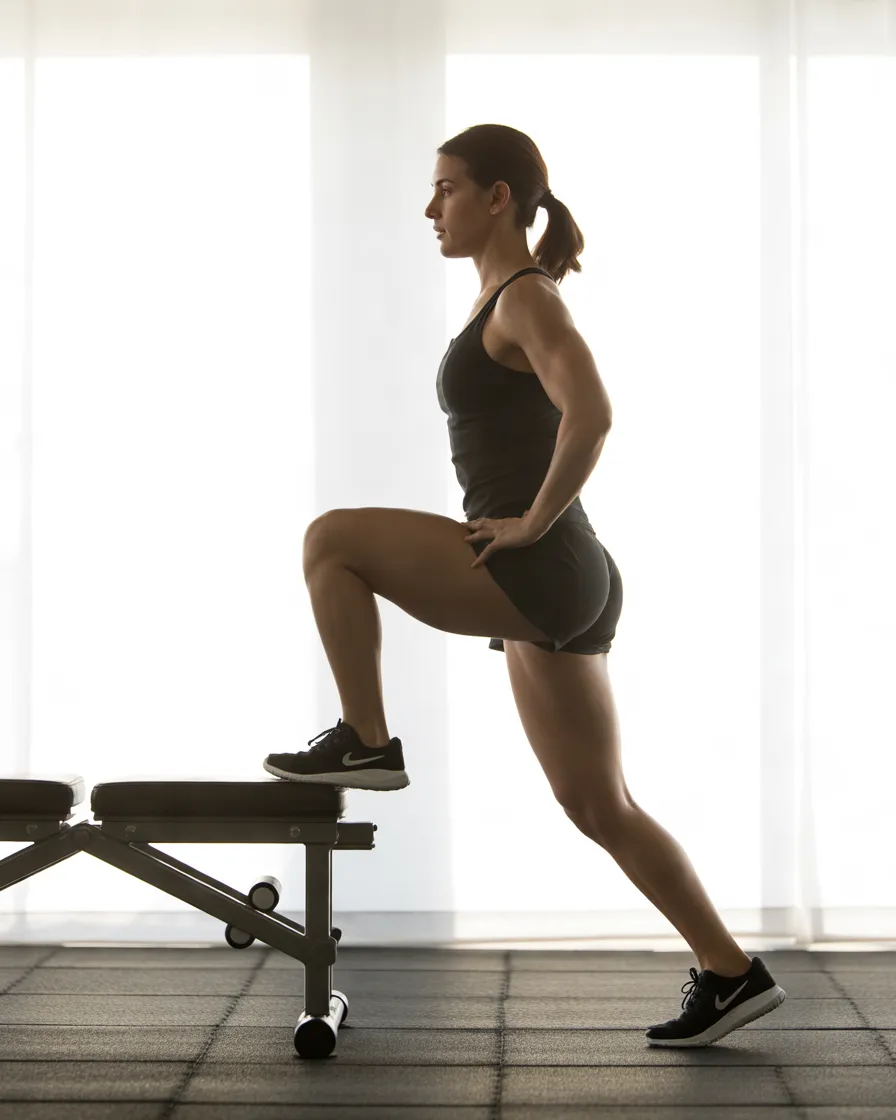
Bulgarian split squats are a single-leg-focused exercise in which the rear foot rests on an elevated support. They require more balance and control than regular squats, so they are best introduced after you have built a basic foundation of lower-body strength.
Benefits: Bulgarian split squats challenge the glutes, quadriceps, and stabilizing muscles. They also provide a way to progress a home workout when standard squats no longer feel sufficiently challenging.
How to perform the exercise:
- Stand a short distance in front of a sturdy, low support.
- Place the top of one foot behind you on the support.
- Keep your front foot firmly planted and find a balanced stance.
- Bend your front knee and lower your body slowly.
- Keep your front knee aligned with your toes and your torso controlled.
- Press through your front foot to return to standing.
- Complete your repetitions before switching legs.
Suggested routine: Start with 2 sets of 6–8 repetitions per leg.
Practical tip: Practice an ordinary split squat with both feet on the floor first. Use a wall for light balance support if necessary, and avoid a rear-foot position that forces your hips into an uncomfortable stretch.
Who it may suit: Intermediate exercisers who already perform lunges and squats confidently.
Important considerations: This is not essential for beginners. If balance, knee comfort, or the setup is a problem, use reverse lunges or supported split squats instead.
Expert Tips for Making Your Glutes Workout at Home More Effective
Train consistently instead of exercising excessively
Start with two or three glute-focused sessions each week, leaving recovery time between demanding sessions. More exercise is not always better, especially if your muscles remain sore or your technique deteriorates.
Focus on controlled repetitions
Slow, controlled movements help you maintain good positioning and understand which muscles are working. Avoid rushing through repetitions or using momentum to lift your hips or legs.
Progress gradually
When an exercise becomes comfortable, you can increase repetitions, add a set, use a more challenging variation, or introduce a resistance band. Change one factor at a time so you can judge how your body responds.
Include different movement patterns
A balanced glute routine should include hip extension, squatting or lunging, and hip abduction. You do not need all 12 exercises in every session. Choose a few movements that fit your level and perform them well.
Eat enough to support training
Protein-rich foods such as eggs, beans, lentils, yoghurt, fish, tofu, and lean meats can help support muscle repair and growth as part of a balanced diet. Adequate total energy intake, hydration, and sleep also matter. No single food guarantees glute growth.
Allow time for recovery
Muscle strength and size change gradually. Results depend on your starting point, training quality, nutrition, genetics, and consistency. Avoid judging progress from daily appearance alone.
Pay attention to pain
Muscle effort is expected, but sharp pain, joint pain, numbness, or dizziness is a reason to stop. People recovering from surgery, managing an injury, or living with a condition that affects exercise should seek individualized guidance from a qualified healthcare professional.
A Simple Weekly Glute Workout Plan for Beginners
You can start with a short routine that combines several of the exercises above. There is no need to complete all 12 movements in one session.
Day 1: Foundational glute strength
- Glute bridges: 3 sets of 12 repetitions
- Bodyweight squats: 2 sets of 10 repetitions
- Donkey kicks: 2 sets of 10 repetitions per leg
- Side-lying leg raises: 2 sets of 10 repetitions per side
Day 2: Recovery or gentle activity
Choose a comfortable walk, gentle mobility work, or rest.
Day 3: Lower-body strength and control
- Glute bridges: 2 sets of 12 repetitions
- Reverse lunges: 2 sets of 8 repetitions per leg
- Fire hydrants: 2 sets of 10 repetitions per side
- Frog pumps: 2 sets of 15 repetitions
Remaining days: Rest or participate in other comfortable activities according to your fitness level.
Before each workout, spend around five minutes warming up with easy walking in place, gentle squats, and comfortable hip movements. Rest for approximately 30–90 seconds between sets, taking longer when necessary.
If you are new to exercise, begin with fewer sets and increase gradually. Once the routine becomes manageable, you can introduce step-ups, hip thrusts, or other challenging variations.
Frequently Asked Questions About Glutes Workout at Home
Can you build your glutes with a workout at home?
Yes. Home workouts can strengthen and develop your glute muscles when the exercises provide an appropriate challenge and you train consistently. Bodyweight movements are useful initially, while resistance bands, dumbbells, or more challenging variations can provide additional resistance as you progress.
What is the best glute exercise for beginners at home?
Glute bridges are an excellent starting point because they require no equipment and are relatively easy to learn. Bodyweight squats and supported reverse lunges are other useful options. The best exercise is one you can perform comfortably with controlled technique.
How many days a week should I train my glutes?
Many people can start with two or three glute-focused sessions per week, depending on exercise intensity and recovery. Allow adequate rest between challenging sessions and adjust the schedule if you experience persistent soreness or fatigue.
How long does it take to see results from glute workouts at home?
There is no universal timeline. You may notice improvements in movement control or exercise endurance within several weeks, while visible changes in muscle size generally take longer. Results vary with training consistency, progressive resistance, nutrition, sleep, and individual factors.
Can I grow my glutes without weights?
You can build strength and potentially muscle using bodyweight exercises, especially when you are a beginner. However, muscles need an increasing training challenge over time. If bodyweight exercises become too easy, consider harder variations, resistance bands, or suitable external weights.
Do glute workouts burn fat specifically around the buttocks?
No exercise can reliably target fat loss from one particular body area. Glute exercises strengthen the muscles underneath the body fat, while changes in body fat depend on broader factors such as overall energy balance, genetics, and lifestyle.
Should I do glute bridges every day?
Daily glute bridges are not necessary for most people. Recovery is part of an effective training plan, and repeatedly training the same muscles hard without enough rest may interfere with performance. Choose a frequency that allows you to recover between sessions.
Are home glute workouts suitable for beginners over 50?
Many adults over 50 can benefit from appropriately adapted strength exercises. Start with manageable movements, use stable support when needed, and progress at a comfortable pace. Anyone with significant joint pain, balance problems, recent surgery, or medical restrictions should seek professional guidance before beginning.
Do I need a resistance band for an effective butt workout at home?
No. You can start with bodyweight exercises alone. Resistance bands are optional tools that can make certain movements more challenging, particularly hip-abduction exercises. Good technique and gradual progression matter more than purchasing equipment immediately.
What should I eat after a glute workout?
A balanced meal or snack containing protein and carbohydrates can support recovery. Examples include Greek yoghurt with fruit, eggs with whole-grain toast, or tofu and rice. Your overall daily nutrition matters more than eating one specific food immediately after exercise.
Conclusion: Make Your At-Home Glute Workout a Sustainable Habit
An effective glutes workout at home does not need to be complicated. Glute bridges, squats, lunges, donkey kicks, and side-lying leg raises provide a practical foundation, while hip thrusts and split squats offer ways to progress as your strength improves.
Start with a small number of exercises, focus on controlled technique, and increase the challenge gradually. Pair your workouts with adequate nutrition, hydration, sleep, and recovery.
Most importantly, choose a routine that fits your life. Consistent, manageable training is more useful than an intense workout that is difficult to maintain.