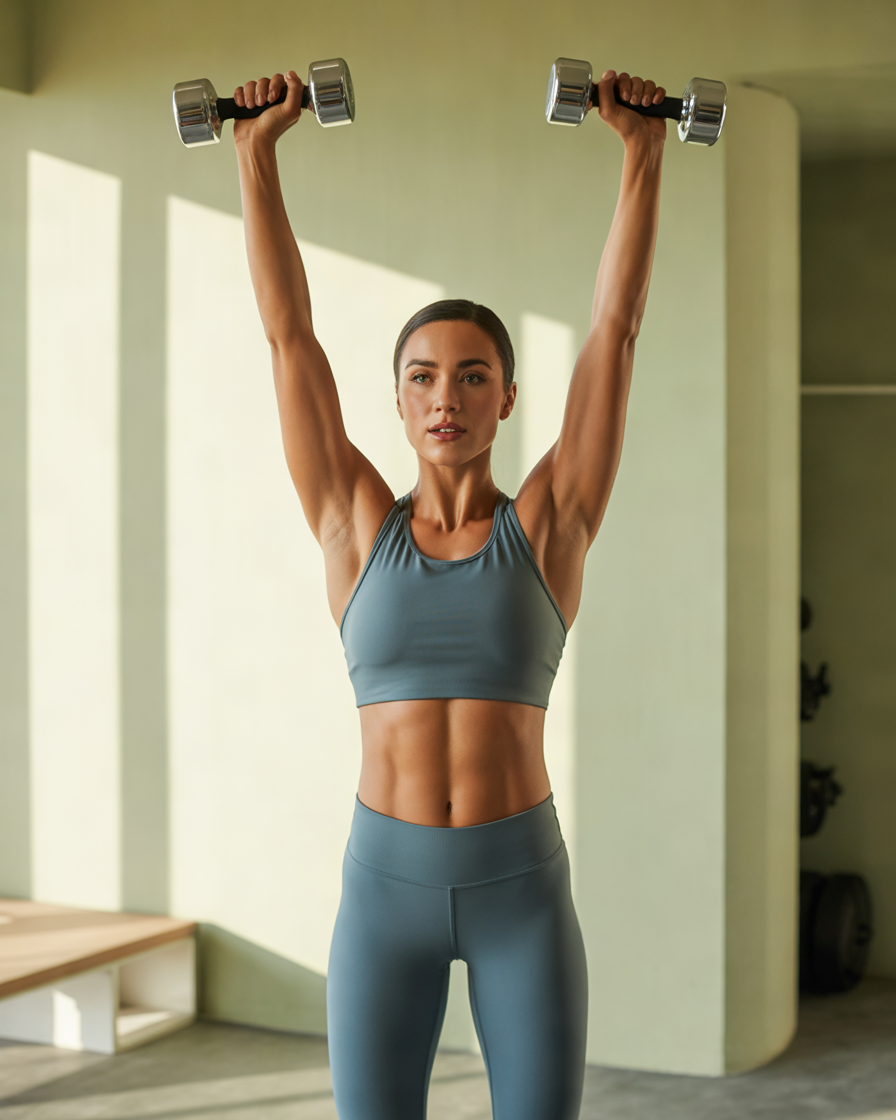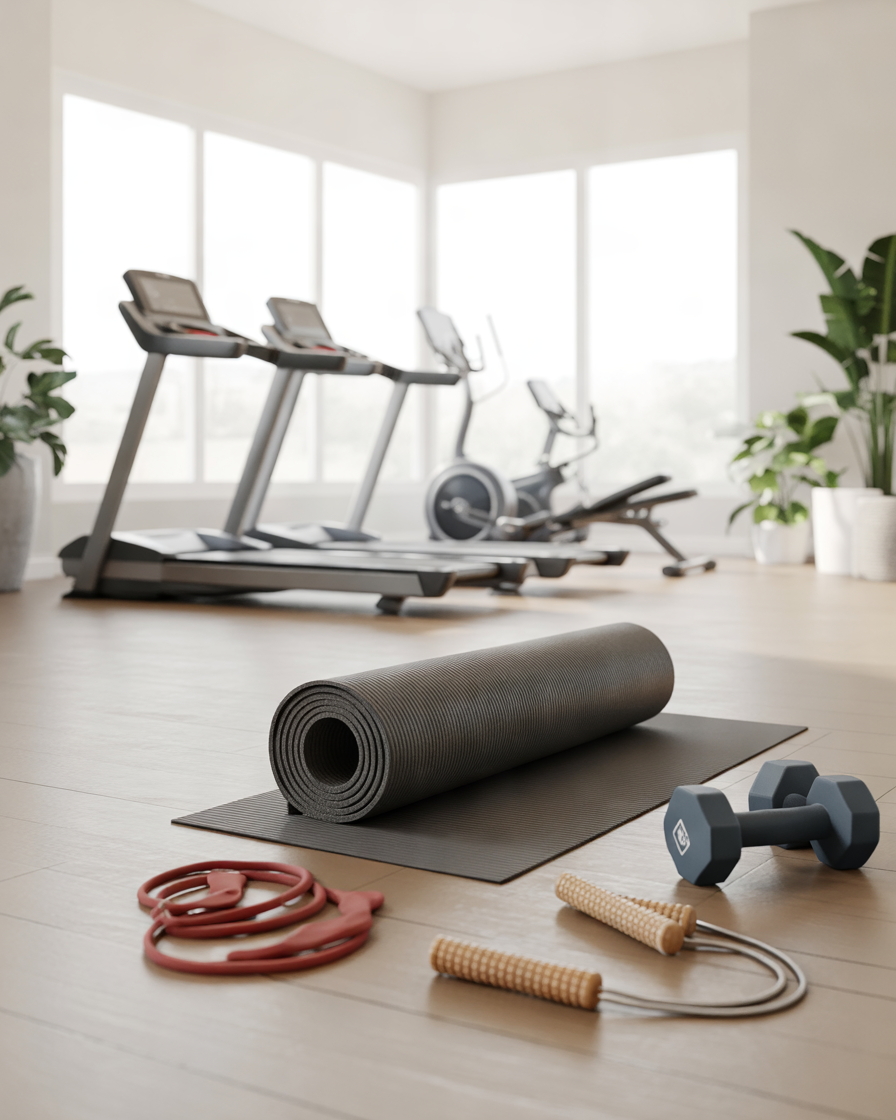
Finding time for exercise can be challenging when work, family responsibilities, and daily routines compete for your attention. The good news is that improving your cardiovascular fitness does not always require a gym membership, expensive equipment, or hours of free time. A well-designed cardio workout at home can help you create a practical fitness routine using simple movements and the space you already have.
Home cardio exercises are a convenient way to increase your daily activity, improve endurance, support heart health, and add more movement to your lifestyle. Whether you live in an apartment, have limited equipment, or prefer exercising privately, there are many options that can be adjusted for different fitness levels.
The key to an effective home cardio routine is consistency. A beginner may start with low-impact movements, while someone with more experience may use high-intensity intervals to challenge their fitness level. The best workout is one that fits your lifestyle and feels sustainable.
This guide covers 12 effective cardio exercises you can perform at home. Each movement includes practical tips, benefits, how to apply it, who it may suit, and safety considerations.
1. Jumping Jacks: A Classic Full-Body Cardio Workout at Home
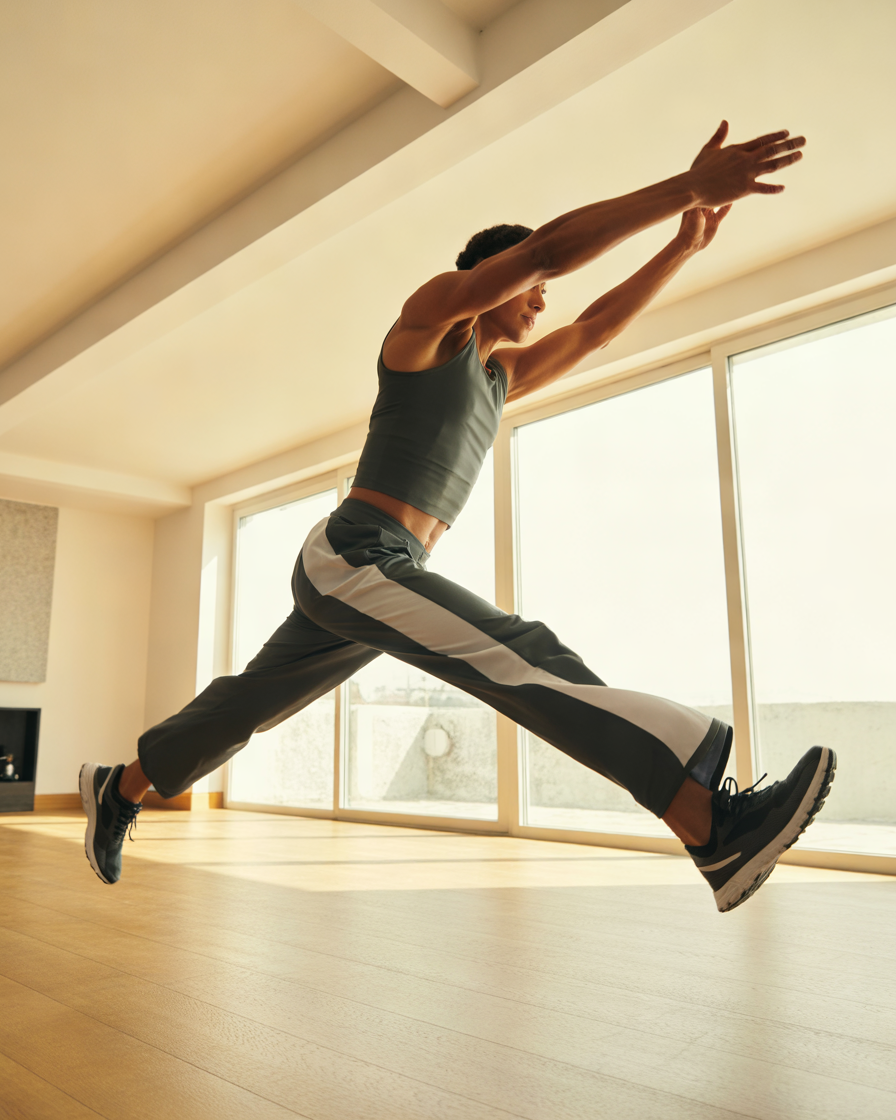
Jumping jacks are one of the simplest cardio exercises because they require no equipment and activate multiple muscle groups at once. This movement increases your heart rate quickly and works your arms, legs, and core together.
Benefits
- Helps increase cardiovascular endurance
- Activates upper and lower body muscles
- Can be performed almost anywhere
- Works well as a warm-up or workout exercise
Practical Tips
Start slowly and focus on controlled movements rather than speed. Keep your knees slightly bent when landing to reduce impact. If jumping feels uncomfortable, perform step-out jacks by moving one foot at a time.
How to Use It
Try performing jumping jacks for:
- 30 seconds during beginner workouts
- 45–60 seconds during moderate sessions
- Multiple rounds in interval training
Who It May Suit
Jumping jacks may suit people looking for an easy full-body cardio exercise. Beginners should start with shorter intervals.
Important Considerations
People with joint discomfort or balance concerns may prefer lower-impact alternatives.
2. High Knees: An Energy-Packed Home Cardio Exercise
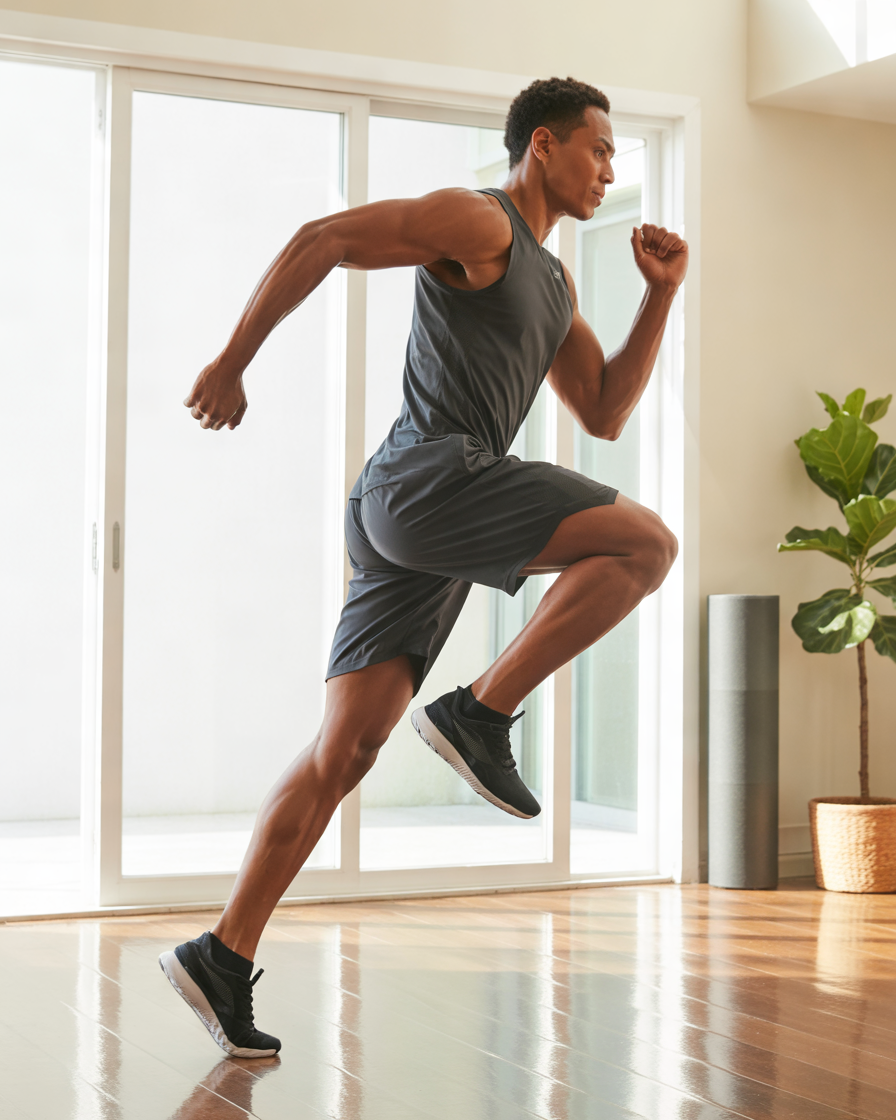
High knees are a dynamic exercise that involves running in place while lifting your knees toward hip level. They are excellent for adding intensity to a home cardio workout.
Benefits
- Raises heart rate quickly
- Improves coordination
- Engages abdominal muscles
- Requires very little space
Practical Tips
Keep your chest upright and avoid leaning backward. Move your arms naturally like you are running.
How to Use It
Include high knees in:
- Warm-ups
- Circuit workouts
- Interval training sessions
A simple example:
30 seconds high knees
30 seconds rest
Repeat 5 times
Who It May Suit
This exercise can suit people who want a higher-energy workout without equipment.
Important Considerations
Reduce the height of your knee lift if the movement feels too intense.
3. Mountain Climbers: A Cardio and Core Challenge
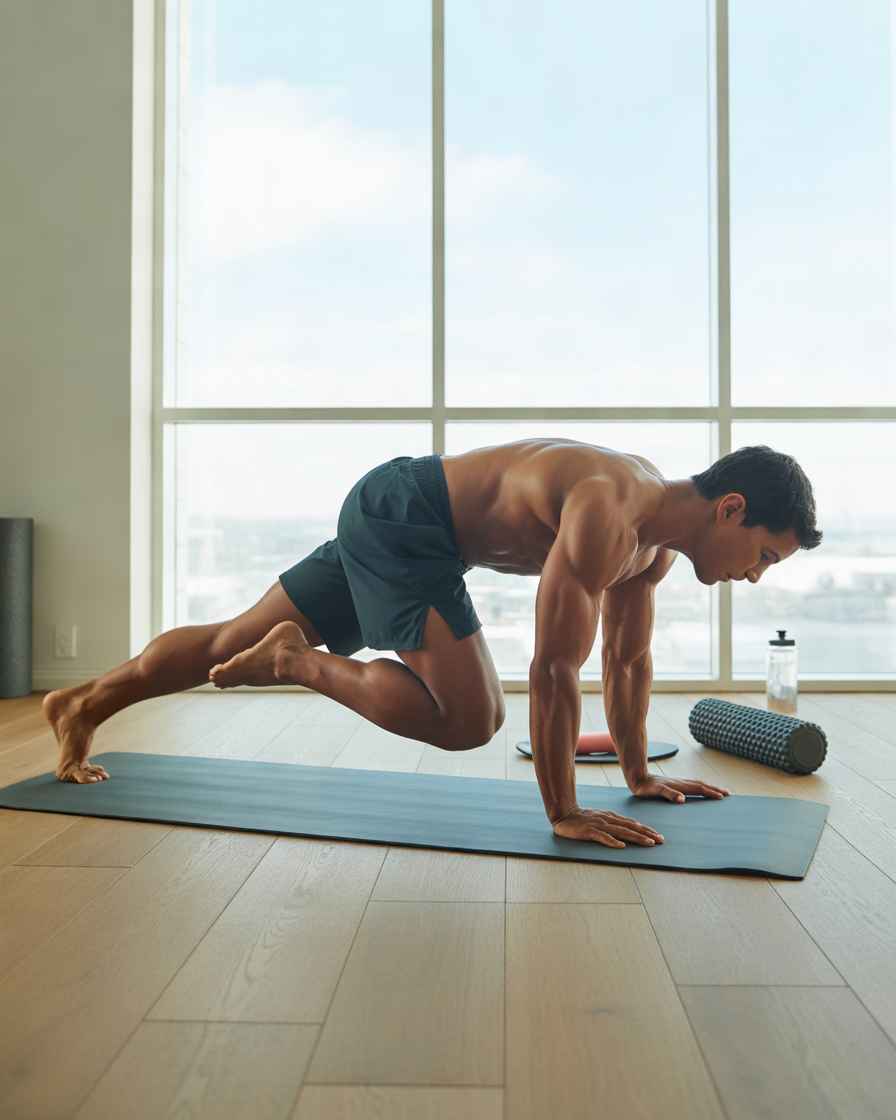
Mountain climbers combine cardiovascular training with core activation. Starting from a plank position, you drive your knees toward your chest in an alternating motion.
Benefits
- Builds endurance
- Engages core muscles
- Improves coordination
- Adds intensity without equipment
Practical Tips
Keep your shoulders above your wrists and maintain a stable back position. Quality movement is more important than speed.
How to Use It
Add mountain climbers into circuits:
- 20 seconds beginner level
- 40 seconds intermediate level
- Longer intervals for advanced training
Who It May Suit
Suitable for people who enjoy challenging full-body movements.
Important Considerations
Modify by performing slow mountain climbers if maintaining a plank position is difficult.
4. Burpees: A Powerful Full-Body Cardio Movement

Burpees combine squats, plank movements, and jumps into one challenging exercise. They are often used in interval workouts because they involve many muscles.
Benefits
- Provides an intense cardio challenge
- Works multiple muscle groups
- Improves workout variety
- Requires no equipment
Practical Tips
Beginners can remove the jump or step back instead of jumping into the plank position.
How to Use It
Start with:
5–10 repetitions per round
Increase gradually as fitness improves.
Who It May Suit
People who enjoy intense workouts and want a challenging home cardio exercise.
Important Considerations
Use proper form and avoid rushing through repetitions.
5. Dancing Cardio: A Fun Way to Exercise at Home
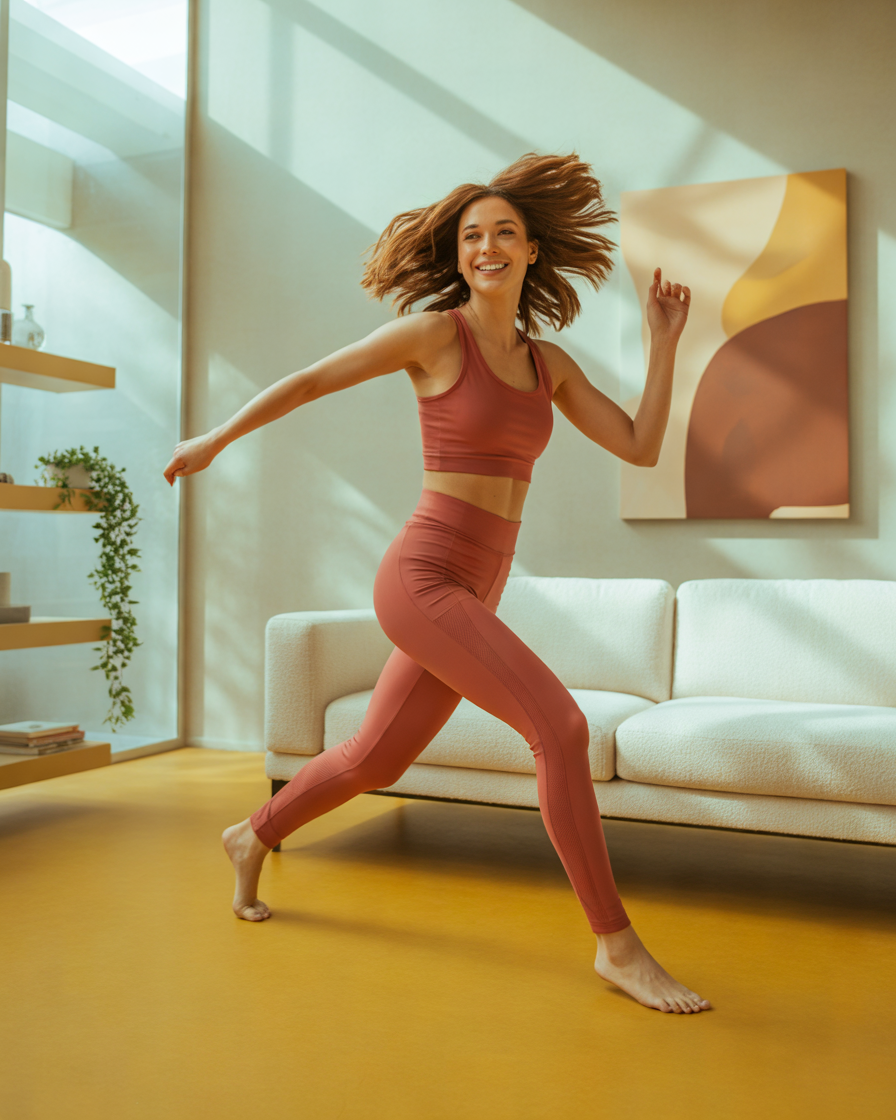
Dance-based cardio workouts make exercise enjoyable by combining movement with music. They are especially useful for people who find traditional workouts repetitive.
Dancing allows you to move continuously while improving coordination and adding more activity to your daily routine. Because it feels more like recreation than traditional exercise, many people find it easier to stay consistent.
Benefits
- Encourages regular movement
- Improves coordination and body awareness
- Can support mood and energy levels
- Easy to customize based on fitness level
- Provides an enjoyable alternative to traditional cardio exercises
Practical Tips
Choose music you enjoy and focus on moving continuously rather than trying to perform complicated choreography. Start with simple steps and gradually add more challenging movements.
Keep your posture comfortable, engage your core, and wear supportive footwear if needed.
How to Use It
Create a 20–30 minute dance workout using:
- Fast-paced songs
- Simple dance steps
- Repeated movement patterns
- Short breaks between songs
You can also combine dance movements with other home cardio exercises to create variety.
Who It May Suit
Dance cardio may suit beginners, people who enjoy music-based workouts, and anyone who wants a more enjoyable approach to staying active.
Important Considerations
Make sure you have enough space to move safely. Avoid slippery surfaces and choose movements that feel comfortable for your body.
6. Stair Climbing: Using Your Home Environment for Cardio
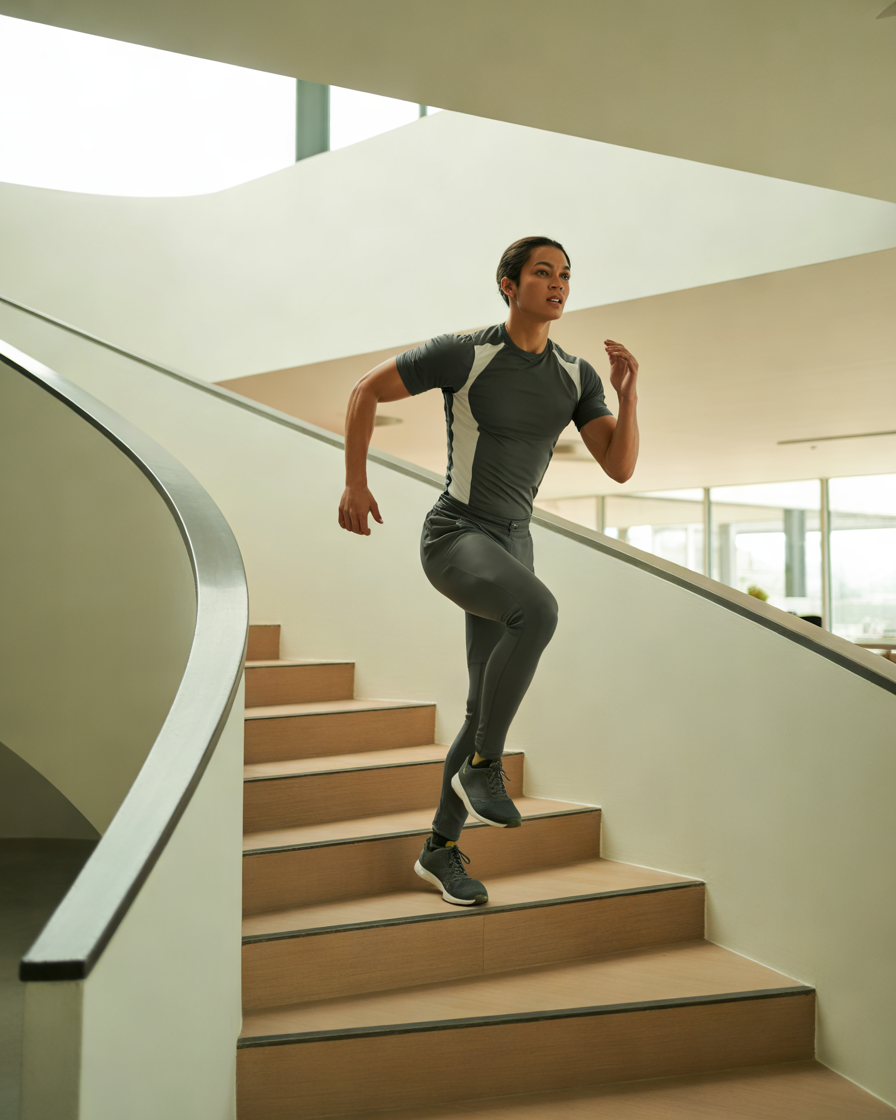
If you have stairs available, stair climbing can become an effective cardio workout at home. It challenges the legs while increasing your heart rate and improving endurance.
Unlike many exercises that require equipment, stair climbing uses something already available in many homes. It can be adjusted by changing your speed, duration, or number of rounds.
Benefits
- Strengthens lower body muscles
- Improves cardiovascular endurance
- Uses existing home space
- Can be adjusted for different fitness levels
- Adds functional movement to your routine
Practical Tips
Maintain good posture while climbing. Keep your chest lifted, look forward, and avoid rushing.
Use the handrail if you need additional balance support. Focus on controlled steps rather than speed.
How to Use It
Try:
- 2–5 minutes of continuous climbing
- Short rest periods
- Several repeated rounds
Beginners can start with slower climbing, while experienced exercisers can increase intensity.
Who It May Suit
Stair climbing may suit people who want a practical home cardio option without buying equipment.
Important Considerations
Use caution on stairs and avoid moving too quickly. People with balance concerns or joint discomfort may need a modified approach.
7. Skipping Rope: A Compact Cardio Workout at Home
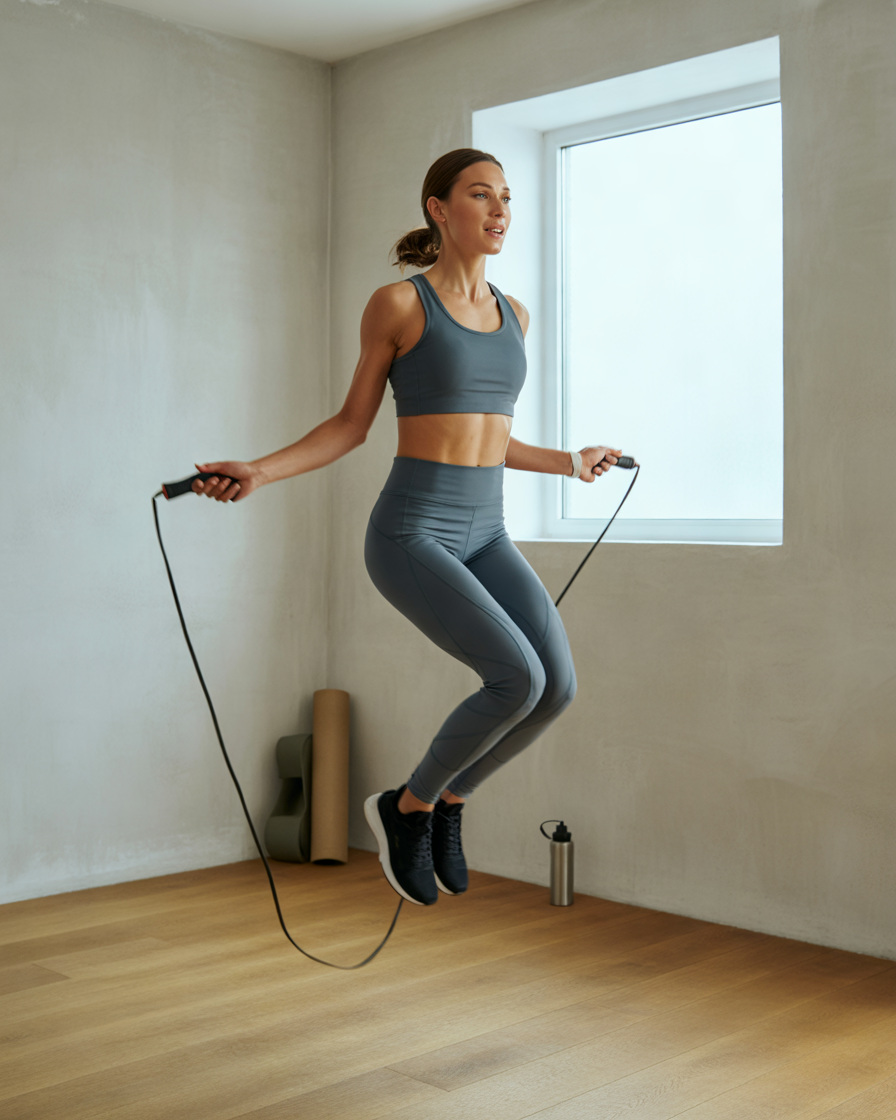
Jump rope is a simple but effective cardio exercise that can increase workout intensity quickly. It combines rhythm, coordination, and cardiovascular effort in one movement.
A skipping rope takes very little storage space, making it a convenient option for home fitness routines.
Benefits
- Helps improve coordination
- Supports cardiovascular endurance
- Requires minimal equipment
- Easy to include in short workouts
- Can increase workout intensity efficiently
Practical Tips
Use small controlled jumps and allow your wrists to create the rope movement. Avoid unnecessary high jumps because they can create extra impact.
Wear supportive shoes and practice on a suitable surface.
How to Use It
Begin with:
- 20–30 second intervals
- Short rest periods
- Multiple rounds
As your coordination improves, gradually increase the duration.
Who It May Suit
Skipping rope may suit people who enjoy rhythmic workouts and want a portable cardio option.
Important Considerations
People with joint sensitivity or balance issues may prefer lower-impact alternatives.
8. Squat Jumps: Lower Body Cardio Training
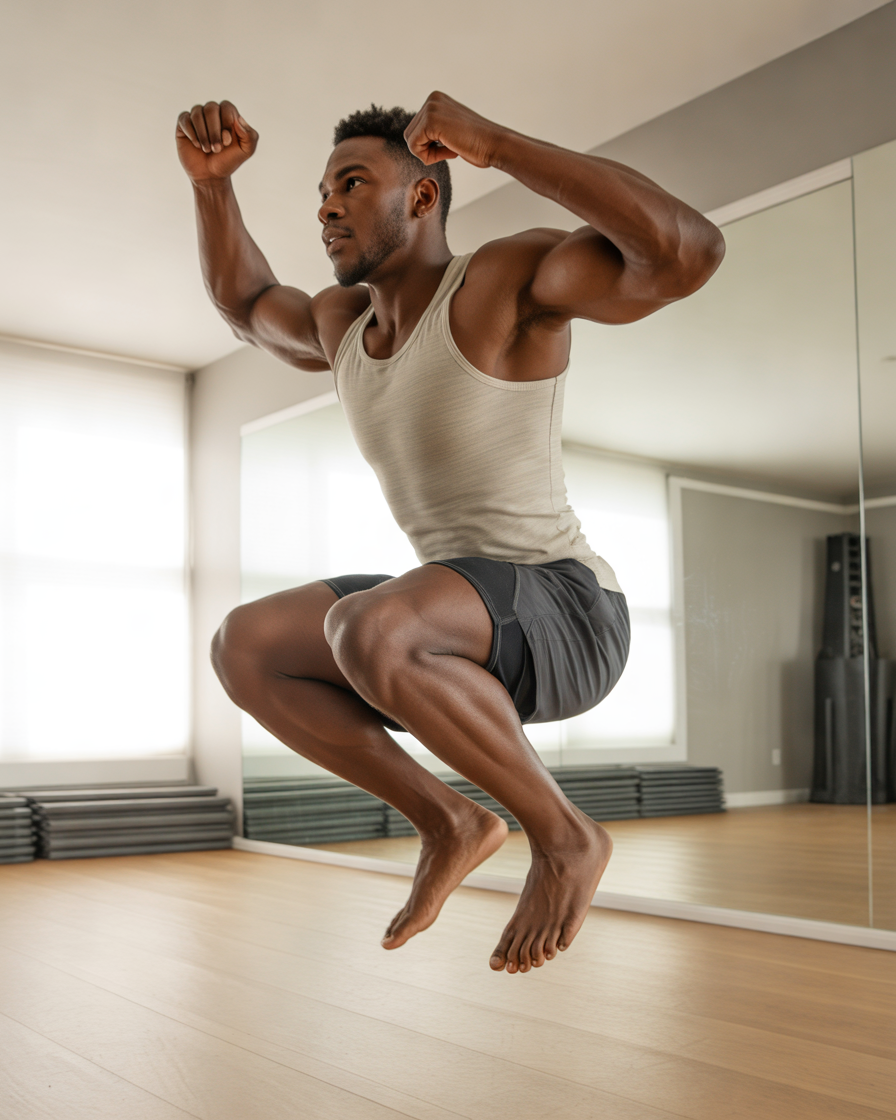
Squat jumps combine the strength benefits of squats with the cardiovascular challenge of explosive movement. They activate the lower body while increasing heart rate.
This exercise can add variety to a home cardio workout routine.
Benefits
- Activates leg muscles
- Improves movement power
- Raises heart rate
- Adds variety to workouts
- Requires no equipment
Practical Tips
Focus on proper landing technique. Land softly with your knees slightly bent and keep your movements controlled.
Quality is more important than completing many repetitions quickly.
How to Use It
Perform:
- 10–15 repetitions per round
- Rest between rounds
- Include them in cardio circuits
Beginners can practice regular squats first before adding jumps.
Who It May Suit
Squat jumps may suit people who are comfortable with basic squatting movements and want a more challenging exercise.
Important Considerations
If jumping feels uncomfortable, replace squat jumps with regular squats or another low-impact cardio movement.
9. Shadow Boxing: A Stress-Relieving Cardio Workout

Shadow boxing involves practicing boxing movements without equipment or an opponent. It combines arm movements, footwork, and body coordination to create an active cardio session.
This exercise can make a home workout feel more engaging because it involves constant movement and changing patterns.
Benefits
- Improves coordination and movement control
- Adds variety to cardio routines
- Encourages active full-body movement
- Can be mentally engaging
- Requires very little space
Practical Tips
Keep your hands near your face in a comfortable boxing position. Rotate your body naturally with each punch and avoid locking your elbows.
Focus on smooth movements rather than trying to punch as fast as possible.
How to Use It
Try:
- Three-minute rounds
- Short rest periods between rounds
- Combining punches with footwork
You can create combinations such as:
- Jab
- Cross
- Hook
- Step movement
Who It May Suit
Shadow boxing may suit people who want an energetic cardio workout with a focus on coordination and movement.
Important Considerations
Avoid aggressive or uncontrolled movements. Keep your joints relaxed and maintain proper technique.
10. Step Touch Cardio: A Beginner-Friendly Option
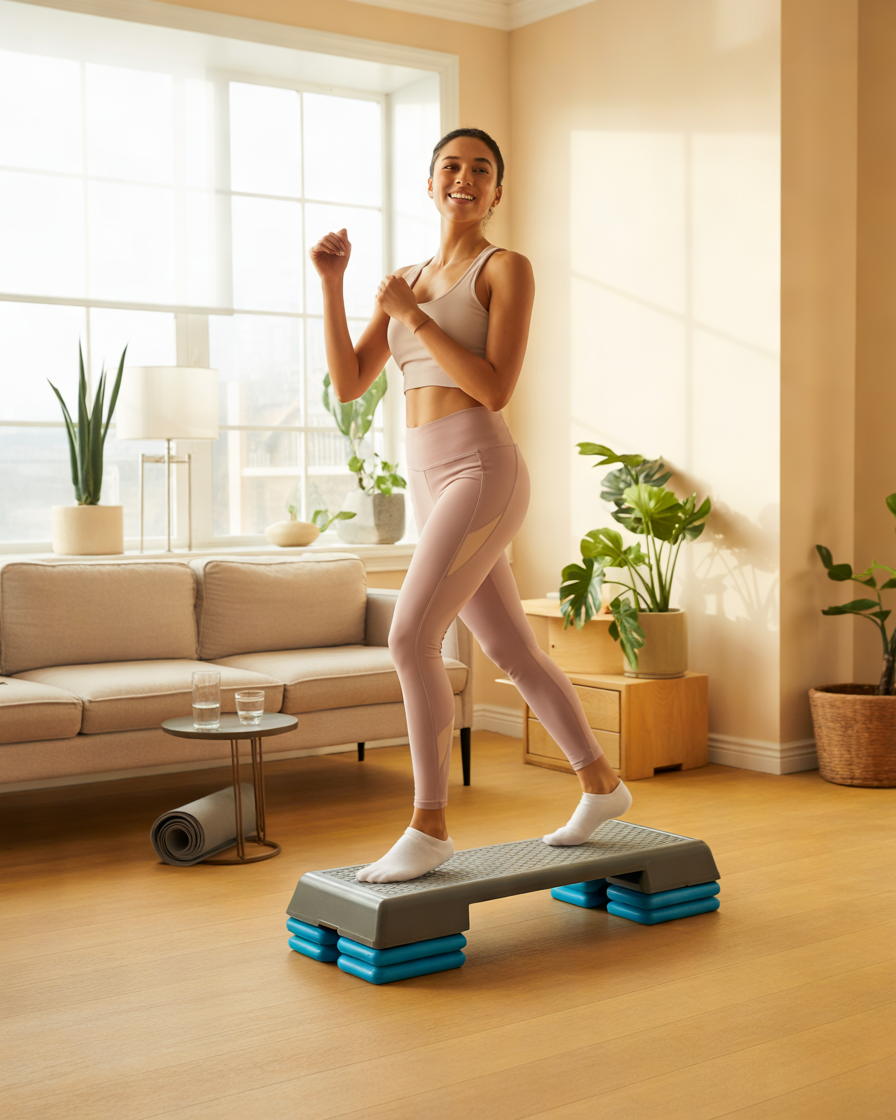
Step touches are low-impact movements where you move from side to side while adding optional arm movements. They are one of the most accessible forms of cardio exercise at home.
This exercise is useful for people who are starting a fitness routine or prefer gentle movement.
Benefits
- Beginner friendly
- Easier on joints compared with high-impact exercises
- Helps increase daily movement
- Can improve coordination
- Suitable for longer workout sessions
Practical Tips
Start with comfortable side steps and gradually add arm movements or faster pacing.
Keep your movements controlled and maintain good posture throughout the exercise.
How to Use It
Perform step touches for:
- 10–20 minutes
- Longer continuous sessions
- Warm-ups before other exercises
You can increase intensity by adding:
- Arm raises
- Faster steps
- Larger movements
Who It May Suit
Step touch cardio may suit beginners, older adults, or people returning to exercise after a break.
Important Considerations
Choose a comfortable pace and avoid forcing movements that cause discomfort.
11. Butt Kicks: Simple Running-Based Cardio at Home
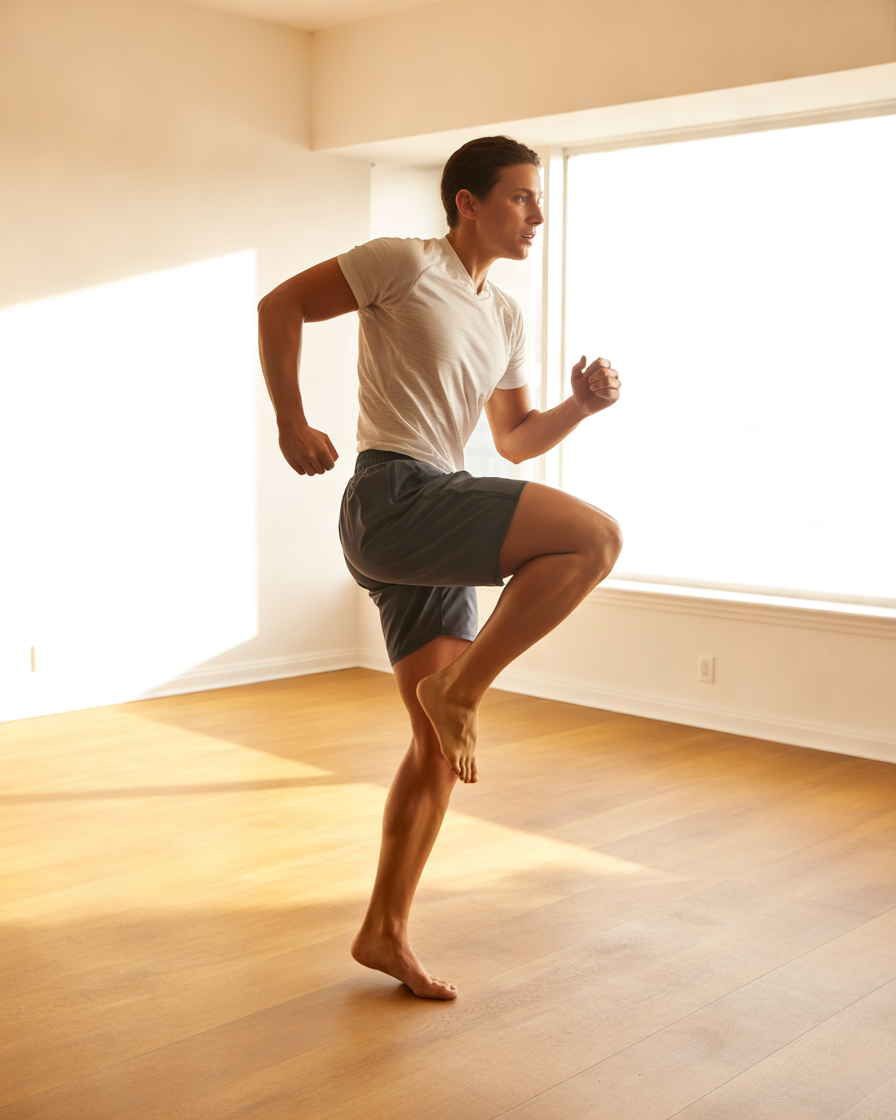
Butt kicks involve jogging in place while bringing your heels toward your glutes. This simple movement adds a running-style challenge without requiring much space.
It is a useful exercise for adding variety to a home cardio workout routine.
Benefits
- Helps increase heart rate
- Supports lower-body movement
- Requires limited space
- Easy to include in workout circuits
- Improves exercise variety
Practical Tips
Keep your upper body relaxed and maintain a steady rhythm. Avoid excessive bouncing and focus on controlled heel movement.
Use your arms naturally as you would while running.
How to Use It
Include butt kicks for:
- 30-second intervals
- Circuit workouts
- Active recovery periods
Combine them with exercises like jumping jacks, squats, or marching.
Who It May Suit
Butt kicks may suit people who want a simple running-based cardio movement indoors.
Important Considerations
Adjust the intensity based on your comfort level. Reduce speed if the movement feels too demanding.
12. Low-Impact Cardio Circuit: A Complete Home Routine
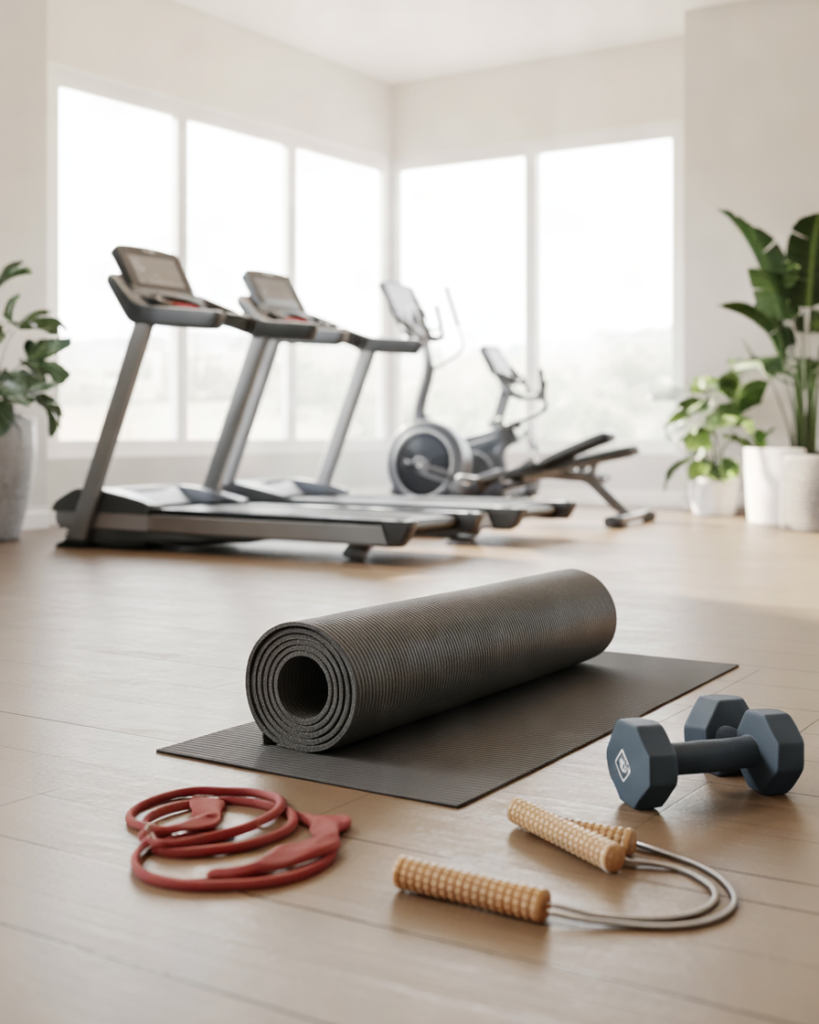
A cardio circuit combines several exercises into one structured workout. Instead of repeating one movement, you rotate through different exercises to keep your routine balanced and interesting.
A well-planned circuit can be adjusted for beginners, intermediate exercisers, and more experienced individuals.
Benefits
- Makes workouts more interesting
- Allows easy customization
- Encourages consistency
- Combines different movement patterns
- Helps create a structured exercise routine
Practical Tips
Choose exercises that match your current fitness level. Include both active movements and short recovery periods.
Example beginner circuit:
30 seconds step touches
30 seconds marching
30 seconds jumping jacks
1 minute rest
Repeat several rounds
How to Use It
Create your own circuit by combining:
- Lower-impact cardio exercises
- Higher-intensity movements
- Strength-based exercises
Adjust workout length depending on your schedule and fitness level.
Who It May Suit
A cardio circuit may suit almost anyone looking for a flexible home cardio workout.
Important Considerations
Avoid choosing exercises only because they look challenging. Select movements you can perform safely with proper form.
Expert Tips for Making Your Cardio Workout at Home More Effective
A successful home cardio workout is not only about working harder. It is about creating a routine that supports your goals, fits your lifestyle, and can be maintained consistently.
Start With a Warm-Up
Before beginning intense cardio exercises, spend a few minutes preparing your body.
Simple warm-up movements can include:
- Marching in place
- Arm circles
- Gentle mobility exercises
- Slow bodyweight movements
A warm-up helps your body transition into exercise gradually.
Focus on Consistency
Many people believe longer workouts are always better, but regular movement is often more realistic and sustainable.
A short workout completed consistently may become a stronger habit than occasional intense sessions.
Combine Different Movements
Using different cardio exercises can make workouts more enjoyable and balanced.
Try combining:
- Low-impact exercises
- Faster movements
- Mobility exercises
- Strength-based movements
This approach can prevent your routine from becoming repetitive.
Listen to Your Body
Exercise should feel challenging but manageable.
Normal signs of effort may include:
- Increased breathing
- Muscle fatigue
- Sweating
However, stop exercising if you experience unusual pain, dizziness, or concerning symptoms.
Create a Dedicated Space
A workout area does not need to be large. A small, clear space can help you stay consistent.
Make sure:
- The floor is stable
- Objects are removed from the area
- You have enough room for movement
Stay Hydrated
Drink enough fluids before and after exercise. During longer or more intense workouts, hydration becomes especially important.
Your hydration needs may vary depending on factors such as temperature, workout intensity, and individual needs.
Frequently Asked Questions About Cardio Workout at Home
Can I get a good cardio workout at home without equipment?
Yes, you can create an effective cardio workout at home without purchasing equipment. Many cardio exercises use only your body weight, including jumping jacks, high knees, mountain climbers, dancing, and step-based movements.
The effectiveness of your workout depends on factors such as consistency, exercise selection, movement quality, and how well the routine matches your fitness level.
A simple home cardio routine can be adjusted by changing:
- Workout duration
- Exercise intensity
- Rest periods
- Number of rounds
How long should a home cardio workout be?
The ideal length of a home cardio workout depends on your fitness experience, schedule, and overall goals.
Beginners may start with shorter sessions and gradually increase their workout time as they become more comfortable. Some people may prefer short daily workouts, while others may choose longer sessions several times per week.
The most important factor is creating a routine that you can maintain consistently.
Is home cardio suitable for beginners?
Yes, home cardio can be suitable for beginners when exercises are selected according to their current ability.
Beginners can start with lower-impact movements such as:
- Step touches
- Marching in place
- Gentle dancing
- Slow-paced circuits
As fitness improves, they can gradually introduce more challenging exercises.
Proper form and comfortable progression are more important than exercising at maximum intensity.
Can I do cardio workouts at home every day?
Whether you can perform cardio workouts every day depends on the intensity of your sessions, your recovery needs, and your overall health.
Some people enjoy daily light movement, while others benefit from rest days between more demanding workouts.
A balanced routine may include:
- Cardio sessions
- Strength training
- Mobility exercises
- Recovery periods
Listening to your body and adjusting your routine is important.
What is the best cardio workout at home for weight management?
Different cardio exercises can contribute to increasing physical activity levels. Exercises such as jumping jacks, dancing, stair climbing, and cardio circuits can all be included in an active lifestyle.
However, weight management involves multiple factors, including:
- Overall eating habits
- Daily activity
- Sleep quality
- Lifestyle patterns
- Individual health factors
There is no single exercise that works the same way for everyone.
Can I do a cardio workout at home in a small space?
Yes, many home cardio exercises require very little space.
Good options for small areas include:
- Marching in place
- High knees
- Shadow boxing
- Step touches
- Low-impact cardio circuits
You can adjust movements to fit your available space while still maintaining an active routine.
Should I warm up before a home cardio workout?
Yes, warming up before cardio exercise is generally recommended.
A warm-up helps prepare your body for movement by gradually increasing activity levels.
A simple warm-up may include:
- Walking in place
- Arm movements
- Gentle stretches
- Light bodyweight exercises
Should I consult a healthcare professional before starting home cardio?
If you have existing health concerns, injuries, chronic conditions, or are returning to exercise after a long break, consider speaking with a healthcare professional before starting a new workout program.
A professional can help you understand what types of activities may be appropriate for your individual situation.
Conclusion: Create a Sustainable Cardio Workout at Home Routine
A cardio workout at home can be simple, effective, and adaptable to different lifestyles. You do not need a gym membership or expensive equipment to add more movement to your daily routine.
From jumping jacks and mountain climbers to dancing, stair climbing, and low-impact circuits, there are many ways to improve your fitness from the comfort of your home.
The most important part of building a successful home cardio routine is choosing exercises that fit your current fitness level and lifestyle. Start with movements you enjoy, focus on proper technique, and gradually increase your challenge as you become stronger and more confident.
Consistency is what turns individual workouts into lasting habits. With a realistic approach and careful progression, your home can become a practical space for supporting your overall fitness journey.