You do not need an expensive gym membership, complicated equipment, or hours of free time to build a healthier and stronger body. Sometimes, all you need is a comfortable exercise mat, a little space, and a consistent routine. An at-home Pilates workout is an excellent way to move your body, strengthen your muscles, improve flexibility, and develop better body awareness without leaving your home.
Pilates is a low-impact exercise method that focuses on controlled movements, breathing, posture, balance, and core strength. Unlike workouts that rely on fast repetitions or heavy weights, Pilates encourages you to move slowly and intentionally. This makes it an appealing option for people who want a manageable fitness routine that can fit into their daily schedules.
One of the best things about Pilates is its flexibility. You can practice beginner Pilates at home using only your body weight. You can also adjust the movements to match your current fitness level and gradually make your routine more challenging as your strength and coordination improve.
Whether you are a complete beginner, someone returning to exercise, or an experienced fitness enthusiast looking for a low-impact home workout, the following exercises can help you create a balanced full-body Pilates routine.
In this guide, you will discover 10 effective at-home Pilates workout exercises, including movements for your abdominal muscles, back, hips, legs, and glutes. Each exercise includes practical instructions, potential benefits, beginner-friendly tips, and important safety considerations.
How to Get Started With an At Home Pilates Workout
Before beginning, prepare a comfortable exercise space where you can stretch your arms and legs without hitting furniture or other objects.
You will need:
- A non-slip exercise or yoga mat.
- Comfortable clothing that allows free movement.
- A water bottle.
- A small cushion or folded towel for additional support if needed.
- Optional resistance bands for more challenging variations.
Start with approximately 15–20 minutes if you are new to Pilates. As your endurance and confidence improve, you can gradually increase your sessions to 25–35 minutes.
Focus on controlled movements rather than completing as many repetitions as possible. Proper breathing and alignment are more important than speed.
The following 10 Pilates exercises can be performed in sequence as a beginner-friendly full-body routine.
1. Pilates Pelvic Curl for Core Strength and Lower Back Mobility
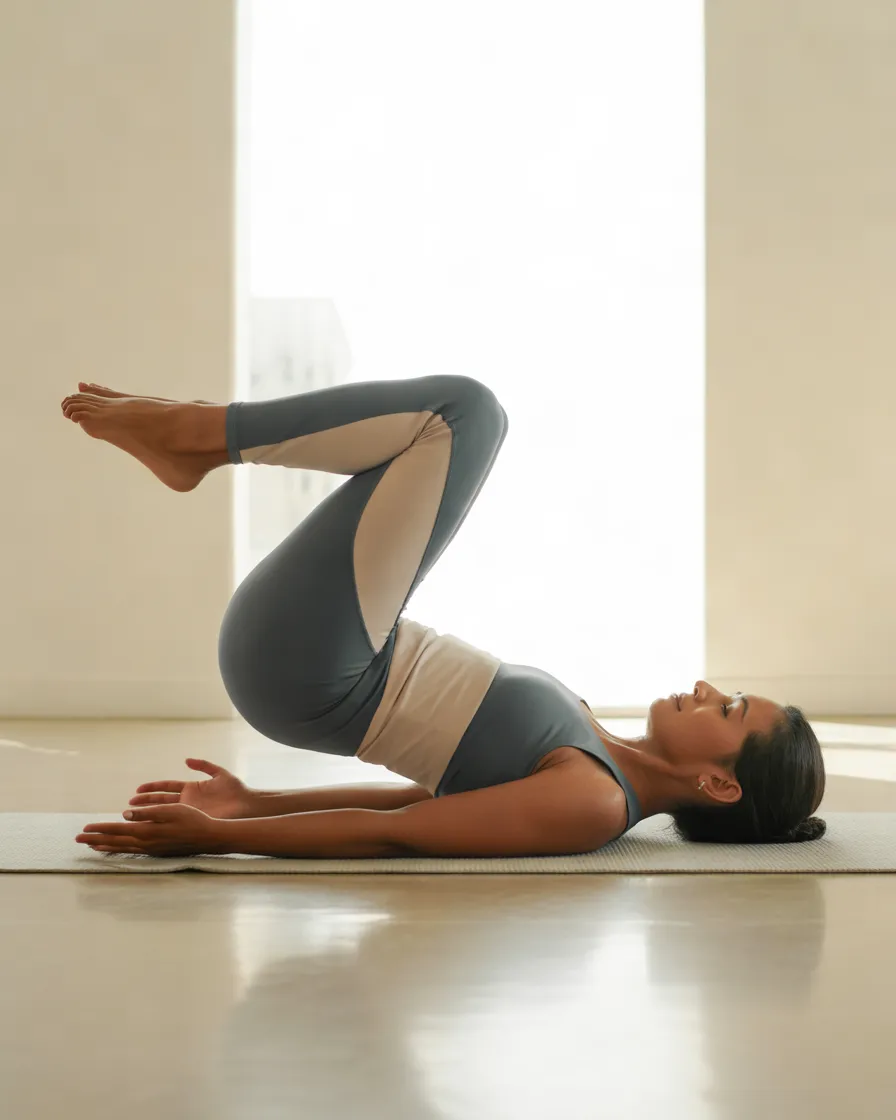
The Pilates pelvic curl is a gentle introductory movement that helps you understand how to control your pelvis and spine. It is particularly useful when starting a beginner Pilates workout because it introduces the connection between breathing, abdominal engagement, and controlled movement.
You perform this exercise while lying on your back with your knees bent and feet resting on the floor.
Potential Benefits
- Encourages gentle spinal movement.
- Activates the abdominal and glute muscles.
- Develops awareness of pelvic positioning.
- Supports controlled movement through the hips.
- Helps prepare the body for more challenging Pilates exercises.
How to Perform It
- Lie on your back with your knees bent and feet hip-width apart.
- Place your arms comfortably beside your body.
- Inhale gently and prepare your abdominal muscles.
- As you exhale, gently tilt your pelvis and lift your hips off the mat.
- Continue lifting until your shoulders, hips, and knees form a comfortable diagonal line.
- Pause briefly without arching your lower back.
- Slowly lower your spine and hips back onto the mat.
Complete 8–12 controlled repetitions.
Practical Tips
Keep your feet firmly grounded and avoid pushing through your neck. Imagine lifting your hips gradually rather than throwing them upward. Coordinate your breathing with each repetition.
Who It May Suit
This exercise may suit beginners, people looking for gentle core activation, and individuals who want to improve their awareness of pelvic movement.
Important Considerations
Avoid lifting your hips too high or forcing your spine into an uncomfortable position. If you experience back pain, stop and consider getting professional guidance before continuing.
2. Pilates Toe Taps for Deep Abdominal Activation
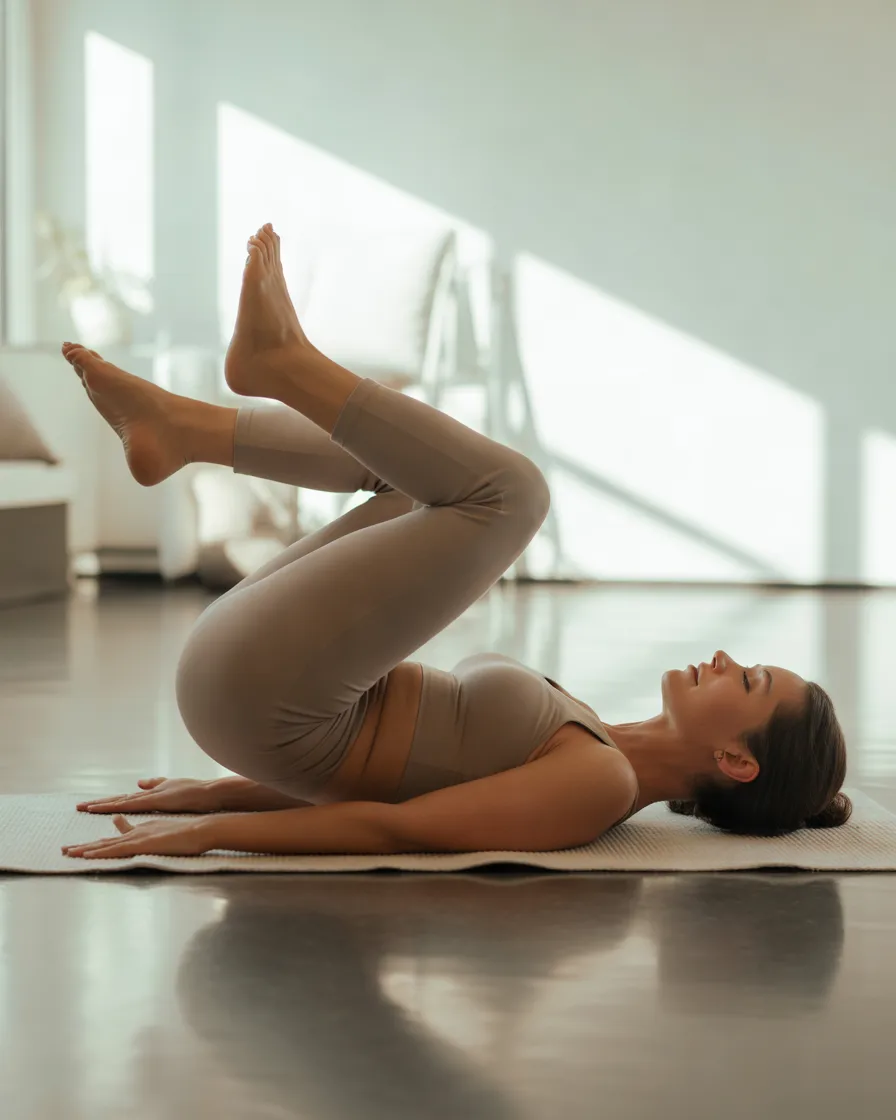
Pilates toe taps are a popular mat Pilates exercise that focuses on abdominal control and coordination. They are especially useful for people who want to strengthen their core without performing traditional sit-ups or crunches.
The movement looks simple, but maintaining a stable pelvis while moving your legs requires concentration.
Potential Benefits
- Strengthens the abdominal muscles.
- Develops core stability.
- Encourages coordination between the upper and lower body.
- Helps improve awareness of pelvic positioning.
- Provides a low-impact alternative to traditional abdominal exercises.
How to Perform It
- Lie on your back with your knees bent.
- Lift both legs into a tabletop position, keeping your knees above your hips.
- Keep your arms relaxed beside your body.
- Engage your abdominal muscles and maintain a comfortable spine position.
- Slowly lower your right foot toward the floor.
- Lightly tap your toes against the mat.
- Bring the leg back to the starting position.
- Repeat with your left leg.
Perform 8–10 repetitions on each side.
Practical Tips
Move one leg at a time and keep your pelvis as still as possible. Start with a small movement if lowering your foot all the way creates tension in your lower back.
Keep breathing naturally instead of holding your breath.
Who It May Suit
Toe taps may suit beginners who want to develop core strength, people who prefer low-impact exercise, and individuals who want to include abdominal work in their home Pilates routine.
Important Considerations
If your lower back begins arching away from the mat or feels uncomfortable, reduce the range of movement. You can also keep one foot on the floor while practicing the movement with the opposite leg.
3. Pilates Hundred Preparation for Core Endurance
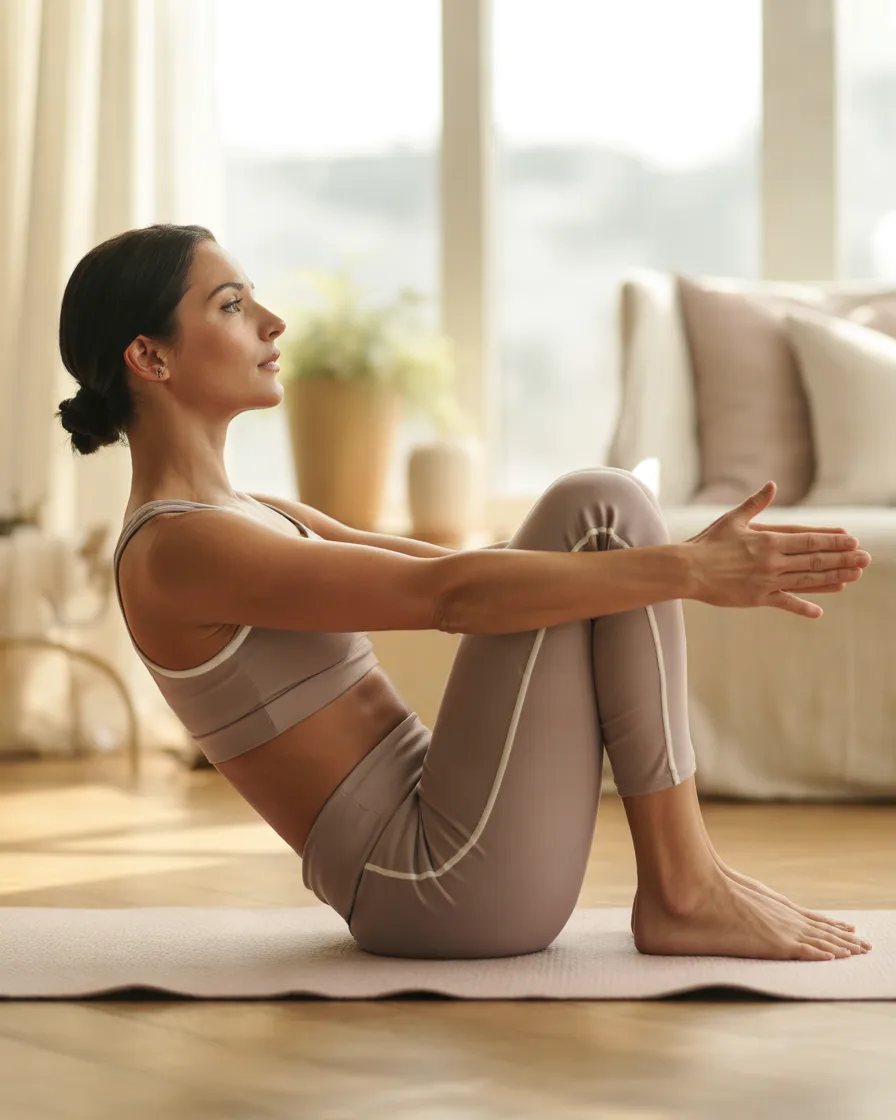
The Hundred is one of the most recognizable traditional Pilates exercises. However, beginners do not need to start with the complete version. The Hundred preparation provides a more accessible introduction to the breathing and abdominal engagement involved in this classic movement.
It focuses on coordinating your breathing with controlled upper-body positioning.
Potential Benefits
- Builds abdominal endurance.
- Encourages controlled breathing.
- Improves coordination.
- Develops awareness of core engagement.
- Introduces an important traditional Pilates movement.
How to Perform It
- Lie on your back with your knees bent and feet resting on the mat.
- Gently engage your abdominal muscles.
- Lift your head and shoulders slightly, keeping your neck comfortable.
- Extend your arms forward beside your hips.
- Begin making small, controlled movements with your arms.
- Inhale gently for several arm movements.
- Exhale slowly for several more movements.
- Lower your head and shoulders to rest.
Start with 20–30 arm movements and gradually build toward the traditional breathing pattern.
Practical Tips
Keep your gaze toward your knees rather than pulling your chin toward your chest. Place a small cushion under your head if necessary.
You can keep your head on the mat throughout the exercise if lifting it feels uncomfortable.
Who It May Suit
This movement may suit people who want to develop core endurance, improve breathing coordination, and learn traditional mat Pilates techniques.
Important Considerations
Avoid forcing your neck upward or holding your breath. People with neck discomfort may prefer the head-supported variation. Stop if you experience pain, dizziness, or unusual discomfort.
4. Single Leg Stretch for Abdominal Control and Coordination
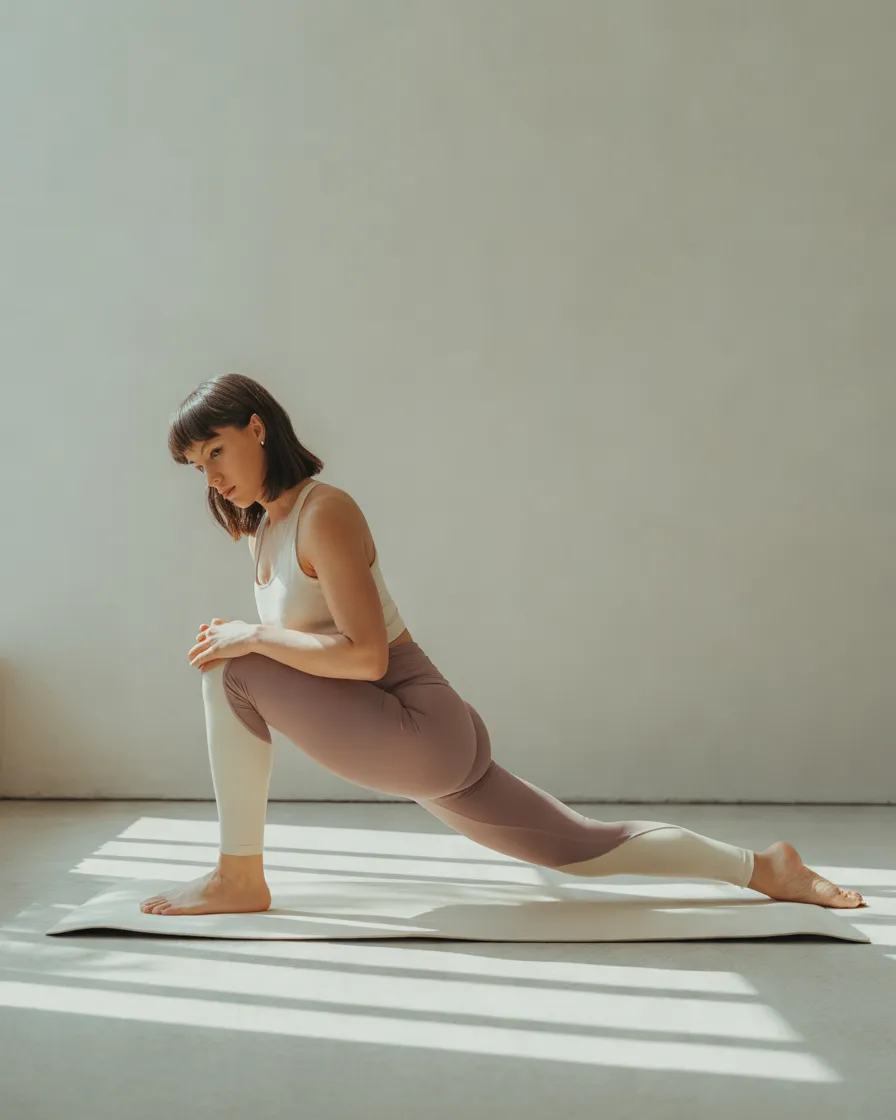
The single leg stretch is a classic Pilates abdominal exercise that combines controlled leg movements with upper-body stability. It challenges your core while encouraging coordination between your arms, legs, and breathing.
A beginner-friendly version can be performed with your head resting on the mat.
Potential Benefits
- Engages the abdominal muscles.
- Develops coordination.
- Encourages controlled hip movement.
- Improves awareness of core stability.
- Adds variety to a full-body Pilates workout.
How to Perform It
- Lie on your back with your knees bent.
- Bring one knee toward your chest.
- Place your hands gently around the shin without pulling forcefully.
- Extend the opposite leg forward at a comfortable angle.
- Slowly switch legs, bringing the extended leg toward your chest.
- Continue alternating sides with controlled movements.
- Maintain a stable pelvis throughout the exercise.
Complete 8–10 repetitions on each side.
Practical Tips
Start with your extended leg pointing toward the ceiling rather than lowering it close to the floor. This makes the exercise easier and can help you maintain abdominal control.
Move slowly and avoid rushing through the leg changes.
Who It May Suit
This exercise may suit beginners with some basic core control, intermediate Pilates participants, and people looking for a more dynamic abdominal movement.
Important Considerations
If you experience neck discomfort, keep your head down. Avoid pulling your knees forcefully toward your chest. Reduce the range of motion if your lower back feels strained.
5. Pilates Glute Bridge for Stronger Hips and Glutes
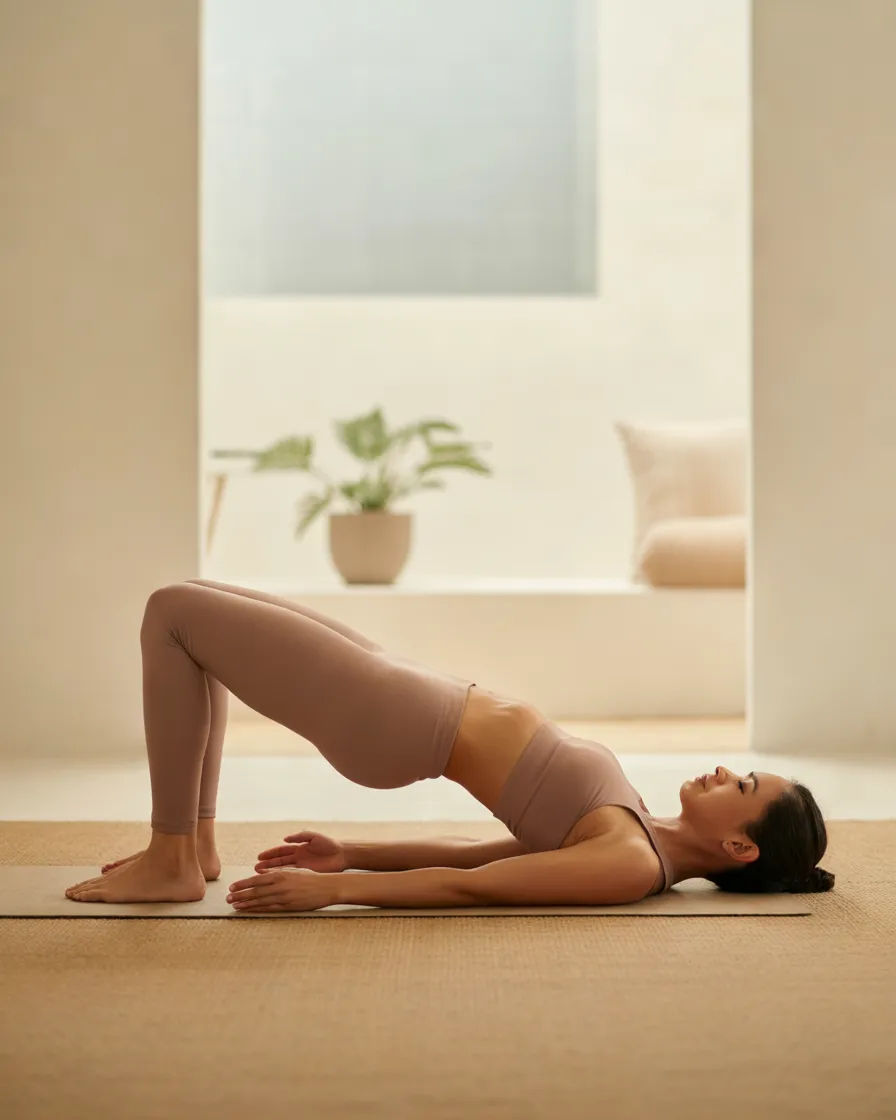
The Pilates glute bridge is an excellent addition to a full-body mat Pilates routine. Although it looks relatively simple, it involves several muscle groups, including the glutes, hamstrings, and abdominal muscles.
It is also a useful exercise for people who spend long hours sitting and want to include more hip movement in their daily routine.
Potential Benefits
- Activates the glute muscles.
- Strengthens the muscles around the hips.
- Engages the abdominal muscles.
- Encourages controlled hip extension.
- Develops lower-body strength without equipment.
How to Perform It
- Lie on your back with your knees bent and feet flat on the floor.
- Keep your feet approximately hip-width apart.
- Rest your arms beside your body.
- Gently engage your abdominal muscles.
- Press through your feet and lift your hips.
- Stop when your body forms a comfortable diagonal line.
- Squeeze your glutes gently without overextending your back.
- Slowly lower your hips to the starting position.
Perform 10–12 repetitions.
Practical Tips
Keep your knees pointing forward rather than allowing them to fall outward. Focus on using your glutes instead of pushing excessively through your lower back.
For an additional challenge, hold the bridge position for 3–5 seconds before lowering.
Who It May Suit
The glute bridge may suit beginners, people interested in strengthening their hips and glutes, and anyone looking for a low-impact lower-body exercise.
Important Considerations
Avoid arching your lower back at the top. Keep the movement within a comfortable range and stop if you experience sharp pain in your hips or back.
6. Side-Lying Leg Raises for Outer Hip and Leg Strength
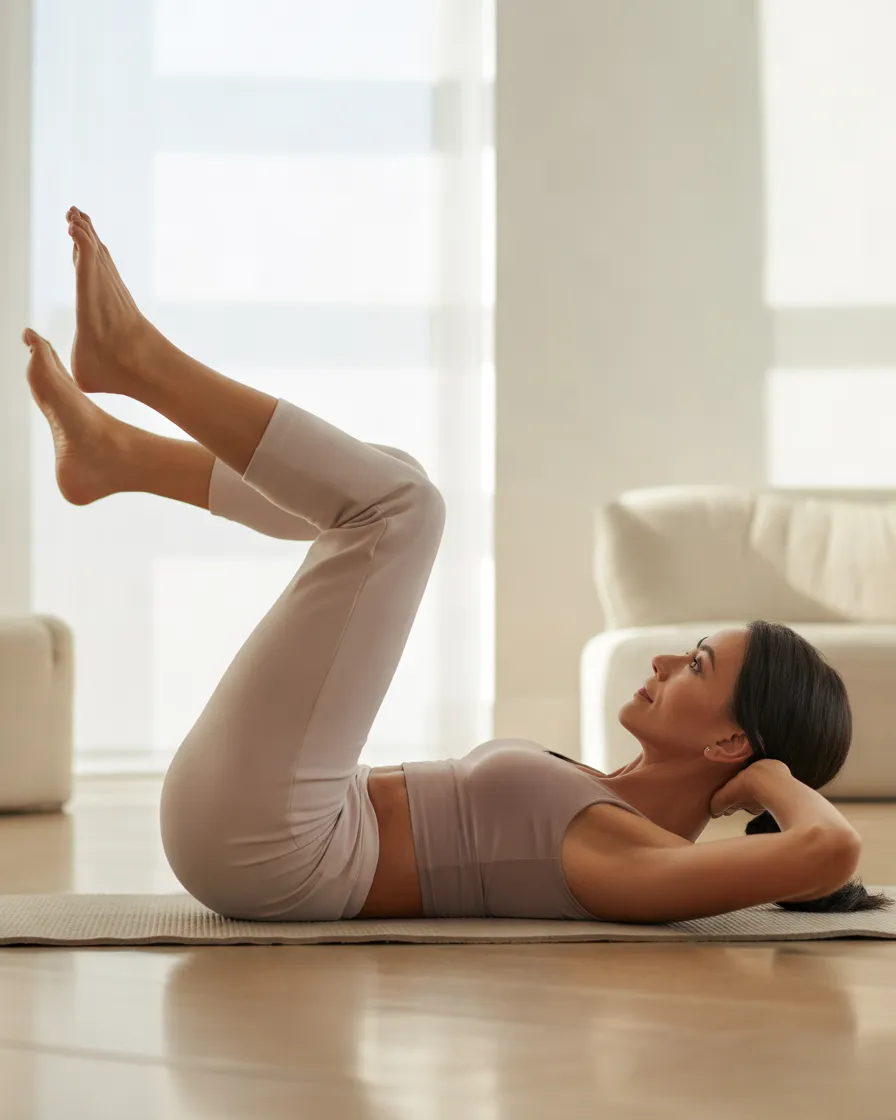
Side-lying leg raises are simple but effective mat Pilates exercises that target the muscles around the outer hips. They are particularly useful when you want to add lower-body strengthening movements without jumping, running, or using heavy equipment.
Because the exercise is performed on your side, it also encourages awareness of your body alignment.
Potential Benefits
- Strengthens the outer hip muscles.
- Engages the muscles around the pelvis.
- Encourages lower-body control.
- Improves movement coordination.
- Provides a convenient no-equipment Pilates exercise.
How to Perform It
- Lie on your right side with both legs extended.
- Rest your head comfortably on your right arm.
- Place your left hand on the mat in front of your body for support.
- Align your shoulders and hips.
- Slowly lift your upper leg toward the ceiling.
- Pause briefly at a comfortable height.
- Lower the leg slowly without letting it drop.
- Complete your repetitions before switching sides.
Perform 10–12 repetitions on each side.
Practical Tips
Keep your toes pointing forward instead of turning your foot upward. Avoid rolling your upper hip backward while lifting your leg.
Small, controlled repetitions are often more useful than lifting your leg as high as possible.
Who It May Suit
This movement may suit beginners and intermediate exercisers who want to strengthen their outer hips and improve lower-body coordination.
Important Considerations
Do not force your leg into a high position. If you feel discomfort around your hip joint, reduce the range of motion or stop the exercise.
7. Pilates Clamshell Exercise for Hip Stability
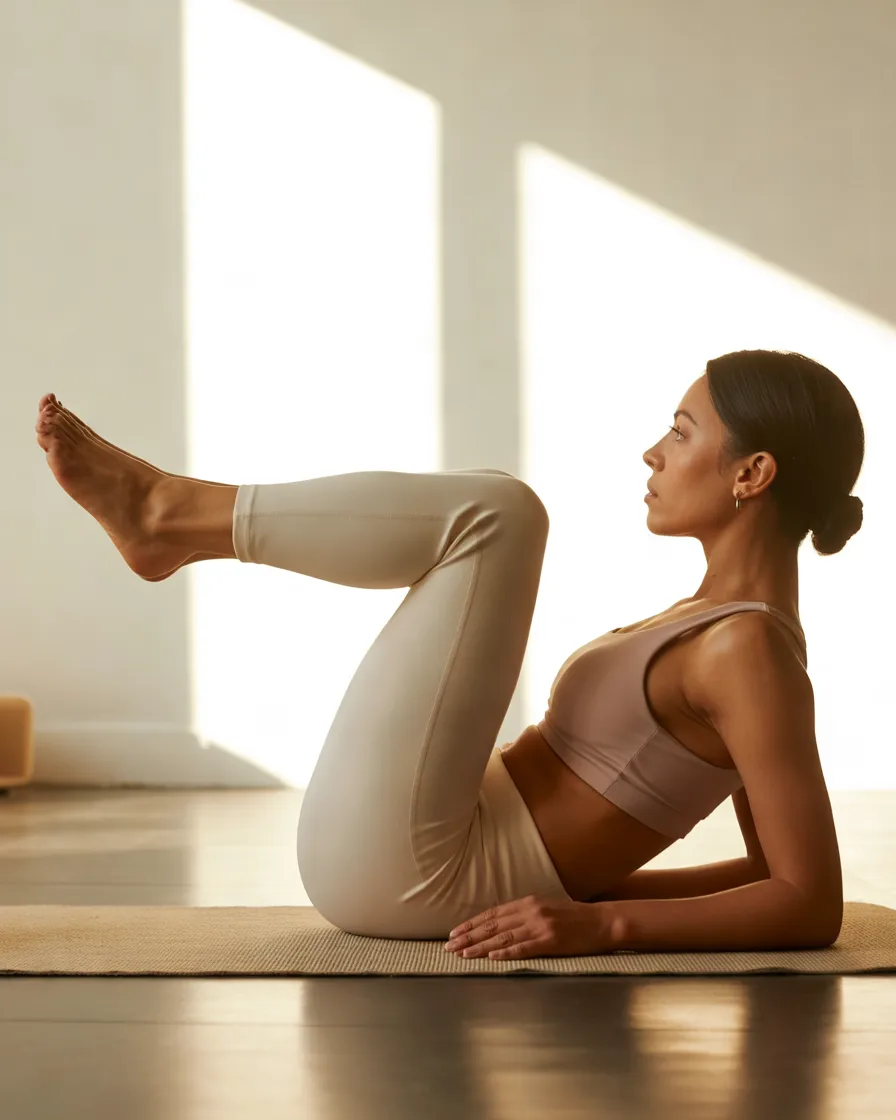
The clamshell is a beginner-friendly Pilates movement that focuses on the muscles around the hips and outer glutes. It is performed while lying on your side with your knees bent.
This exercise is particularly helpful for learning how to move your upper leg independently while keeping your pelvis stable.
Potential Benefits
- Activates the outer glute muscles.
- Strengthens muscles that support hip movement.
- Encourages pelvic stability.
- Develops controlled leg movement.
- Offers an accessible alternative to more challenging standing exercises.
How to Perform It
- Lie on your side with your knees bent and feet together.
- Keep your hips stacked directly above one another.
- Rest your head on your lower arm.
- Place your upper hand on your hip or the mat.
- Slowly lift your upper knee while keeping your feet together.
- Stop before your pelvis begins rolling backward.
- Lower your knee with control.
- Repeat before changing sides.
Complete 12–15 repetitions on each side.
Practical Tips
Think of your knees opening like a small clamshell. Your feet should remain together throughout the movement.
Once the basic version becomes comfortable, you can place a light resistance band above your knees.
Who It May Suit
The clamshell may suit beginners, people working on hip strength, and individuals who want a gentle lower-body exercise without standing or jumping.
Important Considerations
Avoid rotating your entire body backward to create a bigger movement. Keep your hips stacked and work within a comfortable range.
If you have an existing hip injury, ask a qualified healthcare professional whether this movement is appropriate.
8. Bird Dog Pilates Exercise for Balance and Core Stability
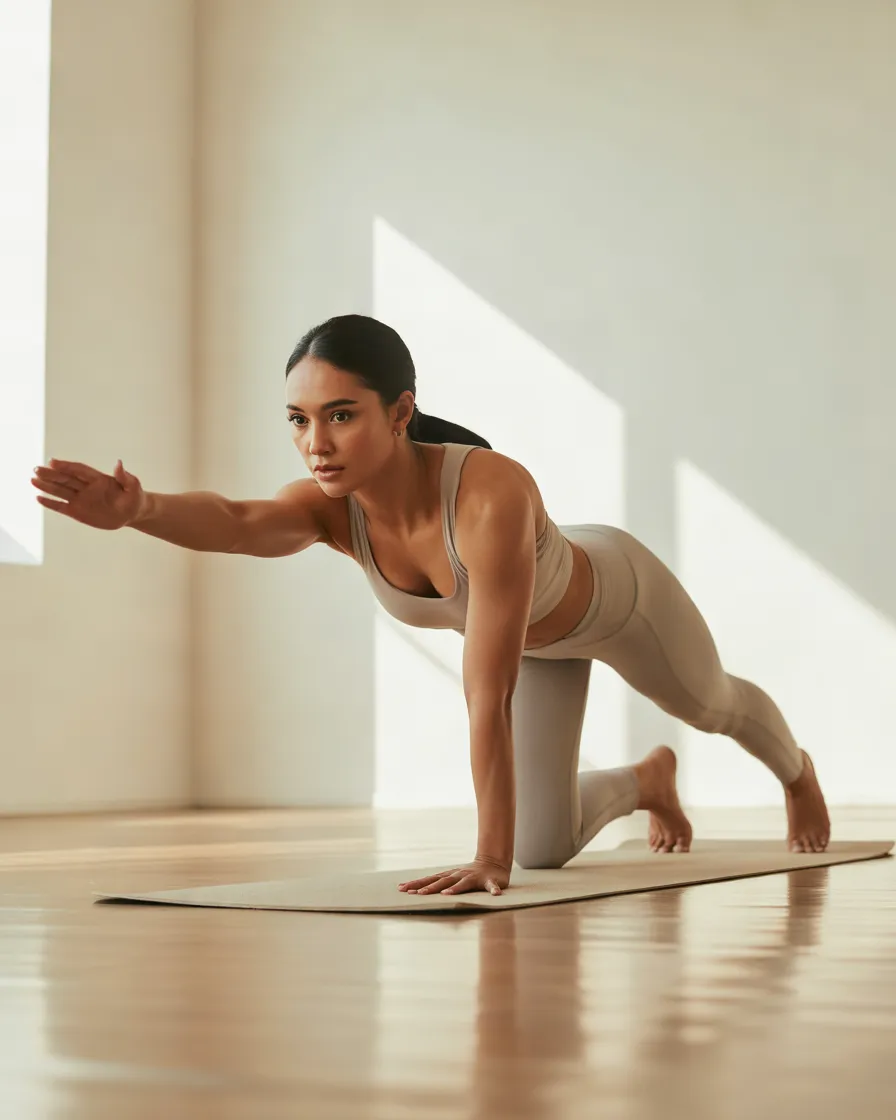
The bird dog is a controlled movement that challenges your balance while engaging your abdominal, back, and hip muscles. It is often included in Pilates-inspired routines because it teaches you to stabilize your body while moving opposite limbs.
Unlike traditional abdominal exercises, this movement involves supporting your body on your hands and knees.
Potential Benefits
- Develops core stability.
- Encourages coordination between opposite arms and legs.
- Engages the muscles around the back and hips.
- Challenges balance and body awareness.
- Supports controlled movement through the shoulders and hips.
How to Perform It
- Begin on your hands and knees.
- Position your hands beneath your shoulders and knees beneath your hips.
- Keep your spine in a comfortable neutral position.
- Gently engage your abdominal muscles.
- Extend your right arm forward while extending your left leg backward.
- Keep your hips facing the floor.
- Pause briefly without losing balance.
- Slowly return to the starting position.
- Repeat with the opposite arm and leg.
Complete 8–10 repetitions on each side.
Practical Tips
Imagine balancing a glass of water on your lower back. This mental image can help you avoid excessive twisting or arching.
If the full movement feels difficult, lift only one arm or one leg at a time.
Who It May Suit
Bird dog may suit beginners who can comfortably maintain a hands-and-knees position, intermediate Pilates participants, and people interested in improving balance and coordination.
Important Considerations
Use a folded towel under your knees if the floor feels uncomfortable. Avoid lifting your leg too high, as this may cause your lower back to arch.
If you have wrist or knee problems, consider a modified version or seek professional advice.
9. Pilates Swimming Preparation for Back and Glute Activation
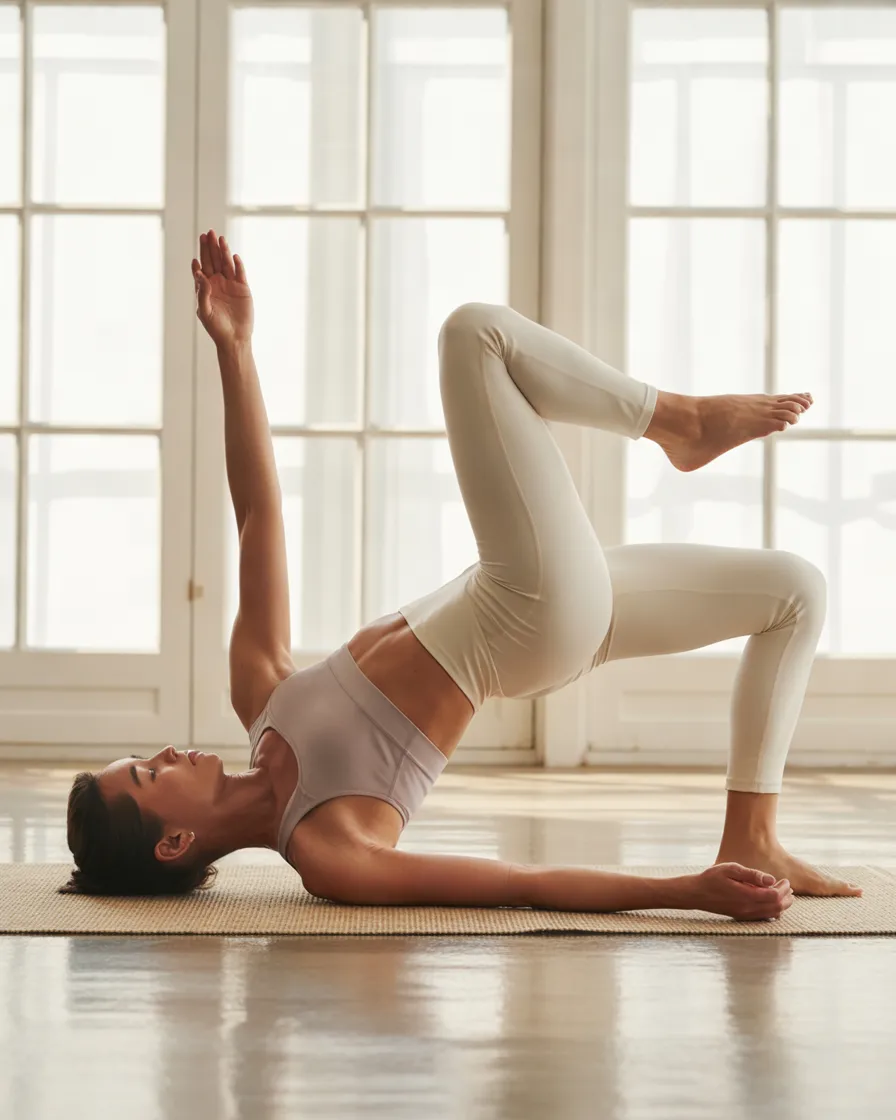
Swimming preparation is a gentle introduction to the traditional Pilates swimming exercise. It is performed while lying on your stomach and focuses on controlled movement through the arms, legs, and upper back.
It provides a useful change from the many exercises performed on your back or side.
Potential Benefits
- Engages the back muscles.
- Activates the glutes.
- Encourages controlled shoulder movement.
- Develops coordination between the upper and lower body.
- Adds variety to a balanced Pilates workout.
How to Perform It
- Lie face down on your mat with your legs extended.
- Place your forehead on a folded towel if needed.
- Extend your arms forward or rest them beside your body.
- Gently engage your abdominal muscles.
- Lift one arm and the opposite leg slightly off the mat.
- Pause briefly while keeping your neck relaxed.
- Lower both limbs slowly.
- Repeat with the opposite arm and leg.
Complete 8–10 alternating repetitions on each side.
Practical Tips
Keep your movements small and controlled. Focus on reaching through your limbs rather than lifting them excessively high.
You can begin by lifting only your arms or only your legs if coordinating both feels challenging.
Who It May Suit
This exercise may suit people who want to include gentle back and glute activation in their Pilates routine.
Important Considerations
Avoid compressing your lower back by lifting your chest or legs too high. If lying on your stomach causes discomfort, skip this movement and choose a comfortable alternative.
10. Seated Pilates Spine Stretch for Flexibility and Relaxation
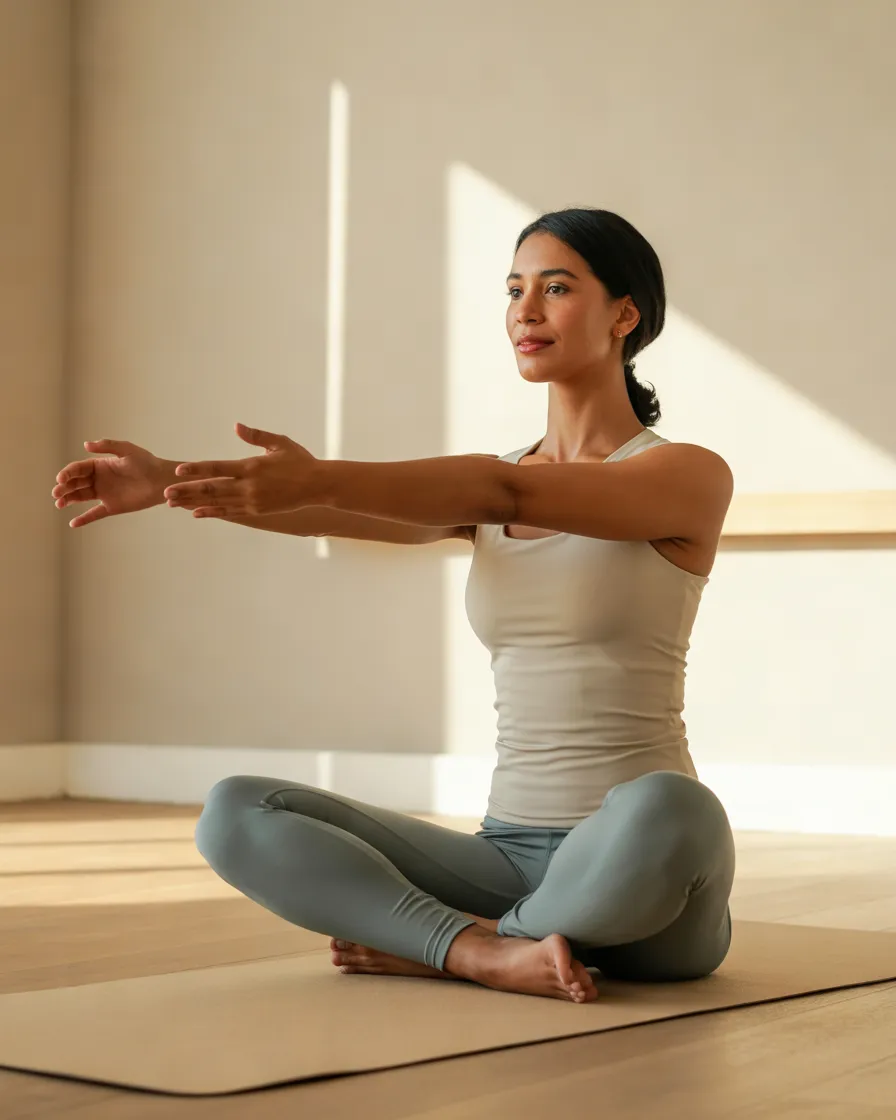
After completing several core and lower-body exercises, it is helpful to finish your at-home Pilates workout with a gentle movement that encourages spinal mobility and relaxation.
The seated spine stretch is a traditional Pilates exercise that involves sitting upright and gently reaching forward while maintaining controlled breathing.
Potential Benefits
- Encourages gentle movement through the spine.
- Stretches the muscles along the back.
- Develops awareness of upright posture.
- Encourages controlled breathing.
- Provides a calming finish to your Pilates session.
How to Perform It
- Sit on your mat with both legs extended in front of you.
- Keep your feet comfortably apart.
- Sit tall with your shoulders relaxed.
- Extend both arms forward at shoulder height.
- Inhale gently to prepare.
- As you exhale, slowly round your upper back and reach your hands forward.
- Move only as far as feels comfortable.
- Slowly return to your upright seated position.
Complete 5–8 repetitions.
Practical Tips
If sitting with straight legs feels uncomfortable, bend your knees slightly or sit on a folded towel. Focus on lengthening your spine before gently rounding forward.
Avoid pulling yourself toward your feet.
Who It May Suit
This exercise may suit beginners and experienced Pilates participants who want to finish their workout with gentle movement and improved body awareness.
Important Considerations
Do not force your body into a deep forward bend. If you experience back pain, numbness, or tingling, stop and seek appropriate professional guidance.
Expert Tips for Getting More From Your At Home Pilates Workout
A successful Pilates routine is not about completing the most repetitions or performing the most difficult movements. It is about developing consistency, learning proper technique, and understanding how your body responds to exercise.
Here are some practical tips to help you get more from your sessions.
1. Prioritize Technique Over Speed
Pilates is based on controlled movement. Performing 8 repetitions with good technique is generally more useful than rushing through 20 repetitions without proper control.
Pay attention to your alignment, breathing, and movement quality.
2. Learn to Coordinate Your Breathing
Breathing is an important part of Pilates. A useful starting point is to inhale gently before a movement and exhale during the more challenging part.
Avoid holding your breath, especially when engaging your abdominal muscles.
3. Start With Beginner-Friendly Variations
You do not need to perform advanced Pilates exercises immediately. Begin with pelvic curls, toe taps, glute bridges, and clamshells.
Gradually introduce more challenging movements when you feel comfortable with the basic versions.
4. Create a Realistic Weekly Schedule
Consistency is more practical than following an intense routine that is difficult to maintain.
A reasonable starting schedule might include two or three Pilates sessions per week, with recovery or other comfortable physical activities on the remaining days.
5. Use a Comfortable Exercise Mat
A supportive, non-slip mat can make floor exercises more comfortable. It is especially useful during movements involving your knees, spine, and hips.
6. Avoid Comparing Your Progress With Others
Everyone starts at a different fitness level. Some people may find balancing movements easy but struggle with core exercises. Others may have excellent flexibility but need more time to develop strength.
Measure your progress through improved control, coordination, and comfort rather than comparing yourself with fitness videos online.
7. Give Your Body Time to Recover
Muscles need recovery time, particularly when you are introducing new movements. If you experience significant soreness or fatigue, consider reducing your workout intensity or taking an additional recovery day.
8. Modify Exercises When Necessary
There is no requirement to perform every movement exactly as demonstrated. Bending your knees, reducing your range of motion, or using a cushion can make an exercise more accessible.
If a movement consistently causes pain, stop rather than trying to push through it.
A Simple 20-Minute At Home Pilates Workout Plan
If you want to turn the exercises above into a practical routine, use the following schedule as a starting point.
| Exercise | Suggested Time or Repetitions |
|---|---|
| Pilates pelvic curl | 10 repetitions |
| Pilates toe taps | 8 per side |
| Hundred preparation | 20–30 arm movements |
| Single leg stretch | 8 per side |
| Glute bridge | 12 repetitions |
| Side-lying leg raises | 10 per side |
| Clamshell | 12 per side |
| Bird dog | 8 per side |
| Swimming preparation | 8 per side |
| Seated spine stretch | 5 repetitions |
Allow approximately 30–45 seconds for rest and transitions between exercises. Include a few minutes of gentle preparation before starting and additional time for recovery afterward.
You can complete one round initially and gradually progress toward two rounds if your fitness level allows.
Remember that the suggested repetitions are starting points, not targets you must achieve. Adjust the routine to your ability.
Frequently Asked Questions About At Home Pilates Workouts
1. Is an at-home Pilates workout suitable for beginners?
Yes. Many Pilates exercises can be modified for beginners. Movements such as pelvic curls, clamshells, toe taps, and glute bridges provide an accessible starting point.
Begin with basic movements, practice proper alignment, and gradually increase the difficulty as your confidence improves.
2. Can I do Pilates at home without equipment?
Absolutely. Mat Pilates uses your body weight as resistance, so you can perform many exercises without purchasing special equipment.
A comfortable exercise mat is helpful, but you can start with a suitable non-slip surface and comfortable clothing.
3. How many days a week should I do Pilates?
Beginners can start with two or three sessions per week. As your fitness and recovery improve, you may choose to practice more frequently.
Your ideal schedule depends on your overall activity level, fitness goals, and recovery needs.
4. How long should a beginner Pilates workout last?
A beginner session can last approximately 15–20 minutes. You can gradually increase the duration to 25–35 minutes as you become more comfortable with the exercises.
The quality of your movements matters more than the length of your workout.
5. Can Pilates help strengthen abdominal muscles?
Pilates includes many exercises that engage the abdominal muscles, including toe taps, the Hundred preparation, and single leg stretches.
Regular practice may help develop core strength and muscular endurance. Results vary depending on consistency, exercise technique, and individual fitness levels.
6. Is Pilates a low-impact workout?
Yes. Traditional mat Pilates is generally low-impact because most exercises involve controlled movements without jumping or running.
However, low-impact does not mean every exercise is suitable for everyone. Some movements may still be challenging for people with existing injuries or physical limitations.
7. Can I combine Pilates with walking or other workouts?
Yes. Pilates can complement activities such as walking, cycling, swimming, and strength training.
Combining different types of physical activity can help create a more balanced fitness routine. Choose a schedule that allows sufficient recovery.
8. What should I wear for Pilates at home?
Choose comfortable, stretchy clothing that allows you to move freely. Fitted athletic clothing can make it easier to observe your alignment during floor exercises.
You can practice barefoot on a suitable non-slip mat or wear appropriate grip socks.
9. Is Pilates better in the morning or evening?
There is no universally best time to practice Pilates. Some people enjoy a morning session because it helps them establish a consistent exercise habit, while others prefer exercising in the evening.
Choose a time when you feel comfortable, have enough space, and can focus on your movements.
10. Is Pilates safe for people with back or joint problems?
Some Pilates movements may be appropriate for people with certain physical limitations, but the exercises need to be selected carefully.
Anyone with an existing back condition, joint injury, recent surgery, pregnancy-related concerns, or other medical restrictions should consult a qualified healthcare professional or appropriately trained Pilates instructor before starting.
Stop exercising if you experience sharp pain, dizziness, numbness, or unusual symptoms.
Conclusion
An at-home Pilates workout can be a practical way to introduce more movement into your daily life without relying on expensive equipment or a gym membership.
The 10 exercises in this guide offer a balanced starting point for developing core strength, improving movement control, engaging the hips and glutes, and encouraging flexibility.
Start with beginner-friendly movements, pay attention to your breathing, and focus on maintaining comfortable alignment. You do not need to master every exercise in your first session.
The most important part is creating a routine that fits your lifestyle and that you can maintain consistently. With patience and regular practice, Pilates can become a valuable part of your overall approach to physical fitness and well-being.