Finding meals that are both satisfying and nutritious can sometimes feel challenging, especially when you want to increase your protein intake without eating too many carbohydrates. Fortunately, there are plenty of delicious options that make healthy eating easier.
High protein meals low carb combine protein-rich ingredients such as chicken, fish, eggs, turkey, lean beef, tofu, and cottage cheese with non-starchy vegetables and healthy fats. This combination creates balanced meals that can fit into different eating preferences and everyday routines.
Protein plays an important role in building and maintaining muscles, supporting normal body functions, and helping the body repair tissues. It can also contribute to feelings of fullness, making protein-rich meals a practical choice for people who want to manage their appetite.
Meanwhile, reducing refined carbohydrates and choosing more vegetables can help create meals with plenty of nutrients and dietary variety. However, low-carb eating does not mean eliminating all carbohydrates. Vegetables, nuts, seeds, and some dairy products naturally contain carbohydrates and can still be part of a nutritious eating pattern.
The best part is that you do not need complicated ingredients or hours in the kitchen. From flavorful chicken bowls and garlic shrimp to satisfying egg bakes and turkey lettuce wraps, there are many easy high protein low carb meals worth adding to your weekly menu.
Below are 12 practical recipes with preparation tips, benefits, serving suggestions, and food photography prompts to help you enjoy healthy meals without sacrificing flavor.
1. Greek Chicken Bowl With Cauliflower Rice
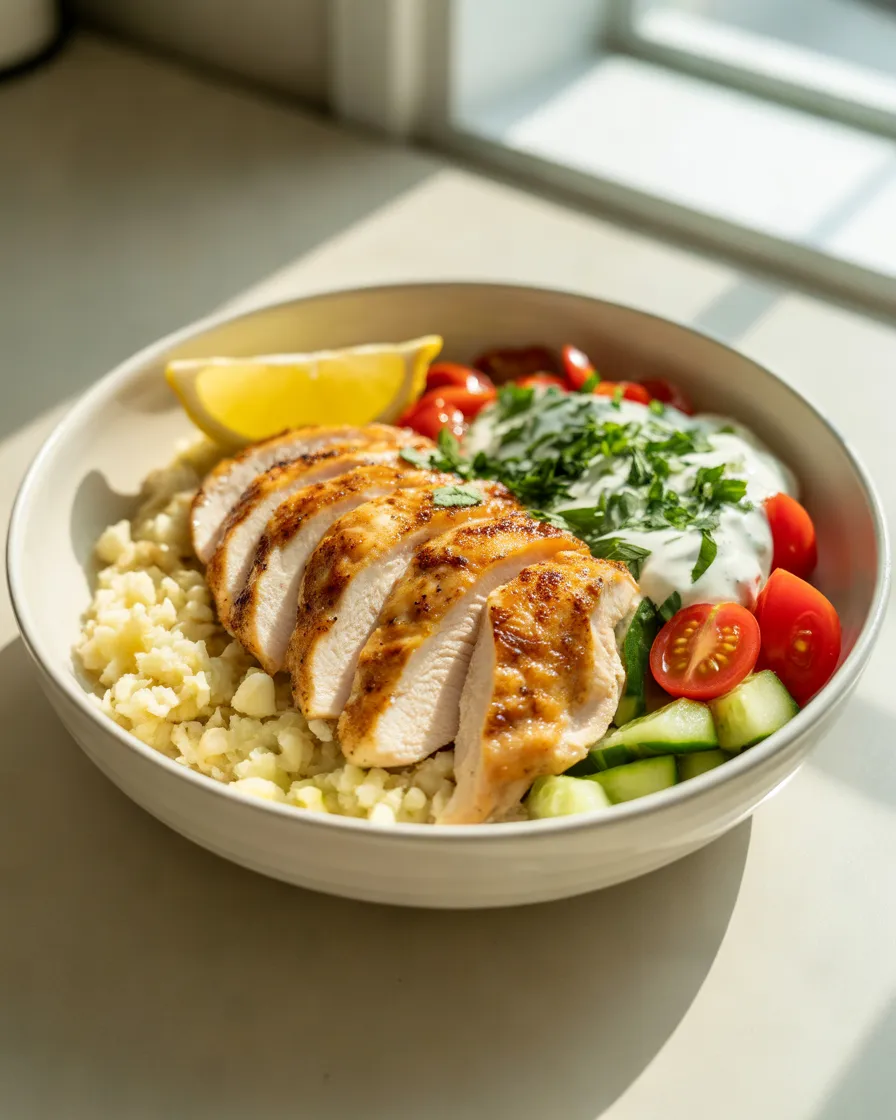
A Greek chicken bowl with cauliflower rice is an excellent option when you want something fresh, colorful, and satisfying. It combines seasoned chicken breast with Mediterranean-inspired vegetables, creamy Greek yogurt dressing, and cauliflower rice instead of traditional rice.
Chicken breast provides a generous amount of lean protein, while cauliflower offers a vegetable-based alternative to regular rice. Cucumber, tomatoes, and fresh herbs add flavor, color, and nutrients.
Ingredients:
- 300g boneless, skinless chicken breast
- 3 cups cauliflower rice
- 1 cucumber, chopped
- 1 cup cherry tomatoes
- ½ cup plain Greek yogurt
- 1 tablespoon olive oil
- Lemon juice
- Garlic, oregano, black pepper, and paprika
- Fresh parsley
Benefits: This meal provides lean protein alongside fiber and micronutrients from vegetables. Greek yogurt adds creaminess while contributing additional protein. It is also easy to customize according to your preferred vegetables.
Practical Tips: Marinate the chicken in lemon juice, garlic, oregano, and olive oil for at least 20 minutes. Cook cauliflower rice separately and avoid overcooking it, as it can become watery.
How to Use It: Divide the cauliflower rice between two bowls. Add sliced grilled chicken, cucumber, tomatoes, and a spoonful of Greek yogurt dressing. Finish with parsley and lemon juice.
Who It May Suit: People looking for easy low carb lunches, meal-prep options, or Mediterranean-inspired high-protein dinners.
Important Considerations: Choose unsweetened Greek yogurt and check packaged seasonings for added sugar or excessive sodium.
2. Garlic Butter Salmon With Roasted Asparagus
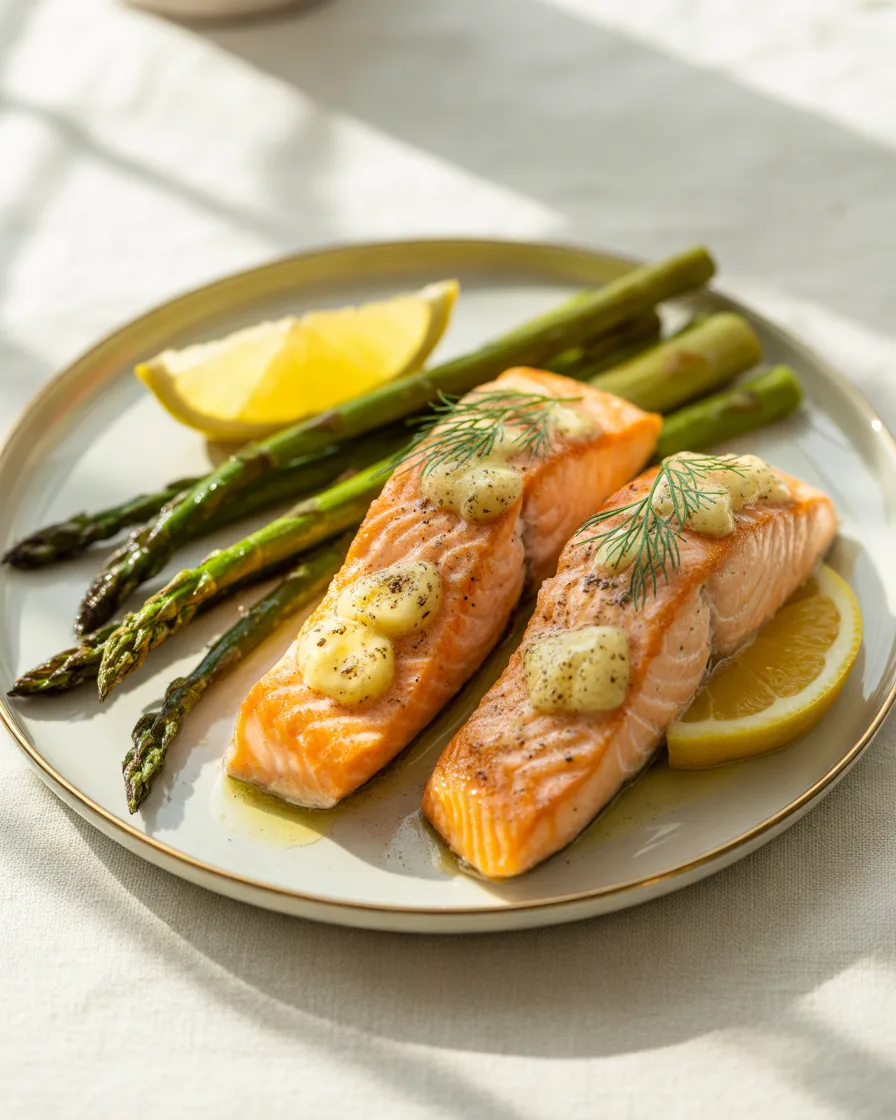
Garlic butter salmon with roasted asparagus is a delicious dinner that feels restaurant-quality but requires very little preparation. Salmon is naturally rich in protein and provides omega-3 fatty acids, while asparagus contributes fiber and several essential nutrients.
This combination is especially useful when you want a flavorful dinner without relying on bread, pasta, or rice.
Ingredients:
- 2 salmon fillets, approximately 150g each
- 300g fresh asparagus
- 2 garlic cloves, minced
- 1 tablespoon butter
- 1 tablespoon olive oil
- ½ lemon
- Black pepper and paprika
- Fresh dill
Benefits: Salmon supplies complete protein and omega-3 fats. Asparagus adds vegetables and fiber without making the meal heavy. The ingredients also provide a satisfying combination of protein, healthy fats, and flavor.
Practical Tips: Pat salmon dry before seasoning to help achieve a nicely browned surface. Use fresh garlic and lemon rather than relying entirely on bottled sauces.
How to Use It: Season salmon with pepper, paprika, garlic, and lemon. Bake at 200°C (400°F) until cooked through, usually around 12–15 minutes depending on thickness. Roast asparagus alongside it with olive oil. Finish with a small amount of melted butter and fresh dill.
Who It May Suit: People who enjoy seafood, want quick high protein low carb dinner ideas, or prefer simple meals with minimal preparation.
Important Considerations: Avoid overcooking salmon because it can become dry. People with fish allergies should choose another protein source.
3. Turkey Lettuce Wraps With Fresh Vegetables
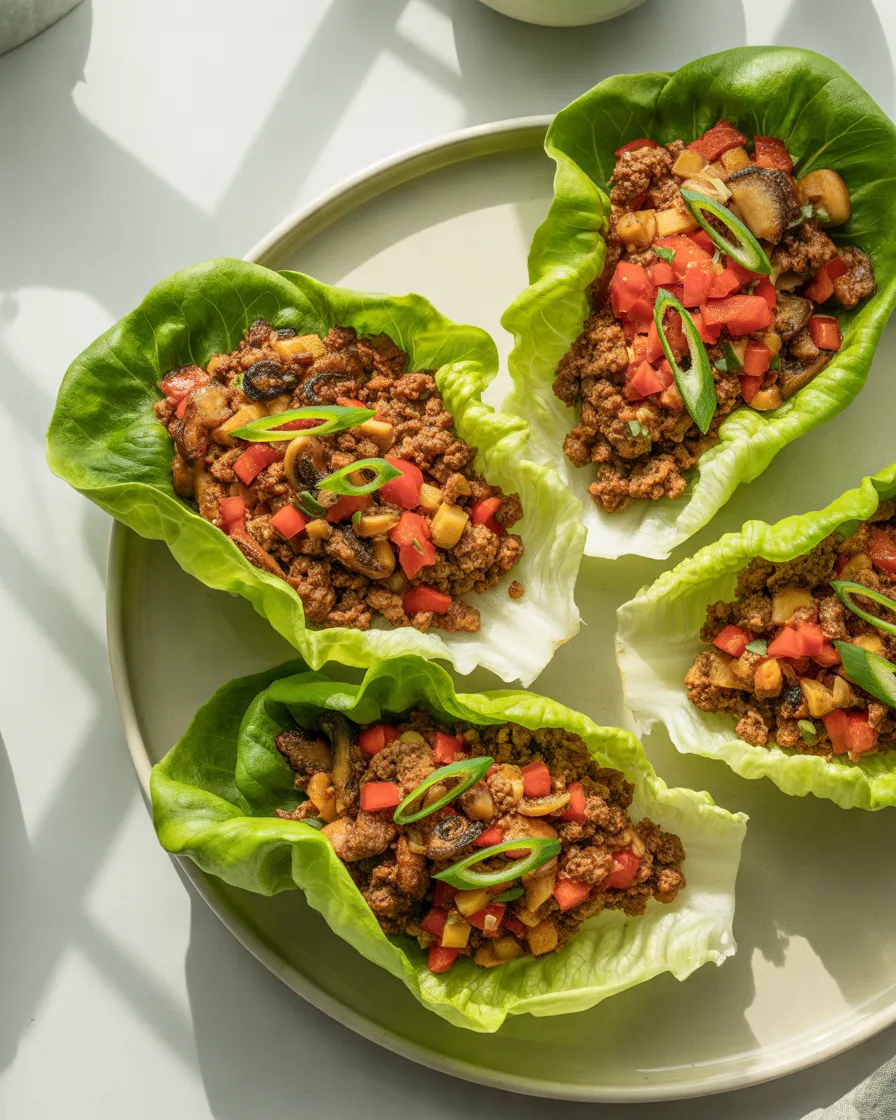
Turkey lettuce wraps are a convenient alternative to traditional sandwiches and tortilla wraps. Instead of bread, crisp lettuce leaves hold a flavorful mixture of lean ground turkey, mushrooms, garlic, ginger, and fresh vegetables.
This recipe is particularly useful when you want something quick, portable, and easy to customize.
Ingredients:
- 300g lean ground turkey
- 8 large butter lettuce leaves
- 1 cup chopped mushrooms
- ½ red bell pepper, diced
- 2 garlic cloves
- 1 teaspoon grated ginger
- 1 tablespoon low-sodium soy sauce or tamari
- 1 teaspoon sesame oil
- Green onions and sesame seeds
Benefits: Turkey offers lean protein, while mushrooms and peppers contribute vegetables and additional nutrients. Lettuce replaces a traditional carbohydrate-rich wrap, creating a lighter meal.
Practical Tips: Cook the turkey until fully done and drain excess liquid before adding the vegetables. Choose large, flexible lettuce leaves that can hold the filling without tearing.
How to Use It: Heat sesame oil in a pan. Add garlic, ginger, turkey, mushrooms, and peppers. Cook thoroughly, then season with soy sauce. Spoon the mixture into lettuce leaves and garnish with green onions.
Who It May Suit: Busy individuals, people preparing quick lunches, and anyone looking for a lighter alternative to traditional wraps.
Important Considerations: Soy sauce can contain significant sodium. Choose a reduced-sodium version if you need to monitor your salt intake.
4. Spinach and Cottage Cheese Egg Bake
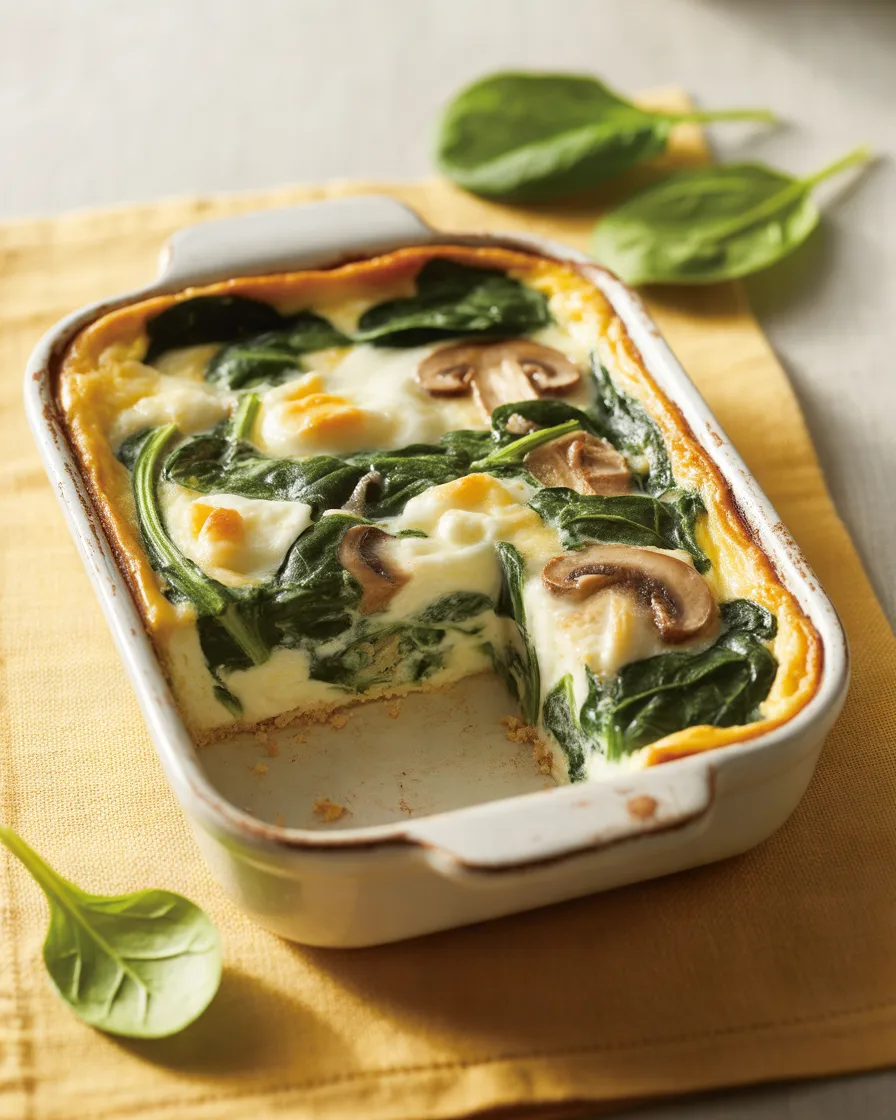
A spinach and cottage cheese egg bake is a practical high-protein meal that works for breakfast, lunch, or even a light dinner. It combines eggs, cottage cheese, spinach, and mushrooms into a soft, flavorful baked dish.
Eggs provide complete protein, while cottage cheese increases the protein content and creates a creamy texture. Spinach contributes vitamins, minerals, and fiber.
Ingredients:
- 4 large eggs
- 1 cup cottage cheese
- 2 cups fresh spinach
- ½ cup sliced mushrooms
- ¼ cup shredded mozzarella
- Black pepper
- Garlic powder
- A little olive oil
Benefits: This recipe combines two convenient protein sources in one dish. It also provides a simple way to include vegetables in your morning routine without preparing several separate dishes.
Practical Tips: Drain excess moisture from spinach before baking. Whisk the eggs and cottage cheese thoroughly to create a more consistent texture.
How to Use It: Lightly grease a baking dish. Combine eggs, cottage cheese, spinach, mushrooms, and seasonings. Sprinkle mozzarella on top and bake at 180°C (350°F) for approximately 25–30 minutes, until the center is set.
Who It May Suit: People who want make-ahead breakfasts, vegetarian meal options, or easy protein-rich meals that can be portioned for several days.
Important Considerations: Cottage cheese and cheese can contain considerable sodium and saturated fat depending on the product. Choose varieties that fit your nutritional needs.
5. Garlic Shrimp With Zucchini Noodles
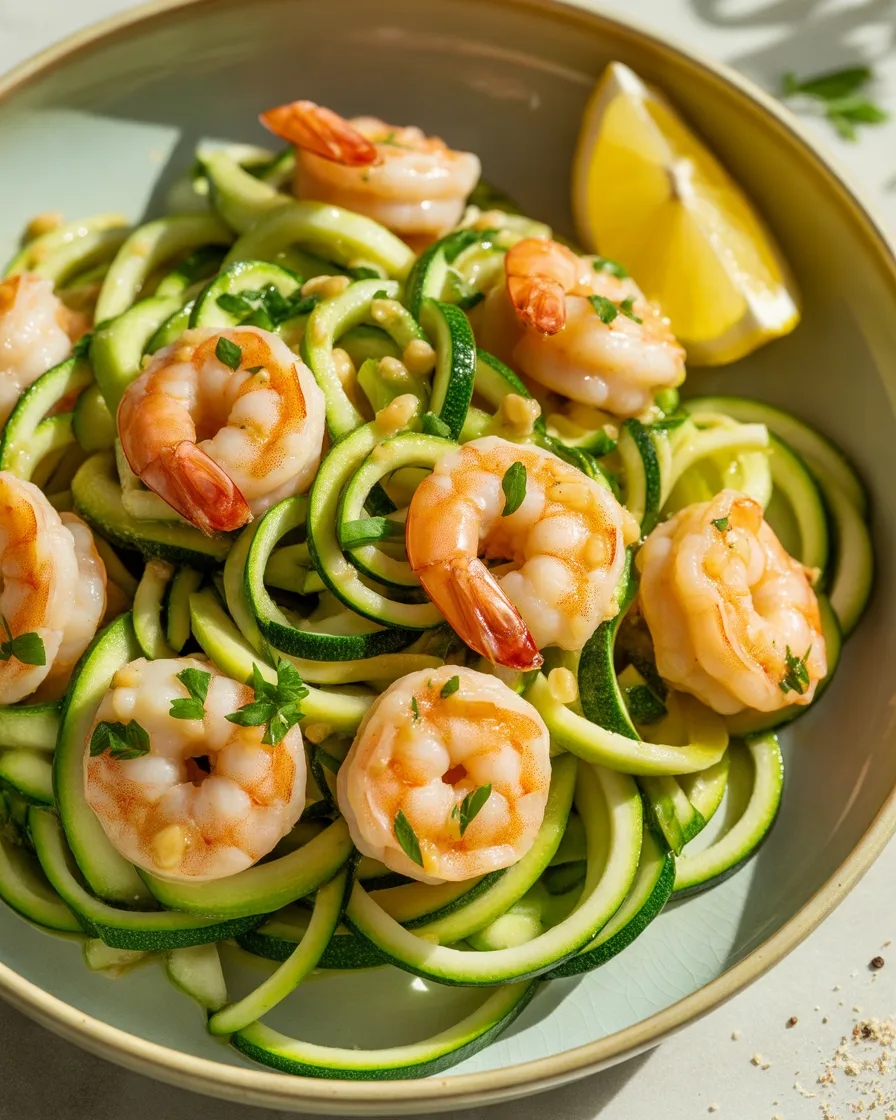
Garlic shrimp with zucchini noodles is a fantastic alternative to traditional pasta dishes. It delivers the familiar comfort of a noodle-based meal while using spiralized zucchini instead of wheat pasta.
Shrimp is naturally high in protein and cooks quickly, making this recipe especially convenient for busy evenings.
Ingredients:
- 300g peeled and deveined shrimp
- 3 medium zucchini
- 3 garlic cloves, minced
- 1 tablespoon olive oil
- 1 tablespoon lemon juice
- ½ teaspoon paprika
- Fresh parsley
- Black pepper
- Optional red pepper flakes
Benefits: Shrimp provides lean protein, while zucchini adds vegetables, water, and fiber. This combination creates a lighter alternative to conventional pasta meals.
Practical Tips: Use a spiralizer or vegetable peeler to prepare zucchini noodles. Avoid cooking them for too long because they release moisture and can become soft.
How to Use It: Heat olive oil in a skillet and cook garlic briefly. Add shrimp and paprika, cooking until the shrimp are opaque and fully cooked. Remove the shrimp, quickly sauté zucchini noodles, and return the shrimp to the pan. Finish with lemon juice and parsley.
Who It May Suit: Seafood lovers, people looking for quick low carb dinners, and anyone wanting an alternative to traditional pasta.
Important Considerations: Shrimp is a common food allergen. Make sure it is properly stored, handled, and cooked.
6. Lean Beef and Broccoli Stir-Fry
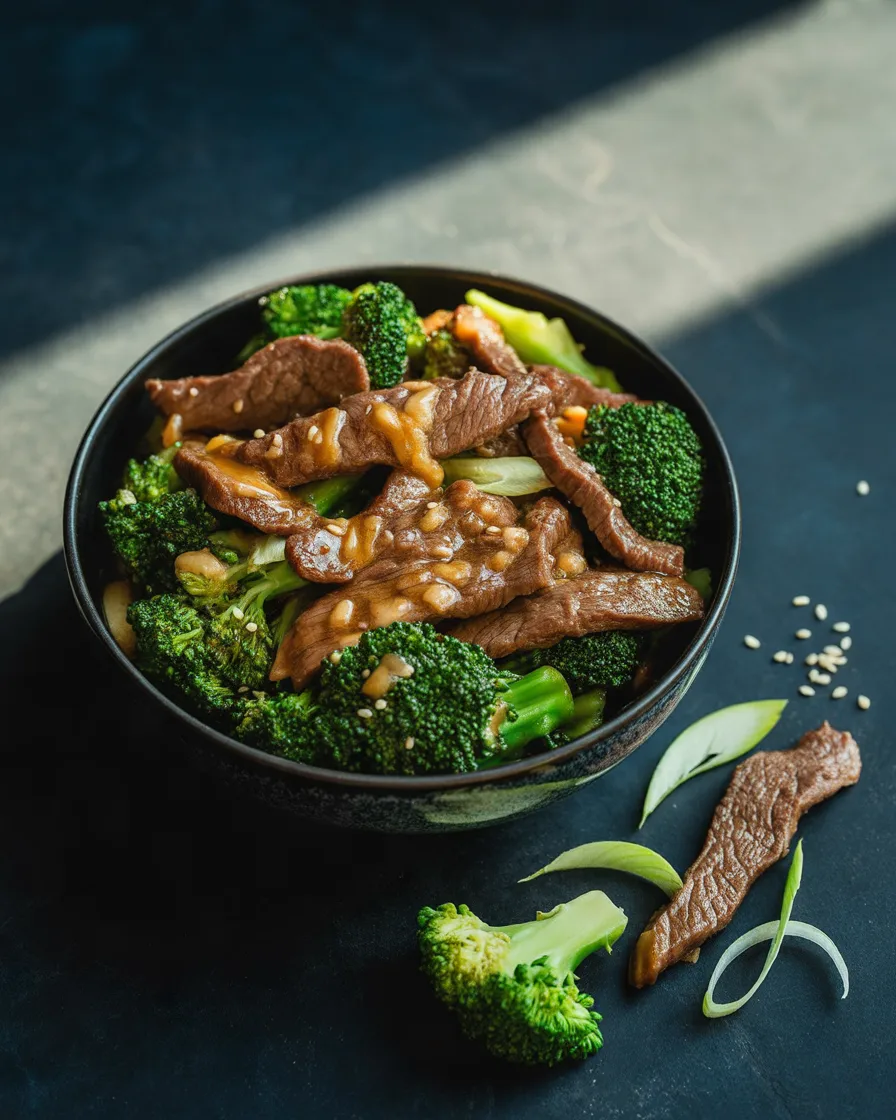
Lean beef and broccoli stir-fry is a flavorful meal inspired by classic Asian-style cooking. It combines tender strips of beef with fresh broccoli, garlic, ginger, and a savory sauce.
Instead of serving it over a large portion of white rice, you can enjoy the beef and vegetables on their own or with cauliflower rice.
Ingredients:
- 300g lean beef strips
- 3 cups broccoli florets
- 2 garlic cloves
- 1 teaspoon fresh ginger
- 1 tablespoon low-sodium soy sauce
- 1 teaspoon sesame oil
- 1 teaspoon rice vinegar
- Black pepper
- Sesame seeds
Benefits: Beef provides protein, iron, and vitamin B12. Broccoli contributes fiber, vitamin C, and other beneficial plant compounds. Together, they make a satisfying meal with a good balance of nutrients.
Practical Tips: Slice beef against the grain for a more tender texture. Prepare the sauce before cooking because stir-frying happens quickly.
How to Use It: Heat sesame oil in a pan and cook the beef in batches. Add garlic, ginger, and broccoli. Stir-fry until the broccoli is tender-crisp and the beef is cooked to your preferred safe temperature. Add soy sauce and rice vinegar.
Who It May Suit: People who enjoy savory meals, want protein-rich dinners, or need practical alternatives to rice-based stir-fries.
Important Considerations: Choose lean beef cuts and moderate the amount of salty sauce. Keep the broccoli slightly crisp rather than overcooking it.
7. Sesame Tofu and Eggplant Vegetable Bowl
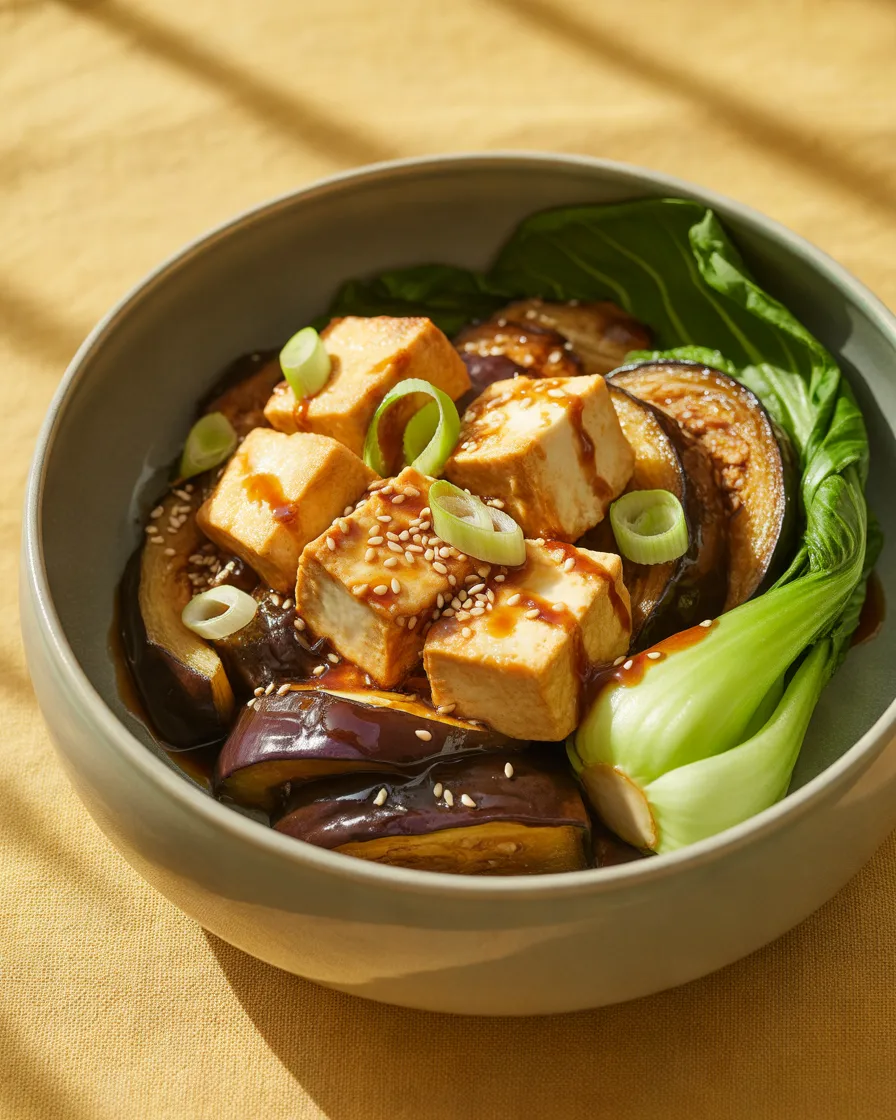
A sesame tofu and eggplant bowl is a delicious plant-based option for people who want high-protein meals without meat. Extra-firm tofu provides plant protein, while eggplant and other non-starchy vegetables contribute flavor and texture.
A simple sesame and ginger dressing brings everything together without requiring complicated ingredients.
Ingredients:
- 400g extra-firm tofu
- 1 medium eggplant
- 1 cup bok choy
- 1 tablespoon sesame oil
- 1 tablespoon low-sodium tamari
- 1 teaspoon fresh ginger
- 1 garlic clove
- Sesame seeds
- Fresh green onions
Benefits: Tofu provides plant-based protein and can be part of a balanced vegetarian eating pattern. Eggplant and bok choy add vegetables, fiber, and a variety of micronutrients.
Practical Tips: Press tofu before cooking to remove excess moisture. This helps it develop a better golden exterior. Use extra-firm tofu for the best texture.
How to Use It: Cut tofu and eggplant into cubes. Roast or pan-sear until golden. Add bok choy, garlic, ginger, sesame oil, and tamari. Cook until the vegetables are tender and finish with sesame seeds.
Who It May Suit: Vegetarians, people reducing meat consumption, and anyone looking for flavorful plant-based low carb meals.
Important Considerations: Protein content varies between tofu brands. Check nutrition labels and adjust portions according to your individual protein requirements. People with soy allergies should avoid this recipe.
8. Chicken Fajita Stuffed Bell Peppers
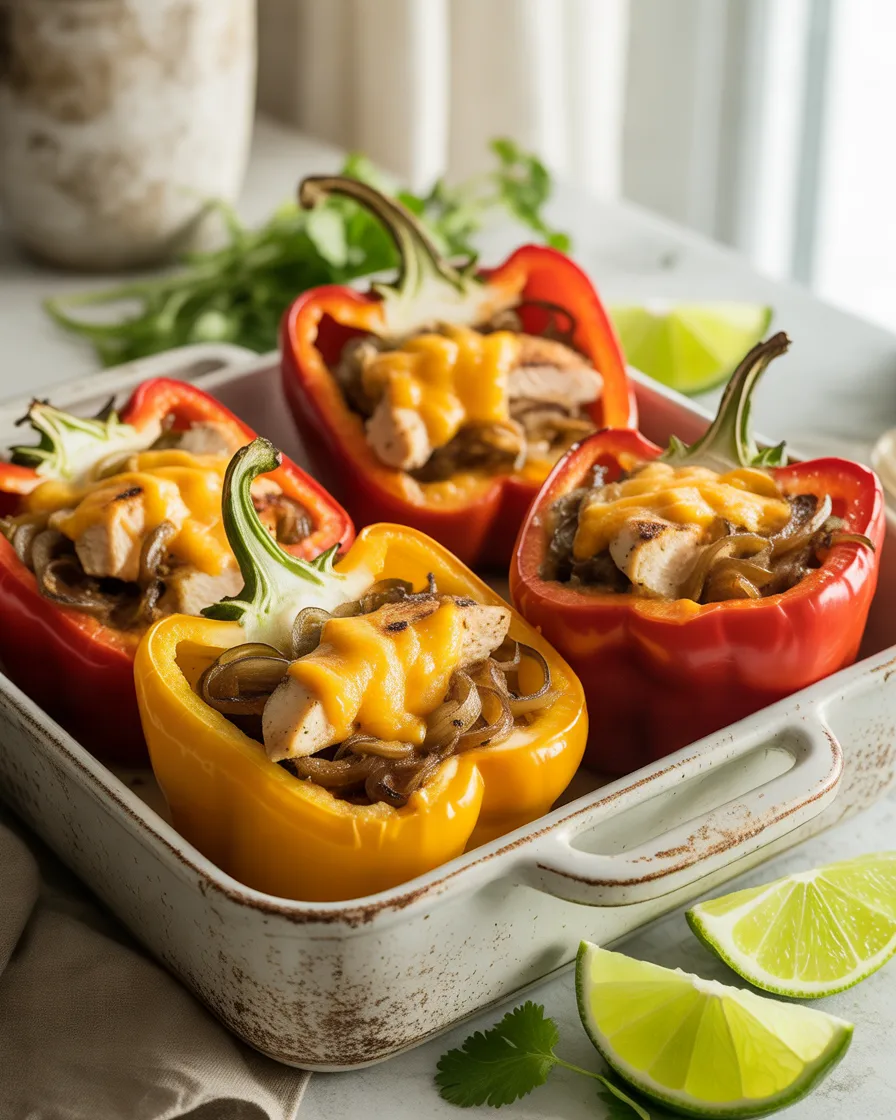
Chicken fajita stuffed bell peppers bring together the flavors of traditional fajitas without relying on tortillas or large portions of rice.
Bell peppers become natural serving containers for seasoned chicken, onions, and melted cheese. The result is a colorful and satisfying dinner that is easy to prepare in advance.
Ingredients:
- 300g boneless chicken breast
- 2 large bell peppers
- ½ onion, sliced
- ½ cup shredded cheddar cheese
- 1 teaspoon paprika
- ½ teaspoon cumin
- ½ teaspoon garlic powder
- 1 tablespoon olive oil
- Fresh cilantro
- Lime juice
Benefits: Chicken provides lean protein, while bell peppers supply vitamin C and other nutrients. The recipe offers a practical way to enjoy familiar fajita flavors with fewer carbohydrate-rich ingredients.
Practical Tips: Cut bell peppers lengthwise and remove the seeds. Partially roast them before filling if you prefer a softer texture.
How to Use It: Cook seasoned chicken with onions in olive oil. Fill the pepper halves with the mixture, top with cheese, and bake at 190°C (375°F) for approximately 15–20 minutes, until the peppers are tender and the chicken is fully cooked.
Who It May Suit: Families, people who enjoy Mexican-inspired meals, and anyone looking for easy high protein low carb meal-prep recipes.
Important Considerations: Bell peppers contain natural carbohydrates, so portion sizes matter if you are following a particularly strict carbohydrate target.
9. Tuna and Avocado Lettuce Boats
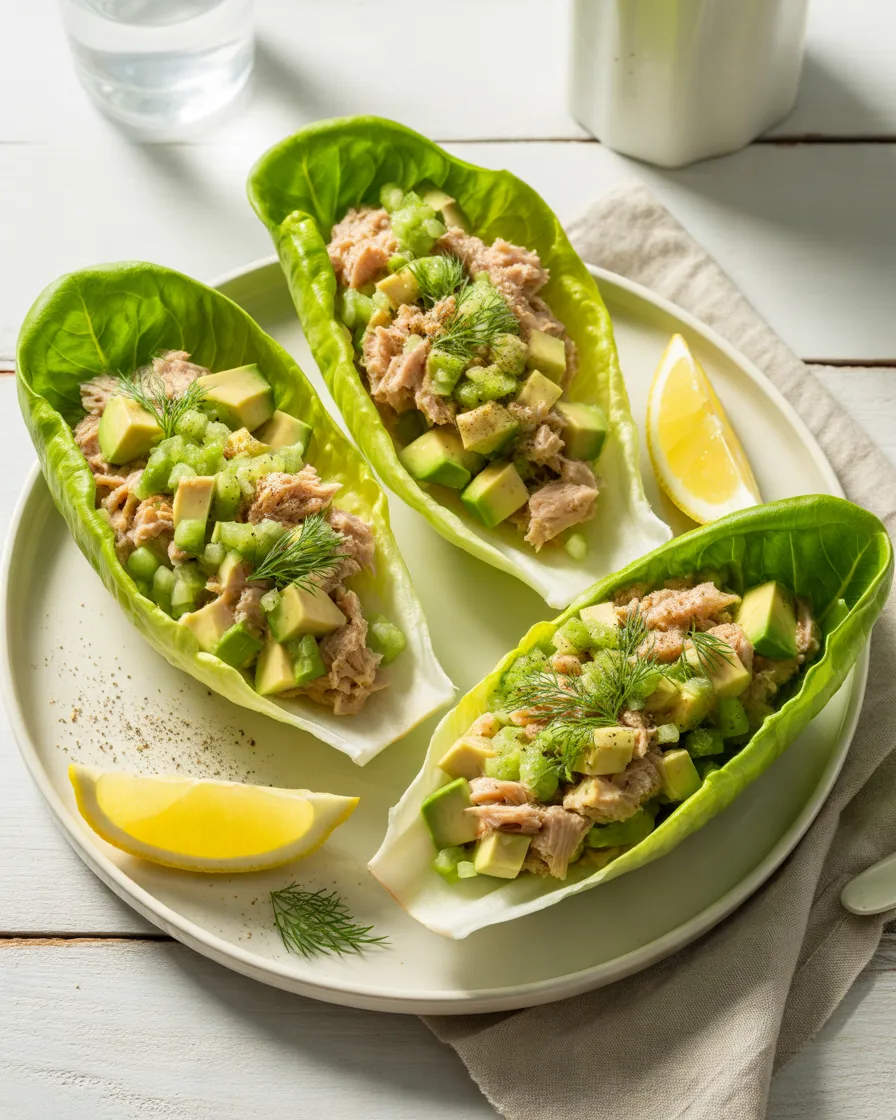
Tuna and avocado lettuce boats are a refreshing option for a quick lunch or light dinner. This recipe combines canned tuna with creamy avocado, crunchy celery, lemon juice, and plain Greek yogurt.
The ingredients require minimal cooking, making this one of the most convenient high protein meals low carb for busy days.
Ingredients:
- 2 cans tuna in water, drained
- 1 ripe avocado
- 2 tablespoons plain Greek yogurt
- 1 celery stalk, finely chopped
- 1 tablespoon lemon juice
- 6 large romaine or butter lettuce leaves
- Black pepper
- Fresh dill
Benefits: Tuna provides protein, while avocado contributes monounsaturated fats and fiber. Lettuce adds freshness and crunch without requiring bread or tortillas.
Practical Tips: Choose tuna packed in water if you prefer a lighter preparation. Use ripe but firm avocado so the mixture remains creamy without becoming overly mushy.
How to Use It: Combine drained tuna, mashed avocado, Greek yogurt, celery, lemon juice, and pepper. Spoon the mixture into washed lettuce leaves and garnish with fresh dill.
Who It May Suit: People looking for no-cook lunches, quick meal-prep options, or convenient protein-rich snacks and light meals.
Important Considerations: Tuna contains mercury in varying amounts depending on the species. Follow local seafood guidance, particularly during pregnancy, and choose lower-mercury options such as canned light tuna when appropriate.
10. Herb-Roasted Pork Tenderloin With Green Beans
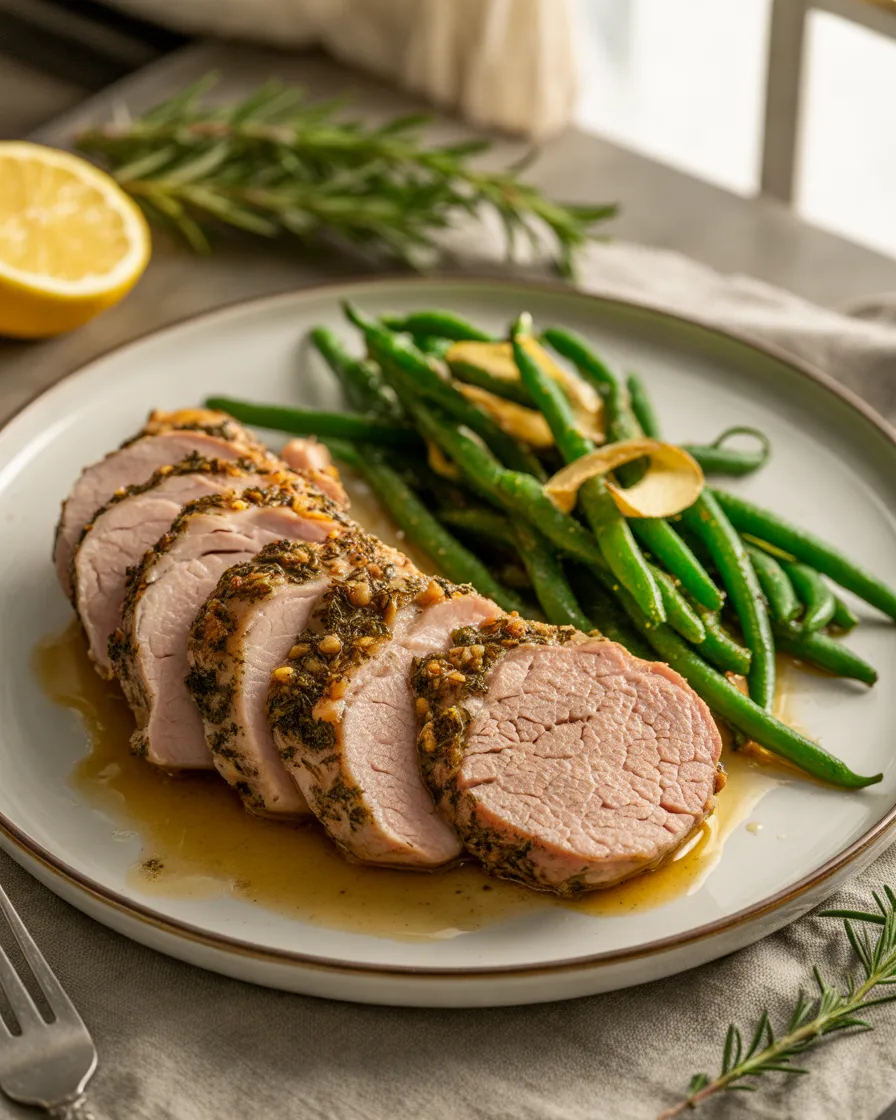
Herb-roasted pork tenderloin with green beans is a satisfying dinner that combines lean meat with a simple vegetable side. Pork tenderloin is a relatively lean cut and provides a substantial amount of protein.
Green beans bring color, fiber, and a slightly sweet flavor that complements the roasted meat.
Ingredients:
- 300g pork tenderloin
- 300g fresh green beans
- 2 garlic cloves
- 1 tablespoon olive oil
- 1 teaspoon Dijon mustard
- ½ teaspoon dried rosemary
- ½ teaspoon thyme
- Black pepper
- Lemon juice
Benefits: Pork tenderloin supplies protein and several B vitamins. Green beans contribute fiber and plant nutrients, helping make the meal more balanced.
Practical Tips: Trim visible excess fat from the tenderloin. Use a meat thermometer rather than relying only on cooking time to check doneness.
How to Use It: Rub pork with olive oil, mustard, garlic, rosemary, thyme, and pepper. Roast at 200°C (400°F) until the center reaches 63°C (145°F), then allow it to rest for at least three minutes. Steam or sauté the green beans and serve alongside sliced pork.
Who It May Suit: People who enjoy traditional home-cooked dinners, want alternatives to chicken, or need a protein-rich meal for family meal preparation.
Important Considerations: Choose unprocessed pork tenderloin rather than heavily cured or processed pork products. Adjust seasoning and added salt to your dietary needs.
11. Turkey Meatballs With Zucchini Noodles
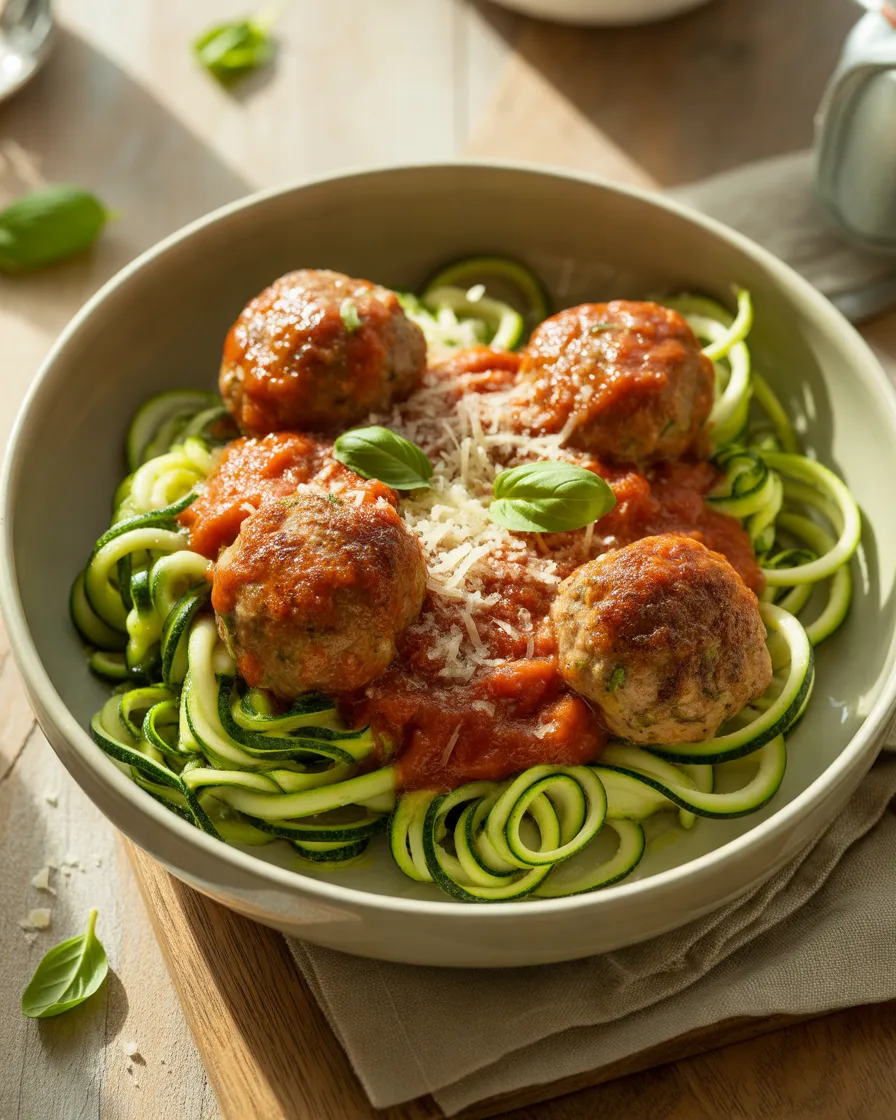
Turkey meatballs with zucchini noodles offer a comforting alternative to traditional spaghetti and meatballs. Lean ground turkey creates tender, flavorful meatballs, while zucchini noodles replace regular pasta.
A simple tomato sauce adds moisture and flavor without requiring a large amount of added sugar.
Ingredients:
- 300g lean ground turkey
- 1 egg
- 2 tablespoons grated Parmesan
- 2 tablespoons almond flour
- 2 garlic cloves
- 3 medium zucchini
- 1 cup no-added-sugar tomato sauce
- Italian seasoning
- Fresh basil
- Black pepper
Benefits: Turkey provides protein, while zucchini contributes vegetables and fiber. Using zucchini noodles instead of traditional pasta reduces the carbohydrate content of the meal.
Practical Tips: Avoid mixing the turkey too aggressively because this can make meatballs dense. Keep meatballs similar in size so they cook evenly.
How to Use It: Combine ground turkey, egg, Parmesan, almond flour, garlic, and seasonings. Form small meatballs and bake at 200°C (400°F) until they reach a safe internal temperature of 74°C (165°F). Heat tomato sauce separately and serve with lightly sautéed zucchini noodles.
Who It May Suit: People who enjoy Italian-inspired meals, want healthier pasta alternatives, or need practical dinners that can be prepared ahead.
Important Considerations: Check tomato sauce labels for added sugars. Almond flour is unsuitable for people with almond allergies.
12. Lemon Pepper Cod Cabbage Tacos
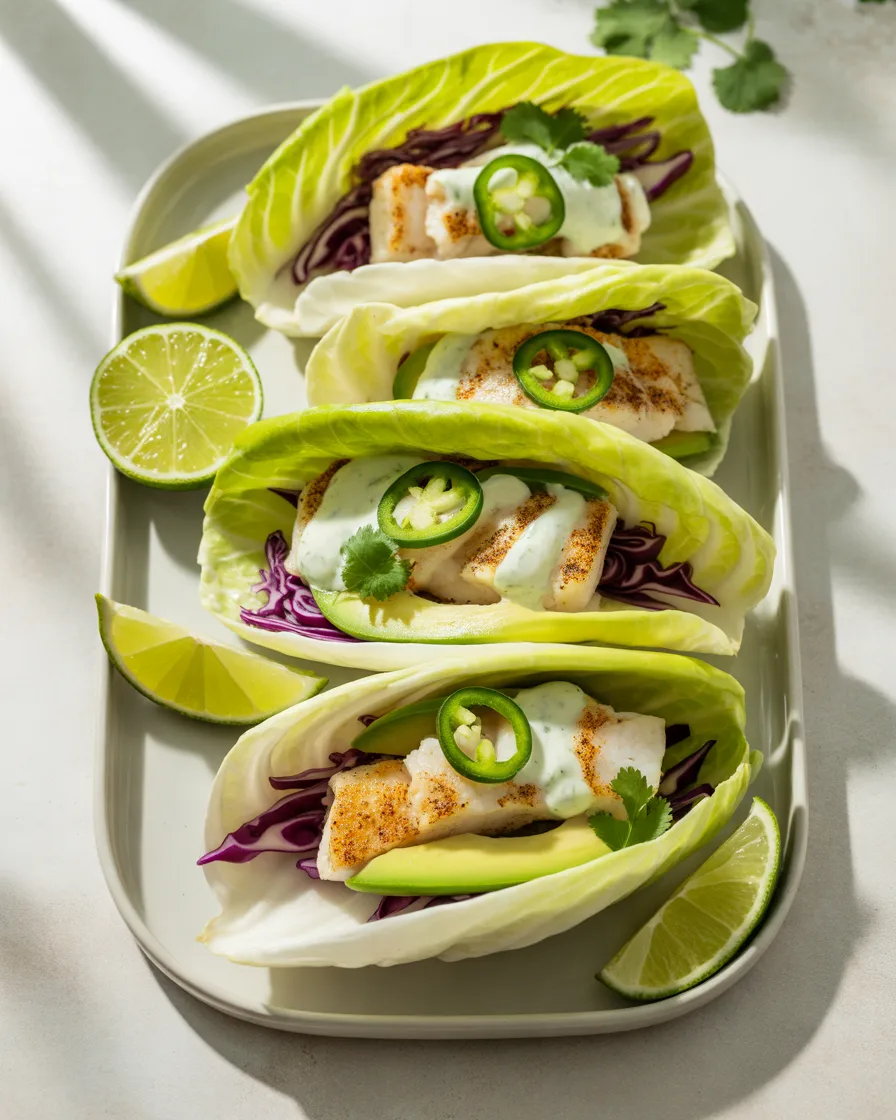
Lemon pepper cod cabbage tacos are a fresh and flavorful alternative to traditional fish tacos. Instead of flour or corn tortillas, crisp cabbage leaves hold seasoned cod, crunchy vegetables, and a creamy yogurt-based sauce.
Cod is a naturally lean source of protein and has a mild flavor that works beautifully with citrus and fresh herbs.
Ingredients:
- 300g cod fillets
- 8 large cabbage leaves
- ½ cup shredded red cabbage
- ½ avocado
- ¼ cup plain Greek yogurt
- 1 tablespoon lime juice
- ½ teaspoon paprika
- Black pepper
- Fresh cilantro
- Cumin
Benefits: Cod supplies lean protein, while cabbage contributes fiber and vitamin C. Avocado adds healthy fats, and Greek yogurt creates a creamy topping.
Practical Tips: Use firm cabbage leaves that are large enough to hold the filling. Warm them briefly to make them more flexible without losing their crunch.
How to Use It: Season cod with paprika, cumin, pepper, and lime. Bake or pan-cook until it flakes easily and reaches a safe internal temperature. Place pieces inside cabbage leaves, add shredded cabbage, and top with avocado and Greek yogurt sauce.
Who It May Suit: Seafood lovers, people who want lighter taco alternatives, and anyone searching for fresh low carb lunch or dinner ideas.
Important Considerations: Check cod carefully for bones before serving. Fish allergies and individual seafood preferences should also be considered.
Expert Tips for Preparing Delicious High Protein Low Carb Meals
Preparing nutritious meals becomes easier when you understand how to combine protein sources, vegetables, healthy fats, and flavorful ingredients.
Here are some practical tips to make your weekly meal planning more successful.
1. Include a Protein Source in Every Main Meal
Start by choosing your main protein ingredient. Chicken, fish, turkey, eggs, lean beef, tofu, and cottage cheese are versatile options.
Choose portions according to your individual protein needs rather than assuming that everyone requires the same amount. Spreading protein-containing foods throughout the day can make it easier to meet your daily requirements.
2. Choose Non-Starchy Vegetables Regularly
Vegetables such as broccoli, spinach, zucchini, asparagus, mushrooms, cucumber, and leafy greens are useful additions to low carb meals.
They provide fiber, vitamins, minerals, and different textures. Combining several vegetables also makes meals more colorful and enjoyable.
3. Replace Refined Carbohydrates With Suitable Alternatives
You do not have to eliminate every familiar food to prepare lower-carb meals.
Consider these practical alternatives:
- Cauliflower rice instead of regular rice.
- Zucchini noodles instead of traditional pasta.
- Lettuce wraps instead of bread-based wraps.
- Cabbage leaves instead of tortillas.
- Roasted vegetables instead of large portions of refined starches.
These substitutions can help reduce carbohydrate intake while keeping meals varied.
4. Prepare Protein Ingredients in Advance
Meal preparation can save time during busy weekdays.
For example, grill several chicken breasts, prepare turkey meatballs, wash vegetables, and portion cooked ingredients into separate containers.
Store cooked food safely in the refrigerator and freeze portions that will not be eaten within the recommended storage period.
5. Pay Attention to Hidden Carbohydrates
Some foods that appear low carb can contain more carbohydrates than expected.
Watch out for:
- Sweetened marinades.
- Bottled barbecue sauces.
- Flavored yogurt.
- Sweet salad dressings.
- Packaged seasoning mixes.
- Sugary tomato sauces.
Read nutrition labels and choose products with ingredients that match your dietary preferences.
6. Include Healthy Fats in Appropriate Portions
Olive oil, avocado, nuts, seeds, and fatty fish can contribute beneficial fats to your eating pattern.
However, these foods can also be energy-dense. Use portions that fit your nutritional goals instead of assuming that unlimited amounts are necessary simply because a food is low in carbohydrates.
7. Keep Your Meals Interesting
Eating the same chicken and vegetables every day can become boring.
Experiment with different flavors, including Mediterranean herbs, Mexican-inspired spices, Asian-style ginger and sesame, and fresh lemon-based dressings.
Changing seasonings and cooking methods can make similar ingredients feel like completely different meals.
8. Do Not Forget Dietary Fiber
Reducing carbohydrates should not mean removing fiber-rich vegetables, nuts, seeds, and other suitable plant foods.
Fiber supports normal digestive function and is an important part of a balanced diet. Increase fiber gradually if you are not used to eating much of it, and drink adequate fluids.
Frequently Asked Questions About High Protein Meals Low Carb
1. What Are the Best High Protein Meals Low Carb?
Some excellent options include grilled chicken bowls with cauliflower rice, garlic butter salmon with asparagus, turkey lettuce wraps, shrimp with zucchini noodles, lean beef and broccoli, and turkey meatballs with zucchini noodles.
These meals combine protein-rich ingredients with non-starchy vegetables and can be adjusted to suit different nutritional preferences.
2. Can High Protein Low Carb Meals Help With Weight Management?
They may help some people manage their appetite because protein can contribute to feelings of fullness. Meals built around protein and vegetables can also make it easier to create satisfying portions.
However, weight management depends on several factors, including total energy intake, physical activity, sleep, health conditions, and long-term eating habits. No individual meal guarantees weight loss.
3. What Can I Eat for Breakfast on a High Protein Low Carb Diet?
There are several convenient breakfast options, including:
- Spinach and cottage cheese egg bake.
- Scrambled eggs with mushrooms.
- Greek yogurt with chia seeds and nuts.
- Cottage cheese with cucumber and herbs.
- Vegetable omelets with cheese.
- Smoked salmon with boiled eggs.
These options provide protein while keeping the meal relatively low in carbohydrates.
4. Can I Prepare High Protein Low Carb Meals for the Whole Week?
Yes. Many recipes can be prepared ahead of time.
Chicken bowls, turkey meatballs, roasted vegetables, and egg bakes are particularly convenient for meal preparation.
Cook ingredients thoroughly, divide them into individual portions, and refrigerate promptly. Most cooked leftovers should be refrigerated for three to four days at 4°C (40°F) or below. Freeze portions intended for later use.
5. Are Vegetables Allowed on a Low Carb Diet?
Absolutely. Vegetables are an important part of a nutritious eating pattern.
Broccoli, spinach, cauliflower, zucchini, cucumber, asparagus, mushrooms, and lettuce are popular lower-carbohydrate choices.
Remember that vegetables contain different amounts of carbohydrates, so portions should reflect your individual carbohydrate target.
6. How Much Protein Should I Eat Every Day?
Protein requirements depend on age, body weight, physical activity, health status, and personal goals.
For healthy adults, the general recommended dietary allowance is approximately 0.8 grams of protein per kilogram of body weight daily. People who exercise regularly or have particular nutritional goals may require different amounts.
A registered dietitian or healthcare professional can help determine an appropriate target.
7. Can Vegetarians Eat High Protein Low Carb Meals?
Yes. Vegetarian options include tofu bowls, egg and cottage cheese bakes, paneer dishes, and meals featuring suitable dairy products.
Tofu is particularly versatile because it absorbs seasonings well and can be baked, grilled, or stir-fried.
People following a fully plant-based diet can also use tempeh, tofu, and other protein-rich plant foods while considering their overall carbohydrate intake.
8. Are High Protein Low Carb Meals Suitable for Dinner?
Yes. Many of these recipes work particularly well for dinner.
Salmon with asparagus, chicken fajita stuffed peppers, beef and broccoli stir-fry, and herb-roasted pork tenderloin are satisfying options that do not require traditional rice, pasta, or bread.
9. Can I Eat Fruit While Following a Low Carb Diet?
Yes, depending on your carbohydrate target and portion sizes.
Berries such as strawberries, raspberries, and blackberries are commonly included in lower-carbohydrate eating patterns. Other fruits can also fit into a balanced diet, although their carbohydrate content varies.
10. Are High Protein Low Carb Meals Healthy for Everyone?
Not necessarily. Individual nutritional requirements vary.
People with chronic kidney disease, certain metabolic conditions, or other medical concerns may need specific dietary guidance. People using diabetes medications should also consult their healthcare team before making substantial carbohydrate changes because medication requirements may need review.
A registered dietitian can help adapt meal choices to individual health needs.
Conclusion: Make Healthy Eating Easier With High Protein Low Carb Meals
Eating nutritious food does not have to mean following complicated recipes or sacrificing your favorite flavors. With the right ingredients, you can prepare delicious meals that provide plenty of protein while keeping carbohydrate intake in line with your personal goals.
These 12 high protein meals low carb offer a variety of choices, from Mediterranean chicken bowls and garlic salmon to turkey lettuce wraps, shrimp zucchini noodles, and plant-based tofu bowls.
The key is to build meals around suitable protein sources, include plenty of non-starchy vegetables, choose healthy fats in appropriate portions, and pay attention to added sugars in sauces and packaged ingredients.
Start with two or three recipes that appeal to you, prepare your ingredients ahead of time, and gradually introduce more variety into your weekly menu.
Healthy eating becomes much more sustainable when your meals are enjoyable, convenient, and suited to your everyday lifestyle.