A healthy breakfast doesn’t have to mean waking up an hour earlier, spending a fortune on special ingredients, or eating the same bowl of oatmeal every morning.
Some of the best healthy breakfast recipes are surprisingly simple. With a few everyday ingredients, you can prepare a satisfying morning meal that tastes good, fits your schedule, and supports a balanced diet.
Whether you enjoy sweet breakfasts, savory dishes, high-protein meals, or something you can grab on your way out the door, there are plenty of options to explore.
The key is choosing a combination of nutritious foods, such as whole grains, fruits, vegetables, protein sources, and healthy fats. These ingredients provide important nutrients and can help make breakfast more satisfying.
Below, you’ll find 15 easy healthy breakfast recipes, including quick breakfasts, meal-prep favorites, vegetarian dishes, and family-friendly ideas. Each recipe includes ingredients, preparation instructions, nutritional benefits, useful tips, and important considerations.
1. Blueberry and Almond Overnight Oats
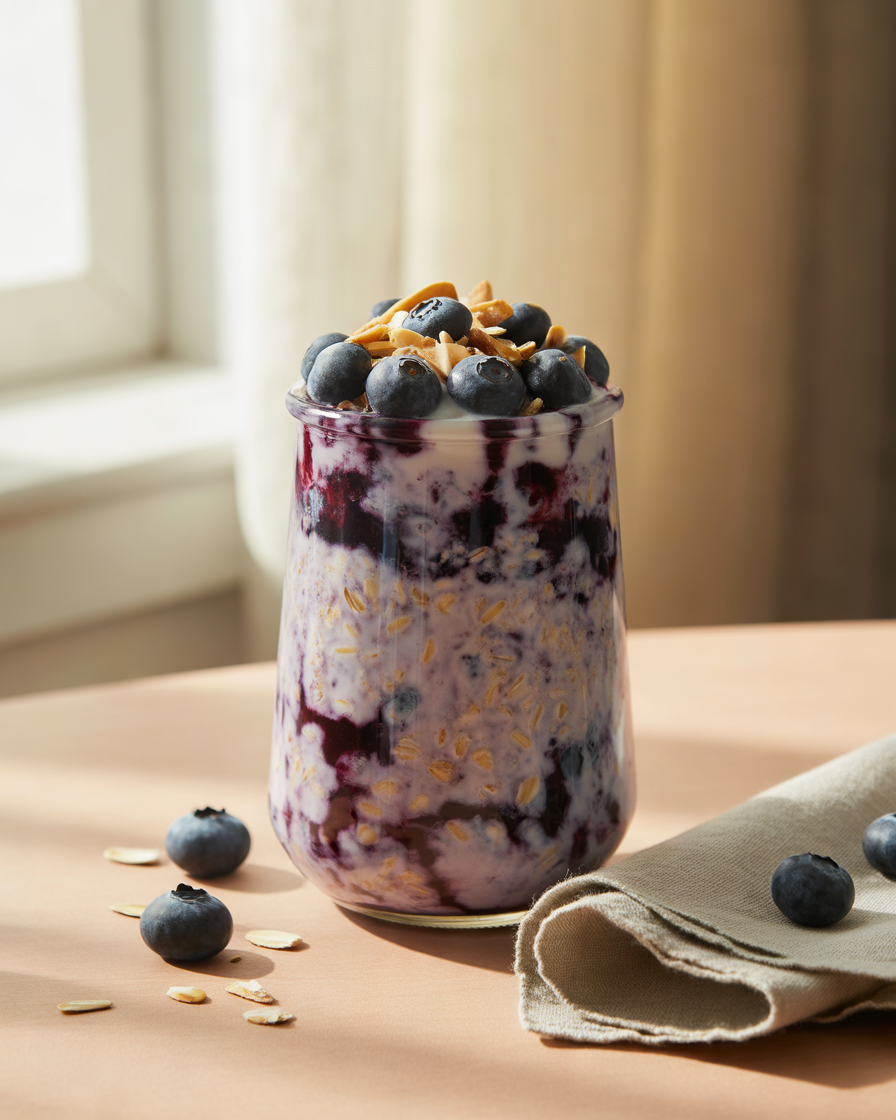
Overnight oats are one of the easiest healthy breakfast recipes for anyone who doesn’t have time to cook in the morning.
The oats soften overnight in milk, creating a creamy breakfast that is ready when you wake up.
Ingredients (1 serving):
- ½ cup rolled oats
- ½ cup milk or unsweetened soy milk
- ⅓ cup plain Greek yogurt
- ½ cup fresh or frozen blueberries
- 1 tablespoon chopped almonds
- A pinch of cinnamon
How to make it:
Combine the oats, milk, yogurt, and cinnamon in a covered jar. Stir thoroughly and refrigerate overnight, ideally for at least six hours. In the morning, add the blueberries and almonds.
Benefits: Oats provide fiber, while yogurt contributes protein and calcium. Blueberries add vitamins and naturally sweet flavor.
Best for: Busy professionals, students, and people who prefer make-ahead breakfasts.
Practical tip: Keep the almonds separate until serving to preserve their crunch.
Important consideration: Choose certified gluten-free oats if necessary, and replace almonds if you have a tree-nut allergy.
2. Spinach and Tomato Egg Muffins

If you love savory breakfasts but dislike cooking every morning, these colorful egg muffins are an excellent meal-prep option.
They are essentially small baked omelets that can be prepared ahead of time.
Ingredients (6 muffins, 3 servings):
- 4 large eggs
- ¼ cup milk
- ½ cup chopped spinach
- ¼ cup diced tomatoes, drained
- ¼ cup chopped bell peppers
- Black pepper and a little olive oil
How to make it:
Preheat the oven to 375°F (190°C). Whisk the eggs with milk and pepper. Stir in the vegetables and divide between six lightly greased muffin cups. Bake for approximately 18–22 minutes, until fully set.
Benefits: Eggs provide protein and several essential nutrients, while the vegetables add fiber, vitamins, and color.
Best for: Families, office workers, and anyone who wants a convenient high-protein breakfast.
Practical tip: Serve two muffins with whole-grain toast and fruit for a more substantial meal.
Important consideration: Refrigerate promptly and consume within 3–4 days. Reheat thoroughly.
3. Greek Yogurt Berry and Granola Breakfast Bowl
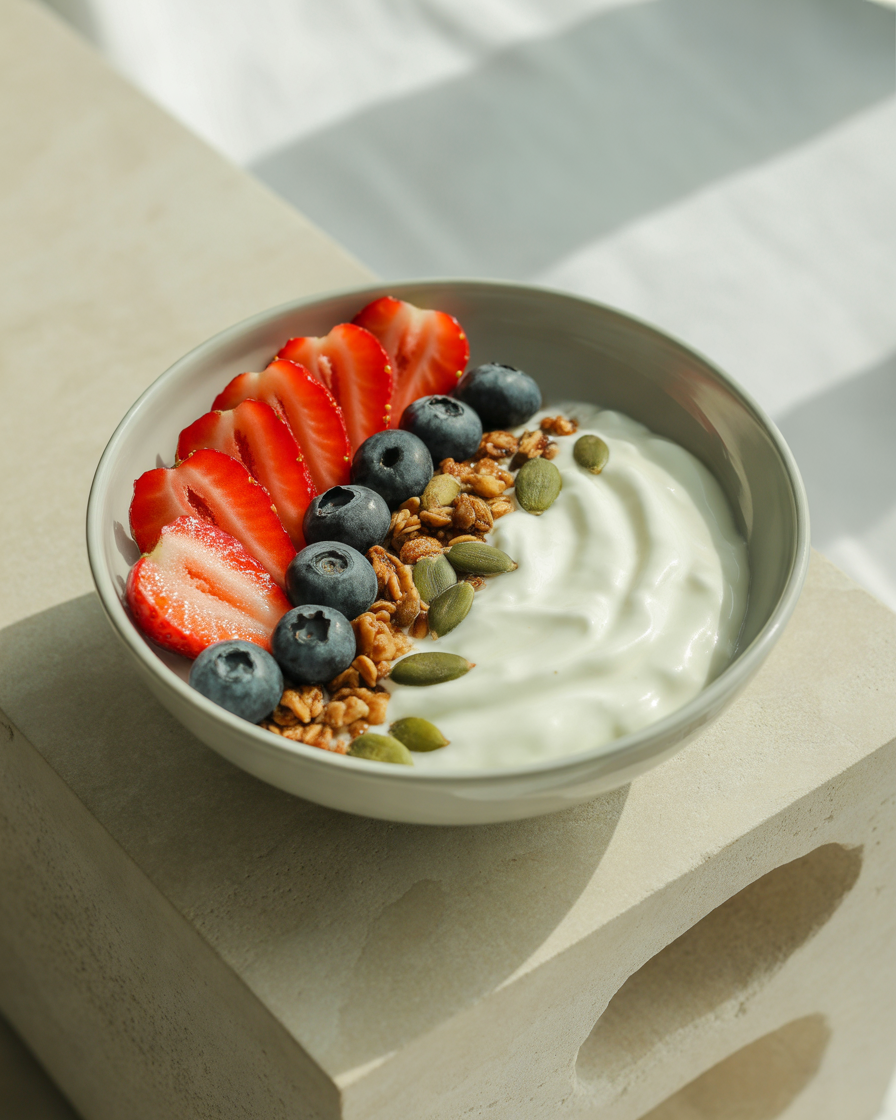
This refreshing breakfast is ideal when you want something nutritious without turning on the stove.
It combines creamy yogurt with juicy berries and crunchy toppings for a delicious contrast of flavors and textures.
Ingredients (1 serving):
- ¾ cup plain Greek yogurt
- ½ cup mixed strawberries and blueberries
- 2 tablespoons lower-sugar granola
- 1 tablespoon pumpkin seeds
- A pinch of cinnamon
How to make it:
Spoon the yogurt into a breakfast bowl. Arrange the berries on top, then sprinkle with granola, pumpkin seeds, and cinnamon.
Benefits: Greek yogurt offers protein and calcium. Berries provide fiber and vitamin C, while pumpkin seeds contribute minerals and unsaturated fats.
Best for: People looking for a quick, no-cook breakfast or an alternative to sugary breakfast cereals.
Practical tip: Frozen berries are often more affordable. Thaw them in the refrigerator before serving.
Important consideration: Some flavored yogurts and granolas contain substantial added sugar. Compare product labels when shopping.
4. Avocado and White Bean Whole-Grain Toast
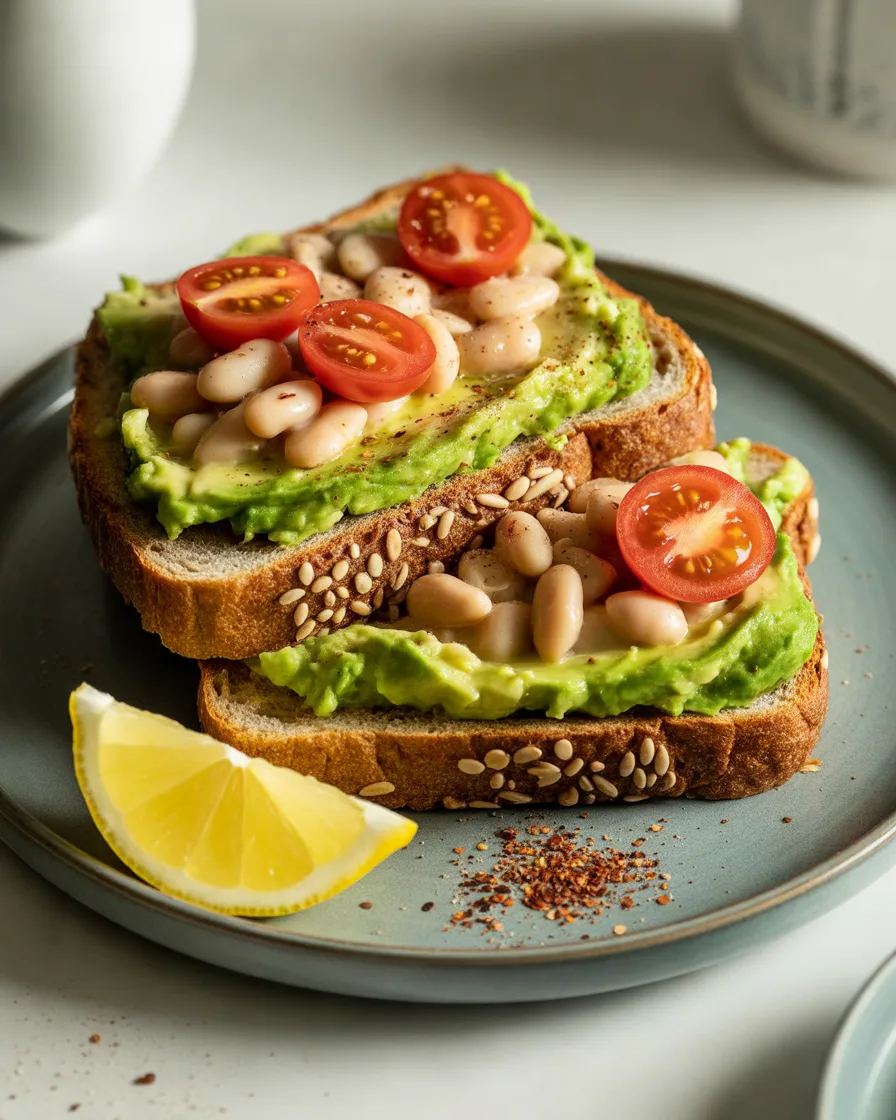
Avocado toast is popular for good reason, but adding mashed white beans makes it more substantial.
The beans provide extra fiber and plant-based protein without overpowering the creamy avocado.
Ingredients (1 serving):
- 2 slices whole-grain bread
- ¼ ripe avocado
- ⅓ cup cooked white beans
- 1 teaspoon lemon juice
- Cherry tomatoes
- Black pepper and chili flakes
How to make it:
Toast the bread. Mash the avocado and white beans with lemon juice and pepper. Spread the mixture over the toast and finish with sliced cherry tomatoes.
Benefits: Avocado supplies unsaturated fats, while beans provide fiber and plant protein. Whole-grain bread contributes additional fiber.
Best for: Vegetarians, people who prefer savory breakfasts, and anyone who wants an egg-free breakfast option.
Practical tip: Rinse canned beans to reduce some of their sodium content.
Important consideration: Avocado and bread portions can be adjusted according to individual energy needs.
5. Apple Cinnamon Peanut Butter Oatmeal
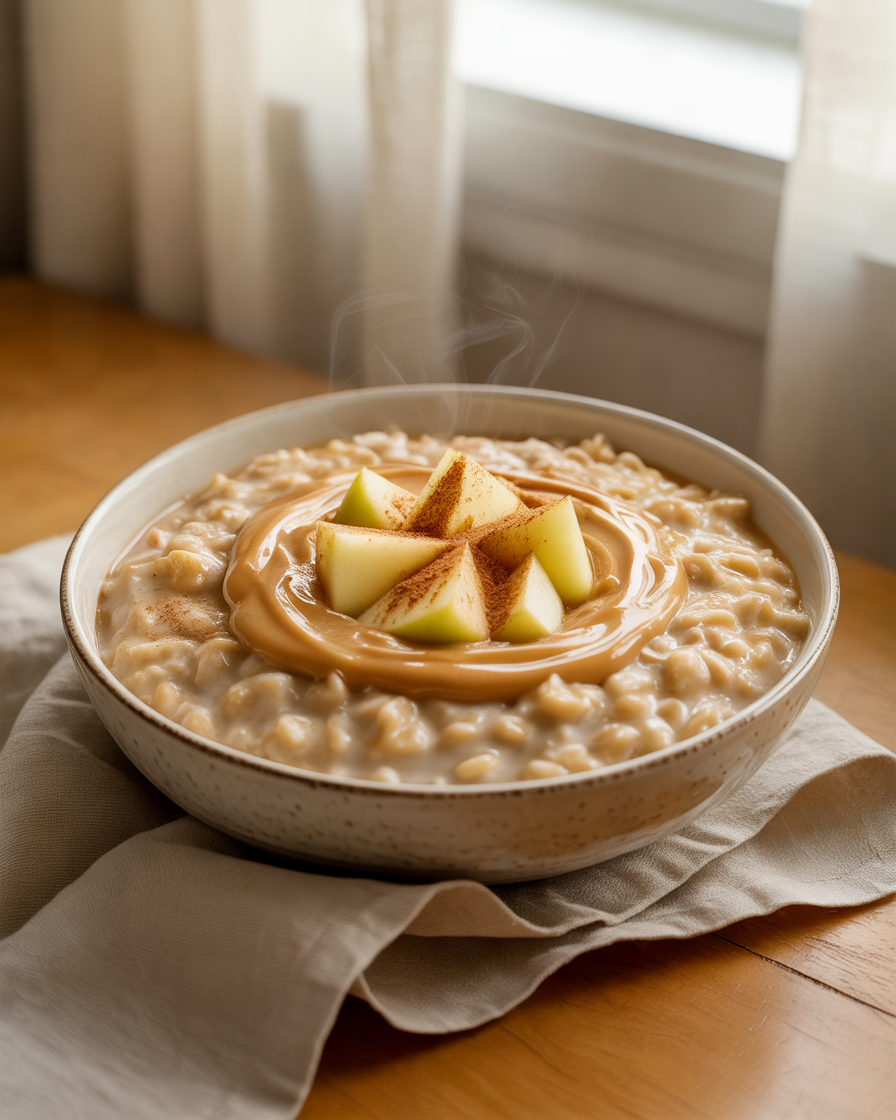
Warm oatmeal is especially comforting on chilly mornings, and this apple cinnamon version tastes like a homemade dessert without needing much added sugar.
It is also an affordable breakfast made from familiar pantry ingredients.
Ingredients (1 serving):
- ½ cup rolled oats
- 1 cup milk or water
- ½ apple, diced
- 1 tablespoon unsweetened peanut butter
- ½ teaspoon cinnamon
How to make it:
Combine the oats, milk, apple, and cinnamon in a saucepan. Simmer for 5–8 minutes, stirring occasionally. Transfer to a bowl and swirl in the peanut butter.
Benefits: Oats and apples contribute fiber, while peanut butter provides unsaturated fats and some protein.
Best for: Budget-conscious households, families, and people who enjoy warm, filling breakfasts.
Practical tip: Cook the apple with the oats rather than adding it afterward for a naturally sweeter, softer texture.
Important consideration: Use sunflower seed butter if peanuts are unsuitable, and check product labels for allergies.
6. Mango Coconut Chia Seed Pudding
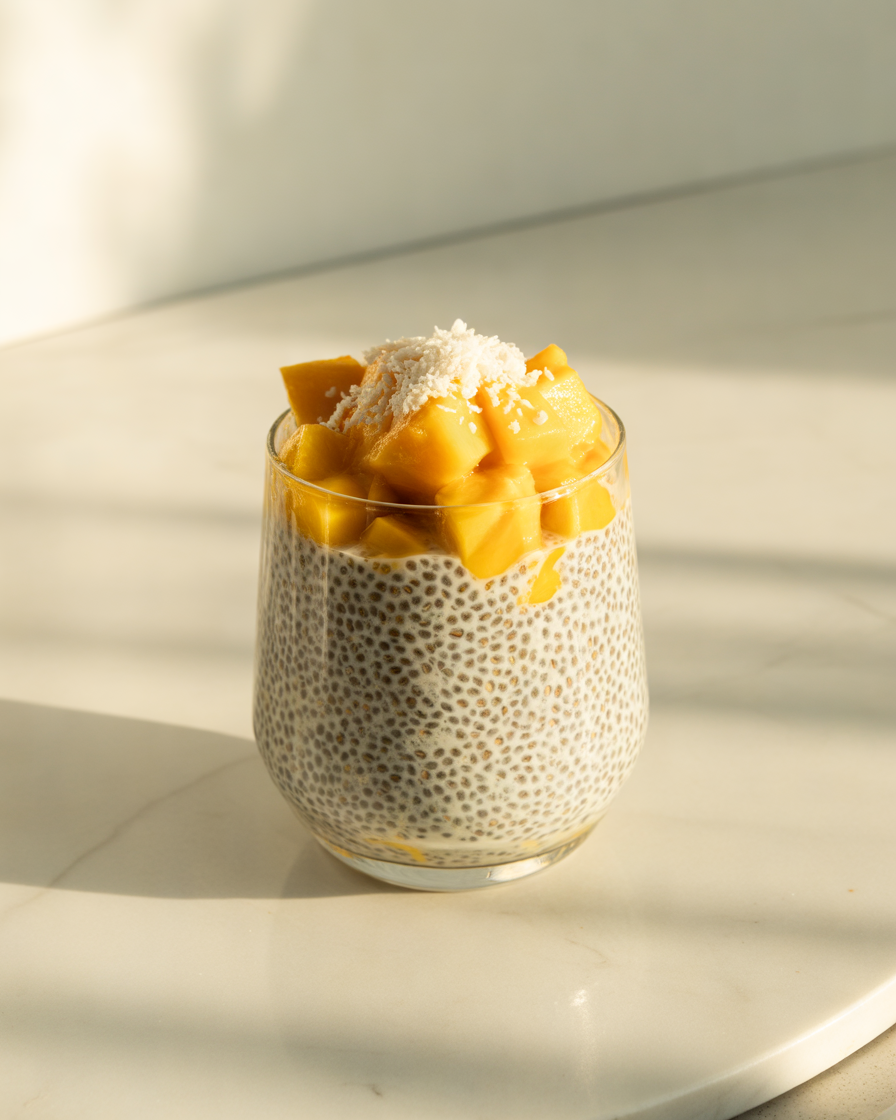
Chia pudding is a convenient make-ahead breakfast with a creamy texture and refreshing tropical flavor.
Chia seeds absorb liquid and create a pudding-like consistency without needing to be cooked.
Ingredients (1 serving):
- 3 tablespoons chia seeds
- ¾ cup milk or fortified soy milk
- ½ cup diced mango
- 1 tablespoon unsweetened shredded coconut
- A little vanilla extract
How to make it:
Mix the chia seeds, milk, and vanilla in a container. Stir again after ten minutes to prevent clumps, then refrigerate overnight. Add mango and coconut before eating.
Benefits: Chia seeds provide fiber and plant-based omega-3 fats. Mango contributes vitamin C and natural sweetness.
Best for: People who enjoy dairy-free breakfasts, simple meal preparation, or chilled breakfasts during warmer weather.
Practical tip: Add a spoonful of plain yogurt or fortified soy yogurt for extra creaminess.
Important consideration: Chia seeds should be properly hydrated before eating. Begin with a smaller portion if you’re unaccustomed to fiber-rich foods.
7. Black Bean and Vegetable Breakfast Burrito

A homemade breakfast burrito can be a practical alternative to expensive takeaway breakfasts.
This version combines eggs, beans, vegetables, and a whole-wheat tortilla for a satisfying handheld meal.
Ingredients (1 serving):
- 1 whole-wheat tortilla
- 1 large egg
- ⅓ cup cooked black beans
- ¼ cup diced bell peppers
- A handful of spinach
- 1 tablespoon salsa
How to make it:
Cook the peppers in a lightly oiled skillet. Add the spinach until wilted, then scramble in the egg until thoroughly cooked. Stir in the beans until hot, transfer to the tortilla, add salsa, and roll tightly.
Benefits: Beans provide fiber and plant protein, while eggs contribute additional protein. Vegetables add useful micronutrients.
Best for: Commuters, active adults, and people who prefer substantial savory breakfasts.
Practical tip: Prepare extra vegetable and bean filling for faster assembly throughout the week.
Important consideration: Choose a lower-sodium salsa when needed, and refrigerate prepared fillings promptly.
8. Banana Oat Blender Pancakes
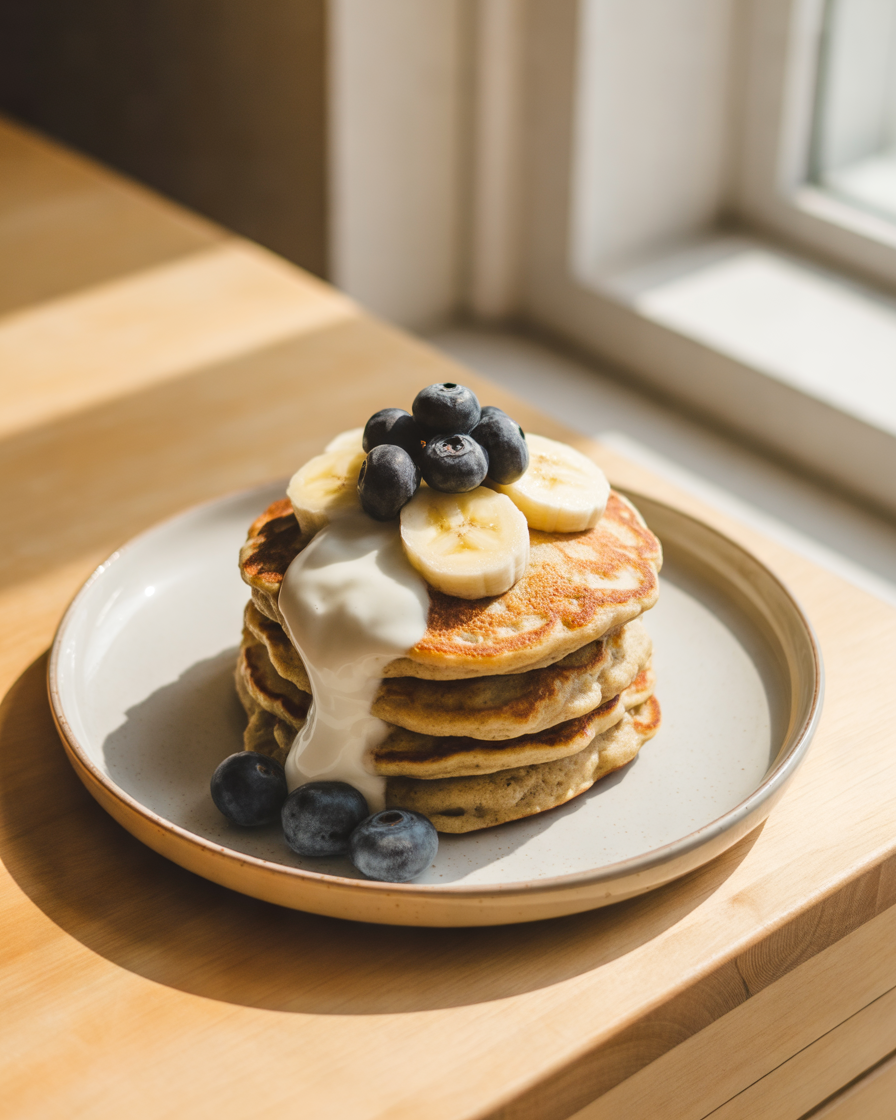
These soft banana pancakes are a simple alternative to traditional pancakes made primarily with refined flour.
They’re naturally sweetened with banana and can be prepared without a complicated batter.
Ingredients (1–2 servings):
- 1 ripe banana
- 1 large egg
- ½ cup rolled oats
- 2 tablespoons milk
- ¼ teaspoon baking powder
- A little oil for cooking
How to make it:
Blend the ingredients until smooth. Heat a lightly oiled nonstick pan over medium-low heat. Cook small pancakes for approximately 2–3 minutes per side, until golden and cooked through.
Benefits: Oats add fiber, banana contributes potassium, and the egg supplies protein.
Best for: Families, weekend breakfasts, and anyone wanting a simple homemade pancake recipe.
Practical tip: Serve with plain yogurt and fresh berries instead of relying on generous amounts of syrup.
Important consideration: These pancakes contain egg. Use an appropriate tested egg-free recipe if you have an egg allergy.
9. Mushroom and Pepper Tofu Scramble

For anyone avoiding eggs, tofu scramble is a versatile savory breakfast that works well with toast or roasted vegetables.
Seasonings give the tofu a delicious flavor, while colorful vegetables keep the dish interesting.
Ingredients (1 serving):
- 150 g firm tofu
- ½ cup sliced mushrooms
- ¼ cup diced bell peppers
- 1 teaspoon olive oil
- ¼ teaspoon turmeric
- Garlic powder and black pepper
- 1 slice whole-grain toast
How to make it:
Heat the oil in a skillet and cook the mushrooms and peppers until softened. Crumble in the tofu, add seasonings, and cook until thoroughly heated and lightly golden. Serve with toast.
Benefits: Tofu provides plant-based protein. Mushrooms and peppers contribute additional vitamins and minerals.
Best for: Vegans, vegetarians, and anyone wanting more plant-based breakfast options.
Practical tip: Add nutritional yeast for a slightly cheesy flavor.
Important consideration: Tofu is made from soy, a common allergen. Its calcium content varies depending on how it is manufactured.
10. Peach and Walnut Cottage Cheese Toast
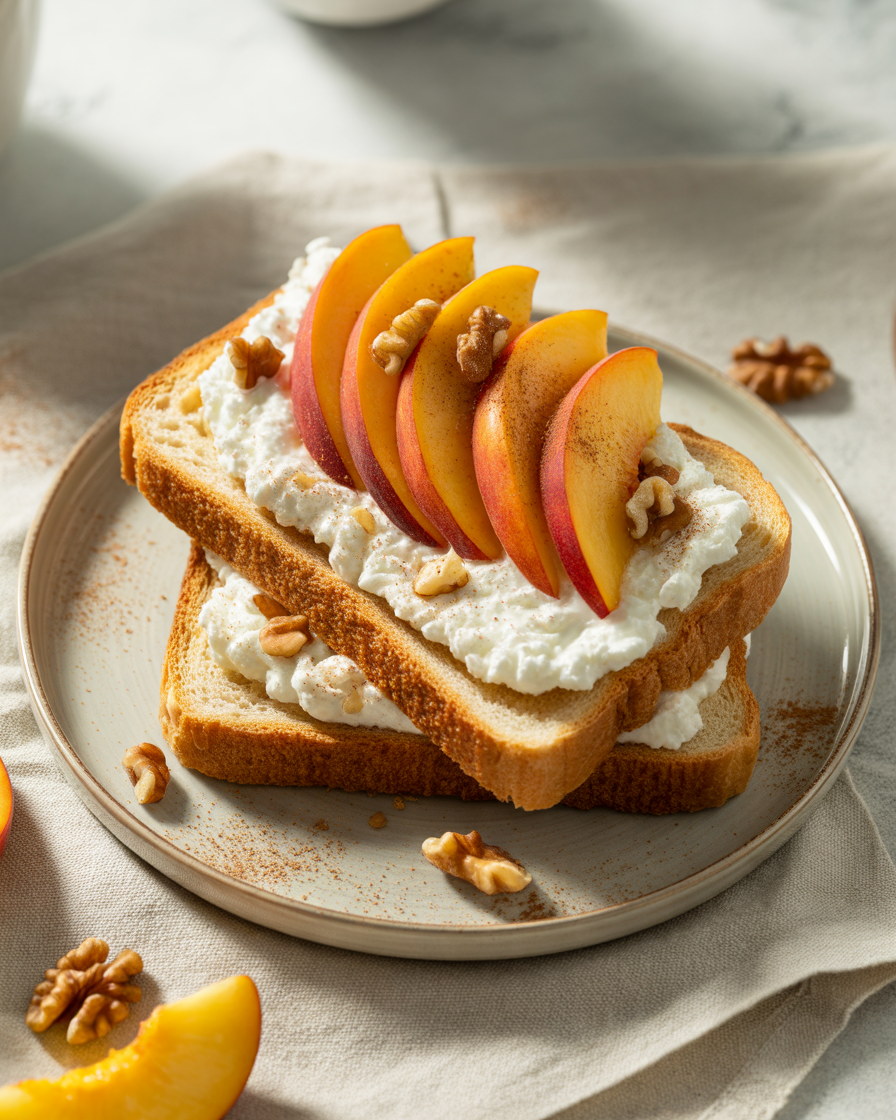
Cottage cheese toast provides a delightful combination of creamy, crunchy, and naturally sweet ingredients.
It takes only a few minutes and makes an appealing alternative to traditional buttered toast.
Ingredients (1 serving):
- 2 slices whole-grain bread
- ½ cup cottage cheese
- 1 ripe peach, sliced
- 1 tablespoon chopped walnuts
- A pinch of cinnamon
How to make it:
Toast the bread until lightly crisp. Spread the cottage cheese evenly across both slices. Arrange the peach slices on top, then finish with walnuts and cinnamon.
Benefits: Cottage cheese contributes protein and calcium, while walnuts provide unsaturated fats. Peaches add fiber and vitamin C.
Best for: People seeking quick high-protein breakfast ideas without cooking eggs.
Practical tip: Substitute pears or berries when peaches are out of season.
Important consideration: Cottage cheese can be relatively high in sodium. Compare brands, and choose pasteurized dairy products when required for food safety.
11. Warm Quinoa and Pear Breakfast Bowl
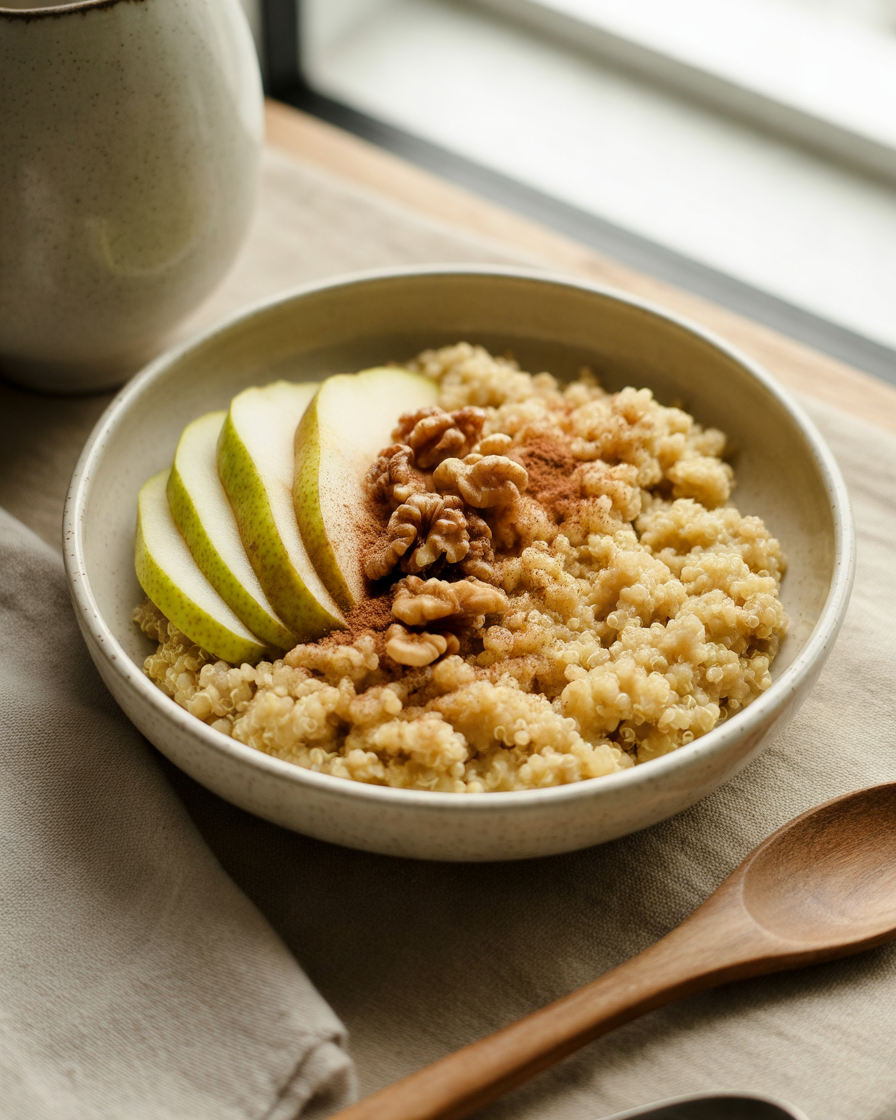
Quinoa isn’t just for lunch salads. Its mild, nutty flavor also makes it an excellent base for a warm breakfast bowl.
This recipe is especially useful when you have leftover cooked quinoa in the refrigerator.
Ingredients (1 serving):
- ¾ cup cooked quinoa
- ½ cup milk or fortified soy milk
- ½ ripe pear, diced
- 1 tablespoon chopped walnuts
- ¼ teaspoon cinnamon
- A few drops of vanilla extract
How to make it:
Combine the cooked quinoa, milk, cinnamon, and vanilla in a small saucepan. Heat gently until warm. Transfer to a bowl and top with pear and walnuts.
Benefits: Quinoa contributes fiber, protein, and minerals, while the fruit and nuts provide additional nutrients.
Best for: People who want alternatives to oatmeal or enjoy warm grain-based breakfasts.
Practical tip: Cook a larger batch of quinoa during weekly meal preparation.
Important consideration: Store cooked quinoa promptly in the refrigerator and reheat it thoroughly.
12. Strawberry Spinach Breakfast Smoothie
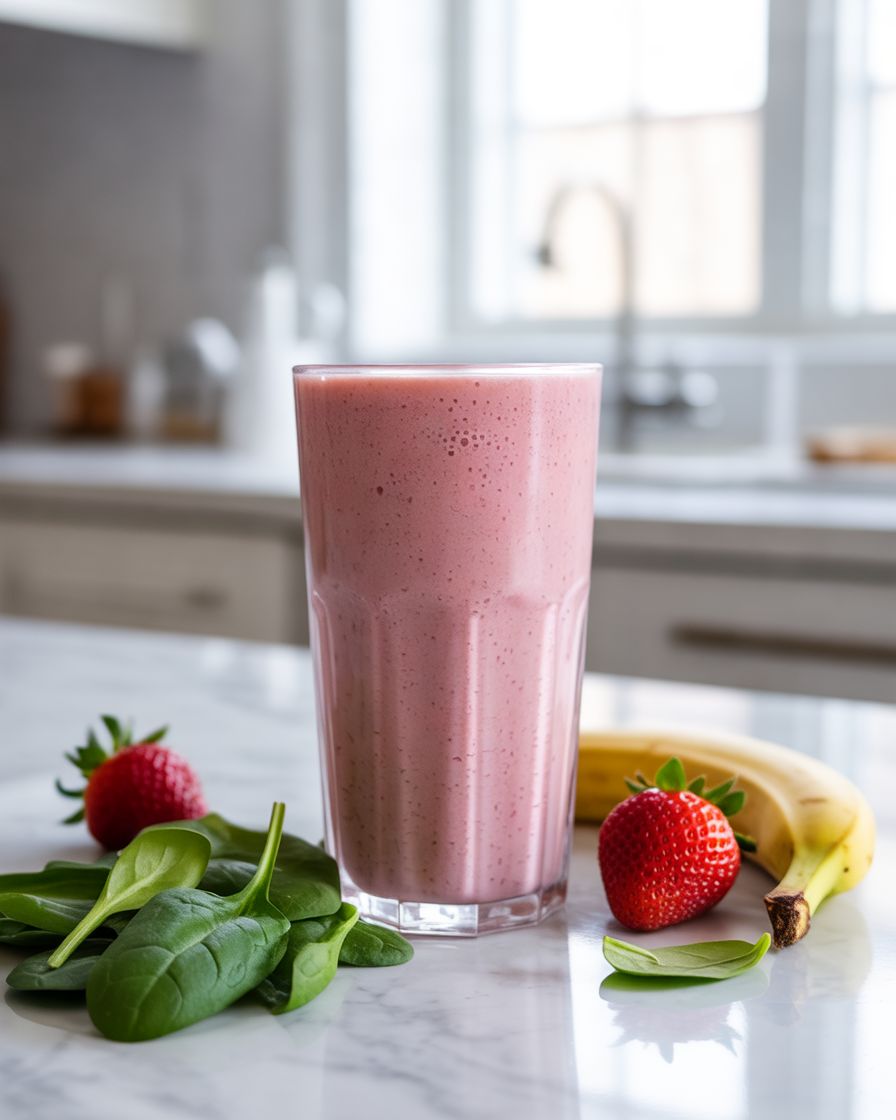
A breakfast smoothie can be helpful when you’re short on time or prefer something easy to consume in the morning.
The secret to making it more substantial is combining fruit and vegetables with protein-rich ingredients.
Ingredients (1 large serving):
- ¾ cup frozen strawberries
- 1 small banana
- 1 cup fresh spinach
- ¾ cup plain Greek yogurt
- ½ cup milk
- 2 tablespoons rolled oats
How to make it:
Add everything to a blender. Blend until creamy, adding a little extra milk if necessary. Serve immediately.
Benefits: Strawberries provide vitamin C, spinach contributes folate, yogurt adds protein, and oats supply fiber.
Best for: Busy mornings, people who prefer drinkable breakfasts, and those looking for convenient fruit-and-vegetable combinations.
Practical tip: Freeze individual fruit portions in advance to reduce preparation time.
Important consideration: Liquid meals may feel less satisfying than solid foods for some people. Avoid adding unnecessary sweeteners, and consume smoothies fresh or keep chilled.
13. Sweet Potato and Egg Breakfast Hash
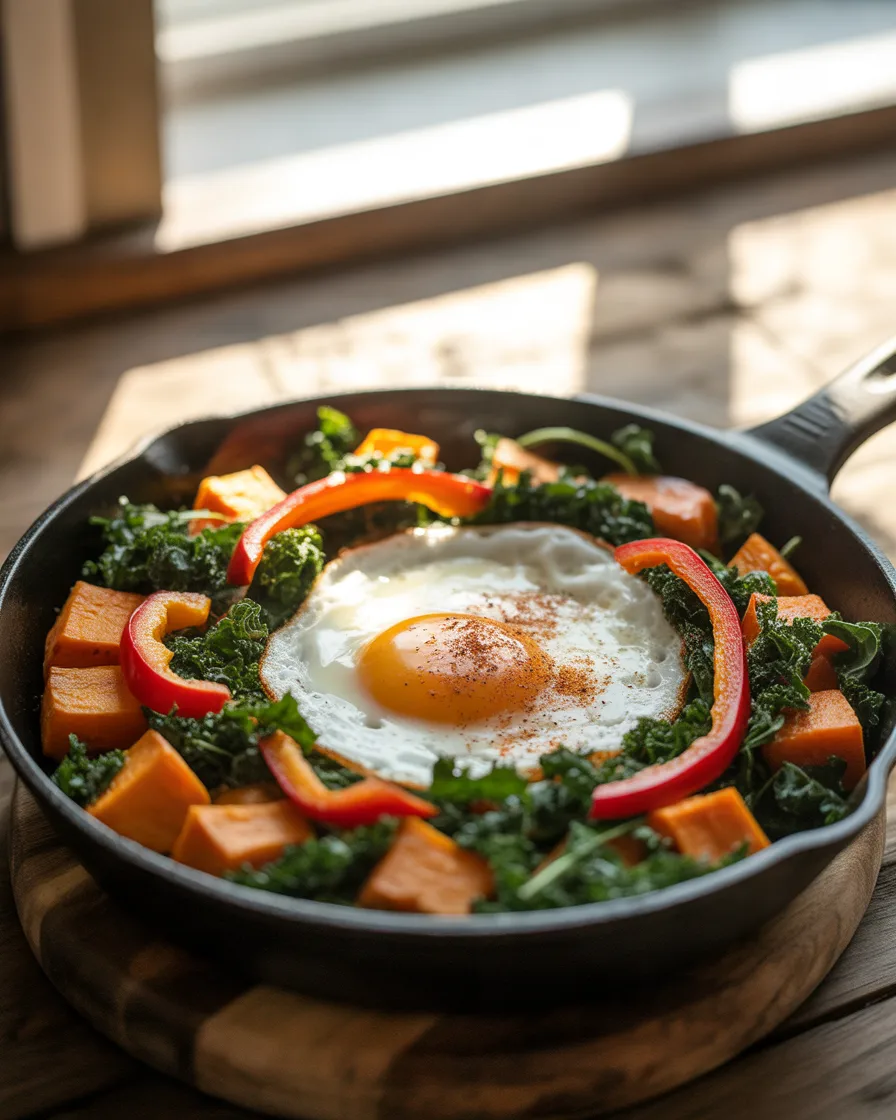
Sweet potatoes make a flavorful breakfast base and pair particularly well with eggs and vegetables.
This colorful skillet recipe is useful when you want a warm, savory meal that feels more substantial than toast.
Ingredients (1 serving):
- 1 small sweet potato, diced
- 1 large egg
- ¼ cup diced bell pepper
- ½ cup chopped kale or spinach
- 1 teaspoon olive oil
- Paprika and black pepper
How to make it:
Microwave the diced sweet potato with a splash of water until almost tender. Transfer to a lightly oiled skillet, add the pepper and cook until golden. Stir in the greens. Add the egg and cook until fully set.
Benefits: Sweet potatoes provide fiber and beta-carotene, while eggs contribute protein. Leafy greens offer additional micronutrients.
Best for: Active individuals, savory breakfast lovers, and weekend brunches.
Practical tip: Dice the sweet potato into small, even pieces to speed up cooking.
Important consideration: Adjust the oil and portion sizes to your needs, and cook the egg thoroughly.
14. Carrot Cake Baked Oatmeal Squares
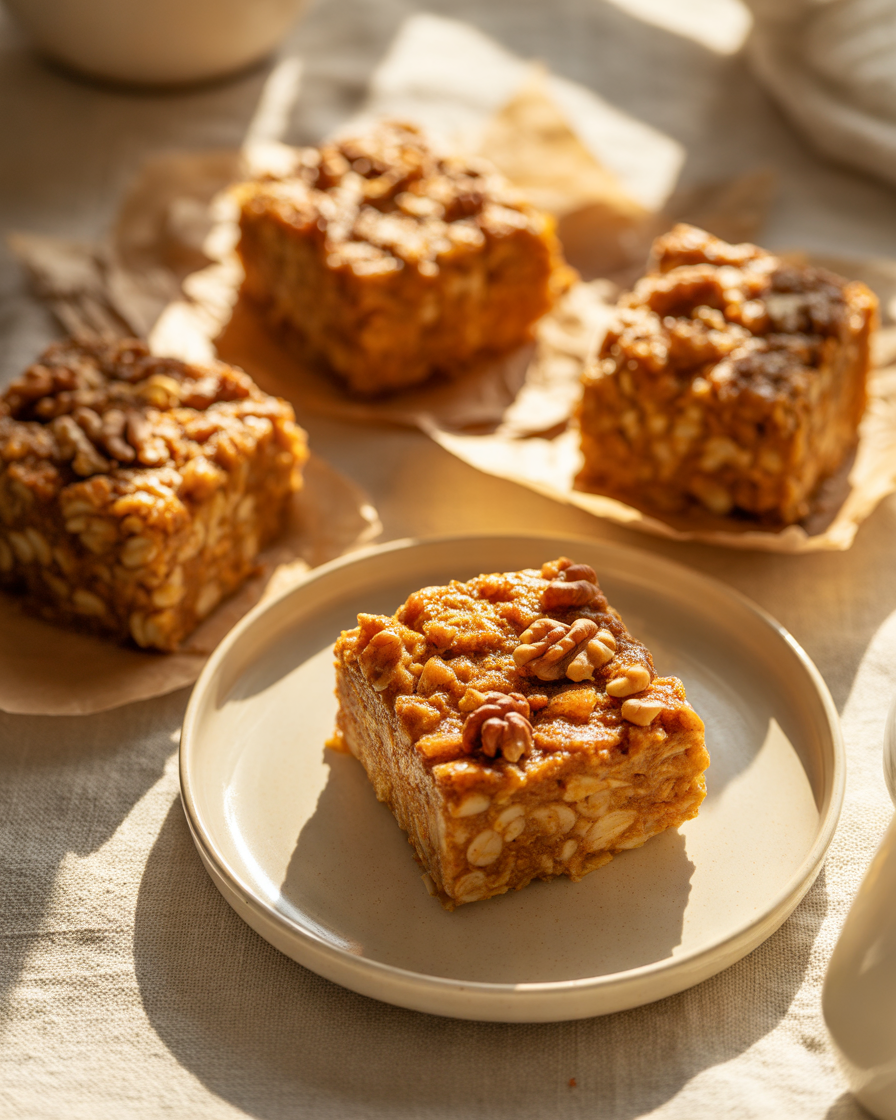
These baked oatmeal squares bring the flavors of carrot cake into a convenient breakfast you can prepare in advance.
They are especially useful for families who want something portable without relying on packaged breakfast bars.
Ingredients (4 servings):
- 1½ cups rolled oats
- 1 cup milk
- 1 ripe banana, mashed
- 1 medium carrot, grated
- 1 large egg
- 1 teaspoon baking powder
- 1 teaspoon cinnamon
- 2 tablespoons chopped walnuts
How to make it:
Preheat the oven to 350°F (175°C). Mix the ingredients, transfer to a small greased baking dish, and bake for approximately 25–30 minutes until set. Cool before cutting into four squares.
Benefits: Oats add fiber, carrots contribute beta-carotene, and walnuts offer unsaturated fats.
Best for: Families, meal preppers, and people looking for homemade grab-and-go breakfasts.
Practical tip: Serve a square with plain Greek yogurt for additional protein.
Important consideration: Refrigerate leftovers promptly and consume within 3–4 days, or freeze individual portions.
15. Lemon and Herb Salmon Breakfast Toast

Salmon toast is a delicious savory breakfast when you want something different from your usual egg-based dishes.
Using leftover cooked salmon also makes this recipe quick and helps reduce food waste.
Ingredients (1 serving):
- 2 slices whole-grain toast
- 75–90 g cooked salmon
- 2 tablespoons plain Greek yogurt
- ¼ cucumber, thinly sliced
- 1 teaspoon lemon juice
- Fresh dill and black pepper
How to make it:
Mix the yogurt with lemon juice, dill, and pepper. Spread it over the toast, then add the cooked salmon and cucumber slices. Serve immediately.
Benefits: Salmon supplies protein and long-chain omega-3 fats, while whole-grain toast contributes fiber.
Best for: People who enjoy savory breakfasts or want to include more fish in their weekly meals.
Practical tip: Use leftover baked salmon from dinner to save preparation time.
Important consideration: Ensure the salmon was properly cooked and refrigerated. This recipe contains fish, dairy, and wheat unless suitable substitutions are used.
Expert Tips for Making Healthy Breakfast Recipes Easier and More Nutritious
A good breakfast routine is about choosing foods that work for your lifestyle rather than following strict rules. These practical tips can make healthy eating more manageable.
1. Include a source of protein.
Protein-rich foods such as eggs, Greek yogurt, cottage cheese, tofu, beans, and fish can make meals more substantial. Adding one of these ingredients to toast, oatmeal, or vegetables is a straightforward way to create a balanced breakfast.
2. Choose fiber-rich carbohydrates.
Whole-grain bread, oats, quinoa, beans, and fruit provide fiber alongside carbohydrates. These foods contribute to a varied diet and may help meals feel more satisfying.
3. Prepare breakfast ingredients ahead of time.
Wash berries, portion oats, chop vegetables, and cook grains in advance. You don’t need to prepare complete meals to make mornings easier. Having ingredients ready can save valuable time.
4. Keep added sugar in check.
Flavored yogurt, granola, breakfast bars, and some cereals may contain more added sugar than expected. Choose plain or lower-sugar versions and use fruit, cinnamon, or vanilla for flavor.
5. Use affordable ingredients.
Healthy eating doesn’t require expensive specialty foods. Frozen berries, canned beans, eggs, oats, seasonal produce, and store-brand yogurt can all work well in breakfast recipes.
6. Think about overall balance, not perfection.
Not every breakfast needs to contain every food group. According to the NHS Eatwell Guide, dietary balance matters across the day or week, rather than at every individual meal.
7. Follow sensible food-storage practices.
Keep perishable ingredients refrigerated. As a general food-safety rule, refrigerate cooked leftovers within two hours, or within one hour in very hot conditions above 90°F (32°C). Most cooked leftovers should be consumed within three to four days.
If you have diabetes, kidney disease, food allergies, pregnancy-related dietary concerns, or another condition requiring dietary adjustments, consult a healthcare professional or registered dietitian for individualized guidance.
Frequently Asked Questions About Healthy Breakfast Recipes
What is the healthiest breakfast to eat every morning?
There is no single breakfast that is best for everyone. A nutritious breakfast usually includes a combination of fiber-rich carbohydrates, protein, and fruit or vegetables.
For example, oatmeal with Greek yogurt and berries, eggs with whole-grain toast, or tofu with vegetables can all fit into a balanced eating pattern.
The best option depends on your preferences, activity level, health needs, and appetite.
What are some quick healthy breakfast recipes for busy mornings?
Greek yogurt bowls, overnight oats, avocado toast, cottage cheese toast, and smoothies are convenient options.
Most require little cooking, and several can be prepared ahead of time. Keeping a few ingredients ready in the refrigerator can make breakfast preparation much faster.
Which healthy breakfast recipes are high in protein?
Egg muffins, Greek yogurt bowls, tofu scramble, cottage cheese toast, and salmon toast are useful high-protein breakfast options.
Their actual protein content depends on the ingredients and serving sizes. For more protein, consider adding Greek yogurt, eggs, tofu, beans, or other appropriate protein-rich foods.
Are oats a healthy breakfast choice?
Yes. Plain oats provide fiber and can be an excellent part of a balanced breakfast.
They are versatile, affordable, and easy to combine with nutritious toppings such as fruit, yogurt, seeds, and nuts.
Choose plain oats when possible so you can control the amount of added sugar and other ingredients.
Can healthy breakfast recipes help with weight management?
A nutritious breakfast may support weight-management efforts when it fits into an overall balanced eating pattern.
Meals containing protein and fiber can help some people feel more satisfied. However, eating breakfast alone does not guarantee weight loss, and individual needs vary.
Sustainable eating habits are more important than relying on any single meal.
What can I eat for breakfast if I don’t like eggs?
There are many healthy breakfast recipes without eggs.
Options include overnight oats, chia pudding, Greek yogurt bowls, avocado and white bean toast, tofu scramble, and warm quinoa.
These can provide a variety of nutrients without requiring eggs.
Can I prepare healthy breakfasts for the whole week?
Yes, but choose recipes suited to storage.
Baked oatmeal squares and some cooked breakfast components freeze well. Overnight oats and yogurt-based breakfasts are convenient for shorter-term refrigeration.
Refrigerate perishable ingredients promptly, follow appropriate storage limits, and keep crunchy toppings separate until serving.
What are some healthy breakfast ideas for children?
Banana oat pancakes, apple cinnamon oatmeal, yogurt and fruit bowls, and baked oatmeal squares can be family-friendly choices.
Adjust portions to the child’s age and appetite. Prepare foods in age-appropriate shapes and textures, especially for younger children, and account for allergies or choking hazards such as whole nuts.
Conclusion
Eating a nutritious breakfast doesn’t need to be complicated, expensive, or time-consuming.
These 15 healthy breakfast recipes offer practical choices for different schedules, tastes, and dietary preferences. From creamy overnight oats and fresh yogurt bowls to savory egg muffins, vegetable burritos, and salmon toast, there is something for almost every morning routine.
The most useful approach is to start with two or three recipes that fit your lifestyle, keep the ingredients available, and gradually add variety.
Focus on nutritious ingredients, realistic preparation times, appropriate portions, and safe food handling.
With a little planning, healthy breakfasts can become a convenient and enjoyable part of your everyday routine.