Staying active doesn’t have to mean paying for an expensive gym membership or spending hours exercising. With the right full body workout at home, you can strengthen your muscles, improve your fitness, increase your energy levels, and build healthier habits without leaving your living room.
Whether you’re a complete beginner, a busy professional, or someone returning to exercise after a break, home workouts offer a convenient way to stay consistent. You don’t need complicated equipment or a large workout space. Many effective exercises use your body weight, while everyday items like water bottles and a backpack can provide additional resistance.
A balanced full-body routine should work your legs, glutes, chest, back, shoulders, arms, and core. Combining strength exercises with cardiovascular movements can also help improve stamina and support overall physical health.
According to the Centers for Disease Control and Prevention (CDC), adults should aim for at least 150 minutes of moderate-intensity aerobic activity each week, along with muscle-strengthening activities on two or more days. Shorter sessions can contribute toward these goals.
In this guide, you’ll discover 13 effective full body workout at home exercises, including beginner-friendly movements, low-impact options, and more challenging exercises. You’ll also find practical instructions, form tips, a simple weekly workout schedule, and expert-informed advice to help you exercise safely.
How to Prepare for a Full Body Workout at Home
Before starting your home workout routine, prepare a comfortable and safe exercise area. You only need enough space to stretch your arms and legs freely without hitting furniture.
Wear comfortable clothing and supportive footwear where appropriate. Keep water nearby, and use an exercise mat if you’re performing movements on the floor.
Start with a five-minute warm-up that includes gentle marching, shoulder circles, arm swings, ankle movements, and controlled hip rotations. Gradually increase your movement speed rather than jumping straight into demanding exercises.
For strength-focused movements, beginners can generally start with one set of 8–12 controlled repetitions, adjusting the number to their abilities. Aim for quality over speed, and take breaks whenever your form begins to deteriorate.
Important: If you have a significant injury, an existing medical condition, are pregnant or postpartum, or have been advised to limit physical activity, speak with an appropriate healthcare professional before beginning or changing your routine.
1. Bodyweight Squats for Stronger Legs and Glutes
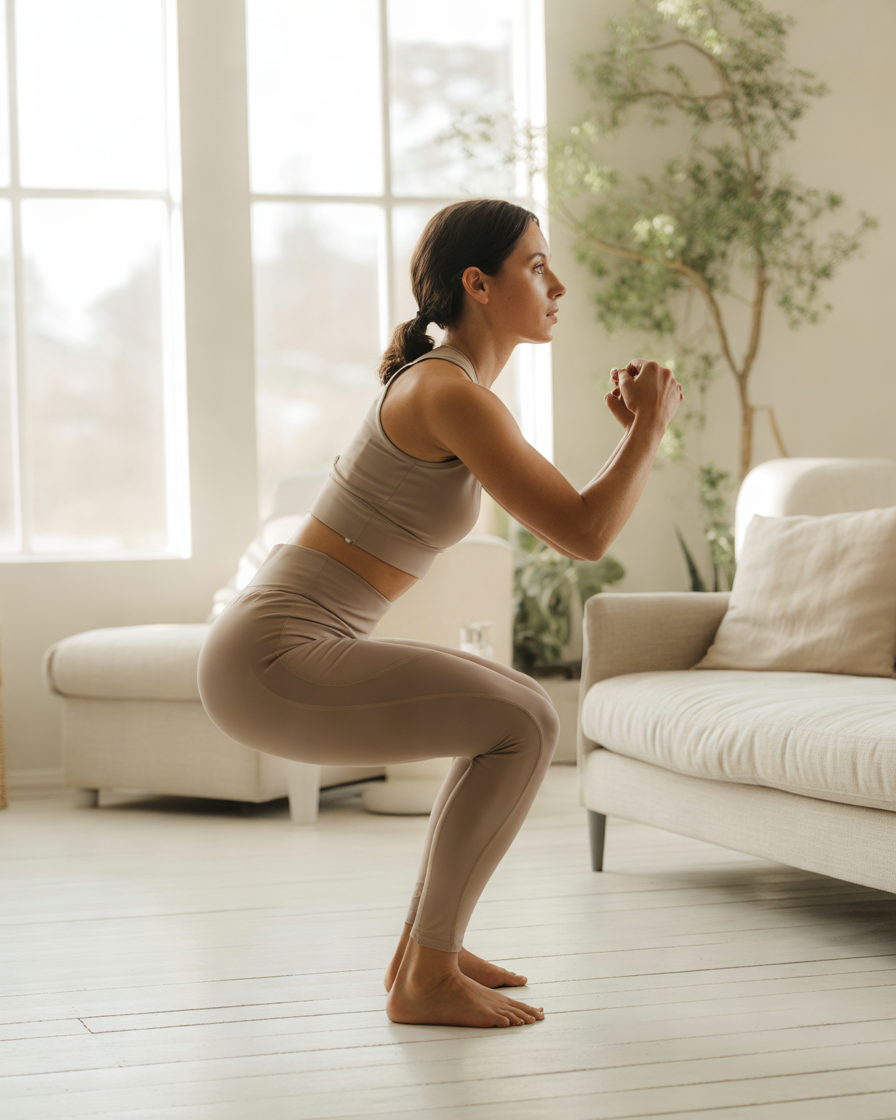
Bodyweight squats are one of the most practical exercises for a full body workout at home. They primarily strengthen your quadriceps, hamstrings, and glutes while requiring your core to help stabilize your body.
Squats also train movements you use in everyday life, including sitting down, standing up, and lifting objects.
Benefits: Strengthens the lower body, improves functional movement, and develops muscular endurance.
How to perform:
- Stand with your feet approximately shoulder-width apart.
- Bend your knees and hips as though sitting in a chair.
- Lower yourself as far as you can comfortably control.
- Push through your feet to return to standing.
Recommended repetitions: 10–15.
Practical tip: Keep your heels grounded and your knees moving in the same direction as your toes.
Best suited for: Beginners, people exercising without equipment, and those building lower-body strength.
Important considerations: Avoid forcing a deep squat. If you struggle with balance, practice sitting down and standing up from a stable chair.
2. Push-Ups for Upper Body Strength
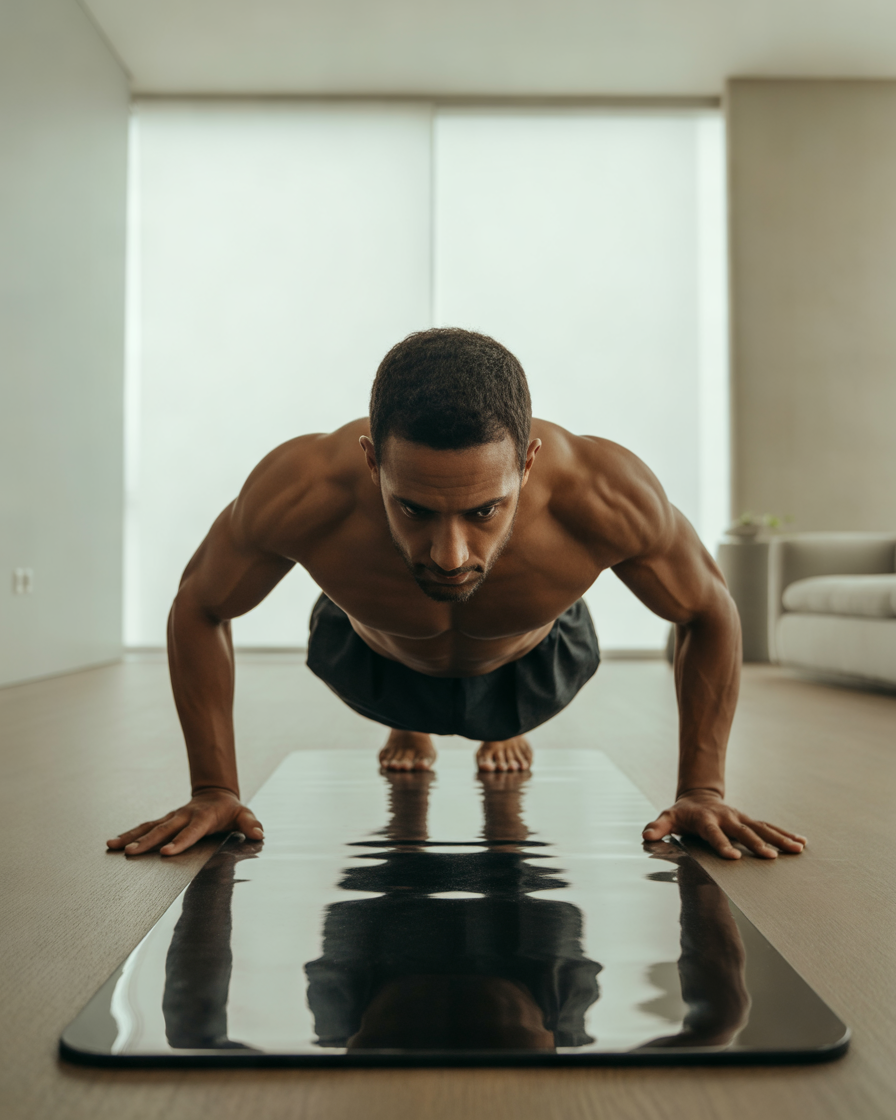
Push-ups are an effective bodyweight exercise that strengthens the chest, shoulders, triceps, and core. They can be modified to suit different fitness levels.
Unlike exercises that isolate one muscle, push-ups require several muscle groups to work together, making them a useful addition to home strength training.
Benefits: Improves upper-body strength, core stability, and muscular endurance.
How to perform:
- Place your hands slightly wider than shoulder-width apart.
- Extend your legs behind you into a plank position.
- Bend your elbows to lower your chest toward the floor.
- Push through your palms to return to the starting position.
Recommended repetitions: 6–12.
Practical tip: Maintain a straight body position and avoid allowing your lower back to sag.
Best suited for: People wanting stronger arms, shoulders, and chest muscles.
Important considerations: Beginners can perform incline push-ups against a wall or sturdy countertop. Stop or modify the exercise if it causes wrist or shoulder pain.
3. Reverse Lunges for Leg Strength and Balance
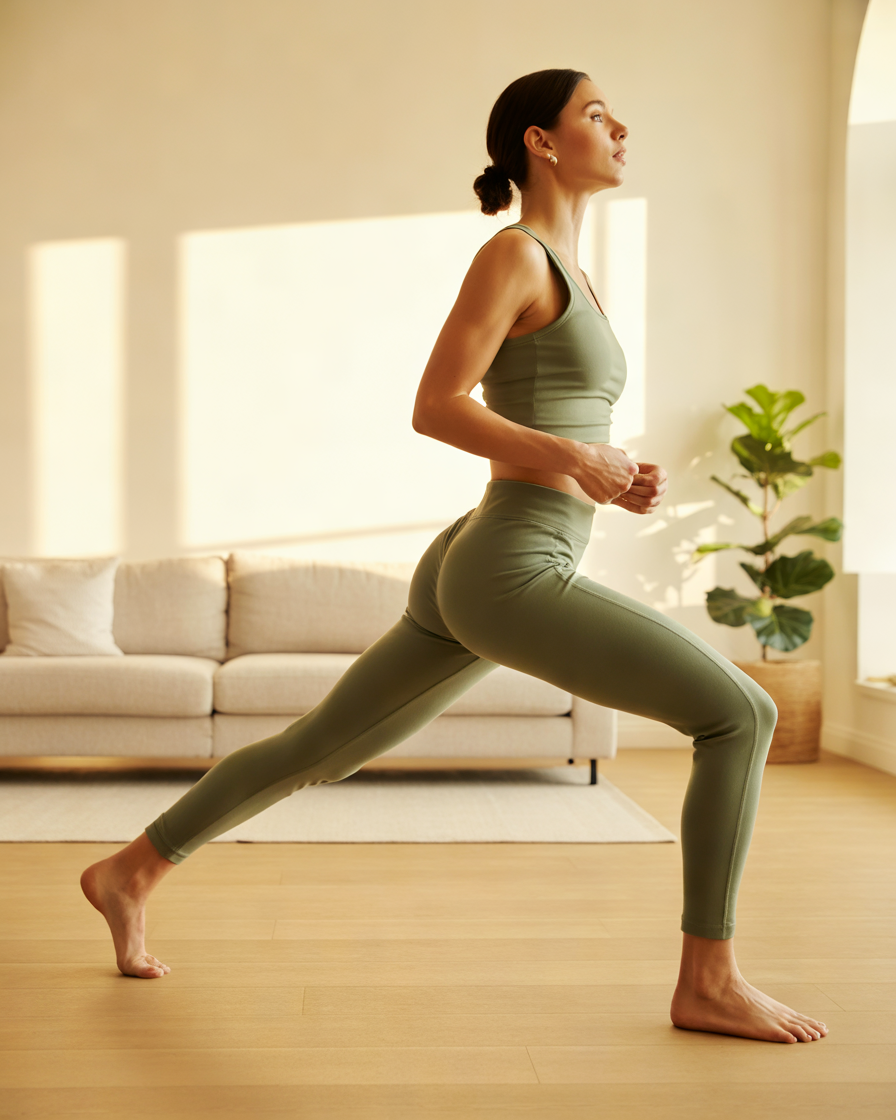
Reverse lunges strengthen the lower body while challenging balance and coordination. Stepping backward can feel more controlled than stepping forward for some beginners.
This exercise works your quadriceps, glutes, and hamstrings while encouraging each leg to perform independently.
Benefits: Develops leg strength, improves coordination, and helps address differences in strength between sides.
How to perform:
- Stand upright with your feet hip-width apart.
- Step one foot backward.
- Bend both knees, lowering your body toward the floor.
- Push through your front foot to return to standing.
- Repeat on the opposite side.
Recommended repetitions: 8–10 per leg.
Practical tip: Take a comfortable step backward and keep your front foot firmly planted.
Best suited for: People wanting to strengthen their legs and improve balance.
Important considerations: Hold a stable support if needed. Reduce the depth of the movement if you experience knee discomfort.
4. Glute Bridges for Stronger Hips and Glutes
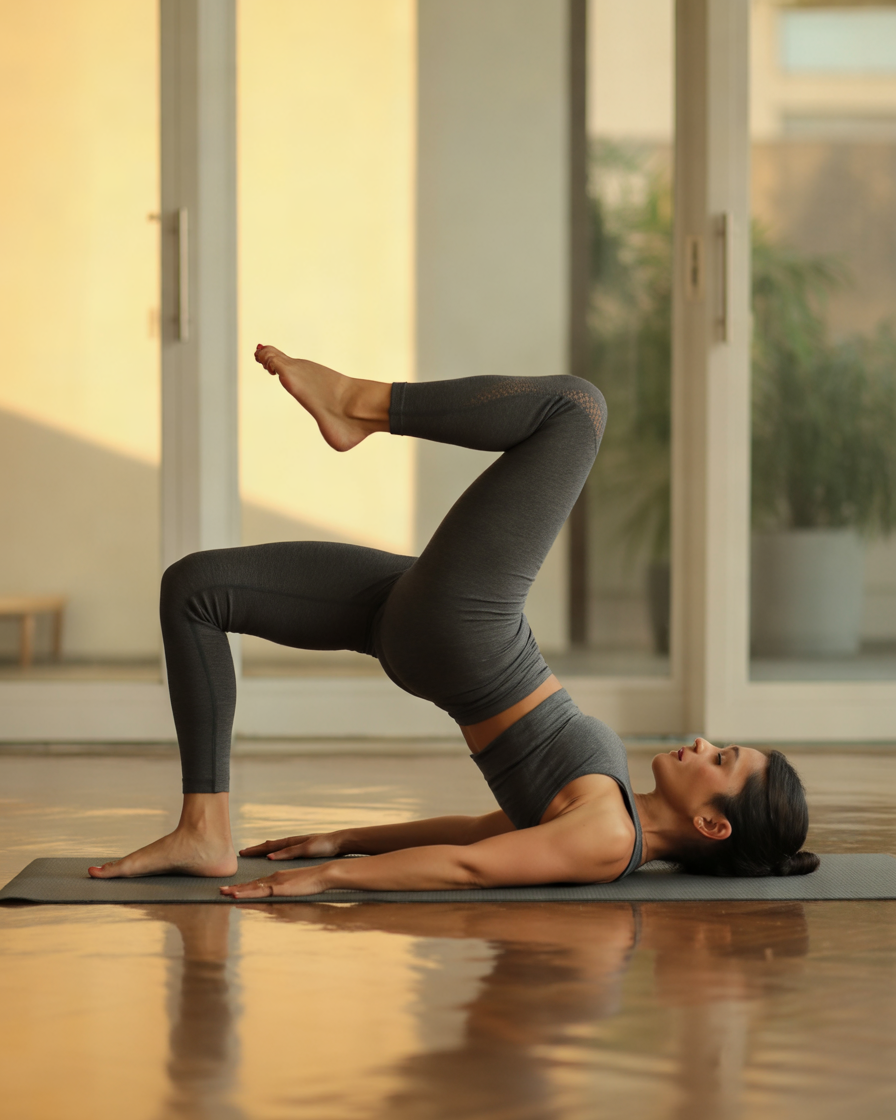
Glute bridges are simple floor exercises that target the gluteal muscles and help strengthen the muscles responsible for hip extension.
They are especially useful for people who spend long periods sitting and want to include more hip-strengthening movements in their routines.
Benefits: Strengthens the glutes, supports hip control, and engages the posterior chain.
How to perform:
- Lie on your back with your knees bent.
- Place your feet flat on the floor, approximately hip-width apart.
- Gently engage your abdominal muscles.
- Lift your hips until your shoulders, hips, and knees form a relatively straight line.
- Lower slowly and repeat.
Recommended repetitions: 12–15.
Practical tip: Focus on lifting through your hips rather than arching your lower back.
Best suited for: Beginners and anyone wanting to improve glute strength.
Important considerations: Keep the movement comfortable. If floor exercises are difficult, consider supported standing hip extensions instead.
5. Bird Dog Exercises for Core Stability
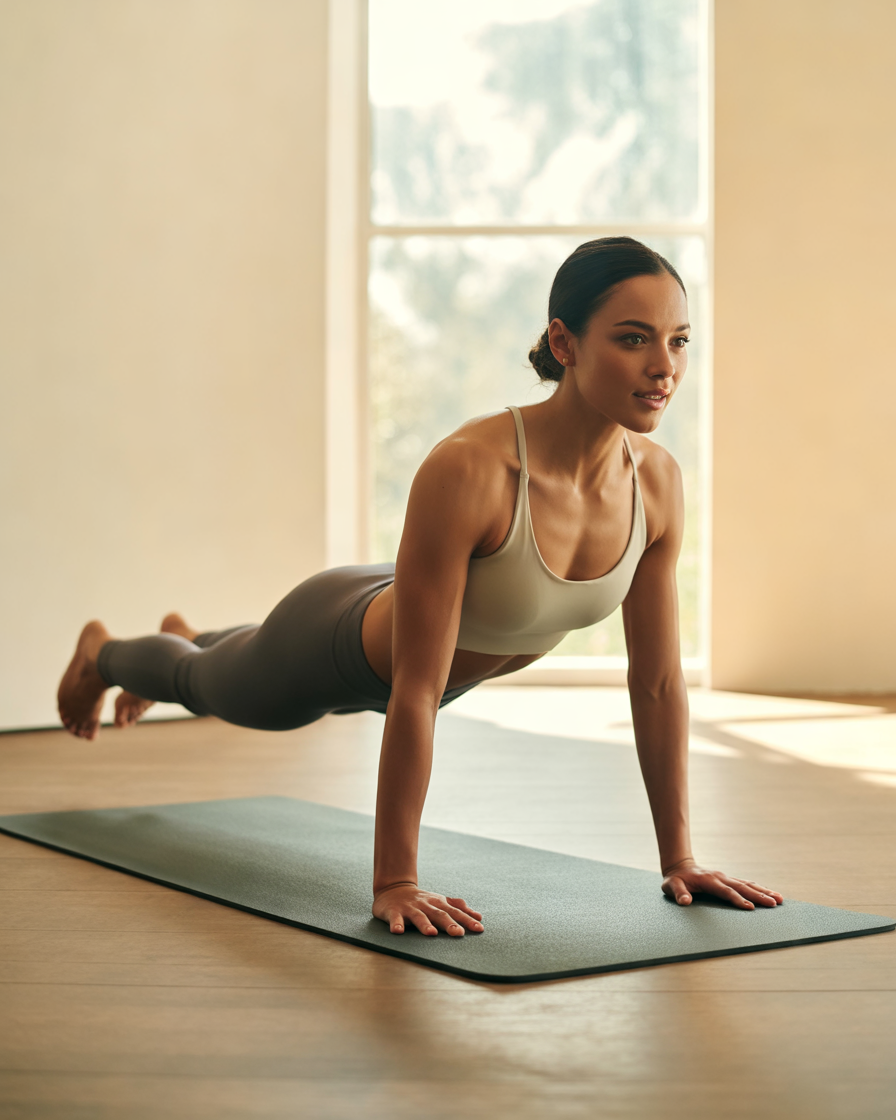
The bird dog is a controlled exercise that challenges your abdominal muscles, back stabilizers, shoulders, and hips.
It focuses on coordination rather than speed, making it particularly useful when building better movement control.
Benefits: Develops core stability, supports balance, and improves coordination between the upper and lower body.
How to perform:
- Start on your hands and knees.
- Position your hands beneath your shoulders and knees beneath your hips.
- Slowly extend your right arm and left leg.
- Keep your torso steady for two seconds.
- Return to the starting position and switch sides.
Recommended repetitions: 8–10 per side.
Practical tip: Imagine balancing a small object on your lower back to discourage unnecessary rotation.
Best suited for: Beginners and people wanting a controlled, low-impact core exercise.
Important considerations: Avoid lifting your limbs higher than necessary. Place padding beneath your knees or modify the exercise if kneeling is uncomfortable.
6. High-Knee Marching for Low-Impact Cardio
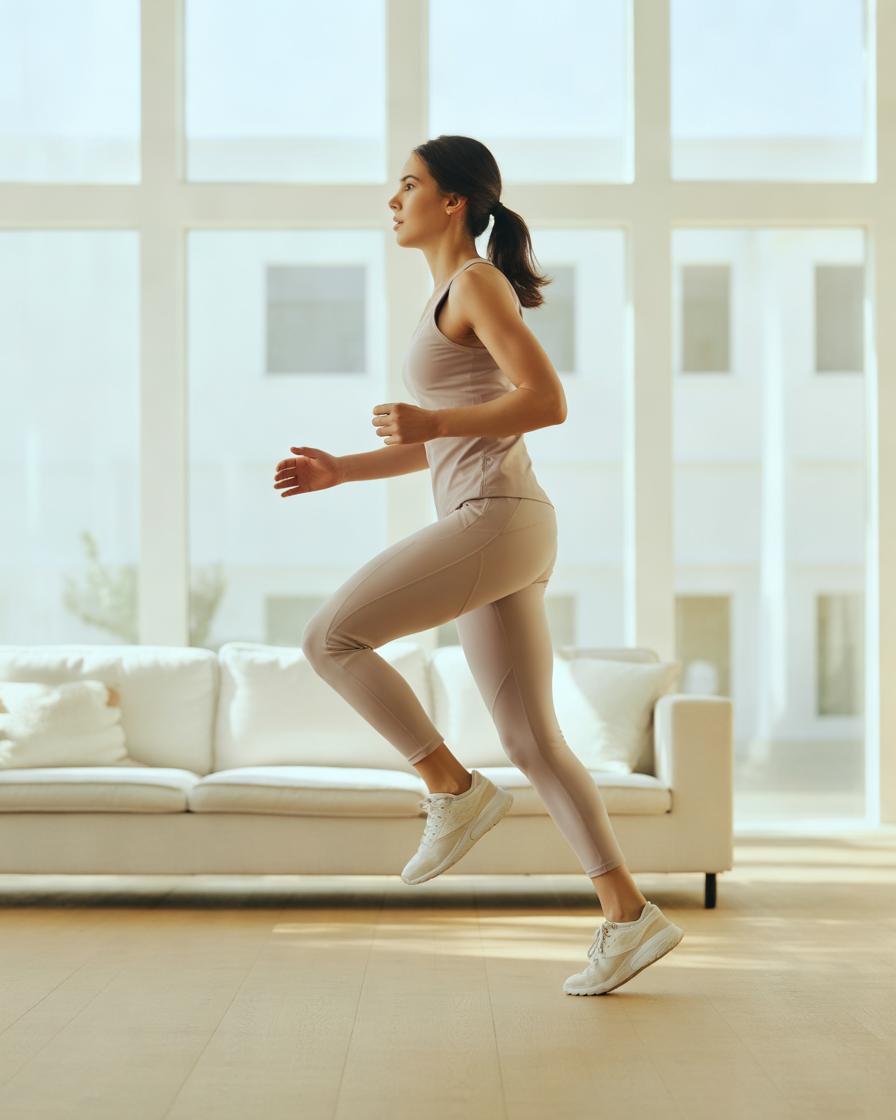
High-knee marching offers a simple way to raise your heart rate without jumping.
It works well as a warm-up, a short cardiovascular interval, or part of a beginner-friendly full body workout at home.
Benefits: Encourages cardiovascular activity, develops coordination, and engages the hip flexors and leg muscles.
How to perform:
- Stand upright with your arms relaxed.
- Lift your right knee toward a comfortable height.
- Lower it and lift your left knee.
- Swing your arms naturally as you alternate legs.
- Increase your pace gradually while maintaining control.
Recommended duration: 30–60 seconds.
Practical tip: Start slowly and concentrate on standing tall rather than lifting your knees as high as possible.
Best suited for: Beginners, apartment workouts, and people who prefer low-impact movement.
Important considerations: Hold a secure support if your balance is limited. March at a comfortable intensity rather than rushing.
7. Forearm Planks for Core Endurance
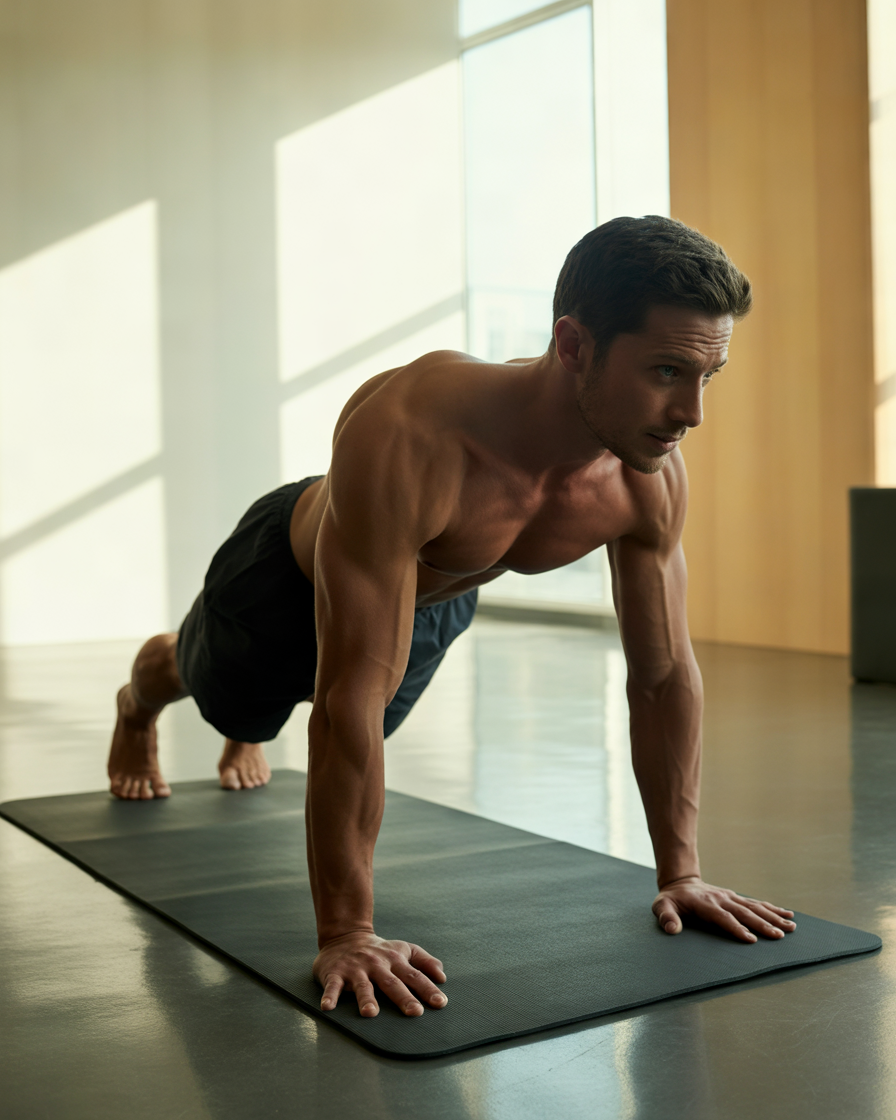
Forearm planks develop strength and endurance in the muscles that help stabilize your trunk.
Although the exercise appears simple, maintaining a steady position requires coordinated effort from the abdominal muscles, shoulders, glutes, and legs.
Benefits: Improves core endurance, shoulder stability, and body awareness.
How to perform:
- Position your forearms on the floor with elbows beneath your shoulders.
- Extend your legs behind you.
- Engage your abdominal muscles and glutes.
- Keep your head, shoulders, hips, and heels approximately aligned.
- Hold the position while breathing normally.
Recommended duration: 15–30 seconds.
Practical tip: A short plank with controlled positioning is more useful than a longer hold with a sagging back.
Best suited for: People developing core endurance and bodyweight strength.
Important considerations: Modify by placing your knees on the floor or using an elevated surface. Avoid holding your breath.
8. Standing Good Mornings for Hamstrings and Hip Control
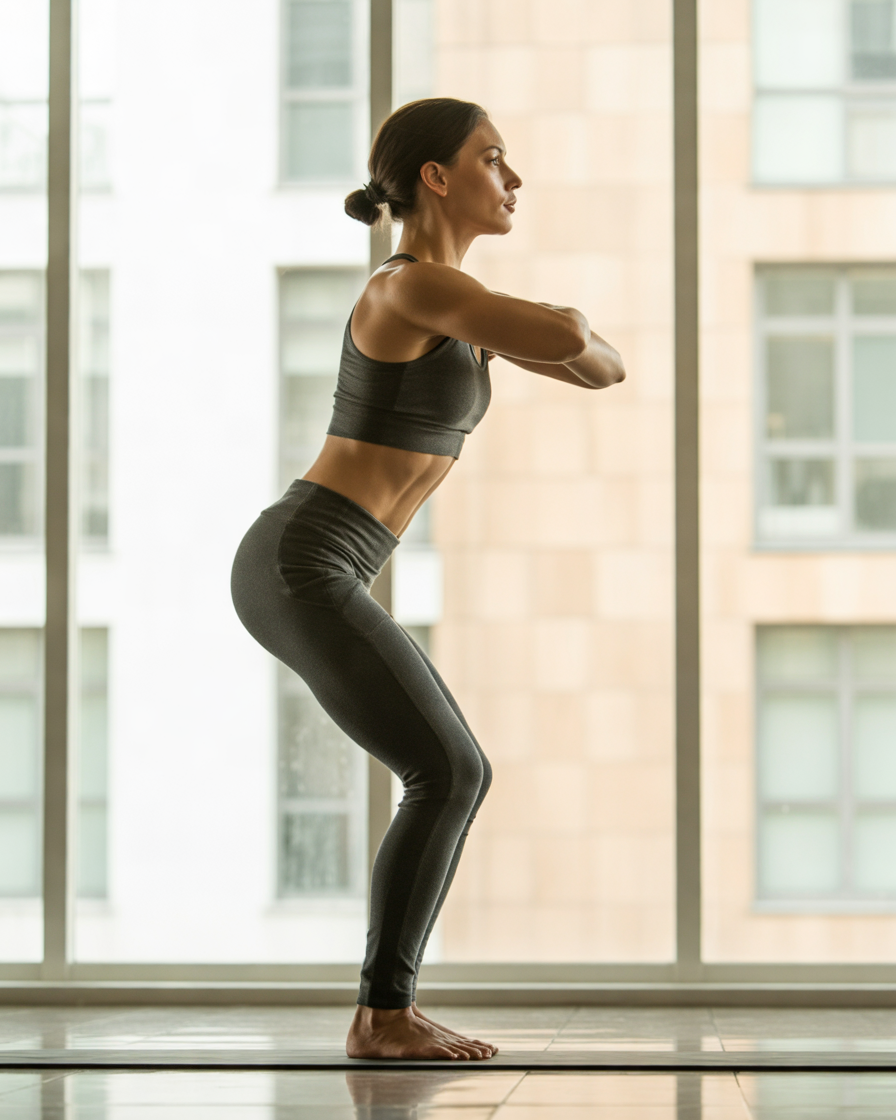
Standing good mornings teach the hip-hinge movement, which is useful for bending forward and picking up objects.
Unlike squats, which involve substantial movement at the knees, this exercise emphasizes bending at the hips while maintaining a controlled spine position.
Benefits: Strengthens the hamstrings and glutes, develops hip-hinge technique, and improves movement awareness.
How to perform:
- Stand with your feet hip-width apart.
- Place your hands across your chest.
- Soften your knees slightly.
- Push your hips backward while leaning your torso forward.
- Return to standing by driving your hips forward.
Recommended repetitions: 10–12.
Practical tip: Practice the movement without weights before adding resistance.
Best suited for: Beginners learning strength-training techniques and people wanting stronger posterior-chain muscles.
Important considerations: Avoid rounding or excessively arching your lower back. Use a smaller range if needed.
9. Backpack Rows for Back and Arm Strength
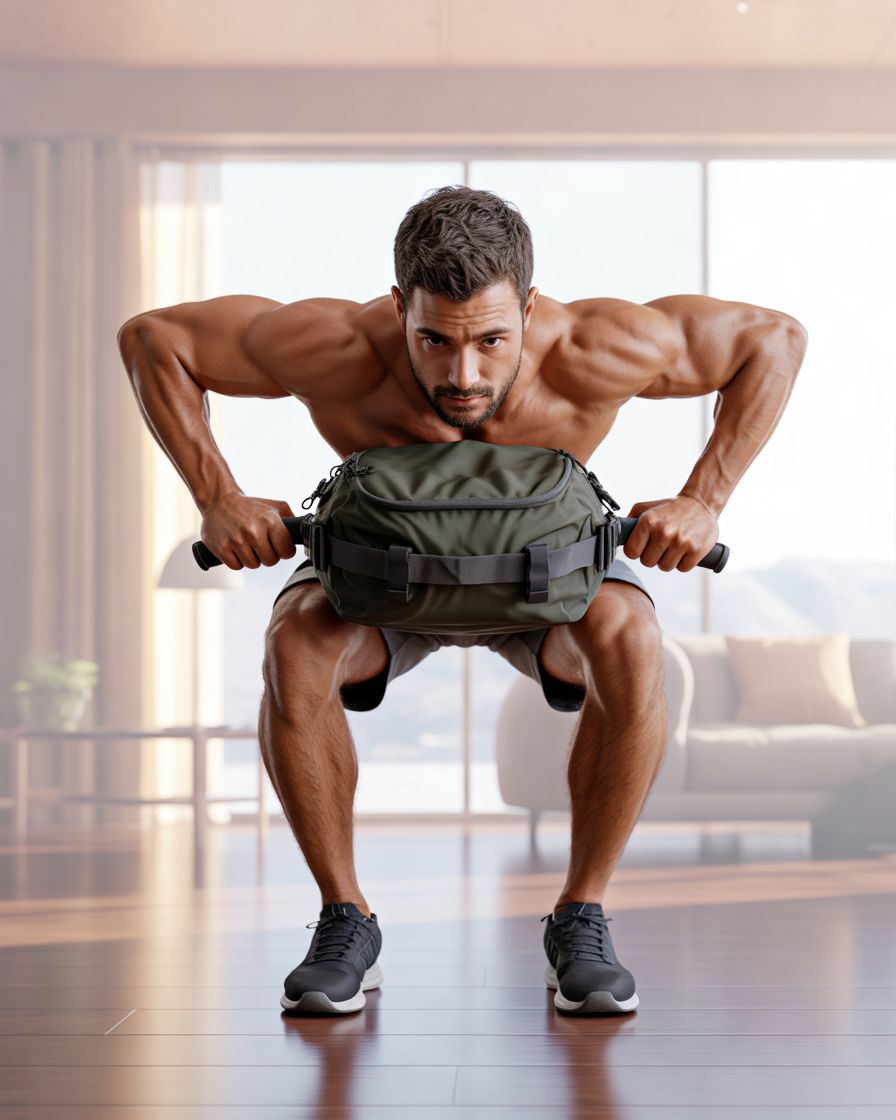
A complete home workout should include pulling exercises, not just pushing movements.
Backpack rows are an accessible alternative when you don’t own dumbbells or resistance bands. A securely packed backpack can provide resistance for your upper-back muscles.
Benefits: Strengthens the upper back, engages the biceps, and helps create a more balanced upper-body routine.
How to perform:
- Place a few lightweight items inside a secure backpack.
- Hold the backpack with both hands.
- Hinge forward slightly at your hips.
- Pull the backpack toward your lower ribs.
- Lower it slowly without swinging.
Recommended repetitions: 8–12.
Practical tip: Keep your elbows moving backward and your shoulders relaxed rather than shrugged.
Best suited for: People looking to strengthen their backs using household equipment.
Important considerations: Check that the backpack is securely closed and easy to grip. Avoid loads that cause back strain or loss of control.
10. Standing Shoulder Press for Upper Body Strength
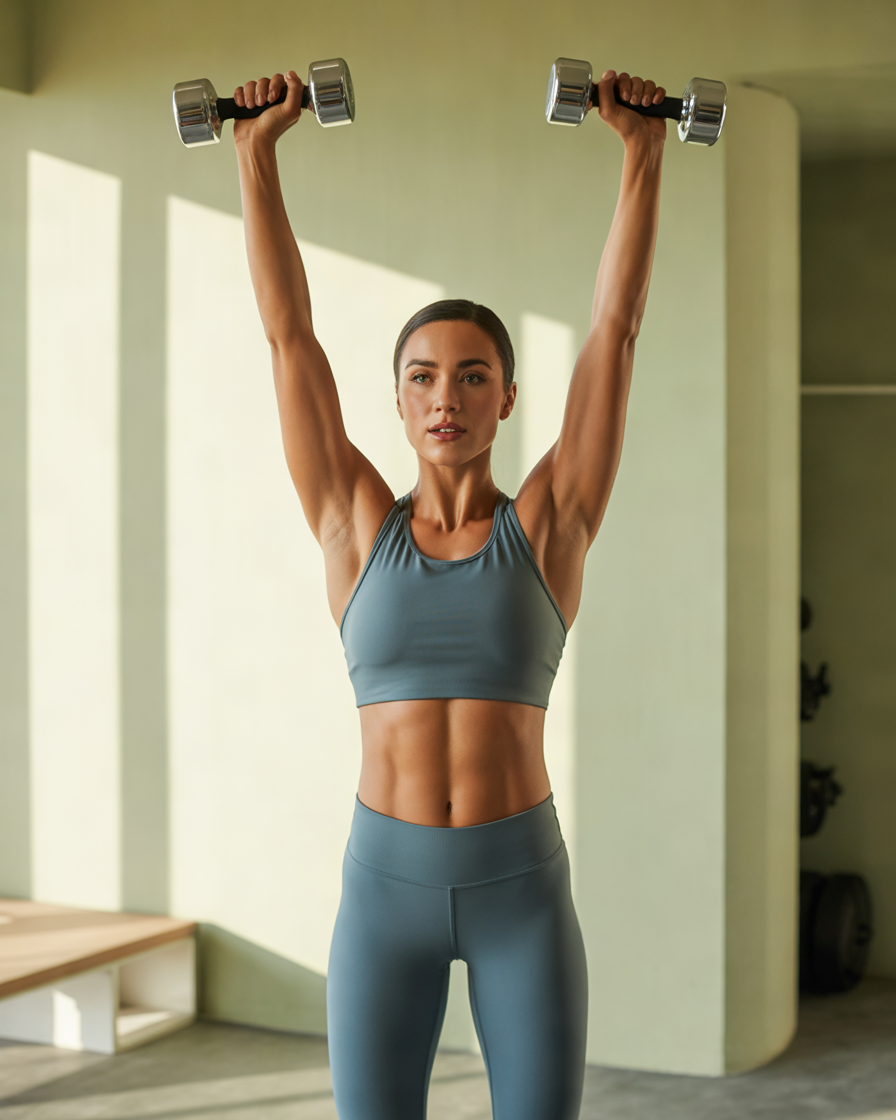
The standing shoulder press strengthens the shoulders and triceps while encouraging your trunk muscles to stabilize your body.
Light dumbbells or securely capped water bottles can provide resistance, making this exercise convenient for small spaces.
Benefits: Builds shoulder strength, strengthens the arms, and develops overhead movement control.
How to perform:
- Stand with your feet approximately hip-width apart.
- Hold a light weight in each hand near shoulder height.
- Gently engage your core.
- Press the weights upward through a comfortable range.
- Lower them slowly to shoulder height.
Recommended repetitions: 8–12.
Practical tip: Keep your ribs relatively aligned over your pelvis rather than leaning backward.
Best suited for: People wanting to strengthen their shoulders and arms without gym machines.
Important considerations: Choose light resistance and avoid pressing through shoulder pain. Some people may benefit from a seated or modified pressing movement.
11. Dead Bug Exercises for Deep Core Control
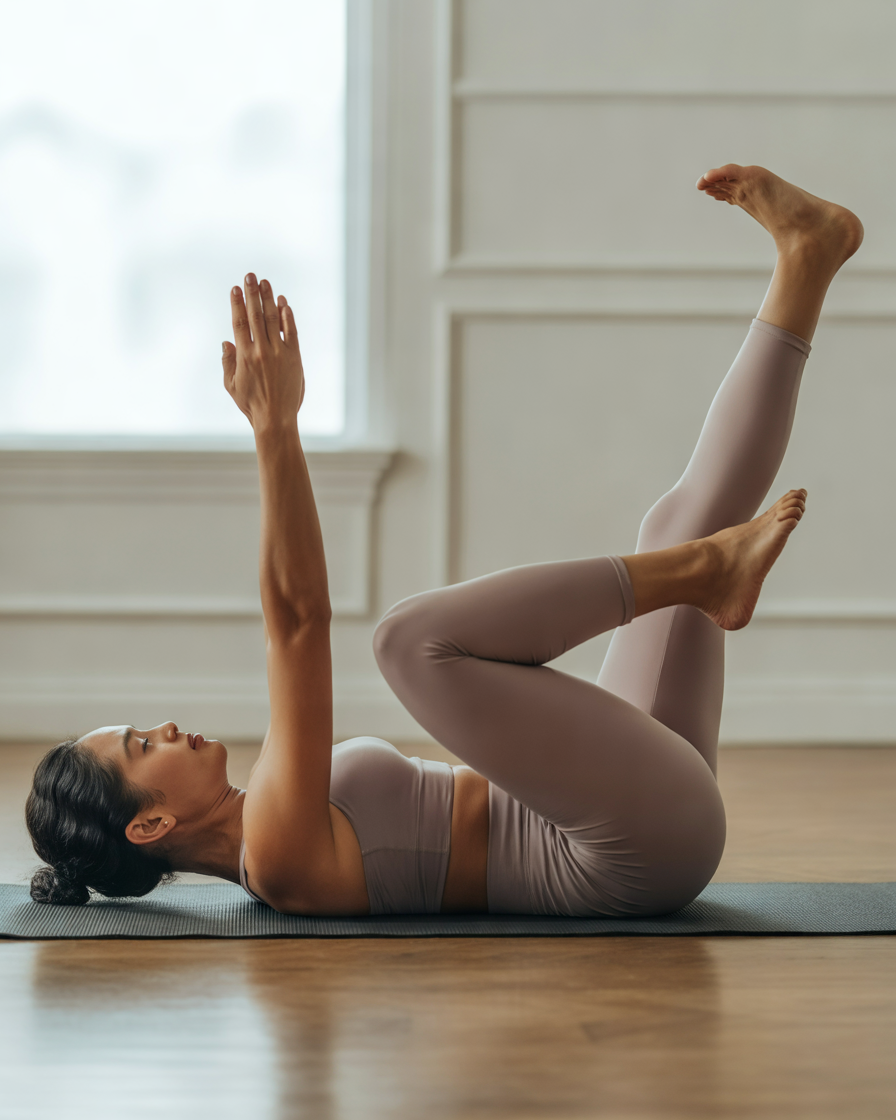
The dead bug is a controlled floor exercise that trains your abdominal muscles to stabilize your trunk while your arms and legs move.
It provides a useful alternative to repetitive crunches, especially when your goal is improving movement control.
Benefits: Develops abdominal coordination, core stability, and awareness of pelvic positioning.
How to perform:
- Lie on your back with your arms pointing upward.
- Raise your knees so your hips and knees are bent approximately 90 degrees.
- Slowly extend your right arm and left leg toward the floor.
- Return to the starting position.
- Repeat with the opposite arm and leg.
Recommended repetitions: 8–10 per side.
Practical tip: Keep your trunk stable and shorten the movement if your back starts arching.
Best suited for: Beginners and people wanting a slow, technique-focused core workout.
Important considerations: Move only through a comfortable range. A physiotherapist can suggest appropriate modifications for existing back problems.
12. Step-Ups for Functional Lower Body Fitness
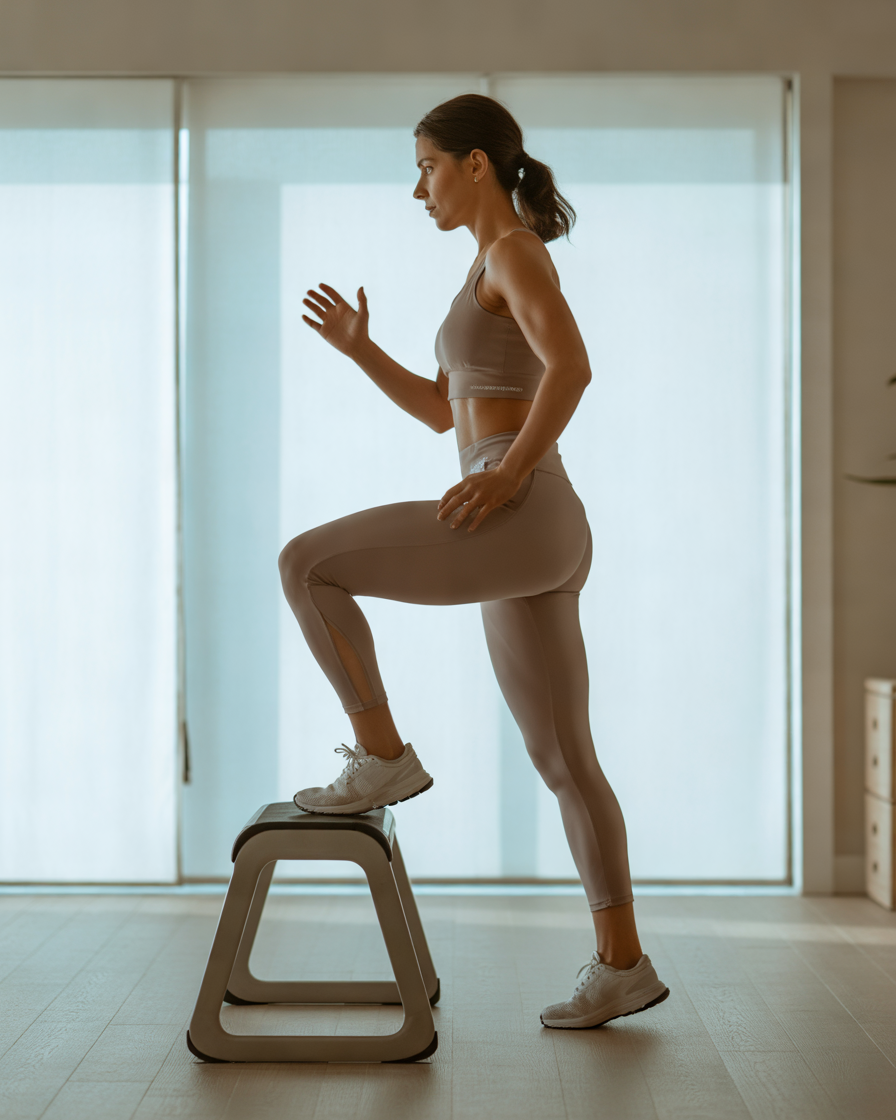
Step-ups strengthen your legs while replicating the movement of climbing stairs.
They also challenge balance because your body weight shifts onto one leg during each repetition.
Benefits: Builds lower-body strength, improves coordination, and supports everyday movements such as stair climbing.
How to perform:
- Stand in front of a low, sturdy exercise step.
- Place your right foot on the step.
- Push through that foot to lift your body.
- Step back down carefully.
- Repeat before switching legs.
Recommended repetitions: 8–10 per leg.
Practical tip: Start with a low step and use a railing or secure support when necessary.
Best suited for: People wanting practical lower-body strength and an adjustable exercise challenge.
Important considerations: Never use an unstable chair, slippery stool, or rolling furniture. Reduce step height if balance or knee discomfort becomes a problem.
13. Mountain Climbers for Full Body Conditioning
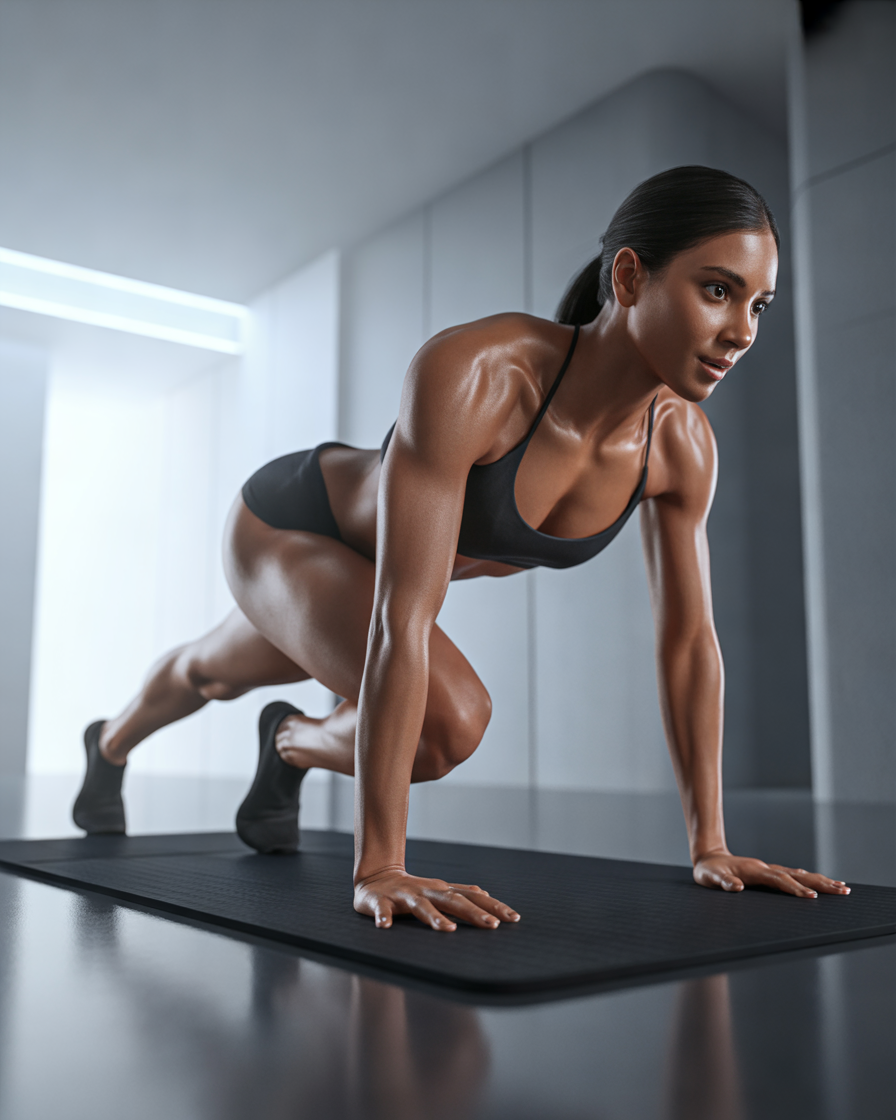
Mountain climbers combine core stabilization with alternating leg movements, making them a time-efficient exercise for home conditioning.
They engage the shoulders, chest, abdominal muscles, and legs while increasing cardiovascular effort.
Benefits: Improves muscular endurance, challenges core stability, and adds a cardiovascular component to your routine.
How to perform:
- Start in a high plank with your hands beneath your shoulders.
- Bring one knee toward your chest.
- Return that foot to the starting position.
- Repeat with your opposite knee.
- Continue alternating at a controlled pace.
Recommended duration: 20–40 seconds.
Practical tip: Begin with slow stepping movements before attempting faster repetitions.
Best suited for: People with some exercise experience who want to combine strength and cardio.
Important considerations: Fast mountain climbers may be demanding on the wrists, shoulders, and cardiovascular system. A hands-elevated variation can make them more manageable.
Simple 20–30 Minute Full Body Workout at Home Routine
You don’t need to complete all 13 exercises in one workout. Instead, choose movements that collectively train your major muscle groups.
Here is a practical routine using exercises from this guide.
| Exercise | Beginner target |
|---|---|
| Bodyweight squats | 12 repetitions |
| Incline push-ups | 8 repetitions |
| Reverse lunges | 8 per leg |
| Backpack rows | 10 repetitions |
| Glute bridges | 12 repetitions |
| Standing shoulder press | 10 repetitions |
| Bird dog | 8 per side |
| High-knee marching | 40 seconds |
Start with one circuit if you’re new to exercise. As your fitness improves, gradually progress to two or three circuits, resting 30–90 seconds between exercises as needed.
Allow approximately five minutes for warming up and another three to five minutes for cooling down. Including rest, the total session may take approximately 20–30 minutes, depending on your pace and number of circuits.
You can rotate forearm planks, dead bugs, step-ups, good mornings, and mountain climbers into later sessions for variety.
Beginner-Friendly Weekly Home Workout Schedule
Consistency matters more than squeezing difficult workouts into every day.
| Day | Suggested activity |
|---|---|
| Monday | Full-body strength workout |
| Tuesday | Brisk walking or gentle cardio |
| Wednesday | Mobility exercises or recovery |
| Thursday | Full-body strength workout |
| Friday | Walking, cycling, or enjoyable cardio |
| Saturday | Optional light workout, stretching, or longer walk |
| Sunday | Rest or gentle movement |
This schedule provides two main strength-training days while leaving room for other physical activities.
The American Heart Association recommends strength training at least twice weekly and allowing recovery time between sessions targeting the same muscle groups.
If you’re beginning from a low activity level, shorter sessions are perfectly reasonable. Build toward longer workouts gradually rather than forcing yourself to complete the entire schedule immediately.
Expert Tips for Getting Better Results From Home Workouts
Prioritize proper exercise technique. The quality of each repetition matters. Slow movements make it easier to notice changes in posture, balance, and control. If possible, occasionally record your technique from the side to identify obvious issues.
Use progressive overload. As exercises become easier, gradually increase your repetitions, add another set, slow the lowering phase, or introduce light resistance. Change only one or two variables at a time.
Balance pushing and pulling exercises. Push-ups and shoulder presses strengthen pushing muscles, while backpack rows help train pulling muscles. Including both supports a more complete upper-body routine.
Make recovery part of your plan. Muscles need time to recover after demanding sessions. Gentle walking, regular sleep, and appropriate nutrition can support your overall training routine.
Include cardiovascular activity. Strength exercises alone may not provide all the aerobic activity recommended for adults. Brisk walking, cycling, dancing, and other enjoyable movements can complement your workouts.
Track useful progress indicators. Instead of relying entirely on body weight, record your repetitions, exercise duration, resistance, and how challenging a movement feels. These measures often give a clearer picture of developing fitness.
Use realistic scheduling. Two manageable workouts every week are more sustainable than an ambitious daily program you cannot maintain. The NHS also advises starting gently and gradually increasing repetitions over time.
Common Mistakes to Avoid During a Full Body Workout at Home
One common mistake is performing every exercise as quickly as possible. Speed is not always beneficial, particularly when you’re learning new movements.
Another is repeating the same difficult routine daily without allowing sufficient recovery. Alternating demanding and lighter sessions can help make training more manageable.
Skipping your warm-up, using unstable household equipment, or choosing weights that are too heavy may also increase the chance of discomfort or injury.
Finally, don’t assume that a workout must leave you exhausted to be effective. Controlled repetitions, appropriate effort, and gradual progression are more useful long-term goals.
Stop exercising if you develop chest pain, faintness, unusual shortness of breath, or sudden significant pain. Seek appropriate medical attention if symptoms are concerning.
Frequently Asked Questions About Full Body Workout at Home
1. Can I get fit with a full body workout at home?
Yes. Regular home workouts can help develop muscle strength, cardiovascular fitness, balance, and endurance. Your progress depends on factors such as consistency, exercise intensity, recovery, and your starting fitness level. You don’t necessarily need a gym membership to become more active.
2. What is the best full body workout at home for beginners?
A beginner routine can include squats, wall push-ups, glute bridges, bird dogs, high-knee marching, and supported reverse lunges. These movements cover several major muscle groups and can be adjusted to different abilities.
3. Is a 20-minute home workout enough?
A 20-minute session can be worthwhile, particularly if you’re building an exercise habit. Whether it meets your overall fitness needs depends on the activity, intensity, and what else you do during the week. Even smaller amounts of physical activity can provide benefits.
4. Can I do a full body workout every day?
You can remain physically active daily, but demanding strength training for the same muscle groups is generally better separated by recovery time. Consider alternating strength workouts with walking, mobility exercises, or other lower-intensity activities.
5. Can home workouts help with weight management?
Home workouts can support weight management by increasing physical activity and helping maintain or develop muscle. However, changes in body weight also depend on nutrition, overall activity, sleep, individual circumstances, and other factors. Exercise does not guarantee a particular amount of weight loss.
6. Do I need dumbbells for a full body workout at home?
No. Squats, push-ups, lunges, planks, and glute bridges can all be performed using body weight. Resistance bands, dumbbells, and suitable household items are optional ways to make certain exercises more challenging.
7. How long does it take to notice progress?
Some people notice better coordination or find exercises easier after several sessions. More noticeable changes in strength, endurance, or appearance may take several weeks or longer. Progress varies considerably, so focus on consistent improvements rather than a fixed deadline.
8. Is a full body workout at home suitable for older adults?
Many home exercises can be adapted for older adults. Chair-assisted squats, wall push-ups, supported marching, and gentle balance activities may be suitable starting points. The best exercises depend on mobility, existing conditions, and individual abilities.
Conclusion: Make Your Full Body Workout at Home a Sustainable Habit
A successful full body workout at home doesn’t require expensive equipment, complicated routines, or hours of free time. It starts with choosing suitable exercises and performing them consistently.
These 13 exercises offer a practical combination of strength training, core stability, balance, and cardiovascular movement. By adjusting the repetitions, duration, and resistance, you can create a routine that fits your experience and schedule.
Start with a few manageable movements, pay attention to technique, and increase the challenge gradually as your fitness develops.
Most importantly, choose a routine you can enjoy and maintain. Regular, appropriately challenging movement can support your physical health and help you build strength for everyday activities—right from the comfort of home.