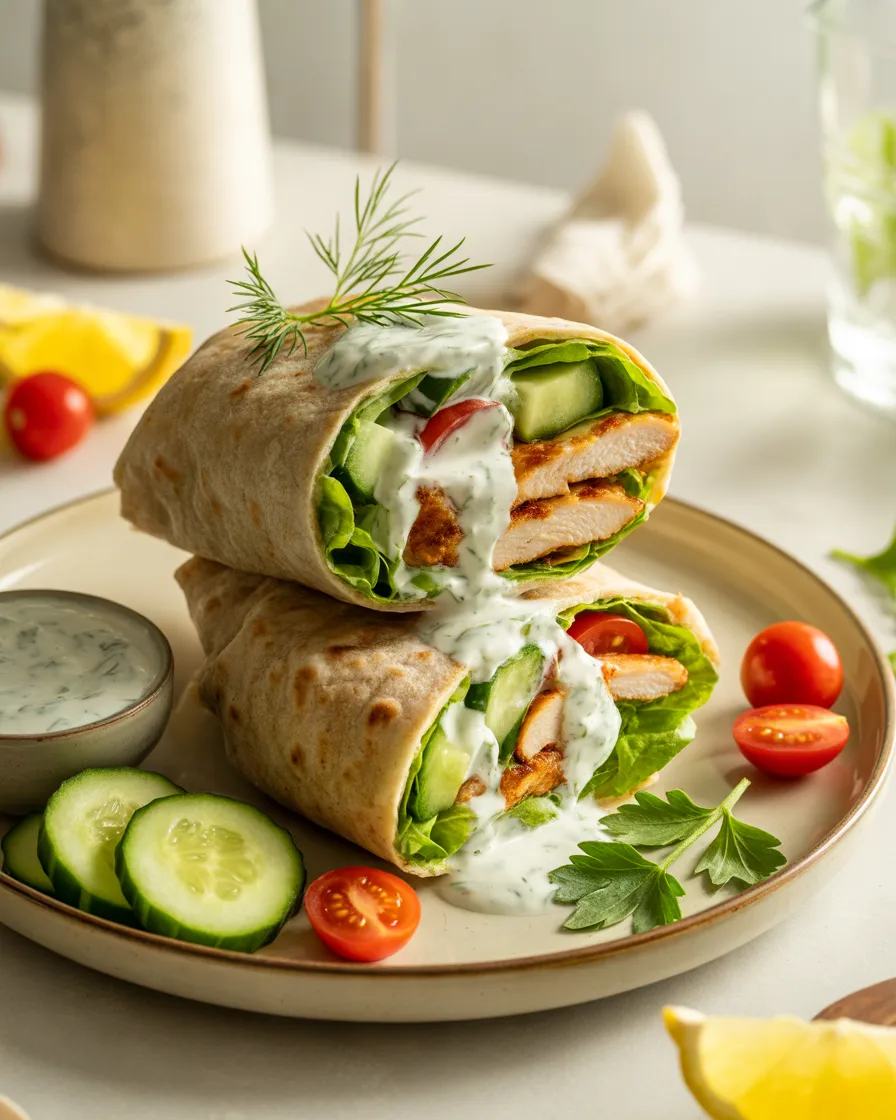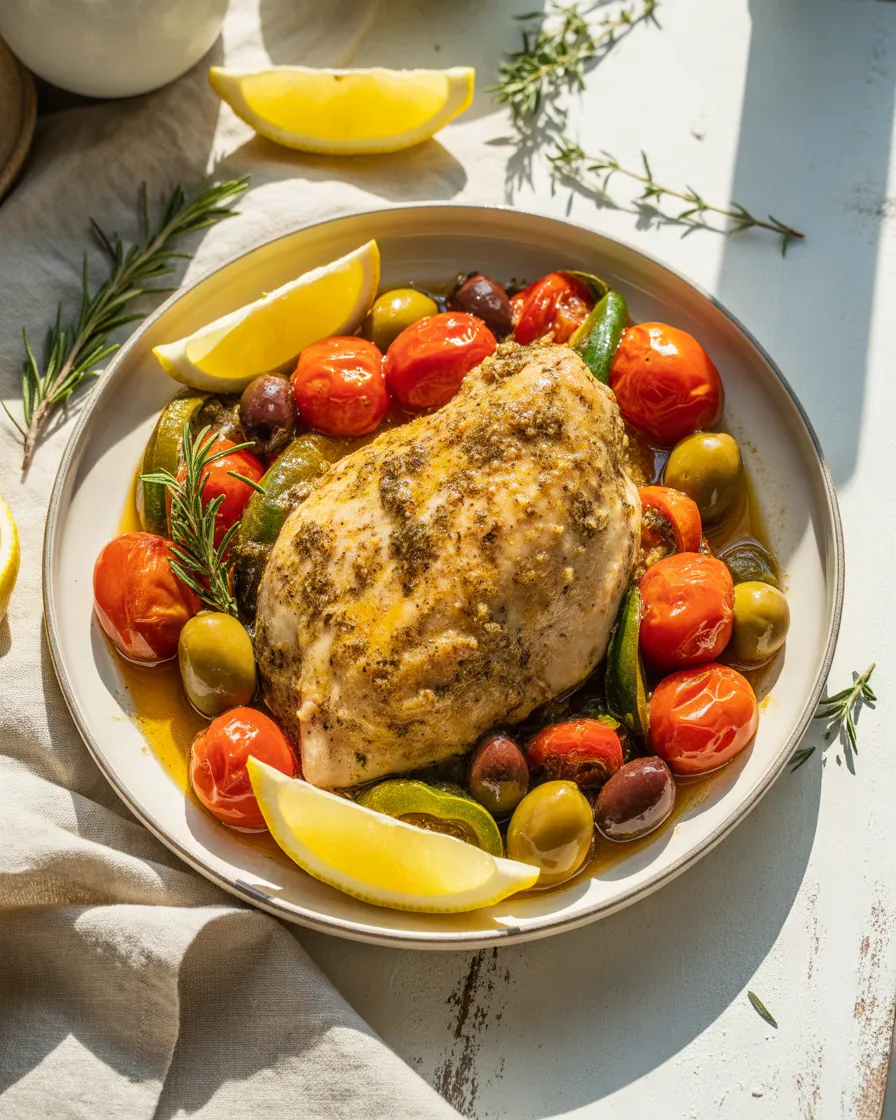
Eating well does not have to mean spending hours in the kitchen or giving up your favorite crispy foods. Sometimes, a few simple ingredients and the right cooking method are all you need to prepare a satisfying meal.
That is where an air fryer can make everyday cooking easier.
An air fryer circulates hot air around food to create a browned, crispy exterior without requiring the amount of oil typically used for deep-frying. You can use it to prepare vegetables, chicken, fish, seafood, plant-based meals and even naturally sweet snacks.
The best part is that healthy air fryer recipes can be adapted to different eating preferences, cooking schedules and household budgets. Whether you want a quick lunch, a high-protein dinner or a nutritious afternoon snack, there are plenty of options to explore.
In this guide, you will discover 12 easy air fryer recipes made with everyday ingredients. Each recipe includes preparation instructions, cooking temperatures, practical tips, potential nutritional benefits and serving suggestions.
You will also find helpful advice for getting better results from your air fryer while keeping food safety and balanced nutrition in mind.
1. Lemon Garlic Air Fryer Chicken Breast
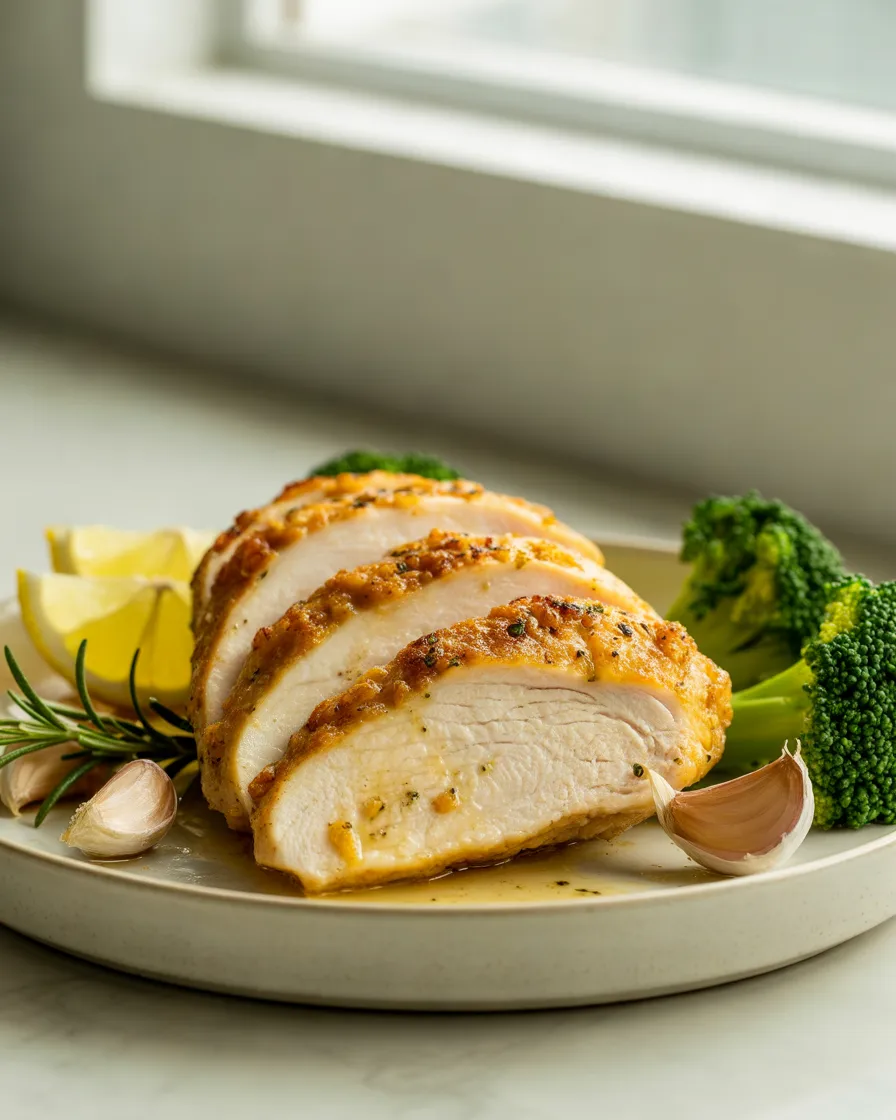
A simple, high-protein meal for busy weekdays
Lemon garlic chicken breast is one of the most versatile healthy air fryer recipes. It combines lean chicken with fresh lemon, garlic and herbs to create a flavorful main dish without relying on heavy sauces or excessive oil.
Chicken breast provides protein, while lemon and herbs add flavor without requiring much additional salt.
Ingredients:
- 2 boneless, skinless chicken breasts
- 1 tablespoon olive oil
- 2 garlic cloves, minced
- Juice of half a lemon
- ½ teaspoon paprika
- ½ teaspoon dried oregano
- Black pepper to taste
- A small amount of salt
Preparation and cooking:
- Pat the chicken breasts dry with a paper towel.
- Combine olive oil, garlic, lemon juice, paprika, oregano and seasoning.
- Coat both chicken breasts evenly with the mixture.
- Preheat the air fryer if recommended by the manufacturer.
- Place the chicken in the basket without overlapping.
- Cook at 375°F (190°C) for approximately 12–16 minutes, turning halfway through. Cooking time depends on thickness and appliance performance.
- Check that the thickest part reaches 165°F (74°C) using a food thermometer.
Benefits: This recipe offers a convenient source of protein and pairs easily with vegetables, whole grains and salads. Using herbs, lemon and garlic makes it easier to build flavor without depending on creamy or sugary sauces.
Practical tips: Choose chicken breasts of similar thickness so they cook evenly. If one side is particularly thick, gently flatten it before seasoning. Let the chicken rest briefly before slicing to help retain moisture.
How to serve: Slice the chicken and serve with brown rice, quinoa, roasted broccoli or a fresh cucumber salad. Leftovers can also be added to whole-grain wraps.
Who it may suit: People looking for straightforward high-protein lunches, meal-prep options or quick family dinners.
Important considerations: Do not rely on the outside color to determine whether chicken is cooked. Always check the internal temperature. Refrigerate leftovers promptly.
2. Healthy Air Fryer Salmon with Lemon and Dill
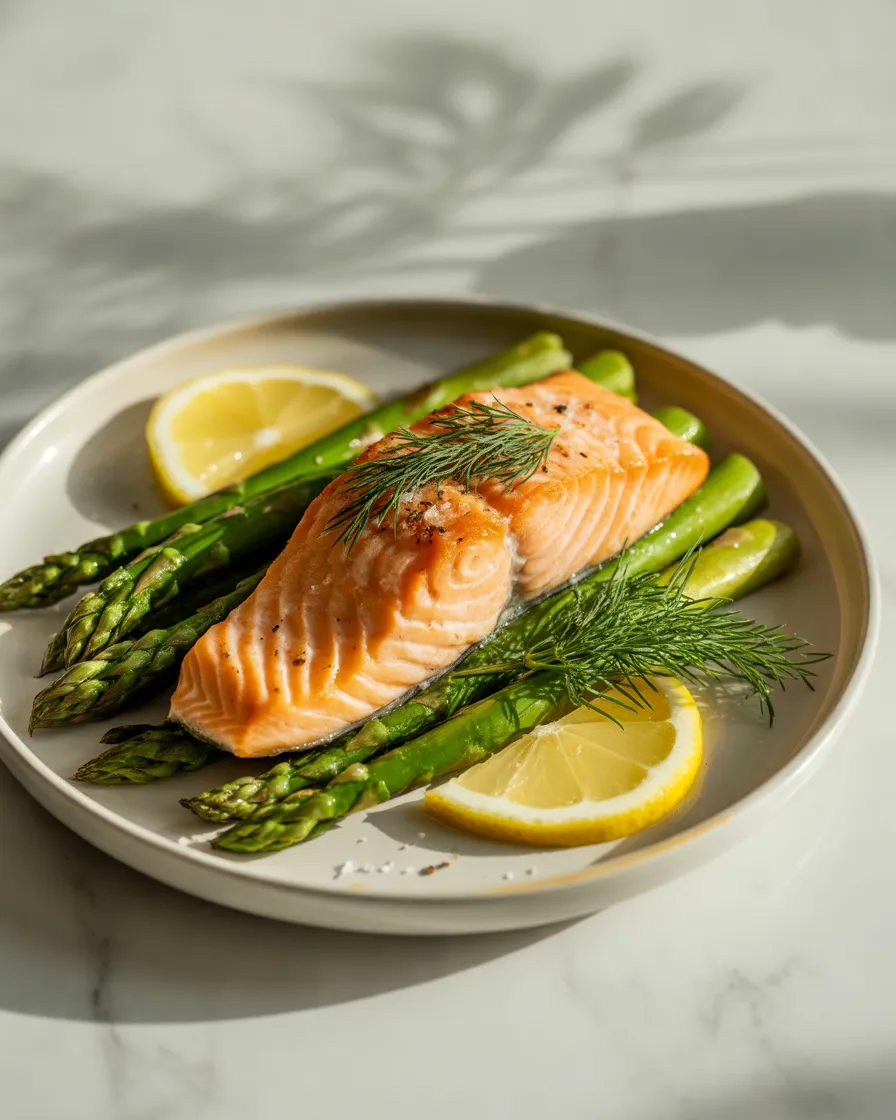
A flavorful seafood dinner with minimal preparation
Salmon is a popular choice for people who want a nutritious meal that feels special without requiring complicated cooking techniques.
It naturally contains protein and omega-3 fatty acids. Pairing it with lemon, dill and black pepper creates a fresh flavor that works well for both lunch and dinner.
Ingredients:
- 2 salmon fillets
- 1 teaspoon olive oil
- 1 tablespoon fresh lemon juice
- ½ teaspoon garlic powder
- 1 teaspoon chopped fresh dill
- Black pepper to taste
- Lemon slices for serving
Preparation and cooking:
- Pat the salmon fillets dry.
- Mix olive oil, lemon juice, garlic powder, dill and black pepper.
- Brush the mixture over the salmon.
- Place the fillets skin-side down in the air fryer basket.
- Cook at 390°F (200°C) for approximately 7–10 minutes, depending on thickness.
- Check that the fish reaches 145°F (63°C), or is opaque and separates easily with a fork.
Benefits: Salmon supplies protein and long-chain omega-3 fats. It can be part of a varied eating pattern that includes vegetables, whole grains and other nutrient-rich foods.
Practical tips: Avoid moving the fillets repeatedly while cooking. Thicker pieces may need additional time, while thinner pieces cook faster. A little lemon zest can provide extra flavor without adding much salt.
How to serve: Serve with asparagus, green beans, quinoa or a simple leafy salad. For a filling meal, add roasted sweet potatoes.
Who it may suit: Seafood lovers, people looking for protein-rich dinners and anyone who wants a relatively quick alternative to pan-frying fish.
Important considerations: Check carefully for bones before serving. If you use frozen salmon, thaw it safely in the refrigerator and dry the surface before seasoning.
3. Crispy Air Fryer Chickpeas
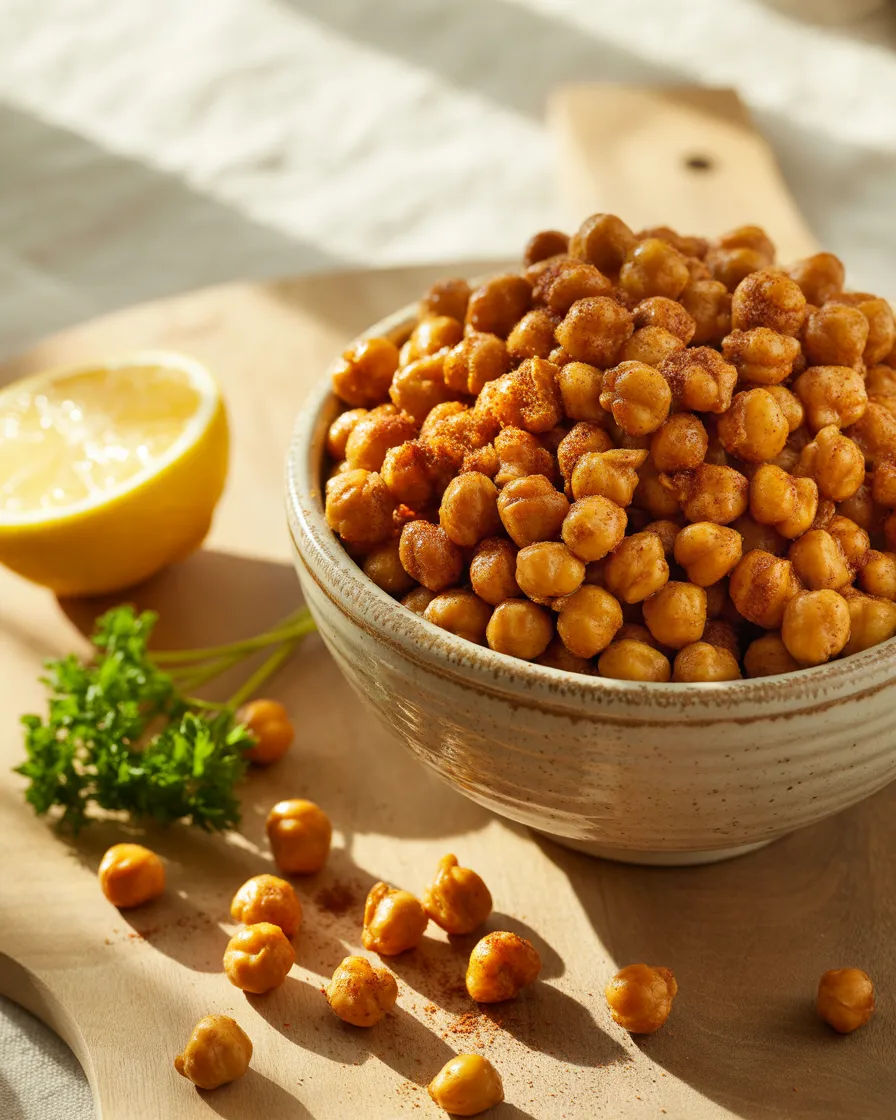
A crunchy, plant-based snack for everyday cravings
If you enjoy crunchy snacks but want something different from packaged crisps or chips, air fryer chickpeas are worth trying.
Chickpeas are a source of plant-based protein and dietary fibre. When properly dried and seasoned, they become a crunchy snack that can also be used as a salad topping.
Ingredients:
- 1 can chickpeas, drained and rinsed
- 1 teaspoon olive oil
- ½ teaspoon paprika
- ½ teaspoon garlic powder
- ¼ teaspoon ground cumin
- Black pepper to taste
Preparation and cooking:
- Drain and rinse the chickpeas thoroughly.
- Spread them on a clean kitchen towel and remove as much surface moisture as possible.
- Mix with olive oil, paprika, garlic powder and cumin.
- Place them in the air fryer basket in a reasonably even layer.
- Cook at 390°F (200°C) for approximately 12–16 minutes.
- Shake the basket every few minutes to encourage even browning.
- Allow them to cool slightly before eating.
Benefits: Chickpeas provide fibre and plant-based protein. They can help make a snack more filling than many refined, low-fibre alternatives.
Practical tips: Drying is particularly important. Wet chickpeas tend to steam rather than become crisp. Start checking them toward the end of cooking because smaller chickpeas may brown faster.
How to serve: Enjoy them as a snack, sprinkle them over vegetable salads or add them to homemade grain bowls.
Who it may suit: Vegetarians, people following plant-focused eating patterns and anyone looking for an inexpensive pantry-based snack.
Important considerations: Chickpeas contain fibre, so people who are not accustomed to eating legumes may prefer smaller portions initially. Store leftovers in an airtight container, although their crispness may decrease over time.
4. Healthy Air Fryer Sweet Potato Wedges
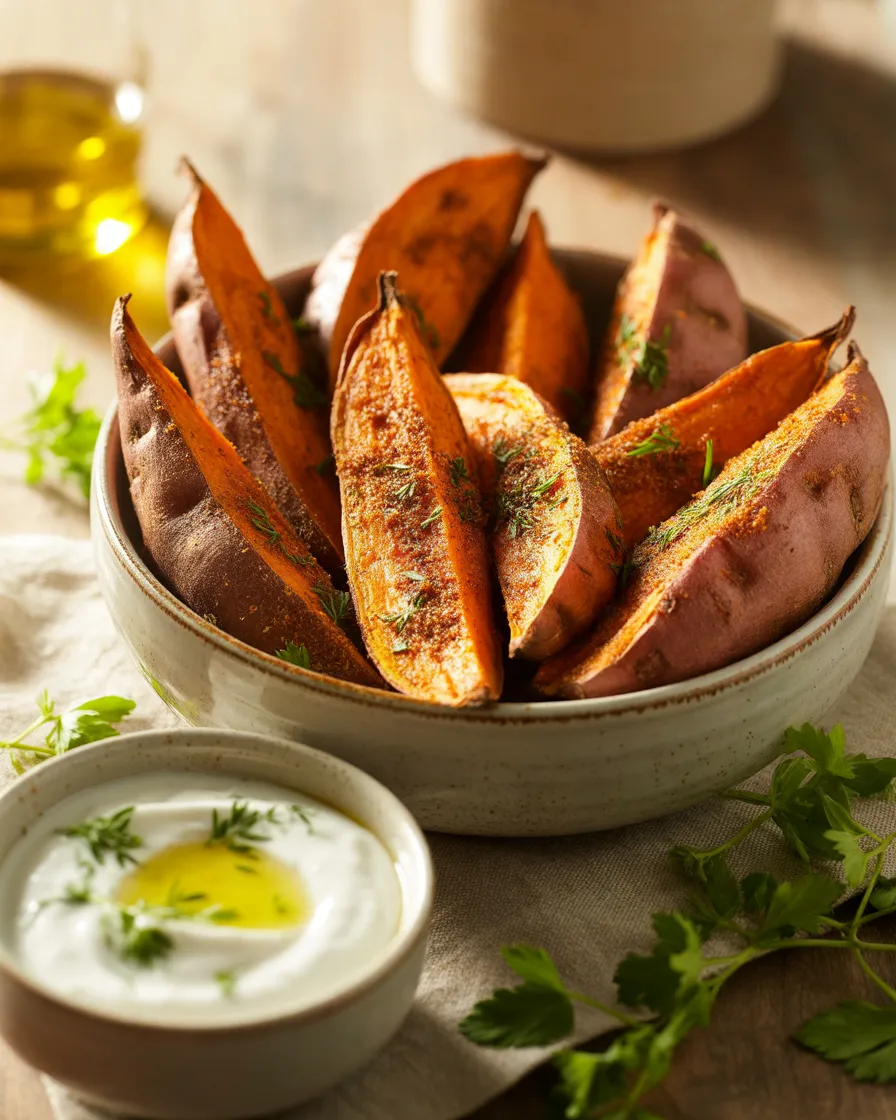
A naturally sweet alternative to traditional fries
Sweet potato wedges are an easy way to add more vegetables to your meals. Their naturally sweet flavor works particularly well with paprika, black pepper and garlic.
They are also a useful alternative when you want a crispy side dish without deep-frying.
Ingredients:
- 2 medium sweet potatoes
- 1 tablespoon olive oil
- ½ teaspoon paprika
- ½ teaspoon garlic powder
- Black pepper to taste
- A small amount of salt
Preparation and cooking:
- Wash and scrub the sweet potatoes.
- Cut them into evenly sized wedges.
- Pat them dry.
- Toss with olive oil, paprika, garlic powder and seasoning.
- Arrange in a single layer in the basket.
- Cook at 380°F (193°C) for approximately 15–20 minutes.
- Turn or shake halfway through and check for tenderness and browning.
Benefits: Sweet potatoes provide dietary fibre and nutrients, including beta-carotene, which the body can convert into vitamin A. Keeping the skin on also adds texture and fibre.
Practical tips: Cut the wedges to a similar thickness. Avoid overcrowding because trapped moisture can prevent browning. If necessary, cook in batches.
How to serve: Pair with grilled chicken, salmon, black beans or a homemade yogurt and herb dip. They also work well as a side for vegetarian burgers.
Who it may suit: Families, people who enjoy homemade fries and anyone looking for a vegetable-based side dish.
Important considerations: Sweet potatoes contain carbohydrates, so consider the portion alongside your overall meal. Cooking time may vary depending on wedge thickness.
5. Garlic Parmesan Air Fryer Broccoli
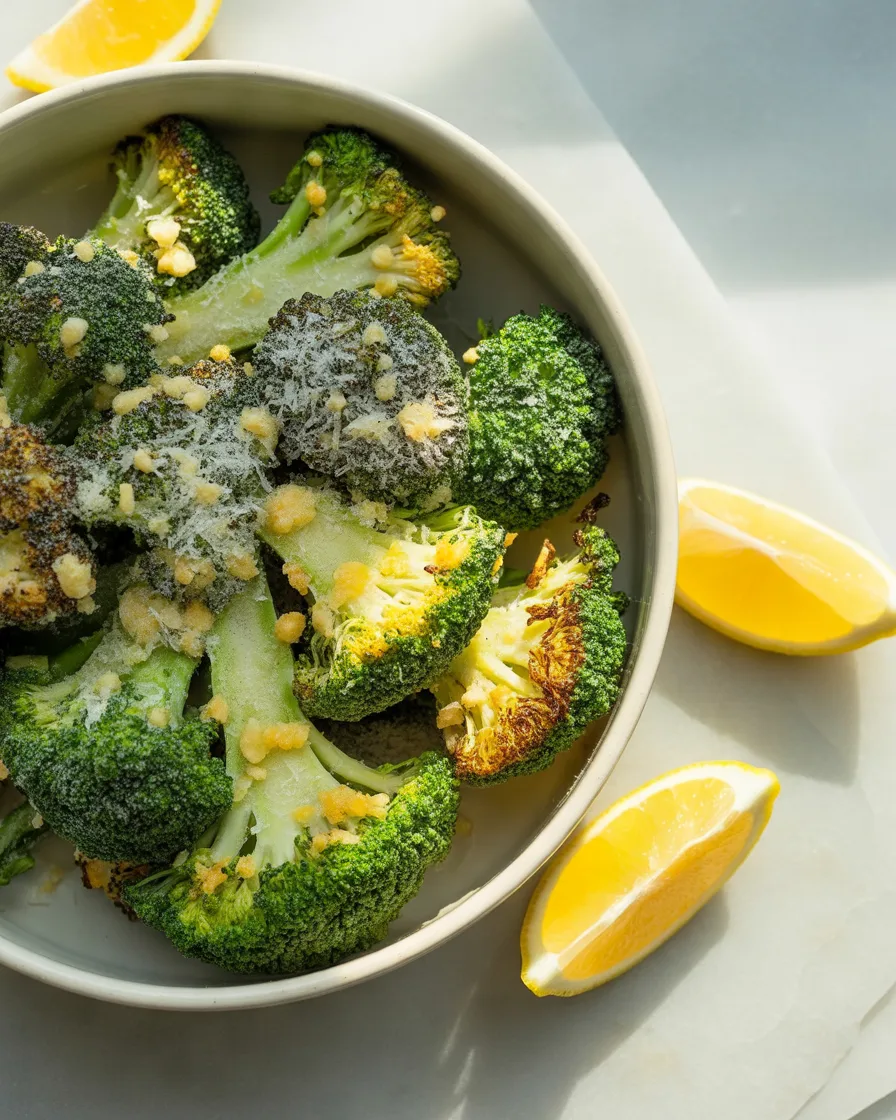
An easy vegetable side dish with plenty of flavor
Broccoli is a nutritious vegetable, but not everyone enjoys eating it steamed or boiled. Air frying offers another way to prepare it, creating browned edges while keeping the inside tender.
A little garlic, olive oil and Parmesan can make broccoli more appealing without requiring a complicated sauce.
Ingredients:
- 2 cups broccoli florets
- 1 teaspoon olive oil
- 1 garlic clove, finely minced
- 1 tablespoon grated Parmesan
- Black pepper to taste
- A squeeze of lemon juice
Preparation and cooking:
- Wash the broccoli and dry it thoroughly.
- Cut larger florets into similar-sized pieces.
- Toss with olive oil, garlic and black pepper.
- Place in the air fryer basket.
- Cook at 375°F (190°C) for approximately 7–10 minutes.
- Shake halfway through.
- Sprinkle with Parmesan and finish with lemon juice.
Benefits: Broccoli contains fibre, vitamin C, vitamin K and other useful plant compounds. Adding it to meals helps increase vegetable variety.
Practical tips: Keep the florets relatively similar in size. If you prefer softer broccoli, add a minute or two of cooking time rather than using excessive oil.
How to serve: Add it to chicken dinners, salmon bowls or whole-grain pasta. You can also combine it with roasted carrots and cauliflower for a colorful vegetable platter.
Who it may suit: People trying to eat more vegetables, families looking for simple side dishes and anyone who prefers roasted vegetables over boiled ones.
Important considerations: Parmesan adds sodium and saturated fat, so use a modest amount if you are watching either. You can leave it out or substitute nutritional yeast.
6. Air Fryer Shrimp Fajita Bowls
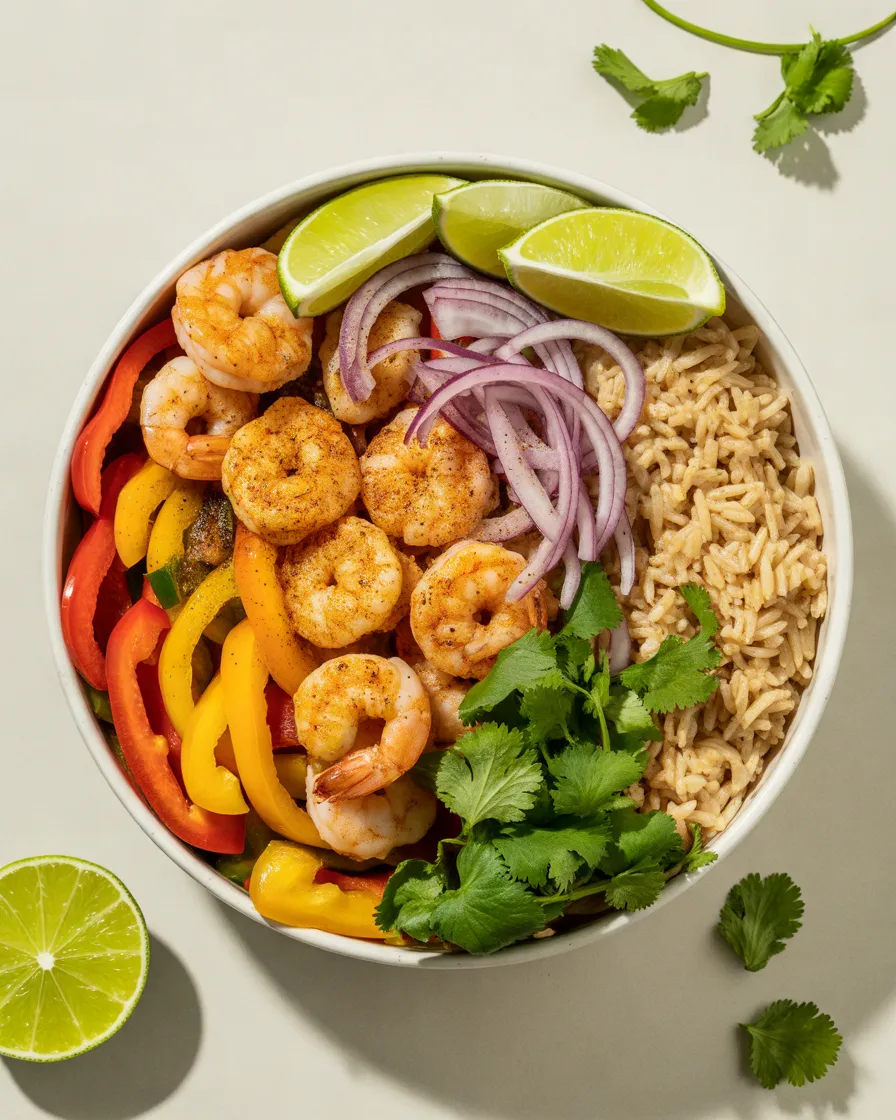
A colorful, protein-rich meal with vegetables
Shrimp fajita bowls bring together seafood, colorful vegetables and satisfying grains in one convenient meal.
The combination of peppers, onions and spices provides plenty of flavor, while shrimp cooks quickly and requires relatively little added oil.
Ingredients:
- 200–250 g peeled and deveined shrimp
- 1 red bell pepper
- 1 yellow bell pepper
- ½ red onion
- 1 teaspoon olive oil
- ½ teaspoon paprika
- ½ teaspoon ground cumin
- Garlic powder and black pepper
- Cooked brown rice for serving
- Fresh lime wedges
Preparation and cooking:
- Slice the peppers and onion into thin strips.
- Toss the vegetables with half the olive oil and seasoning.
- Cook the vegetables at 390°F (200°C) for approximately 5 minutes.
- Meanwhile, season the shrimp with the remaining oil and spices.
- Add the shrimp to the basket and cook for another 4–6 minutes, checking regularly.
- Make sure the shrimp become pearly and opaque throughout.
- Serve over cooked brown rice with fresh lime.
Benefits: Shrimp supplies protein, while peppers contribute vitamin C and other nutrients. Adding brown rice provides whole grains and makes the meal more substantial.
Practical tips: Avoid cooking shrimp for too long because it can become rubbery. Keep the shrimp in a single layer when possible. If your air fryer basket is small, cook in batches.
How to serve: Build a bowl with brown rice, shrimp, peppers, onions, lettuce and fresh lime. Add plain Greek yogurt as a creamy alternative to heavier dressings.
Who it may suit: People who enjoy seafood, quick dinners and colorful meal-prep bowls.
Important considerations: Shellfish is a common food allergen. Keep raw shrimp separate from ready-to-eat ingredients and use clean utensils.
7. Healthy Air Fryer Turkey Meatballs
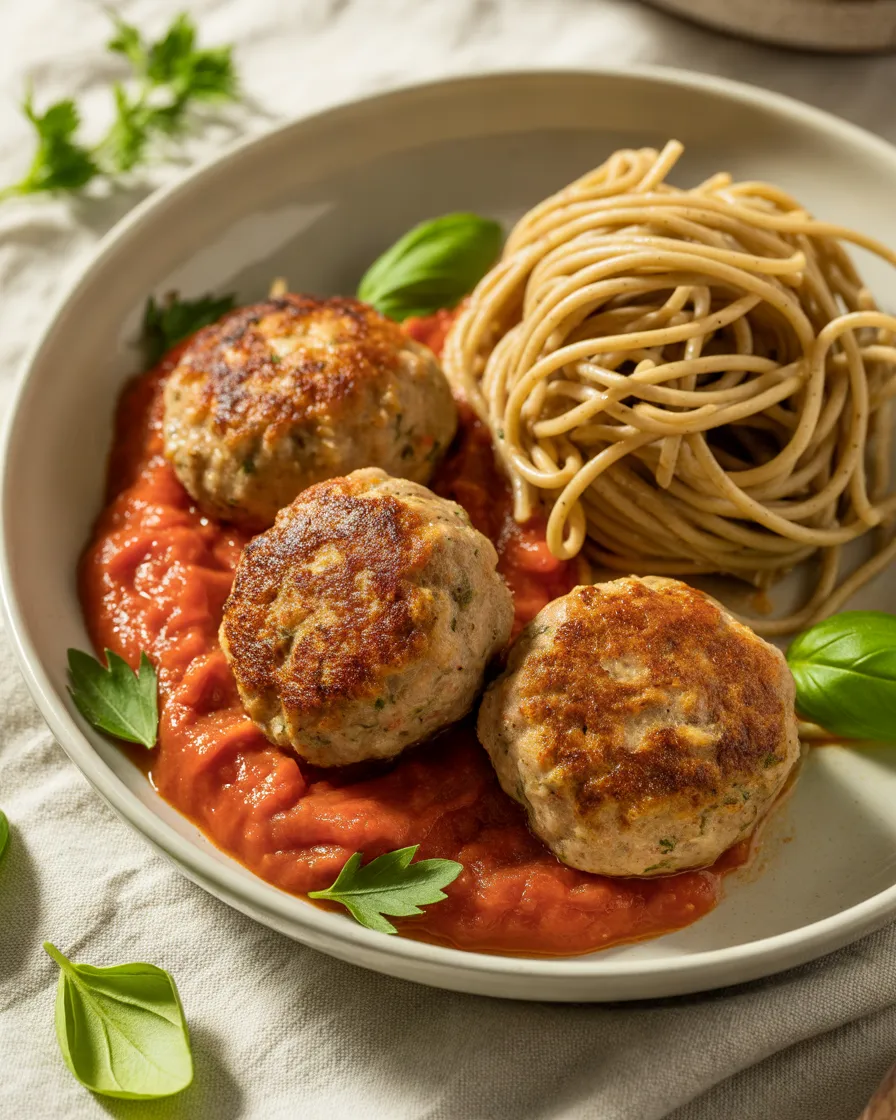
A versatile protein option for family meals
Turkey meatballs are an excellent addition to a simple weekly meal plan. They are easy to prepare in batches and can be paired with different sides depending on your preferences.
Using lean ground turkey, herbs and whole-grain breadcrumbs creates a flavorful alternative to some heavier meatball preparations.
Ingredients:
- 450 g lean ground turkey
- ¼ cup whole-grain breadcrumbs
- 1 egg
- 2 tablespoons finely chopped onion
- 1 garlic clove, minced
- 1 teaspoon dried Italian herbs
- Black pepper to taste
Preparation and cooking:
- Add all ingredients to a mixing bowl.
- Mix gently until combined. Avoid overmixing.
- Shape into evenly sized meatballs.
- Arrange them in the air fryer basket without overcrowding.
- Cook at 375°F (190°C) for approximately 10–14 minutes, turning halfway through if needed.
- Check that the centre of each meatball reaches 165°F (74°C).
Benefits: Turkey provides protein, while the breadcrumbs help create a tender texture. Preparing meatballs at home also allows you to control added salt and ingredients.
Practical tips: Use slightly damp hands when shaping the meatballs to reduce sticking. Keep their sizes consistent so they cook evenly.
How to serve: Pair with whole-wheat spaghetti, tomato sauce, roasted vegetables or a fresh salad. You can also add them to whole-grain pita pockets.
Who it may suit: Families, meal-prep enthusiasts and people looking for convenient protein options.
Important considerations: Ground turkey must reach 165°F (74°C). If using commercially prepared breadcrumbs or sauces, compare sodium levels on the labels.
8. Crispy Air Fryer Tofu with Soy and Ginger
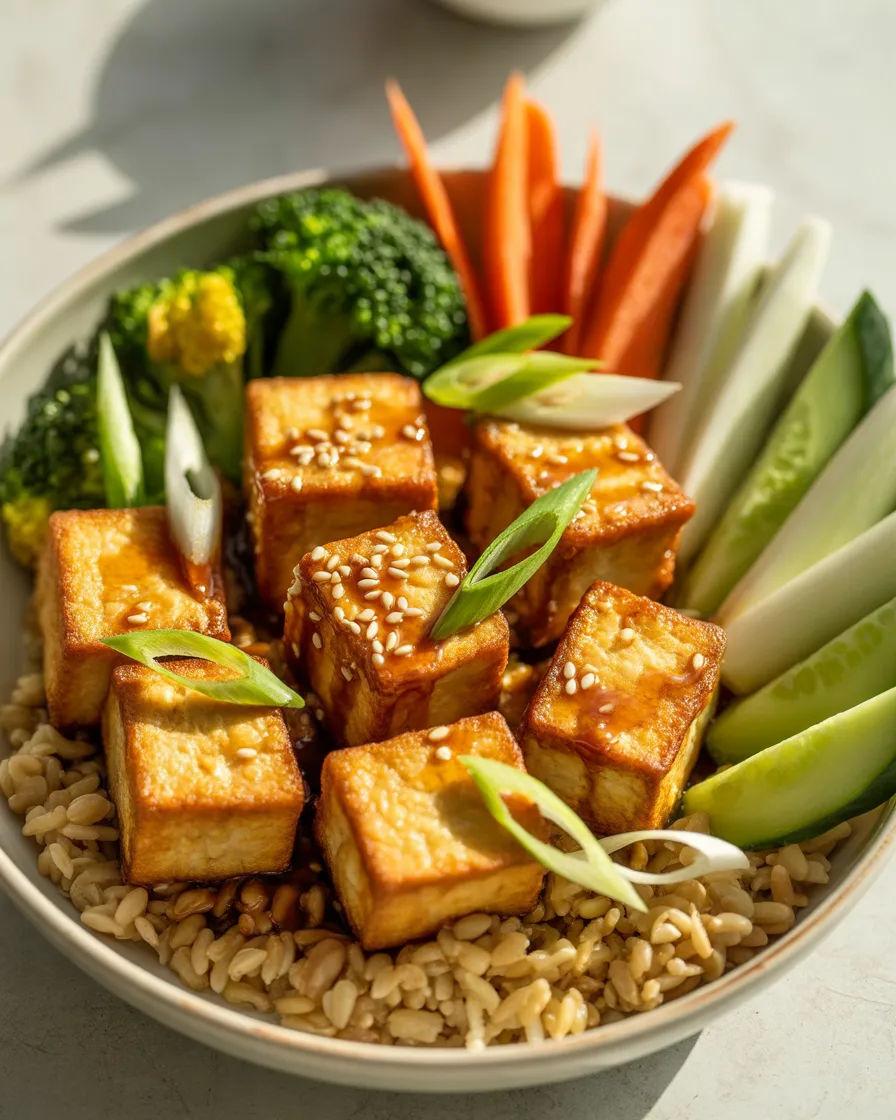
A plant-based dinner with a satisfying texture
Tofu is a versatile plant-based protein that absorbs the flavors of marinades and seasonings. Air frying helps create a lightly crisp exterior while keeping the inside soft.
This recipe combines ginger, garlic and reduced-sodium soy sauce for a savory meal that works well with vegetables and whole grains.
Ingredients:
- 300 g firm or extra-firm tofu
- 1 tablespoon reduced-sodium soy sauce
- 1 teaspoon olive or sesame oil
- ½ teaspoon fresh grated ginger
- 1 garlic clove, minced
- 1 tablespoon cornstarch
- Black pepper to taste
Preparation and cooking:
- Drain the tofu and press it between clean towels to remove excess moisture.
- Cut into bite-sized cubes.
- Mix soy sauce, oil, ginger and garlic.
- Toss the tofu gently in the marinade.
- Add cornstarch and mix until lightly coated.
- Place in the air fryer basket in a single layer.
- Cook at 390°F (200°C) for approximately 12–16 minutes, shaking halfway through.
Benefits: Tofu provides plant-based protein and can contribute calcium and iron, depending on how it is prepared. It is also useful for adding variety to meals that rely less on meat.
Practical tips: Pressing the tofu is one of the most important steps. Removing excess water improves the final texture. Avoid adding too much marinade immediately before cooking.
How to serve: Combine with brown rice, broccoli, carrots and cucumber. A small amount of lime juice or sesame seeds can finish the dish.
Who it may suit: Vegetarians, vegans when using suitable ingredients, and people looking for meat-free dinner ideas.
Important considerations: Soy is a common allergen. Choose a suitable alternative if you have a soy allergy. Check the sodium content of soy sauce, even when using reduced-sodium varieties.
9. Healthy Air Fryer Zucchini Fries
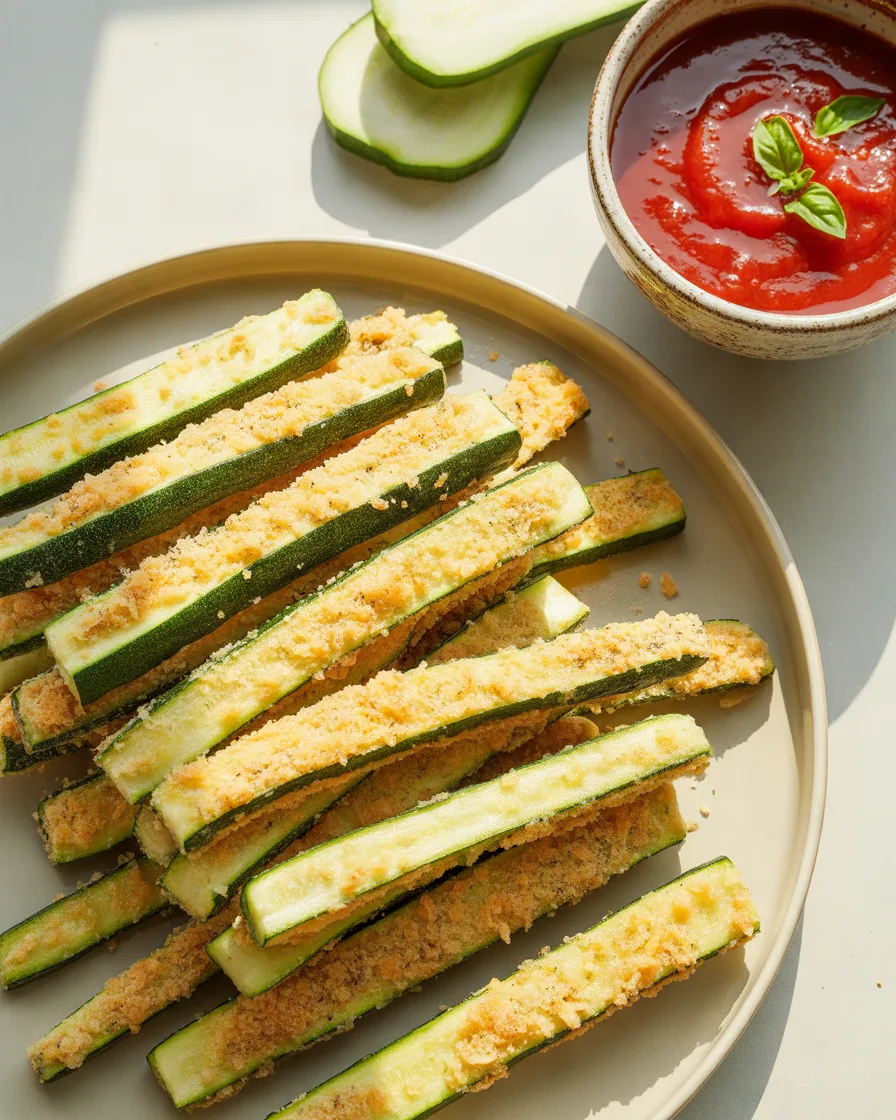
A lighter homemade alternative to traditional fries
Zucchini fries are a useful way to enjoy a crunchy snack while adding another vegetable to your eating routine.
Their mild flavor works particularly well with a whole-grain breadcrumb coating and simple herbs.
Ingredients:
- 2 medium zucchini
- 1 egg
- ½ cup whole-grain breadcrumbs
- 2 tablespoons grated Parmesan
- ½ teaspoon garlic powder
- ½ teaspoon dried oregano
- Black pepper to taste
Preparation and cooking:
- Wash the zucchini and cut them into evenly sized sticks.
- Beat the egg in a small bowl.
- Combine breadcrumbs, Parmesan, oregano, garlic powder and pepper in another bowl.
- Dip each zucchini stick into the egg, then coat with the breadcrumb mixture.
- Arrange in a single layer in the air fryer.
- Cook at 390°F (200°C) for approximately 8–11 minutes, turning halfway through.
- Remove once the coating is golden and the zucchini is tender.
Benefits: Zucchini provides water, fibre and several vitamins. Using a measured breadcrumb coating helps create a crunchy snack without deep-frying.
Practical tips: Avoid cutting the zucchini too thin, as it can become soft. For a crispier result, remove excess moisture before coating.
How to serve: Pair with homemade tomato dip, Greek yogurt mixed with herbs or a small amount of marinara sauce.
Who it may suit: Families, people looking for vegetable-based snacks and anyone who wants an alternative to conventional fried sides.
Important considerations: The texture is best immediately after cooking. Zucchini naturally contains considerable moisture, so these fries will not remain as crisp as potato fries during storage.
10. Air Fryer Stuffed Bell Peppers
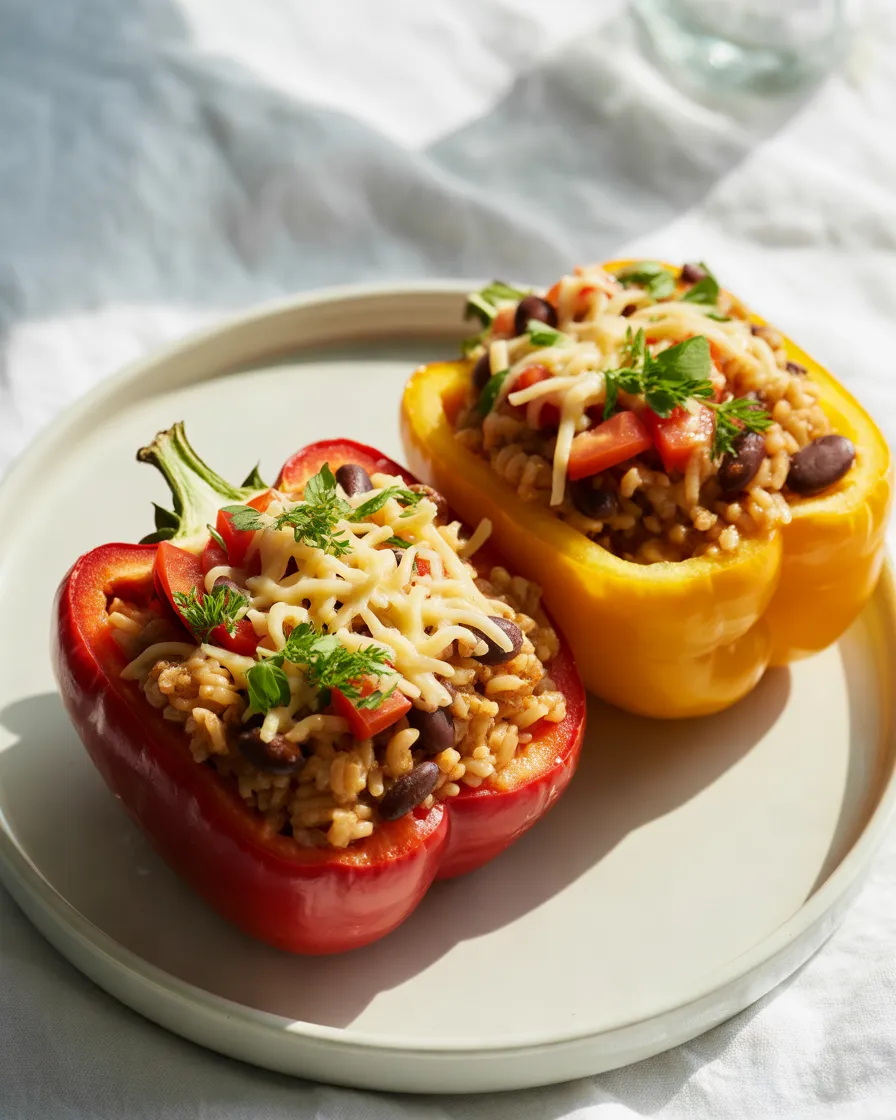
A balanced meal in a convenient individual serving
Stuffed bell peppers are a practical way to combine vegetables, whole grains and protein in one dish.
They can be prepared with ground turkey, beans or lentils, making the recipe easy to adapt for different dietary preferences.
Ingredients:
- 2 large bell peppers
- ½ cup cooked brown rice
- 150 g cooked lean ground turkey or ½ cup cooked black beans
- ¼ cup chopped tomatoes
- 2 tablespoons finely chopped onion
- ½ teaspoon paprika
- ¼ teaspoon cumin
- 2 tablespoons grated reduced-fat cheese (optional)
Preparation and cooking:
- Wash the peppers and cut them in half lengthwise.
- Remove the seeds and membranes.
- Mix cooked brown rice with turkey or beans, tomatoes, onion and spices.
- Fill each pepper half with the mixture.
- Place the peppers upright in an air fryer-safe dish that fits your appliance.
- Cook at 360°F (182°C) for approximately 12–15 minutes, or until the peppers soften and the filling is thoroughly heated.
- Add cheese near the end if desired.
Benefits: This recipe combines vegetables, protein and whole grains. Choosing beans instead of turkey creates a plant-based version with additional fibre.
Practical tips: Cook the rice and protein before assembling the peppers. Cut the pepper halves evenly so they fit comfortably inside the basket.
How to serve: Enjoy two pepper halves with a side salad or roasted green vegetables. They can also be prepared in advance for convenient weekday lunches.
Who it may suit: People who enjoy complete meals, families and anyone interested in flexible meal-prep recipes.
Important considerations: If the filling contains cooked meat or leftovers, reheat the centre to 165°F (74°C). Make sure the cooking dish is suitable for your particular air fryer.
11. Healthy Air Fryer Falafel Patties
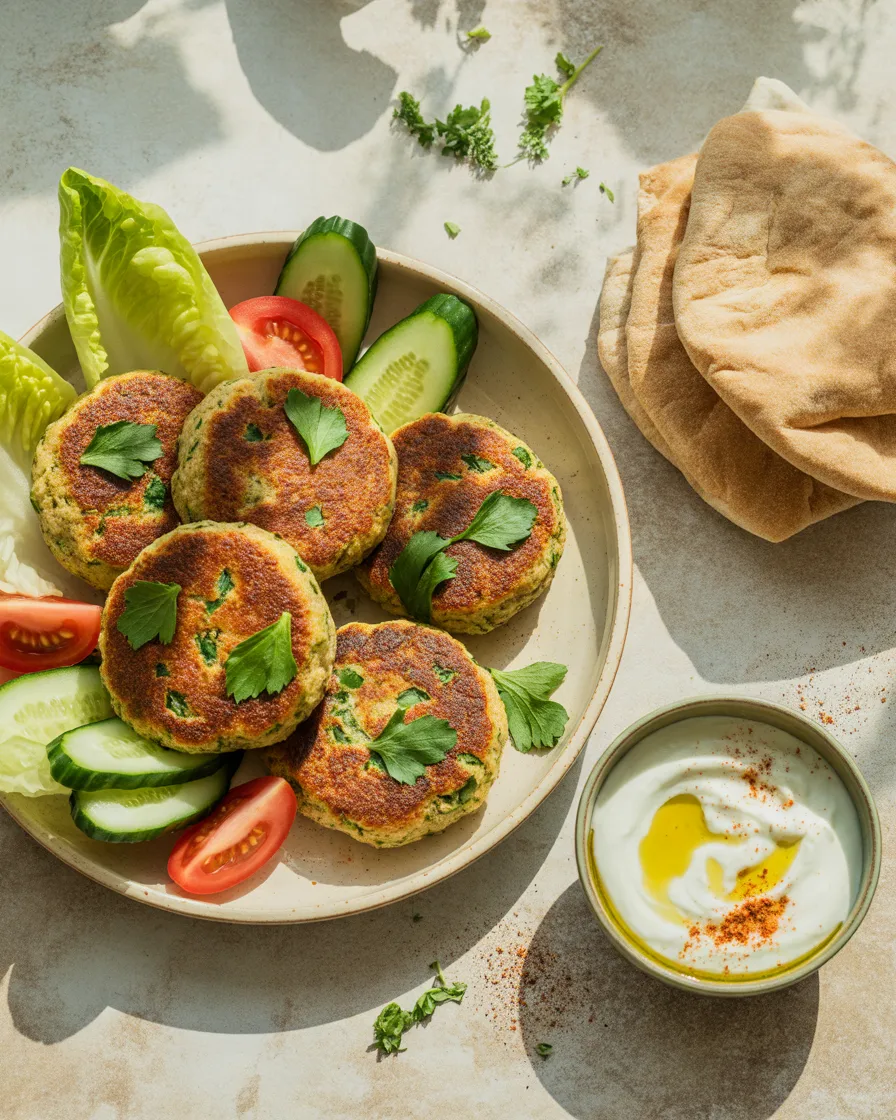
A fibre-rich vegetarian meal inspired by Middle Eastern flavors
Falafel is traditionally made with chickpeas, herbs and spices. An air fryer offers a convenient alternative to deep-frying, creating patties with browned edges and a soft interior.
This version uses simple ingredients and works particularly well in wraps and grain bowls.
Ingredients:
- 1 can chickpeas, drained and thoroughly dried
- ¼ cup fresh parsley
- 2 tablespoons chopped coriander
- 2 garlic cloves
- ¼ small onion
- ½ teaspoon cumin
- ½ teaspoon ground coriander
- 1 tablespoon whole-wheat flour
- 1 teaspoon olive oil
- Black pepper to taste
Preparation and cooking:
- Add chickpeas, parsley, coriander, garlic, onion and spices to a food processor.
- Pulse until the mixture becomes coarse. Avoid turning it into a smooth paste.
- Add flour and mix.
- Shape into small patties.
- Refrigerate for approximately 20–30 minutes to help them hold their shape.
- Lightly brush with olive oil.
- Cook at 375°F (190°C) for approximately 12–15 minutes, turning carefully halfway through.
Benefits: Chickpeas provide plant-based protein, dietary fibre and several minerals. Fresh herbs add flavor, making this a useful alternative to heavily processed vegetarian products.
Practical tips: Do not use excessively wet chickpeas. If the mixture feels too soft, add a little more flour. Make smaller patties to help them cook evenly.
How to serve: Place falafel inside whole-wheat pita with cucumber, tomatoes, lettuce and a yogurt-based dressing. They also work well over a Mediterranean grain bowl.
Who it may suit: Vegetarians, people interested in Mediterranean-inspired meals and anyone looking for more ways to include legumes.
Important considerations: Canned chickpeas are convenient, but their sodium content varies. Rinse them thoroughly and check labels when purchasing.
12. Air Fryer Apple Cinnamon Oat Bites
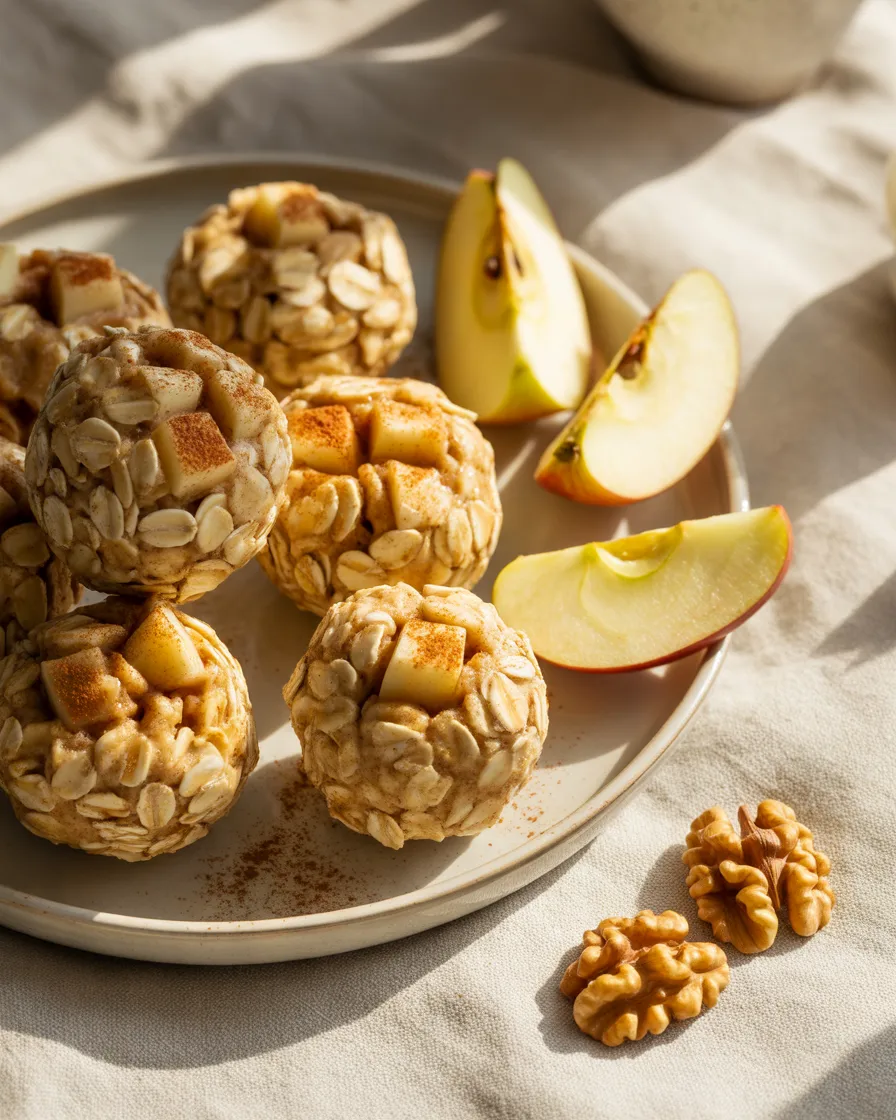
A naturally sweet snack for breakfast or afternoon cravings
Healthy air fryer recipes do not have to be limited to lunch and dinner. You can also use your appliance to prepare simple snacks and sweet treats.
These apple cinnamon oat bites combine oats, fresh apple and banana for a naturally sweet flavor without requiring large amounts of added sugar.
Ingredients:
- 1 cup rolled oats
- 1 small apple, finely diced
- 1 ripe banana, mashed
- 1 egg
- ½ teaspoon ground cinnamon
- ½ teaspoon vanilla extract
- 1 tablespoon chopped walnuts (optional)
Preparation and cooking:
- Mash the banana in a mixing bowl.
- Add the egg, vanilla and cinnamon.
- Stir in the oats and finely diced apple.
- Add chopped walnuts if desired.
- Let the mixture rest for approximately 5 minutes so the oats absorb some moisture.
- Spoon small portions into lightly greased, air fryer-safe silicone cups or suitable baking molds.
- Cook at 350°F (175°C) for approximately 8–11 minutes, checking that the centres are set.
Benefits: Oats provide soluble fibre, while apples contribute additional fibre and natural sweetness. Using mashed banana helps reduce the need for added sugar.
Practical tips: Cut the apple into small pieces so it softens properly. Avoid overfilling the molds, as the mixture needs room to cook evenly.
How to serve: Enjoy one or two bites with plain Greek yogurt, milk or unsweetened tea. They also make a convenient breakfast addition when prepared ahead.
Who it may suit: People looking for homemade snacks, families and anyone who enjoys simple fruit-based treats.
Important considerations: These bites still contain carbohydrates and natural sugars. Portion sizes matter, especially for people monitoring their blood glucose. Anyone with an egg or nut allergy should adapt the ingredients accordingly.
Expert Tips for Making Healthier Air Fryer Meals
Choosing nutritious ingredients is important, but the way you prepare them also affects the final meal. A few simple habits can improve texture, flavor and cooking consistency.
1. Use oil thoughtfully
An air fryer does not require the amount of oil used in traditional deep-frying. A small amount of olive, canola or avocado oil can help vegetables and proteins brown.
Choose liquid plant oils in place of butter or other fats high in saturated fat when appropriate. The American Heart Association recommends prioritizing unsaturated plant oils as part of a heart-conscious eating pattern.
2. Avoid overcrowding the basket
Air fryers work by circulating hot air around food. When ingredients are packed too tightly, airflow becomes restricted and food may cook unevenly.
Cook in batches if necessary. This is especially important for zucchini fries, chickpeas, tofu and chicken pieces.
3. Choose minimally processed ingredients
An air fryer does not automatically make every food healthy. Frozen breaded snacks, processed meat products and heavily salted convenience foods may still contain considerable sodium, saturated fat or refined ingredients.
Whenever possible, choose fresh vegetables, beans, lean proteins and whole grains.
4. Experiment with herbs and spices
You do not need large amounts of salt or heavy sauces to make meals enjoyable.
Try combinations such as:
- Garlic, lemon and oregano for chicken.
- Paprika, cumin and coriander for chickpeas.
- Dill and lemon for salmon.
- Ginger and garlic for tofu.
- Cinnamon and vanilla for fruit-based snacks.
5. Check internal food temperatures
Food safety should never be overlooked, even when using an air fryer.
Use a food thermometer to check the thickest part of meat and poultry.
Common US safe minimum temperatures include:
- Chicken and turkey: 165°F (74°C).
- Ground beef, pork and lamb: 160°F (71°C).
- Whole cuts of beef, pork and lamb: 145°F (63°C), followed by a three-minute rest.
- Fish: 145°F (63°C).
These temperatures are more reliable than judging food by its color or appearance.
6. Learn how your particular air fryer works
Different air fryer models have different basket sizes, heating elements and airflow patterns. A recipe that takes 15 minutes in one appliance may cook faster or slower in another.
Use recipe times as starting points rather than guaranteed cooking times. Check your manufacturer’s instructions and inspect food toward the end of cooking.
7. Make meal preparation easier
Prepare ingredients in advance to reduce the time required during busy weekdays.
For example, wash and chop vegetables, portion chicken or tofu, prepare spice mixtures and cook grains ahead of time.
Keep raw meat separate from ready-to-eat ingredients, refrigerate perishable foods promptly and use safe storage practices.
8. Clean your air fryer regularly
Remove food crumbs and grease after the appliance has cooled. Clean the basket and accessories according to the manufacturer’s instructions.
Regular cleaning helps prevent old food residue from affecting the taste of new meals.
Frequently Asked Questions About Healthy Air Fryer Recipes
1. Are air fryer recipes healthier than deep-fried foods?
They can be a useful alternative. Air frying generally requires much less added oil than deep-frying, which can reduce the amount of fat in a meal.
However, the overall nutritional value still depends on the ingredients, portion sizes, seasoning and preparation method.
Air-fried vegetables and homemade chicken can be nutritious choices, while heavily breaded or highly processed foods may still be less suitable for regular consumption.
2. Can I cook healthy meals in an air fryer without oil?
Yes. Many foods, including broccoli, sweet potatoes, salmon and some chicken preparations, can be cooked with little or no additional oil.
A small amount of oil can improve browning and texture, but it is not essential for every recipe.
3. What are the best healthy air fryer foods for beginners?
Good starting options include:
- Sweet potato wedges.
- Broccoli florets.
- Chicken breast.
- Salmon fillets.
- Chickpeas.
- Zucchini fries.
These foods require relatively simple preparation and can be seasoned with ingredients already available in most kitchens.
4. Can I use frozen vegetables in an air fryer?
Yes. Many frozen vegetables can be cooked directly in an air fryer.
Spread them in an even layer, follow the package or appliance guidance and adjust cooking time according to their size and moisture content.
Avoid overcrowding the basket. Some frozen vegetables may need a small amount of oil or additional seasoning to improve their texture.
5. What is the best temperature for healthy air fryer recipes?
There is no single temperature that works for every ingredient.
As a general starting point, many vegetables cook well between 350°F and 400°F (175°C–200°C). Chicken, fish and other proteins require temperatures and cooking times appropriate to their thickness and safe internal temperature.
Always follow the individual recipe and use a food thermometer where necessary.
6. Can I prepare air fryer meals for weekly meal prep?
Absolutely. Chicken breast, turkey meatballs, falafel, roasted vegetables and tofu can all be useful meal-prep ingredients.
Prepare suitable portions, refrigerate them promptly in covered containers and reheat leftovers to 165°F (74°C).
For better texture, store wet sauces and dressings separately and add them shortly before serving.
7. Are air fryers suitable for vegetarian and vegan meals?
Yes. Air fryers can prepare a wide range of plant-based foods.
Chickpeas, tofu, falafel, sweet potatoes, broccoli and zucchini are excellent starting points. You can combine them with whole grains, beans and fresh vegetables to create balanced meals.
For vegan versions, check that sauces, coatings and other packaged ingredients do not contain animal-derived products.
8. Can I put parchment paper in an air fryer?
Some air fryer models allow specially designed parchment liners, but you should always check the manufacturer’s instructions.
Never place loose parchment paper inside an empty preheating air fryer. It can lift into the heating element and create a fire hazard. Make sure any approved liner is weighed down by food and does not block airflow.
Conclusion: Make Healthy Eating Easier with Simple Air Fryer Recipes
Preparing nutritious meals can become much easier when you have a collection of reliable recipes to choose from.
These 12 healthy air fryer recipes offer a practical starting point, whether you prefer lean chicken, fresh salmon, plant-based proteins, roasted vegetables or homemade snacks.
You do not need expensive ingredients or complicated cooking techniques. A few everyday foods, sensible seasoning and the right cooking temperature can help you prepare satisfying meals at home.
Start with two or three recipes that appeal to you, experiment with different herbs and vegetables, and adjust the ingredients to match your preferences.
Remember that an air fryer is simply a cooking tool. The most important part of healthy eating is choosing a varied combination of vegetables, fruits, whole grains, healthy fats and suitable protein sources.
Small, realistic changes to everyday cooking can make nutritious meals easier to enjoy over time.