Finding healthy recipes for weight losing feels like a losing battle: the meals that sound sensible leave you hungry within an hour, and the filling ones undo the progress you wanted. Small portions, bland flavors and strict rules make eating well a chore, so many give up before the habit sticks.
The fix is not eating less of everything, but choosing meals that pair protein, fiber and plenty of vegetables, so each plate feels generous and keeps you full for hours. These fifteen ideas cover breakfasts, salads, soups, mains and snacks, all practical at home. Start with the one that sounds most like you.
1. Greek Yogurt and Berry Breakfast Bowl — A Healthy Recipe for Weight Loss
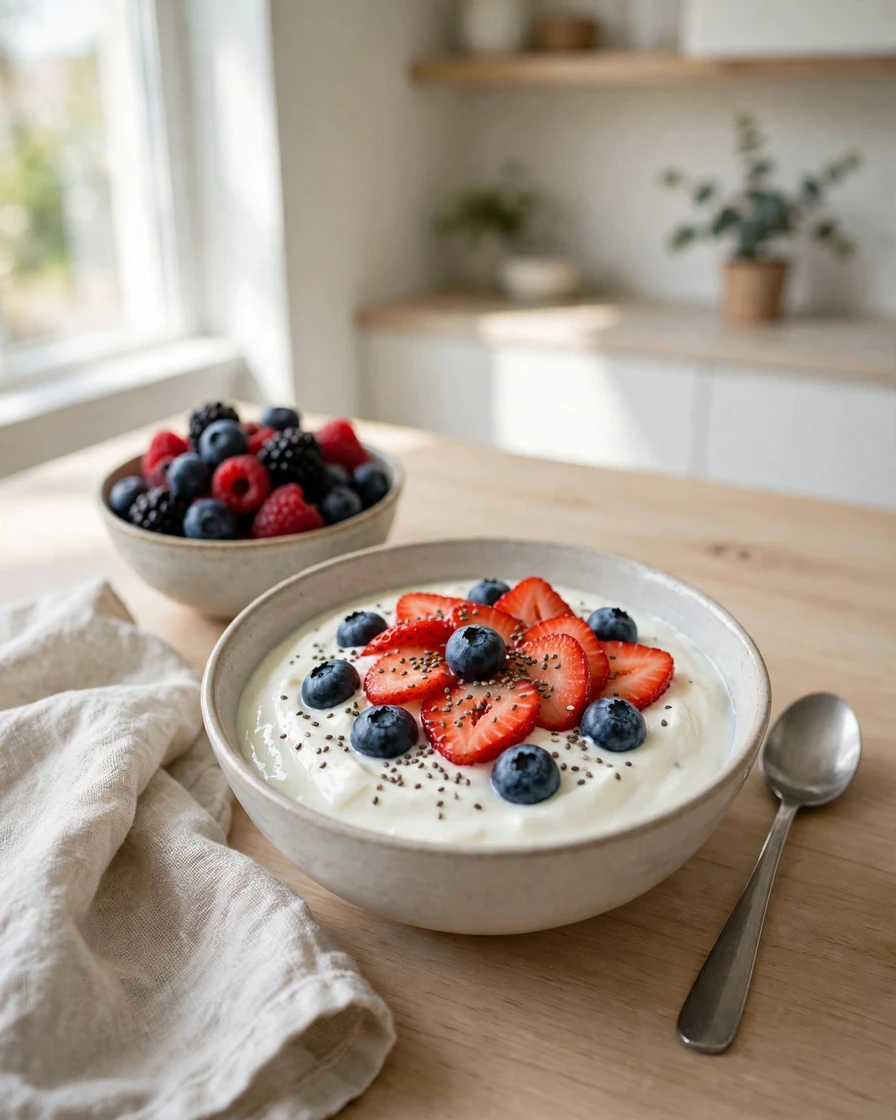
Greek yogurt with berries is a breakfast that feels like a treat and still keeps you full until lunch. Spoon three-quarters of a cup of plain low-fat Greek yogurt into a bowl, add a handful of mixed berries, such as blueberries and strawberries, and finish with a teaspoon of chia seeds. The yogurt brings protein, the berries add sweetness and fiber, and the chia seeds give a gentle crunch.
This bowl suits busy mornings because it takes two minutes and needs no cooking. Choose plain yogurt rather than flavored kinds, which often carry added sugar, and let the fruit do the sweetening. If dairy does not agree with you, a soy-based yogurt works in its place, though the protein will be lower. Keep the seed portion small — a little goes a long way. A sprinkle of cinnamon or a few drops of vanilla add warmth without sugar, and the bowl works with frozen berries when fresh ones are out of season.
Quick Tip: Freeze the berries the night before — they thaw into the yogurt by morning and make it taste like soft-serve.
2. Veggie-Packed Egg White Omelette
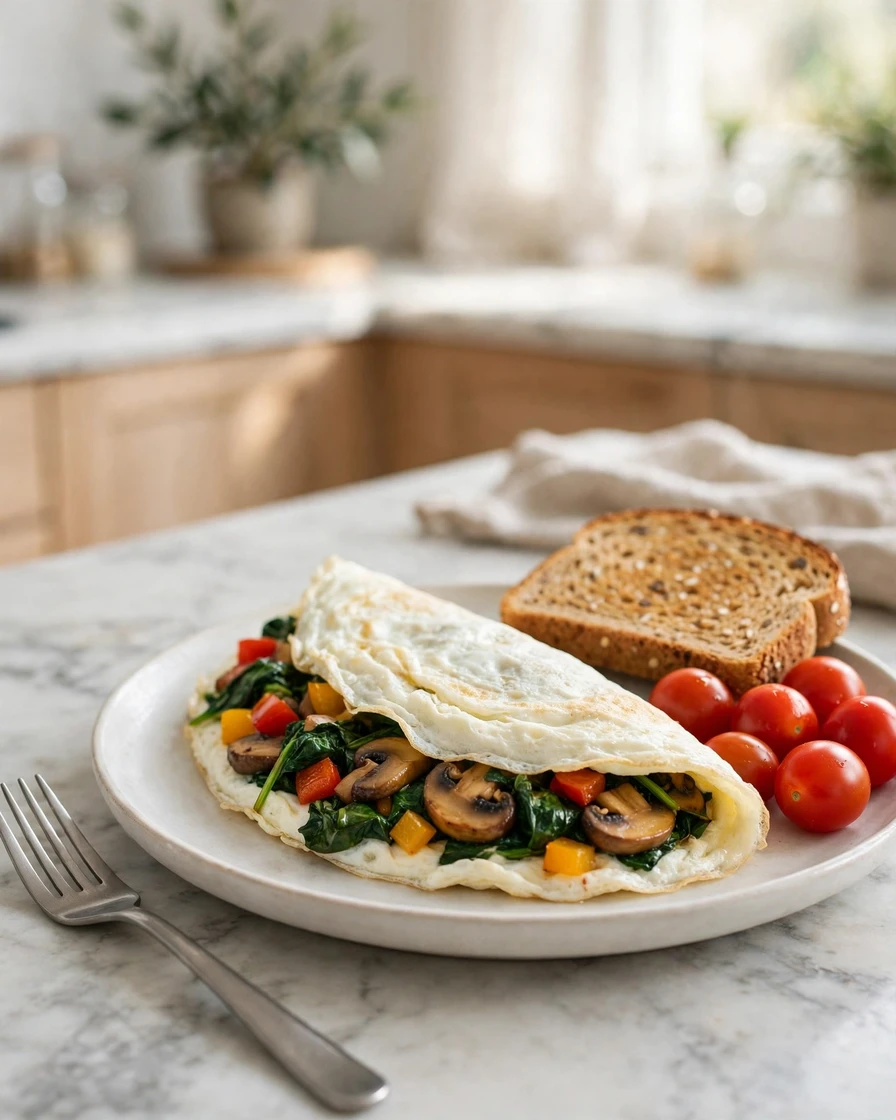
An egg white omelette packs a lot of vegetables into a light, protein-rich breakfast. Whisk three egg whites with a pinch of salt, pour them into a lightly oiled pan, and add spinach, sliced mushrooms and diced bell peppers as the eggs set. Fold it in half and serve with cherry tomatoes and wholemeal toast.
Egg whites keep the dish light while the vegetables add bulk and fiber, so the plate looks generous without feeling heavy. This one suits anyone who wants a warm, savory start to the day. If you miss the richness of whole eggs, use one whole egg with two whites. Cook the vegetables first if you like them soft, and season well — herbs and pepper do more for flavor than extra salt. A slice of wholemeal toast on the side turns it into a fuller breakfast, and leftover roasted vegetables from dinner work well as the filling.
Quick Tip: Cook the omelette on medium-low heat and take it off while the center is still slightly soft — it firms up on the plate.
3. Overnight Oats with Chia and Apple
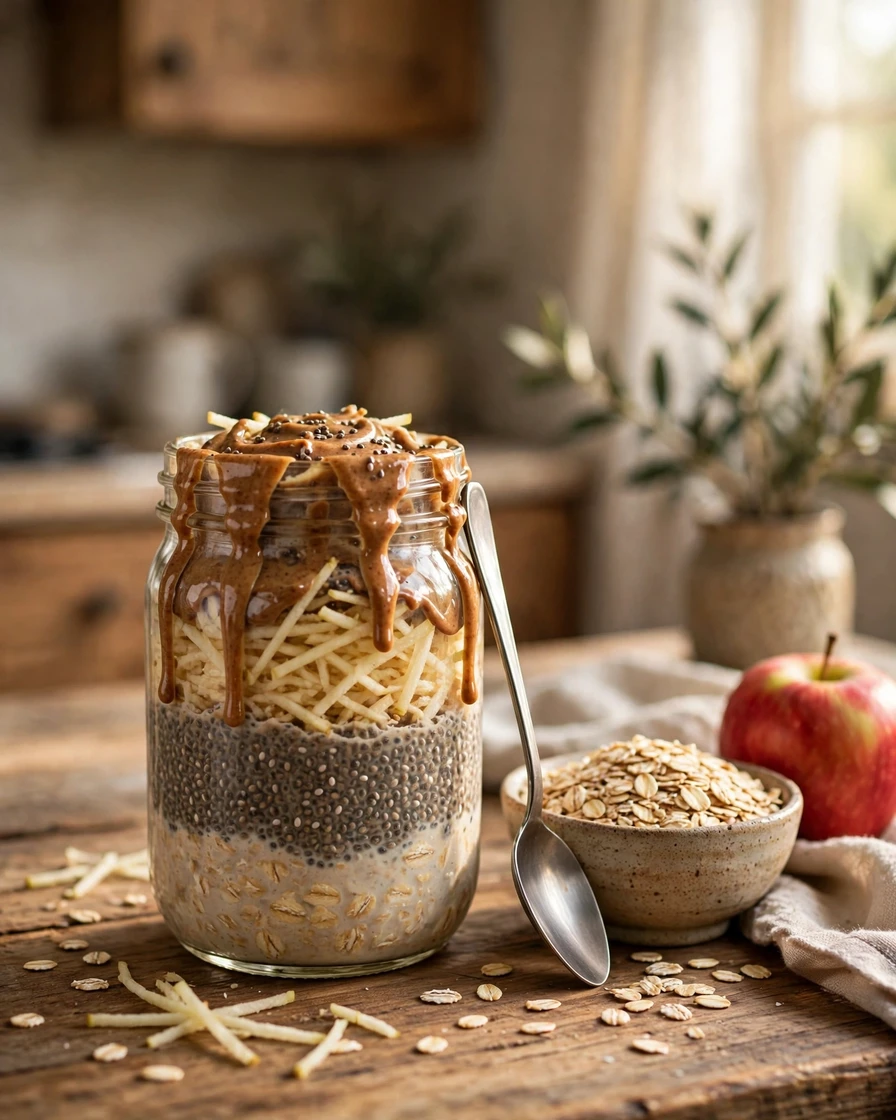
Overnight oats are the easiest make-ahead breakfast in this list. Stir half a cup of rolled oats with half a cup of milk, a tablespoon of chia seeds and half a grated apple in a jar, then leave it in the fridge overnight. By morning the oats and chia have soaked up the milk into a thick, creamy mix. Top it with a drizzle of almond butter before eating.
Oats and chia are both rich in fiber, which may help you feel full for longer after breakfast. This jar suits anyone with rushed mornings, and it travels well to work. Use unsweetened milk and skip the honey — the apple gives enough sweetness on its own. If you have a nut allergy, leave out the almond butter or swap it for sunflower seed butter. Make two jars at once and keep the second for the next day. It also works with oat milk or soy milk if you prefer.
Quick Tip: Add the apple the night before, not in the morning — it softens overnight and sweetens the whole jar.
4. Grilled Chicken and Quinoa Salad
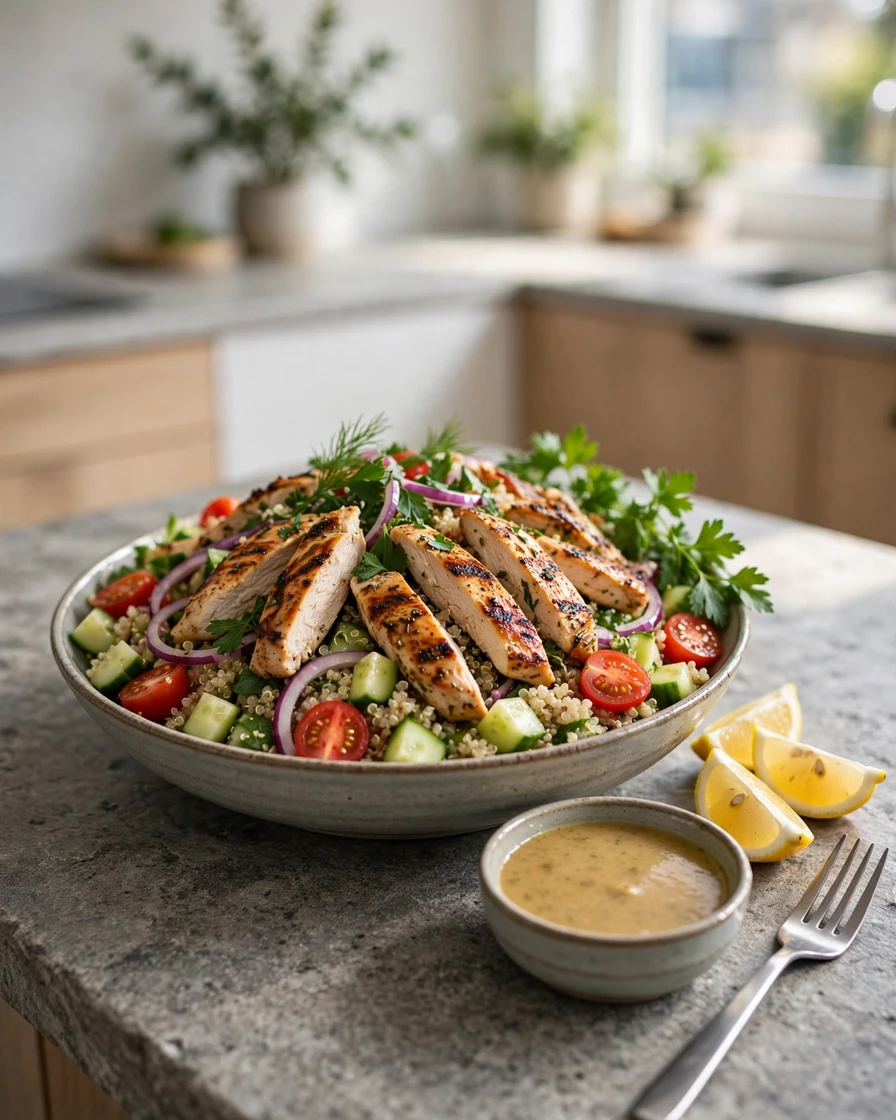
Grilled chicken and quinoa salad is a lunch that keeps well and fills you up without weighing you down. Grill a chicken breast until cooked through, slice it, and toss with a cup of cooked quinoa, cherry tomatoes, cucumber, red onion and fresh herbs. A squeeze of lemon and a spoonful of olive oil is all the dressing it needs.
Quinoa adds fiber and a gentle nutty flavor, while the chicken brings the protein that helps the meal last until dinner. This salad suits meal prep: cook quinoa on Sunday and build fresh bowls through the week. For more ideas in the same spirit, these high-protein dinner ideas pair lean protein with vegetables in a similar balanced way. Keep the dressing light and add it just before eating so the salad stays crisp. A handful of spinach or rocket stirred through just before serving adds color and crunch, and the salad keeps well in the fridge for a day.
Quick Tip: Rinse quinoa well before cooking — it removes the bitter coating and gives a cleaner taste.
5. Lentil and Vegetable Soup — A Filling Healthy Recipe for Weight Loss
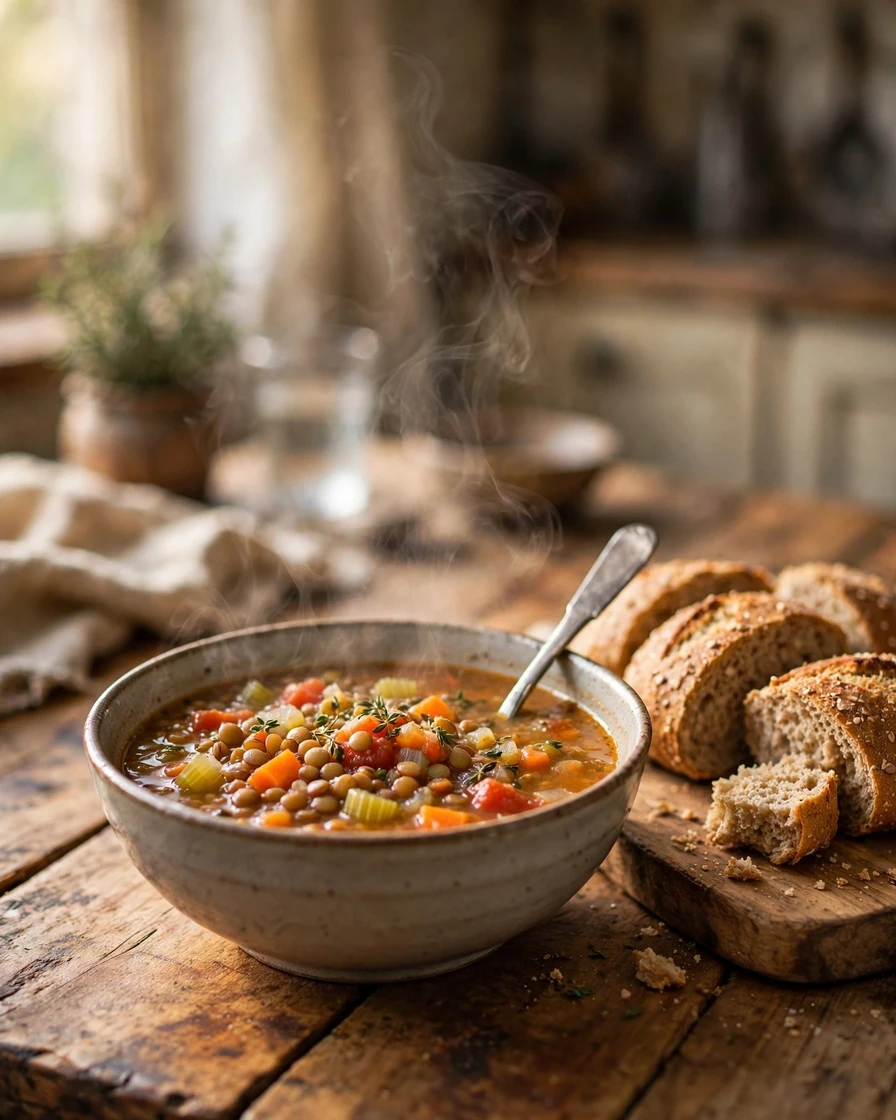
Lentil soup is one of the most filling meals you can make from a handful of pantry ingredients. Simmer a cup of dried red or brown lentils with chopped carrots, celery, onion and tomatoes in vegetable stock for about half an hour, until the lentils are soft and the soup is thick. Season with cumin, garlic and a little lemon juice, and serve with a slice of wholemeal bread.
Lentils are rich in fiber and plant protein, which may help a modest bowl feel surprisingly satisfying. This soup suits batch cooking: it freezes well and tastes even better the next day. It also adapts to hands-off cooking — see these slow cooker recipes for the same kind of one-pot approach. If lentils are new to you, start with a smaller portion and drink water with the meal, as the fiber can take some getting used to. A squeeze of lemon at the end lifts the flavor, and crusty bread is optional.
Quick Tip: Blend half the soup and stir it back in for a thicker texture without adding cream.
6. Zucchini Noodles with Turkey Bolognese
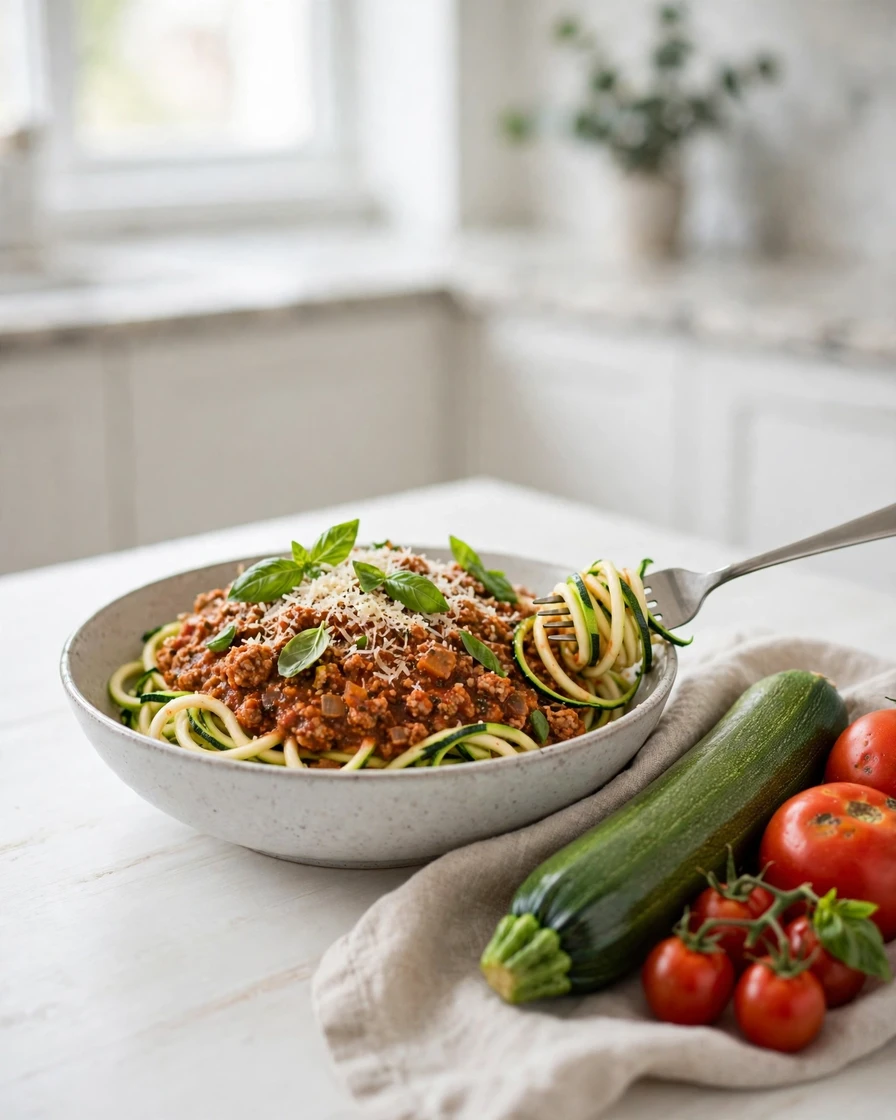
Zucchini noodles let you enjoy a bolognese-style dinner with a much lighter base. Spiralize two zucchinis into long ribbons, then cook lean ground turkey with onion, garlic, canned tomatoes and a pinch of oregano until the sauce is rich and thick. Spoon the sauce over the raw or lightly warmed noodles and finish with basil and a little grated parmesan.
Swapping pasta for zucchini noodles keeps the plate full while leaving room for a generous portion of sauce. This dish suits anyone who loves Italian-style food but wants a lighter evening meal. Do not overcook the noodles — a minute in the pan is enough, or they turn watery. If you do not own a spiralizer, a vegetable peeler makes wide ribbons that work just as well. A side of mixed leaves with lemon dressing rounds out the plate, and the sauce itself freezes well, so a double batch can cover two dinners with little extra effort.
Quick Tip: Salt the zucchini noodles and let them sit for ten minutes, then pat dry — it stops the sauce from going watery.
7. Baked Salmon with Roasted Vegetables
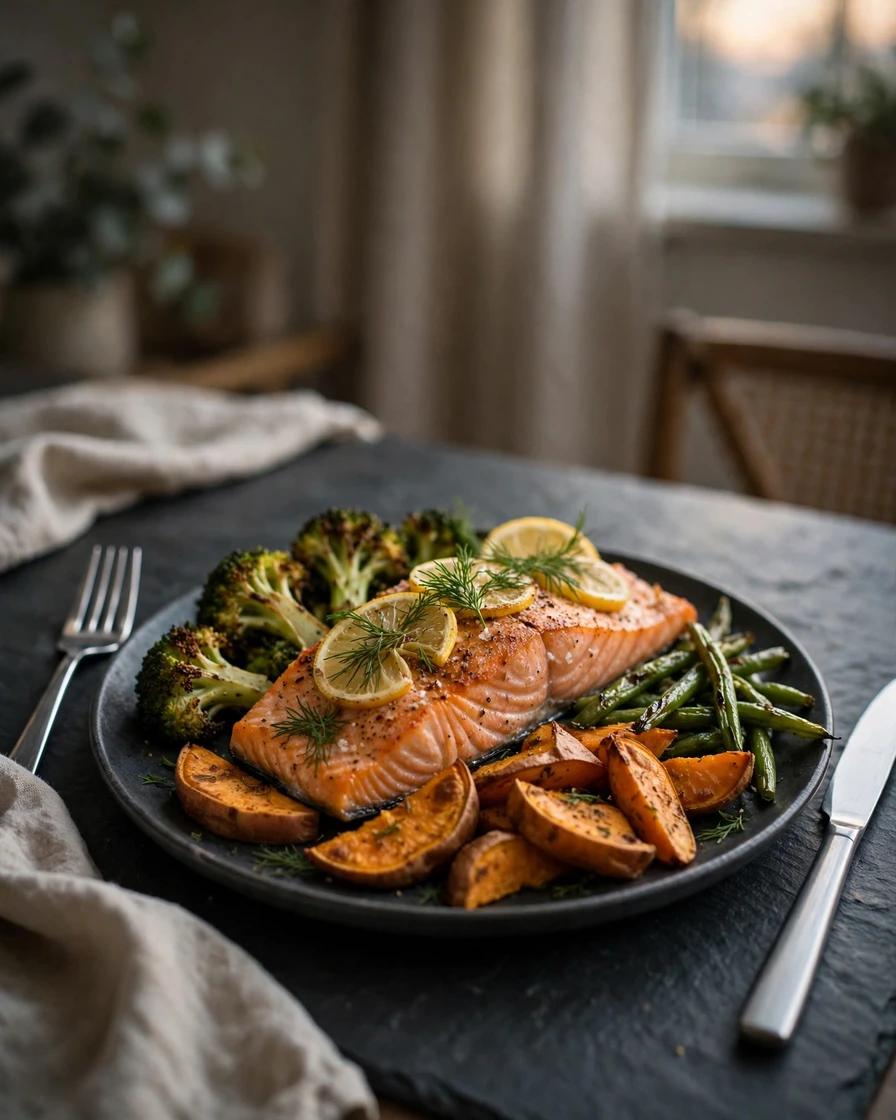
Baked salmon with roasted vegetables is a simple tray dinner that feels like a proper restaurant meal. Place a salmon fillet on a baking tray with broccoli florets, sweet potato wedges and green beans, drizzle lightly with olive oil, and bake at 200°C (400°F) for about 18 minutes. Finish with lemon slices and fresh dill.
Salmon is rich in omega-3 fatty acids and protein, which may help you feel full after a modest portion. This tray suits busy weeknights because everything cooks together and the washing up is minimal. Check the fish is cooked through — it should flake easily with a fork. A squeeze of lemon over the finished tray brightens the whole plate. If you have a fish allergy, the same tray works with chicken breast, though the cooking time will be a little longer. A small green salad on the side adds freshness, and any leftover vegetables are good cold in a lunchbox the next day.
Quick Tip: Cut the sweet potato wedges small so they roast through in the same time as the salmon.
8. Cauliflower Rice Stir-Fry with Tofu
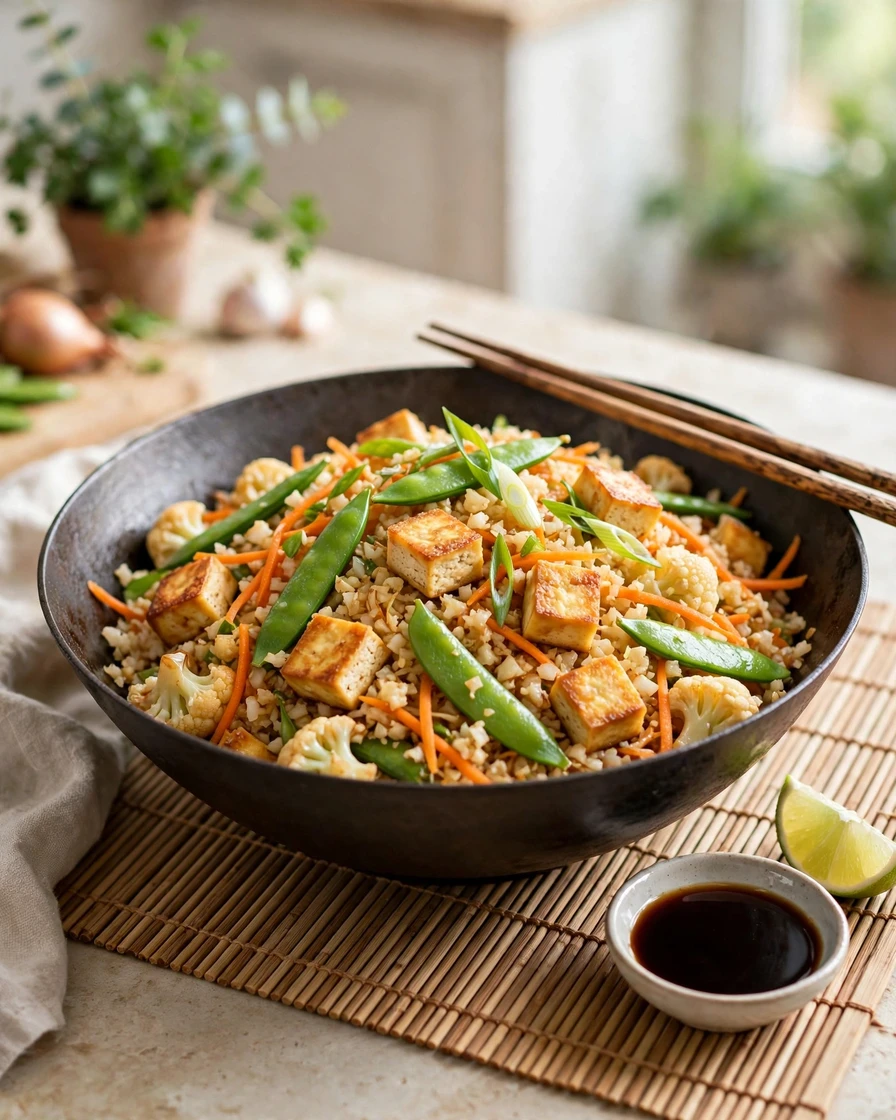
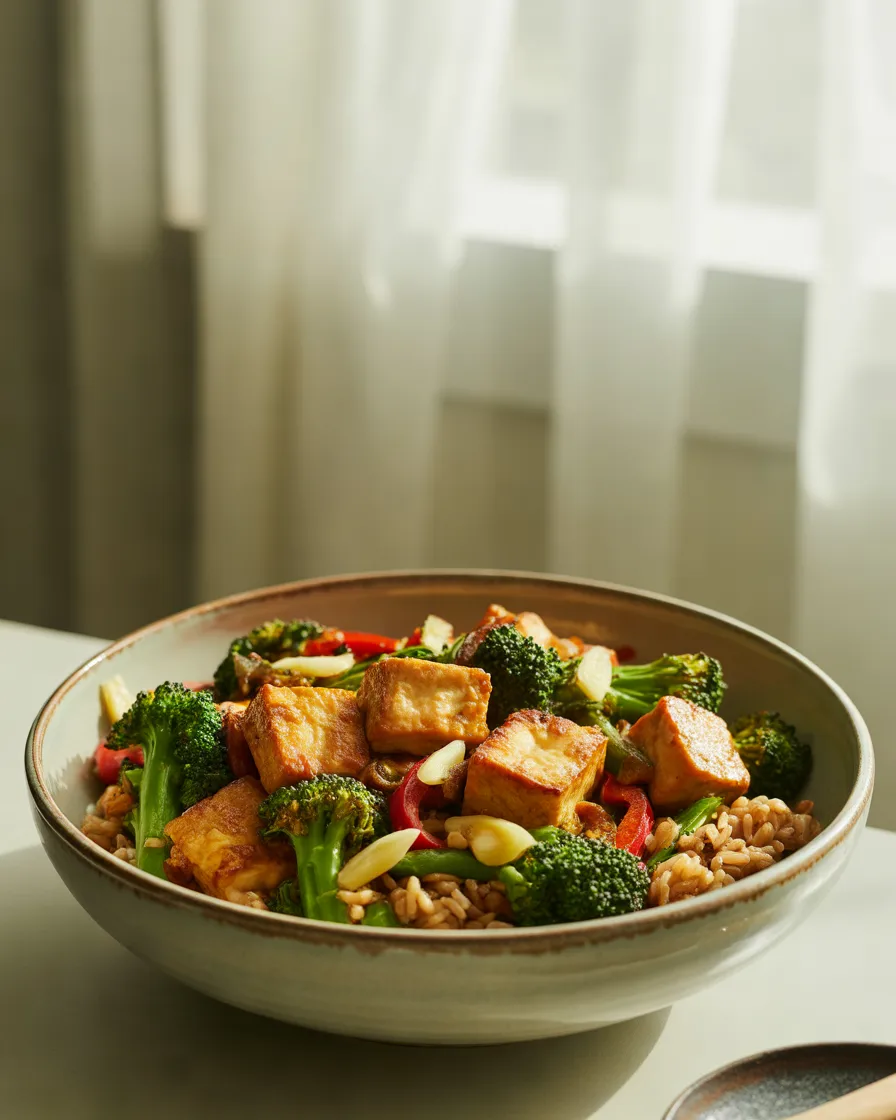
Cauliflower rice stir-fry is a fast, colorful dinner built around vegetables. Pulse cauliflower florets in a food processor until they look like rice grains, then stir-fry them with cubed tofu, snap peas, shredded carrots and spring onions in a hot wok with a little sesame oil and soy sauce. Serve with a lime wedge.
Using cauliflower in place of rice keeps the dish light while the tofu adds the protein that makes it a complete meal. This stir-fry suits weeknights when you want dinner in under twenty minutes. Press the tofu first to remove extra water so it browns properly. If you avoid soy, chickpeas can stand in for the tofu. Go easy on the soy sauce — a small splash gives plenty of flavor. A fried egg on top makes it a heartier dinner, and the same method works well with broccoli rice or shredded cabbage when cauliflower is not in season.
Quick Tip: Cook the cauliflower rice in a wide pan in a single layer so it fries instead of steaming.
9. Stuffed Bell Peppers with Turkey and Brown Rice
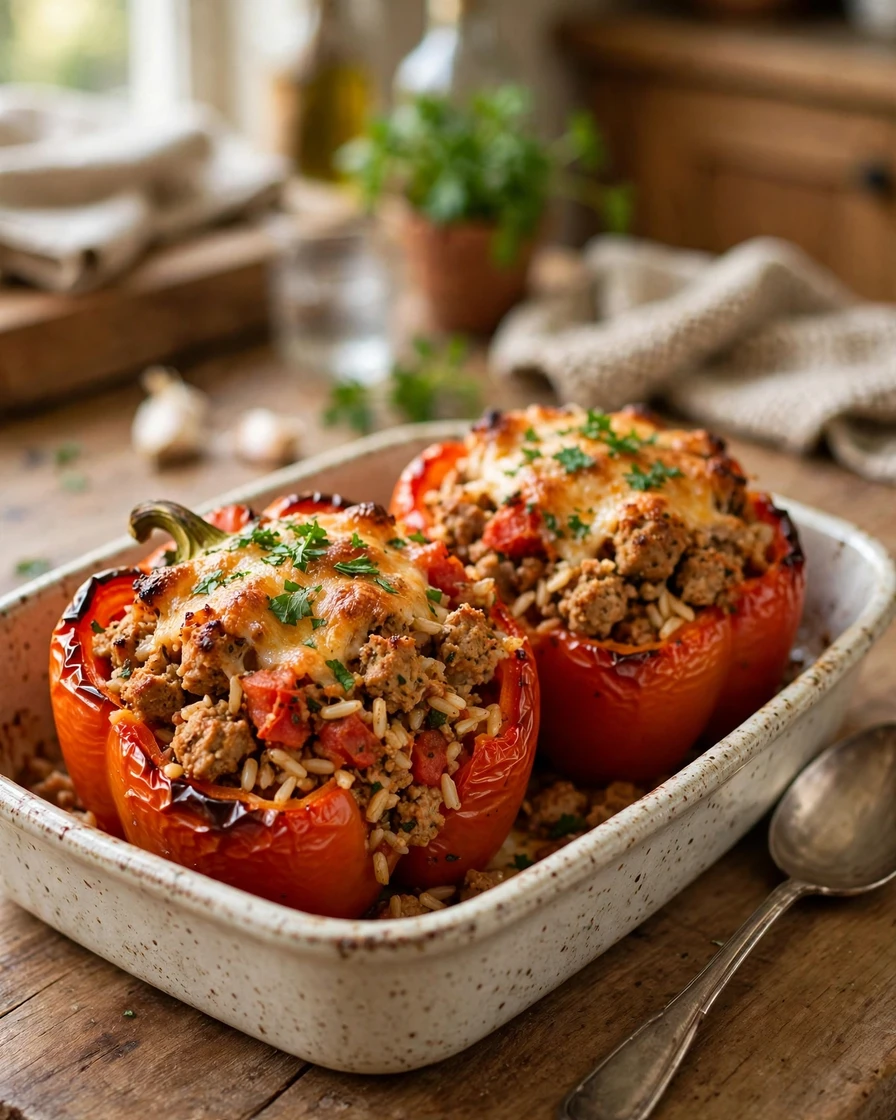
Stuffed bell peppers turn simple ingredients into a meal that looks impressive with little effort. Halve two bell peppers and remove the seeds, then fill them with a mix of cooked ground turkey, brown rice, diced tomatoes and herbs. Top with a little grated cheese and bake at 190°C (375°F) for about 25 minutes, until the peppers are soft and the tops are golden.
Each pepper is a ready-made portion, which can help with portion awareness without any weighing or counting. This dish suits family dinners and reheats well for lunch the next day. Use brown rice rather than white for extra fiber, and cook it ahead so assembly takes minutes. If you prefer a meat-free version, swap the turkey for lentils or black beans and keep everything else the same. A simple green salad on the side completes the plate, and any leftover filling works well spooned over rice the next day for lunch.
Quick Tip: Blanch the pepper halves for three minutes before filling — they bake through evenly and stay tender.
10. Chickpea and Cucumber Salad
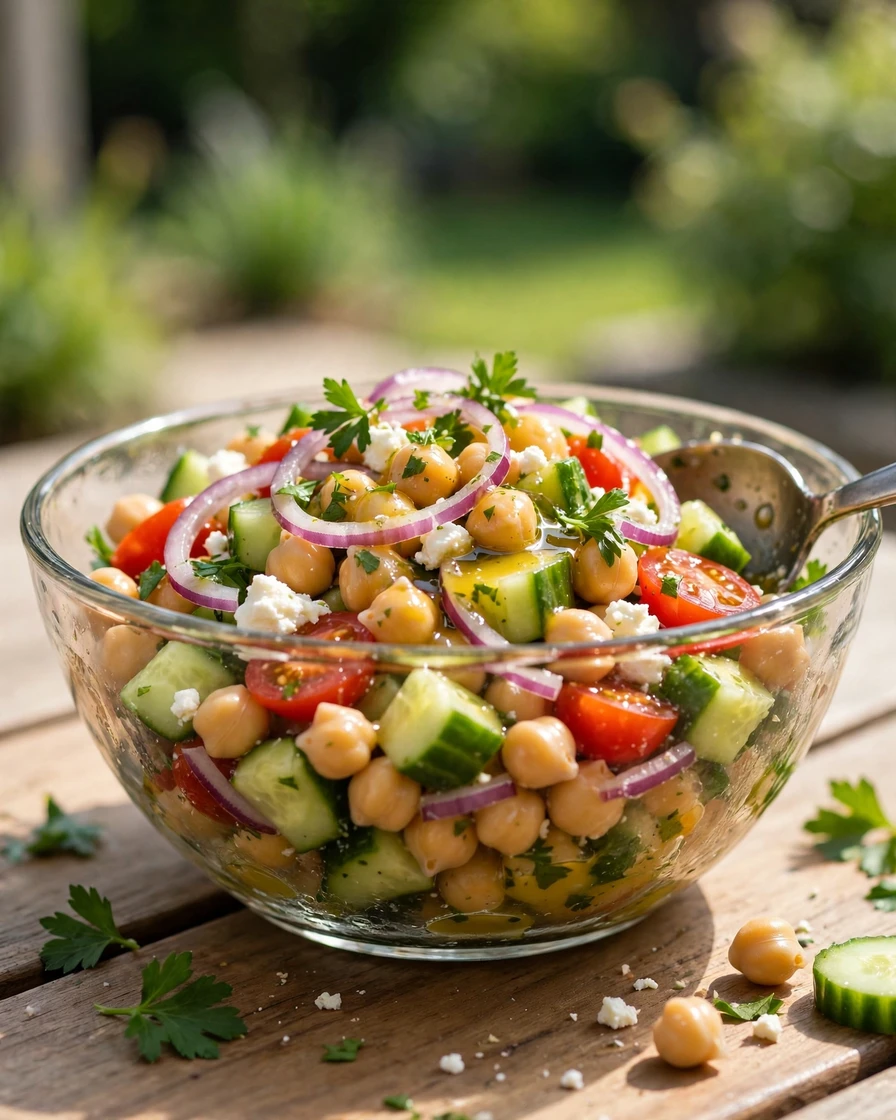
Chickpea and cucumber salad is a no-cook lunch that comes together in ten minutes. Toss a can of drained chickpeas with diced cucumber, halved cherry tomatoes, thinly sliced red onion and chopped parsley. Crumble over a little feta, then dress with lemon juice and a spoonful of olive oil.
Chickpeas bring fiber and plant protein, so this salad keeps you going longer than a leaf-only salad would. It suits packed lunches, picnics and warm days when cooking feels like too much. Rinse canned chickpeas well to cut the salt, and let the salad sit for ten minutes so the flavors blend. It also works as a side dish next to grilled fish or chicken. Leave out the feta if you want it dairy-free, or add a few olives for a salty note instead. A squeeze of extra lemon just before serving brightens the flavors, and the salad tastes even better after an hour in the fridge.
Quick Tip: Smash a few chickpeas with a fork before mixing — they thicken the dressing and help it cling.
11. Roasted Sweet Potato and Black Bean Bowl
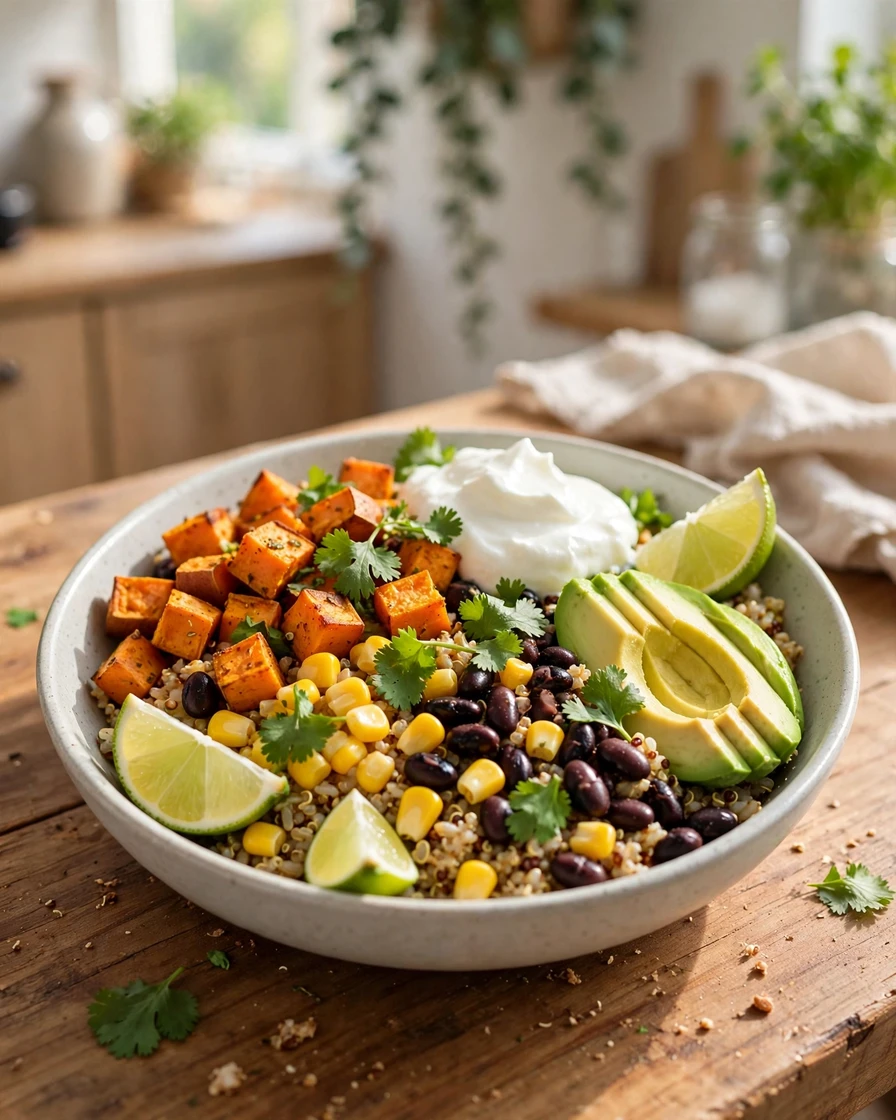
A sweet potato and black bean bowl is a warm, colorful meal that comes together on one tray. Toss sweet potato cubes with smoked paprika and a little olive oil, roast until golden, then serve over cooked quinoa with black beans, corn, sliced avocado and a dollop of Greek yogurt. Finish with lime wedges and fresh cilantro.
Sweet potatoes and beans both bring fiber, and the avocado adds a creamy texture that makes the bowl feel indulgent. If you enjoy this combination, you may like more sweet potato recipes built around the same filling ingredient. This bowl suits meat-free Mondays and anyone who wants a filling plant-based dinner. The bowl keeps well, so leftovers make an easy lunch the next day. Keep the avocado portion modest — half a fruit per bowl is plenty. A little hot sauce or smoked paprika on top adds warmth, and the bowl is just as good served cold the next day.
Quick Tip: Roast a double batch of sweet potatoes — the extras are great cold in salads the next day.
12. Tomato and White Bean Soup — A Light Healthy Recipe for Weight Loss
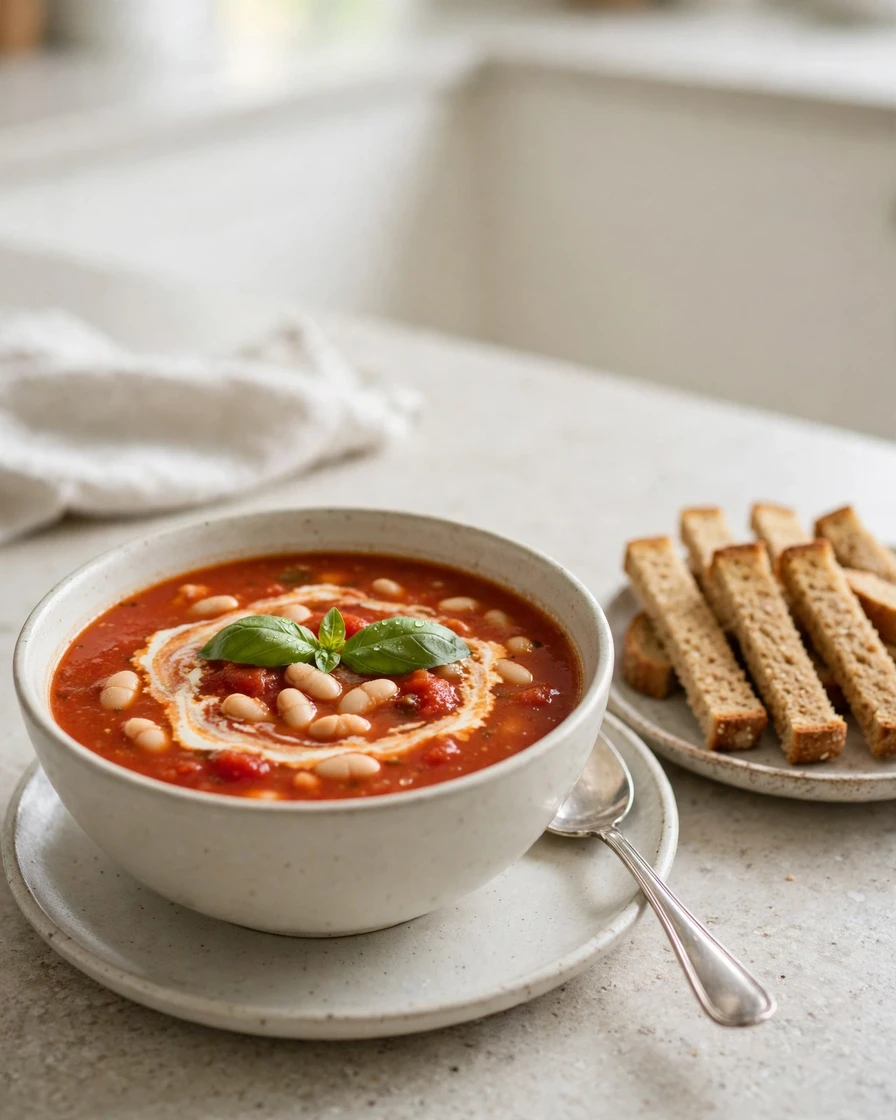
Tomato and white bean soup is a light, warming bowl that takes little more than a pot and a can opener. Simmer canned tomatoes with garlic, onion and a can of drained white beans in vegetable stock for about twenty minutes, then blend half the soup for a creamy texture. Swirl in a spoonful of yogurt and top with fresh basil.
White beans add protein and fiber to a soup that would otherwise be mostly tomato, which may help it keep you full for longer. This soup suits cold evenings and pairs well with a slice of wholemeal bread for dipping. Choose low-salt canned beans and tomatoes where you can, and taste before adding extra salt. If you find beans hard to digest, start with a small bowl and build up over time. A drizzle of good olive oil over each bowl adds richness, and a few toasted seeds on top give a welcome crunch.
Quick Tip: Freeze leftover soup in single portions — it reheats in minutes for a quick lunch.
13. Cottage Cheese and Cucumber Snack Plate
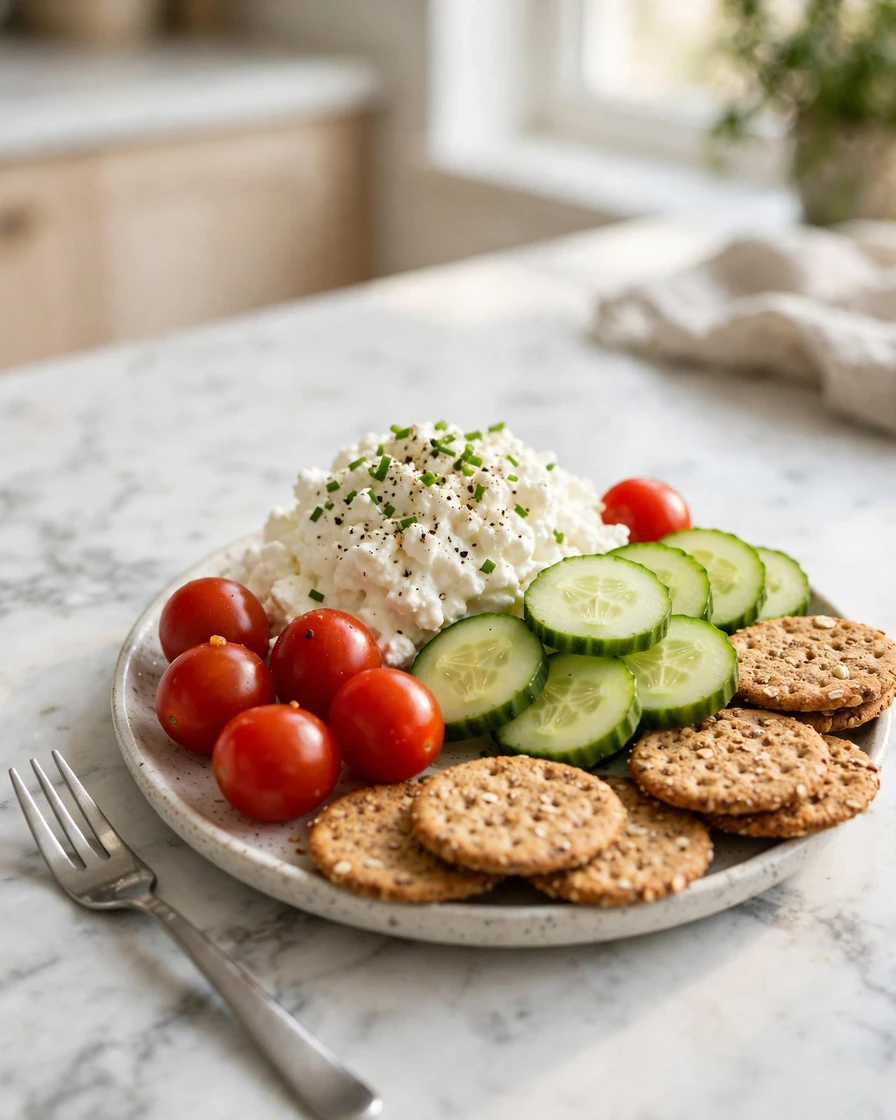
A cottage cheese snack plate is a quick answer to the mid-afternoon slump. Spoon a generous serving of low-fat cottage cheese onto a plate with cucumber slices, cherry tomatoes and a few wholegrain crackers. Season with black pepper and a sprinkle of chopped chives, and eat it slowly — a snack you sit down for is more satisfying than one eaten standing up.
Cottage cheese is high in protein for its size, which may help a small snack carry you through to dinner. This plate suits office days and anyone who wants a savory snack that is not a packet of crisps. Check the label for salt, as some brands are saltier than others. If dairy is off the menu, hummus with the same vegetables makes a similar plate. Keep the crackers to a small handful so the vegetables do most of the filling. It also packs well for work if you keep the crackers separate.
Quick Tip: Chill the plate for ten minutes before eating — cold cucumber and cottage cheese taste fresher together.
14. Tuna Lettuce Wraps
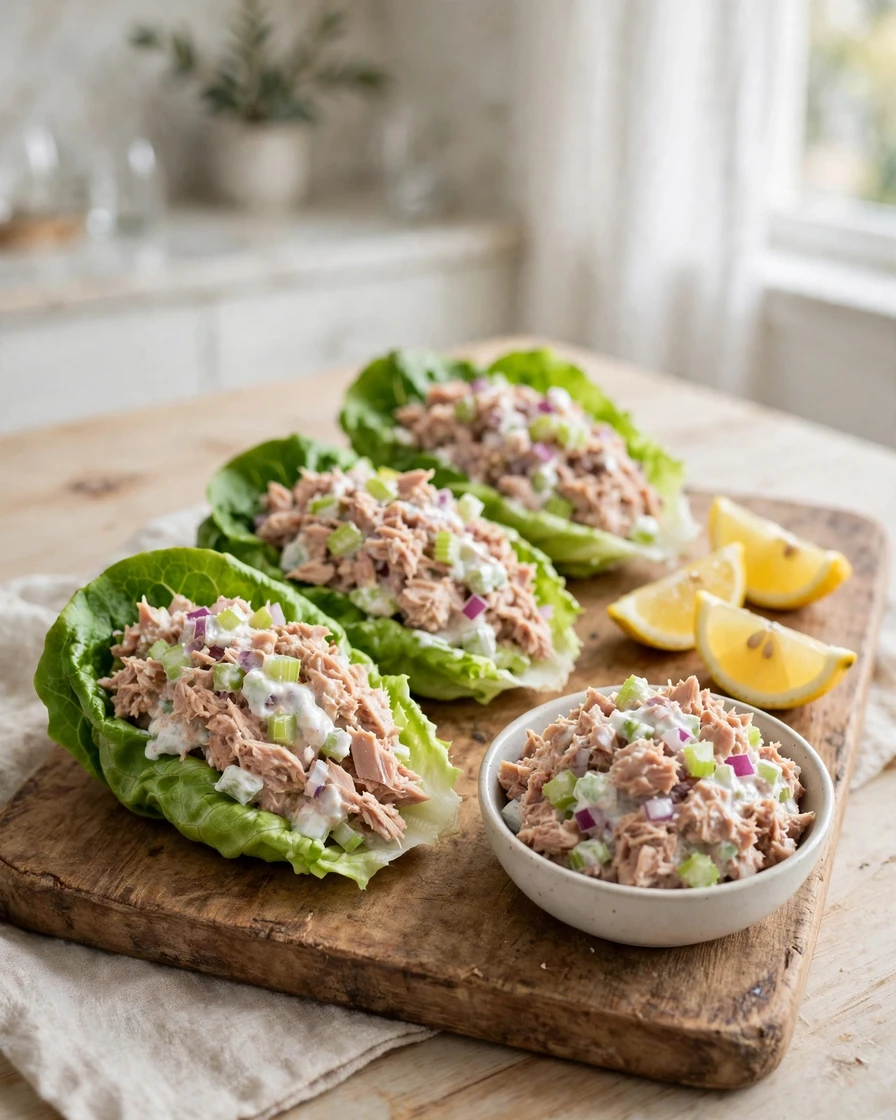
Tuna lettuce wraps are a light lunch that swaps bread for crisp leaves. Mix a can of tuna in water with diced celery, red onion and a spoonful of plain yogurt instead of mayonnaise, then spoon the mix into large lettuce leaves. Serve with lemon wedges and a little extra filling on the side.
Lettuce leaves keep the wrap light while the tuna brings protein, so three wraps can make a satisfying meal. This one suits warm days and anyone who wants a sandwich without the bread. Choose tuna in water rather than oil, and drain it well. Because tuna contains mercury, most health authorities suggest eating it no more than a couple of times a week — if you are pregnant, check with a healthcare professional first. A few cherry tomatoes on the side add color and sweetness, and the same filling works well in a wholemeal pitta when you want something more filling.
Quick Tip: Use butter lettuce or romaine hearts — their leaves are sturdy enough to hold the filling without tearing.
15. Baked Apple with Cinnamon and Walnuts
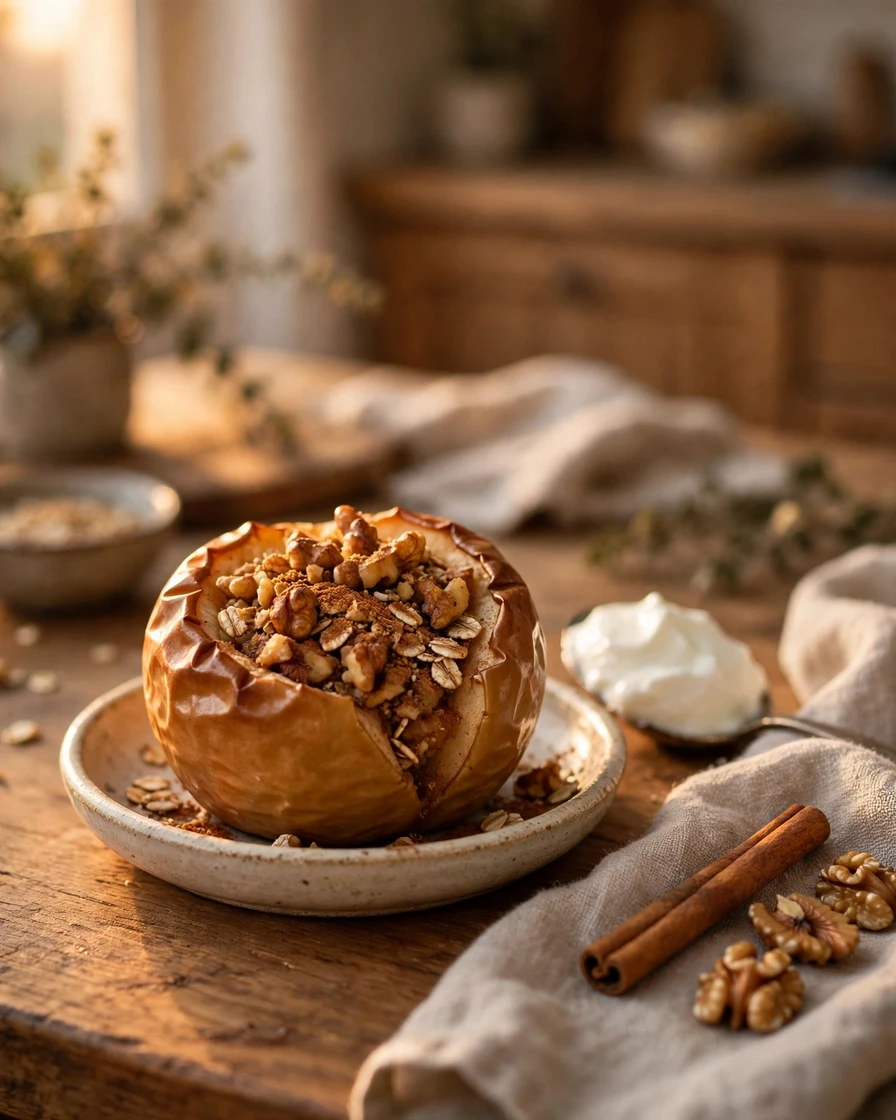
A baked apple is a warm, sweet finish to a meal that needs no added sugar. Core a firm apple, fill the center with chopped walnuts, a spoonful of oats and a good pinch of cinnamon, then bake at 180°C (350°F) for about 25 minutes, until the apple is soft and the filling is toasted. Serve with a spoonful of plain Greek yogurt.
The apple softens into its own sauce while the walnuts and oats give the filling a satisfying crunch. This dessert suits anyone who wants something sweet in the evening without reaching for biscuits or cake. Choose a firm variety like Braeburn or Granny Smith so the apple holds its shape. If you have a nut allergy, use extra oats and a few pumpkin seeds instead of walnuts. Leftover baked apples reheat well the next morning, and the same walnut-oat filling works nicely in pears when apples are out of season.
Quick Tip: Score a shallow ring around the apple skin before baking — it stops the skin from splitting.
Expert Tips
- Build the plate around vegetables: Fill half the plate with vegetables or salad first, then add protein and grains. The meal looks generous, and the vegetables add bulk and fiber.
- Keep protein at every meal: Protein may help you feel full for longer, so include a source at every meal — yogurt, eggs, beans, fish, chicken or tofu all count.
- Watch portions of energy-dense foods: Nuts, cheese, oils and avocado are nutritious, but small amounts go a long way. Measure them for a week until portions come naturally.
- Cook once, eat twice: Soups, grain bowls and stuffed peppers reheat well, so make a double batch and keep half for tomorrow. A ready meal makes it easier to skip takeaway on busy nights.
- Plan snacks ahead of time: Decide on your snacks the way you decide on meals, and keep them ready in the fridge. A planned snack stops hunger turning into a rushed trip to the biscuit tin.
Final Thoughts
Healthy recipes for weight loss work best when they become part of a steady routine rather than a short burst. The fifteen meals here share a simple pattern: plenty of vegetables, a good source of protein, fiber-rich grains or beans, and flavors worth looking forward to. Pick two or three to try this week, and notice which ones you want to make again.
Everyone’s needs are different, so if you have a health condition, take medication, or want a plan shaped around you, speak with a healthcare professional or dietitian before changing how you eat. Small, steady changes last longer than dramatic ones — and a meal you enjoy is a meal you will repeat.
Can healthy recipes alone help me lose weight?
Healthy recipes can support weight management, but no single meal causes weight loss on its own. What matters is the overall pattern: balanced meals, sensible portions, regular movement and enough sleep, kept up. If you have a health condition or a specific target, a dietitian can help shape a plan that fits you.
How many calories should each meal have?
There is no single number that fits everyone, because calorie needs depend on age, size, activity and health. A common starting point is a plate built around vegetables, a palm-sized portion of protein and a modest serving of whole grains. For a personal target, ask a healthcare professional.
Are these recipes suitable for vegetarians?
Several are, including the lentil soup, chickpea salad, cauliflower rice stir-fry and overnight oats. The meat and fish dishes can be adapted too: swap chicken or turkey for chickpeas, tofu or lentils, keeping the vegetables and grains the same. Check yogurt and cheese labels if you follow a strict vegetarian diet.
Can I meal prep these recipes for the week?
Yes, most of them hold up well. Soups, lentils, stuffed peppers and grain bowls keep in the fridge for three to four days in sealed containers. Keep salads and dressings apart so nothing goes soggy, and store snack plates and wraps for a day at most.
What should I eat when I feel hungry between meals?
Reach for something with protein or fiber rather than a sugary snack, such as the cottage cheese plate or a small handful of nuts with fruit. Hunger between meals is normal, and a planned snack can stop you arriving at dinner overly hungry. A glass of water first can also help tell thirst from hunger.