You do not need a gym membership, fancy equipment, or an hour of free time to move your body. All you need is a small patch of floor, a sturdy chair, and twenty minutes. A quick workout at home can fit into a lunch break, a gap between meetings, or the quiet minutes before the rest of the house wakes up.
A quick workout at home simply means a short, focused session of bodyweight exercises done in your own space. The thirteen moves below work your legs, arms, core, and balance, and most take only two to three minutes each. Do them as a full circuit, or pick four or five when time is really tight.
Before you start, warm up for two or three minutes with gentle marching or arm circles, and keep water nearby. Move at your own pace, use the easier options whenever you need them, and stop if anything hurts. If you have a health condition, an injury, or you are returning to exercise after a long break, check with a healthcare professional before starting a new exercise routine.
1. Bodyweight Squats
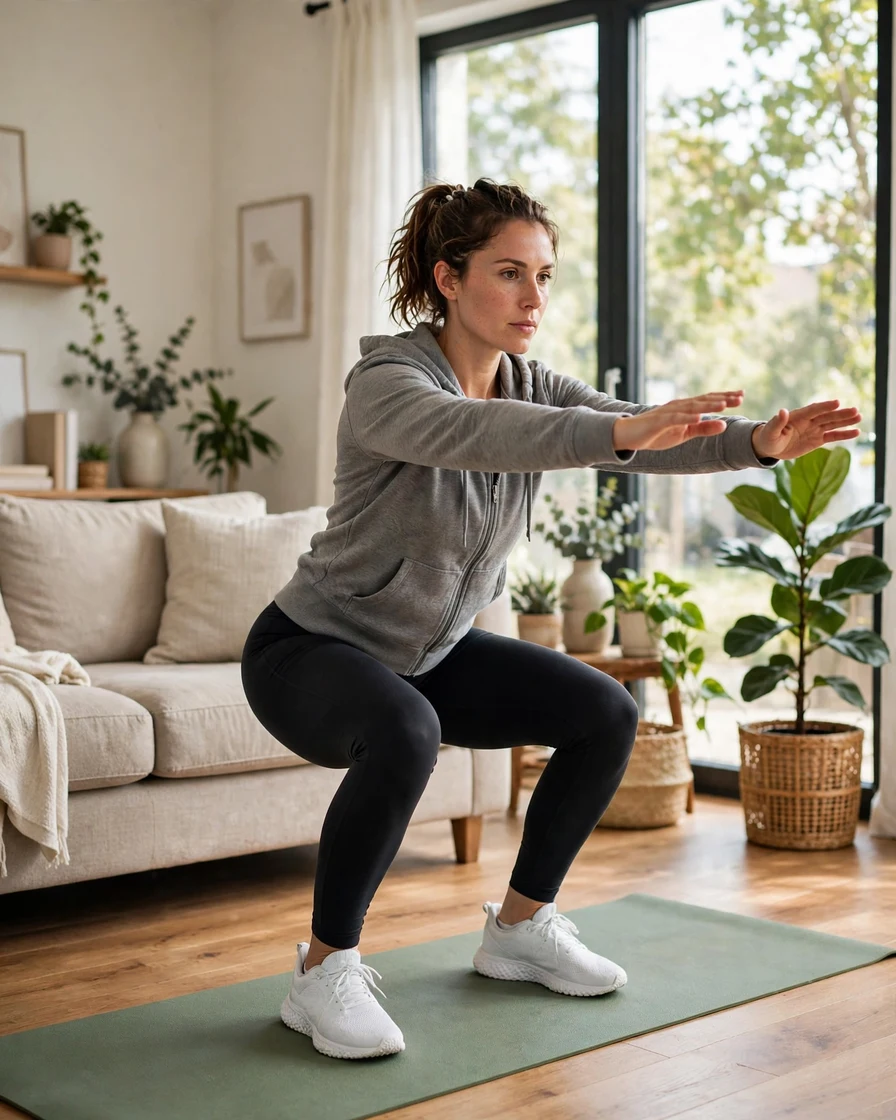
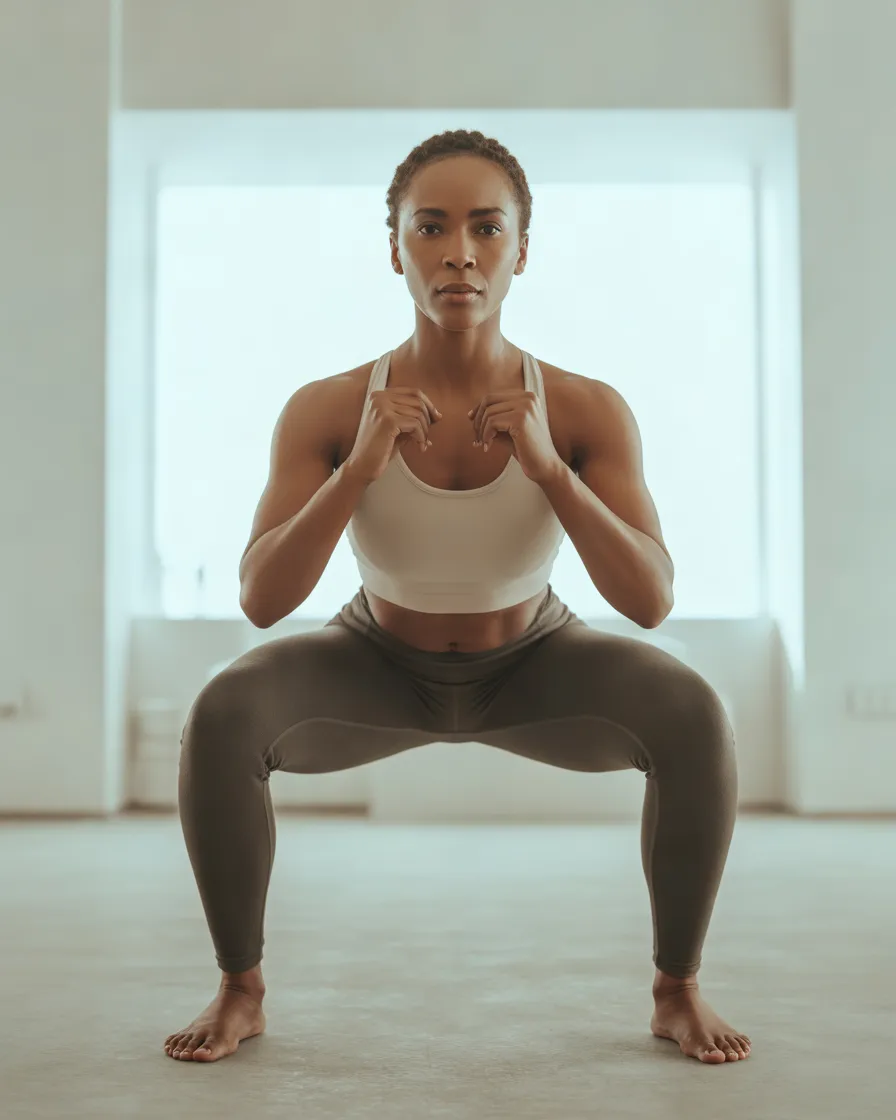
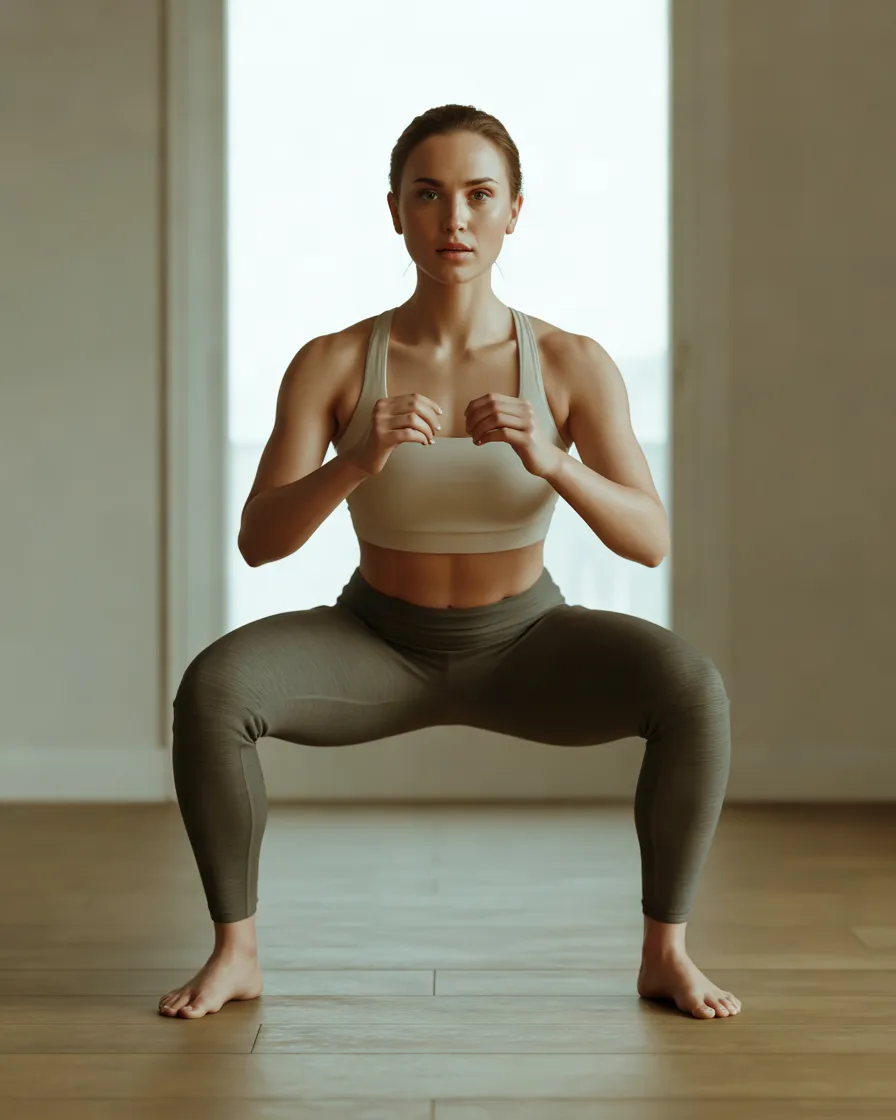
Squats are one of the most useful moves you can do at home, because they train the same muscles you use every time you sit down and stand up. Bodyweight squats work your thighs, glutes, and core, and they may help support everyday strength and balance. The move also gets your heart rate up gently, making it a good opener for a short session.
How to do it: Stand with your feet about shoulder-width apart and your toes pointing slightly out. Push your hips back and bend your knees, lowering your body as if you are sitting into a chair. Keep your chest up and your knees tracking over your toes. Go as low as feels comfortable — thigh level is fine, but a smaller range works too. Push through your heels to stand back up. Aim for 10 to 12 slow, controlled repetitions.
Who it may suit: Most adults looking for a simple lower-body exercise. Good to know: Keep your knees from caving inward, and do not force depth if your knees or hips feel pinched. A chair behind you can act as a target — lightly tap the seat and stand up again. Stop if you feel sharp pain.
2. Incline Push-Ups
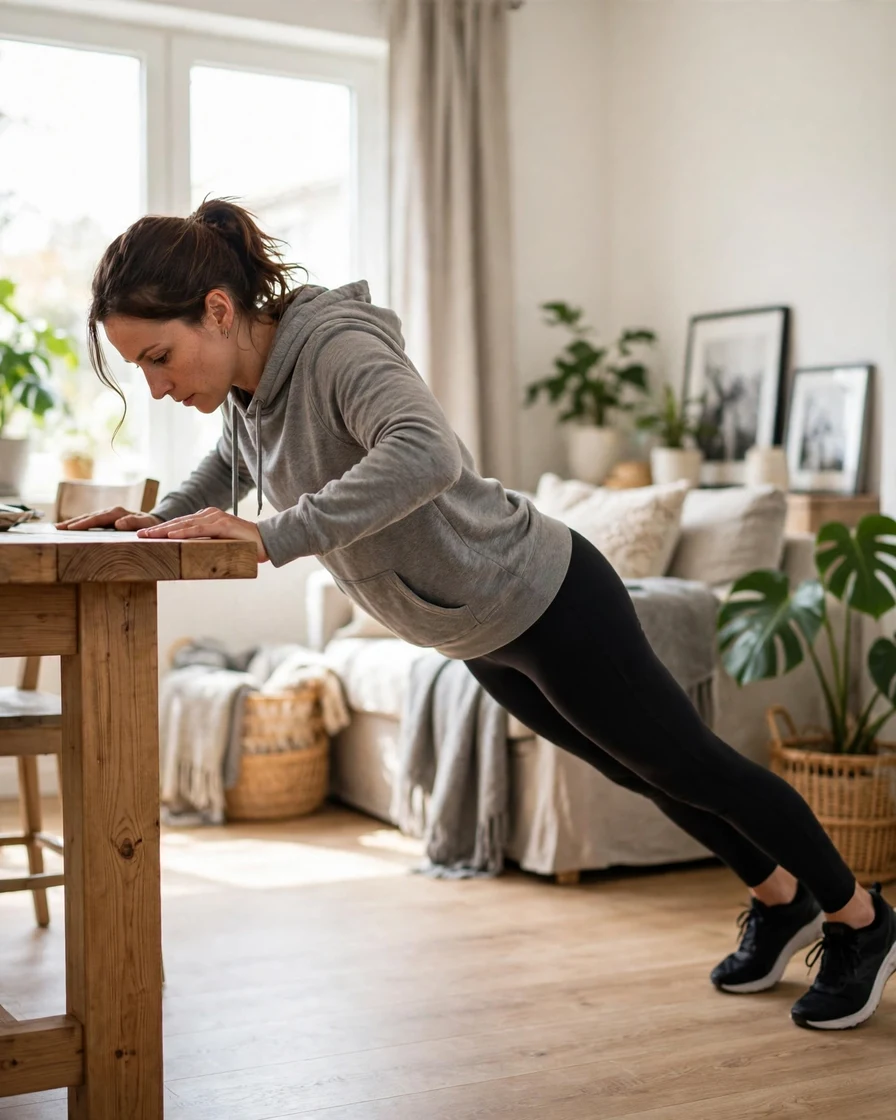
Push-ups are a classic upper-body exercise, but doing them on the floor can be too hard for many people. Incline push-ups solve that by raising your hands on a table, countertop, or sturdy chair, which reduces the load while keeping the same movement. They work your chest, shoulders, triceps, and core, and they can help build the strength you need for full floor push-ups over time.
How to do it: Place your hands shoulder-width apart on the edge of a sturdy table or countertop. Step your feet back so your body forms a straight line from head to heels. Tighten your stomach, then bend your elbows to lower your chest toward the surface. Keep your elbows at roughly a 45-degree angle to your body. Push back up. Aim for 8 to 12 repetitions.
Who it may suit: Beginners and anyone building upper-body strength. Good to know: Choose a surface that will not slide or tip — test it first. The higher the surface, the easier the move. If your lower back sags, shorten your stance or raise the surface. Stop if your shoulders or wrists hurt.
3. Reverse Lunges
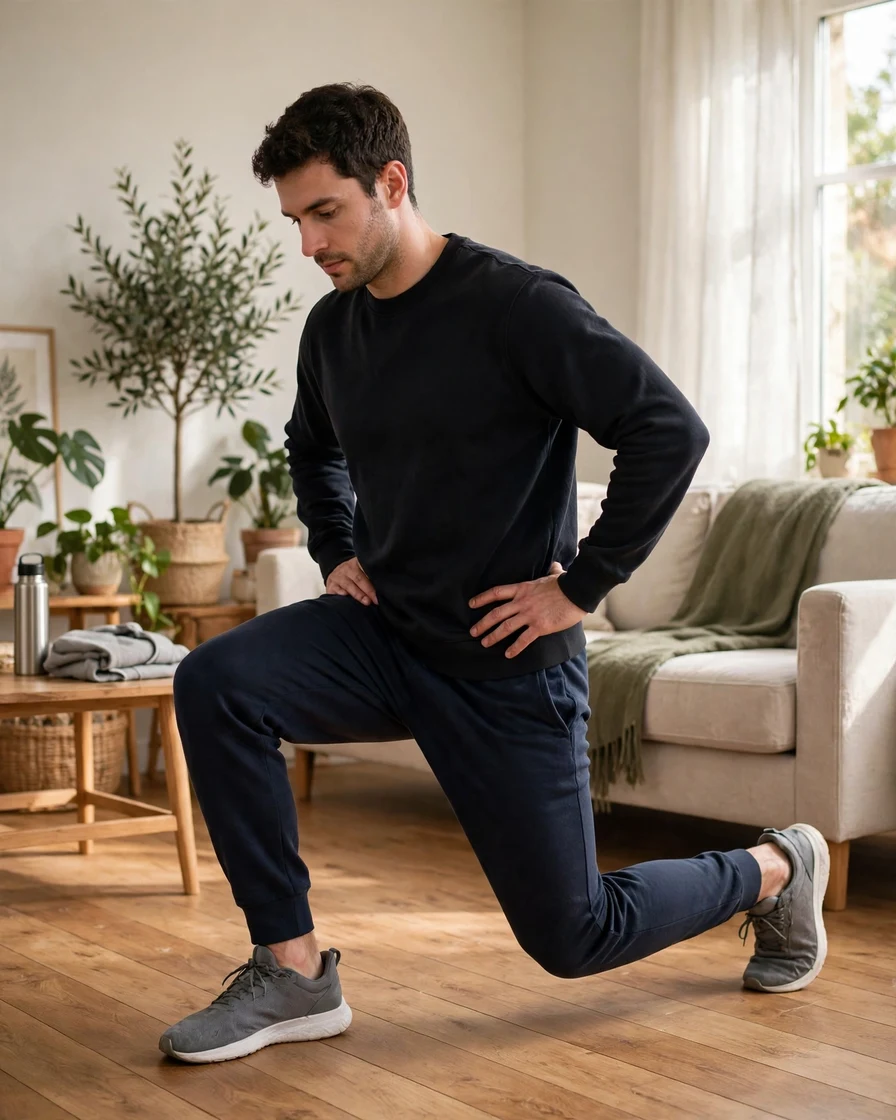
Reverse lunges work one leg at a time, which can help balance and coordination as well as leg strength. Stepping backward instead of forward tends to feel steadier for many people, and it can be kinder on the knees. The move targets your thighs, glutes, and calves, and it can support the stability you need for walking and climbing stairs.
How to do it: Stand tall with your feet hip-width apart and your hands on your hips or at your sides. Step one foot back about two feet and lower your back knee toward the floor, keeping your front knee over your ankle. Your front thigh should be roughly parallel to the floor. Push through your front heel to return to standing. Do 8 to 10 repetitions per leg, alternating or completing one side first.
Who it may suit: People who want a balance challenge without jumping. Good to know: Hold a chair or wall for support if your balance feels unsteady. Take smaller steps if your knees feel uncomfortable. Keep your torso upright and avoid letting your front knee drift far past your toes.
4. Forearm Plank
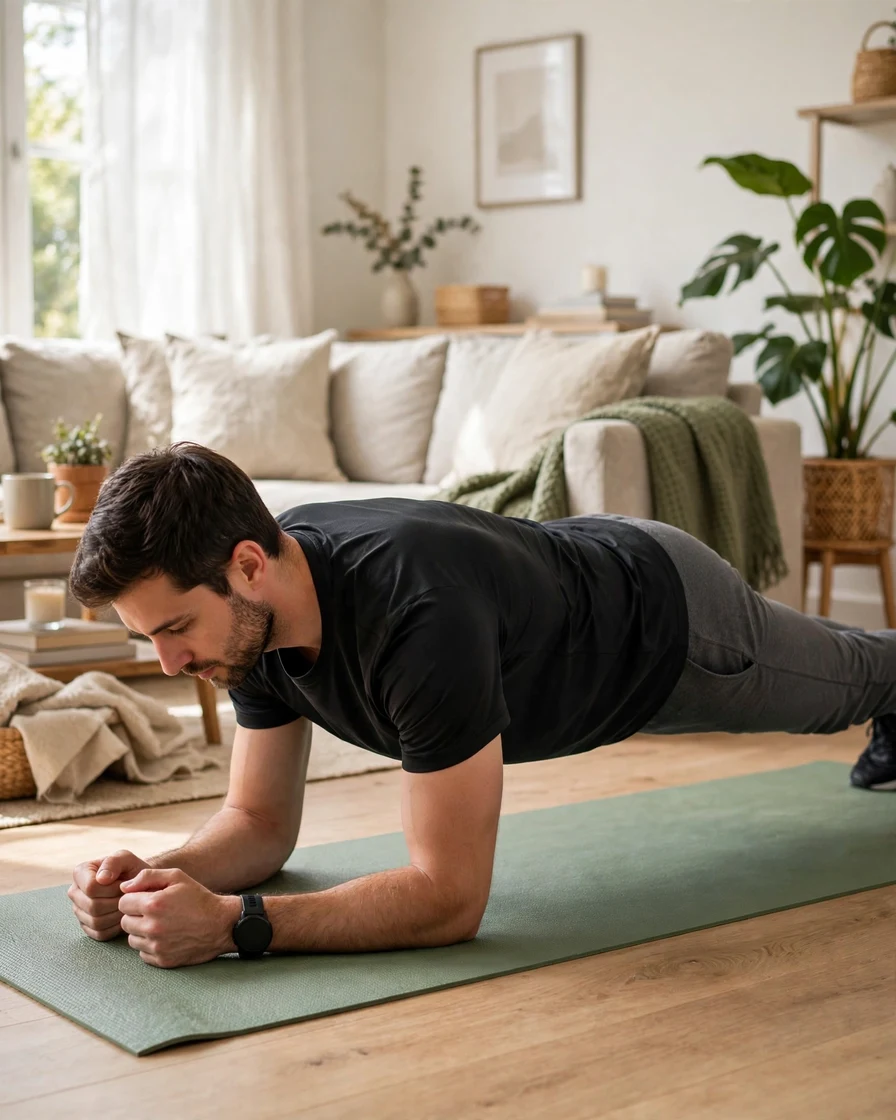
The forearm plank is a quiet but demanding core exercise. It asks your stomach, back, shoulders, and glutes to work together to hold your body in a straight line, which can support posture and everyday stability. Because there is no jumping or twisting, it suits most home workouts, and you can adjust the hold time to match your level.
How to do it: Lie face down on a mat, then prop yourself up on your forearms with your elbows under your shoulders. Tuck your toes under and lift your hips so your body forms a straight line from head to heels. Keep your neck neutral by looking at the floor. Breathe steadily and hold for 15 to 30 seconds. Lower your knees to rest, then repeat 2 or 3 times.
Who it may suit: Anyone wanting to build core strength without equipment. Good to know: Do not let your hips sag or rise too high — a straight line matters more than a long hold. If your lower back aches, drop to your knees. A wall plank, standing with hands on a wall, is a gentler starting point.
5. Glute Bridge
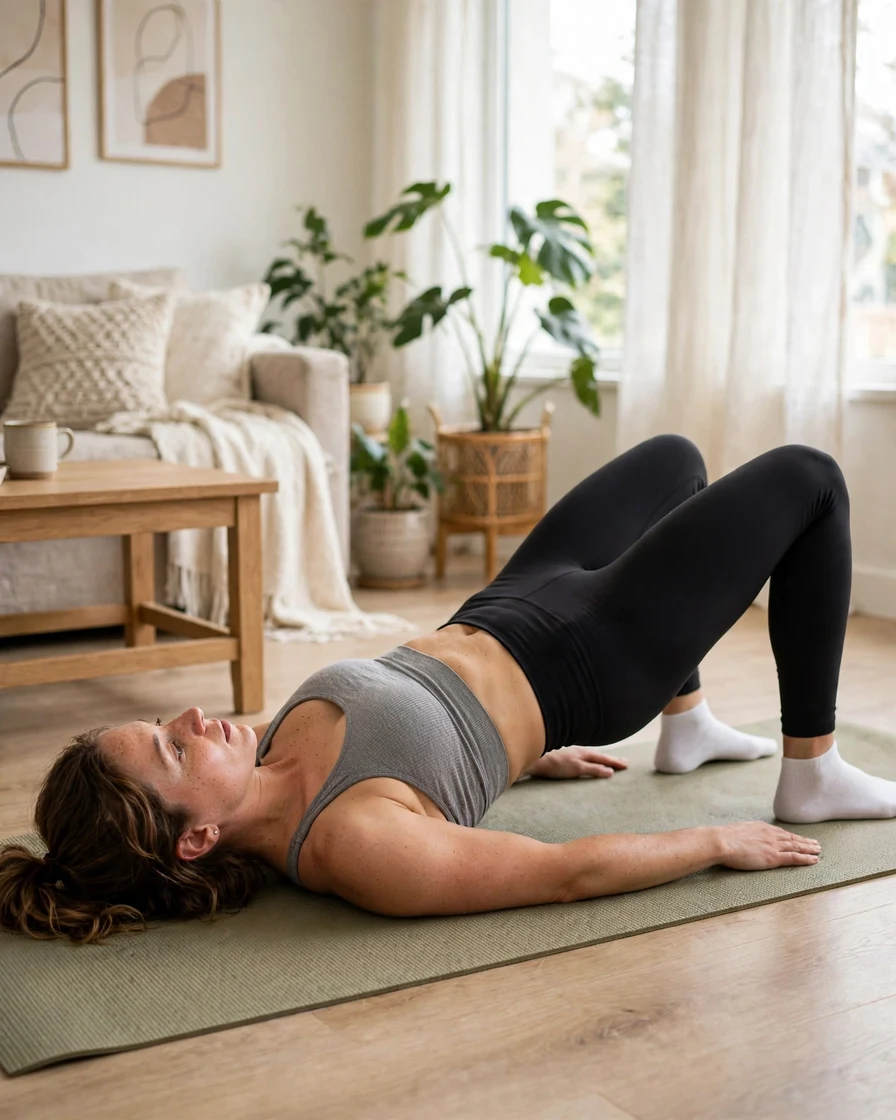
The glute bridge is a gentle, lying-down exercise that wakes up the muscles at the back of your hips. Strong glutes can support your lower back and make walking, climbing, and standing feel easier. Because your back stays on the floor, this is one of the more comfortable moves on the list, and it works well as a warm-up or a calm finisher.
How to do it: Lie on your back with your knees bent and your feet flat on the floor, hip-width apart and close to your hips. Arms rest by your sides, palms down. Press through your heels and squeeze your glutes to lift your hips until your body forms a straight line from shoulders to knees. Pause for a second at the top, then lower slowly. Aim for 12 to 15 repetitions.
Who it may suit: People with desk jobs, beginners, and anyone easing back into exercise. Good to know: Keep your ribs down and avoid arching your lower back at the top. If you feel it in your lower back instead of your glutes, bring your feet a little closer to your hips. Stop if you feel pain in your back or neck.
6. Wall Sit
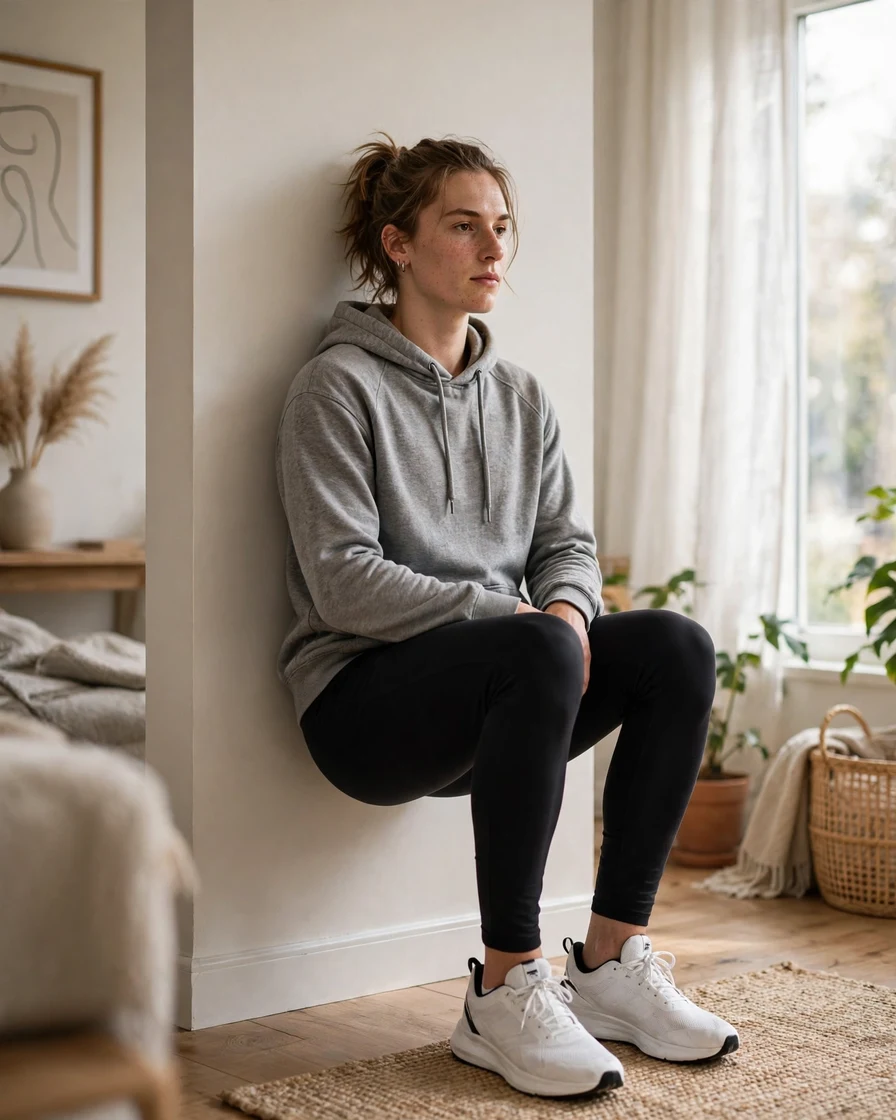
A wall sit looks easy until you try it. Holding a seated position against a wall builds endurance in your thighs and glutes without any movement at all, which makes it a good option when joint-friendly, low-impact exercise is what you need. It also trains you to keep good posture under effort, and it takes only a clear stretch of wall.
How to do it: Stand with your back flat against a wall and your feet about two feet away from it, hip-width apart. Slide down until your knees are bent at roughly 90 degrees, like sitting in an invisible chair. Keep your back pressed to the wall and your knees over your ankles. Hold for 15 to 30 seconds, breathing steadily. Slide back up, rest, and repeat 2 or 3 times.
Who it may suit: Anyone wanting a low-impact leg strengthener. Good to know: Do not slide so low that your knees hurt — a higher position is still useful. Keep your feet flat and avoid letting your knees cave inward. If you feel dizzy, stand up slowly and rest before trying again.
7. Mountain Climbers (Slow and Controlled)
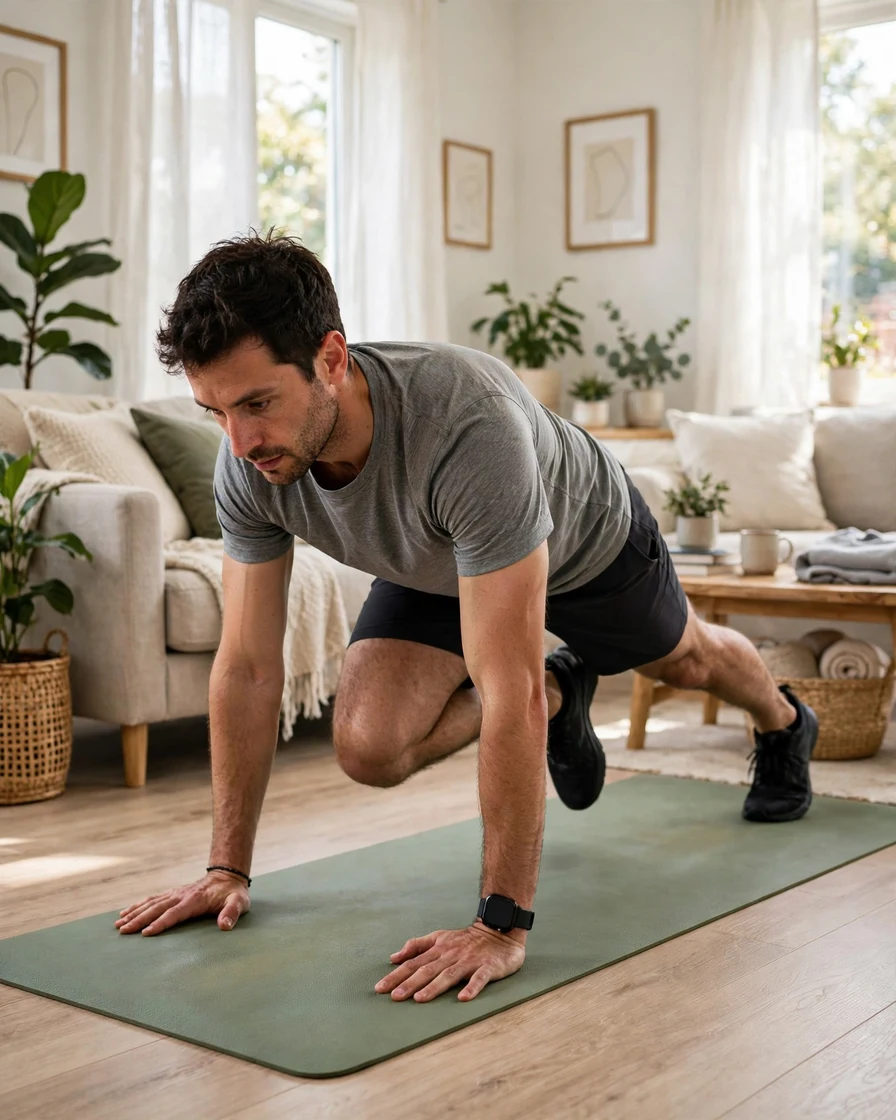
Mountain climbers combine core work with a gentle cardio lift, and doing them slowly keeps the focus on control rather than speed. Each knee drive works your stomach, hips, and shoulders, and the steady rhythm can raise your heart rate without any jumping. They are a useful middle-of-workout move for energy without high impact.
How to do it: Start in a high plank position with your hands under your shoulders and your body in a straight line. Slowly bring one knee toward your chest, then return it and bring the other knee in. Keep your hips level and your core tight, and move at a steady, controlled pace. Continue for 20 to 30 seconds, rest, and repeat 2 or 3 times.
Who it may suit: People who want a core and cardio mix in one move. Good to know: Keep the pace slow — speed is not the goal here. If your wrists ache, try the move with your hands on a sturdy table instead of the floor. Stop if your lower back sags or your shoulders hurt.
8. Dead Bug
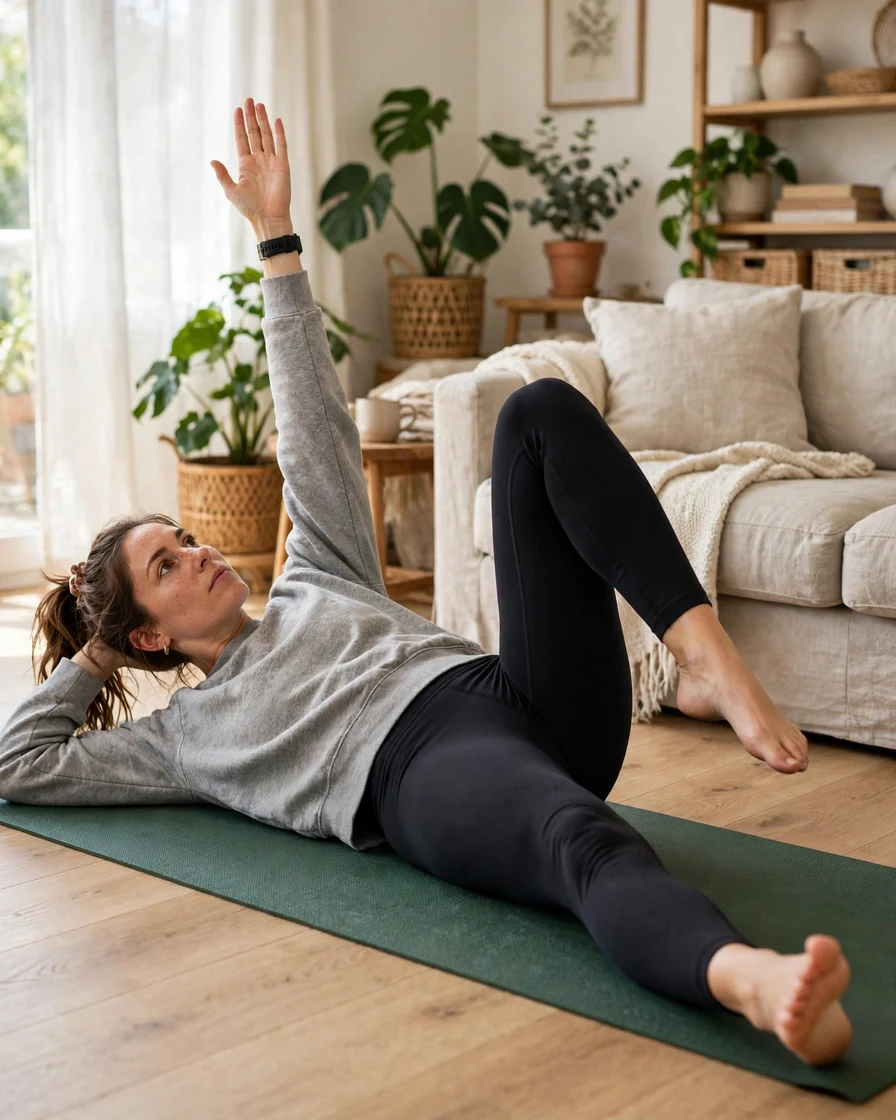
The dead bug has an odd name but a serious purpose: it teaches your core to stay stable while your arms and legs move, which is exactly what your body does when you walk, reach, or carry things. It is low-impact, floor-based, and easy to scale, so it works well for beginners and for anyone rebuilding core control after a break from exercise.
How to do it: Lie on your back with your arms pointing up toward the ceiling and your knees bent at 90 degrees, shins parallel to the floor. Press your lower back gently into the mat. Slowly extend one arm overhead and the opposite leg out, hovering just above the floor. Return to the start and switch sides. Do 6 to 8 repetitions per side, moving slowly.
Who it may suit: Beginners and anyone working on core stability. Good to know: Only extend as far as you can without your lower back arching off the mat — a smaller range still counts. Move slowly and breathe out as you extend. If you feel back pain, shorten the reach or rest.
9. Step-Ups on a Sturdy Chair
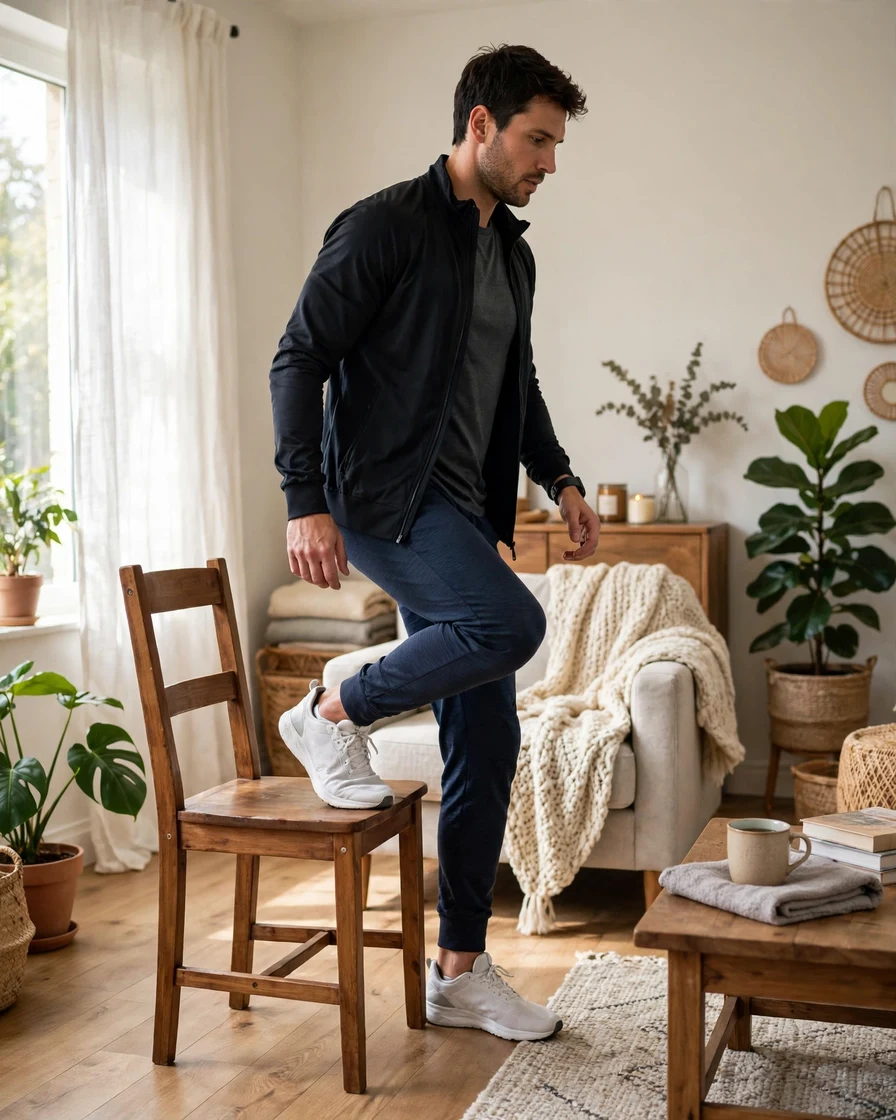
Step-ups mimic one of the most everyday movements there is: climbing stairs. They build single-leg strength in your thighs and glutes, challenge your balance, and can gently raise your heart rate. All you need is a stable, low chair or step.
How to do it: Stand facing a sturdy, non-slip chair or low step. Place one foot flat on the seat, press through that heel, and step up until you are standing tall on the chair. Step back down with control, leading with the same foot. Do 8 to 10 repetitions per leg. Keep your chest up and your knee tracking over your toes.
Who it may suit: People who want stair-like strength without leaving home. Good to know: Test the chair first — it must not wobble, slide, or tip. Use a wall or countertop for balance if you need it, and choose a lower step if your knees feel uncomfortable. Never use a chair with wheels.
10. High Knees (Low-Impact March Option)
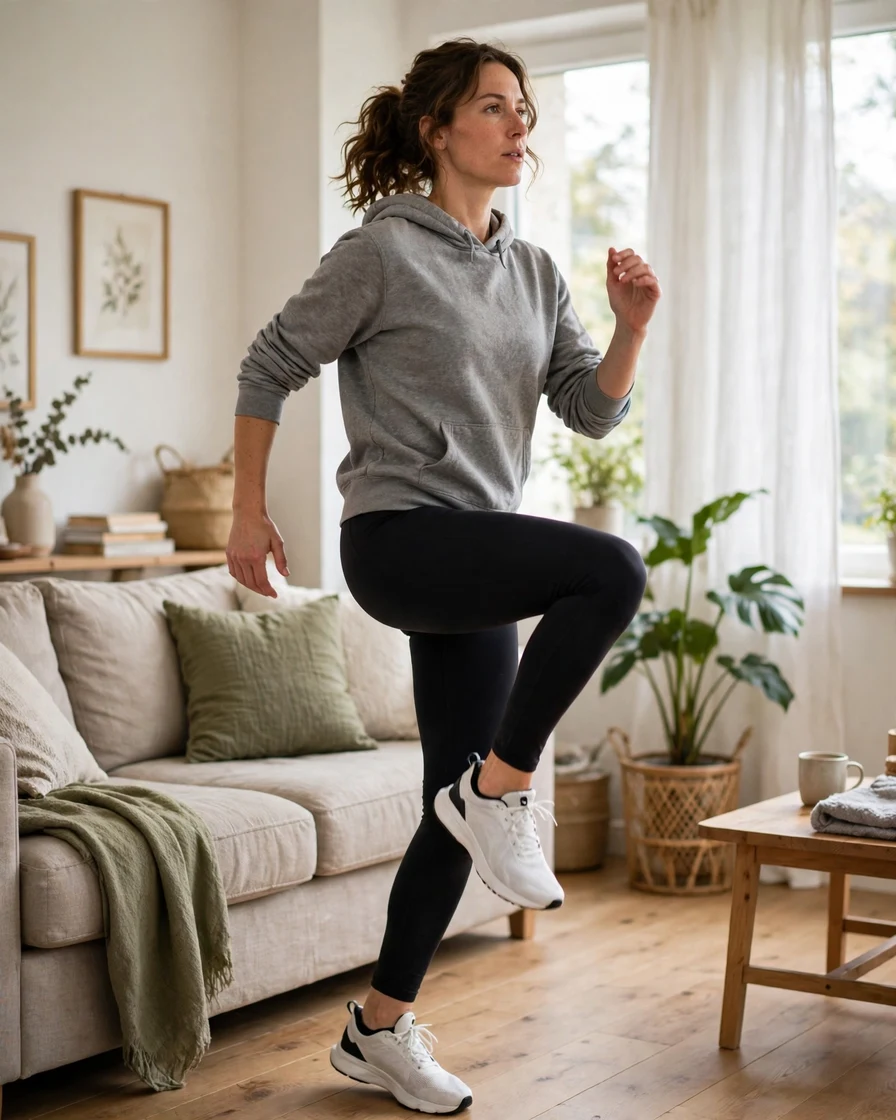
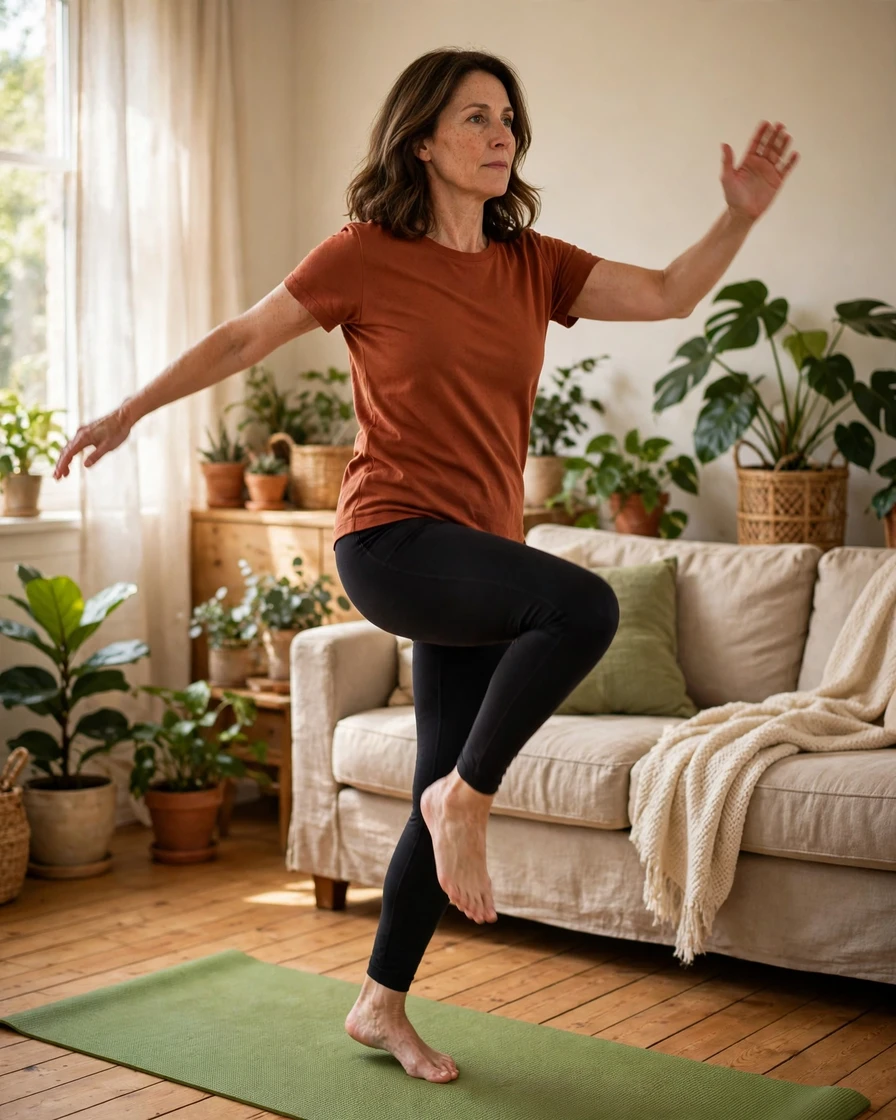
High knees are a simple way to get your heart pumping without leaving your living room. Lifting your knees in turn works your hip flexors, thighs, and core, and the rhythm can lift your energy in the middle of a workout. A low-impact marching version gives you the same pattern at a gentler pace, so almost anyone can join in.
How to do it: Stand tall with your feet hip-width apart. Lift one knee toward hip height, then lower it and lift the other, alternating in a steady rhythm. Swing your arms naturally, opposite arm to opposite knee. Continue for 20 to 30 seconds. For the low-impact option, march in place instead, lifting your knees only as high as feels comfortable and keeping one foot on the floor at all times.
Who it may suit: People who want a short burst of cardio at home. Good to know: Stay light on your feet and land softly. If your knees or ankles feel uncomfortable, switch to the marching option and keep the height low. Stop and rest if you feel breathless or dizzy.
11. Bird Dog
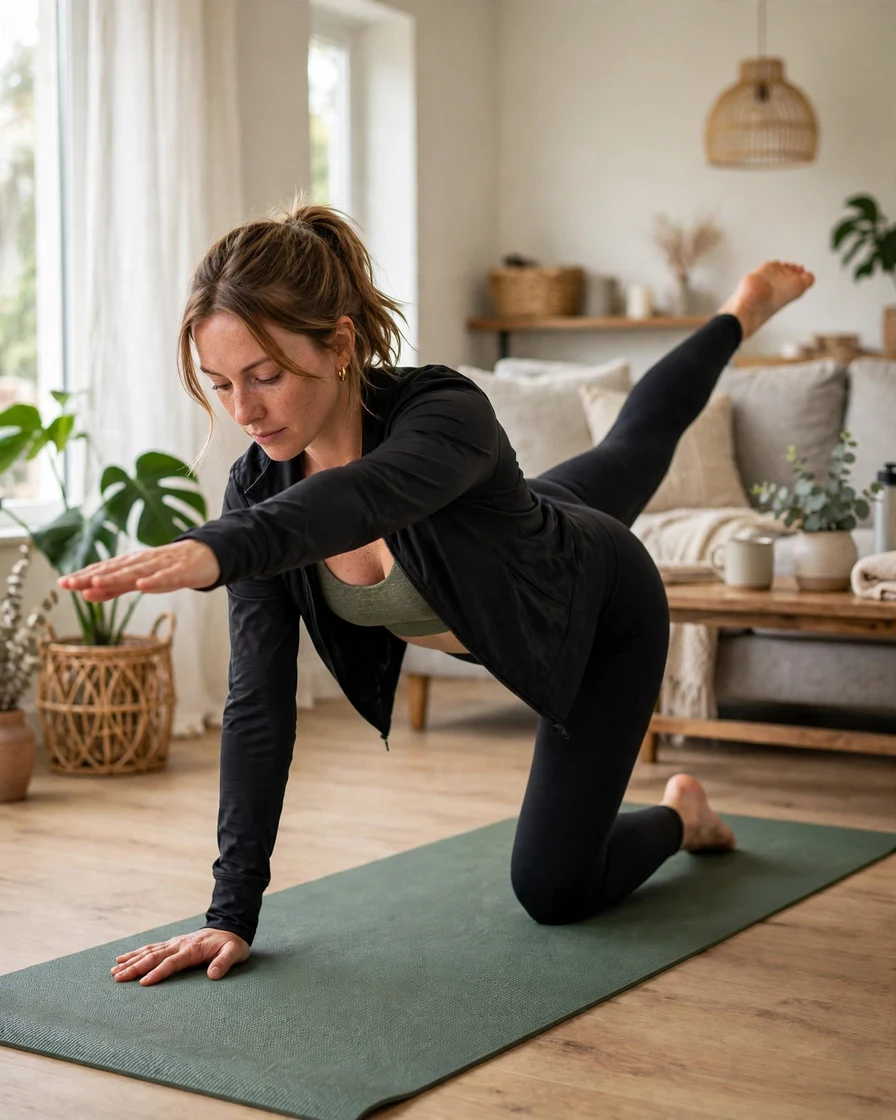
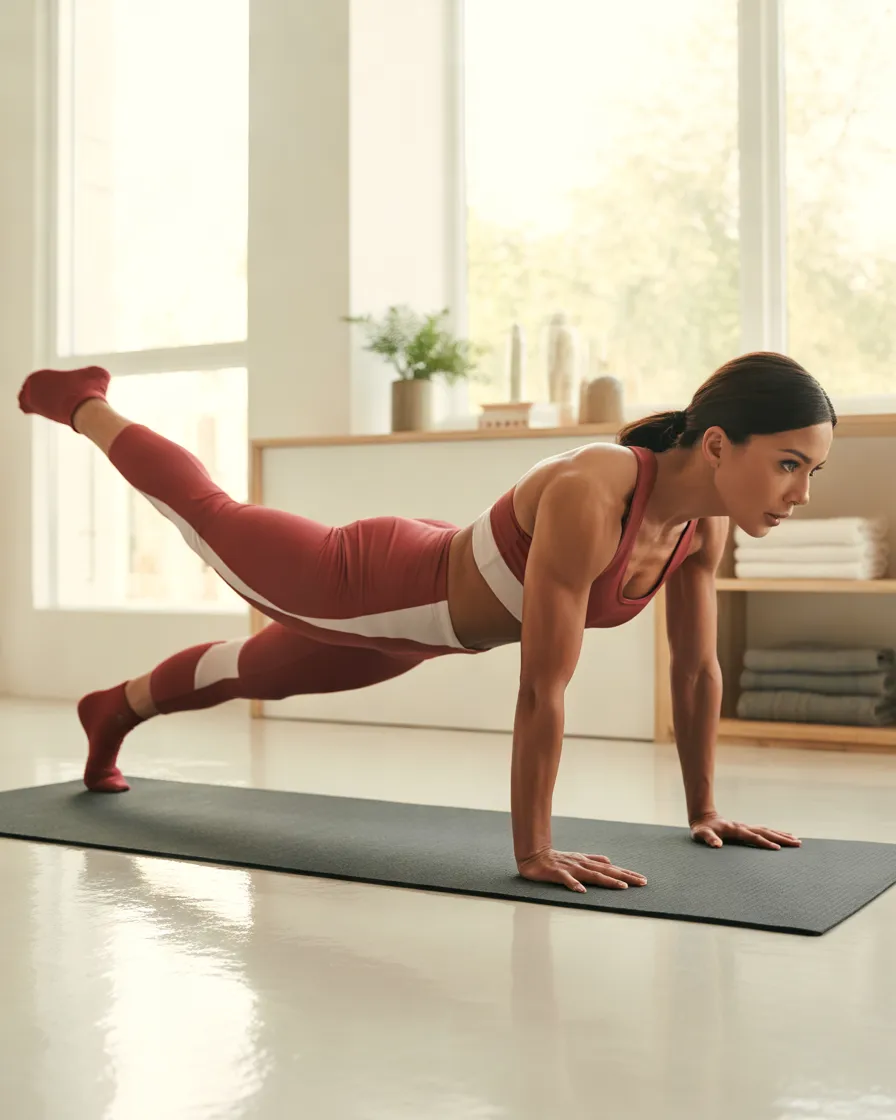
The bird dog is a slow, balanced exercise that works your core, back, glutes, and shoulders all at once. Extending opposite arm and leg challenges your stability, which can support coordination and posture. It is gentle, floor-based, and easy to adjust, making it a good choice for a calm, controlled part of your workout.
How to do it: Start on all fours with your hands under your shoulders and your knees under your hips. Keep your back flat and your neck neutral. Slowly extend your right arm forward and your left leg back until both are in line with your body. Pause, then return to the start and switch sides. Do 6 to 8 repetitions per side, moving slowly and steadily.
Who it may suit: Anyone working on balance, posture, and core control. Good to know: Keep your hips level and avoid letting them tilt as you extend. A smaller reach still works if balance feels tricky. If your wrists ache, try the move on your forearms or with fists on the mat. Stop if you feel back pain.
12. Chair Dips
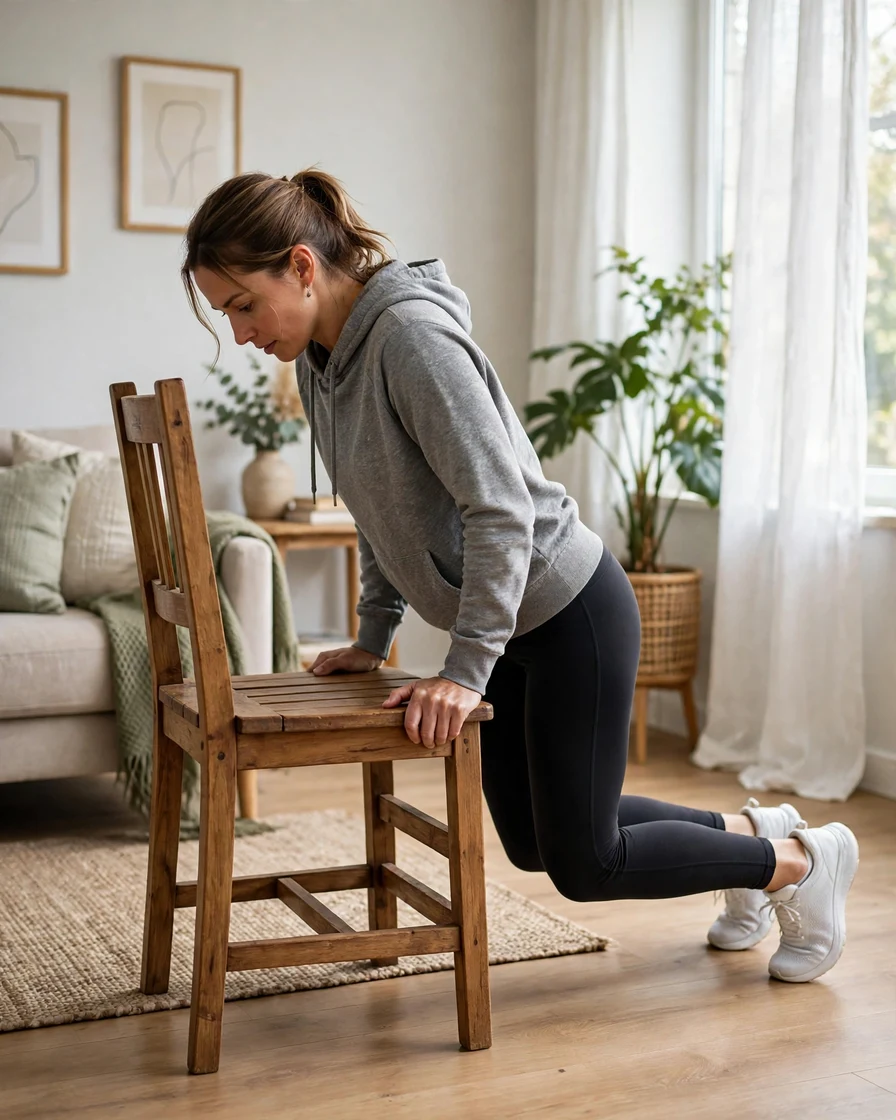
Chair dips are a simple way to strengthen the backs of your arms and your shoulders using only a chair. They use your own body weight, they need very little space, and they pair well with push-ups for a balanced upper-body session.
How to do it: Sit on the edge of a sturdy chair with your hands gripping the seat beside your hips, fingers pointing forward. Walk your feet out a little and lift your hips off the seat. Bend your elbows to lower your body a few inches, keeping your back close to the chair. Push back up through your palms. Aim for 8 to 10 repetitions, keeping the movement slow and controlled.
Who it may suit: People wanting an easy at-home arm exercise. Good to know: The chair must be stable and pushed against a wall so it cannot slide. Keep the range small at first and your shoulders down away from your ears. If your shoulders or wrists hurt, skip this move and try incline push-ups instead.
13. Standing Side Leg Lifts
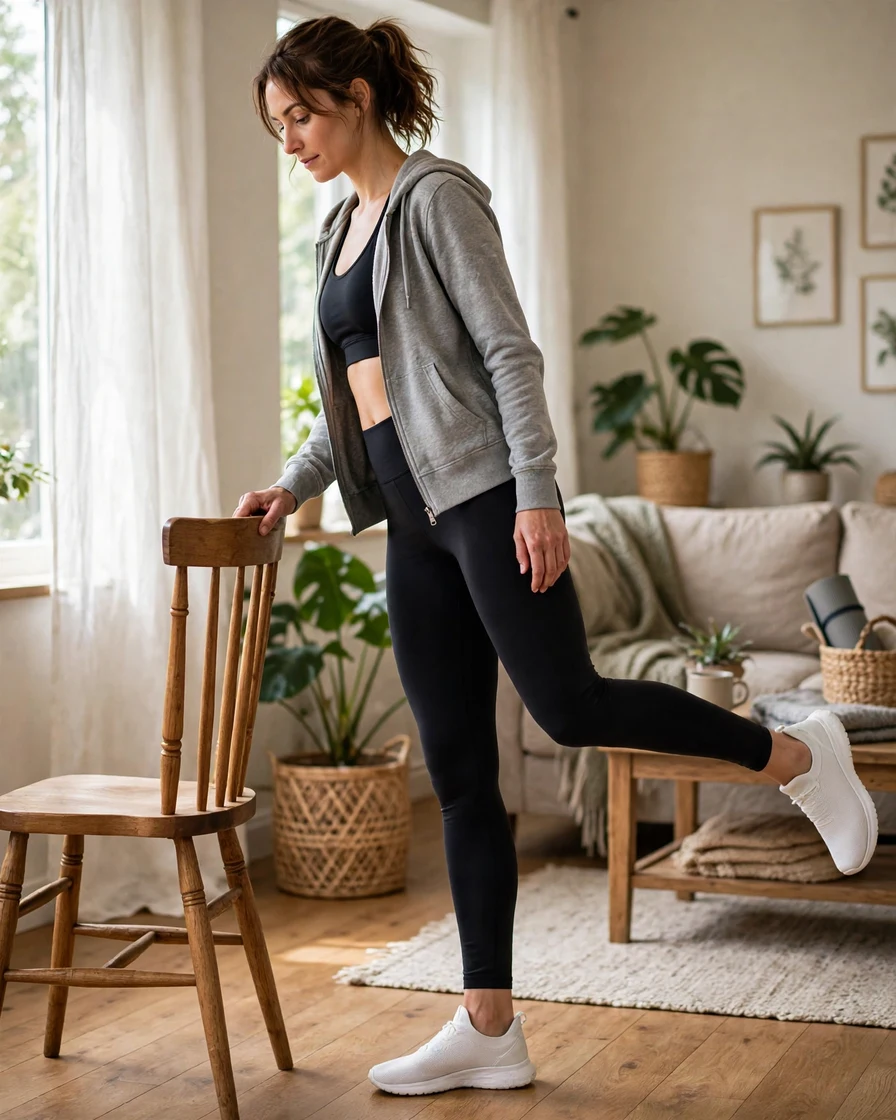
Standing side leg lifts are a quiet finisher that works the outer hips and thighs, muscles that support balance and steady walking. Because you do them standing with a chair nearby for support, they are easy to fit into the end of a workout or even a short movement break during the day. They need no floor space and no equipment beyond something steady to hold.
How to do it: Stand tall beside a sturdy chair or countertop, with one hand resting lightly on it for balance. Keep your standing leg soft, not locked. Slowly lift your outer leg to the side, keeping it straight and your toes pointing forward. Pause at the top, then lower with control. Do 10 to 12 repetitions per leg, keeping your torso upright throughout.
Who it may suit: Anyone looking for a gentle balance and hip exercise. Good to know: Avoid leaning to the side or swinging the leg — small, controlled lifts work best. If your hip clicks or pinches, reduce the height. A slow pace and light fingertip support are more useful than a big range of motion.
Expert Tips for Quick Workouts at Home
Warm up and cool down every time. Two or three minutes of gentle marching, arm circles, and leg swings prepare your muscles, and a short stretch at the end helps your heart rate come down gradually. Skipping the warm-up is one of the most common reasons home workouts feel harder than they should.
Put form before speed or repetitions. Slow, controlled movements train your muscles more effectively than rushed ones, and they lower the chance of strain. If your form slips, rest for a few seconds and continue, or switch to the easier option given for that exercise.
Rest between moves. Take 30 to 60 seconds between exercises, and a little longer between rounds if you repeat the circuit. Rest is part of training, not a break from it — your muscles need it to work well on the next set.
Progress a little at a time. When a move feels comfortable, add a few repetitions, hold a plank five seconds longer, or lower the incline on your push-ups. Small, steady steps are more sustainable than sudden jumps in effort.
Build a simple routine you can repeat. The same 20-minute session three or four times a week is more useful than a different hard workout every day. Pick a regular time, keep your mat and water bottle in one place, and track how the moves feel week to week.
If you have a health condition, an injury, or you are pregnant or returning to exercise after surgery, speak to a healthcare professional before starting a new exercise routine.
FAQs About Quick Workouts at Home
Can I get a good workout at home in 20 minutes?
Yes — a focused 20-minute session of bodyweight exercises can work your major muscle groups and raise your heart rate. The key is consistency: several short sessions a week are likely to be more useful than one long session followed by days of nothing.
Do I need any equipment for these quick workouts?
No equipment is required. The thirteen moves in this list use only your body weight, a sturdy chair, and a wall or floor. A yoga mat can make floor exercises more comfortable, and a water bottle and towel are handy, but neither is essential to get started.
How often should I do a quick workout at home?
Three to four sessions a week is a reasonable starting point for most healthy adults. Listen to your body — if you feel unusually sore or tired, take an extra rest day. A healthcare professional can help you find a frequency that suits your situation.
What should I do if an exercise hurts?
Stop the exercise and rest. Mild muscle effort is normal, but sharp pain, joint pain, or pain that lingers is a signal to pause. Try the easier modification, or skip that move and choose another. If pain keeps coming back or you have an injury, speak to a healthcare professional before continuing.
Conclusion
A quick workout at home does not need equipment, a large space, or a big block of time. Twenty minutes, a sturdy chair, and the thirteen moves above are enough to work your legs, arms, core, and balance.
Start with the moves that feel most comfortable, warm up first, and build up slowly. Do the session a few times a week, and you may find that moving your body becomes one of the easiest habits in your day. Pick a time, clear a small space, and begin with the first squat.