Finding a lunch that is both satisfying and nutritious can be challenging, especially when work, family responsibilities, and busy schedules leave little time for cooking. It is tempting to grab fast food, skip lunch, or eat something that does not keep you satisfied for long. Fortunately, preparing a healthier midday meal does not have to be complicated.
These 12 healthy lunch recipes offer practical ways to enjoy delicious food while including ingredients that support a balanced eating pattern. From protein-rich chicken wraps and Mediterranean quinoa bowls to comforting lentil soup and colorful vegetarian meals, there is something for different tastes and dietary preferences.
A balanced lunch generally includes a source of protein, fiber-rich vegetables or fruit, and whole grains or another satisfying carbohydrate. Healthy fats from ingredients such as avocado, olive oil, nuts, and seeds can also add flavor and satisfaction.
Whether you want easy healthy lunch ideas for work, nutritious meals for your family, or healthy meal prep lunches that save time during the week, these recipes are worth adding to your regular menu.
The best part? Most use affordable supermarket ingredients and can be adjusted to suit your preferences. You do not need complicated cooking techniques or expensive specialty foods to make a wholesome lunch.
1. Mediterranean Chickpea and Quinoa Bowl for a Fiber-Rich Healthy Lunch
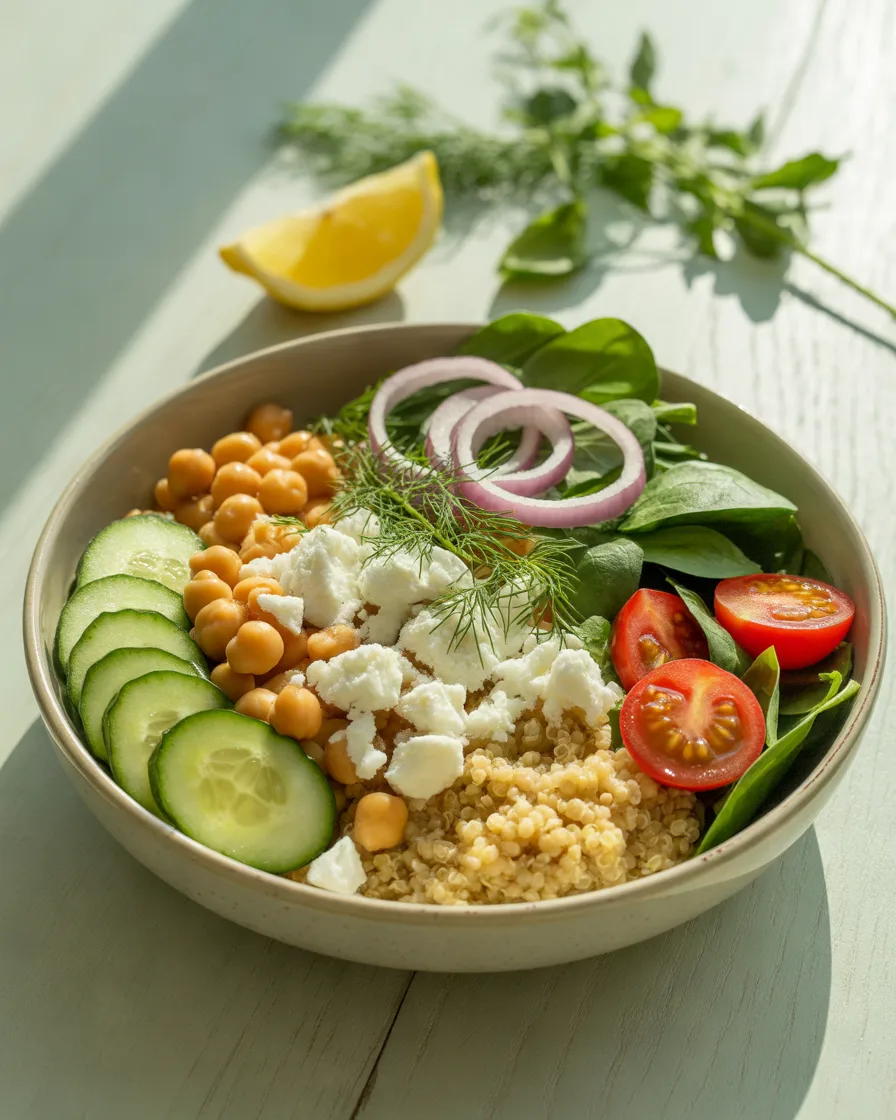
A Mediterranean chickpea and quinoa bowl is a colorful, satisfying meal that combines plant-based protein, whole grains, and fresh vegetables. It is an excellent option when you want a nutritious lunch without spending much time in the kitchen.
The combination of chickpeas and quinoa provides protein and fiber, while cucumber, tomatoes, and leafy greens add freshness. A simple lemon and olive oil dressing brings everything together.
Ingredients (1 serving):
- ½ cup cooked quinoa
- ½ cup cooked chickpeas
- ½ cucumber, chopped
- ½ cup cherry tomatoes, halved
- ¼ red onion, finely sliced
- 1 cup fresh spinach
- 1 tablespoon olive oil
- 1 tablespoon fresh lemon juice
- 1 tablespoon crumbled feta cheese
- Black pepper and dried oregano
How to Prepare: Cook the quinoa according to the package instructions and allow it to cool slightly. Add it to a bowl with chickpeas, cucumber, tomatoes, onion, and spinach. Mix olive oil, lemon juice, oregano, and black pepper separately. Pour the dressing over the ingredients and finish with crumbled feta.
Benefits: Chickpeas provide plant-based protein and fiber, while quinoa contributes additional protein and useful minerals. Vegetables increase the meal’s fiber content and provide a variety of vitamins.
Practical Tips: Prepare several portions of quinoa and chickpeas in advance. Keep the dressing separate until lunchtime to maintain freshness.
How to Use It: Enjoy this bowl as a complete vegetarian lunch or serve it alongside grilled chicken or tofu if you prefer additional protein.
Who It May Suit: Vegetarians, people looking for Mediterranean-inspired meals, and anyone who enjoys fresh, colorful lunch bowls.
Important Considerations: Feta and canned chickpeas can contain considerable sodium. Choose reduced-sodium chickpeas and adjust the cheese according to your preferences.
2. Grilled Chicken and Avocado Whole Wheat Wrap for a High-Protein Lunch
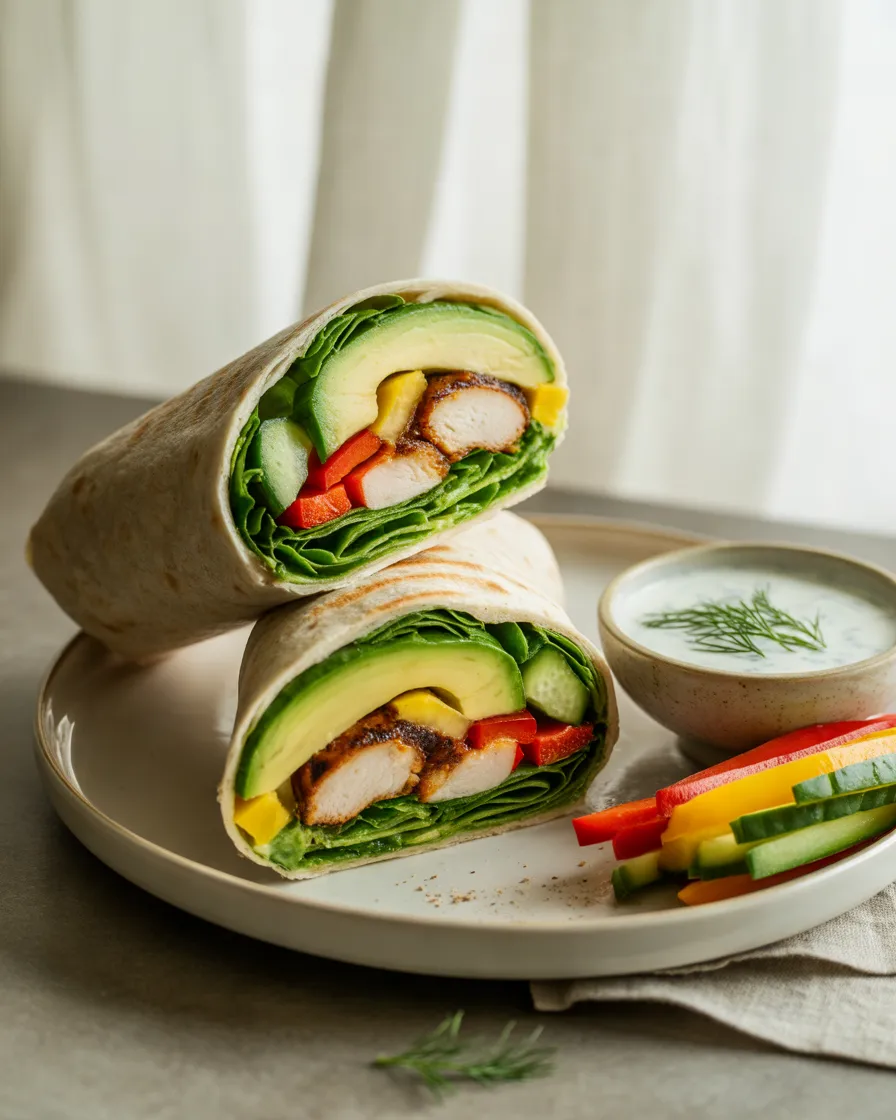
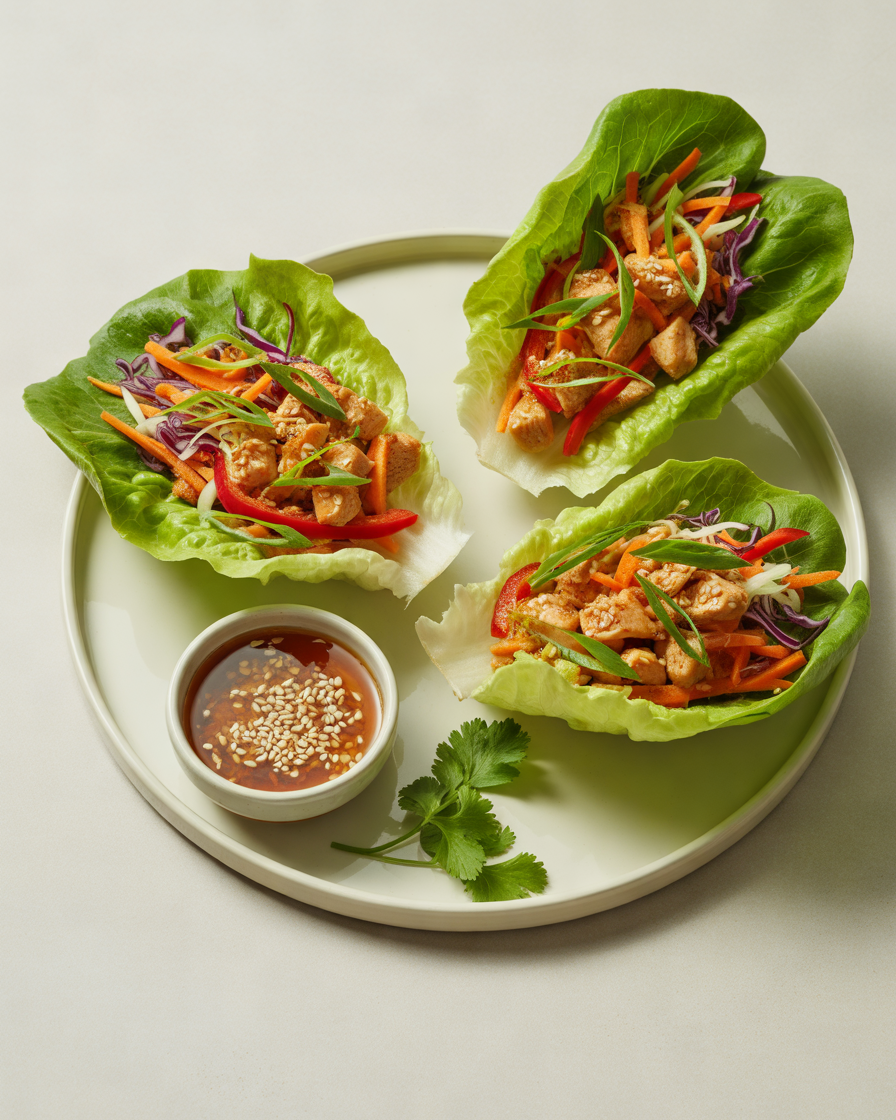
A grilled chicken and avocado wrap is one of the most convenient healthy lunch recipes for people who want something filling and easy to carry. It combines lean protein with healthy fats and fresh vegetables inside a whole wheat tortilla.
This recipe works particularly well for office lunches, packed meals, or a quick homemade alternative to takeaway food.
Ingredients (1 serving):
- 1 medium whole wheat tortilla
- 100–120 g cooked grilled chicken breast
- ¼ ripe avocado
- ½ cup shredded lettuce
- ¼ cucumber, sliced
- ¼ red bell pepper, sliced
- 2 tablespoons plain Greek yogurt
- 1 teaspoon lemon juice
- Black pepper and paprika
How to Prepare: Season the chicken with paprika and black pepper, then grill until fully cooked. Slice it into thin strips. Mash the avocado with lemon juice and spread it over the tortilla. Add lettuce, cucumber, bell pepper, and chicken. Mix Greek yogurt with black pepper and use it as a light dressing. Fold the tortilla tightly and cut it in half.
Benefits: Chicken provides high-quality protein, avocado contributes unsaturated fats, and whole wheat tortillas offer more fiber than many refined-flour alternatives.
Practical Tips: Grill chicken in batches and refrigerate individual portions for convenient lunches. Wrap the tortilla tightly in food-safe paper to make it easier to transport.
How to Use It: Serve with a small portion of fresh fruit, vegetable sticks, or plain yogurt for a more complete meal.
Who It May Suit: Busy professionals, students, fitness enthusiasts, and people seeking high-protein lunch recipes.
Important Considerations: Check the tortilla’s ingredient list and sodium content. If preparing ahead, keep refrigerated and avoid leaving chicken at room temperature for extended periods.
3. Homemade Lentil and Vegetable Soup for a Comforting Healthy Lunch
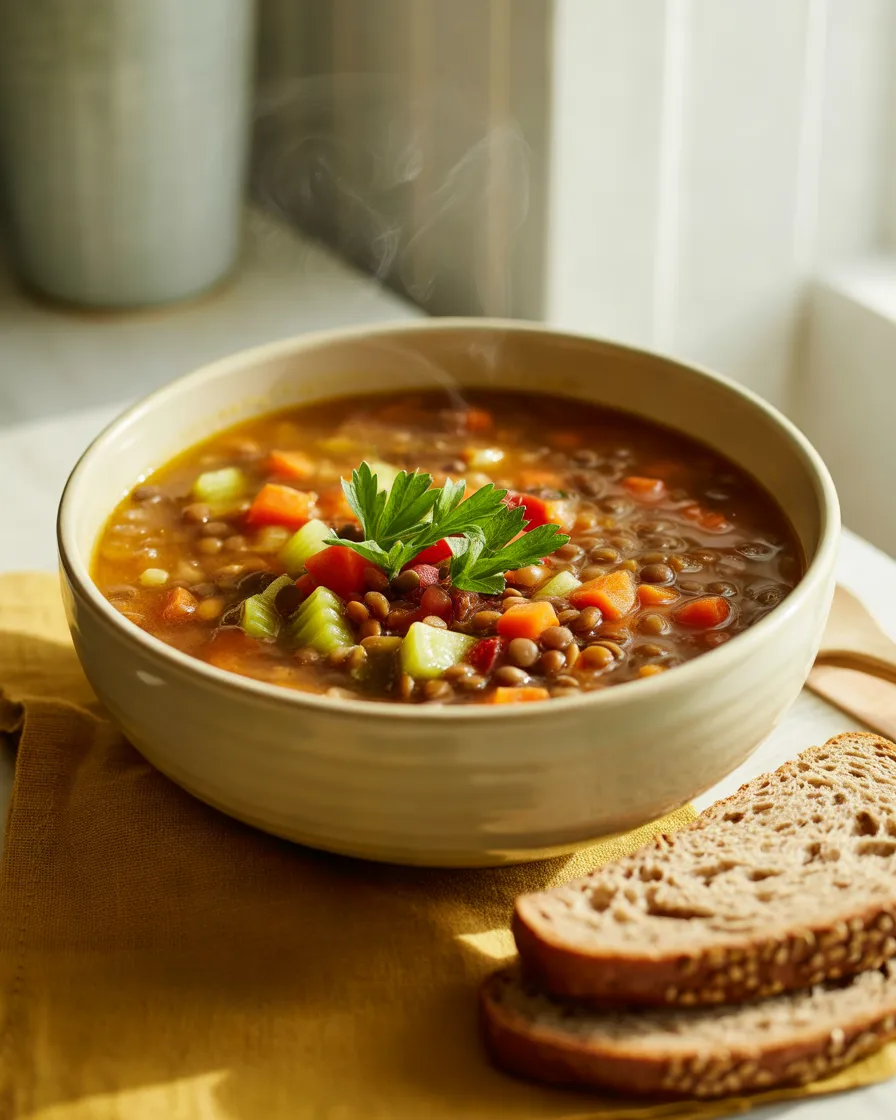
When you want something warm, comforting, and nutritious, homemade lentil and vegetable soup is an excellent choice. It uses simple pantry ingredients and can be prepared in a large batch for several lunches.
Lentils are particularly useful in plant-based cooking because they contain protein, fiber, iron, and folate. Combining them with vegetables creates a hearty meal without requiring expensive ingredients.
Ingredients (2 servings):
- ½ cup dried brown or green lentils, rinsed
- 1 small carrot, diced
- ½ onion, chopped
- 1 celery stalk, chopped
- 1 small tomato, chopped
- 2 cups low-sodium vegetable broth
- 1 garlic clove, minced
- 1 teaspoon olive oil
- ½ teaspoon cumin
- Black pepper and fresh parsley
How to Prepare: Heat olive oil in a saucepan and cook the onion, carrot, and celery for approximately five minutes. Add garlic, cumin, tomatoes, lentils, and vegetable broth. Bring everything to a boil, then reduce the heat and simmer until the lentils become tender, usually around 25–35 minutes. Add parsley before serving.
Benefits: Lentils provide plant-based protein and fiber, which contribute to a satisfying meal. Vegetables add variety, while the broth creates a comforting lunch without requiring heavy cream.
Practical Tips: Make a larger batch on the weekend and divide it into individual containers. Add water or broth when reheating if the soup becomes too thick.
How to Use It: Serve with whole-grain toast or a small side salad for a balanced lunch.
Who It May Suit: Vegetarians, budget-conscious households, people who enjoy meal preparation, and anyone looking for a warm plant-based meal.
Important Considerations: Lentils contain fermentable carbohydrates that may cause digestive discomfort for some people. Introduce larger portions gradually if you are not accustomed to eating legumes.
4. Baked Salmon and Brown Rice Bowl for a Nutritious Omega-3 Lunch
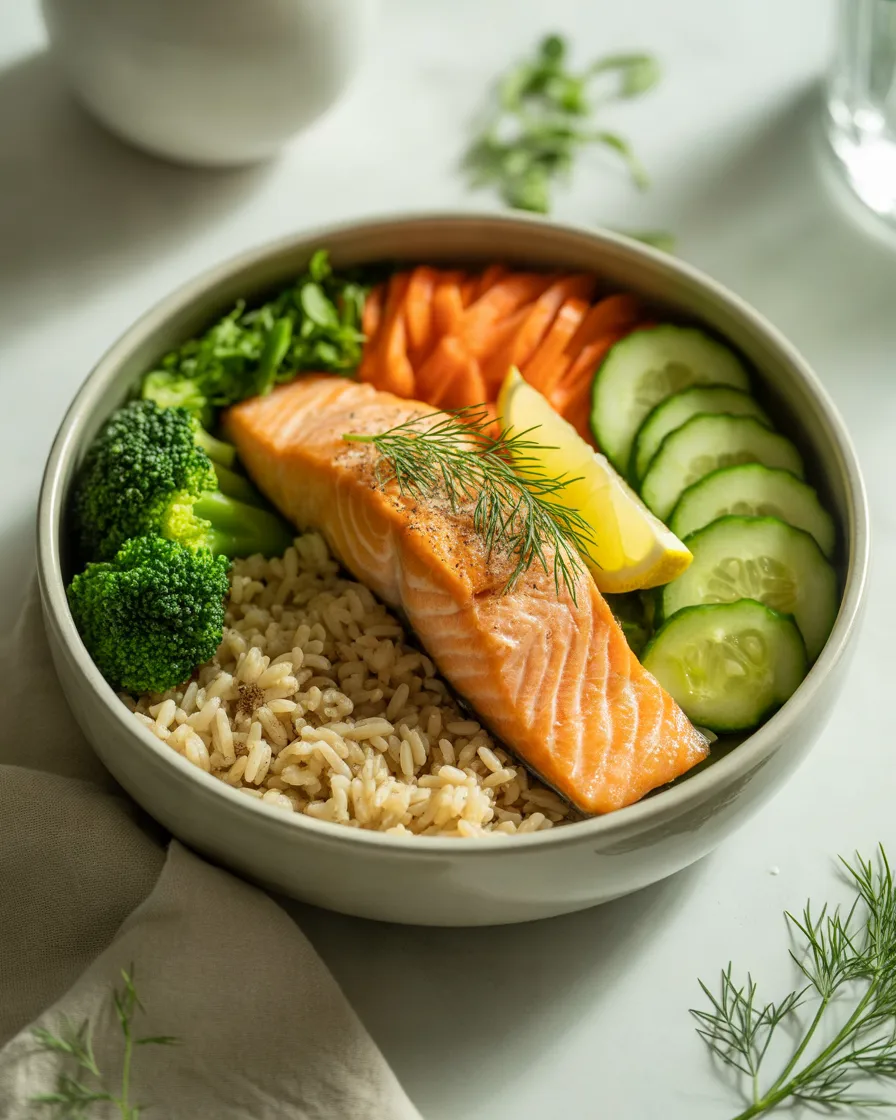
A baked salmon and brown rice bowl is a delicious way to include fish in your weekly lunch routine. Salmon provides protein and omega-3 fatty acids, while brown rice offers fiber and energy-producing carbohydrates.
The combination of tender fish, whole grains, and colorful vegetables makes this a practical option for people who want a satisfying homemade meal.
Ingredients (1 serving):
- 120 g salmon fillet
- ½ cup cooked brown rice
- ½ cup steamed broccoli
- ½ carrot, grated
- ¼ cucumber, sliced
- 1 teaspoon olive oil
- 1 teaspoon lemon juice
- ½ teaspoon garlic powder
- Black pepper
- Fresh dill, optional
How to Prepare: Season the salmon with olive oil, lemon juice, garlic powder, and black pepper. Bake at 200°C (400°F) until the fish reaches a safe internal temperature of 63°C (145°F). Prepare the brown rice and steam the broccoli. Arrange the rice, salmon, broccoli, carrot, and cucumber in a bowl. Finish with fresh dill and lemon.
Benefits: Salmon provides protein and long-chain omega-3 fats, while brown rice and vegetables contribute fiber and a variety of nutrients.
Practical Tips: Cook extra brown rice in advance and store it safely in the refrigerator. Keep the dressing light so the natural flavor of the salmon remains noticeable.
How to Use It: Enjoy warm for lunch or prepare the components separately for a convenient meal-prep bowl.
Who It May Suit: Fish lovers, people seeking protein-rich meals, and anyone interested in including seafood in a balanced eating pattern.
Important Considerations: Check carefully for fish bones. People with fish allergies should choose another protein source. Follow local seafood storage and cooking recommendations.
5. Tofu and Vegetable Soba Noodle Salad for a Plant-Based Healthy Lunch
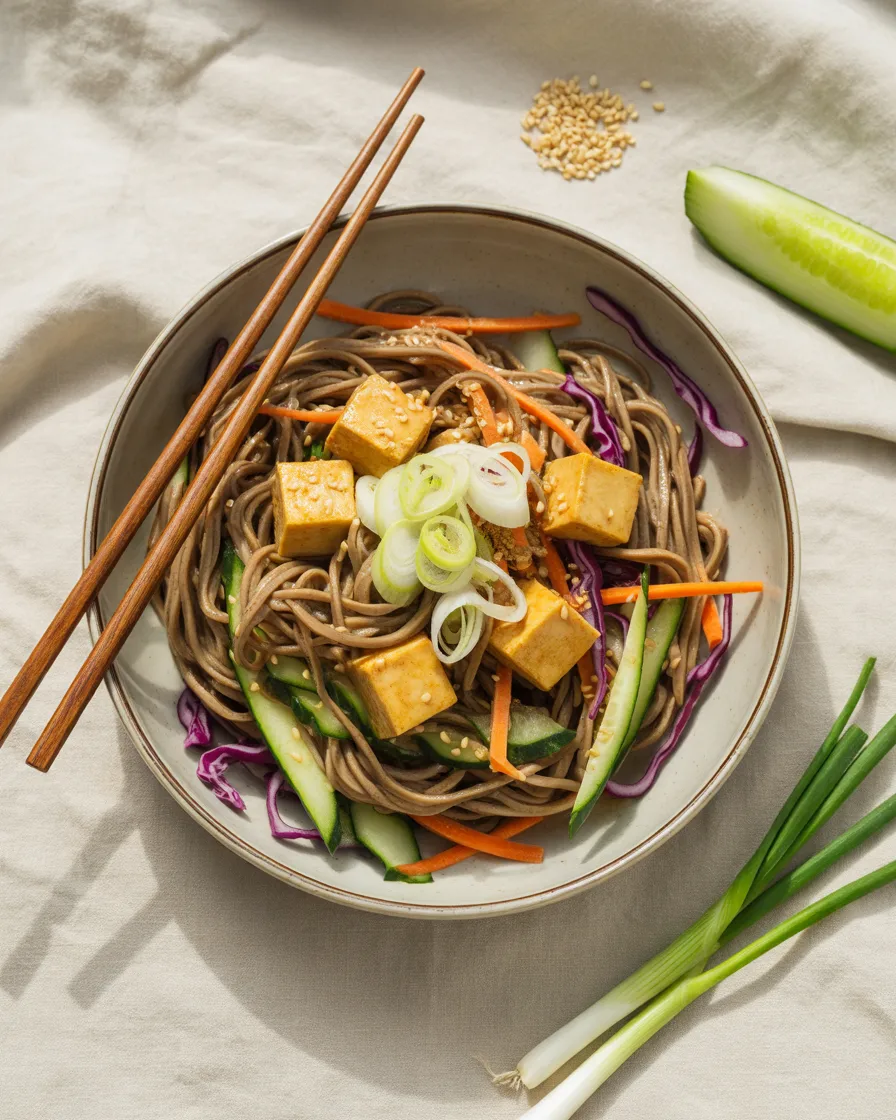
If you enjoy Asian-inspired meals, a tofu and vegetable soba noodle salad is a refreshing option. It combines noodles, crispy tofu, and colorful vegetables with a light sesame dressing.
This recipe is particularly useful for people who want to increase their variety of plant-based meals without sacrificing flavor.
Ingredients (1 serving):
- 75 g dry soba noodles
- 100 g firm tofu
- ½ cup shredded cabbage
- ½ carrot, thinly sliced
- ½ cucumber, sliced
- 1 spring onion
- 1 teaspoon sesame oil
- 1 tablespoon low-sodium soy sauce
- 1 teaspoon rice vinegar
- 1 teaspoon sesame seeds
- Fresh ginger, grated
How to Prepare: Cook the soba noodles according to the package instructions and rinse under cold water. Pat the tofu dry, cut it into cubes, and cook in a non-stick pan until lightly golden. Combine the soy sauce, sesame oil, vinegar, and ginger. Toss the noodles with vegetables and dressing, then add the tofu and sesame seeds.
Benefits: Tofu provides plant-based protein, while cabbage, cucumber, and carrots add fiber and different micronutrients. Soba noodles can contribute additional protein and fiber, depending on their buckwheat content.
Practical Tips: Look for soba noodles with a high percentage of buckwheat. Prepare the vegetables in advance and keep the dressing separate until serving.
How to Use It: Serve chilled as a refreshing lunch or enjoy it slightly warm during cooler weather.
Who It May Suit: Vegetarians, people exploring plant-based eating, and those who enjoy Asian-inspired healthy lunch ideas.
Important Considerations: Soy is a common food allergen. Check noodle ingredients because some soba products contain mostly wheat flour rather than buckwheat. Soy sauce can also be high in sodium.
6. Greek Yogurt Chicken Salad Pita for an Easy Protein-Rich Lunch
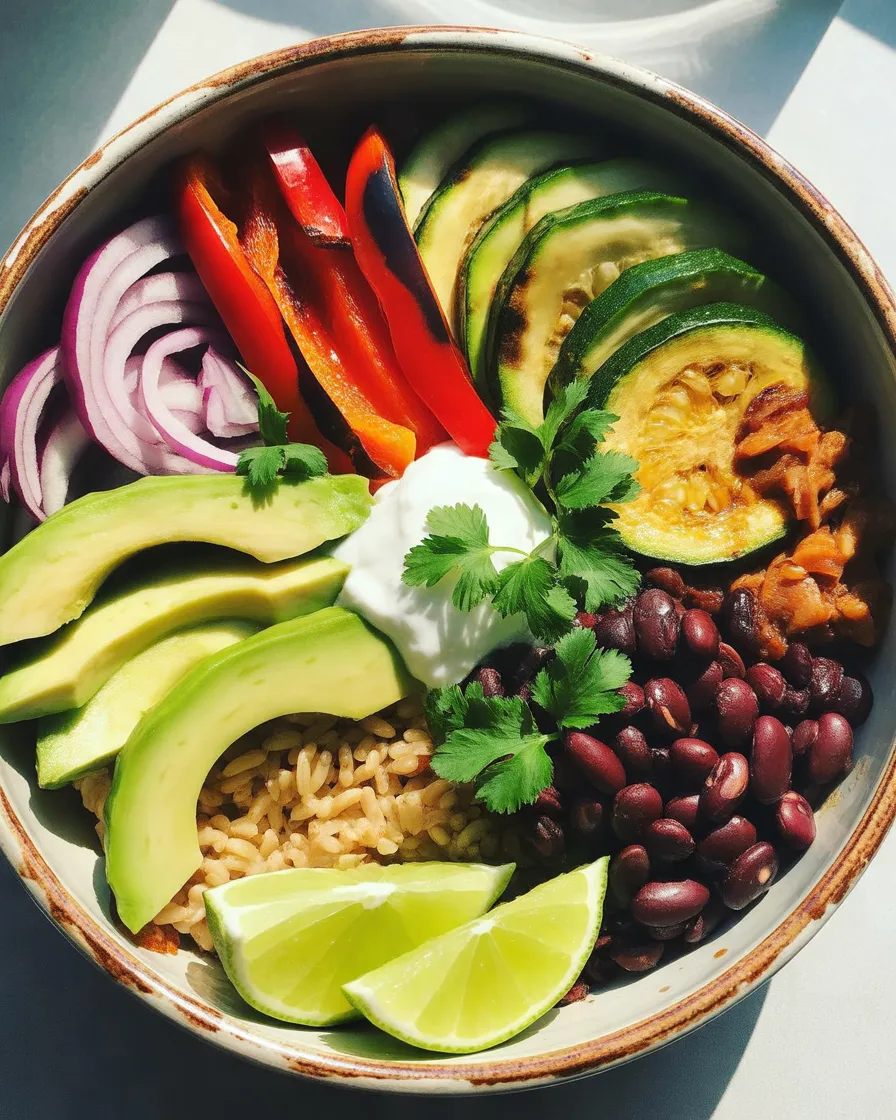
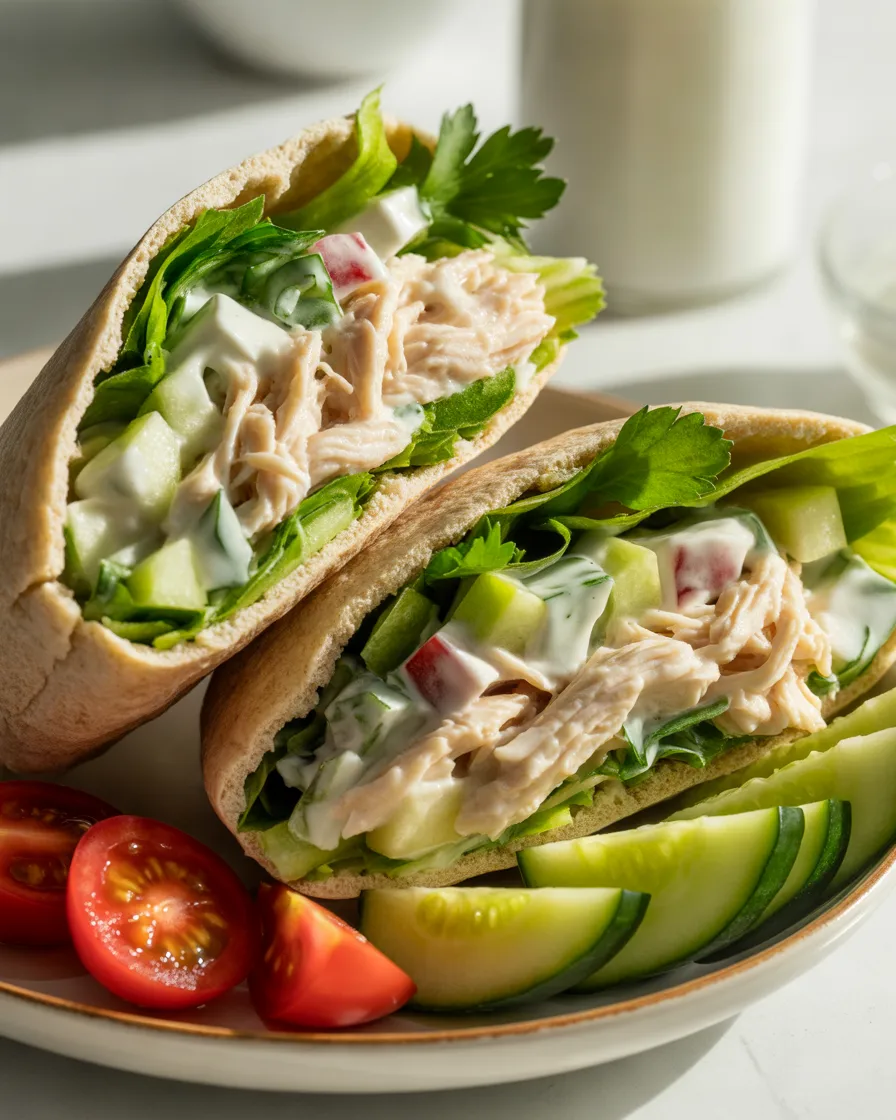
Traditional chicken salad can sometimes contain large amounts of mayonnaise. Replacing some or all of the mayonnaise with plain Greek yogurt creates a creamy alternative that provides additional protein.
This chicken salad pita is easy to assemble, portable, and suitable for a busy weekday.
Ingredients (1 serving):
- 1 small whole wheat pita
- 100 g cooked shredded chicken breast
- 3 tablespoons plain Greek yogurt
- ¼ celery stalk, finely chopped
- ¼ apple, diced
- 1 tablespoon chopped parsley
- 1 teaspoon lemon juice
- ½ cup lettuce
- Black pepper and a pinch of paprika
How to Prepare: Combine the shredded chicken, Greek yogurt, celery, apple, parsley, lemon juice, and seasonings in a bowl. Mix until evenly coated. Carefully open the pita and add the lettuce. Fill with the chicken mixture and serve.
Benefits: Chicken and Greek yogurt contribute protein, while the apple and celery provide crunch and additional plant foods. Whole wheat pita adds fiber and makes the meal easy to carry.
Practical Tips: Cook and shred chicken ahead of time. Store the chicken salad separately from the pita and assemble just before eating to prevent sogginess.
How to Use It: Enjoy with cherry tomatoes, cucumber sticks, or a piece of seasonal fruit.
Who It May Suit: Office workers, students, people who prefer cold lunches, and anyone looking for easy high-protein lunch ideas.
Important Considerations: Keep chicken salad refrigerated until serving. People with dairy allergies can use an appropriate unsweetened dairy-free alternative, although its protein content may differ.
7. Black Bean and Roasted Vegetable Burrito Bowl for a Filling Vegetarian Lunch
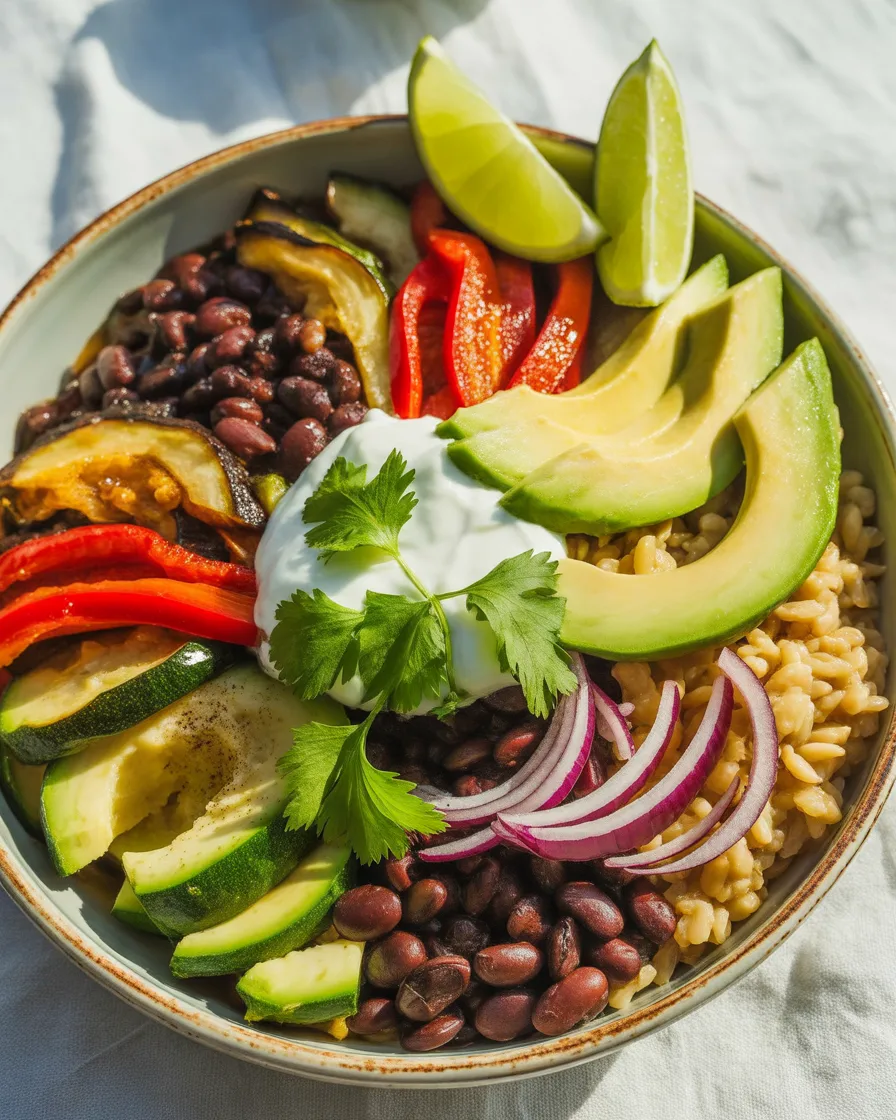
A black bean burrito bowl brings together Mexican-inspired flavors, fiber-rich beans, whole grains, and roasted vegetables. It is a satisfying alternative to restaurant-style burritos and can be easily customized.
It is also a practical recipe for using leftover vegetables from dinner.
Ingredients (1 serving):
- ½ cup cooked brown rice
- ½ cup black beans, rinsed and drained
- ½ red bell pepper, chopped
- ½ small zucchini, diced
- ¼ red onion
- ¼ avocado
- 1 tablespoon plain Greek yogurt
- 1 teaspoon olive oil
- ½ teaspoon cumin
- ½ teaspoon paprika
- Fresh coriander and lime juice
How to Prepare: Toss the bell pepper, zucchini, and onion with olive oil, cumin, and paprika. Roast at 200°C (400°F) until tender and lightly browned. Add the cooked rice and black beans to a bowl. Top with roasted vegetables and sliced avocado. Finish with Greek yogurt, coriander, and lime juice.
Benefits: Black beans provide plant-based protein and fiber. Brown rice contributes whole grains, while the vegetables and avocado add variety, texture, and unsaturated fats.
Practical Tips: Prepare rice, beans, and roasted vegetables in separate containers. This makes it easier to assemble lunch portions throughout the week.
How to Use It: Serve as a complete vegetarian meal or add grilled chicken if you prefer a mixed-protein option.
Who It May Suit: Vegetarians, families, meal-prep enthusiasts, and people who enjoy flavorful Mexican-inspired meals.
Important Considerations: Rinse canned beans to reduce some of their sodium. Adjust the amount of onion, beans, or spices if particular ingredients cause digestive discomfort.
8. Egg, Spinach, and Sweet Potato Lunch Plate for a Nutrient-Dense Meal
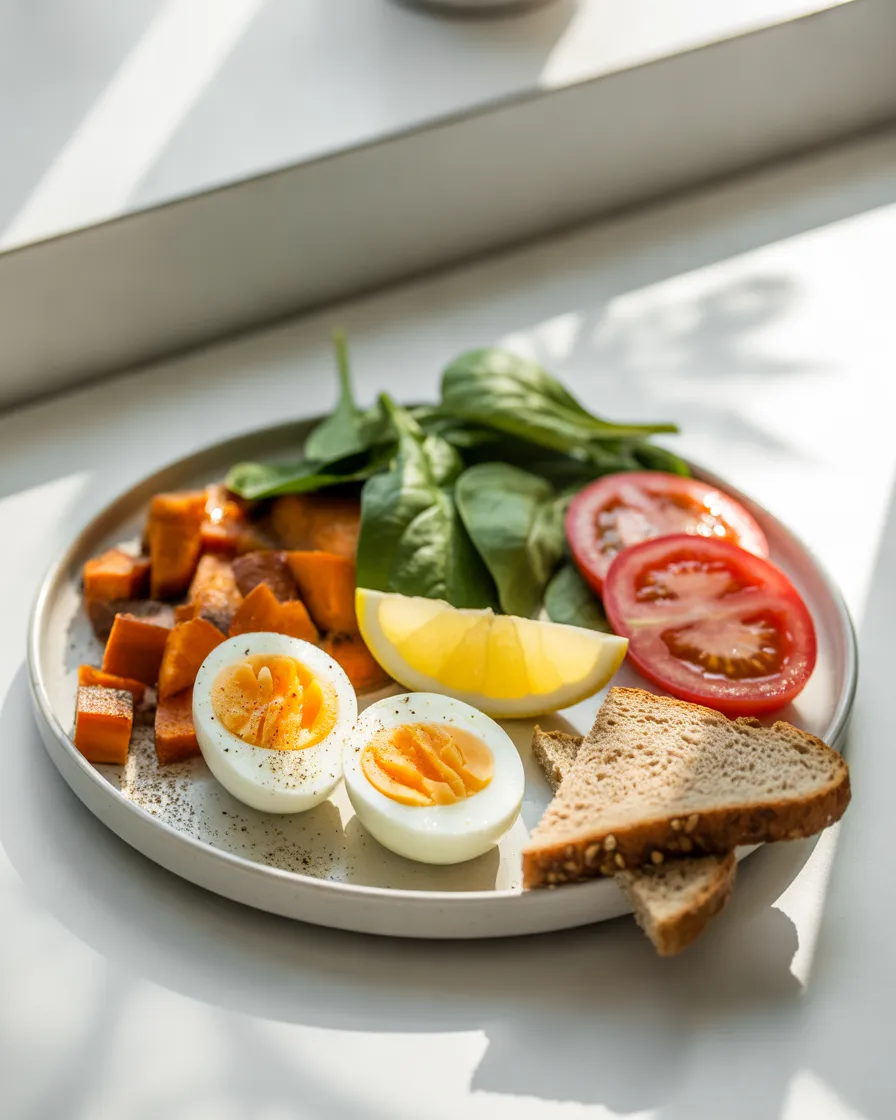
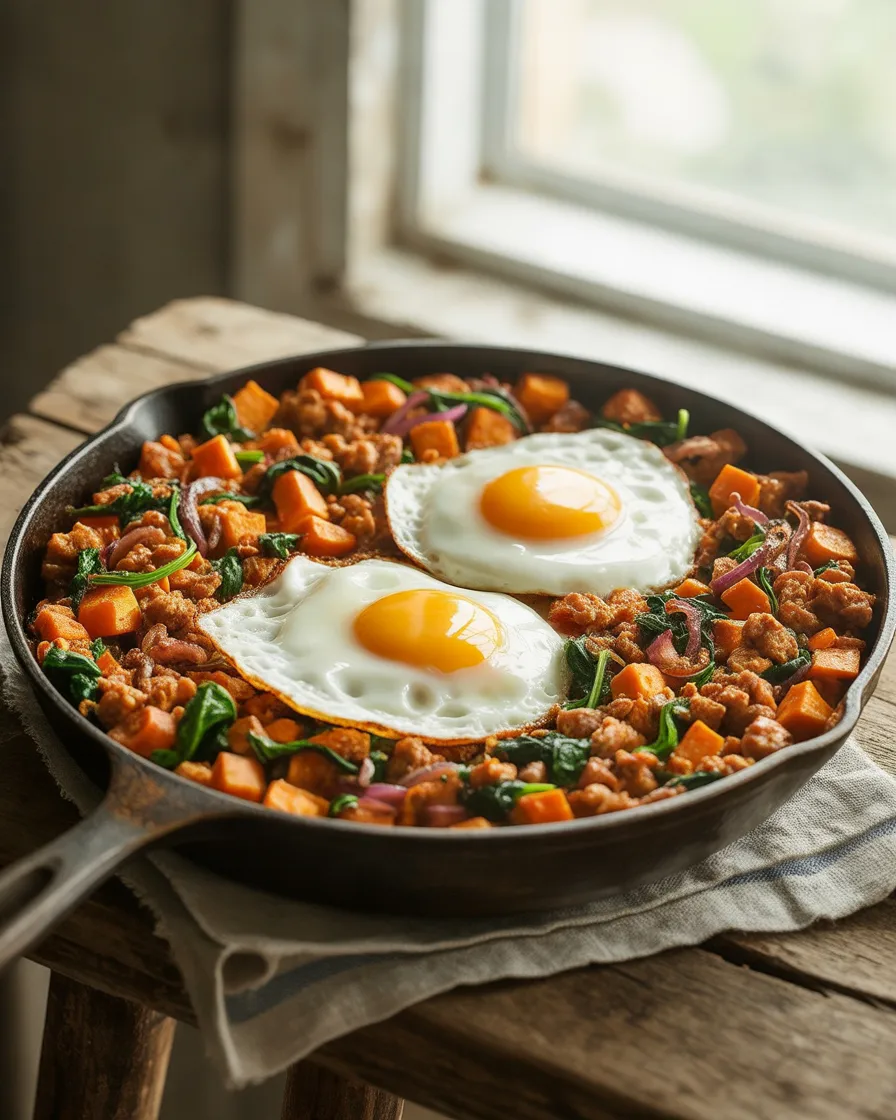
Eggs are versatile, affordable, and easy to prepare. Pairing boiled eggs with roasted sweet potatoes and fresh spinach creates a balanced lunch with protein, carbohydrates, and vegetables.
This recipe is especially convenient when you want a meal that uses simple ingredients already available in your kitchen.
Ingredients (1 serving):
- 2 large eggs
- 1 medium sweet potato
- 1 cup fresh spinach
- ½ tomato, sliced
- 1 teaspoon olive oil
- ½ teaspoon paprika
- Black pepper
- 1 teaspoon lemon juice
How to Prepare: Cut the sweet potato into small cubes and toss with olive oil, paprika, and black pepper. Roast at 200°C (400°F) until soft and lightly browned, approximately 20–25 minutes. Hard-boil the eggs, cool, and peel them. Lightly sauté the spinach or serve it fresh. Arrange everything on a plate with sliced tomato and lemon juice.
Benefits: Eggs provide high-quality protein and nutrients such as choline. Sweet potatoes contain fiber and beta-carotene, while spinach contributes folate and other micronutrients.
Practical Tips: Roast extra sweet potato cubes and boil several eggs in advance. Store cooked components separately for easier meal preparation.
How to Use It: Enjoy as a lunch plate with whole-grain toast if you need a larger meal.
Who It May Suit: People who prefer simple homemade lunches, individuals looking for protein-rich vegetarian meals, and busy households.
Important Considerations: People with egg allergies should choose another protein source. Cook eggs thoroughly and refrigerate prepared portions promptly.
9. Tuna and White Bean Salad for a Quick No-Cook Healthy Lunch
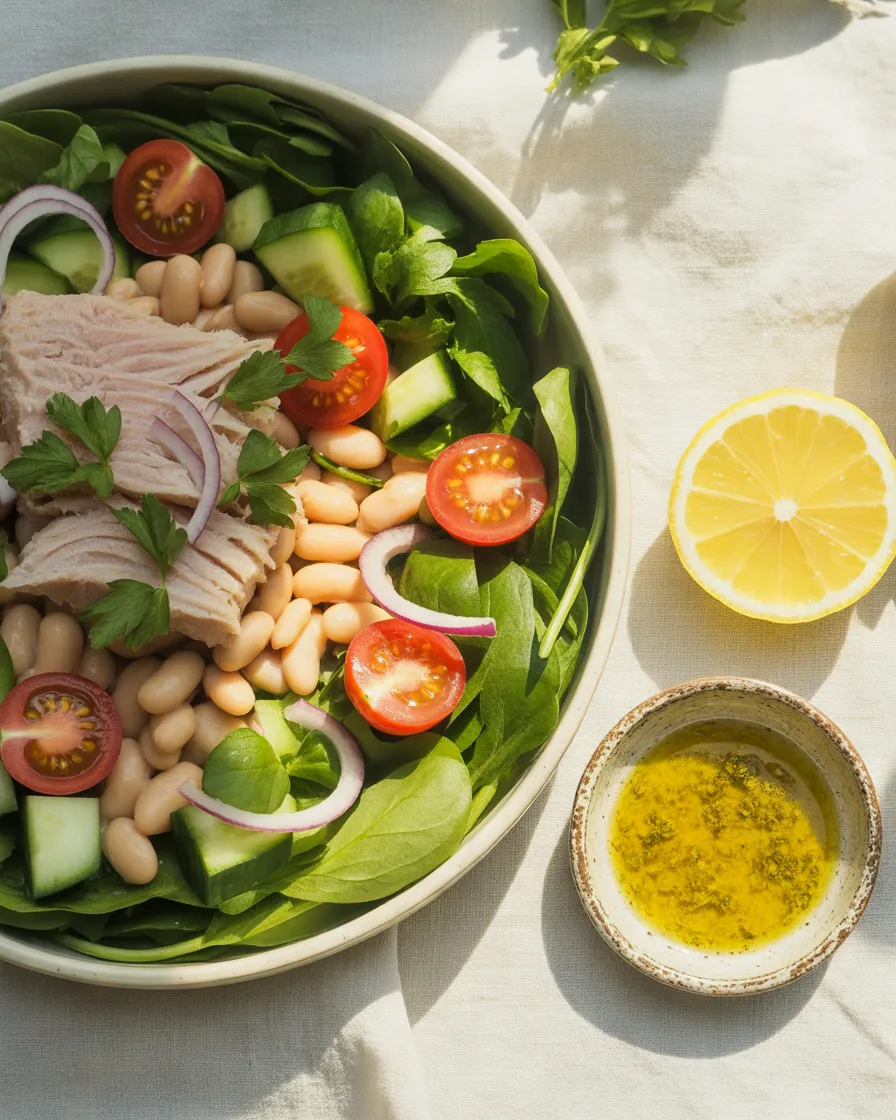
Not every healthy lunch requires cooking. A tuna and white bean salad is a convenient option for days when you have limited time or do not want to use the stove.
Combining canned tuna with white beans, fresh vegetables, and lemon dressing creates a protein-rich meal that is easy to prepare.
Ingredients (1 serving):
- 1 small can of tuna in water, drained
- ½ cup cooked white beans
- ½ cucumber, chopped
- ½ cup cherry tomatoes
- ¼ red onion
- 1 cup mixed salad greens
- 1 tablespoon olive oil
- 1 tablespoon lemon juice
- Fresh parsley and black pepper
How to Prepare: Drain the tuna and rinse the white beans if canned. Add them to a bowl with cucumber, tomatoes, red onion, and salad greens. Combine olive oil, lemon juice, parsley, and black pepper. Pour over the salad and gently mix.
Benefits: Tuna offers protein, while white beans contribute fiber and additional plant-based protein. Fresh vegetables provide color, texture, and a range of nutrients.
Practical Tips: Keep canned tuna and beans in your pantry for emergency lunches. Prepare the dressing separately if packing the salad for work.
How to Use It: Serve on its own or with whole-grain crackers or a slice of whole-grain bread.
Who It May Suit: Busy professionals, people who dislike complicated cooking, and anyone looking for quick healthy lunch ideas.
Important Considerations: Tuna contains mercury, and levels vary by species. Choose lower-mercury options such as canned light tuna more frequently, follow local fish-consumption guidance, and pay particular attention to recommendations during pregnancy. Check canned products for added sodium.
10. Roasted Vegetable and Hummus Whole Grain Sandwich for a Fresh Lunch
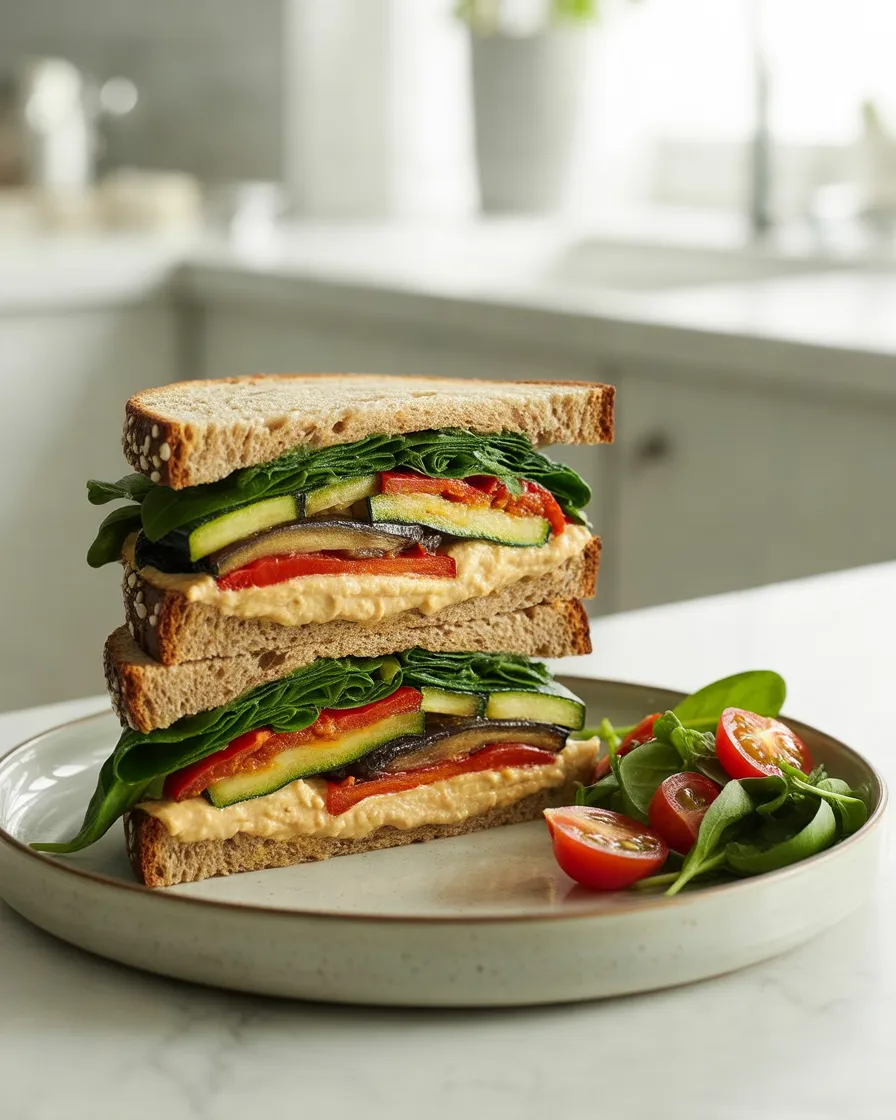
A roasted vegetable and hummus sandwich is a delicious way to enjoy a meat-free lunch. Hummus provides a creamy base, while roasted vegetables add sweetness and texture.
Using whole-grain bread increases the fiber content and makes this sandwich more satisfying than many refined-bread alternatives.
Ingredients (1 serving):
- 2 slices whole-grain bread
- 3 tablespoons hummus
- ½ small zucchini, sliced
- ½ red bell pepper
- ¼ small eggplant, sliced
- A handful of fresh spinach
- 1 teaspoon olive oil
- Black pepper
- A little lemon juice
How to Prepare: Toss the zucchini, bell pepper, and eggplant with olive oil and black pepper. Roast at 200°C (400°F) until tender. Toast the bread lightly if desired. Spread hummus over both slices, add spinach and roasted vegetables, and finish with lemon juice. Close the sandwich and cut diagonally.
Benefits: Chickpeas in hummus contribute plant-based protein and fiber. Vegetables add variety and micronutrients, while whole-grain bread supplies additional fiber.
Practical Tips: Roast vegetables in advance and store them refrigerated. Add spinach and hummus just before serving to keep the bread from becoming soggy.
How to Use It: Pair with a side salad, fresh fruit, or a small bowl of vegetable soup.
Who It May Suit: Vegetarians, people looking for meat-free lunch ideas, and anyone who enjoys Mediterranean-style food.
Important Considerations: Some store-bought hummus varieties contain more sodium or oil than expected. Compare labels and choose an option that fits your dietary preferences.
11. Cottage Cheese and Fresh Vegetable Protein Bowl for a Simple Lunch
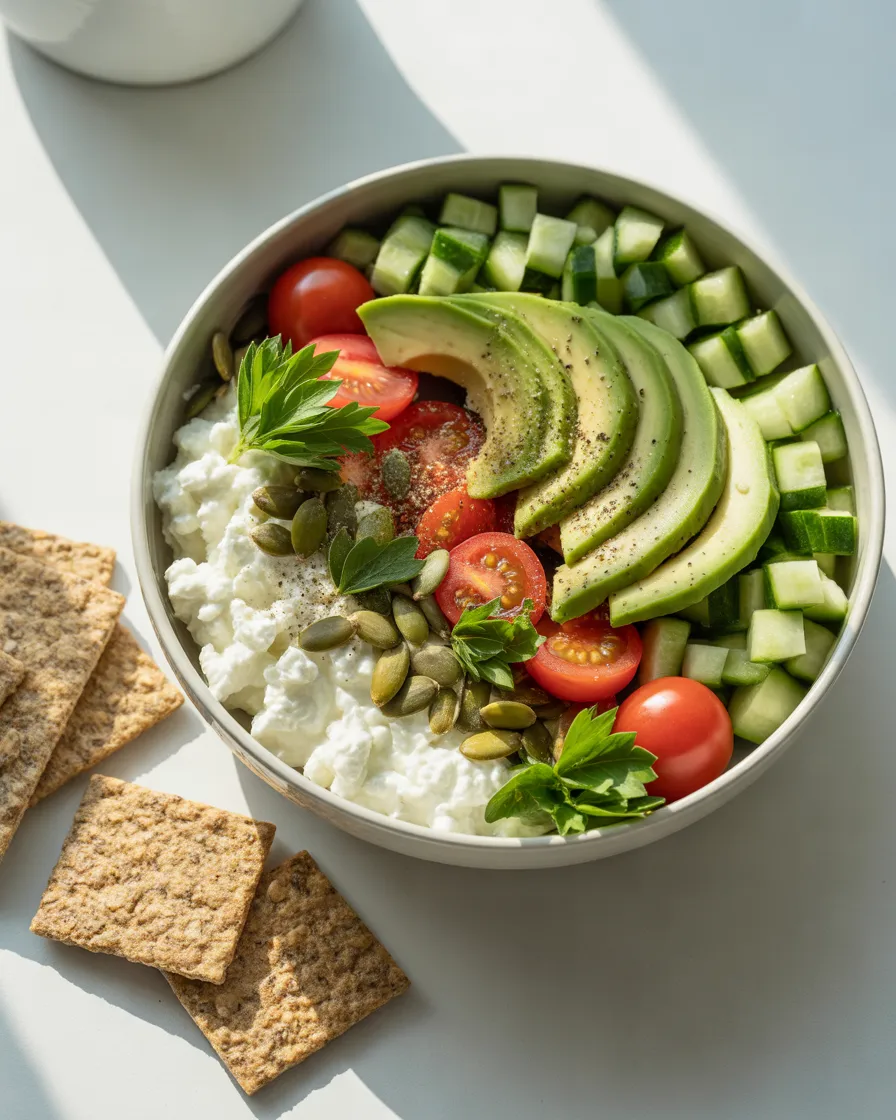
Cottage cheese is a convenient ingredient for people who want a protein-rich lunch without spending time cooking. Its mild flavor works well with fresh vegetables, herbs, seeds, and whole-grain crackers.
This savory bowl is particularly useful when you want something refreshing and easy to assemble.
Ingredients (1 serving):
- ¾ cup plain cottage cheese
- ½ cucumber, diced
- ½ cup cherry tomatoes
- ¼ avocado, sliced
- 1 tablespoon pumpkin seeds
- 1 tablespoon chopped fresh parsley
- Black pepper
- 1 teaspoon lemon juice
- 2–3 whole-grain crackers
How to Prepare: Place cottage cheese in a serving bowl. Arrange the cucumber, cherry tomatoes, and avocado around it. Sprinkle pumpkin seeds and fresh parsley over the top. Add lemon juice and black pepper. Serve with whole-grain crackers.
Benefits: Cottage cheese is a convenient source of protein and calcium. Vegetables contribute fiber and different vitamins, while pumpkin seeds provide healthy fats and minerals.
Practical Tips: Choose plain cottage cheese rather than flavored varieties with added sugar. Prepare the vegetables in advance, but slice the avocado just before serving.
How to Use It: Enjoy as a light lunch or add a boiled egg and an extra slice of whole-grain toast when you need a more substantial meal.
Who It May Suit: People looking for easy high-protein lunch recipes, individuals who prefer no-cook meals, and anyone who enjoys fresh savory foods.
Important Considerations: Cottage cheese can be relatively high in sodium. Compare labels and choose lower-sodium varieties if appropriate. People with dairy allergies should avoid it.
12. Edamame and Quinoa Mason Jar Salad for Convenient Meal Prep Lunches
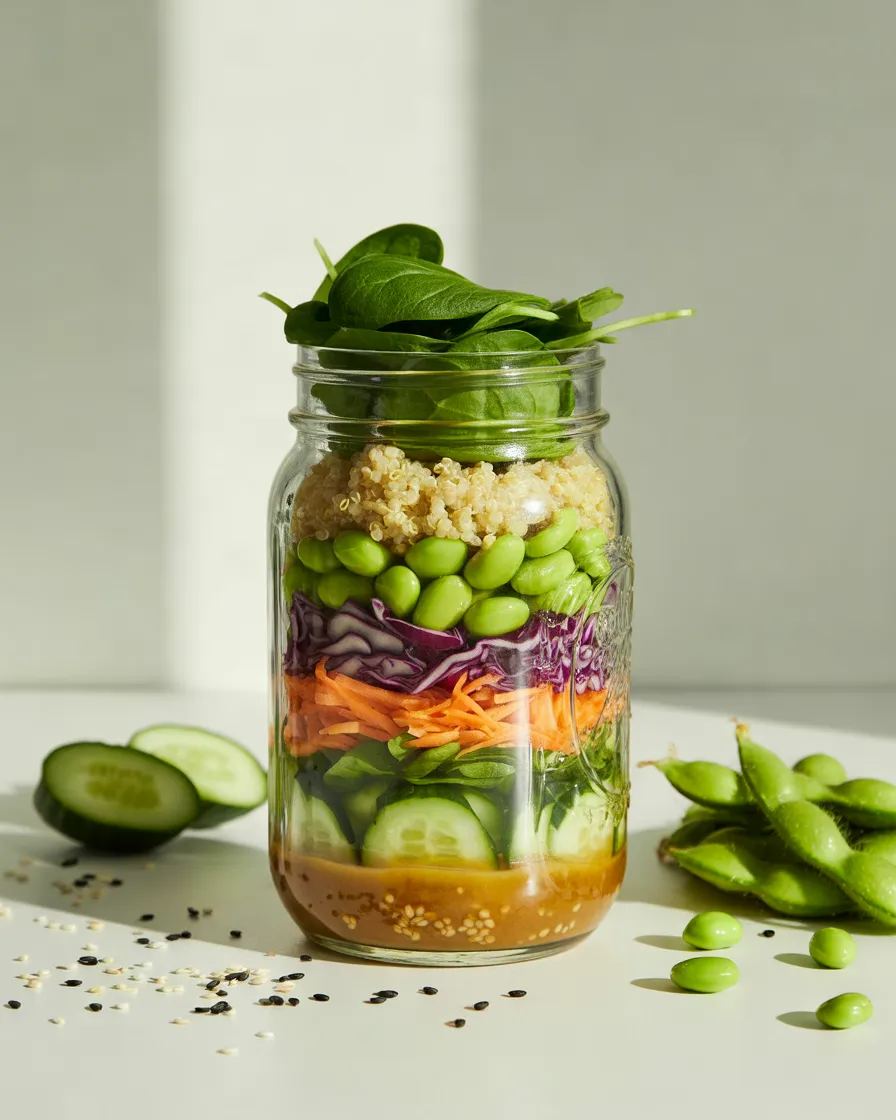
A mason jar salad is an excellent option when you want to prepare several healthy lunches ahead of time. Layering ingredients correctly helps keep the vegetables fresh and prevents the leafy greens from becoming soggy.
This edamame and quinoa version combines plant-based protein, whole grains, and colorful vegetables in a portable container.
Ingredients (1 serving):
- ½ cup cooked quinoa
- ½ cup shelled cooked edamame
- ½ cucumber, diced
- ½ carrot, grated
- ½ cup shredded purple cabbage
- 1 cup baby spinach
- 1 tablespoon rice vinegar
- 1 teaspoon sesame oil
- 1 teaspoon low-sodium soy sauce
- 1 teaspoon sesame seeds
How to Prepare: Whisk rice vinegar, sesame oil, and soy sauce together. Pour the dressing into the bottom of a clean wide-mouth jar. Add cucumber, carrot, cabbage, edamame, and quinoa in layers. Finish with spinach at the top. Close the jar and refrigerate until ready to eat. Shake into a bowl before serving.
Benefits: Edamame provides plant-based protein, quinoa contributes whole grains and additional protein, and vegetables supply fiber and different micronutrients.
Practical Tips: Use a jar with enough room to shake the ingredients. Keep the dressing at the bottom and leafy greens at the top. Prepare individual portions for convenient weekday lunches.
How to Use It: Take the jar to work or school and shake it into a bowl when you are ready to eat.
Who It May Suit: Students, office workers, vegetarians, and people interested in healthy meal prep lunches.
Important Considerations: Edamame is a soy product and may not be suitable for people with soy allergies. Keep the jar refrigerated and use clean, food-safe containers.
Expert Tips for Making Healthy Lunch Recipes More Nutritious and Satisfying
Choosing nutritious ingredients is important, but how you combine, prepare, and store them also makes a difference. These practical tips can help make healthier lunchtime habits easier to maintain.
1. Build a Balanced Lunch Plate
A useful starting point is the plate method:
- Fill approximately half your plate with vegetables and fruit.
- Include a quarter of the plate with protein-rich foods.
- Use the remaining quarter for whole grains or other carbohydrate-rich foods.
- Add a moderate amount of healthy fat, such as olive oil, avocado, or seeds.
This is a flexible guide rather than a strict rule. Individual nutritional needs and portion sizes vary.
2. Include Protein in Every Lunch
Protein contributes to normal muscle maintenance and helps make meals satisfying. Good options include chicken, eggs, fish, tofu, lentils, chickpeas, beans, cottage cheese, and Greek yogurt.
Try changing your protein source throughout the week rather than eating the same food every day.
3. Choose Fiber-Rich Ingredients
Whole grains, beans, lentils, vegetables, fruits, nuts, and seeds are useful sources of dietary fiber. Including a variety of these foods can support digestive health and contribute to a balanced eating pattern.
If you currently eat little fiber, increase it gradually and drink enough fluids.
4. Prepare Ingredients Ahead of Time
Meal preparation does not mean cooking every lunch in advance. Instead, prepare a few useful ingredients that can be combined in different ways.
For example, cook a batch of brown rice, roast vegetables, wash salad greens, and prepare chicken or beans. You can use these ingredients to assemble several different meals.
5. Make Homemade Dressings
Store-bought dressings can sometimes contain considerable sodium, added sugars, or saturated fats. A simple homemade dressing can be made with olive oil, lemon juice, vinegar, mustard, herbs, and black pepper.
Measure the oil rather than pouring freely if you want to keep portions consistent.
6. Do Not Forget Food Safety
Prepared lunches should be stored in clean, covered containers and refrigerated promptly. As a general food-safety guideline, refrigerate perishable food within two hours, or within one hour when temperatures exceed 32°C (90°F).
Use insulated lunch bags with ice packs when refrigeration is unavailable. Follow local food-safety recommendations for storage times and reheating.
7. Make Healthy Eating Enjoyable
Healthy eating should not feel like a punishment. Experiment with herbs, spices, textures, and different cooking methods. Roasting vegetables, grilling chicken, adding fresh herbs, or making a flavorful dressing can make everyday lunches more enjoyable.
Frequently Asked Questions About Healthy Lunch Recipes
1. What Are the Healthiest Foods to Eat for Lunch?
Some nutritious lunch choices include lean chicken, salmon, eggs, tofu, beans, lentils, quinoa, brown rice, whole-grain bread, leafy greens, and colorful vegetables. Combining protein, fiber-rich foods, and healthy fats can help create a balanced meal.
2. What Are Some Easy Healthy Lunch Ideas for Work?
Chicken and avocado wraps, quinoa bowls, tuna and white bean salads, lentil soup, and mason jar salads are convenient options for work. Most can be prepared in advance and packed in reusable food containers.
3. What Is a Good High-Protein Lunch?
Grilled chicken with brown rice, baked salmon bowls, Greek yogurt chicken pita, tofu noodle salads, and cottage cheese bowls are examples of protein-rich lunches. The amount of protein varies depending on the portion and ingredients used.
4. Are Healthy Lunch Recipes Good for Weight Management?
Balanced meals containing protein, vegetables, whole grains, and appropriate portions of fats can fit into a weight-management eating pattern. However, no individual recipe guarantees weight loss. Overall food intake, activity, sleep, and personal health circumstances also matter.
5. Can I Prepare Healthy Lunches for the Entire Week?
Yes, but food storage needs careful planning. Prepare ingredients in batches, refrigerate meals that will be eaten within a few days, and freeze suitable portions for later use. Keep dressings and delicate ingredients separate when necessary.
6. What Can I Eat for a Healthy Vegetarian Lunch?
Great vegetarian choices include Mediterranean chickpea bowls, lentil soup, tofu soba salad, black bean burrito bowls, roasted vegetable sandwiches, and edamame quinoa salads. These meals provide different combinations of plant-based protein and fiber.
7. What Is the Best Lunch for Someone With a Busy Schedule?
No-cook meals such as tuna and white bean salad, cottage cheese bowls, and prepared chicken wraps are practical choices. Keeping a few cooked ingredients and pantry staples available can make lunchtime much easier.
8. How Can I Make My Lunch More Filling Without Eating Too Much?
Include a suitable portion of protein, fiber-rich vegetables, whole grains, and some healthy fats. These ingredients contribute to a satisfying meal. Avoid relying entirely on low-fiber snacks or sugary drinks when you need a complete lunch.
9. Are Homemade Lunches Better Than Fast Food?
Homemade lunches often make it easier to control ingredients, cooking methods, portion sizes, and sodium levels. However, not all homemade meals are automatically healthier, and nutritious options are also available when eating out.
10. How Many Calories Should a Healthy Lunch Contain?
There is no universal calorie target for lunch. Energy requirements depend on factors such as age, body size, activity level, health circumstances, and overall daily food intake. A registered dietitian can help determine an appropriate target if you need individualized guidance.
Conclusion: Enjoy These Healthy Lunch Recipes for a More Balanced Daily Routine
Eating a nutritious lunch does not require expensive ingredients, complicated preparation, or hours in the kitchen. With a little planning, you can create delicious meals that include protein, fiber-rich vegetables, whole grains, and healthy fats.
These 12 healthy lunch recipes offer plenty of variety, whether you prefer a Mediterranean quinoa bowl, a grilled chicken wrap, comforting lentil soup, or a refreshing vegetarian salad.
Start by choosing two or three recipes that match your taste and schedule. Prepare a few ingredients ahead of time, experiment with different flavors, and gradually build a collection of lunches you genuinely enjoy.
Remember that consistency and variety are more important than making every meal perfect. A balanced, enjoyable lunch can be a simple and practical part of a healthier lifestyle.